On Saturday, we got up early to put the finishing touches on a picnic (little sausages, a cooked chicken, breads, melons, tomatoes, wine, coffee and left over birthday torte) and went to rendezvous with 15 of Peta and Bryan’s friends near Marcigny beside the Loire river. A canoe rental business is housed in an old stone house, with immaculate patio, beside a huge old barn. The barn is filled with life jackets, bidot (plastic bins to put our belongings in) and all manner of plastic canoes, kayaks and paddles. We all climb into a small bus, pulling a stack of canoes & kayaks, and are driven 10 kilometers up river where we re-grouped, only to find that we were 1 canoe short.
Somehow, this became a problem of les Anglais et les Canadiens who were clearly being difficult. Everyone else had what they wanted, what they had ordered. The fact that they were just quicker getting to them didn’t seem to be understood. Various options were proposed, most of which would have meant that we were paired with other couples or going individually in kayaks (we had 1 extra kayak). After 20 minutes of wild gesticulations, we persuaded the group to go on without us.
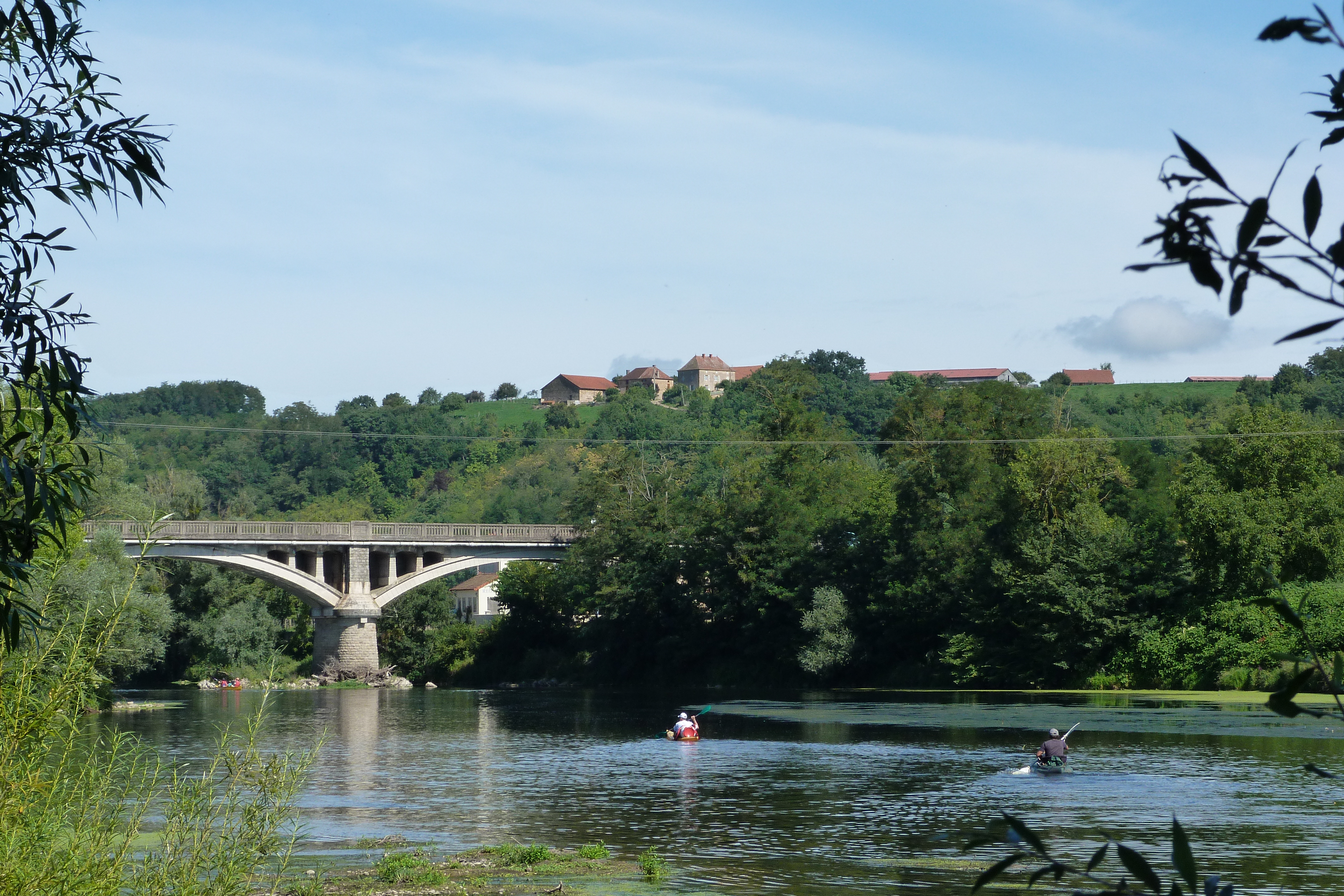
Peta, Bryan, Matt, Tim & I waited for a canoe to be brought to us, while les Françaises headed out into the river.
About 30 minutes later, the bus showed up, with a new load of canoeists. We grabbed a canoe and the 5 of us headed out onto the river.
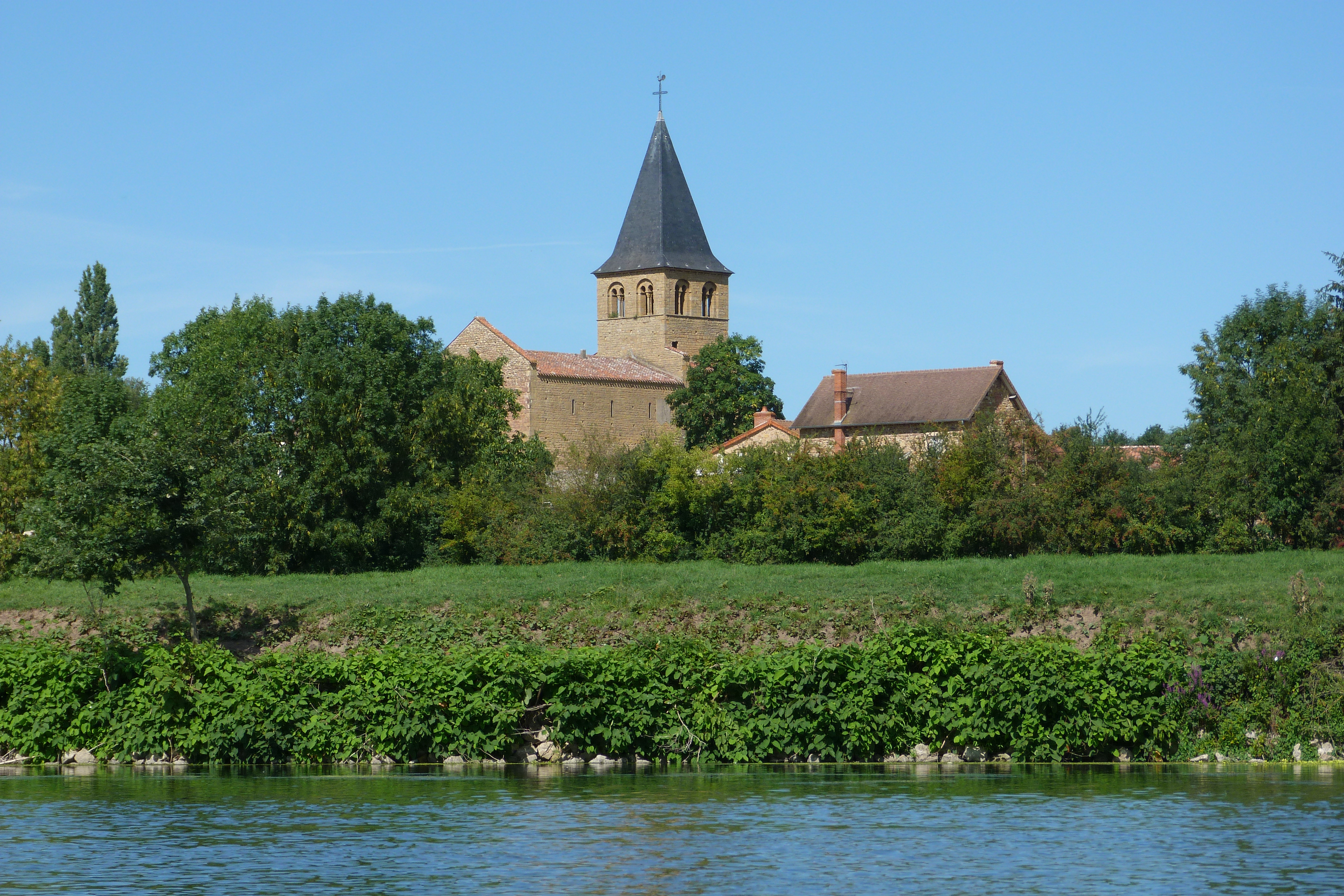
The Loire is stunningly gorgeous and surprisingly unspoiled and undeveloped. There are no motor boats, no docks, no yahoos on jet skis. This is picture perfect farming landscape. Cows come right down to the river to drink, and urinate. Egrets parade on the banks. Storks nest high in the trees. Fish almost jump into the canoe while distant church bells toll.
We are paddling downstream, with help from the current that occasionally rouses itself to move briskly. The river is mostly very shallow, and we must watch for shoals that cause us to run aground. But that is about as hard as the paddling gets. Tim & I put on our best Canadian form. We have a reputation to live up to. We are representing all of Canada! But somehow using plastic paddles in a plastic moulded canoe doesn’t evoke the same elegance of a cedar strip and we slow our pace and ignore our style, laughing at the wonder of floating down the Loire.
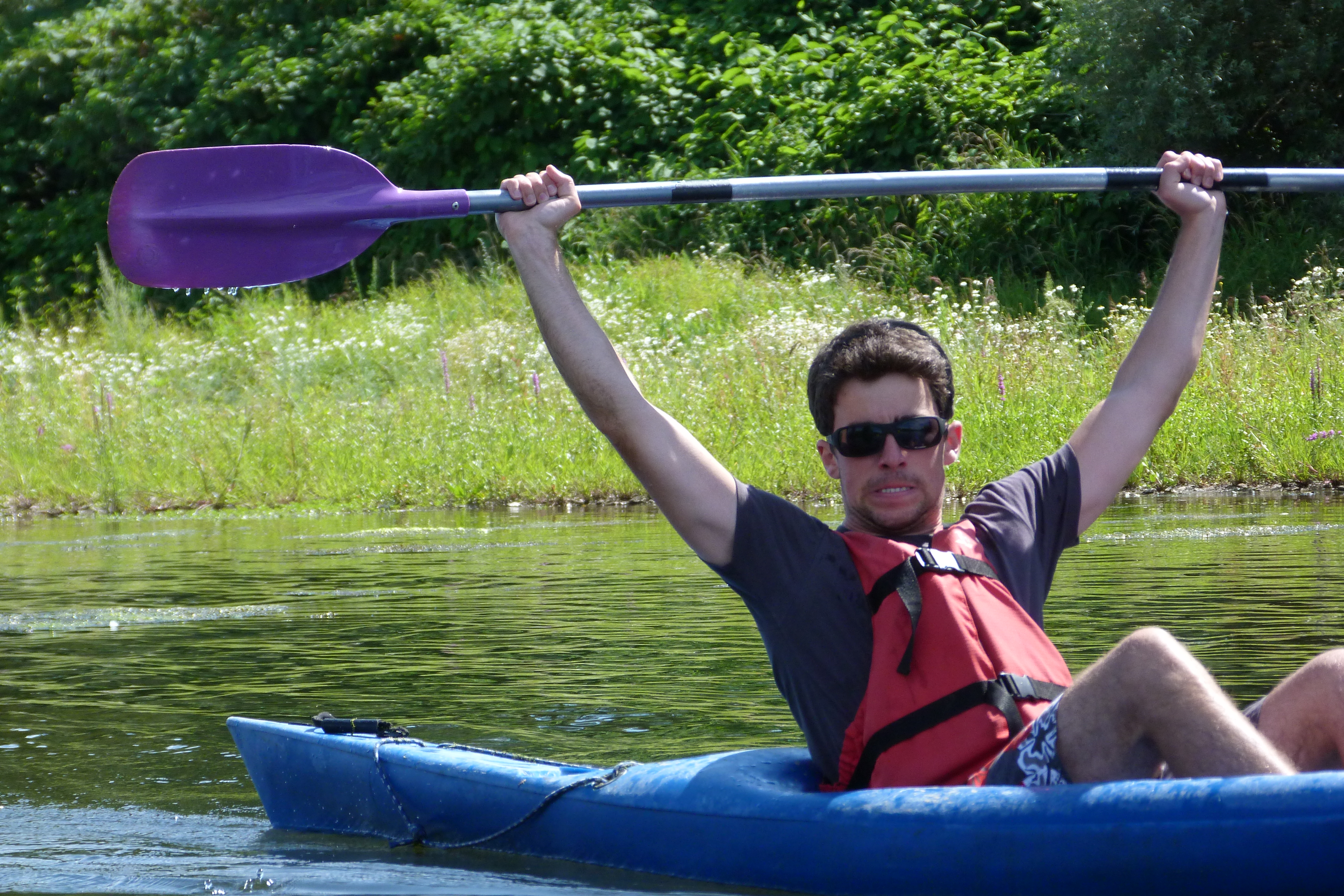
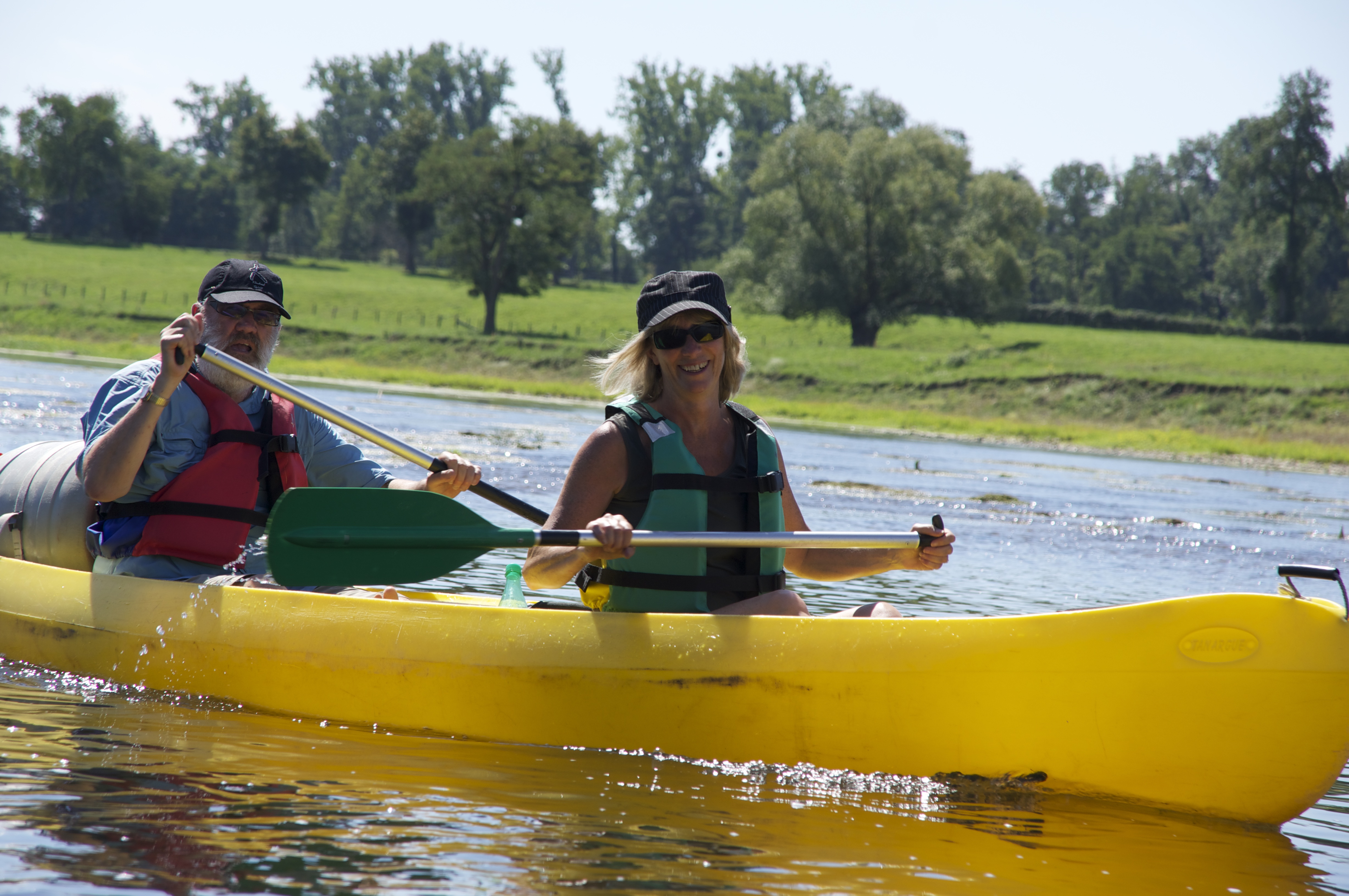
After 1 ½ hours of gentle paddling, we arrive at the picnic place. The rest of the party have only just arrived and are amazed that we caught up so quickly. We beam as we unpack. Suzanne and a couple of the other wives arrive with the lunches. They don’t join us on the river, preferring instead to be responsible for the food preparation and clean up. We spread our blanket under the shade of the trees and begin the feast.
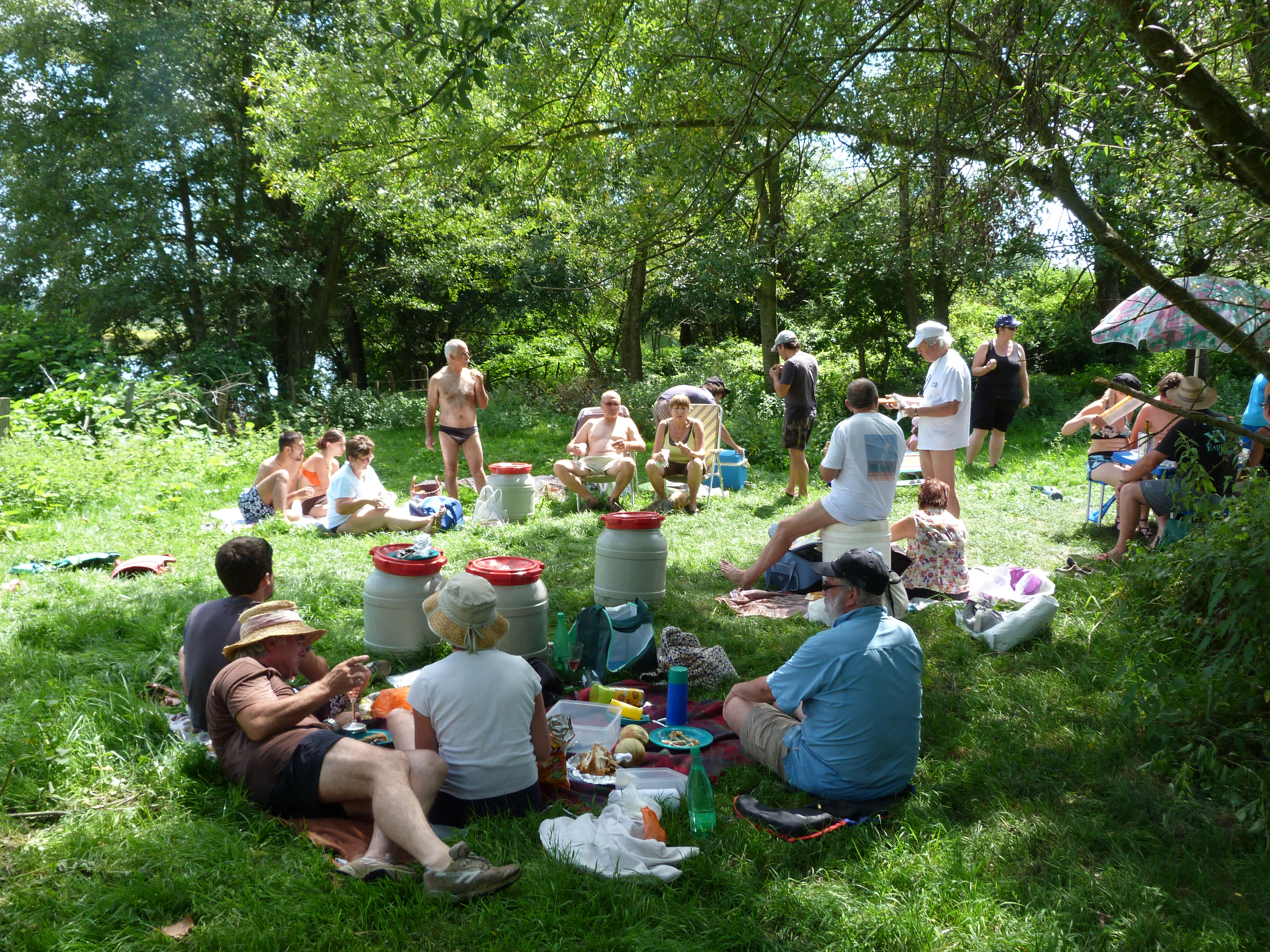
All food and drink is shared. But the way it is shared is that you put some of what you have brought on your own plate and then carry the rest of it around to each cluster of people, offering them little bits. The same is done with the wine, beginning with the white, moving to the rose, and finishing with the red. Different reds for different parts of the meal. Christian brings us some exquisite chèvre, but is dismayed that we only have Bourgogne to drink with it. He returns with a half bottle of Cote du Rhône, insisting that we keep it for the chèvre.
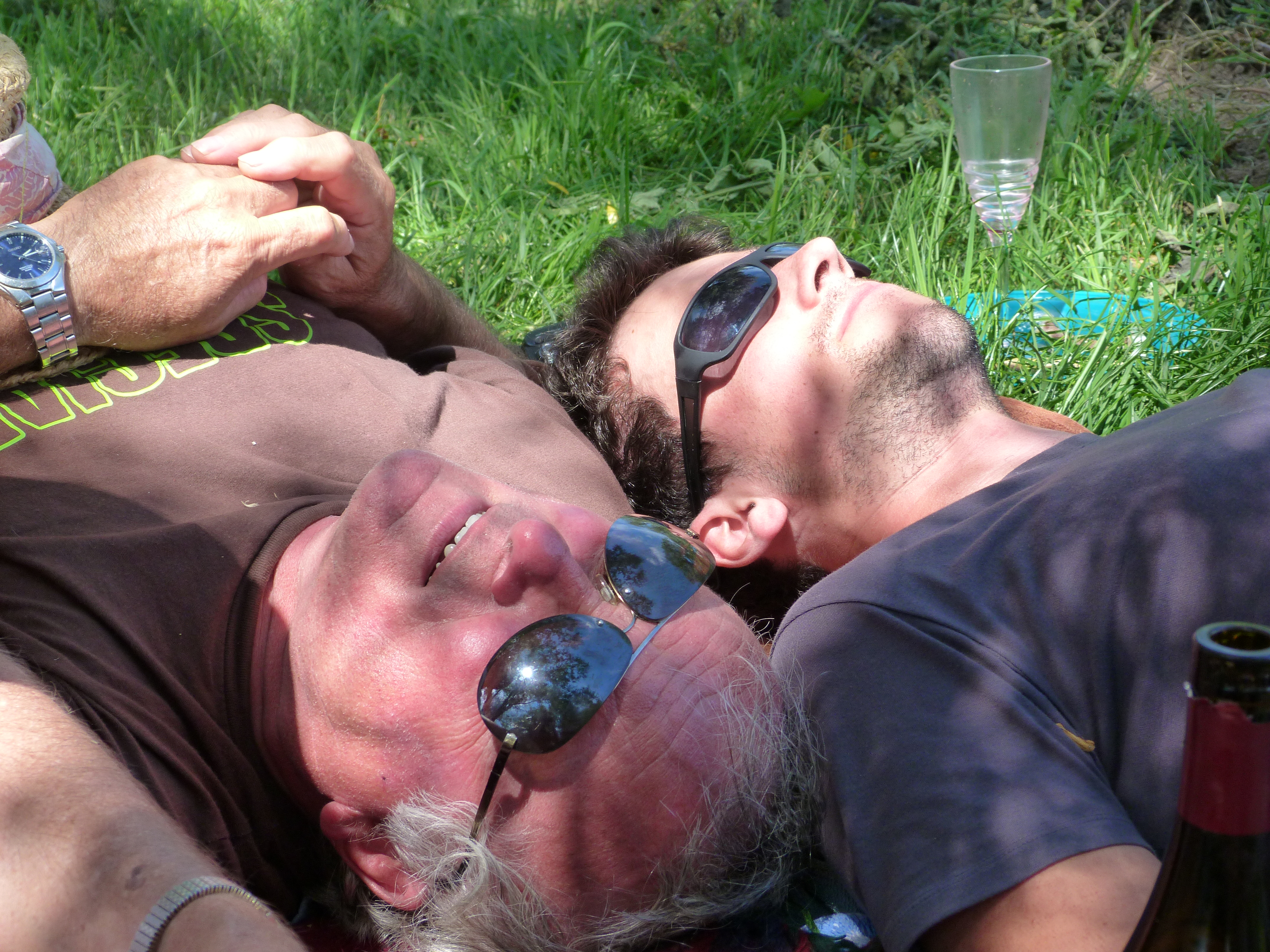
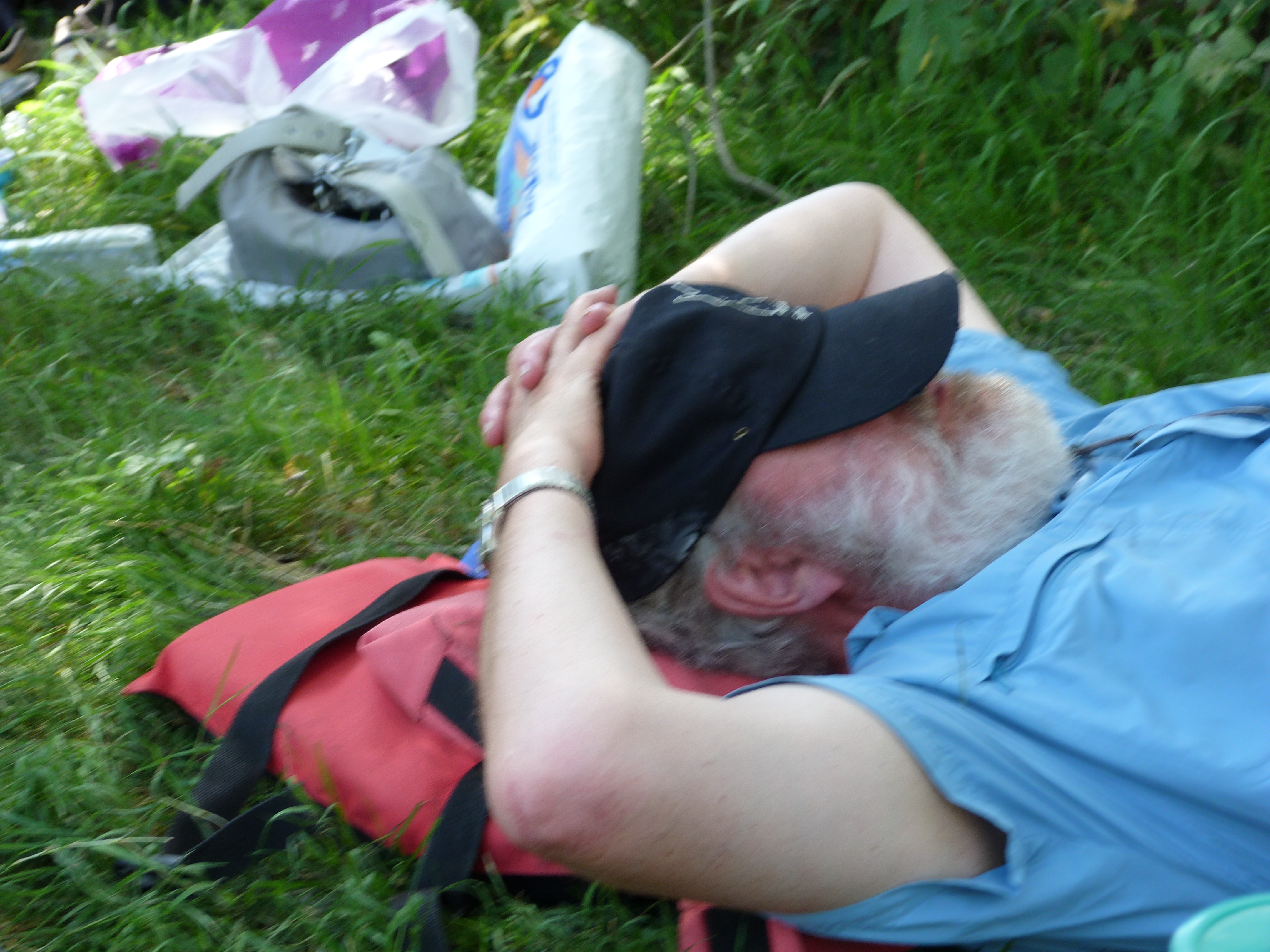
We are replete. We doze. Eventually we gather up our things and head out for the second leg of the journey. It is bright and hot and still, but it is good to be moving again. We are among the last of the group to head out, and we weave in and out of the other canoes until we eventually find ourselves in the lead, skirting the occasional rapid with humour, if not grace.
I was asked at lunch if I found the river wild. “Sauvages”. I almost cause an international incident when I reply “non”. I am told indignantly that the Loire is the last wild river in France. Bryan intervenes and explains that Canada is “très sauvages”, and everyone laughs and nods in agreement. We are asked if we have a lot of caribou where we live. We try to talk about the deer and for some reason I bring up the word moose — wherein follows a long discussion about what a moose is. If there is a French word for moose neither Peta nor Bryan know it, and we leave the French increasingly bewildered. It is hard enough for them to believe that we are from Canada and not from Quebec, but now we are talking about some kind of mythical beast. Clearly, we are lost causes.

 Stepping off the Treadmill
I can imagine the conversation about the moose. “You say it looks like what now?” Should it come up again, the word you need is “un orignal” though perhaps a wallet-sized photo would be better. . .
Orignal is moose in French. Hurrah for the voyageurs Canadiens!
I love the picture of you both in the yellow canoe. I can only imagine how awkward it must have been to try and explain what a moose was.