With Tim in Boston, I decided to take a trip to visit Annie Thomas in Bristol. We’d met Annie in France and liked her immediately. She teaches Language and Literature to high school students, helping them to get their “A” levels. Tim and I had been to Bristol in 1976, but I remember nothing about the visit save for a dim memory of pub with a parrot.
The weather was unusually hot and lovely. After lunch in Annie’s terraced backyard, we went walking along the Avon River.
Bristol is a port city that has checkered past. It rose to prominence when John Cabot (Giovanni Caboto) sailed from Bristol in 1497 and arrived at Newfoundland. Ah, a Canadian connection. A replica of his boat, the Matthew, was built to commemorate the 500thanniversary of the voyage, and it sailed to Canada in 1997.

The replica of the Matthew now sits in the harbor in Bristol, and it is amazing to think that such a small and delicate vessel could make it across the ocean.
Bristol became an important commercial port, but when I ask Annie what Bristol is known for she immediately says, “Slave Trade”. Bristol was on the triangle of slave trade that sent Africans to the New World to work the sugar, cotton and tobacco plantations. It is an infamous past that I see no acknowledgement of, although Annie says that all school children learn this history in school.
What I do see is a wealthy Georgian suburb, high in the hills, a sign of 17thcentury prosperity, built on slave trade.

In the 18th century, Bristol moved away from trade and developed as a prominent shipbuilding centre. It is still a working shipyard, although the boats repaired here are now pleasure crafts, not commercial vessels.
In recent years, the harbor has undergone a renaissance. Art galleries and museums have taken over the old warehouses, new flats give residents wonderful riverside views, and there is a profusion of small cafes and restaurants. There is an air of luxury, culture and fun.
On Sunday, the whole town seemed to be out enjoying the hot sun glistening on the water. On the water there were model speed boat races (really annoying with a terribly whiney sound), rowboats and sailboats.
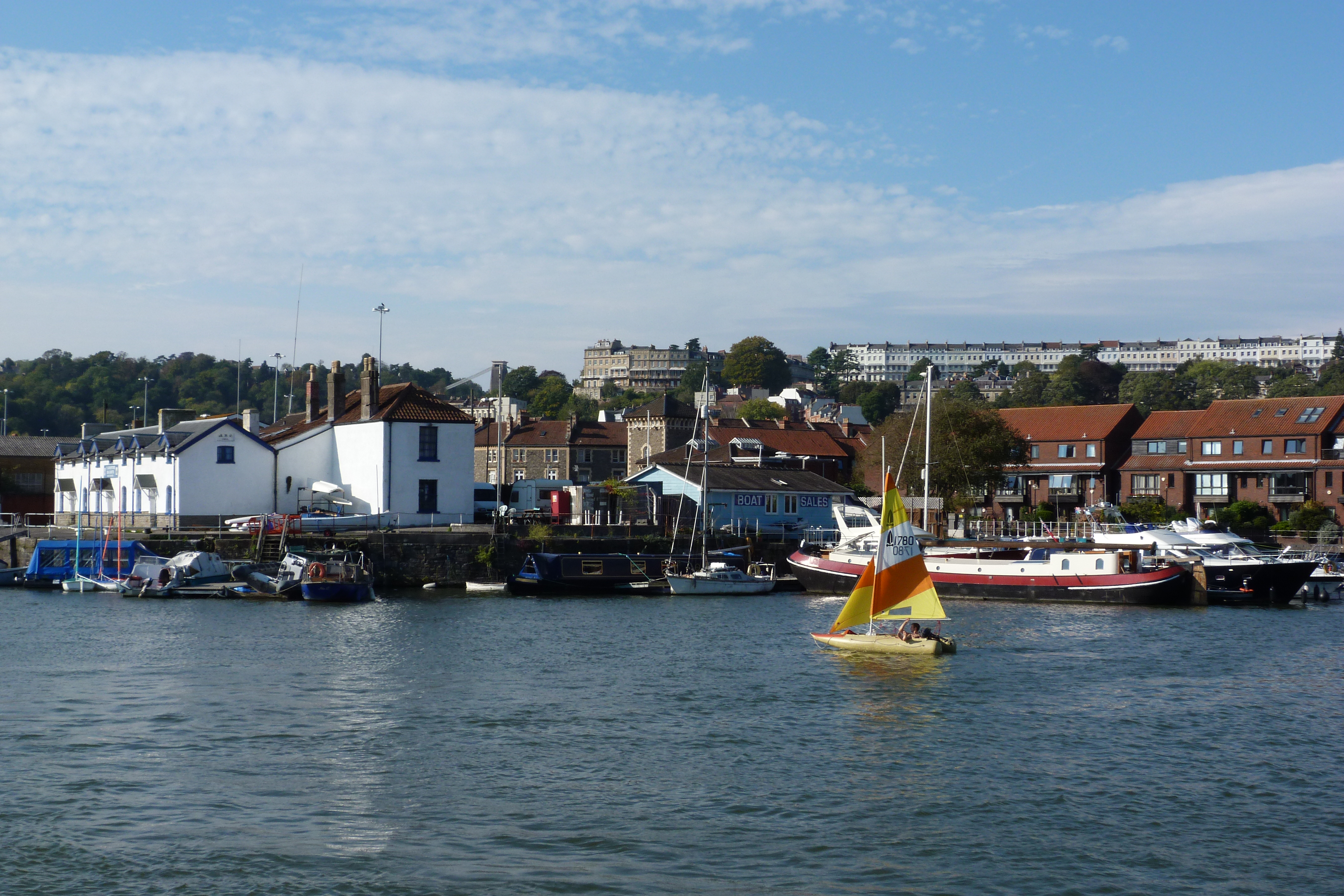
Annie and I walked and talked, stopping for coffee at The Olive Shed, an outdoor café on the river that oozed garlic from a profusion of tapas choices.
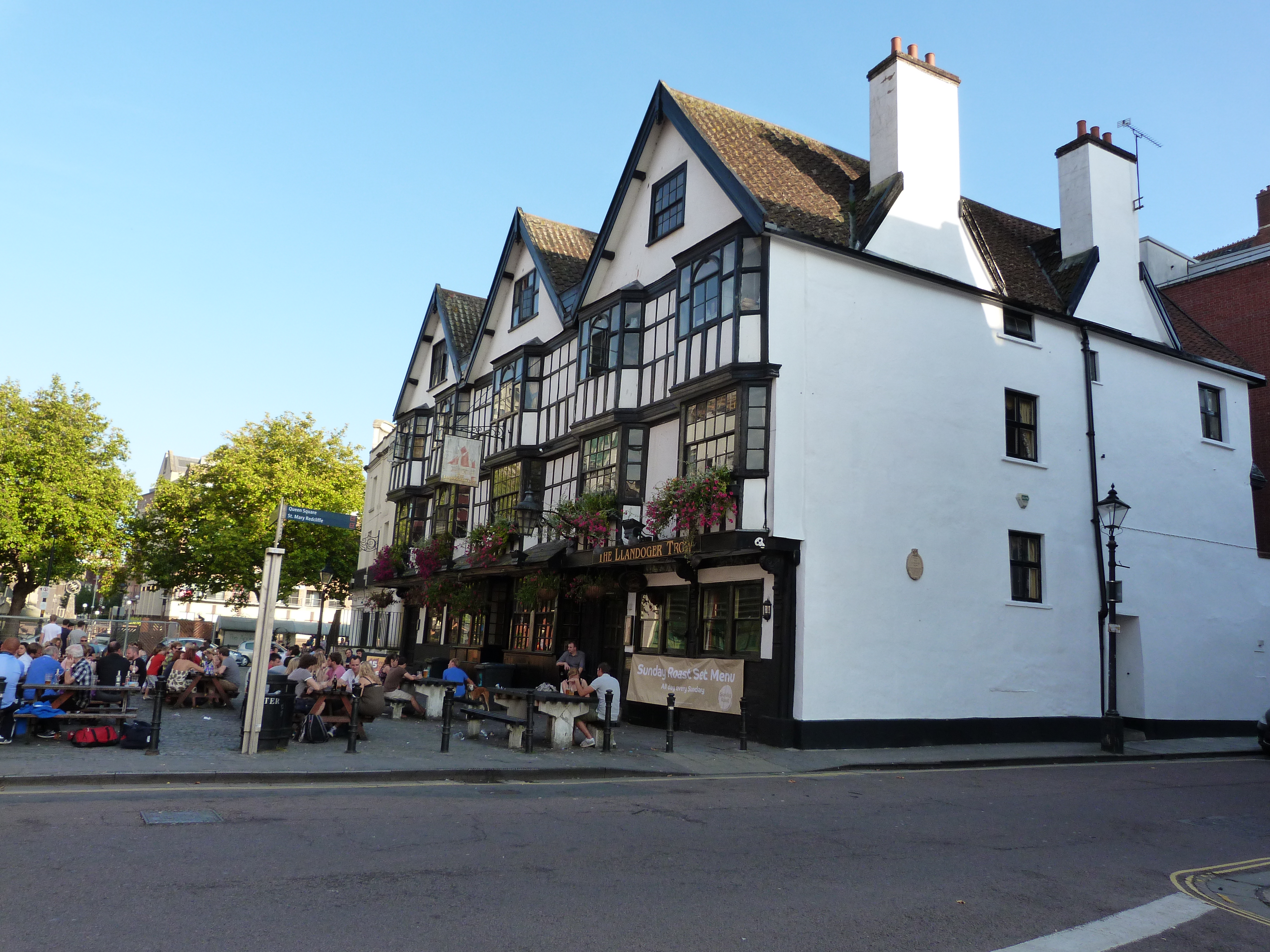
We walked the entire perimeter of the harbor, passing the Llandoger Trow, the pub where Daniel Dafoe met Alexander Selkirk, the model for Robinson Crusoe. I forget to go and check to see if they have a parrot.
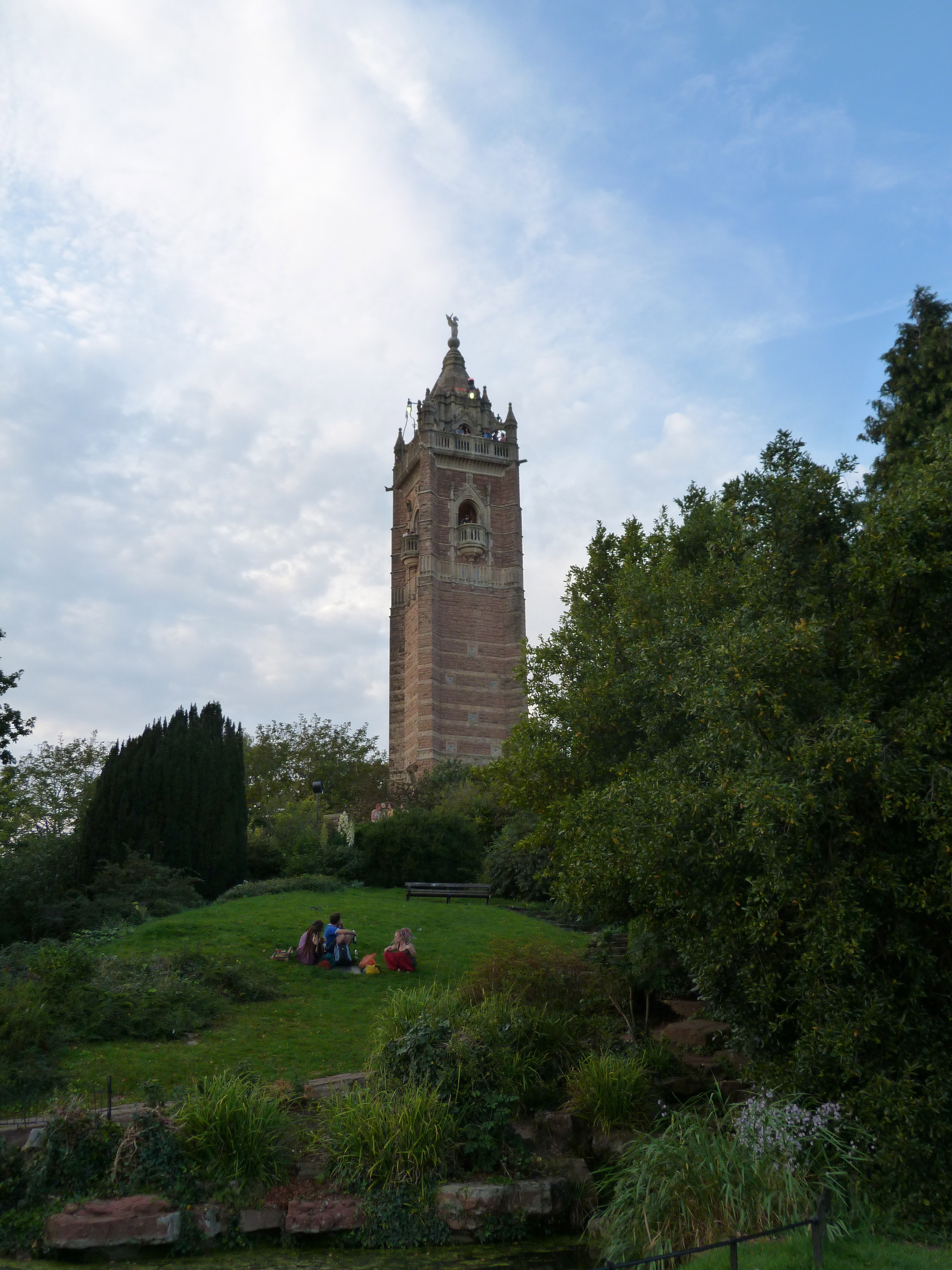
We headed up the hill toward The Downs. Bristol has 2 universities, and classes were due to start the next day. Consequently, the Downs were filled with university students picnicking, singing, drinking and gently smoking various substances. It was a peaceful, party-like atmosphere. We climbed up the Cabot Tower, which was erected in 1897 to commemorate John Cabot’s voyage. It gives an amazing view of Bristol and the lands beyond.
For dinner we went to Annie’s favourite, The Grain Barge, a ship converted into a pub. We sat on sofas on the deck of the ship and looked over the harbor, watching the evening lights come on and a crescent moon sink under the horizon. “Gert Lush”, which is Bristolian for “Really Good”.
The next day, Annie took me to Clifton Village, which is the wealthy suburb of Georgian row houses up the hill from the harbor. Because Bristol is built upon the hill coming up from the river, our walking took us on tiny streets zigzagging through the town. At the top of the town is the Clifton Suspension Bridge. Designed by Isambard Kingdom Brunel, the 76 meter high bridge spans the Avon Gorge from Clifton to Leigh Woods in northern Somerset.

The bridge was completed in 1864, and the workers that we spoke to were doing some re-pointing that hadn’t been done in 50 years. One lane of traffic can go over the bridge at a time, and apparently 12,000 cars can cross every day. We walked over, fighting vertigo, amazed at the engineering marvel.
Bristol felt vibrant, beautiful and friendly. A city of 400,000, Annie boasted that she is able to walk to concerts, to the theatre, to her Italian, German and French classes, and to her work. And of course, she is able to walk down to the harbor, to enjoy dinner at the Grain Barge. A very livable city.

 Stepping off the Treadmill