On a recent Saturday walk we decided that we had sufficiently built up our thigh muscles to face a tougher walk. The Hope Cove to Salcombe walk is on the south west side of the peninsula and we were told it had some rugged paths, with some degree of difficulty. The gauntlet was thrown.
There are very few busses in or out of Salcombe, so we had to coordinate our time carefully, taking a bus to the tiny nearby town of Malborough and then transferring to a bus to take us to Hope Cove.
At the heart of Malborough is the parish church, founded around 1200 AD. With its 13thcentury stone vaulted roof and a perfectly preserved pointed spire sitting atop a hill, it can been seen throughout the countryside. We waited outside the post office beside the church for our bus.

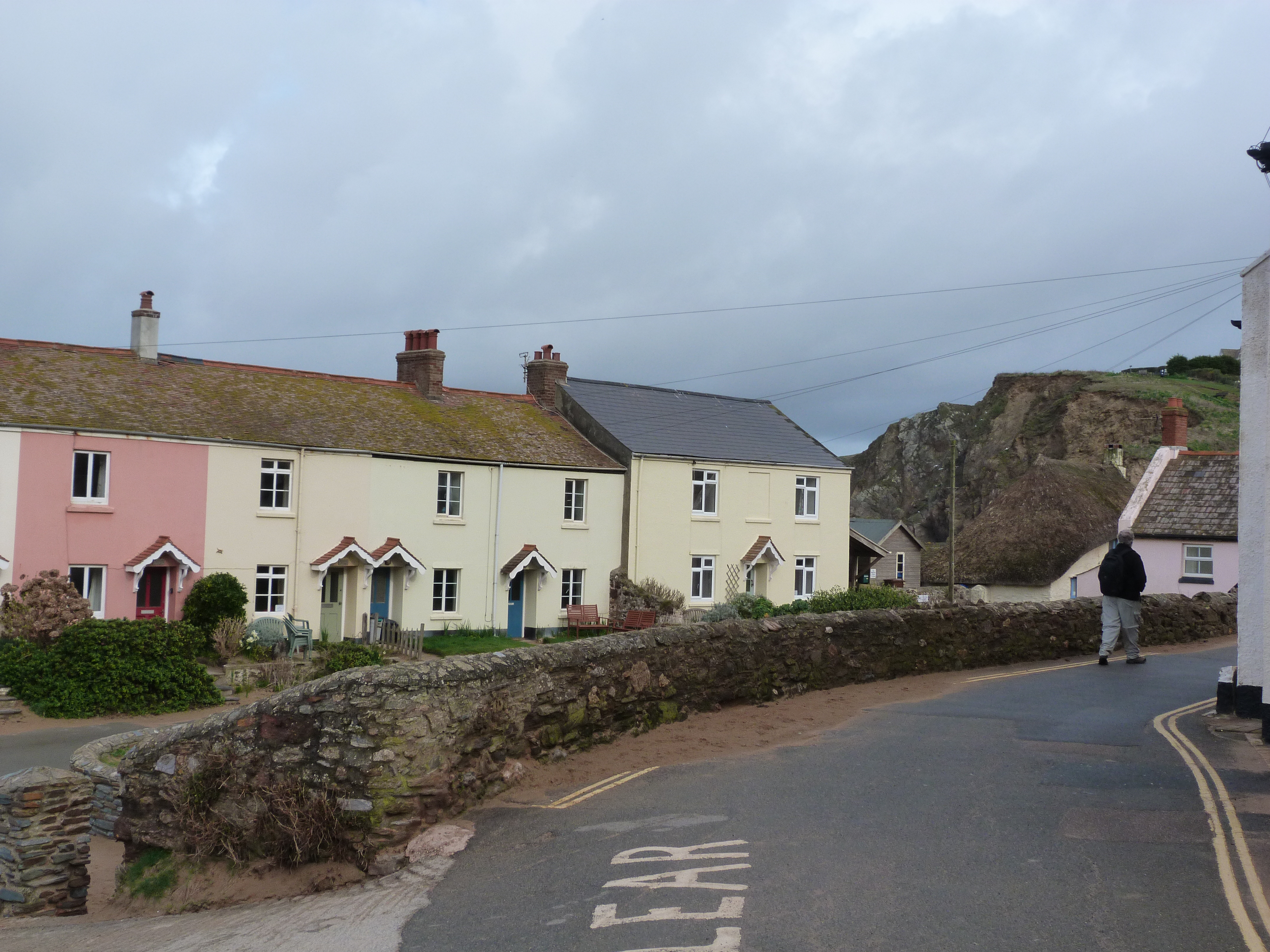
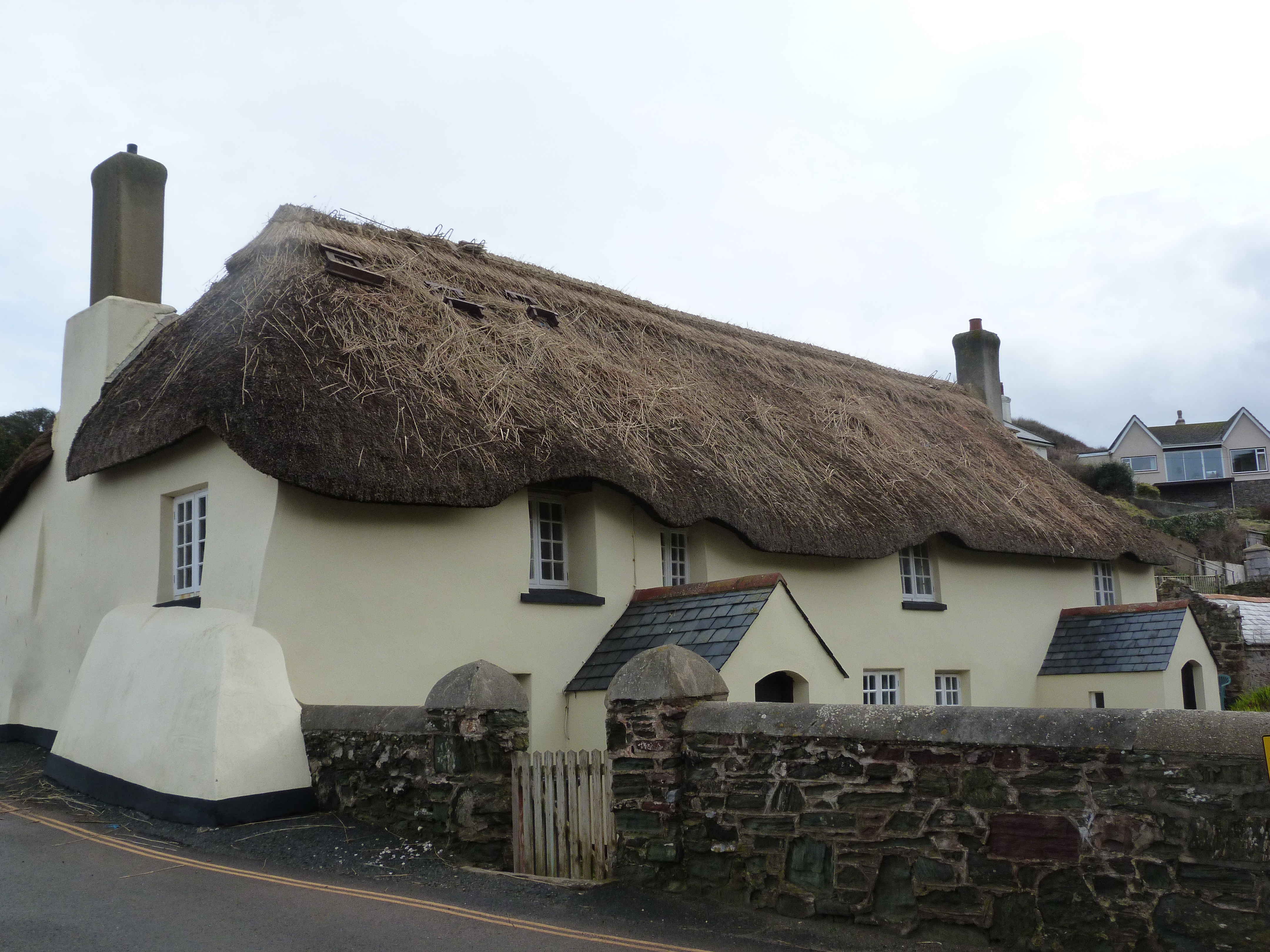
Hope Cove sits nestled between Inner Hope and Outer Hope. (I am not making these names up. We had quite a debate as to where one would rather live – in Inner Hope or in Outer Hope.) Hope Cove was a favourite among smuggles, and the tiny cob cottages with thatched roofs made us feel we were in the midst of a novel.
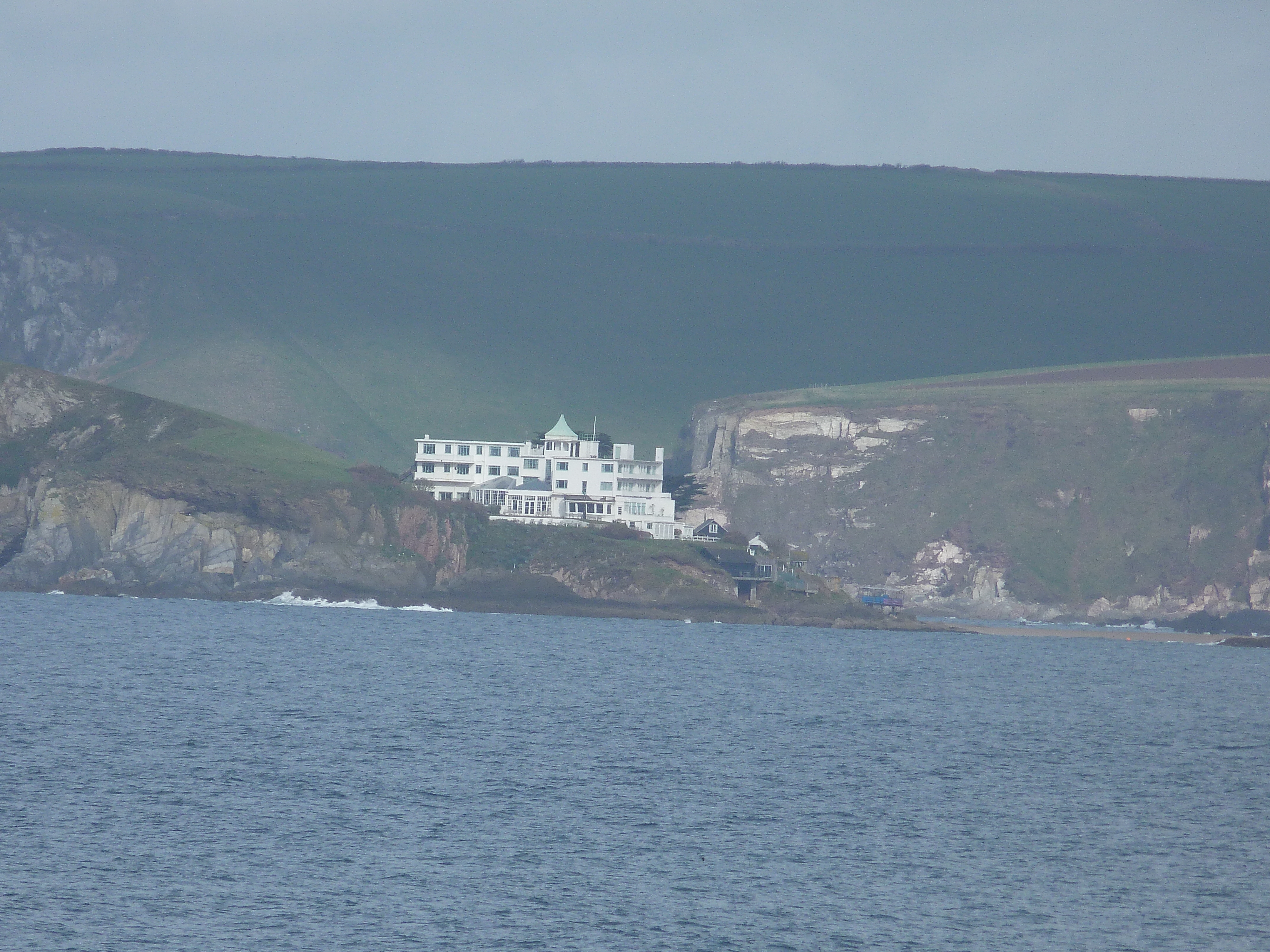
Just off the cove is Burgh Island where there is a complete Art Deco hotel. The site is associated with Agatha Christie’s book “And Then There Were None” as well as the Hercule Poirot mystery “Evil Under the Sun” and many celebrities have stayed in the hotel over the years. We could only view it through a telephoto lens, unfortunately.
We made our way out of Inner Hope and headed up toward the cliff, only to discover a group of 25 hikers, most a bit older than us, on the path. We raced ahead, knowing that it would be best to be in front, rather than behind the pack. They were stopping from time to time for guided information, but they were keeping a fair clip. The nation of walkers was showing us some of their best.
We burned our thighs up toward Wolf Rock and Bolt Tail, high above the water, crossing an Iron Age Fort embankment.

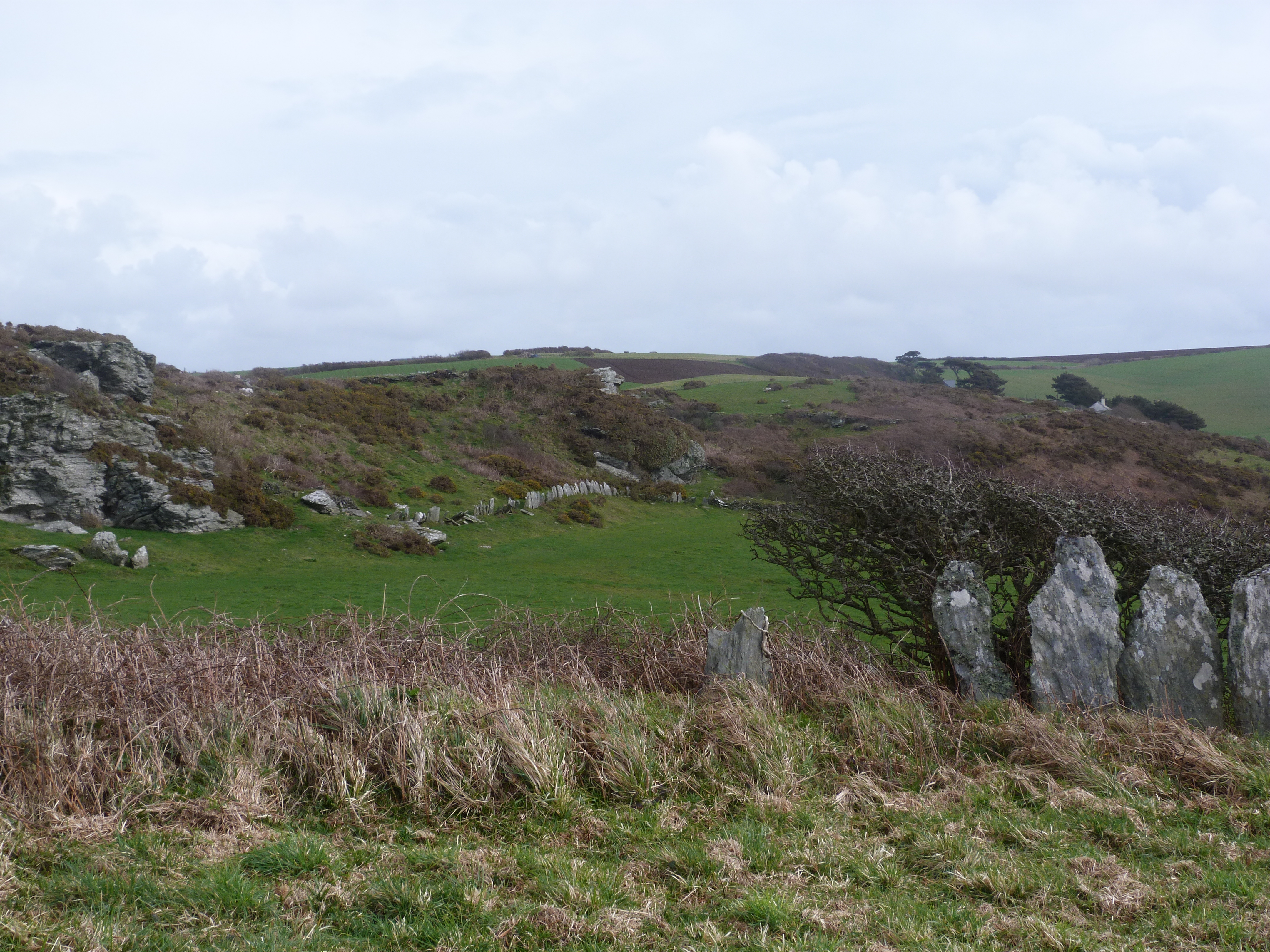
We passed by lines of pre-historic standing stones, stretching out into the distance.
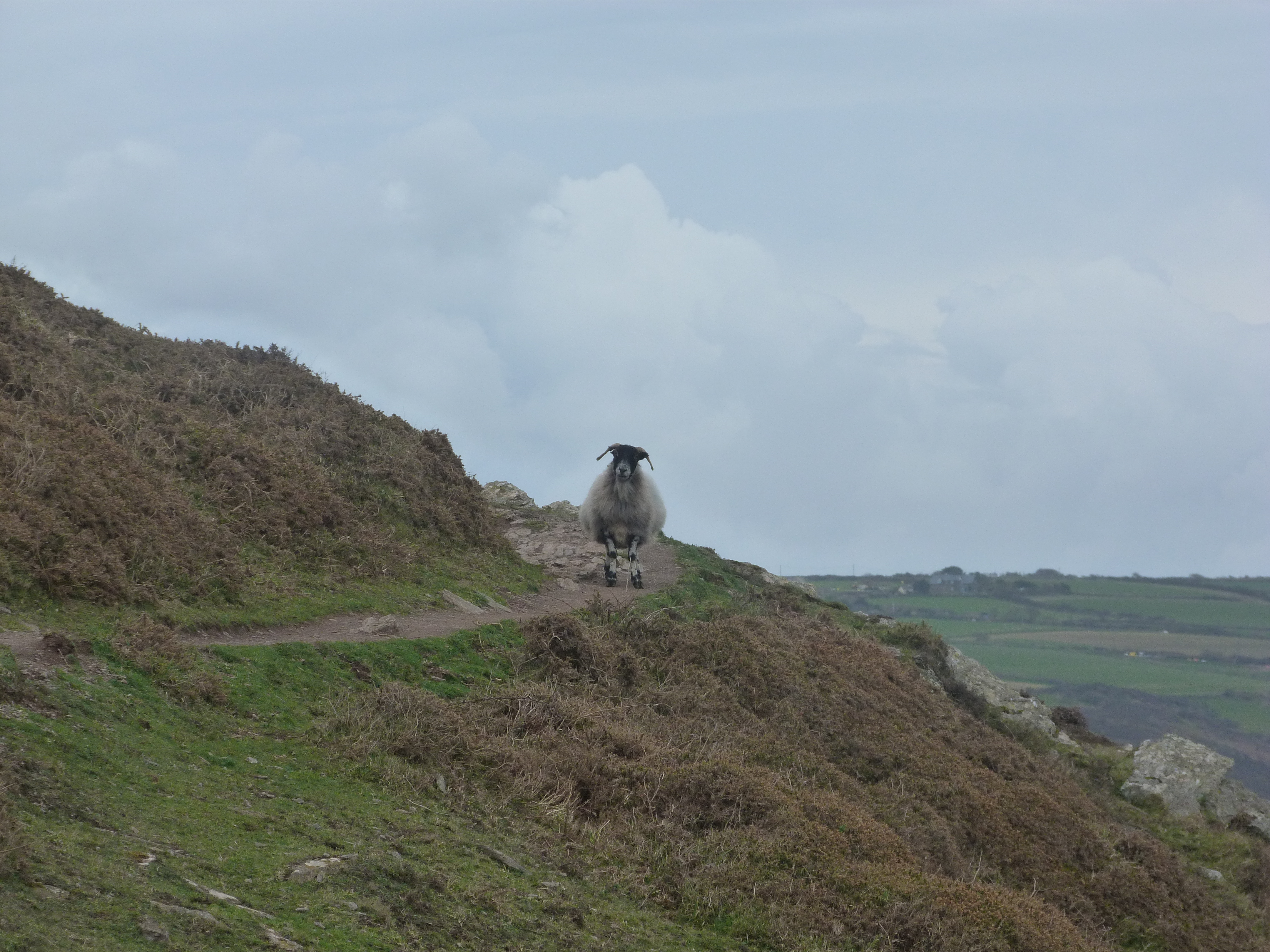
The path took us through Bolberry Down, a beautiful grazed area filled with sheep and new spring lambs. In 1760 a Spanish ship went down off the coast of Bolberry Down, killing 700 men. Another wreck. More lost hopes.
We made a pit stop at the one habitation on our route, Port Light, which is a small collection of buildings formerly a part of RAF Hope Cove. Asking about the road ahead, we were told that it was rough in places, that we had a section coming up with a lot of highs and lows but that after that things got flat. “Should take you about 3 hours,” the proprietor of the Port Light restaurant told us, eying our greying hair. “I do it in about 2 ½”.
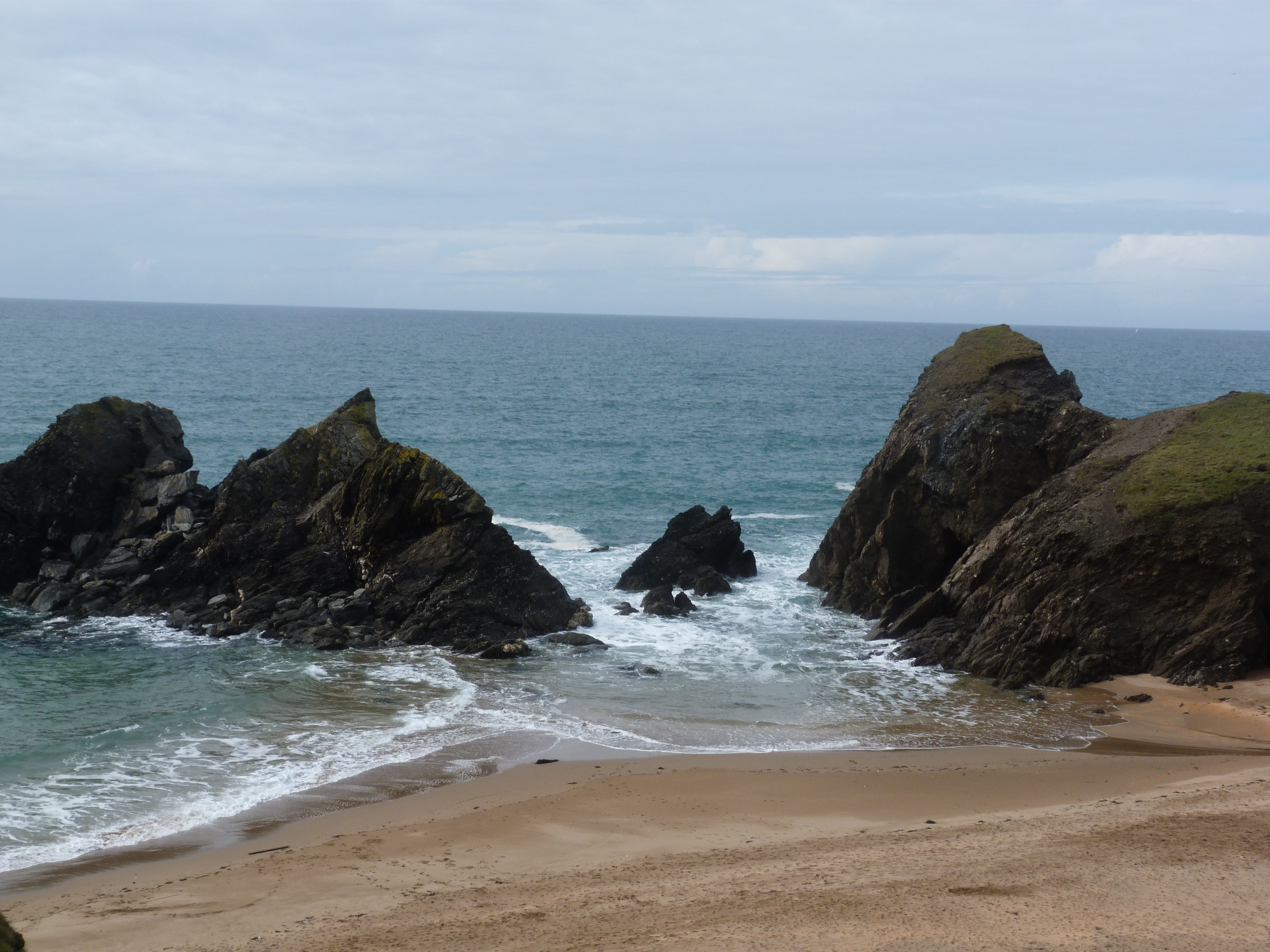
After a few bites of apple and lovely Devon cheese, we set out with will and determination. From the high cliffs, the path led us down to the tiny beach at Soar Mill. Isolated and perfectly proportioned, it is a place to come back and spend a day lazing.
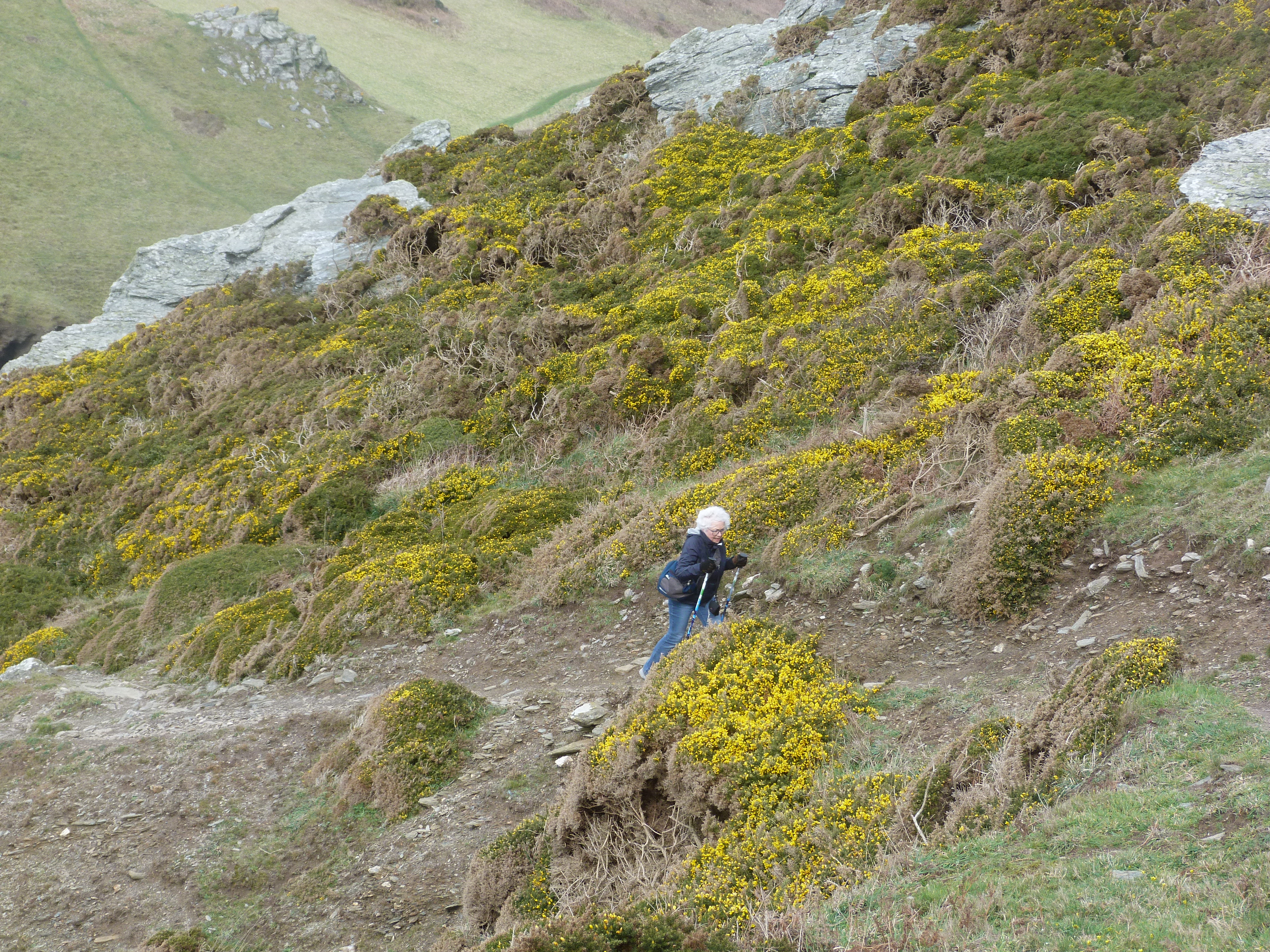
The path led us up again. The way was very steep and Jan was glad of her walking poles.
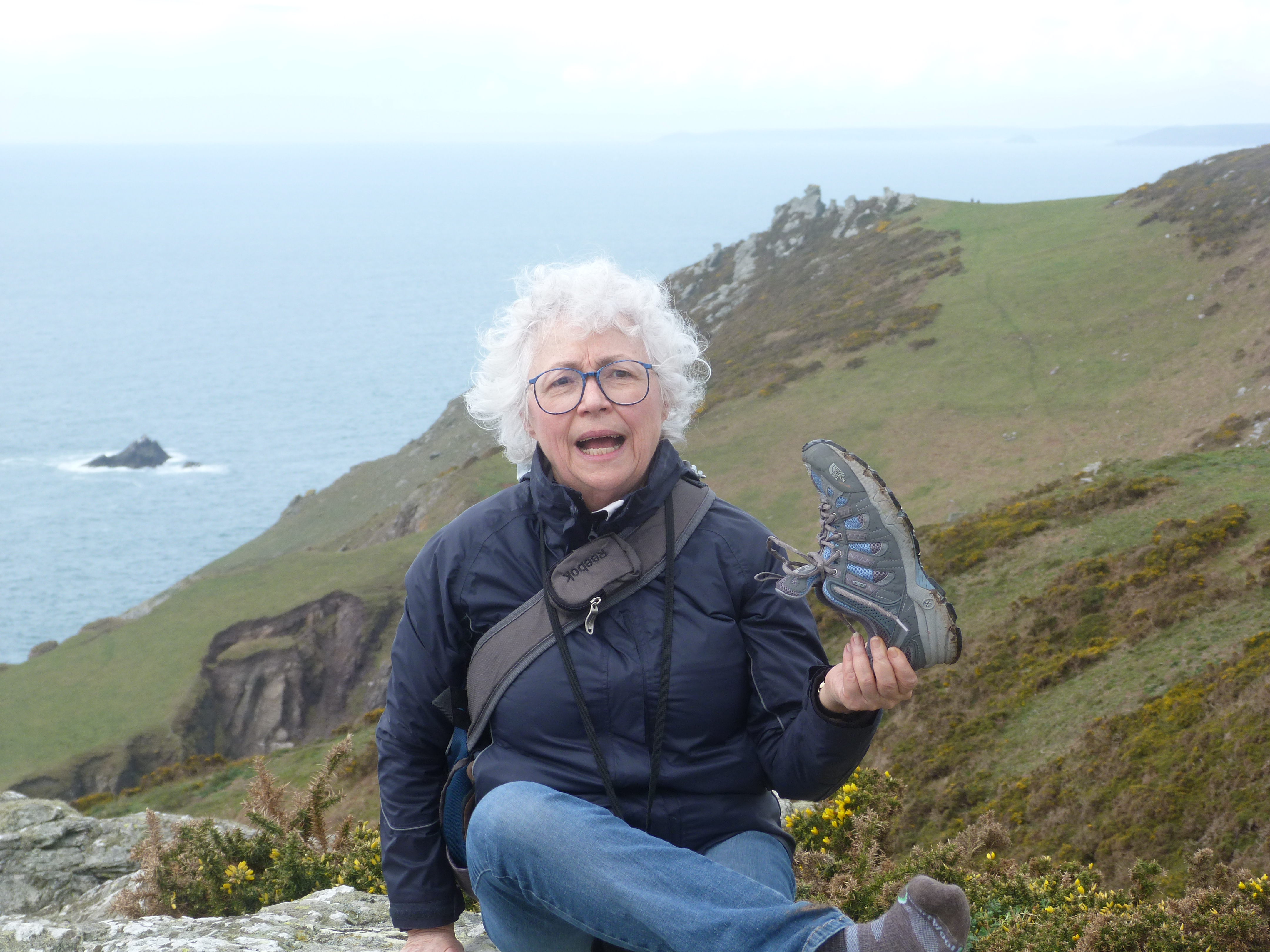
The high path took us through a field of lovely, friendly Shetland ponies with whom we shared the last bit of our apple. (I think they may have been “Sharptor Shetlands”)

We huffed and puffed our way up to Bolt Head, the most southerly point of Devon. I clamboured out as far as I could go, well beyond Jan and Tim’s comfort level. I managed to take a picture of myself, on the edge.
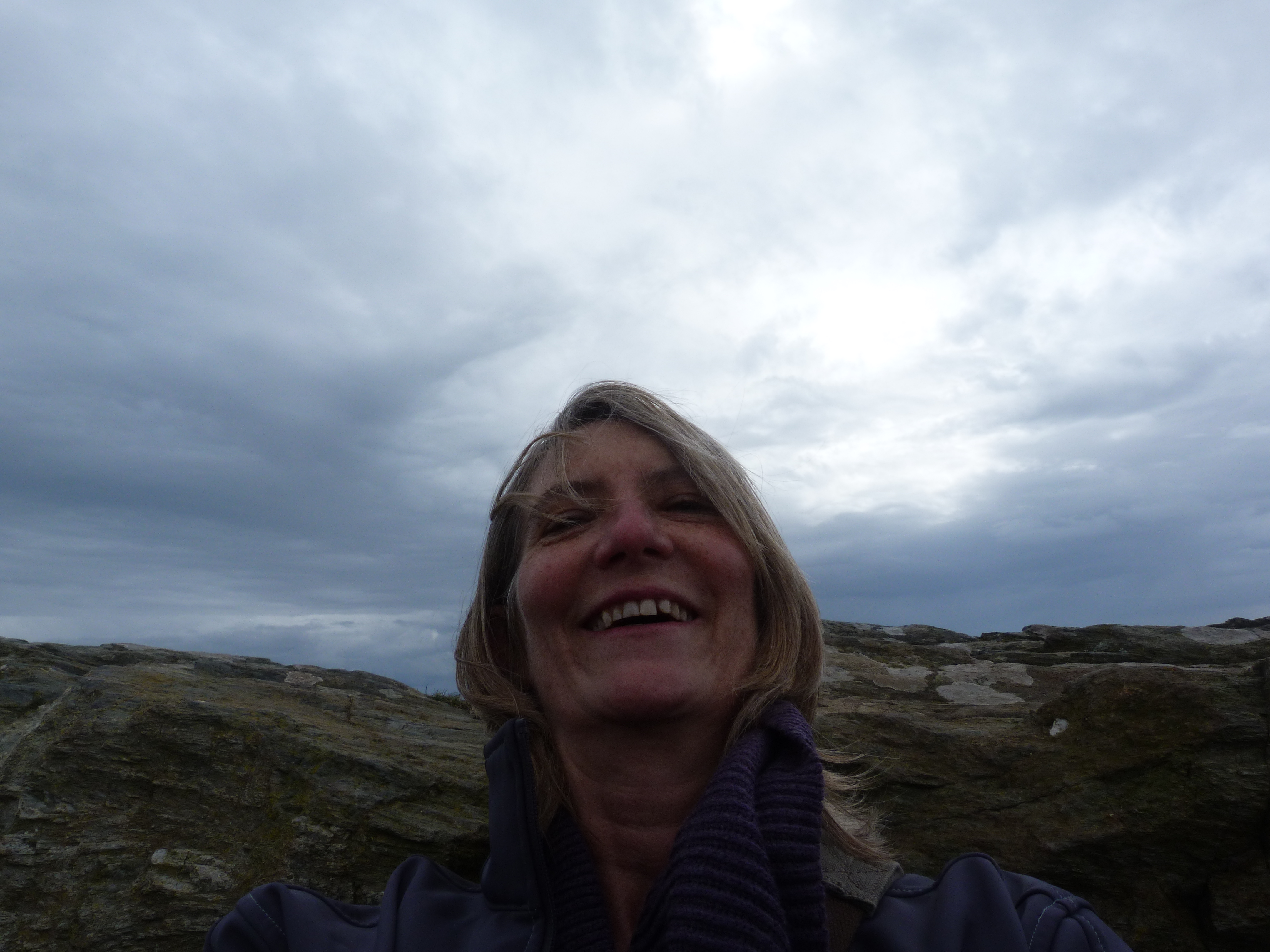
The rocks were right behind my head. There was nothing between me and the ocean far below. I turned around to realize that I was alone and mildly terrified of going back down. I slide down gingerly on my backside.
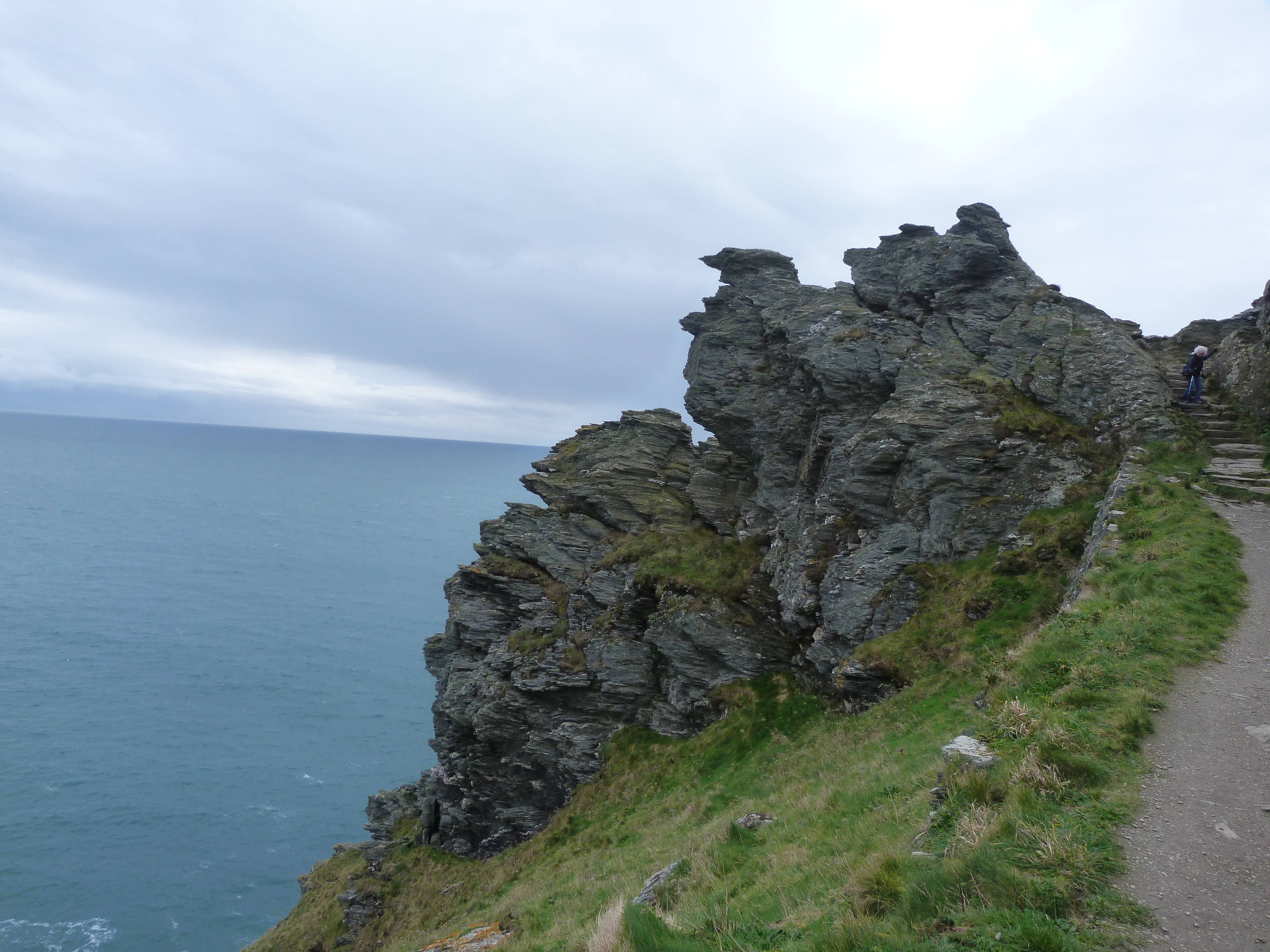
We rounded the corner, dodging sheep, to look down on the green blue waters of Starehole Bay and the dramatic rocks of Sharp Tor. These are “metamorphic rocks”, rocks that have changed their nature through pressure or heat. They are incredibly dramatic formations that look like they have been squeezed out of the earth and are ready to fall on unsuspecting hikers below.
We continued on toward Salcombe, past the small luxury hotels in South Sands, the enthusiastic dog beach at North Sands, past the million pound homes and cottages along the coast.
It had been a good 9 mile walk, and yes, took us about 3 hours to complete from Port Light. We ended the adventure with a bowl of crab bisque and a pint, in front of the fire at our favourite Salcombe pub, The Victoria Inn. The perfect place to massage weary feet.

 Stepping off the Treadmill
One thought on “Devon Coastal Paths, Part Two”