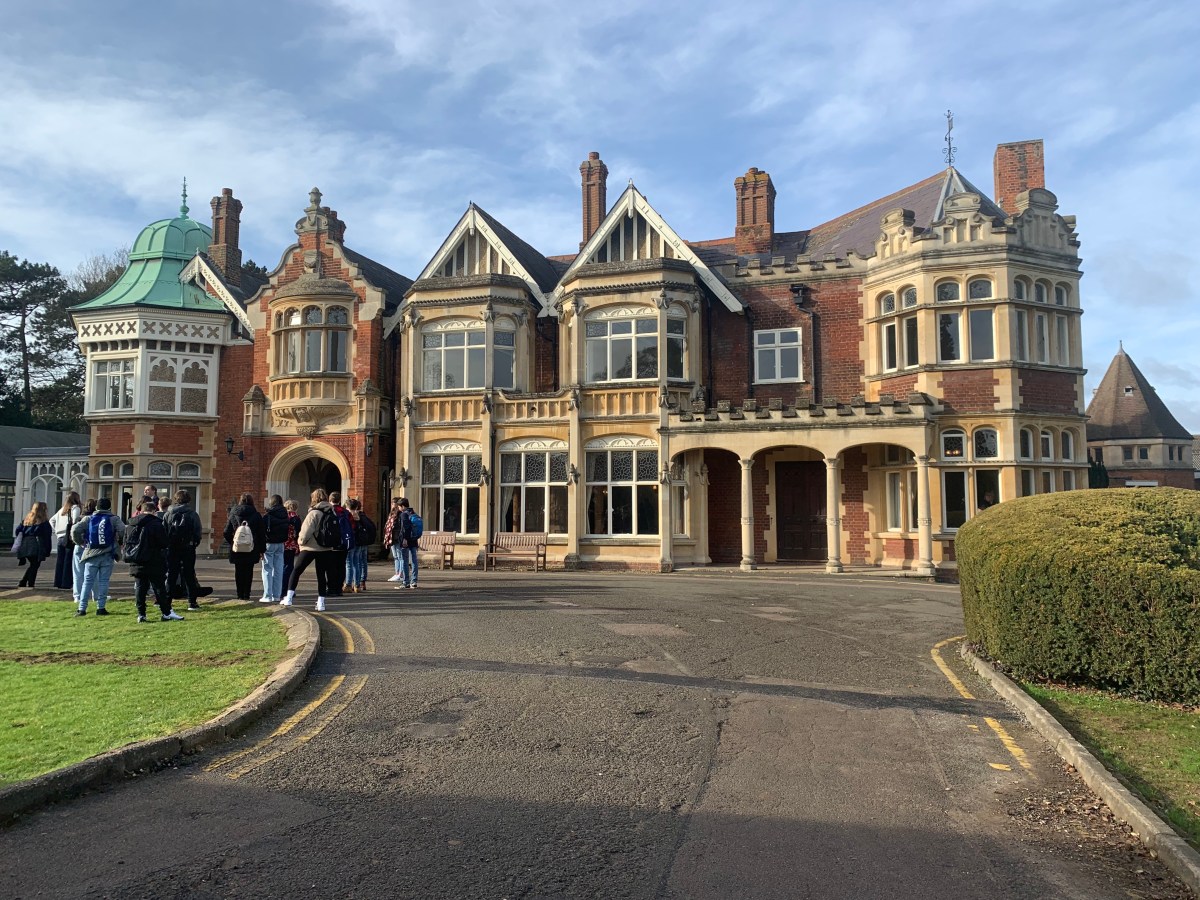
Bletchley Park. It is the stuff of legends. The codebreaking headquarters that changed the course of the Second World War. A place so secret that husbands and wives didn’t know of each other’s involvement. A place of mystery and of tremendous excitement. A place where imagination and scientific minds met to solve life and death problems.
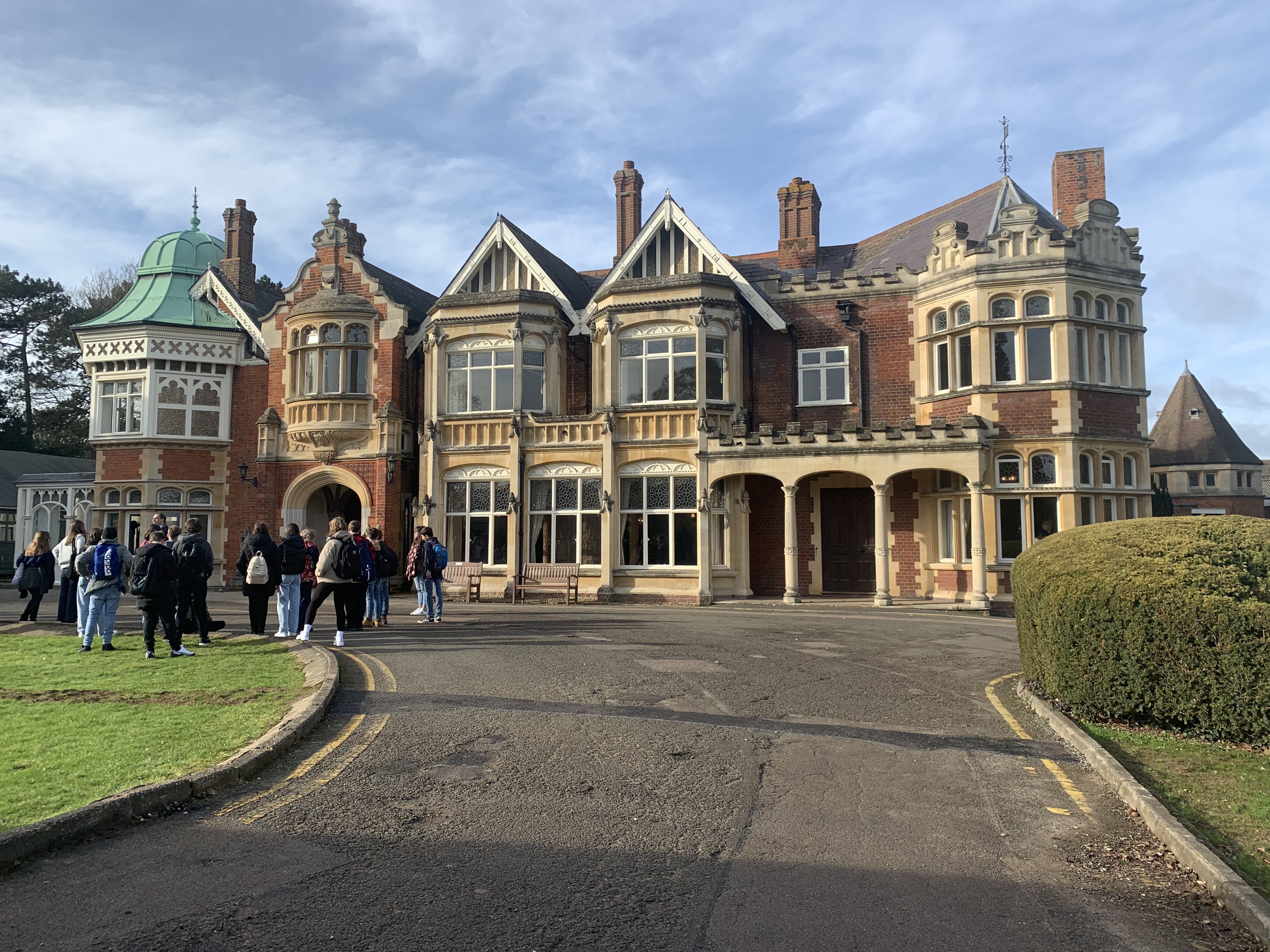
The British Government bought the Bletchley Park estate in Buckinghamshire in 1939 to house the Government Code and Cypher School (Actually, Admiral Hugh Sinclair, head of the Secret Intelligence Service, seems to have bought it privately to get the whole thing running –– or perhaps because he saw a good real estate deal. But that’s another story…) Initially, a small group of people, chosen for their skills with languages and numbers, were hired to work there. They were told to sign the Official Secrets Act before they were given any information. They had no idea what they were hired to do.
There were 185 people working at Bletchley in 1939. By 1945, there were almost 9,000. Three quarters of those people were women. Yet the existence of Bletchley remained a secret until 1974. Even to this day, people who worked there won’t tell you what they did.
Now, it’s a heritage national museum. Exhibits lead you through the daily processes from message reception to codebreaking and translation. Messages weren’t intercepted here – it was far too dangerous to have a radio station at Bletchley. But a team of thousands of couriers arrived day and night at the gates, bringing morse code radio messages that had been intercepted by operators throughout the country. In fact, our tour guide’s father had been one of those bicycle couriers, delivering coded messages to Bletchley.

After the Bletchley codebreakers and translators received the message and decoded it, they needed to re-package it to make it seem as though it came from British spies. This way, the Germans wouldn’t find out about Bletchley. In fact, few people in the British government knew. It was this level of secrecy that made it a success. Something almost impossible to imagine in the age of Twitter.
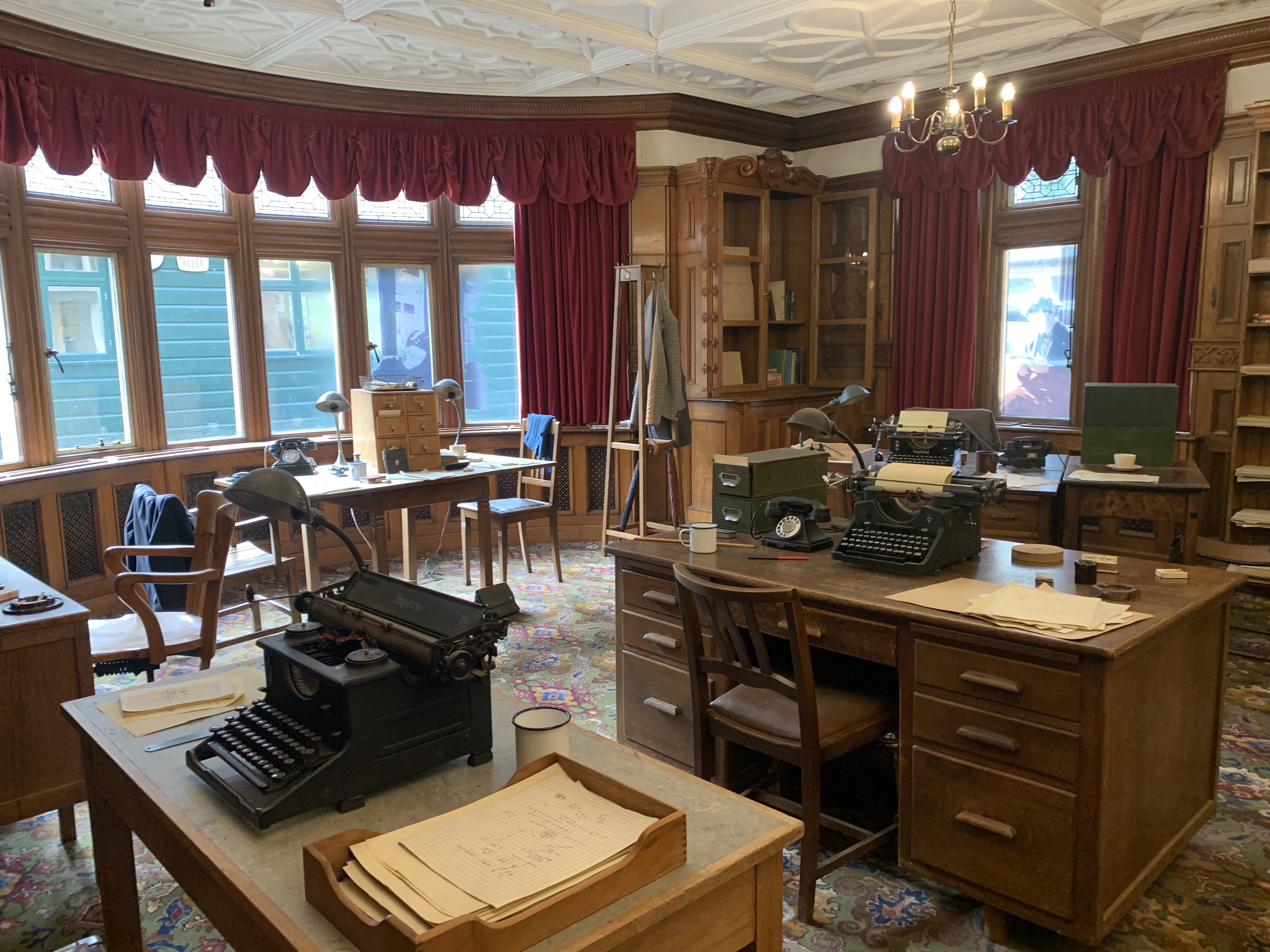
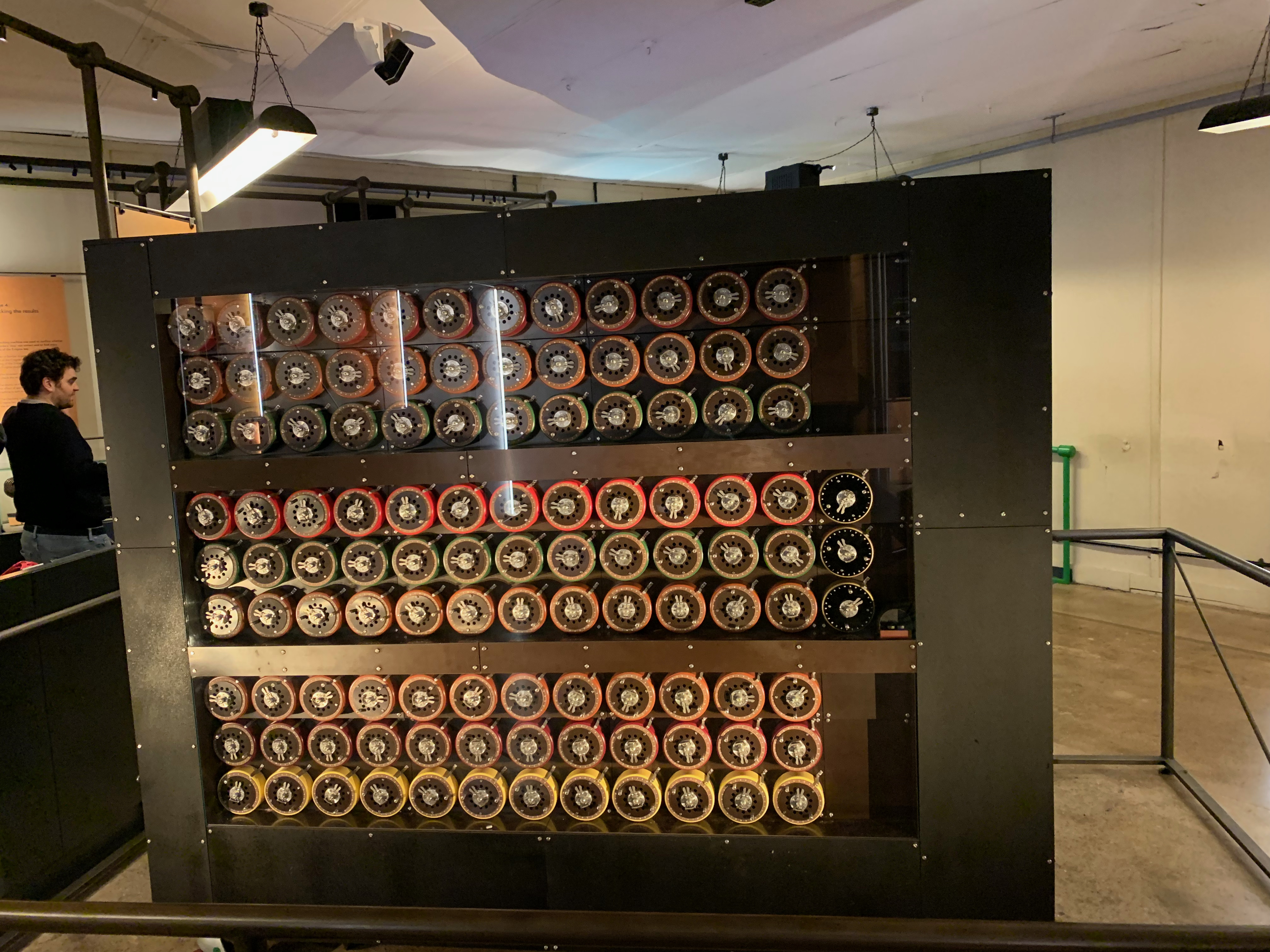
We were shown how the German Enigma machines worked to encode their messages, and how the people at Bletchley went about decoding them. By May 1945, they’d broken 21,971 Enigma messages! That was only possible because Alan Turing and Gordon Welchman designed the Bombe machine to speed things up. It ticks and whirs in Hut 11A. The Colossus, the world’s first large-scale electronic digital computer, was also invented and built at Bletchley.
Tim and I have done our fair share of research into WW2, but our visit to Bletchley brought our reading into reality. It’s hard not to be moved and impressed by the scale and vision of this operation. It is a place filled with personal stories and with triumphs of dedication. People knew that they were saving lives, and they threw themselves into it, working night and day for five long years. It’s a story of human ingenuity that led us to a feeling of awe.
“The work here at Bletchley Park … was utterly fundamental to the survival of Britain. I’m not actually sure that I can think of very many other places where I could say something as unequivocal as that. This is sacred ground.”
Richard Holmes, Military Historian

 Stepping off the Treadmill
WOW!!!!
Thanks for this post. I’ve read novels about codebreakers at Bletchley so it’s especially fun to read your post about all the factual details!
So glad you enjoyed it! If you ever get the chance to go, it’s really worth the visit. Very inspiring.