We fled January in Canada and landed in Madrid.
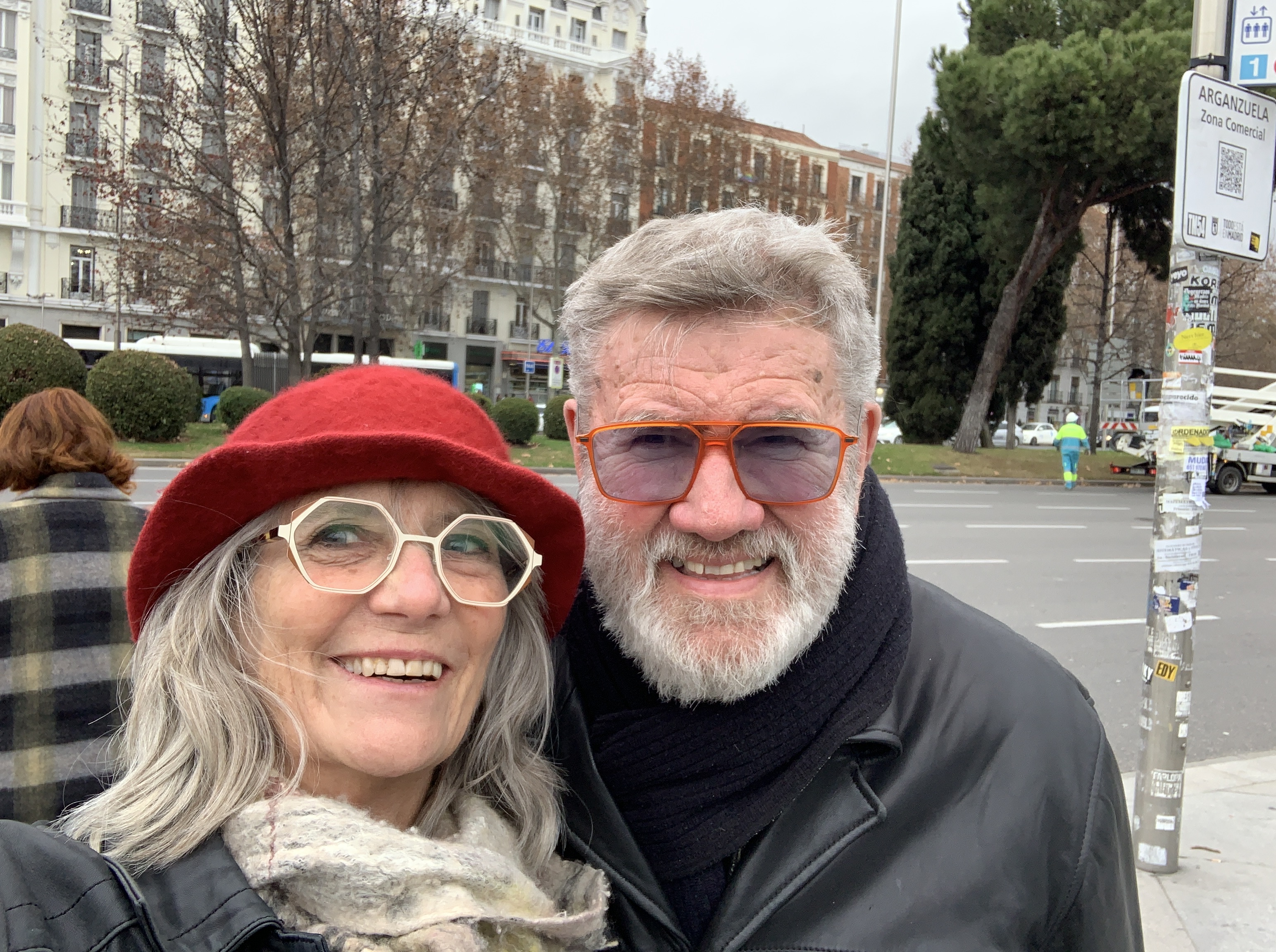
Our sole focus for going to Madrid was to go to El Prado, La Reina Sofia, and, if we could manage it, the Thyssen-Bornemisza –– iconic art galleries that have captured our imaginations for years but where we had never been. A first stage of the “input” journey. Open your eyes and see.
We had booked ourselves into the Hotel Mediodia. It is easy walking distance from there to all three galleries. We arrived before we could check in so, after the all-night flight, we blearily dropped our bags, had a breakfast of Spanish tortilla and patas bravas, and headed out to investigate. There’s that glorious feeling when you’ve been on a plane all night and you arrive in a different climate and time zone. When you stretch out your legs and everything is new. Everything stands in sharp relief, waiting to be noticed. Birds, streetlights, sculptures, building cornices, edges of park paths –– everything is there, waiting for you to see it.
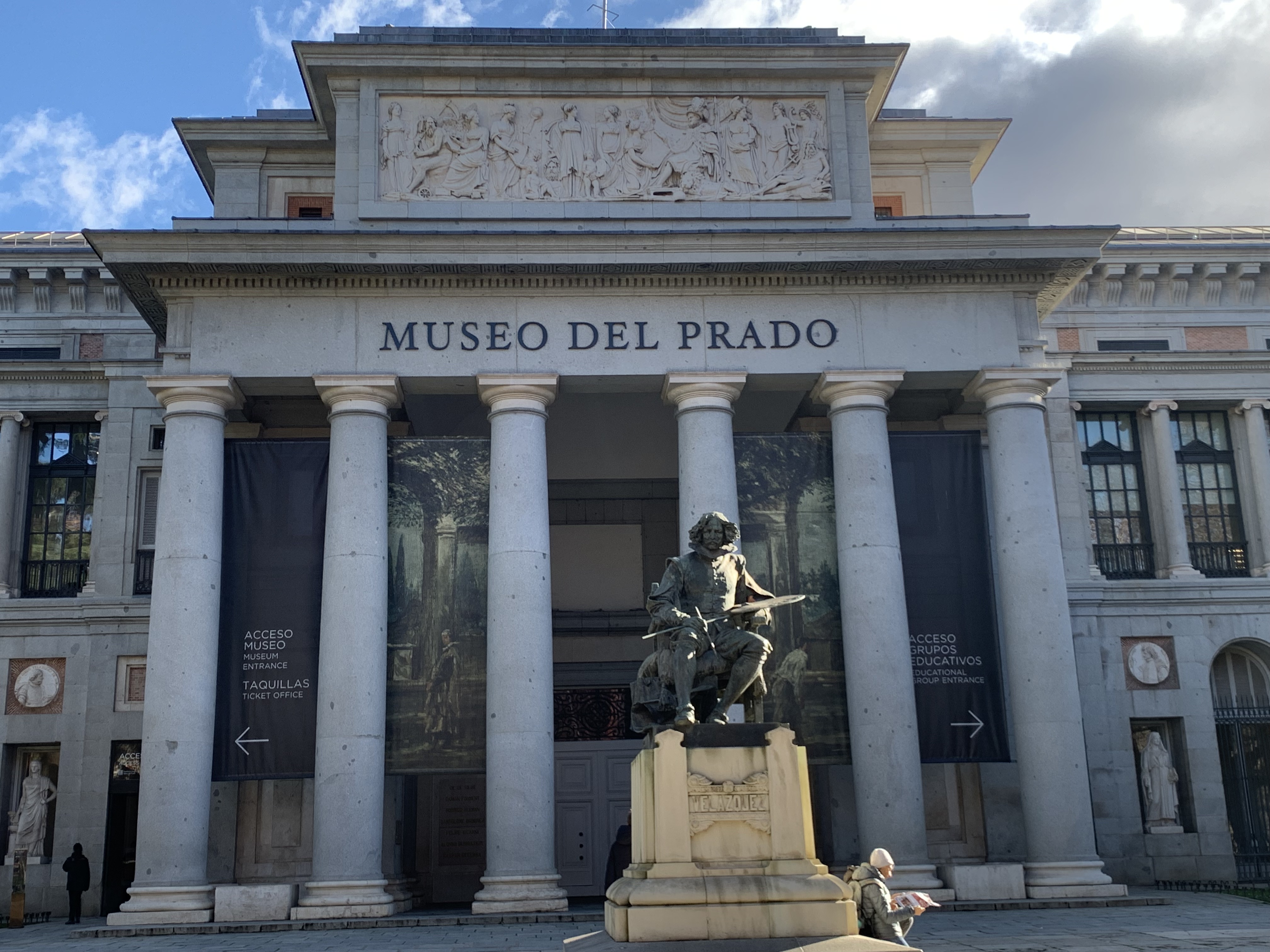
We wound our way to El Prado. Our thought was to just get the lay of the land and figure out where everything was. But when we got there, we were caught up in the idea of it all. We realized it was going to be too much to see in any given day, so we might as well start then, right away, and dive in. We decided to take a group tour to get a sense of the place. It was perfect. We were dazed but delighted by the information and surprises. Tim, who has a BFA and MFA in Visual Arts, said he learned things on the 90-minute tour that he never learned in seven years of art school.
The Prado. What can one say? I geared myself to Spanish history and Spanish painters. I felt as though I was trying to suck it in all into my body, to bring the reality of this “old” world into my understanding. I began to fully appreciate the importance of the Spanish court and the fact that they sent Columbus out onto the sea with three ships and changed the course of human history.
We spent most of that first day the Prado, interrupted only by the need, eventually, to sleep and then to eat again. We found a welcoming Taberna, where the wine was cheap and the food excellent.
Well rested and with only slight cases of jet lag, we immersed ourselves in the Prado again the next day. Already, it felt like an old friend. We shared new-found favourites with each other (we travel separately in galleries) and went more deeply into Velasquez and Goya in particular. The breadth of Goya’s work, his journey from traditional to madness, was a window into intense creativity. Beauty, pain, passion. Inquiry, pride, politics.
Foot weary, we left, knowing that there will always be more. But needing to rest before navigating La Reina Sofia.
La Reina Sofia was almost too much to take. Seeing Guernica surrounded by rooms of war posters and art, gave it even more context. Especially now, as wars rage and refugees flee, Guernica and the “Prop-art” are even more vibrant, and all too familiar.
But what struck me most was an exhibition called “In the Troubled air,” a line from Federico García Lorca’s poem Romancero gitano: “En la aire conmovido…” The curator has assembled many different pieces, different media, to explore the idea of the effect of the the movement of “air”, both in terms of atmospheric movement, emotion, and politics. From the website:
“ ‘In the troubled air’ sets forth a political anthropology of emotion in a poetic tone, sketching channels of respiration and resistance to confront the persuasive culture of capitalism which has filtered into everything…
For me, this became a theme for my whole time in Spain. A place where emotion and politics coalesce. The percussive elements of sound and movements of all kinds. It paved the way to opening up my eyes, ears, heart, and mind to Flamenco, and seeing it as a political statement. But that was still several days away…
Our last day in Madrid was sunny and cool. We walked up to the Puerta del Sol, the heart of the city. All roads lead there. All protests form there. But the square itself was a disappointment of higher end chain stores where rectangular architecture meets capitalism. We were glad to find the Museo Thyssen-Bornemisza close by, surprised to find it the perfect compliment to the day. A beautifully designed building filled with art from the 16th century to contemporary. Art to fall in love with. Art that leads you back to life. With all of the horror in the world (and we are currently going through our fair share), the art at the Thyssen-Bornemisza leads you back to humans and their wisdom and passion. How unique and extraordinary it is that humans struggle to understand life, and that we work to express something about being human in order to help us to see who we are.
Our last wonderful event in Madrid was a walk to the Mercado San Miguel, where we feasted on art for the other senses.
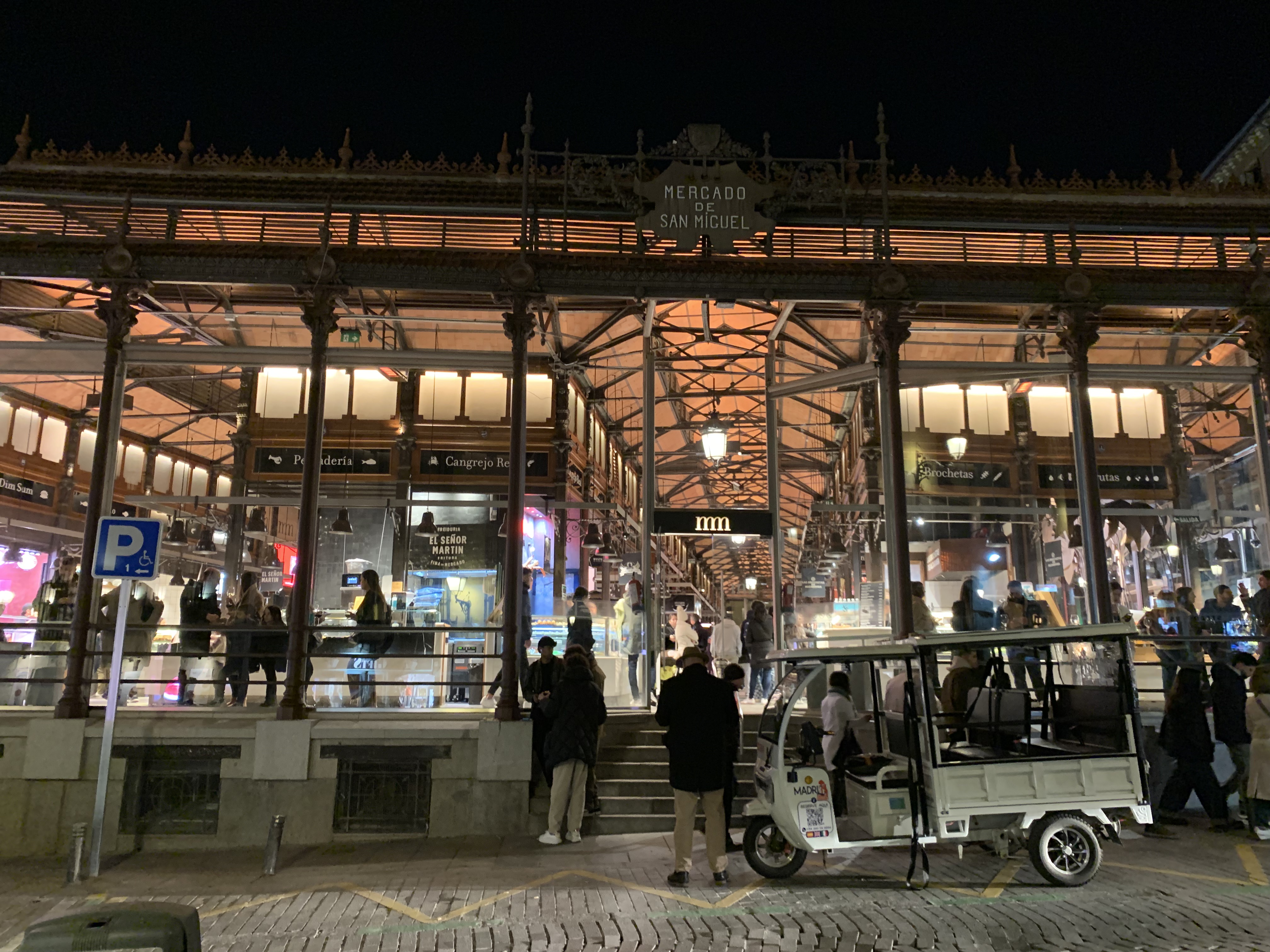
The Mercado San Miguel is a covered market filled with tapas stalls of all kinds. We got glasses of chilled white wine and walked around tasting and sampling. I discovered the joys of a “Gilda,” a Basque tapas on a skewer with cheese (in this case a soft lovely cheese that absorbed all flavours), anchovy, pickled Iberian peppers and olives. Spanish olives really are like none other. I stood happily indulging in as many different kinds of olives as I could manage.
We ended the night at a table out on the street, eating Paella under the stars, watching people living their lives.
Feasts for all of the senses.

 Stepping off the Treadmill
oh Wow!!! how splendid!! What a marvellous artist you are, my honey…
>
So incredibly grateful you take the time to share your journey.