Sevilla is where we fell in love with Flamenco. But first, the city prepared us with its style, fun, and grandeur.
We stayed in the old city, getting appropriately lost in the narrow, twisty streets with inviting Tabernas on every corner. Although it is obviously a tourist city, we felt very welcomed. It’s remarkably friendly, with delights and surprises around every turn.
Nothing was quite as surprising as turning a corner and seeing the Las Setas (the mushrooms).
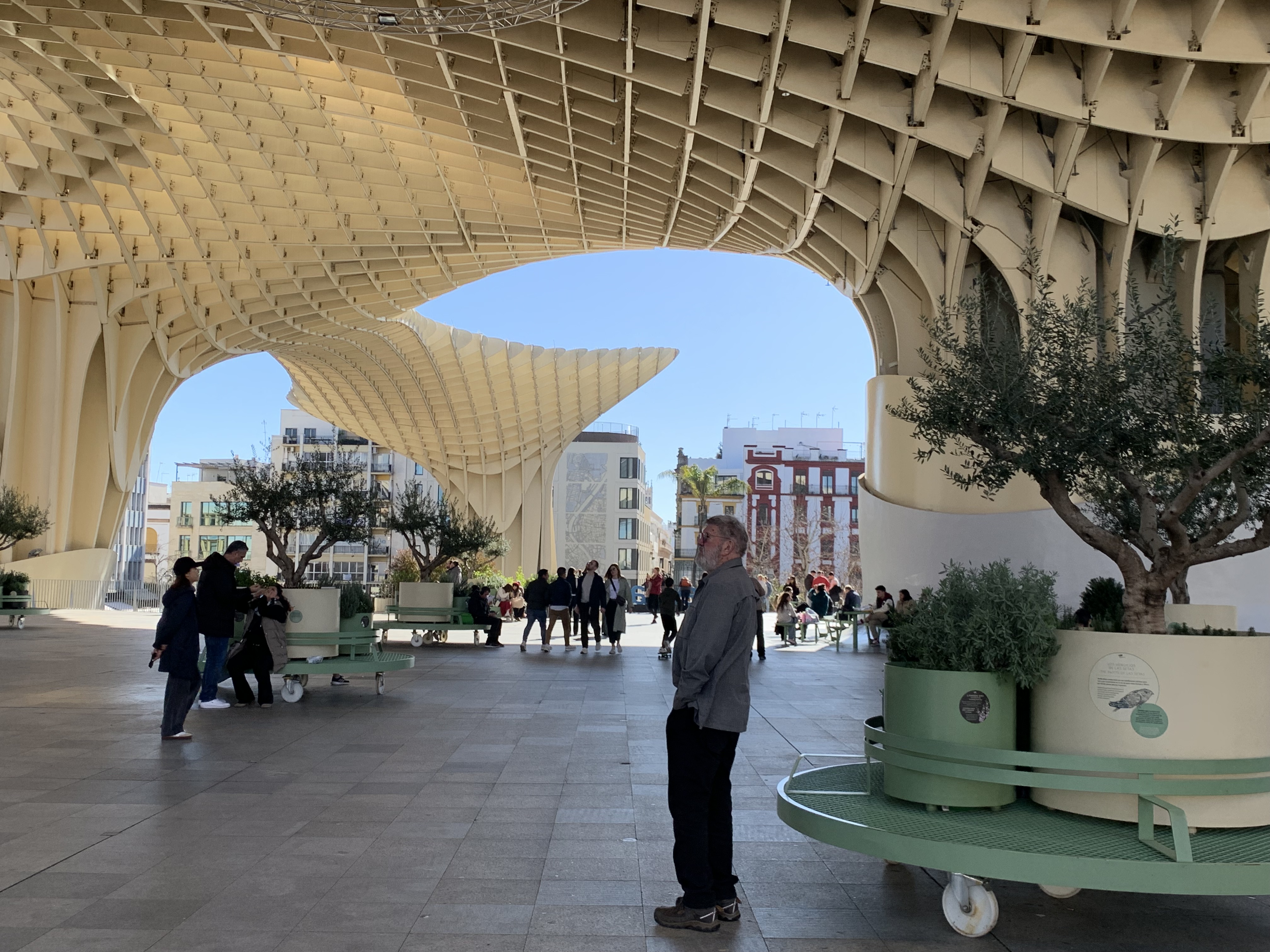
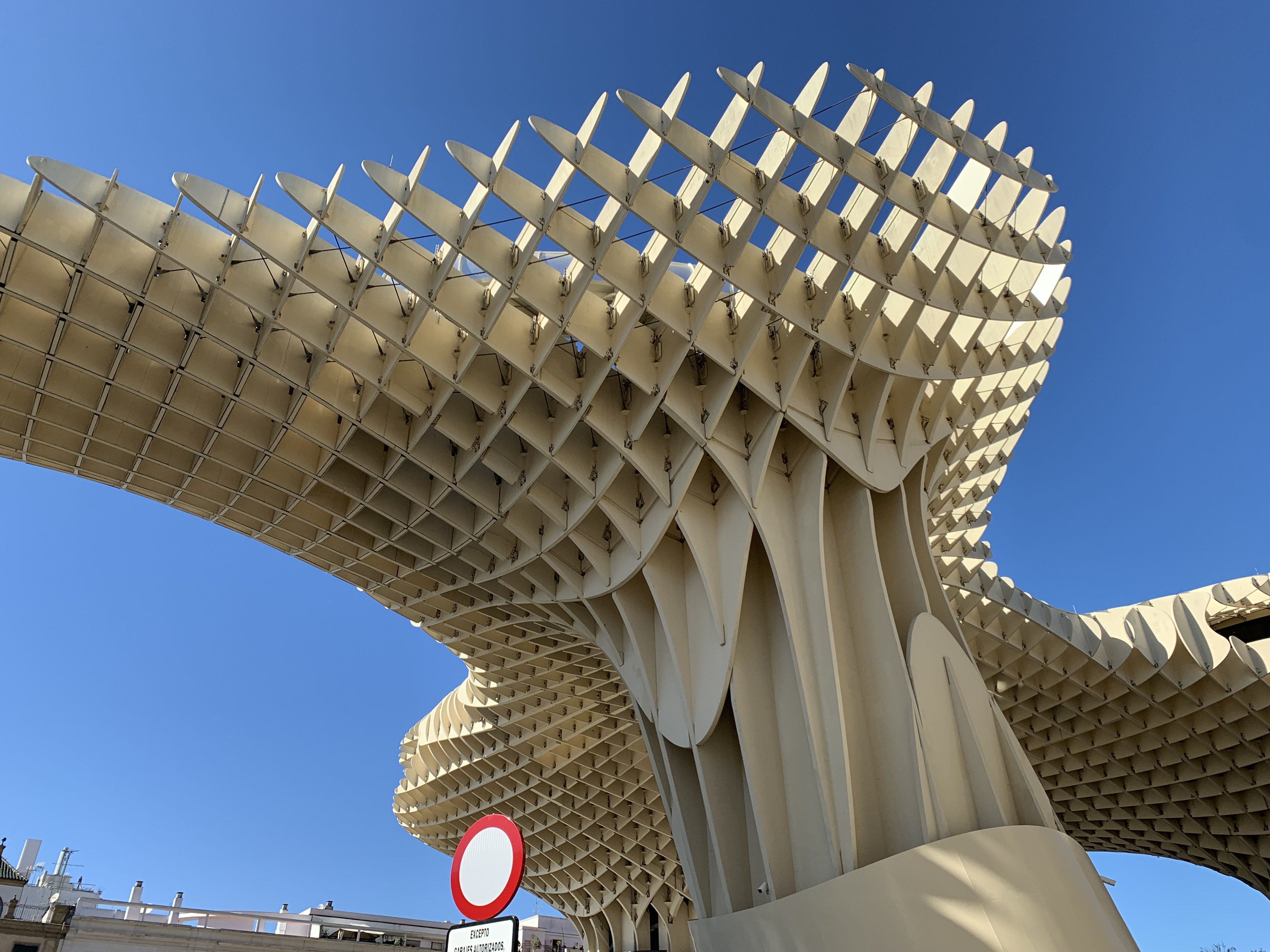
Considered the world’s largest wooden structure, we didn’t pay to go on top of the “Parasol” as it is often called. Las Setas is built on top of a market, La Encarnación that has operated here for centuries, but it was late in the afternoon and people were packing up. But we meandered through and had tiny perfect local beer and a plate of exquisite jamón Ibérico drizzled with olive oil and lemon juice. And a few olives, of course.
Sevilla is of course famous for its orange trees. They line the streets and are laden with fruit. The orange trees were introduced to Sevilla for their decoration and culinary uses around the 10th century.
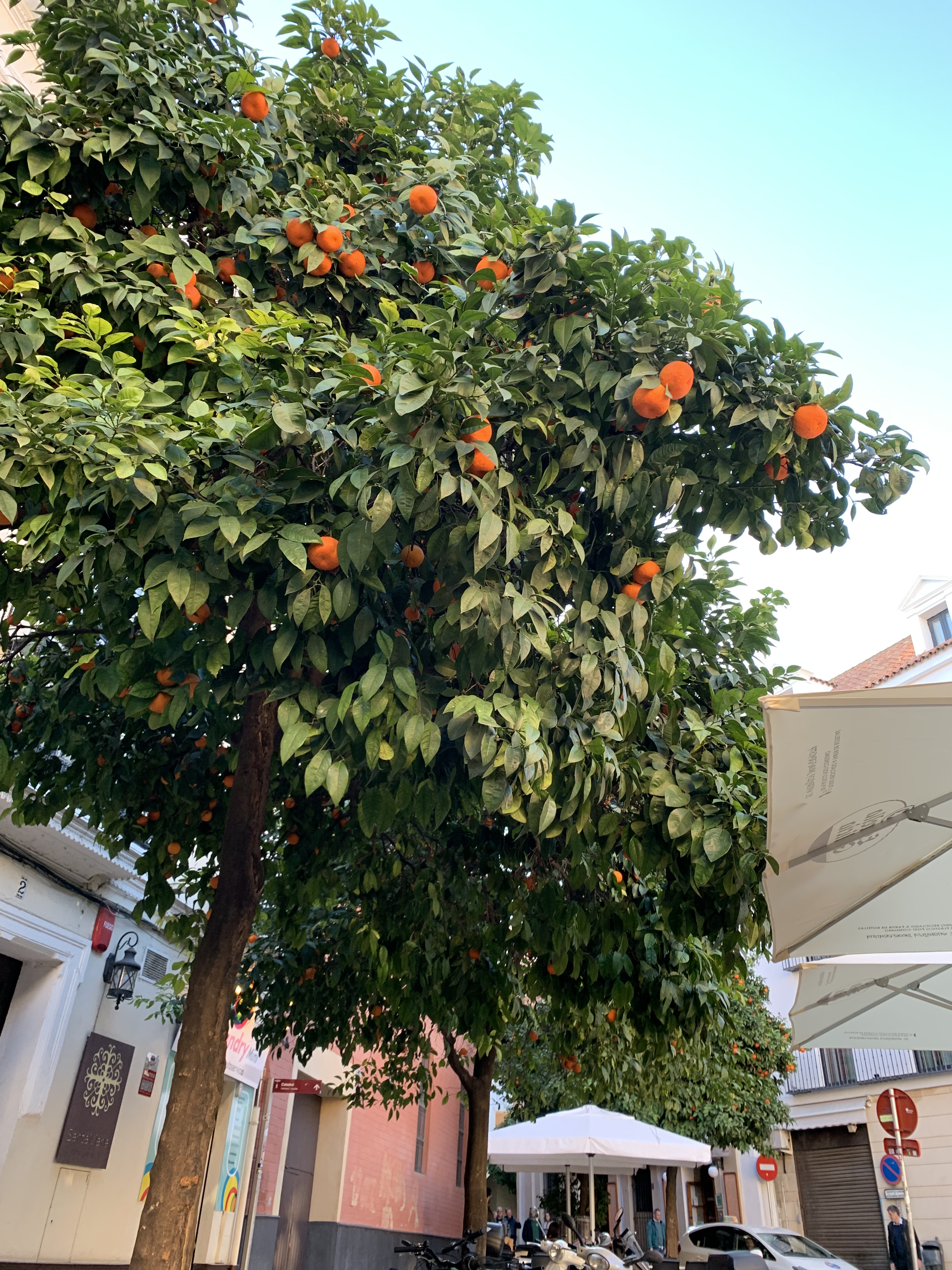
They are Seville oranges, of course, from which one makes Seville Marmalade. Bitter until you add a good quantity of sugar. In Spanish, mermelade just means jam.
And under the orange trees, Tabernas. It was tempting to simply move from one Taberna to the next, watching oranges fall and life go by.
Our first night in Sevilla, we crossed the Guadaquivir river to go to a tasting menu that our son had gifted to me for my birthday. Ivantxu is a Michelin star restaurant that combines authentic Andalusian ingredients with a contemporary flair. Our nine courses included a sea urchin bisque, Pigeon a la Royal, txangurro (spider crab) croquette, and traditionally prepared antxoa (anchovy) in a spray of sea foam.
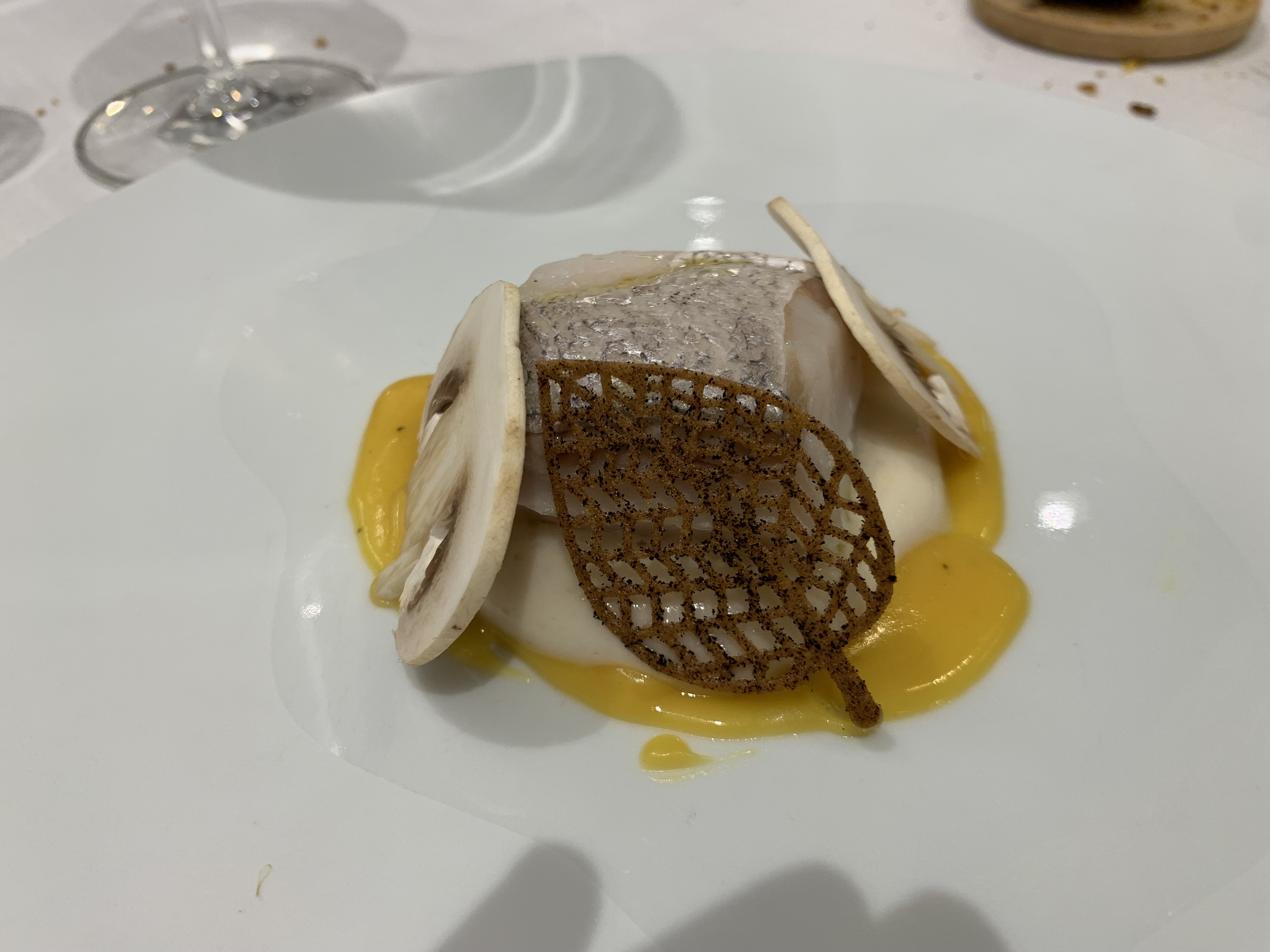
It was all astonishing and surprising and paired very well with a number of delicious Spanish wines!
By the good graces of GPS, we were navigated back through the winding streets to our apartment.
The next day, armed with my broken and faulty Spanish, I felt emboldened to try almost anything. We found a cheap and cheery local café, definitely not tourist fare, and sat outside for breakfast. Traditional working breakfast is usually some form of Tostada Con Tomate. If you’re fancy, you might have it with ham or a bit of cheese. I ordered something called Tostada con Zurrapa, which my phone translated as toast with “dregs.” The waitress assured me it was delicious, as long as I was all right with meat. I think the meat was probably bits left over from a soup bone (hence the dregs). It was combined with tomato sauce and spices, smeared over the toasted bread, then drizzled with olive oil. A great way to start a day of after a night of excess.
Our tickets for the Alcazar (the World Heritage site that is the main tourist attraction in Sevilla) were for late afternoon, so we settled into organized wandering throughout the downtown area near the river. We discovered a park and followed our ears to singing and dancing. We stopped dead. Never have I been so overwhelmed by sound. Flamenco. It is the “troubled air.” It is unfathomable rhythms, intense emotion, the call of something ancient and wild. There is of course a lot of “tourist” Flamenco, but this was honest and real. We were sucked into the heart of Flamenco on the street, and hooked.
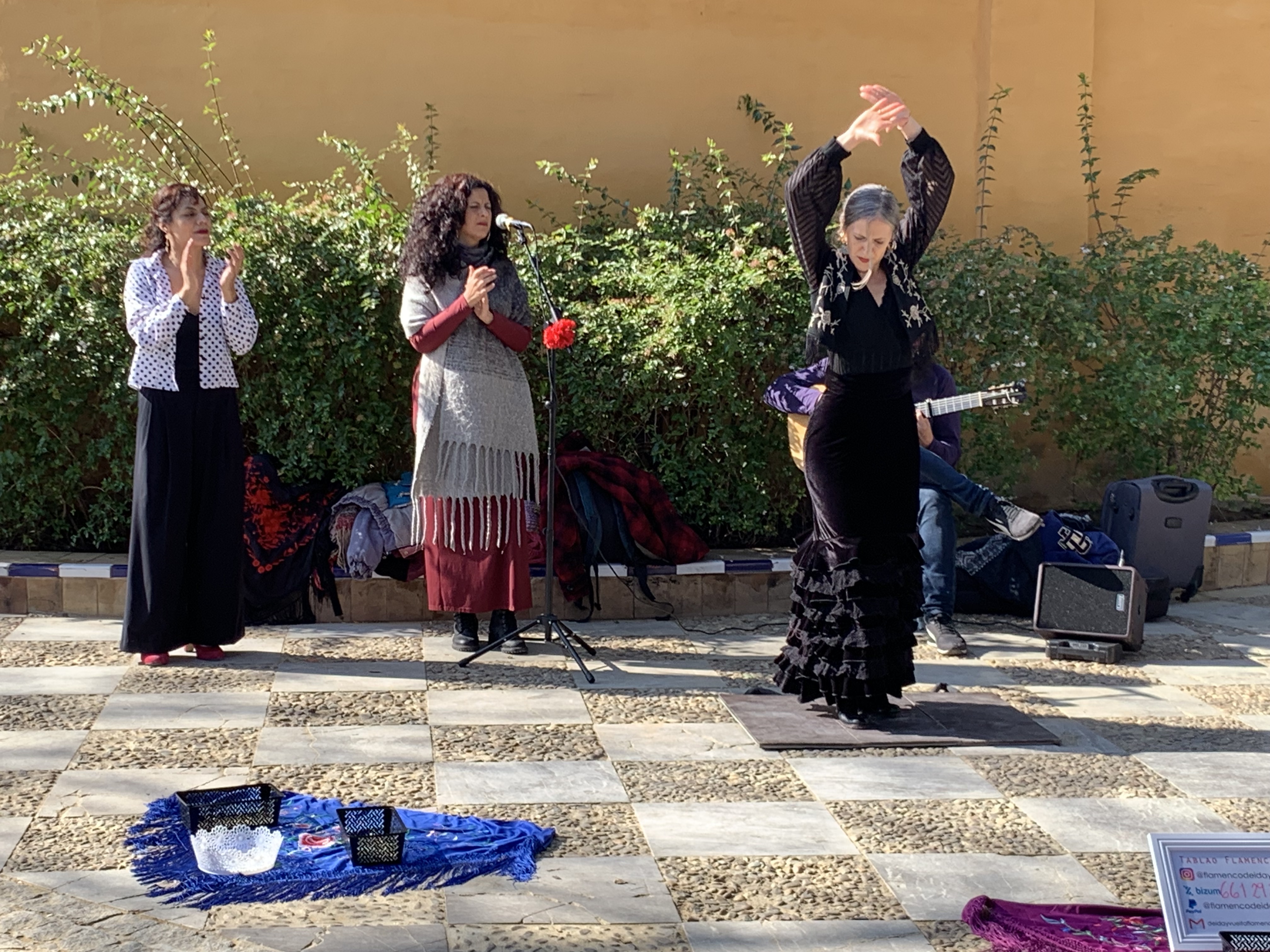
We had to tear ourselves away to go to Real Alcázar.
In 913 AD, Abd al-Rahman III established Sevilla as the capital of Al-Andalus and built his palace over an old Visigothic Christian basilica. The palace remained Islamic until 1248, when Ferdinand III of Castile took it over. It has been remodelled in the Islamic Andalusian style ever since, and the Royal Spanish family still occupy one section of the palace when they are in residence.
The Palace itself is overwhelmingly regal and beautiful. The details of the carving are hard to comprehend. We wandered from room to room, trying to grasp an understanding through our audio guide and feeling totally inadequate. (Note to self – splurge on tour next time!) We eventually lost sight of each other and became increasingly disoriented.
Until I got to the Gardens. They are designed for quiet contemplation and serve their purpose very well.
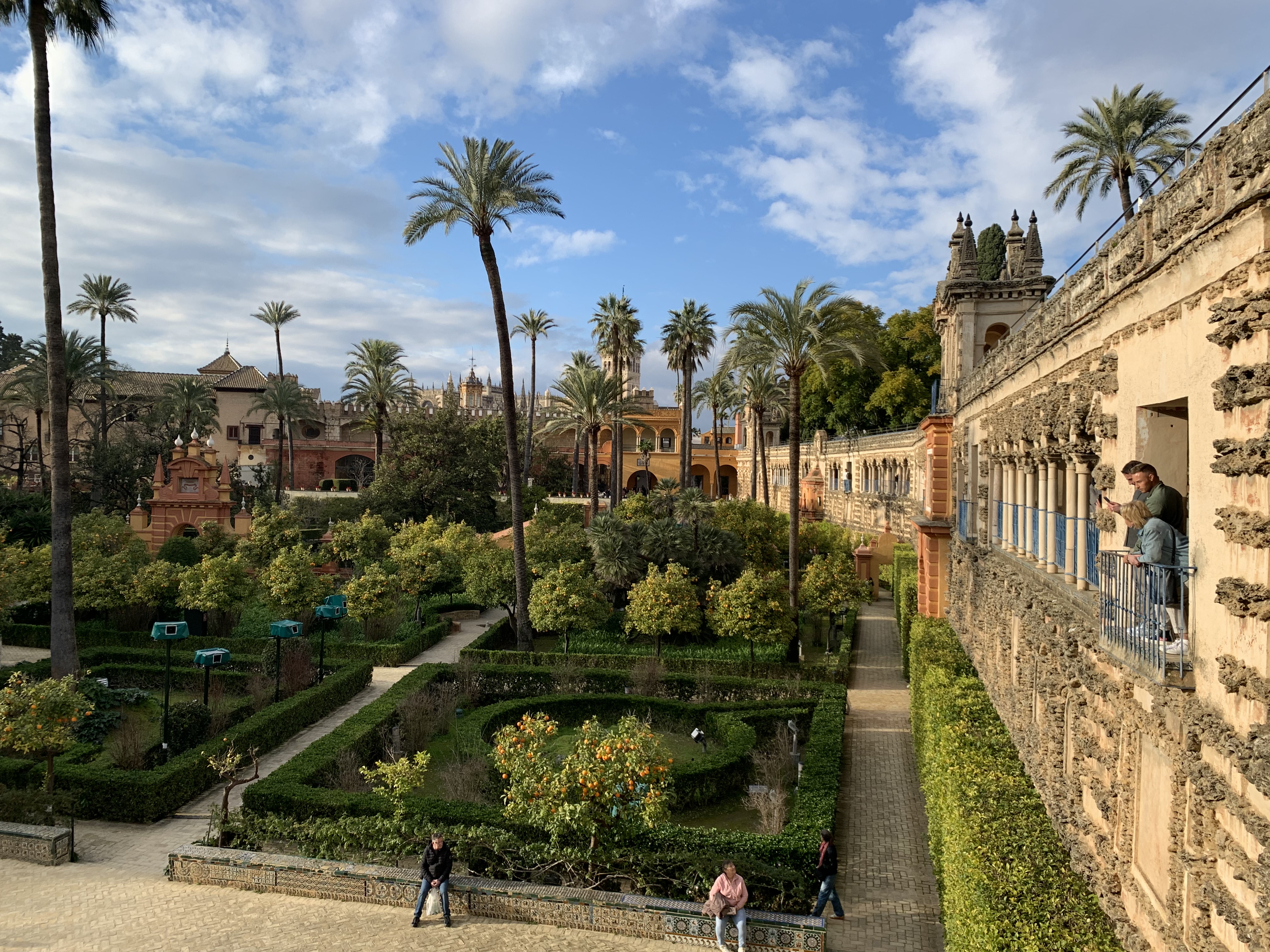
I can only imagine how beautiful these gardens are in the spring. With the orange trees, walkways, peacocks, fountains, they are the epitome of something out of the Arabian Nights. In the spring, you’d have the smell of blossoms too. The feast would surely go to your head and render you incapable of doing anything else except to luxuriate in your senses.
But with the setting sun, it was time for another Taberna and more “pescalitos fritos,” the tiny fried fish that are a specialty of Andalusia. Perfect to usher in nightfall and plan the next venue.
Our youngest son had told us about an authentic place to see/hear/experience Flamenco. La Carboniera is well-hidden, and, by the time we got there, packed. We were definitely the most senior residents. The Sangria was flowing and we shared a jug with a couple of fellow travellers, who shared their olives and cheeses. But when the Flamenco started, we were silenced and dumbstruck. Stories were told between the guitar, singer and dancer. It was alive and thriving and essential. Everyone in the room was drawn together into the heart of the guitar, voice and movement.
The next day was overcast and we spent a large part of it wandering in the Maria Luisa Park and exploring the astonishing Plaza España, which was created for the 1923 Expo.
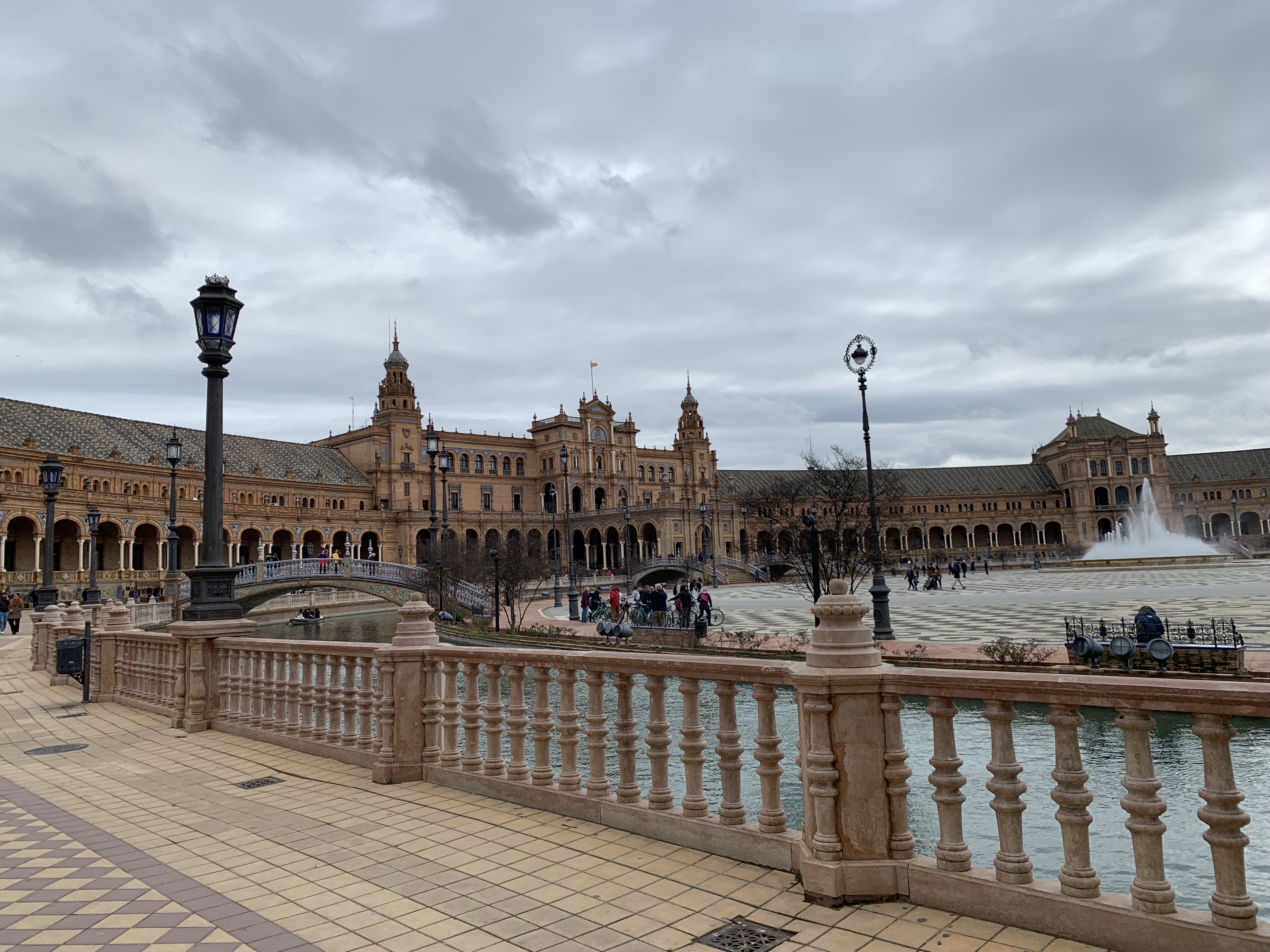
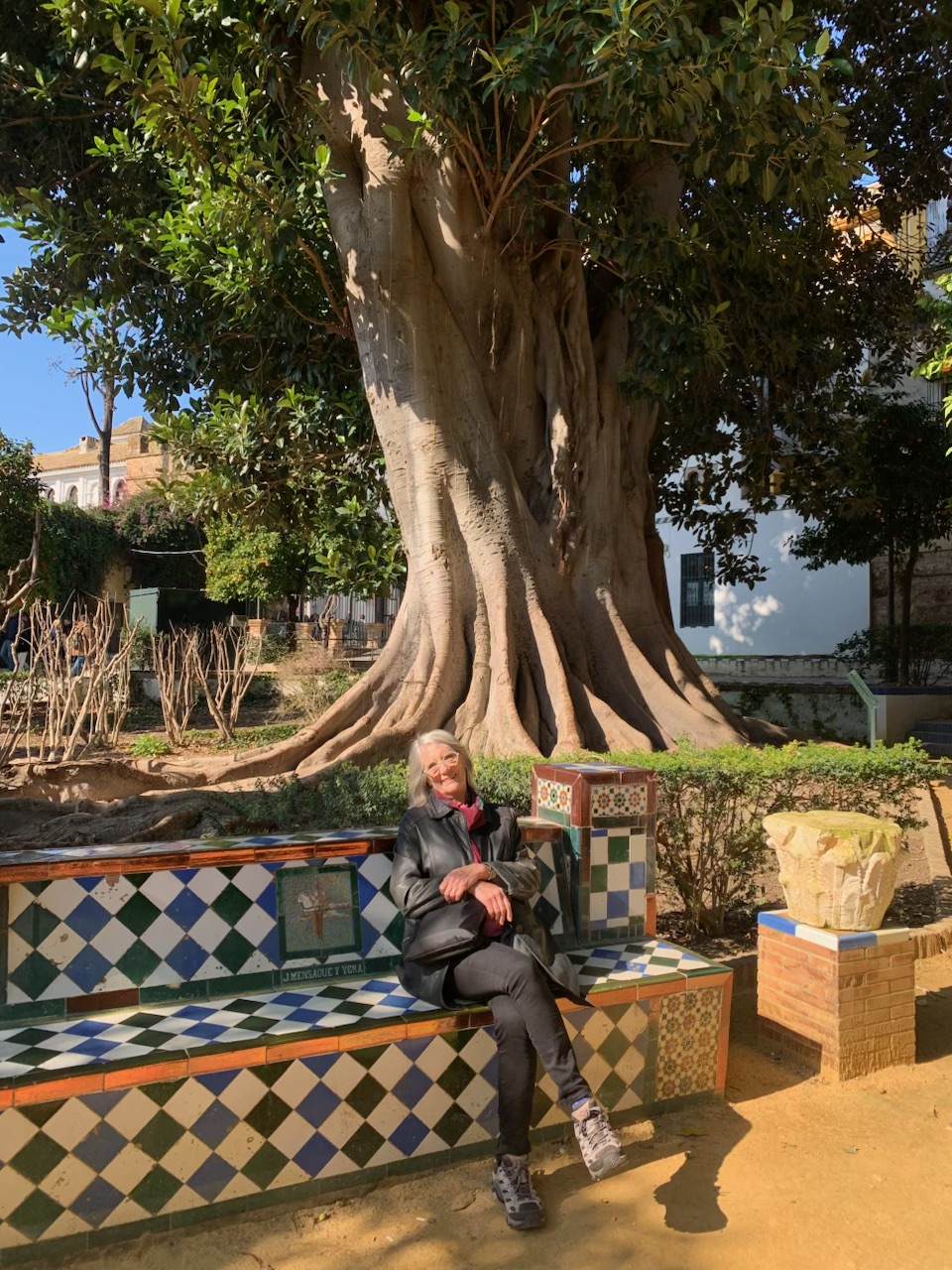
There are tiled banquettes dedicated to each of the 49 Spanish provinces. I want to take a pilgrimage to each and every one. Because I suspect there will be equal surprises to discover…

In the afternoon we braved the Cathedral and La Giralda.
The Seville Cathedral is immense, built to impress. It’s one of the largest and most ornate Cathedrals in the world. Spain struck it rich in “the Indes,” and there is an appropriately lavish tomb in the Cathedral for the founder of the feast, Christopher Columbus.
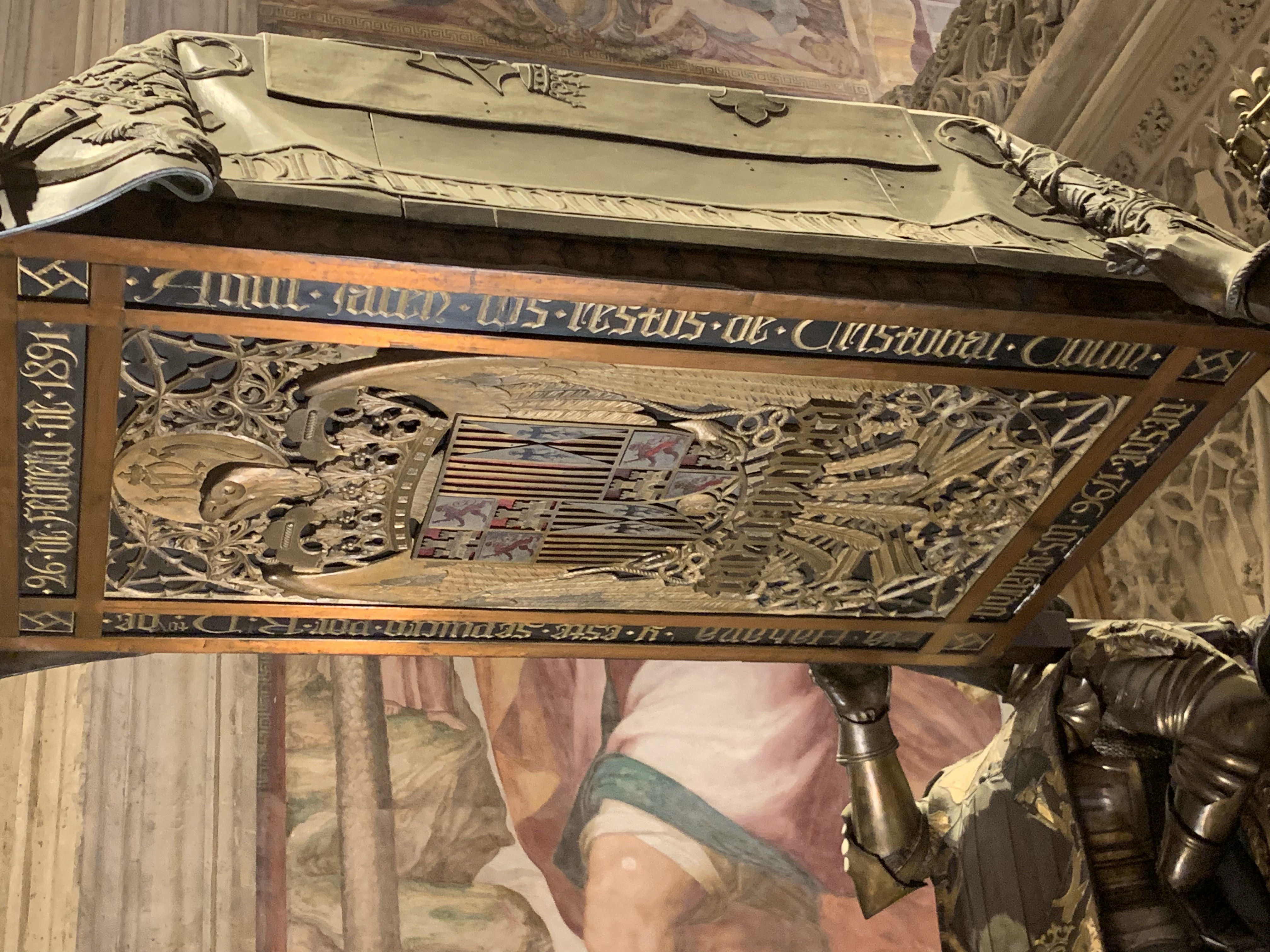
With their new found wealth, the Spanish nobles turned their attention to hiring the finest architects, builders, carvers and artists in Europe. The Cathedral blends the civilization of the Almohads (the North African Berber Muslim empire that ruled Al-Andalus and created the original Alcazar palace) with the Spanish Reconquista (the Spanish Christians who fought to claim the Iberian peninsula). To this day, the Cathedral remains a central place of worship for Catholics where “The synthesis of faith, liturgy and art helps us to encounter the Invisible God through the visible.” (Archbishop D. Jose Angel Saiz Meneses)
Although much of the architecture is influenced by the Almohads, most of the original Mosque on the site was destroyed. All that is left is La Giralda, the old minaret, which was converted into a bell tower in the Renaissance and crowned with a bronze statue/ weathervane inspired by the image of Pallas Athena.

We braved the climb up all 36 stories to get to the top for a view of the city below. So much still to discover.
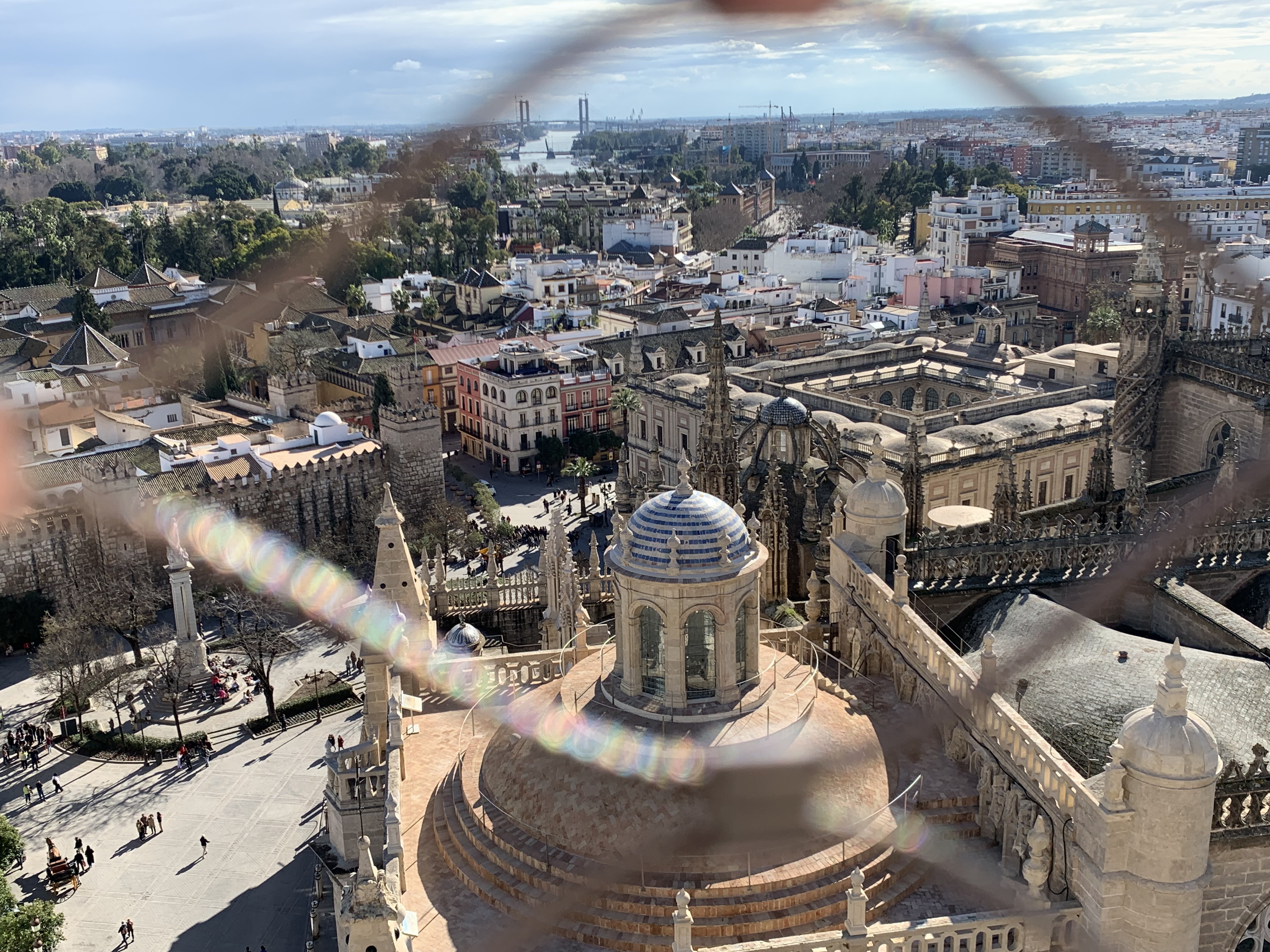
We celebrated our time in Sevilla with a traditional Valencia Paella (Tim, who makes brilliant Paella, was on a quest to try as many different ones as he could), limped our way back to the apartment, and bid a sad farewell to the grandeur and beauty of Sevilla.

 Stepping off the Treadmill
Wow! I want to visit Seville now too!
I think you’d love it. And you may want to do some more in Andalucia. I’ve got posts upcoming on Cordoba, Granada and Malaga. I know you’ve been doing some wonderful travelling too. So many places to experience, and only so much time…
Ooooh, I’m looking forward to hearing more!