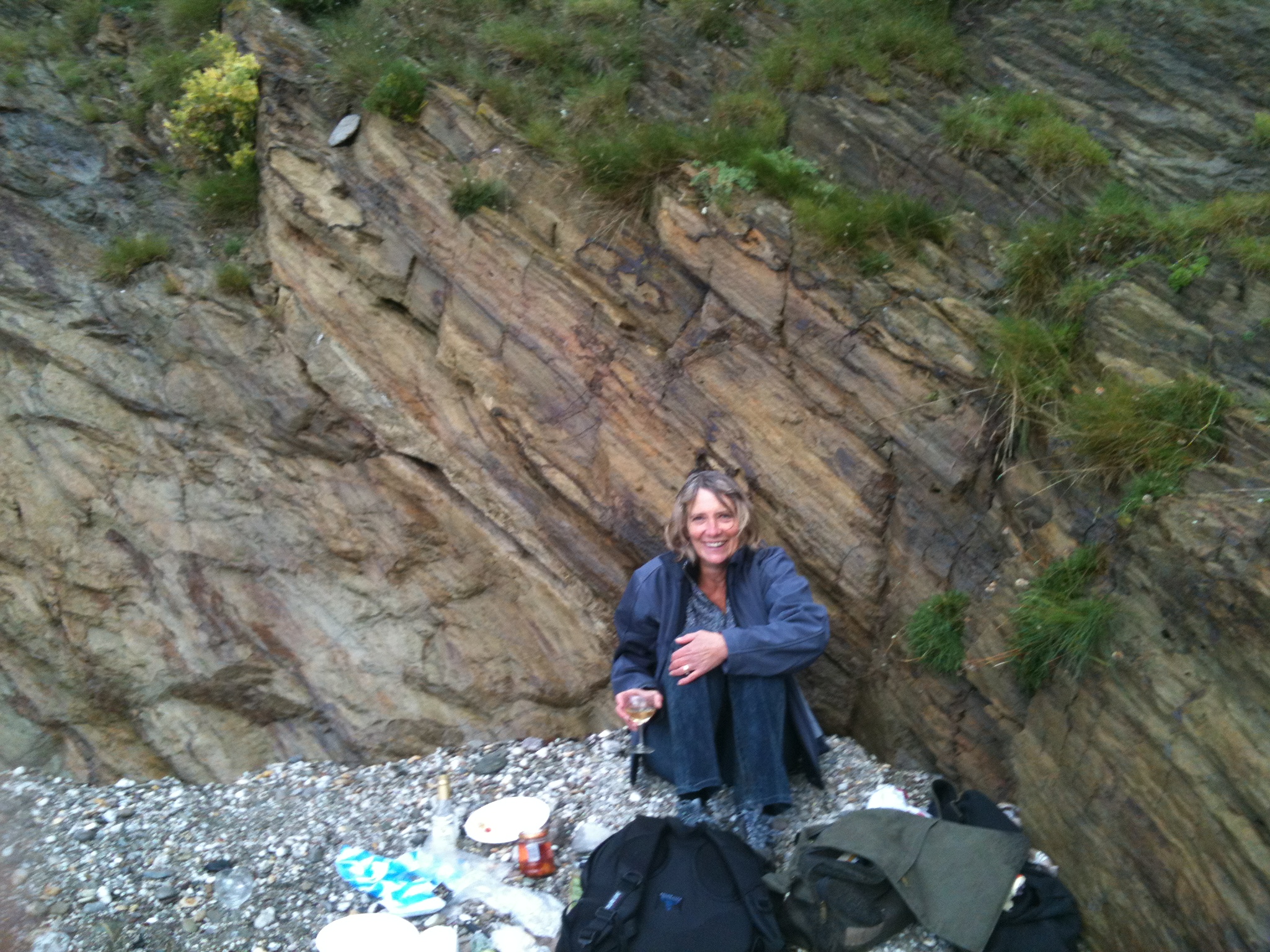
The weather has been, for the most part. “Sunny, with cloudy periods”. On one particularly sunny day, we decided to have a picnic.
There are wonderful local foods available here. Right up the road from the cottage, there is a good independent grocery that carries a range of local cheeses and specialty items. I loaded up with some Cornish “Crumbly” cheese (nutty and a bit cream/dry), Cornish Blue, roasted peppers, marinated artichokes, olives and a loaf of crusty bread. We got some locally smoked wild salmon, a little bottle of Cornish apricot Mead and headed for a rocky beach just east of Looe.
The sun was baking hot as we arrived. We settled into a sheltered rock face, kicked off our shoes and started to unpack the picnic. Admittedly, there were some clouds in the sky, coming in fairly quickly, but they seemed to fit into the idea of “ … with cloudy periods”.
We had just tasted the Mead (very yummy, tasting of sunshine, perfect for a picnic) and served up first helpings of fish and cheese when the rain started. There was really no place to take cover, and it looked like the rain would be over by the time we packed everything up. So all we could do was to try and save the bread from getting too soggy and the Mead from getting watered down while we kept eating.
The rain let up after about 15 minutes. We were pretty wet, but clean and happy. The hot sun came out, we packed up the sodden remains of the picnic and walked the hills to dry off before heading back to the cottage.
Amanda at the Sodden Picnic
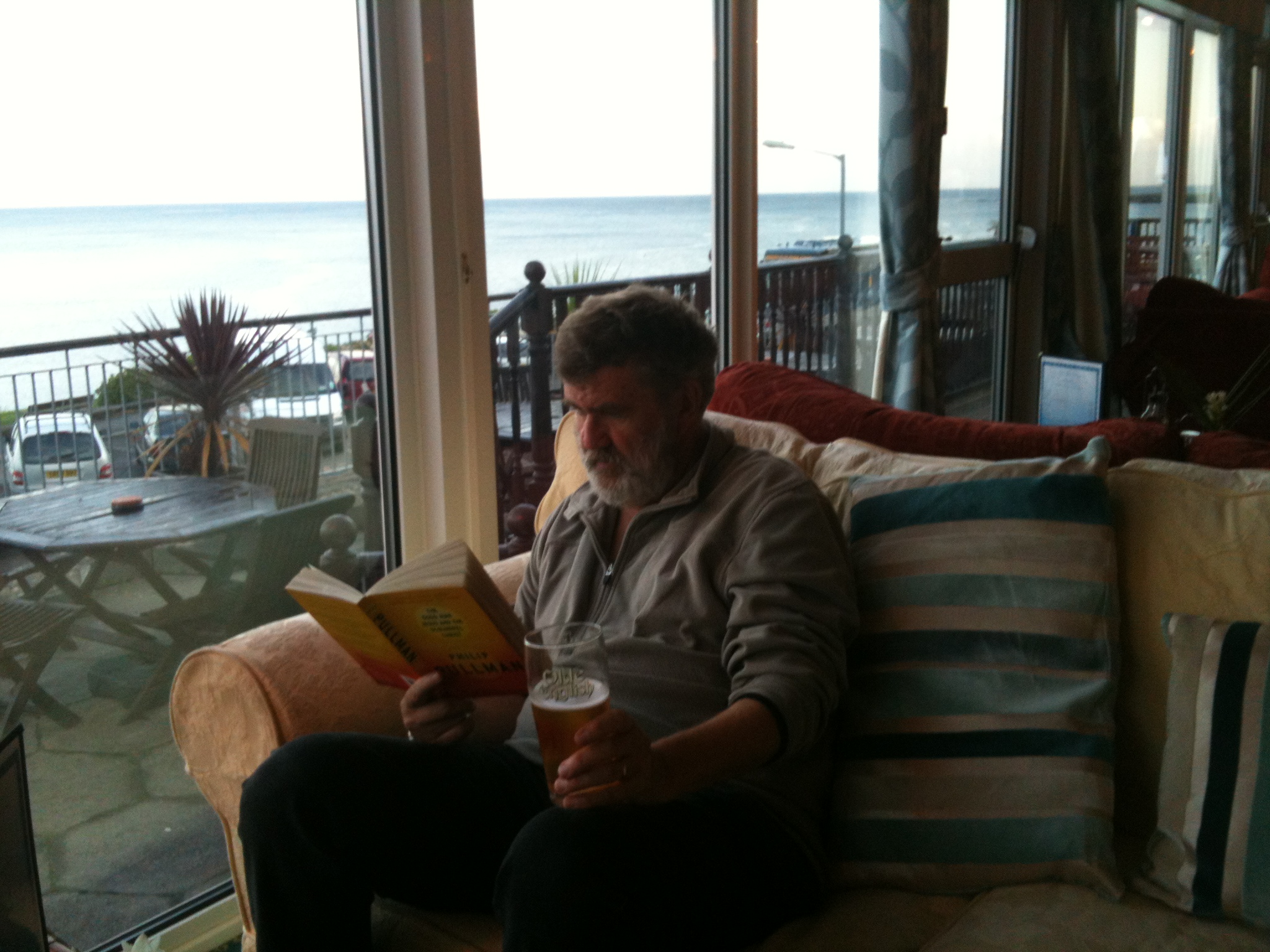
Our little cottage has no view of anything at all. It is a cute place, but it easily drives us to cabin fever. So we have adopted another “lounge” overlooking the sea for our early evening pre-dinner drinks.
Just around the bend from West Looe is the small community of Hannafore. Sitting high atop the ocean cliffs, with spectacular views, is the Hannafore Point Hotel. Large overstuffed couches sit beside the full-length windows of the bar. With few customers, we have the place entirely to ourselves. We settle in with books and glasses of wine to watch the sunset. A good, dry ending to the day.
Moors dominate the landscape of so many English novels. But it seemed like the only words ever used to convey this foreign setting were “desolate” and “windswept”. As a Canadian, this didn’t give me a lot to go on. So when Tim suggested that we head out to the Bodmin Moor (featured in Daphne Du Maurier’s “Jamaica Inn”), I hoped I could add few more adjectives to the description and be better able to understand this mythic setting.
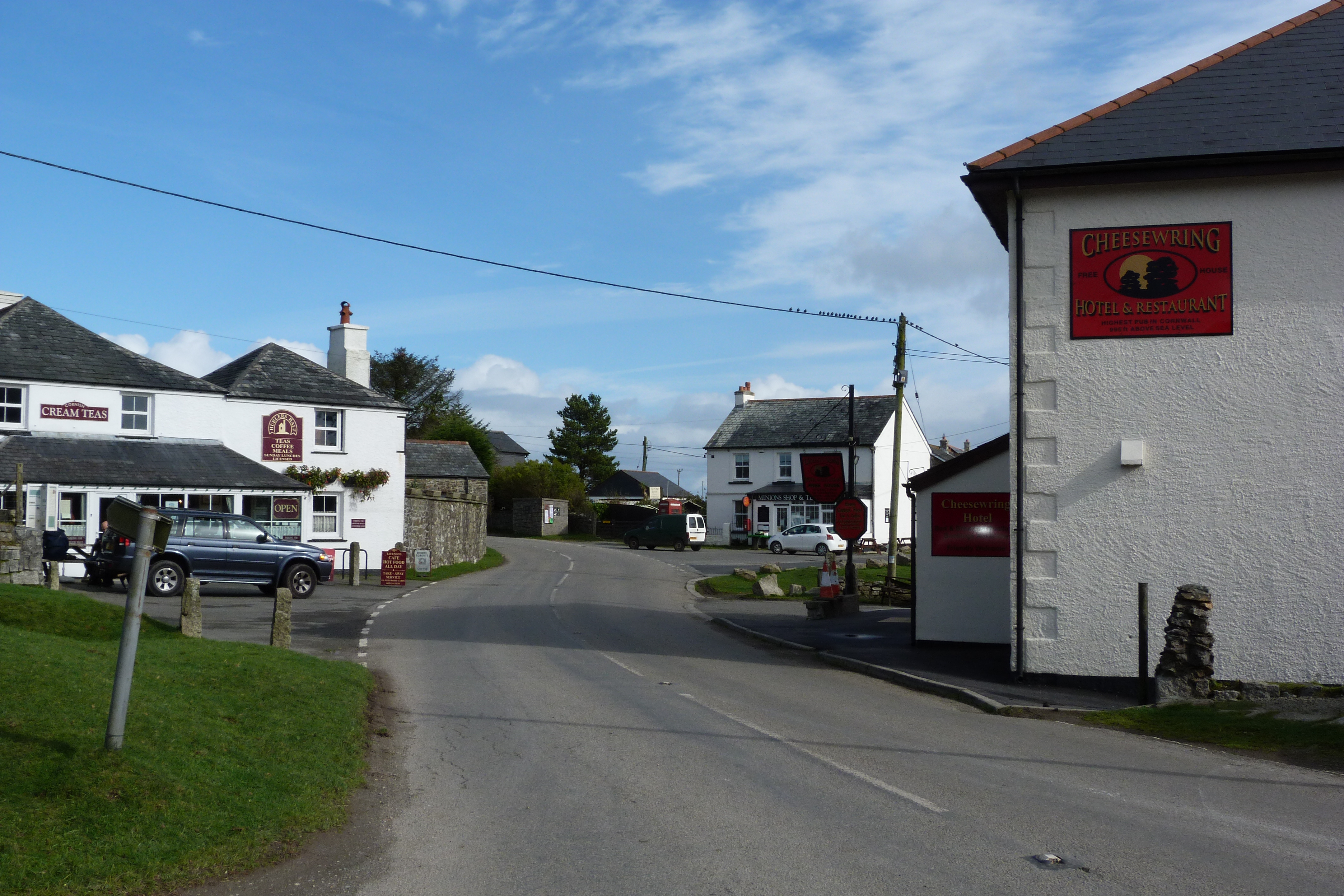
Because we are travelling without a car, our choices are dictated by the schedules and routes of trains and coaches. The town of Minions is a little over a half hour away by local bus and as it is right on the edge of Bodmin Moor it was a good place to start our moor adventure.
The town of Minions
Minons sits 1000 feet up from the sea level, so the bus ride from Looe was steep and twisty. The town was prosperous in 1863 when Captain Jack Clymo discovered a vein of copper ore. Over 4000 people were employed in the mines. But todayall that remains of the industry are over 20 derelict mines, dotting the moors. The town consists of two shops and small group of cottage homes.
The bus driver let us off with the reminder that there is only one bus out of Minions, coming through 4 hours later. And not to miss it, unless we wanted to spend the night in the moors.
The minute that we walked into Bodmin Moor, I realized that the first and best word to describe a moor was no other than “desolate”. And with the wind whipping our faces so hard that our words were snatched before they were heard, it was definitely “windswept”. Startlingly cold, spongy underfoot, with small tufts of gorse, it is the first place I have been in England that is totally open and flat. Your eyes play tricks on you. It is impossible to tell how far away or large the landmarks are. A 2-foot high marker can look like a distant tower. A slight roll in the foreground persuades you it is the edge of a non-existent river valley. I felt a slight panic at the idea of getting lost, and watched constantly for any markers I could see.
The Bodmin Moor has been a huge source of granite throughout human history. These days, it is primarily used for grazing ponies, sheep and cattle. The high area where we were hiking is dominated by “tors” (rocky peaks) and “clitter” (granite strewn slopes) and an exciting layering of history, both geological and human.
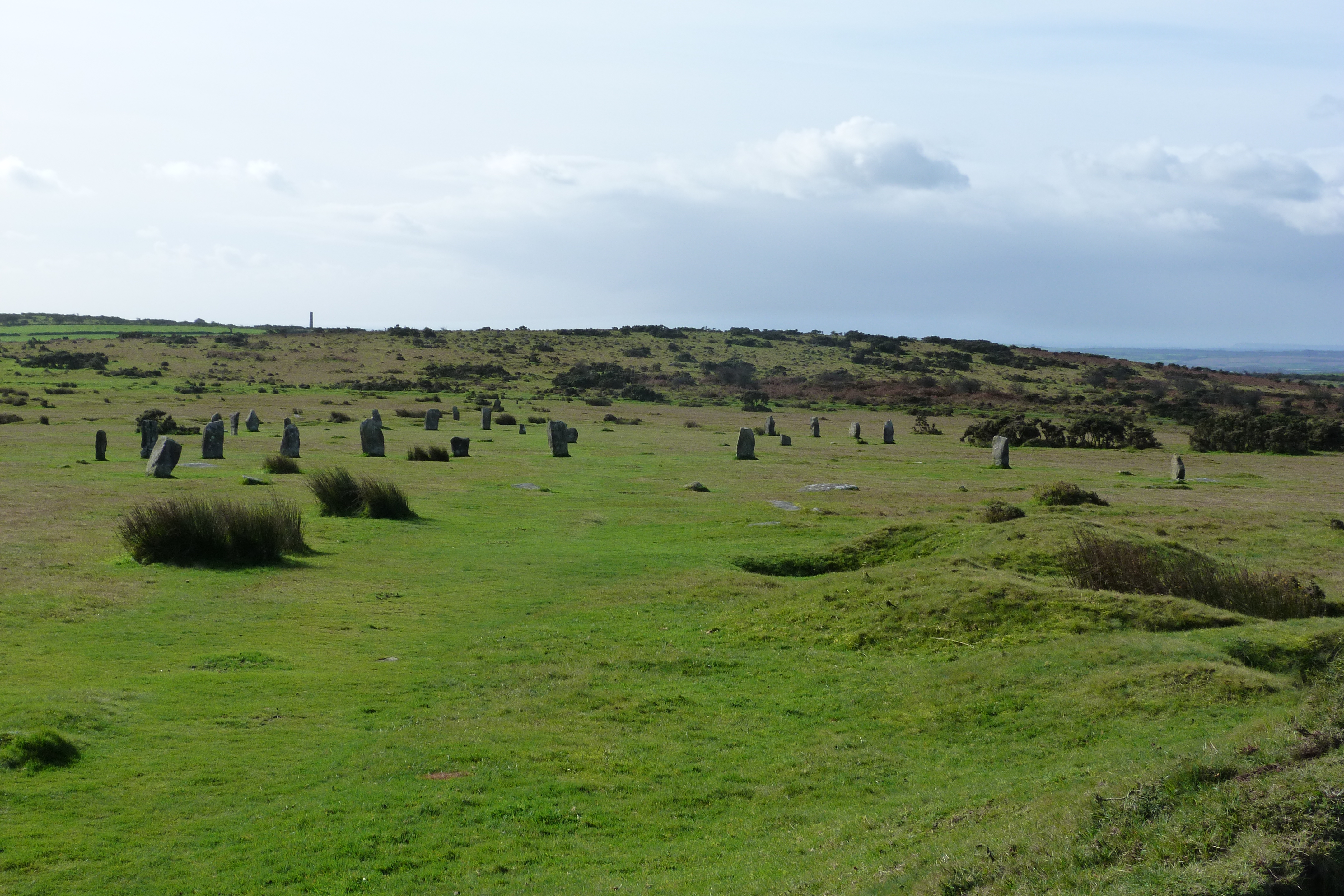
As we walked into the moor, the first thing we saw were the “Hurlers”, 3 Bronze Age stone circles, with 35 m diameters, grouped together.
The Hurlers
Legend has it that men were turned to stone for playing “hurlers”, a Cornish game, on the Sabbath. A ghastly fate – I am not sure that even as a rock I would want to have to stand out on the Moor for eternity.
From the Hurlers, we walked up to the Cheesewring atop Stowe’s Hill. This precarious looking pile of rocks is a natural formation from erosion during the ice age. They are astonishing natural “sculptures” of the granite. They are an unnerving presence in the landscape.
The Cheesewring. Note Tim in foreground, left, for scale.
“If a man dreams of a great pile of stones in a nightmare, he would dream of such a pile as the Cheesewring.” Wilkie Collins.
We decided that it was time to find somewhere a bit out of the wind to eat our picnic lunch, so we headed to one of the derelict 19thcentury mines, and managed to find a corner in which to eat.
Derelict mine
Of course there wasn’t much protection when the rain started. Although it was really just a light misting, we decided that we wanted nothing more than a cup of tea and headed back to Minions to warm up.
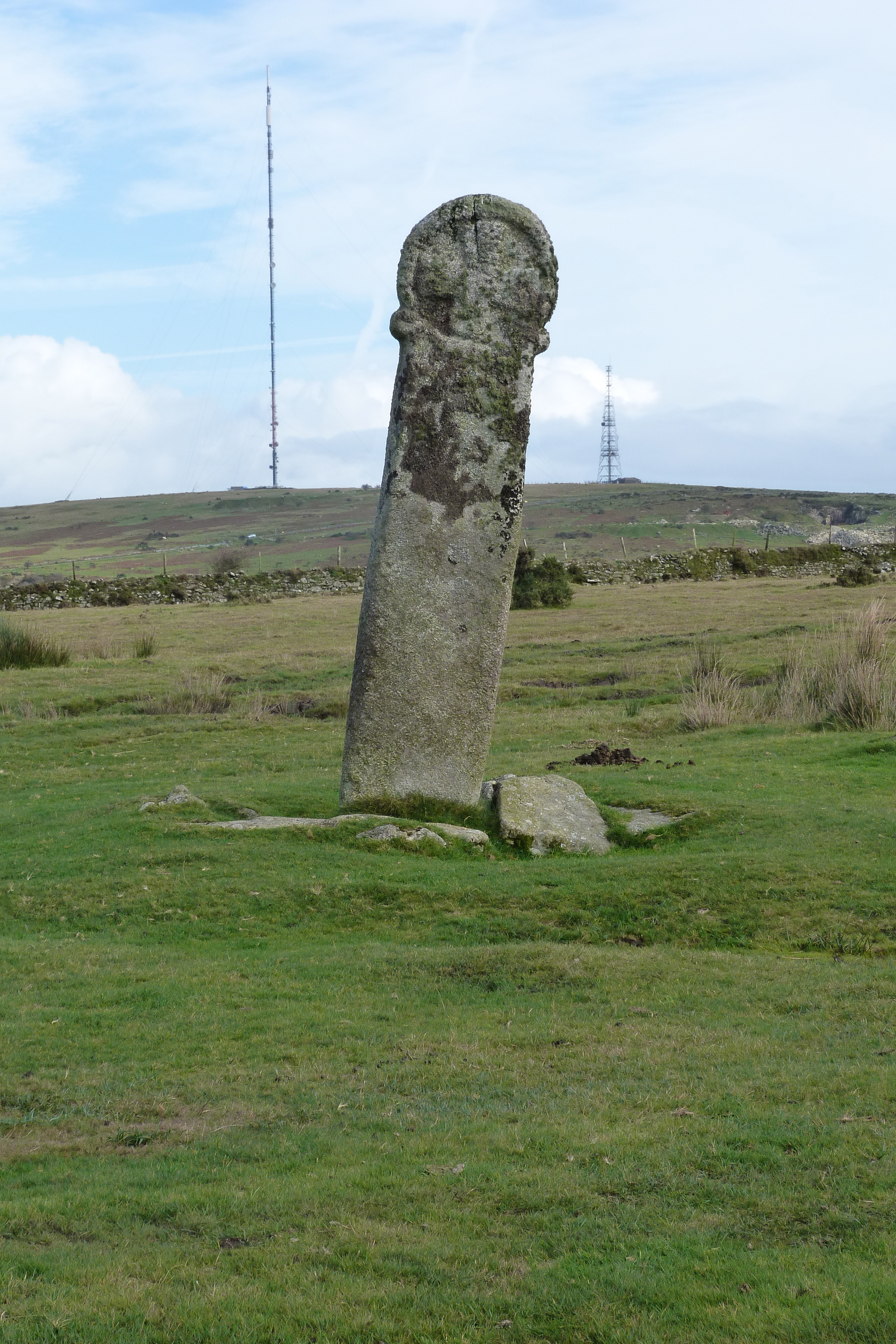
We had a little over an hour before the bus, so we wanted to try to see Trethevy Quoit, about a mile away. We have a good ordinanace map, but not everything is marked so we followed directions from the proprietor at the tea shop at Minions. We left Minions at a brisk clip, passing “Long Tom” or Longstone, a medieval wayside cross by the side of the road, and headed along the country lanes.
Long Tom
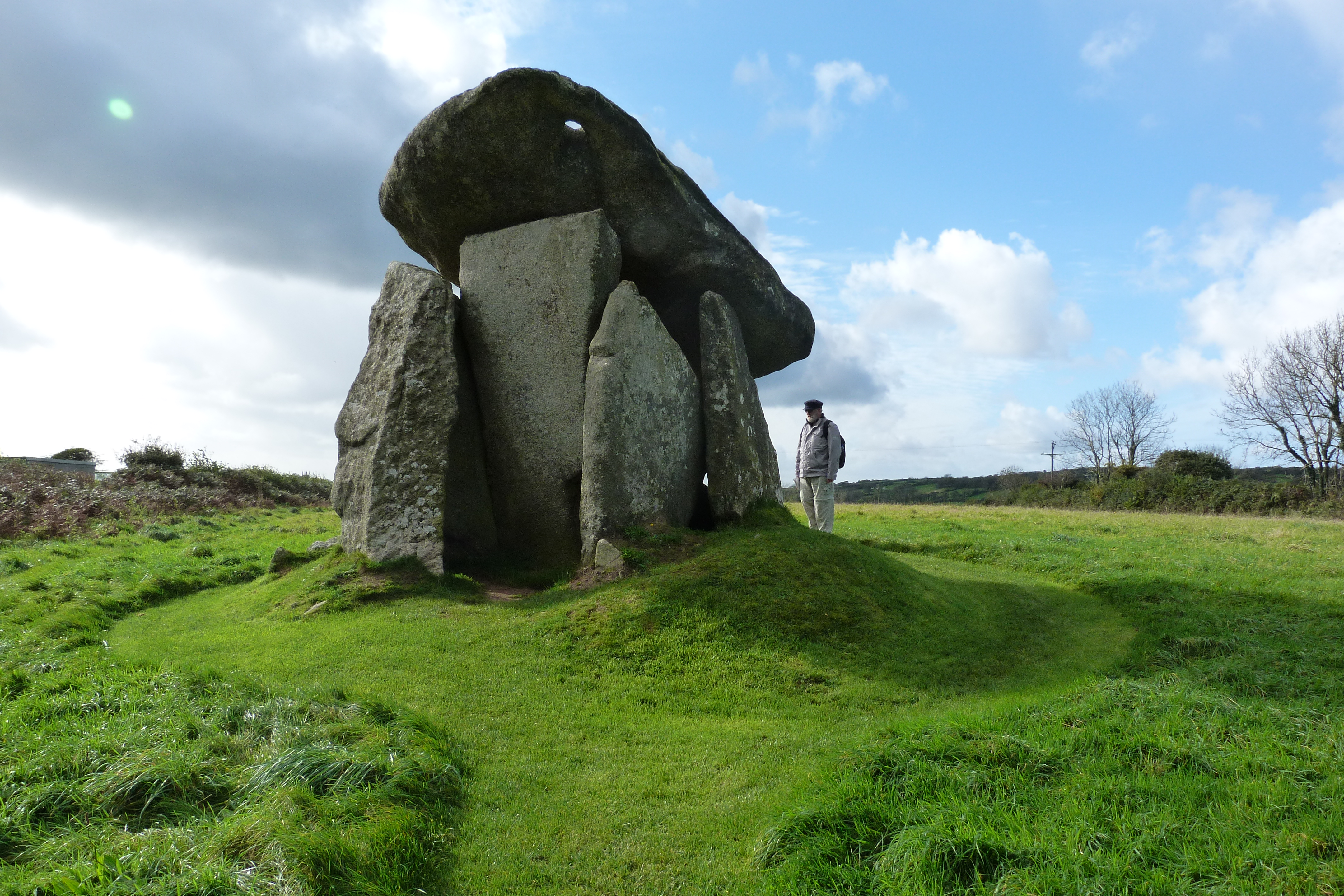
We were determined to get to Trethevy Quoit, but knew that we had to get back to “Commonmoor”, just outside of Minions, to catch the bus. But we weren’t entirely sure where either Trethevy Quoit or Commonmoor were, and it was starting to rain. Panic began to set in as we ran. “Just one more corner. Just around this bend?” And suddenly, behind a couple of quite ordinary houses, was this huge 9-foot high stone structure.
Trethevy Quoit is a Neolithic portal burial chamber. Originally covered by a mound, it consists of 5 standing stones, topped by a massive (20 ton) capstone. One of the supporting stones has fallen into the chamber, and the capstone has since slide onto an angle, but it is remarkably in tact. It is thought that the Quoit was used as a burial mound or portal to the other world.
Trethevy Quoit
It was worth the run and the panic. And clearly the luck of the ancients was with us because we were late for the bus, but the bus was also, unusually, late and we caught it with 2 minutes to spare.
Back in Looe, we capped our day of Neolithic adventures by a night at the Jolly Sailor pub, just down the street from our cottage. The Jolly Sailor is Looe’s oldest pub and has been going since 1516. A group of locals assembled with guitars, penny whistles, accordions and mandolins to sing songs of love, protest, sea faring and adventure. Singing along, pint in hand, we felt a bit of Cornwall had definitely entered into our souls.
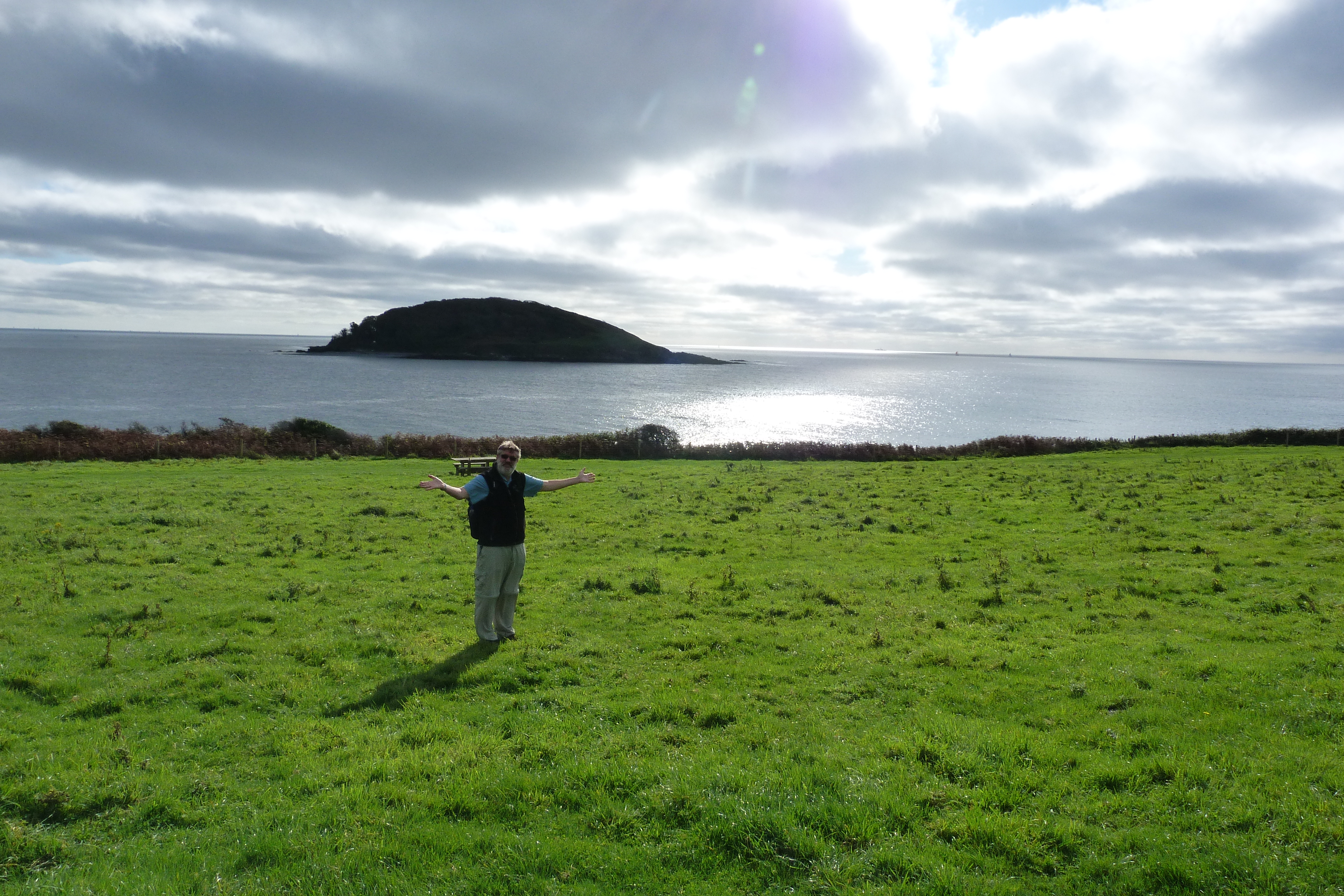
The coastal path, St. George's (Looe) island in the distance
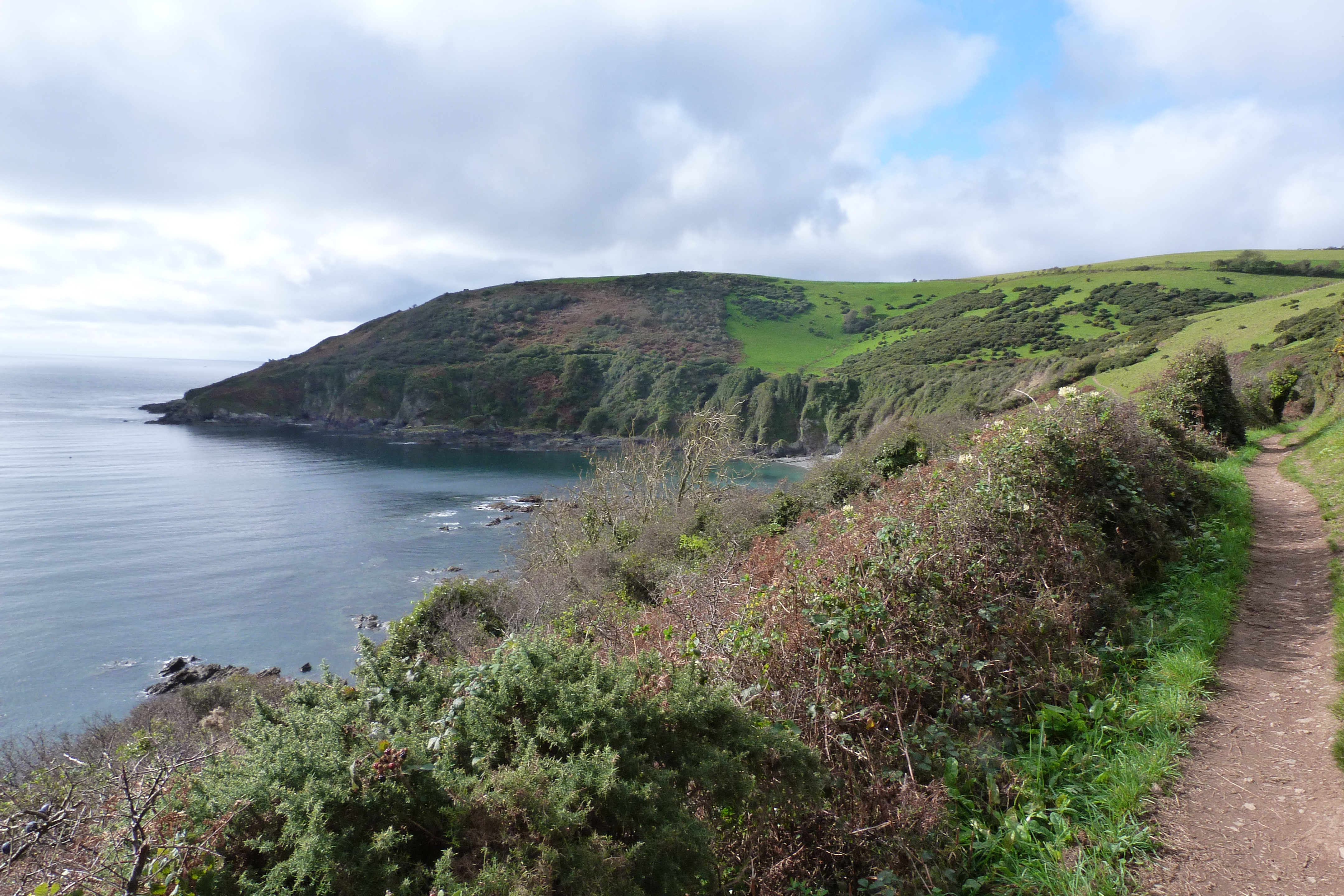
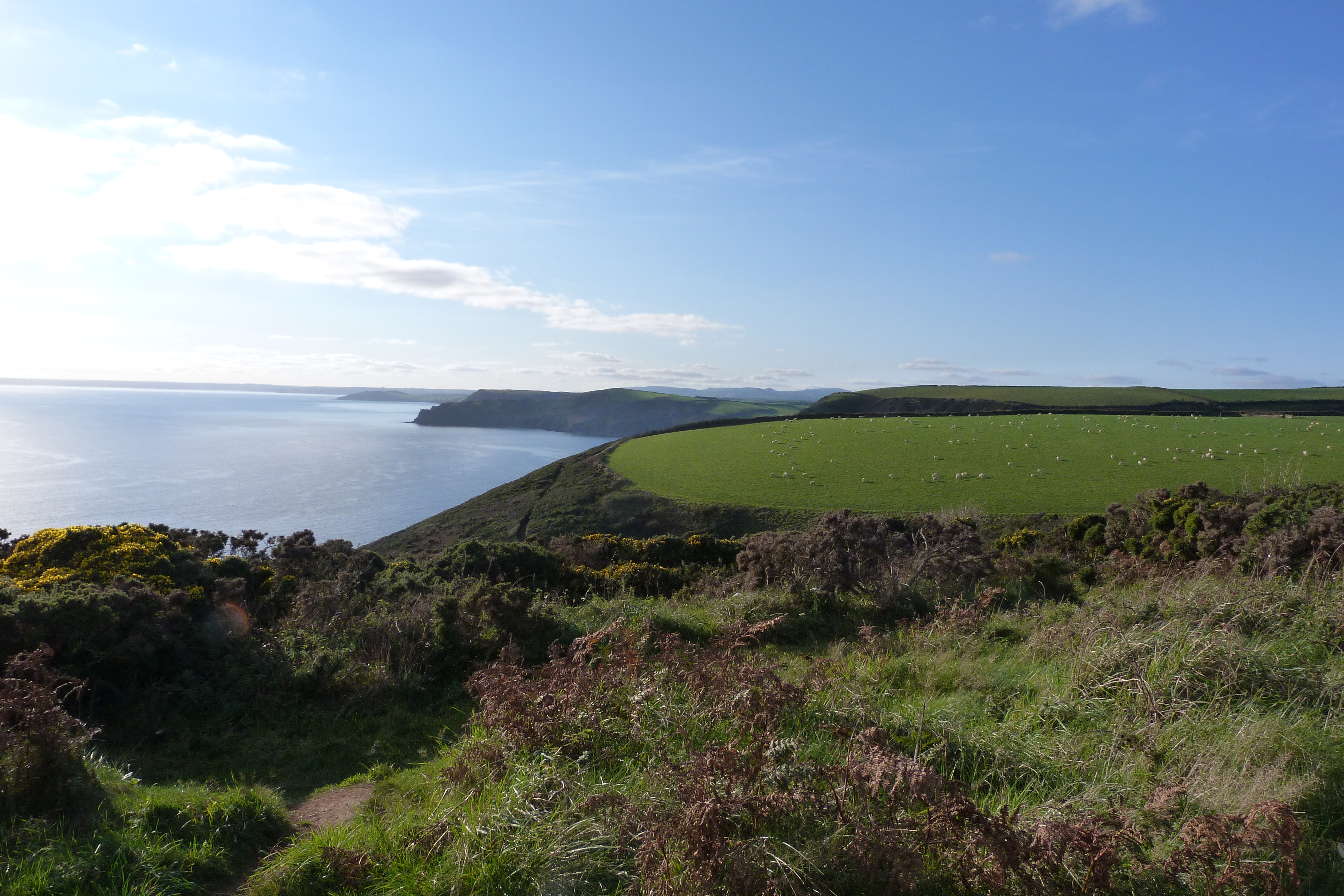
The coastal path from Looe to Polperro is well worn and friendly. Approximately 5 miles, the hike takes you along the cliff edge with magnificent views of the rocky beaches below. It was a gorgeous warm day of mixed sun and cloud, so, with water bottles and snacks in hand, we headed out.
The coastal path, Looe to Polperro
We meandered through fields of cattle and yellow flowered gorse bushes (said to flower every month of the year), passing the occasional dog walker and being passed by more serious hikers and making sure to stop and breathe in the sea air.
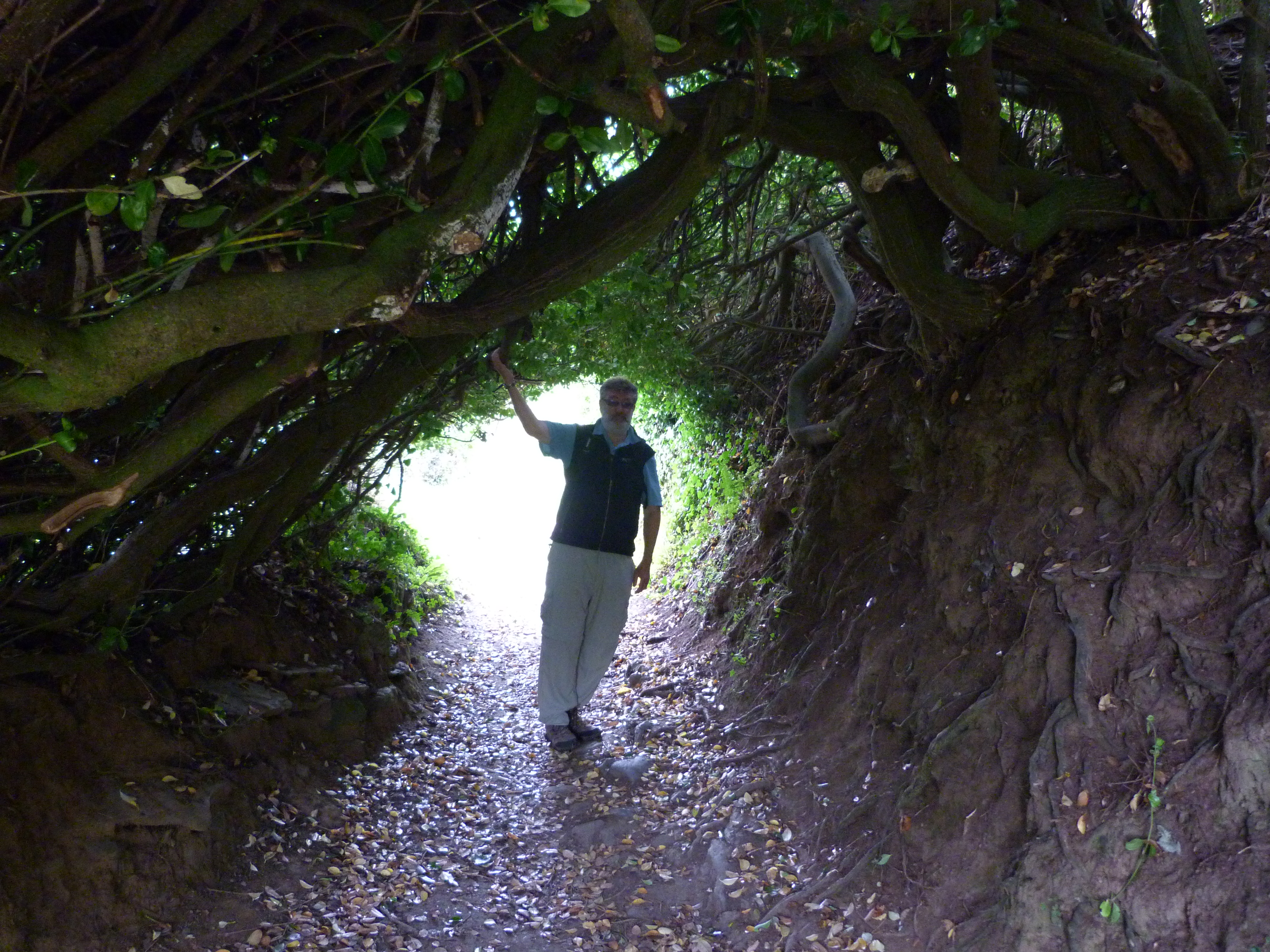
The path takes us under the roots of a tree
We arrived in Polperro about 2 hours later, ready for a good pub lunch.
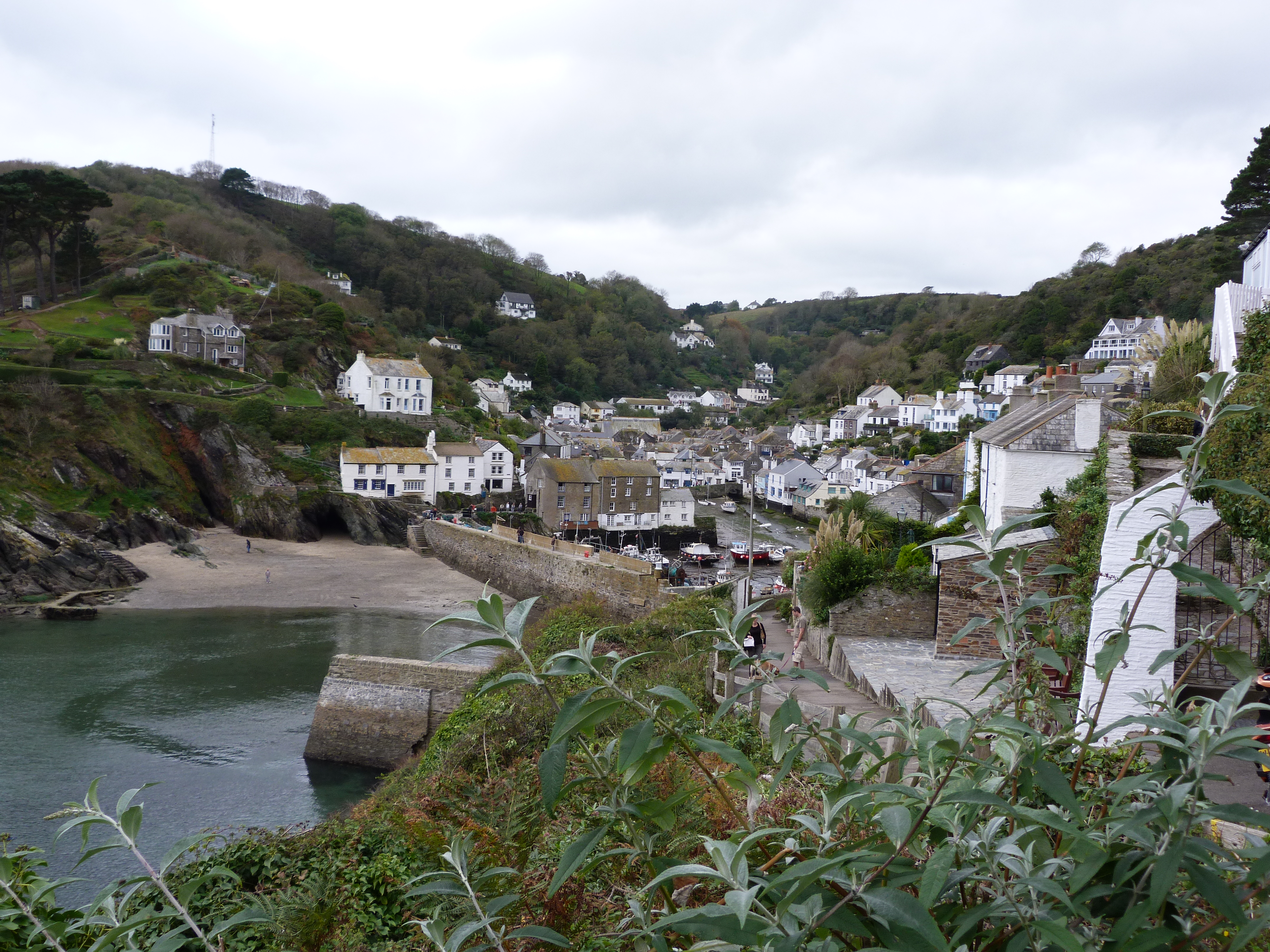
Polperro
Polperro is an even smaller fishing village than Looe, with tiny houses clustered around the harbor. We were pretty tired and hungry from our hike and we headed to the first pub we saw, The 3 Pilchards. It is the oldest pub in Polperro, and has dark low ceilings and lots of homemade food. A Pilchard is a kind of sardine and was the catch that made Polperro a vibrant village in years gone by. Tim opted for the “2 Pilchards Plate” which, when it arrived, was a mound of shrimps, prawns, calamari, crab, smoked pilchard and mussels. I had ordered the Thai fish stew (a specialty of the house), but Tim’s plate was enormous and it took both of us to polish it off. The fish was some of the freshest I have ever tasted and went beautifully with Sharpes Ale, a local from Rock, Cornwall.
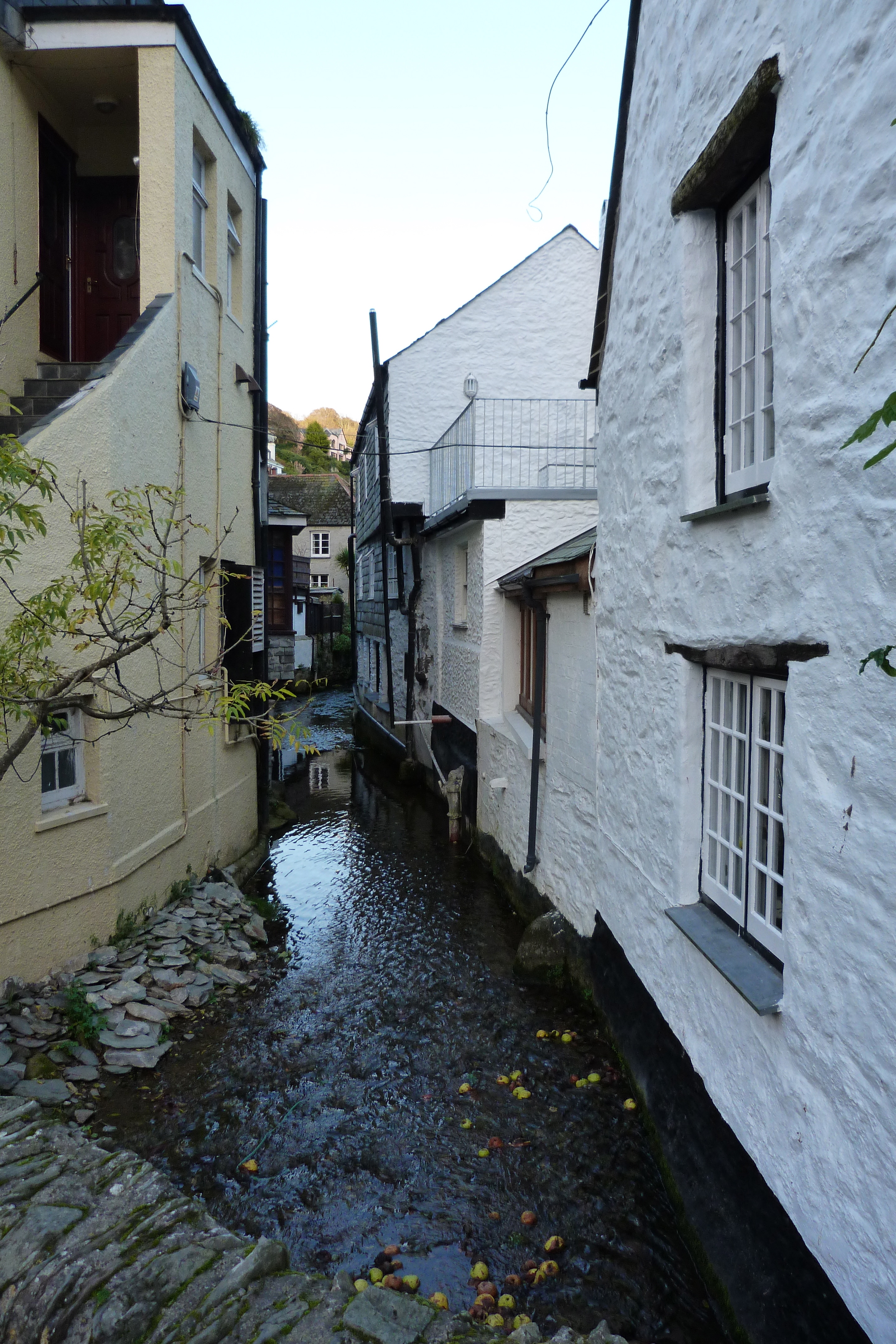
The streets of Polperro
Because Polperro is small, the proportion of tourists on a fine Sunday was rather off putting, so we decided to travel on fairly quickly. Not ready to finish our hiking day, I suggested that we push on to Lansallos, which I had heard of in our search for cottage accommodations. We decided to walk along the roads inland from the sea to get there, walk back to Polperro along the coast and then take a local bus back to Looe in the late afternoon.
Going inland, Lansallos was about 3 miles away.
On the road to Lansallos
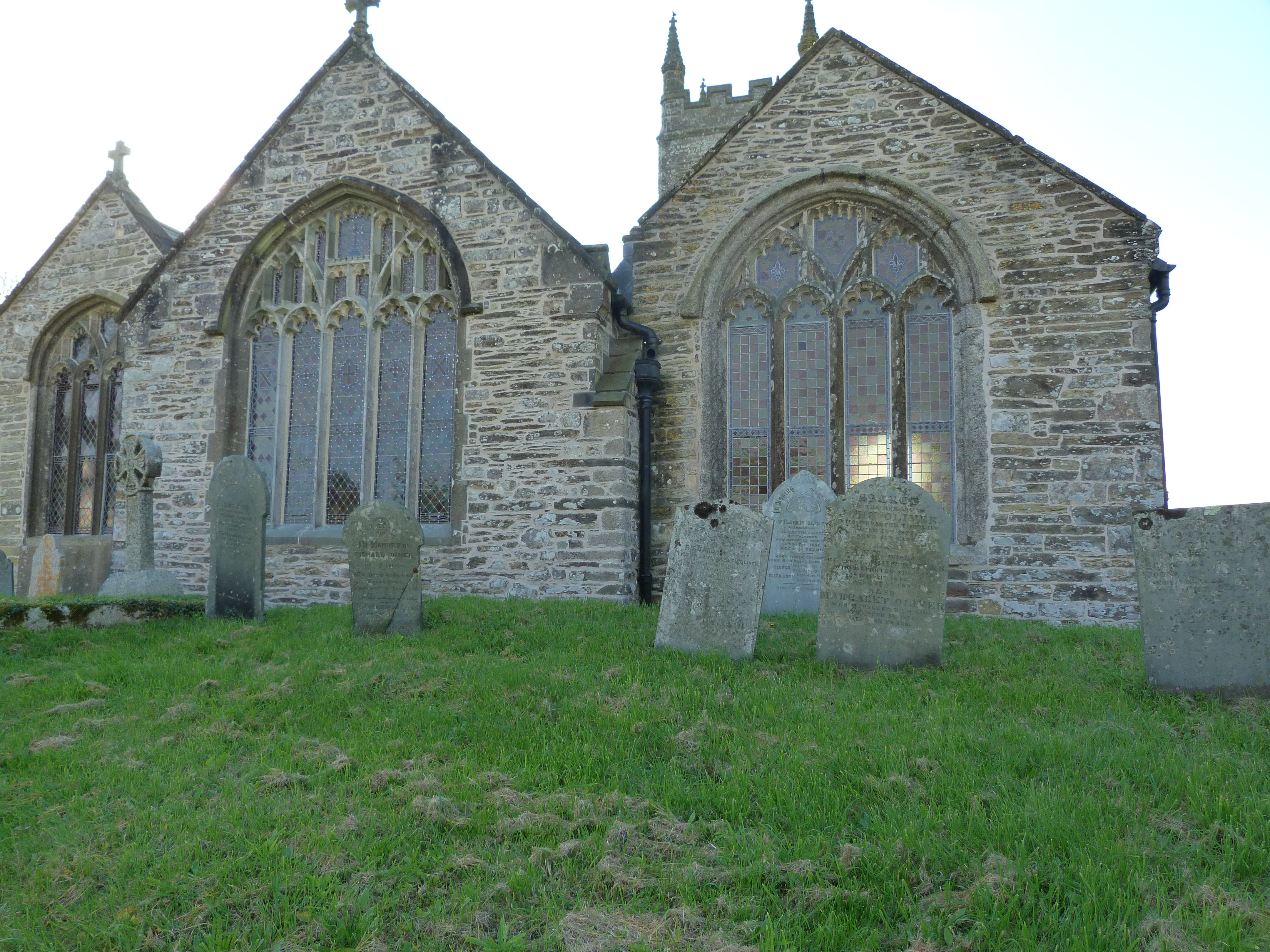
It was a beautiful country walk with tall hedgerows on either side of the road and picturesque farms dotting the landscape. Lansallos consists only of a few houses and a magnificent Norman church built in 1321 on the site of a Celtic chapel. An incredibly peaceful site, the Church is surrounded by a very old cemetery. One of the gravestones is dedicated to: “John Perry Mariner, who was unfortunately killed by a cannonball by persons unknown”. Poor John Perry was only 24 when he died, and the imagination boggles at this unusual death in 1779.
The Church in Lansallos
We saw not a living soul in Lansallos. “Benath Dew Genough Why” – “God be with you” in Cornish.
We headed back along the coastal hike. We probably should have found out more about it before heading off.
The hike from Lansallos to Polperro is, to say the least, a challenge. Some of the cliffs have steps to help the weary traveller, but they really serve to let you know how high or low you are going. 168 steps up, followed by 130 steps down, followed by… Tim kept chirping up “We’ve just climbed an 8 story building. That was 13 stories” etc. Not only that, but the path is right on the edge of the cliff. It is a severe challenge to anyone suffering from vertigo.
Looking over the cliff edge on the coastal path
Thankfully, there are occasional benches to help you to recover between climbs. It was an incredibly strenuous hike, especially for two rather inexperienced hikers. But it was astonishingly beautiful.
The rewarding view after a particularly difficult climb
Two hours later, with the sun just starting to set, we hobbled into Polperro to catch the bus back to Looe. Adding it all up, we put in well over 12 miles. Triumphant, we got back to the cottage, gratefully soaked our aching joints in deep baths, made pasta and curled up in front of a cozy electric fire.
As odd as it sounds, we decided to take a vacation from our vacation. We booked a cottage in Looe, a fishing village on the Cornish coast. Tim’s mission on this trip is to do a lot of walking on the coastal path and Looe, directly on the path, was advertised as a picture perfect English fishing village.
We left London via Paddington Station early on Saturday morning. The main train took 3 hours to get us to Liskard where we changed to a branch route to go to Looe.
The one car train to LooeTim at the train station in Liskard
The train to Looe was a tiny one-car train that went through leafy green woods, right beside a flowing stream. After 5 minutes of going forward, the train stopped and the driver left the front engine, walked through the train, and started driving in the other direction. We thought at first that he was heading back to Liskard, but apparently he was just going onto another track from a siding. Within another 10 minutes we were in Looe.
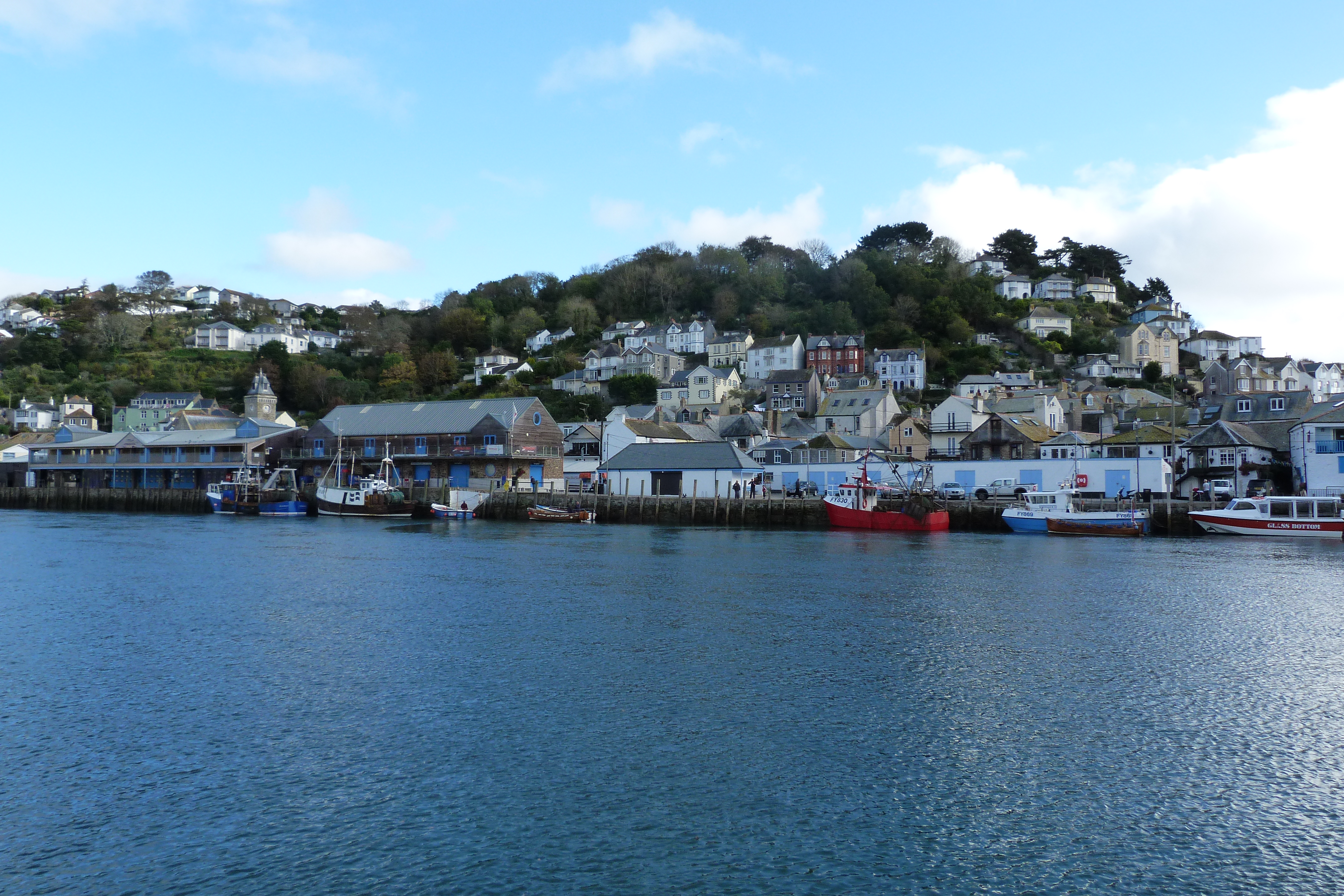
Looe is actually comprised of two villages – East Looe and West Looe – each wrapping around the small harbour. They were connected in 1411 when an estuary bridge was built. The current bridge was built in 1853. East Looe is the main commercial village filled with shops. West Looe is quieter and is primarily filled with accommodations.
Our cottage in West Looe is up a quiet, narrow, twisty street. It is a small two-story structure attached to a row house, and we enter below ground level. It is very dark (the bathroom is the sunniest room in the house) and has virtually no views out of any windows. But it is cozy and clean and private. It has a well-appointed kitchen, which is really the best feature as we are planning on cooking a lot of fresh fish.
The harbor is around the corner and to get to the shops in East Looe we can either walk around the harbor (about 5 minutes) or take a “ferry” (one man in a motor boat) for 40p (1 minute trip).
Looking across to East Looe
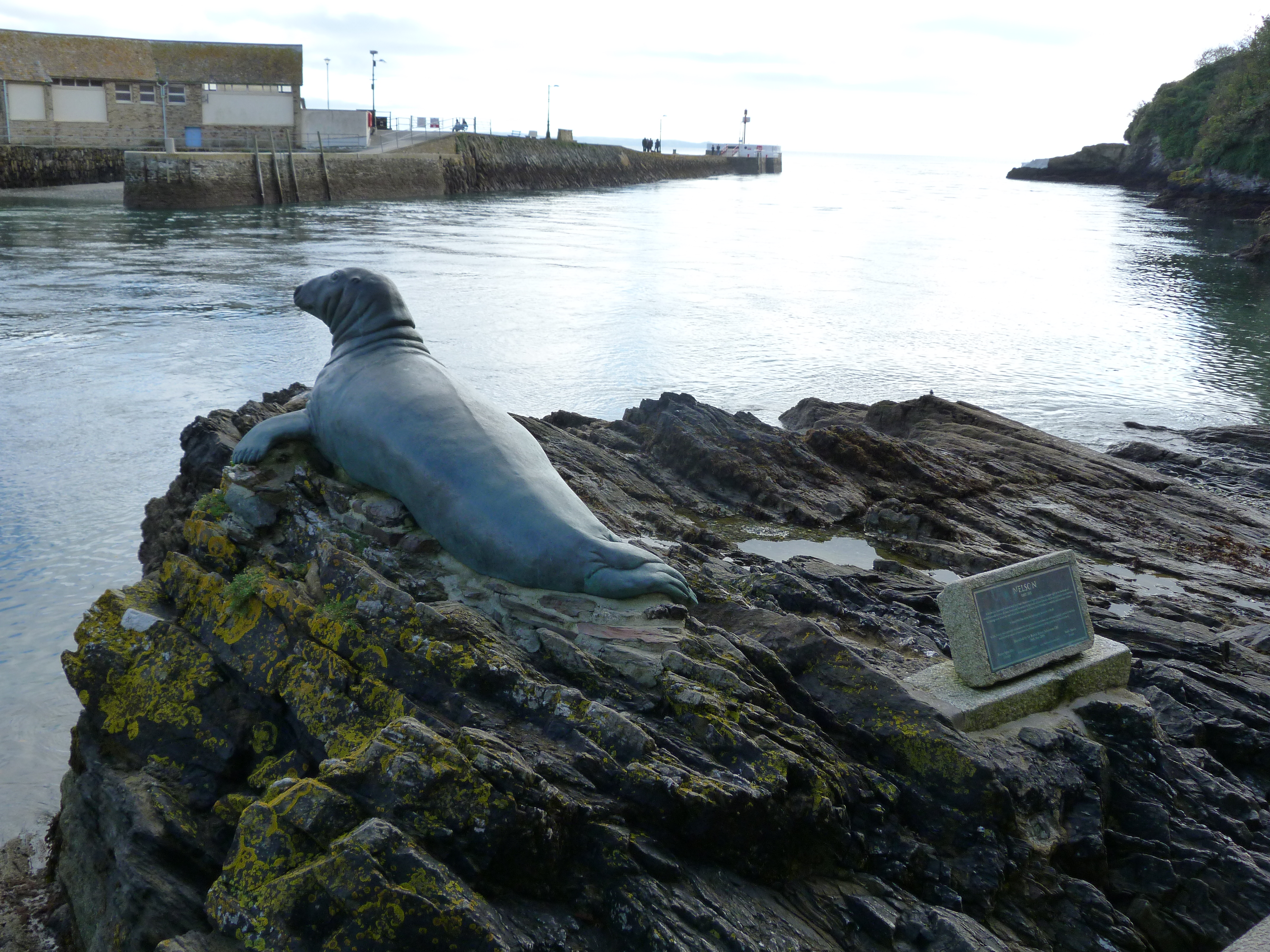
One of my favourite things on the West Looe side of the harbor is a dedication to “Nelson”, a distinctive, “one-eyed” Grey Seal who was well known along the Cornish coast for over 25 years.
The statue of "Nelson" in the harbour in West Looe.
He eventually “settled” on the rocks in Looe and the “Grand Old Man of the Sea” was apparently fed by local fishermen, villagers and visitors and was a great favourite of all.
After settling into Horton Cottage, we were anxious to walk about and get a sense of the town and points beyond. It was a warm and sunny Saturday, the tide was out and the beach was filled with families and laughter.
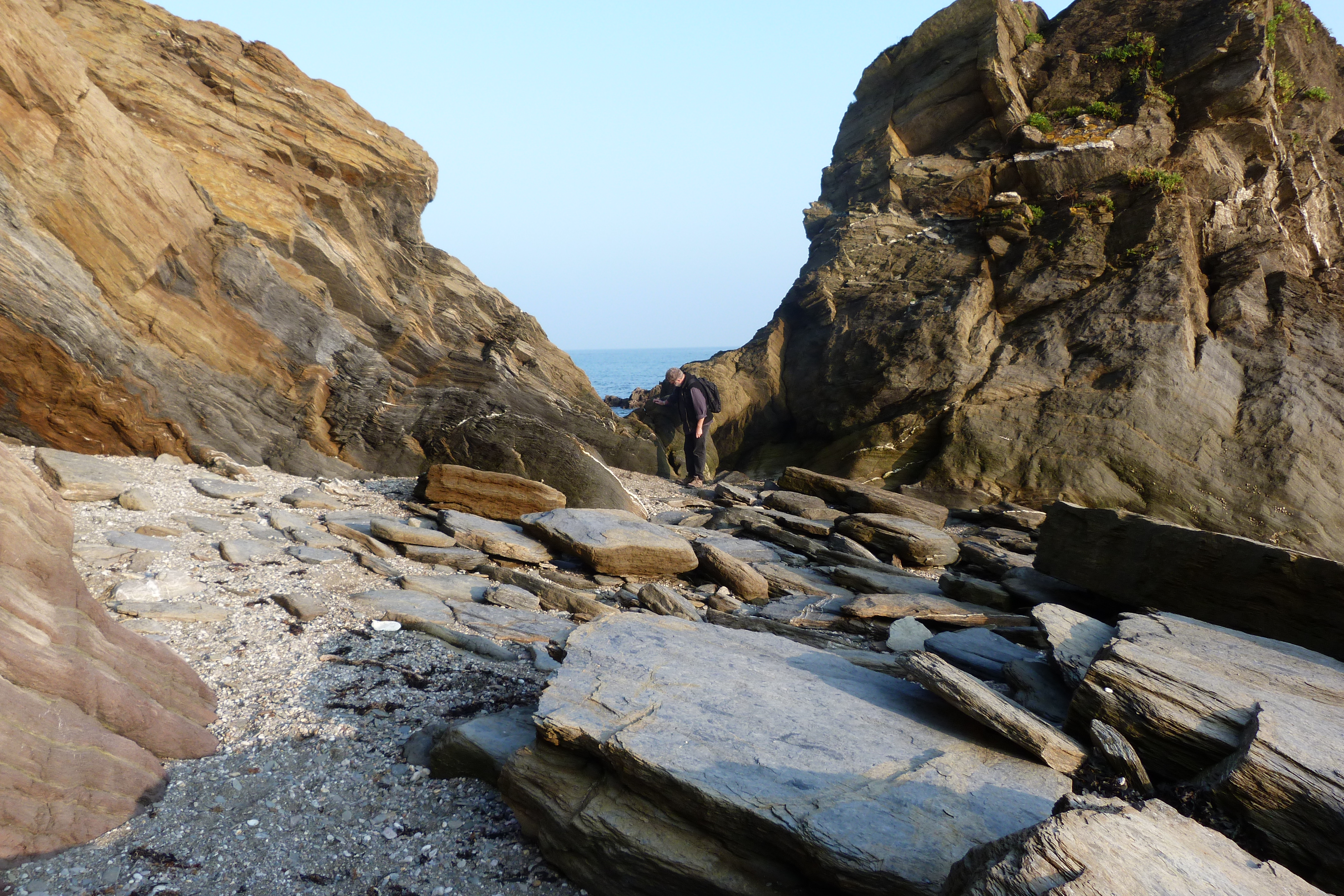
We walked a mile along the eastern coastal path to get our bearings, marveling at the rock formations and the quiet.
Rocks along the shore. Tim is in the centre of the picture for scale.
We hadn’t realized how much we missed vistas and fresh air.
Back in the village, we watched children set up around the edge of the harbor catching crabs just for the fun of it. They lowered little bait packages down into the water and then reeled them up covered in small (3 inch) crabs, which they put into buckets of fresh seawater. Inevitably, some crabs got away, and the kids squealed as they tried to catch them on the dock. The competition was in the number of crabs caught in any one lift (“Look, Look! I’ve got 5!!!). They were all released 15 minutes later.
Beside the dock, the tide was coming back in and so were the boats, laden with fish – John Dory, mackerel, lemon sole, crabs, halibut – to unload at the commercial market beside the dock. Looks like it has been a good day. Gulls cried overhead as we strolled lazily back to Horton Cottage.
You can get £12 tickets to shows at the National Theatre on the day of performance. They start selling at 9:30 in the morning, so you have to get there first thing and line up. So I got up early on Saturday and headed to town and got a ticket for the matinee of “The Kitchen” by Arnold Wesker.
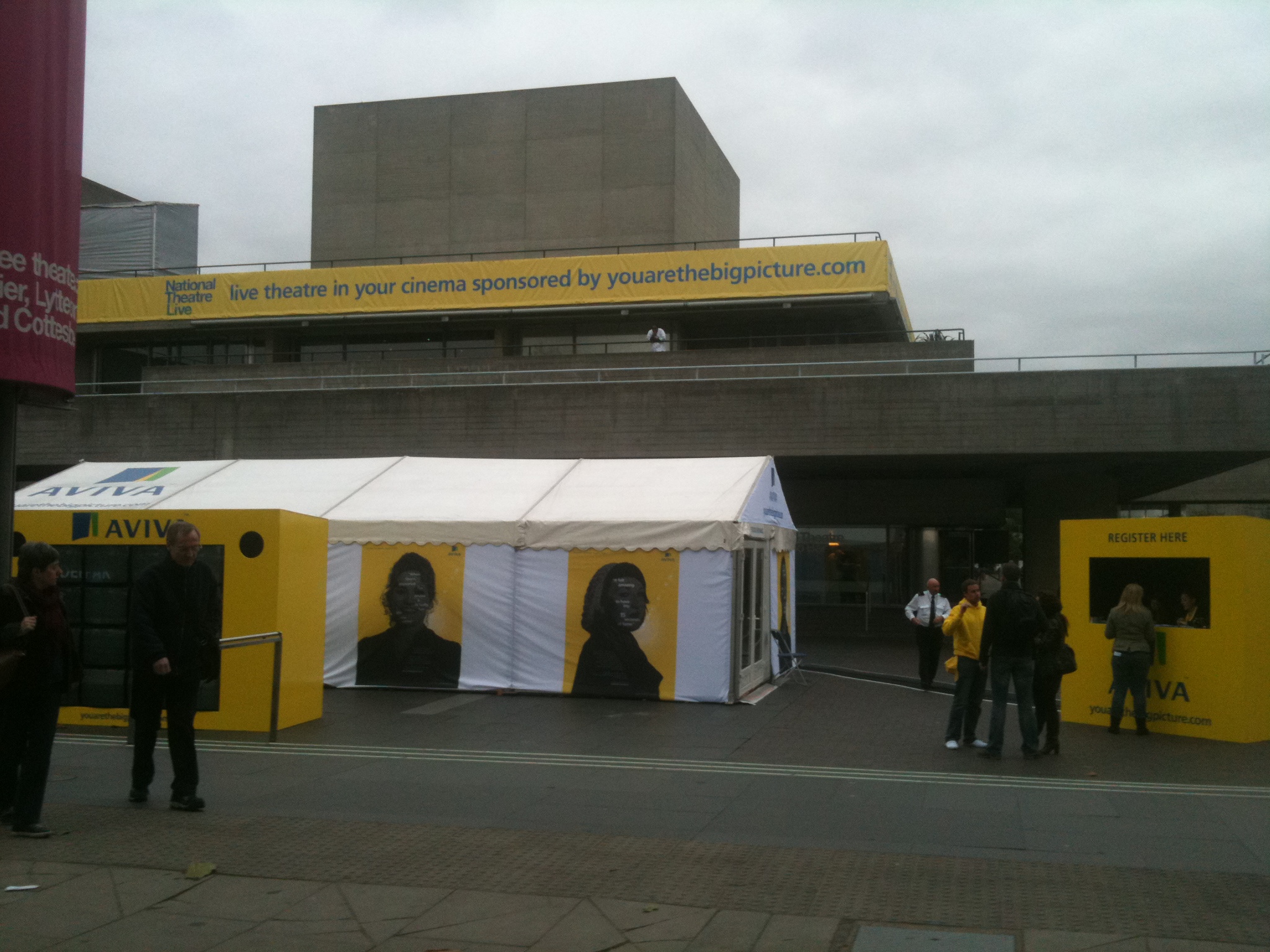
Ticket in hand, I had a lot of time before the show. I decided I would head over to the Imperial War Museum, a 15-minute walk from the National Theatre. But as soon as I stepped out of the theatre, I was approached by a couple of earnest young men asking me if I would take part in the Aviva Insurance “You are the Big Picture” campaign.
I am a fan of Aviva. They sponsor the National Theatre Live broadcasts that have allowed me to see great NT performances while in Ottawa. For “You Are the Big Picture”, Aviva is photographing thousands of people and for every picture they use they are donating £2 to Save the Children. I was asked if I wanted to take part. Aviva had set up a tent outside the theatre, and everything would take place right there. A makeup artist would “Just give me a little Jeuge” (have no idea how to spell this but everyone said it – keep the g soft when you say it), and a “world famous photographer” would take my picture. I would be given an 8 x 10 glossy – all free of charge. Well I said yes, of course!
The Aviva tent outside the National Theatre. My 15 seconds of celebrity.
Inside the tent, all shapes and sizes of people were getting “jeugged” and treated like celebrities. We told that our pictures would be projected on the wall of the National Theatre that night. Appropriately “jeugged”, I went into the photo shoot, had a bit of chit chat (click, click), smiled affably (click, click), was told I was very photographic (click, click) and thanked. My photo is being sent to me in the mail.
My 15 seconds of fame being over, I headed to the Imperial War Museum for a dose of reality. The War Museum was opened by King George V in 1920 and is a “museum of social history, concentrating on people’s experiences of war, the way they behave in war and the impact of war on society.”
Inside the Imperial War Museum
I wanted to go to the museum to see a special exhibit called The Children’s War. Focusing on the child evacuees during the Second World War, the exhibit gives a poignant view into war through the eyes of children. There are diary excerpts, toys, photos, evacuee kits and a recreation of a house from the 1940s to give you a direct and tangible sense of life at the time.
The British evacuation during the Second World War was the largest evacuation in history. By the end of the war 3.5 million people, mostly children, had been evacuated from their homes. They were primarily evacuated to the countryside in England but thousands were sent to Canada, the United States, South Africa, Australia and the Caribbean. Posters of the time exhorted mothers not to be tempted to bring their children back to the city:”Children are safer in the country: Leave them there.” It was an incredible exhibit and left me thinking a lot about Tim’s mother raising her 3 daughters in Gloucestershire during the war, while his father was in service. She always described their evacuation to the countryside as somewhat idyllic. For others, it was clearly a nightmare from which they never recovered.
On my way back toward the National Theatre, I came upon a market with just a dozen or so stalls behind the Royal Festival Hall.
The Market behind Royal Festival Hall
I bought a wonderful Moroccan Falafel with spicy Harissa sauce for lunch. Seems every weekend that I am out and about in London I come across a different market. This one was a perfect transition from the exhibit at the museum to the play at the National.
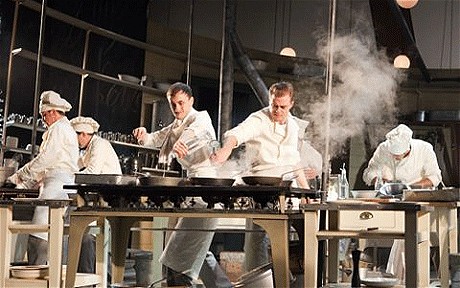
“The Kitchen”, by Arnold Wesker, takes place in a kitchen of a large restaurant circa 1950.
"The Kitchen" at The National Theatre
It is a director’s tour de force where 30 actors portray chefs, waitresses, cleaning staff, proprietors all in a balletic harmony and disharmony of action. Very few theatres in the world could produce something on this scale. It is a restaurant that apparently serves 1500 for lunch, and you believe it as the orders pour in and chefs chop and cook in a flurry of activity, flirting and fighting. It is a United Nations of workers “backstage” in the kitchen, all of whom are struggling to find their place in post-war England. A mammoth study of character and movement, there is also an element of allegory. A huge and fascinating piece of theatre, it would take at least 5 viewings to see all of the action.
I treated myself to a quick “Autumn Cocktail” at the market as I headed back to the train to Surbiton to begin Thanksgiving preparations for the next day.
Thanksgiving is not celebrated in England, or anywhere outside of North America I realize. But I am pretty hardwired for a harvest celebration at this time of year. Maddy hasn’t had a chance to celebrate Thanksgiving for years, and Amanda Lunberg is American and was definitely up for celebrating, even if it was not exactly the right time of year for her. So we all decided to do a big Thanksgiving dinner with Peta. Bryan, Penny & Eric.
The Brits are fascinated by the details of the holiday, trying to figure out if there is anything special that we do other than cooking and eating. “We are thankful. That’s all. Thankful for the harvest. Thankful to be with family and friends. Thankful for a holiday.” To which Tim adds, “Thankful that it has nothing to do with presents”.
Peta helped us to set up the harvest table. Jo made fresh salsa from the French tomato harvest for our hors d’oeuvres. We cooked a large, free-range turkey and made all of the “trimmings” – stuffing, mashed potatoes, roast potatoes, roast onions, gravy, squash casserole and Tim’s fabulous red cabbage.
Maddy's Pecan Pie
Maddy made broccoli casserole and her famous pecan pie (Bryan says she is not allowed in the house without one). Amanda Lunberg made delicious pumpkin pie and Penny made apple crumble from her apple harvest. Mid-meal we took a break and were entertained by Eric with photos of their recent trip to Turkey and Greece.
Bryan opened Cremant and we all got very noisy and thankful, together.
With Tim in Boston, I decided to take a trip to visit Annie Thomas in Bristol. We’d met Annie in France and liked her immediately. She teaches Language and Literature to high school students, helping them to get their “A” levels. Tim and I had been to Bristol in 1976, but I remember nothing about the visit save for a dim memory of pub with a parrot.
The weather was unusually hot and lovely. After lunch in Annie’s terraced backyard, we went walking along the Avon River.
Bristol is a port city that has checkered past. It rose to prominence when John Cabot (Giovanni Caboto) sailed from Bristol in 1497 and arrived at Newfoundland. Ah, a Canadian connection. A replica of his boat, the Matthew, was built to commemorate the 500thanniversary of the voyage, and it sailed to Canada in 1997.
The Matthew
The replica of the Matthew now sits in the harbor in Bristol, and it is amazing to think that such a small and delicate vessel could make it across the ocean.
Bristol became an important commercial port, but when I ask Annie what Bristol is known for she immediately says, “Slave Trade”. Bristol was on the triangle of slave trade that sent Africans to the New World to work the sugar, cotton and tobacco plantations. It is an infamous past that I see no acknowledgement of, although Annie says that all school children learn this history in school.
What I do see is a wealthy Georgian suburb, high in the hills, a sign of 17thcentury prosperity, built on slave trade.
Georgian Row houses on the hills above the harbour
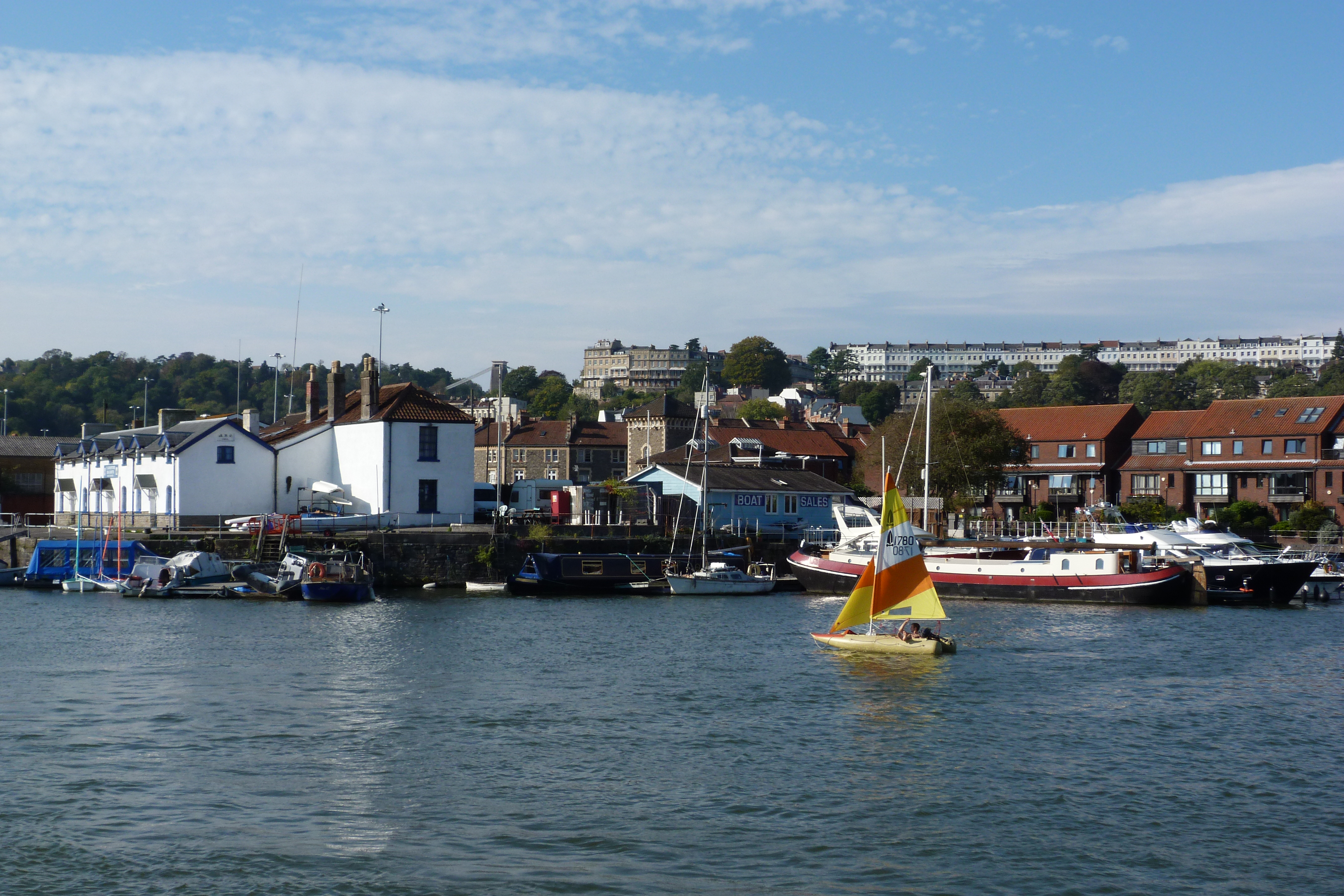
In the 18th century, Bristol moved away from trade and developed as a prominent shipbuilding centre. It is still a working shipyard, although the boats repaired here are now pleasure crafts, not commercial vessels.
In recent years, the harbor has undergone a renaissance. Art galleries and museums have taken over the old warehouses, new flats give residents wonderful riverside views, and there is a profusion of small cafes and restaurants. There is an air of luxury, culture and fun.
On Sunday, the whole town seemed to be out enjoying the hot sun glistening on the water. On the water there were model speed boat races (really annoying with a terribly whiney sound), rowboats and sailboats.
The Bristol Harbour
Annie and I walked and talked, stopping for coffee at The Olive Shed, an outdoor café on the river that oozed garlic from a profusion of tapas choices.
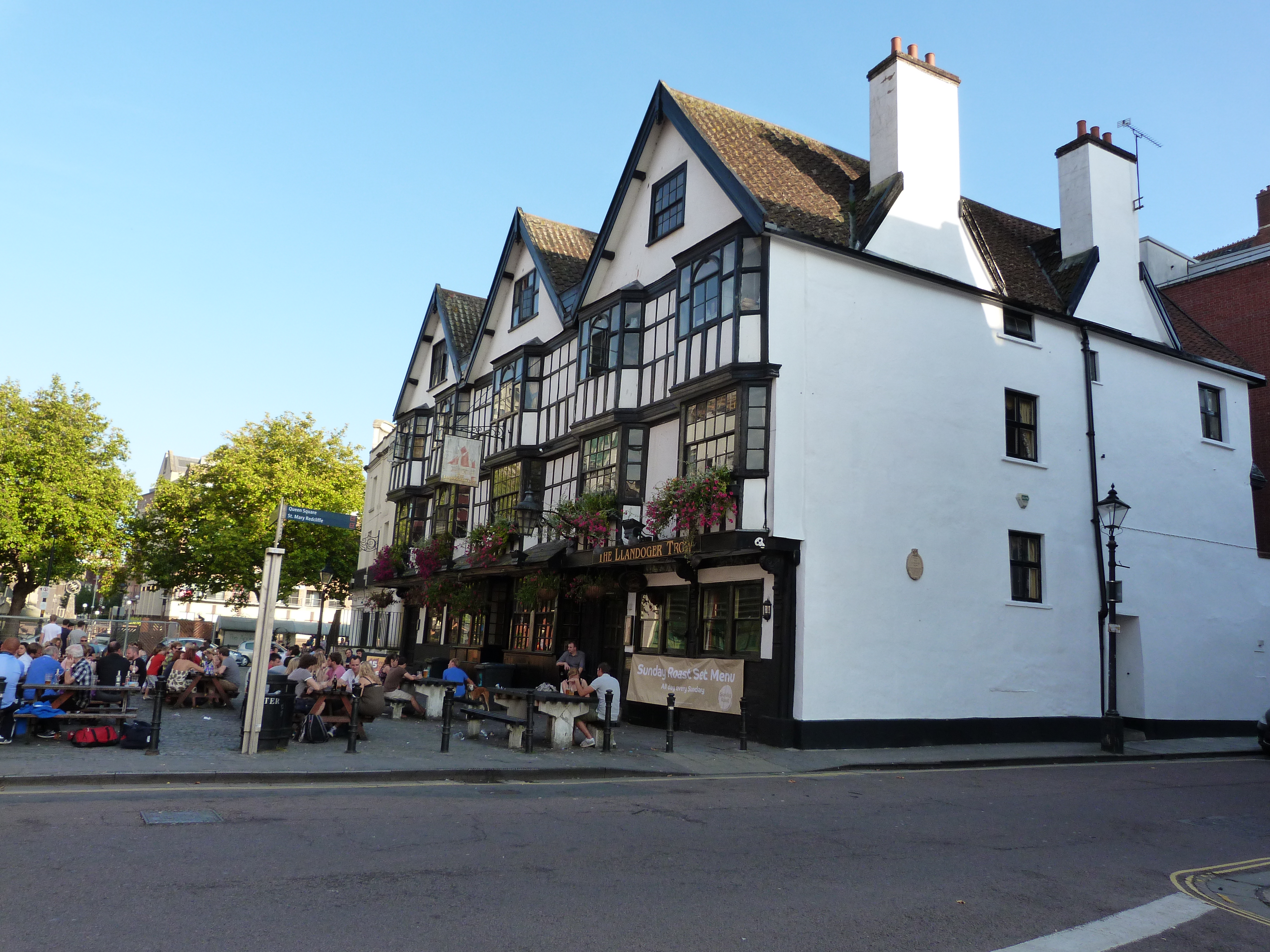
We walked the entire perimeter of the harbor, passing the Llandoger Trow, the pub where Daniel Dafoe met Alexander Selkirk, the model for Robinson Crusoe. I forget to go and check to see if they have a parrot.
The Llandoger Trow
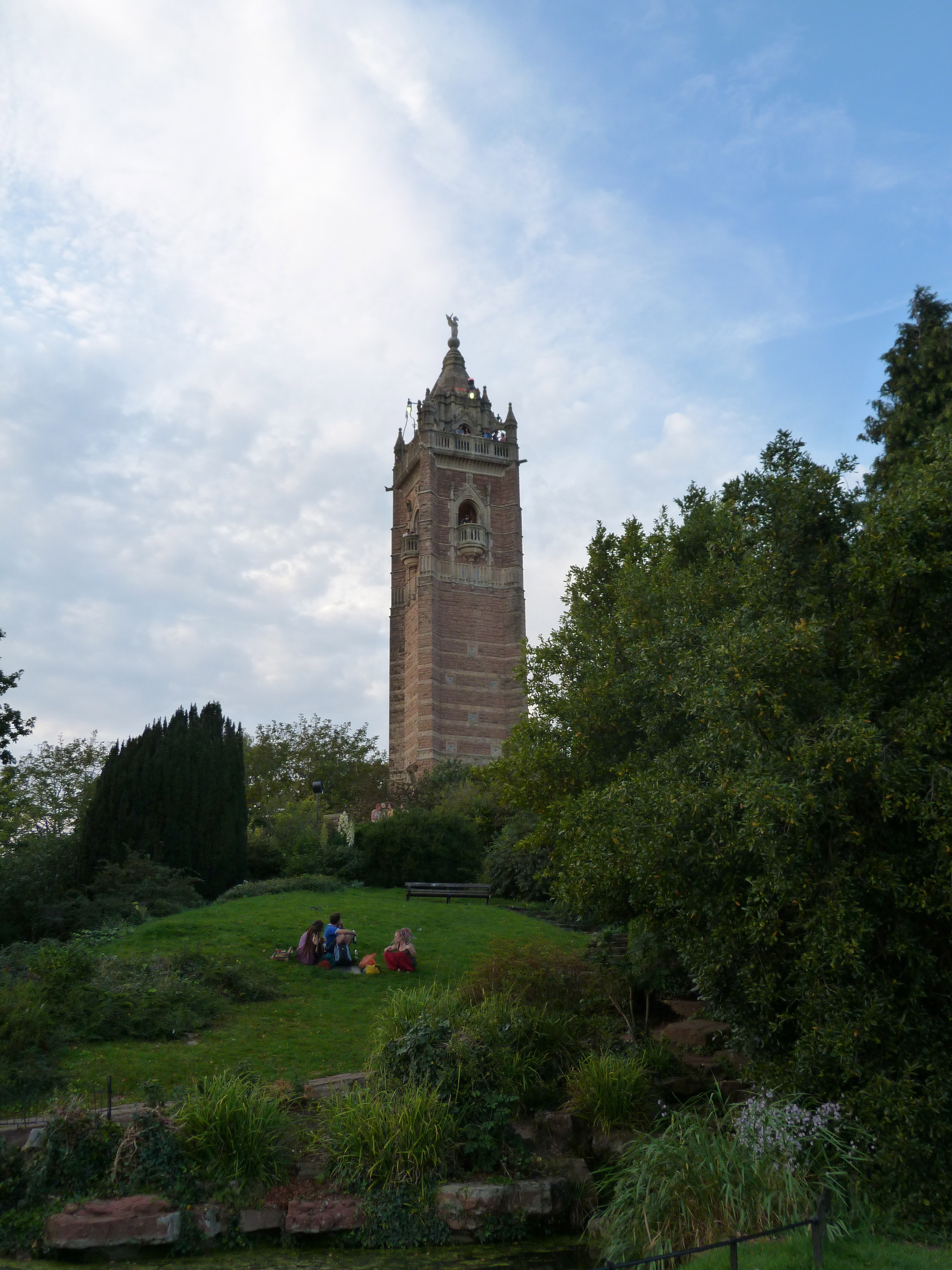
We headed up the hill toward The Downs. Bristol has 2 universities, and classes were due to start the next day. Consequently, the Downs were filled with university students picnicking, singing, drinking and gently smoking various substances. It was a peaceful, party-like atmosphere. We climbed up the Cabot Tower, which was erected in 1897 to commemorate John Cabot’s voyage. It gives an amazing view of Bristol and the lands beyond.
Cabot Tower
For dinner we went to Annie’s favourite, The Grain Barge, a ship converted into a pub. We sat on sofas on the deck of the ship and looked over the harbor, watching the evening lights come on and a crescent moon sink under the horizon. “Gert Lush”, which is Bristolian for “Really Good”.
The next day, Annie took me to Clifton Village, which is the wealthy suburb of Georgian row houses up the hill from the harbor. Because Bristol is built upon the hill coming up from the river, our walking took us on tiny streets zigzagging through the town. At the top of the town is the Clifton Suspension Bridge. Designed by Isambard Kingdom Brunel, the 76 meter high bridge spans the Avon Gorge from Clifton to Leigh Woods in northern Somerset.
The Clifton Suspension Bridge
The bridge was completed in 1864, and the workers that we spoke to were doing some re-pointing that hadn’t been done in 50 years. One lane of traffic can go over the bridge at a time, and apparently 12,000 cars can cross every day. We walked over, fighting vertigo, amazed at the engineering marvel.
Bristol felt vibrant, beautiful and friendly. A city of 400,000, Annie boasted that she is able to walk to concerts, to the theatre, to her Italian, German and French classes, and to her work. And of course, she is able to walk down to the harbor, to enjoy dinner at the Grain Barge. A very livable city.
In 1925, A.A. Milne bought Cotchfield Farm outside of the town of Hartfield in East Sussex. Although the farm is now privately owned, there is a public path and we are in need of an “Expotition”.
We arrived in Hartfield by bus from the town of Tunbridge Wells. Hartfield is a tiny village, listed in the Doomsday book of 1086. It is basically one street, with tiny converted cottages and two inns. We stopped at the Anchor Inn (built in the 15thcentury) for a pub lunch (Fisherman’s pie, locally made).
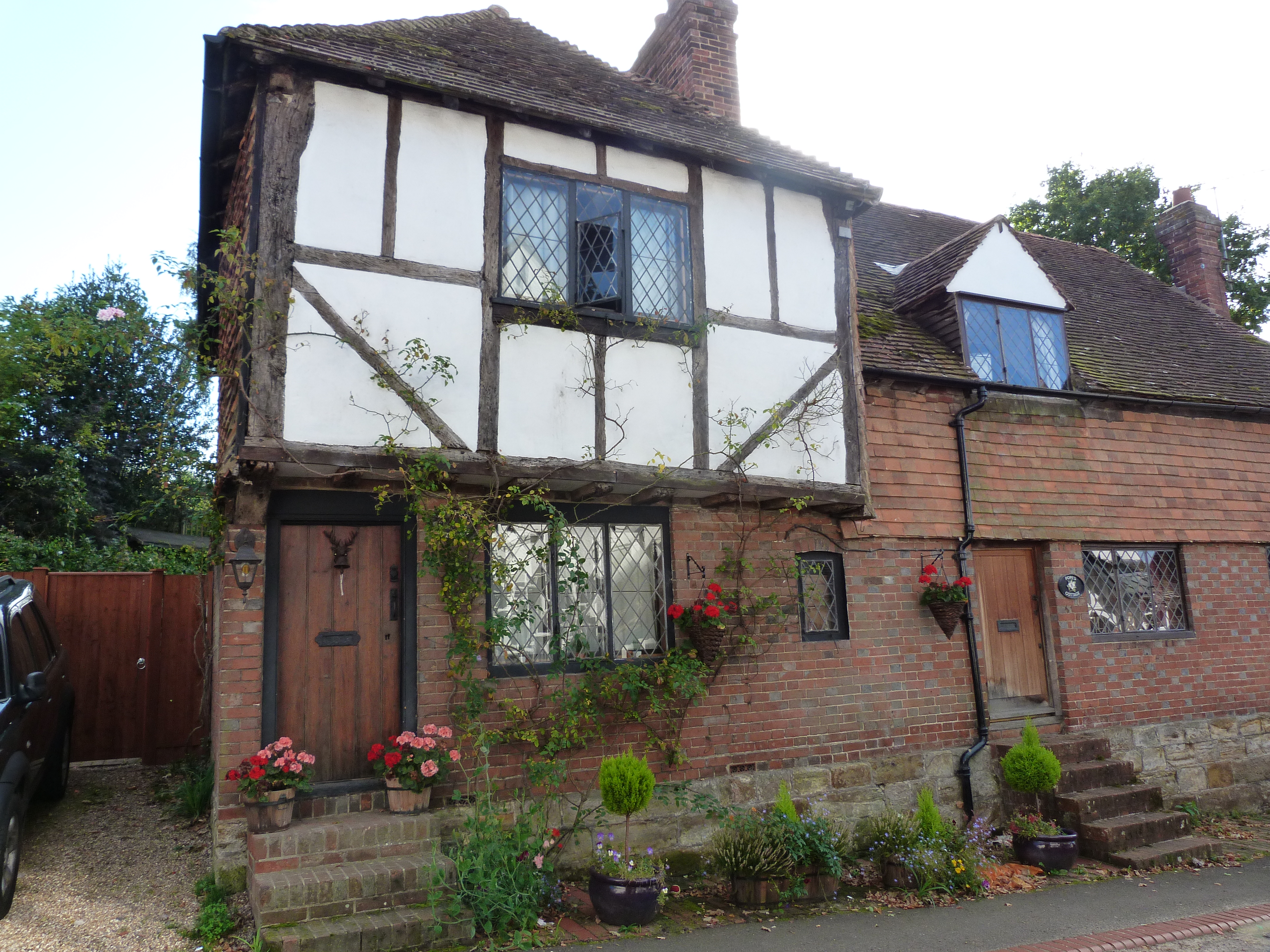
Pope's Cottage
Across from the Anchor Inn was “Pope’s Cottage”, originally built in the 13thcentury. At the end of the main street was a little sweets shop that was frequented by a young Christopher Robin.
Sweets Shop
Our pilgrimage begins at the sweets shop, where we are able to pick up a map to Pooh Bridge. Maps are available in English and in Japanese, as are instructions for how to play “Pooh Sticks”.
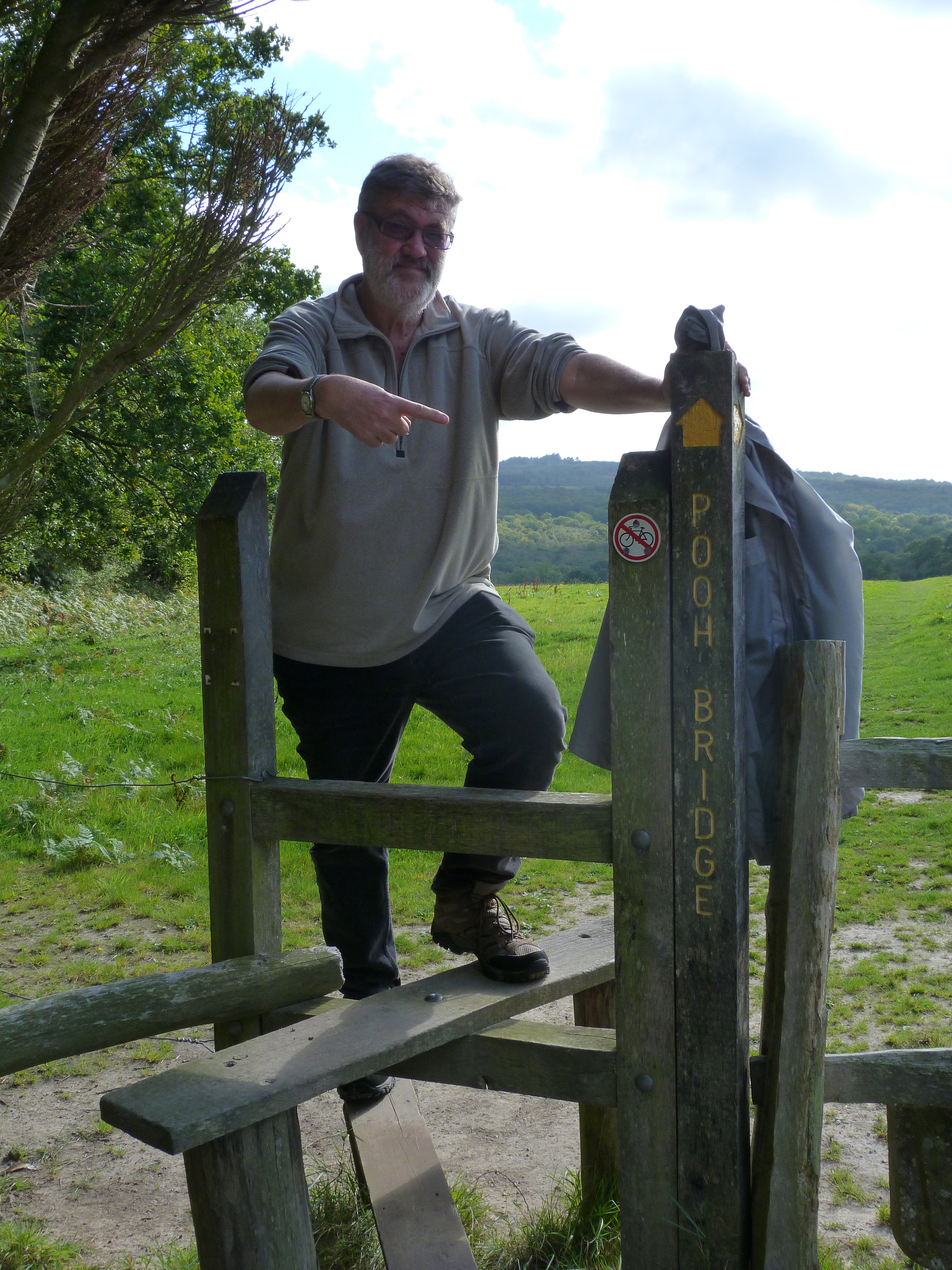
Tim stepping over the Stile
Our walk to the bridge takes us 2 miles out of the village, over wooden stiles, through sheep fields, along a public pathway bedecked with raspberry canes. The day is perfect, with billowy clouds against a bright blue sky and just a hint of breeze.
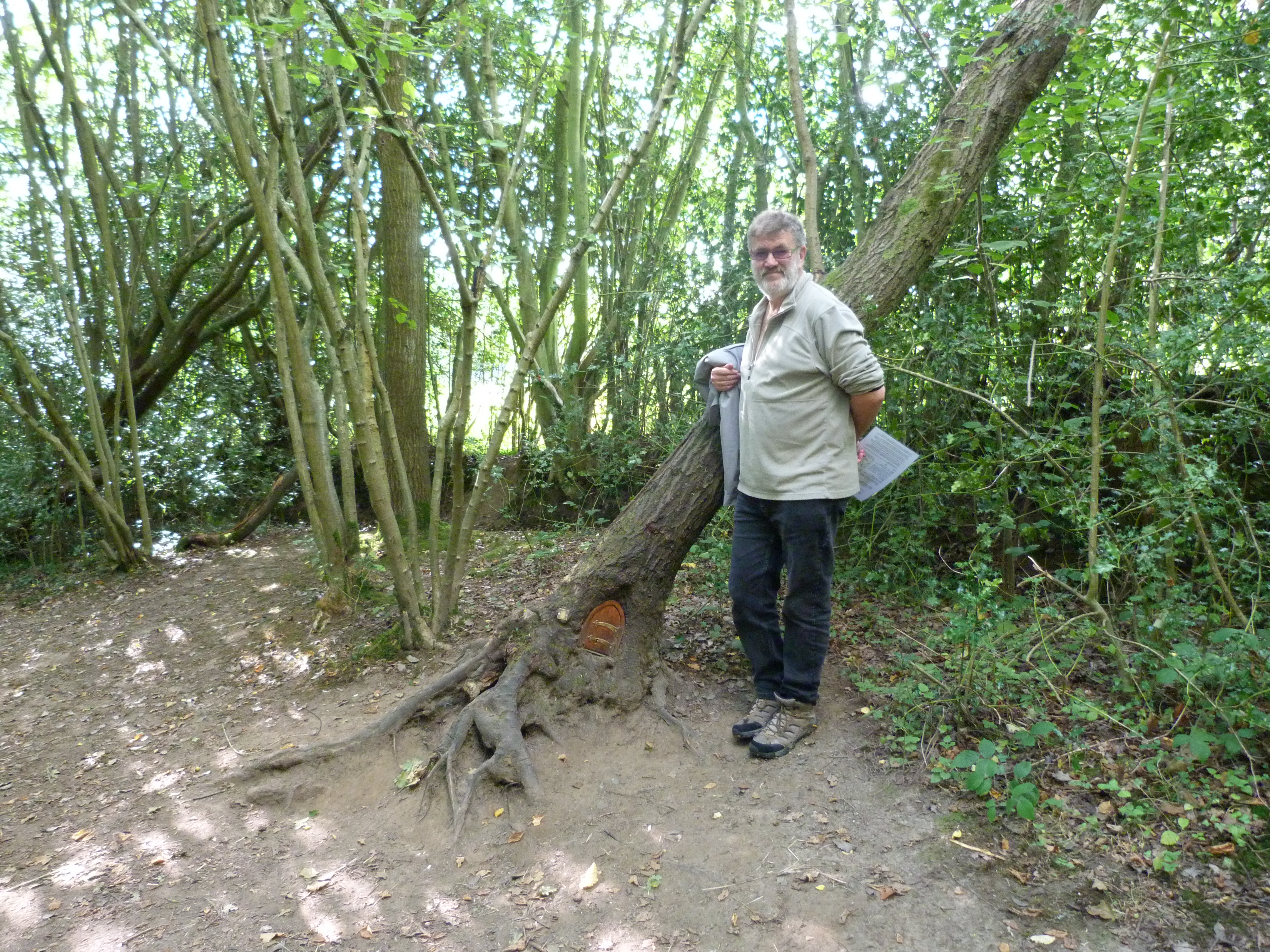
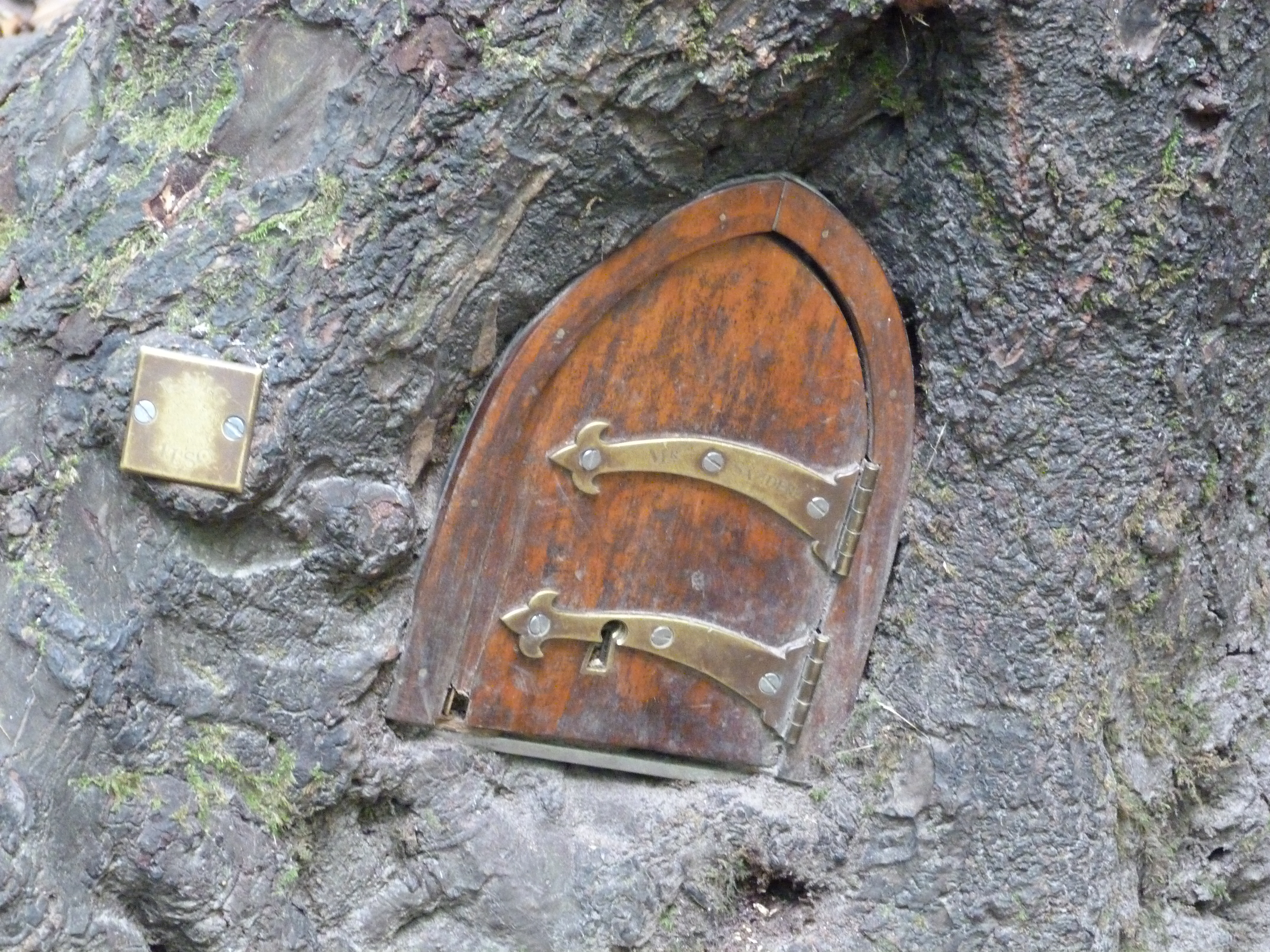
It takes us a leisurely 40 minutes, and as we come toward the bridge we see a beautiful tiny wooden door set in a tree.
A small door in the base of the tree
An inscription has long since worn off, but we can still see, at the top of the door, the engraving: “Mr. Sanders”. (“Winnie-the Pooh lived in a forest all by himself under the name of Sanders”)
Mr. Sanders
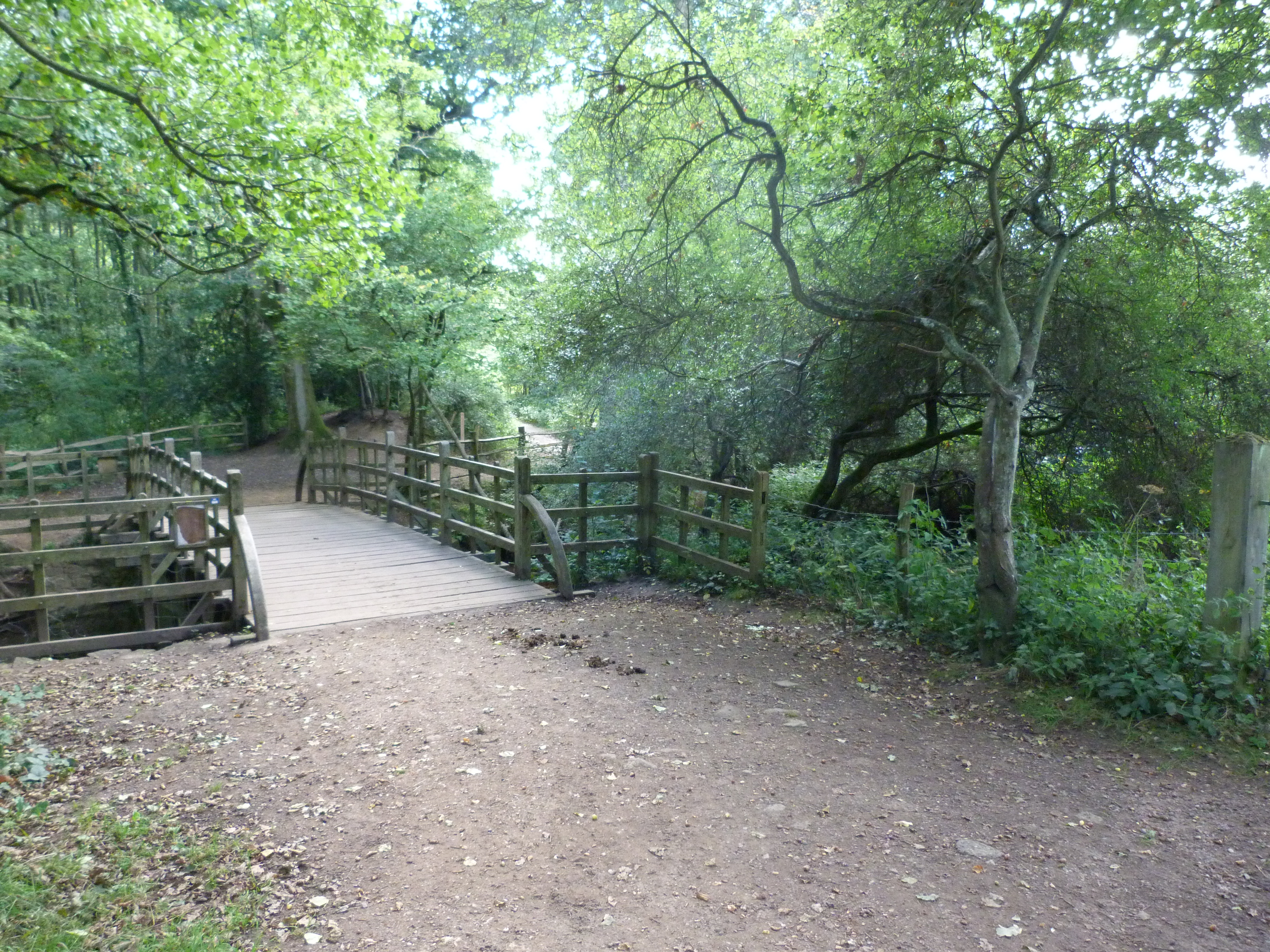
Beyond is the bridge.
Pooh Bridge
It was restored in 1979, and is solid wood, strong enough for the horse traffic that comes along this path. The sunlight dapples the river, showing a proliferation of small sticks on the downstream side.
Amanda plays Pooh Sticks
We add our small offerings into the pile, racing from one side of the bridge to the other to see them come through.
Back in Hartfield we have tea in the Rose Garden of the sweets shop (called “Pooh Corner” now). A perfect day. Some go to Lourdes. Others go to Pooh Bridge.
“Sometimes, if you stand on the bottom rail of a bridge and lean over to watch the river slipping slowly away beneath you, you will suddenly know everything there is to be known.” Winnie-the-Pooh
On our second to last night in France, Suzanne and Christian invited us over for dinner and I asked if I could make the dessert. I wanted to make a Tarte aux Mourres. Picking blackberries brings out an almost religious feeling in me. The deep purple, sun-warmed berries, bloated with juice, line all of the road verges. Such beauty. I love picking them with the sun at my back, hearing, just on the other side of the verge, the gentle snorting and snuffling of a large Charolaise cow.
However, there is a bit of treachery there. A bit of pain is part of the process. The thorns are sharp, and the roadsides are plagued with stinging nettles. These seem to thrive right beside the best berries. Tim says the experience is an important moral lesson –in order to receive this extraordinary gift, you will have to undergo a bit of pain. But it will be worth it in the end. And it is. We are just at the end of the blackberry season now, but Tim and I were still able to pick over a quart of blackberries.
To make the tarte, I approximated a recipe from memory that leaves most of the fruit uncooked – it is a great pie if you want your fruit to still taste really fresh. The recipe I have included works for any fresh fruit.
The meal at Suzanne & Christian’s was a true French feast – an extraordinary 5-course, 5-bottle meal. We began with some true Champagne, lovely tiny bubbles that whetted our appetites as we nibbled a local pastry and tiny tomatoes from Suzanne’s garden. Next was “Vin des Fossiles” from Saone-et-Loire. It is made from a grape I have never heard of – Auxerrois – and was crisp and light and lovely with our tomato tarte appetizer. The François Pinte Aloxe-Corton was a gorgeous and rich Pinot to go with our thin Entrecot steaks. We fried these on a griddle at the table, with some shallots. Suzanne made a beautiful dish of aubergines, potatoes, tomatoes and Parmesan cheese. The whole mixture brought out the pepper taste of the Pinot. For the cheese course, Bryan chose a special wine from his part of Christian’s wine cellar – a Givry Premiere Cru 2000. The way that this wine went with the cheese course is impossible for me to describe. The cheeses themselves were correctly eaten in an order – the soft Brie, followed by the dry chèvre and completed with the creamy St. Agur blue. My Tarte aux Mourres was about 3” high, solid with the blackberries that we had picked that morning. A great success, it went perfectly with the Cremant de Bourgogne, 2008, Veuve Ambal.
Christian admits that they don’t eat in this true French fashion very often! We felt very spoiled.
The next morning I had one final class with Suzanne. I am deeply grateful for the friendship that Suzanne and Christian have shown me. After the class they offered me an aperitif, a Vin Doux Naturel. It is a Vallée du Rhône Grenache that is 16% proof, a slightly sweet, thick wine, served chilled. Not sweet and viscous like an ice wine, but very smooth and very earthy. They gave me olives and dried pork from the same region as the wine to taste as well. Just a little nibble to share before I left. I don’t think I have advanced much with my French, but there are so many wonderful things I have learned!
Christian and Suzanne and our aperitif
It was a day of lasts. I walked up the hill past the chickens, past Claudette and Robert’s to a last lunch on the patio. Bryan’s special Frissé salad. It is a simple, filling country salad of Frissé lettuce, Lardons (bits of pork), Comte cheese, and topped with a fried egg. Bryan keeps a big jar of home made salad dressing in the cupboard to pour generously over the top of anything and everything. Of course you sop up all of the salad dressing with fresh baguette, and wash it all down with local Sauvignon Blanc. How can we possibly leave this heaven?
But we do, on an early morning TGV (Tran Grand Vitesse), from Le Cruesot to Lille, Lille to London. Our gorgeous Maddy is at St. Pancras station to meet us, to guide us and help heft suitcases to Surbiton, Bryan and Peta’s wonderful London home. With loving family around, we get down to the business of making the transition to a new phase of the adventure.
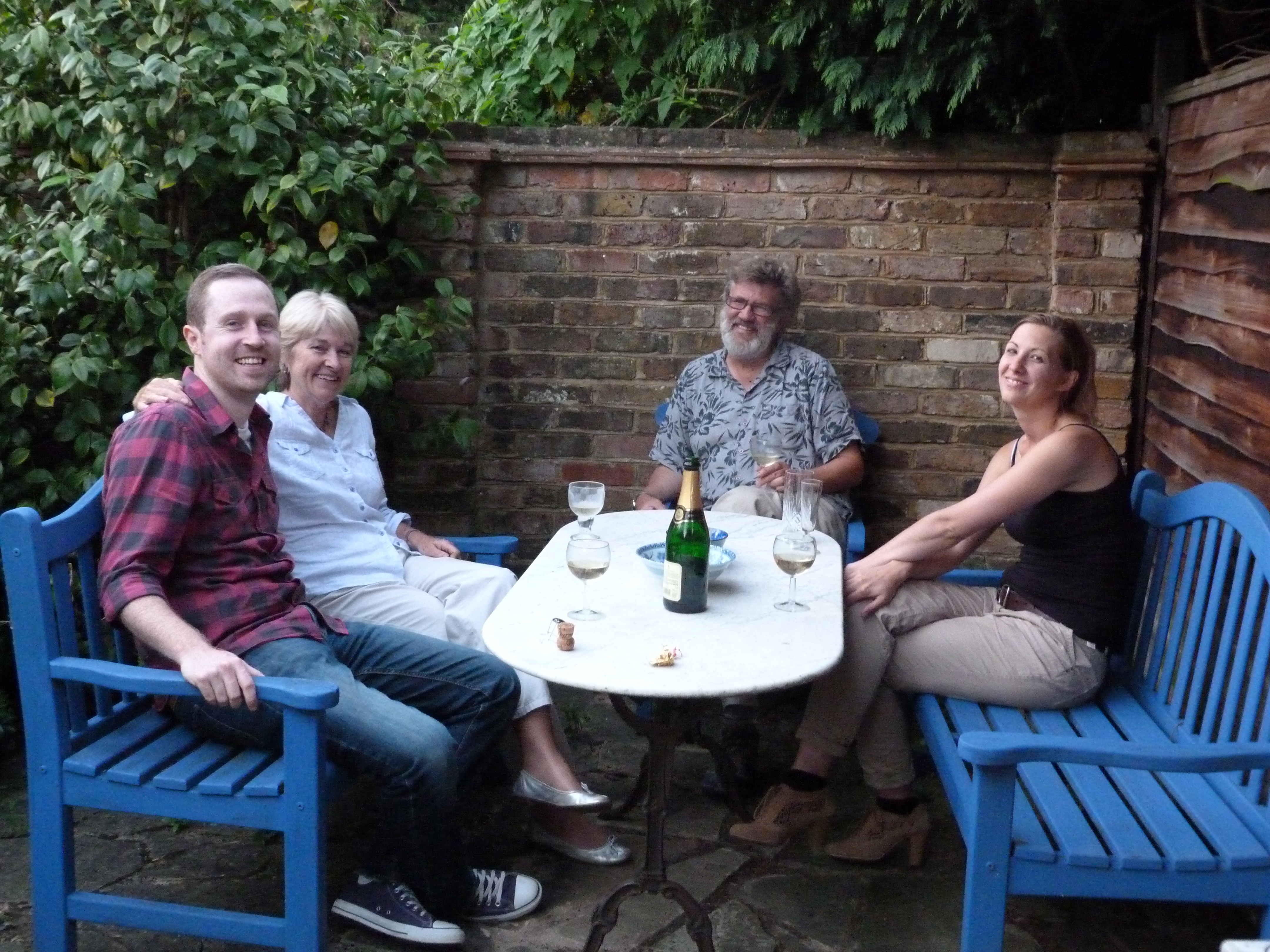
Jo, Peta, Tim & Maddy in the garden at Tolworth
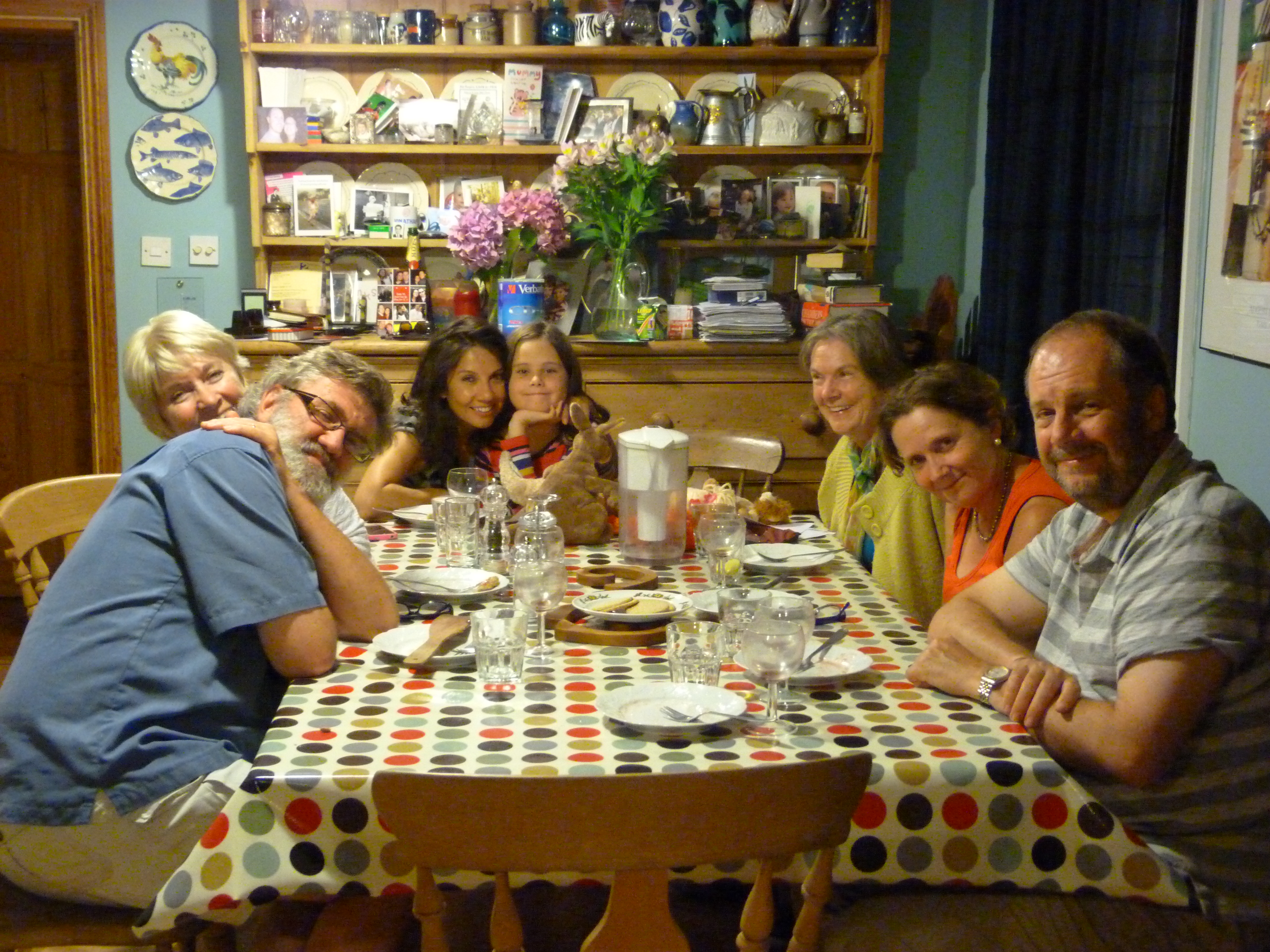
Starting, of course, with a large, welcoming, meal.














 Stepping off the Treadmill