On Vacation in Cornwall

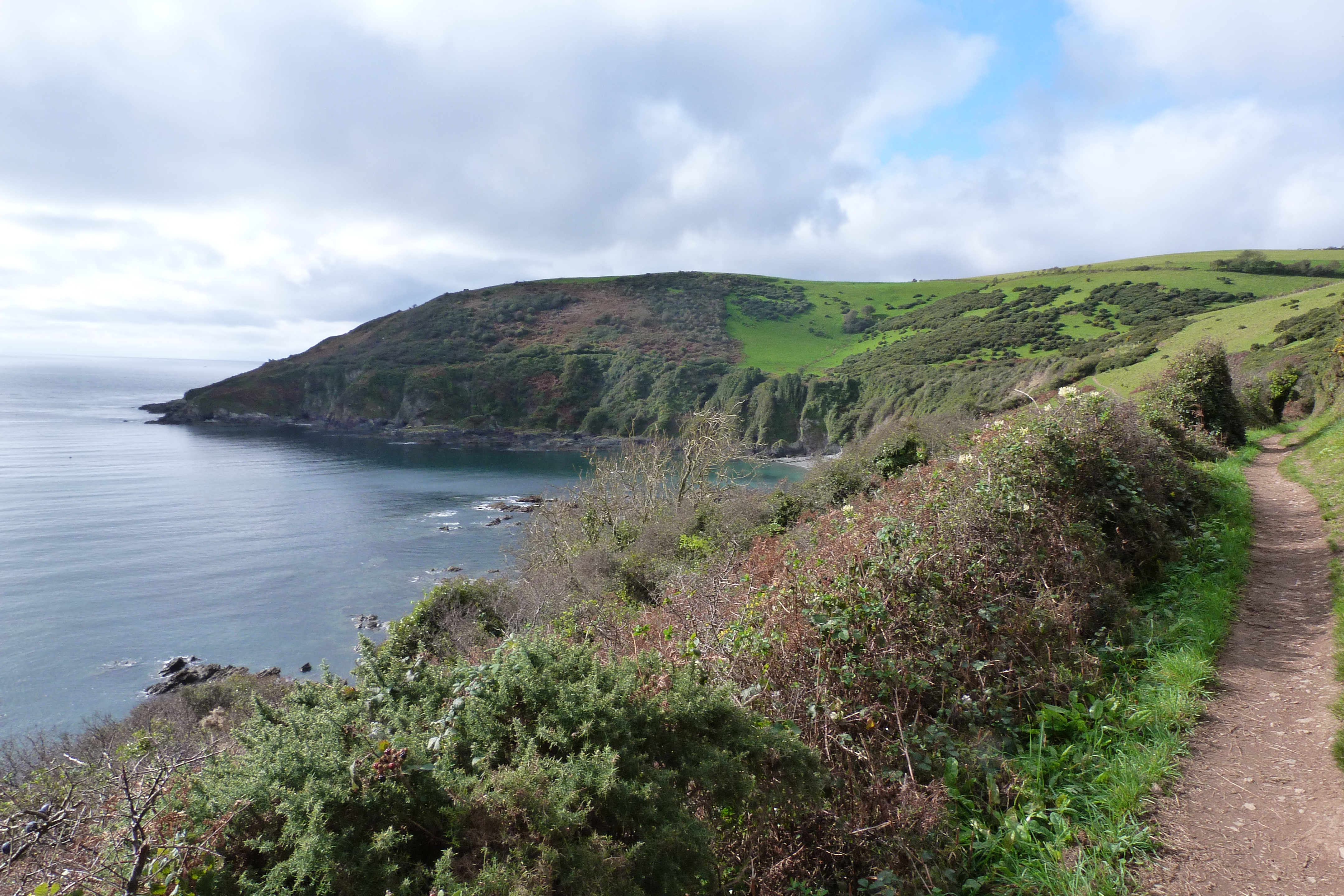
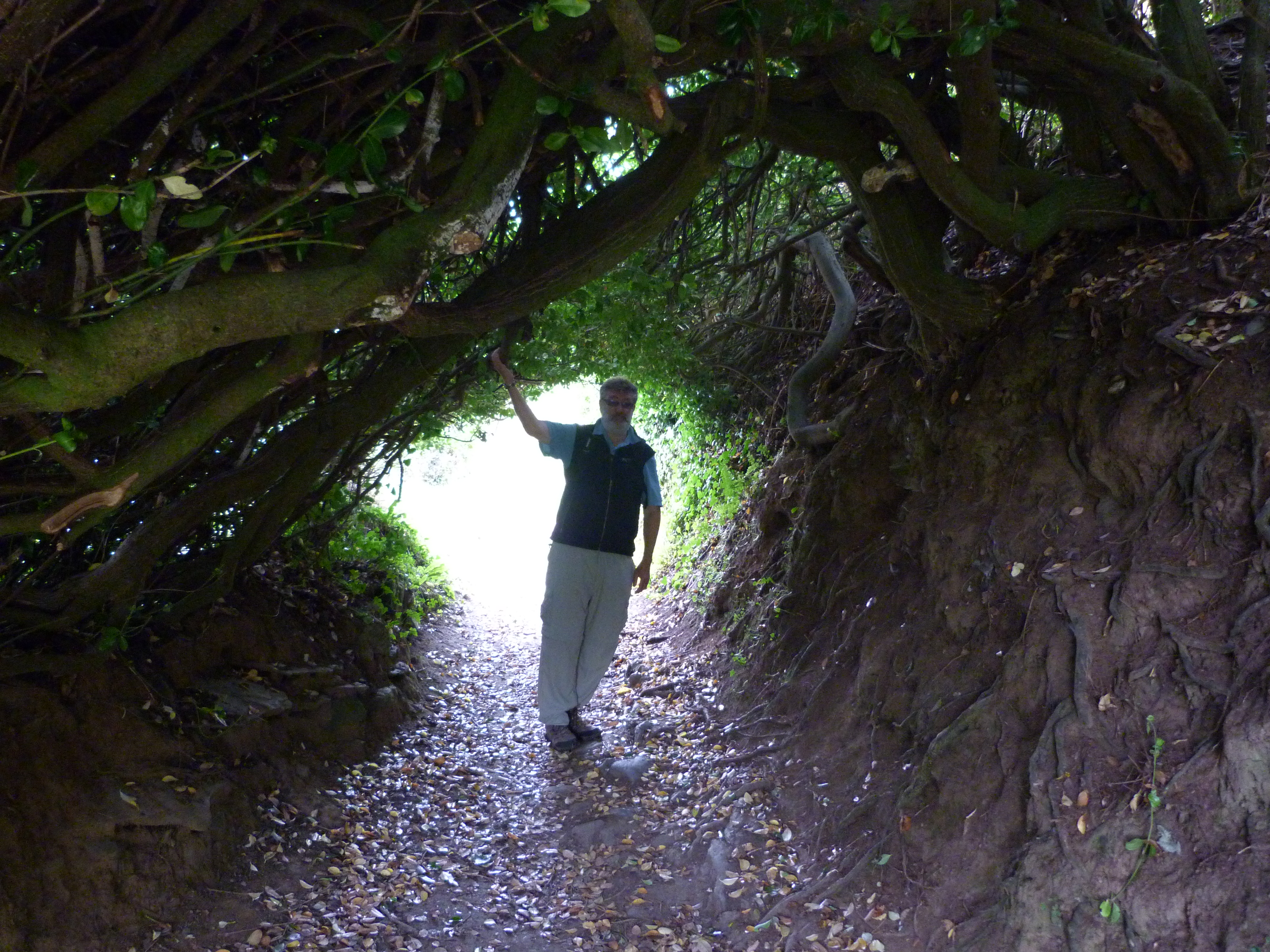
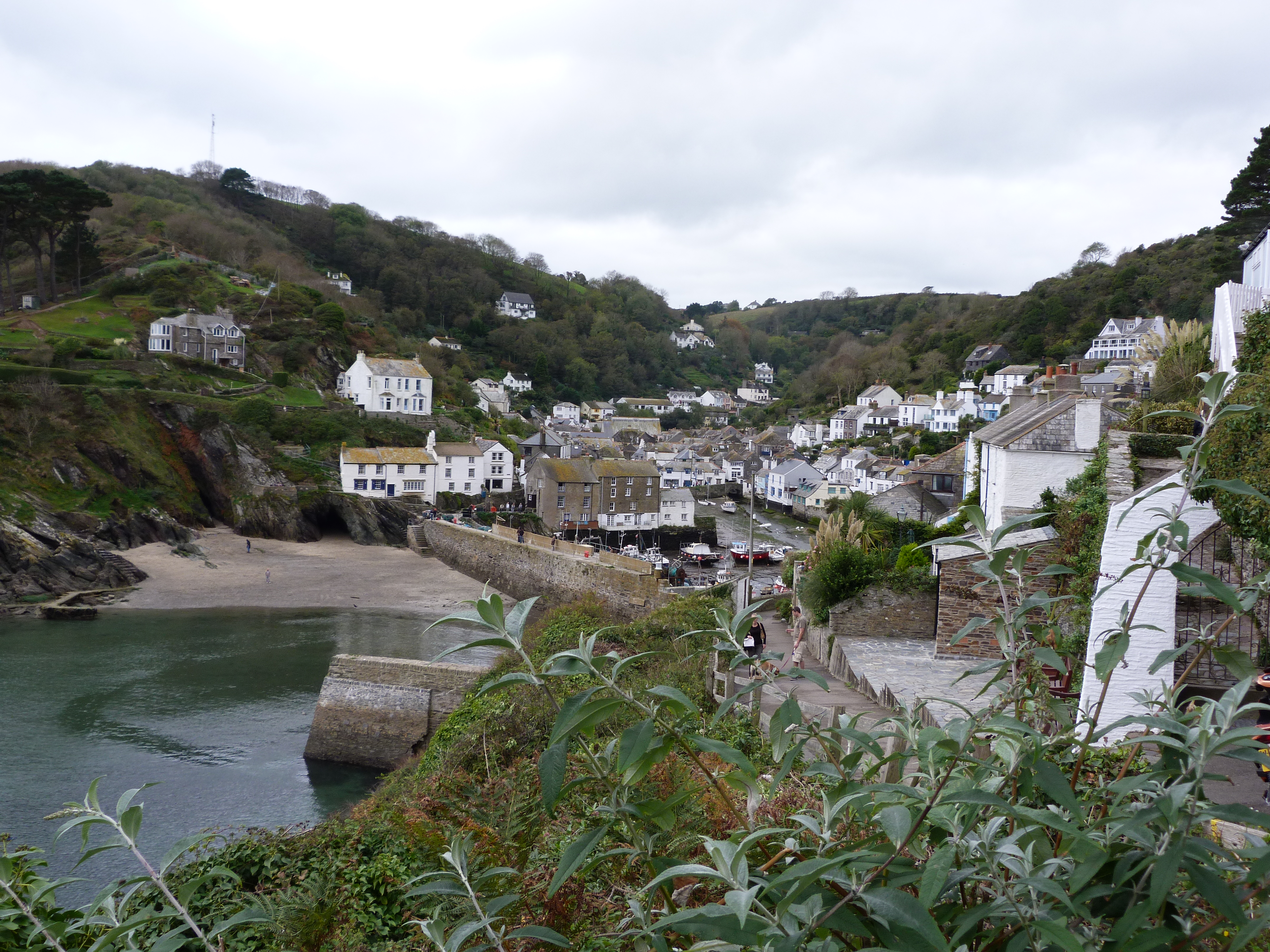
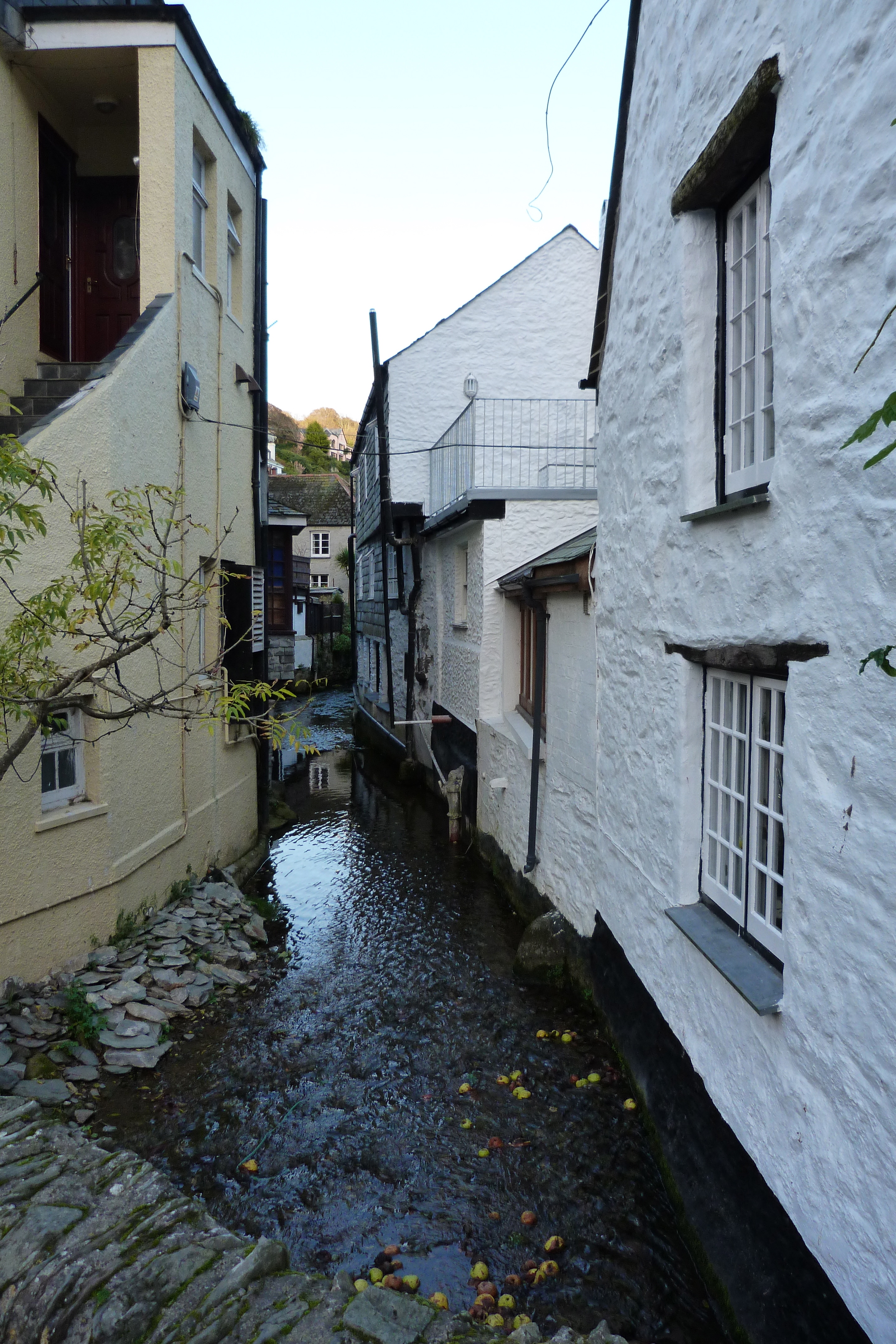
As odd as it sounds, we decided to take a vacation from our vacation. We booked a cottage in Looe, a fishing village on the Cornish coast. Tim’s mission on this trip is to do a lot of walking on the coastal path and Looe, directly on the path, was advertised as a picture perfect English fishing village.

We left London via Paddington Station early on Saturday morning. The main train took 3 hours to get us to Liskard where we changed to a branch route to go to Looe.

The one car train to Looe
Tim at the train station in Liskard

The train to Looe was a tiny one-car train that went through leafy green woods, right beside a flowing stream. After 5 minutes of going forward, the train stopped and the driver left the front engine, walked through the train, and started driving in the other direction. We thought at first that he was heading back to Liskard, but apparently he was just going onto another track from a siding. Within another 10 minutes we were in Looe.

Looe is actually comprised of two villages – East Looe and West Looe – each wrapping around the small harbour. They were connected in 1411 when an estuary bridge was built. The current bridge was built in 1853. East Looe is the main commercial village filled with shops. West Looe is quieter and is primarily filled with accommodations.

Our cottage in West Looe is up a quiet, narrow, twisty street. It is a small two-story structure attached to a row house, and we enter below ground level. It is very dark (the bathroom is the sunniest room in the house) and has virtually no views out of any windows. But it is cozy and clean and private. It has a well-appointed kitchen, which is really the best feature as we are planning on cooking a lot of fresh fish.

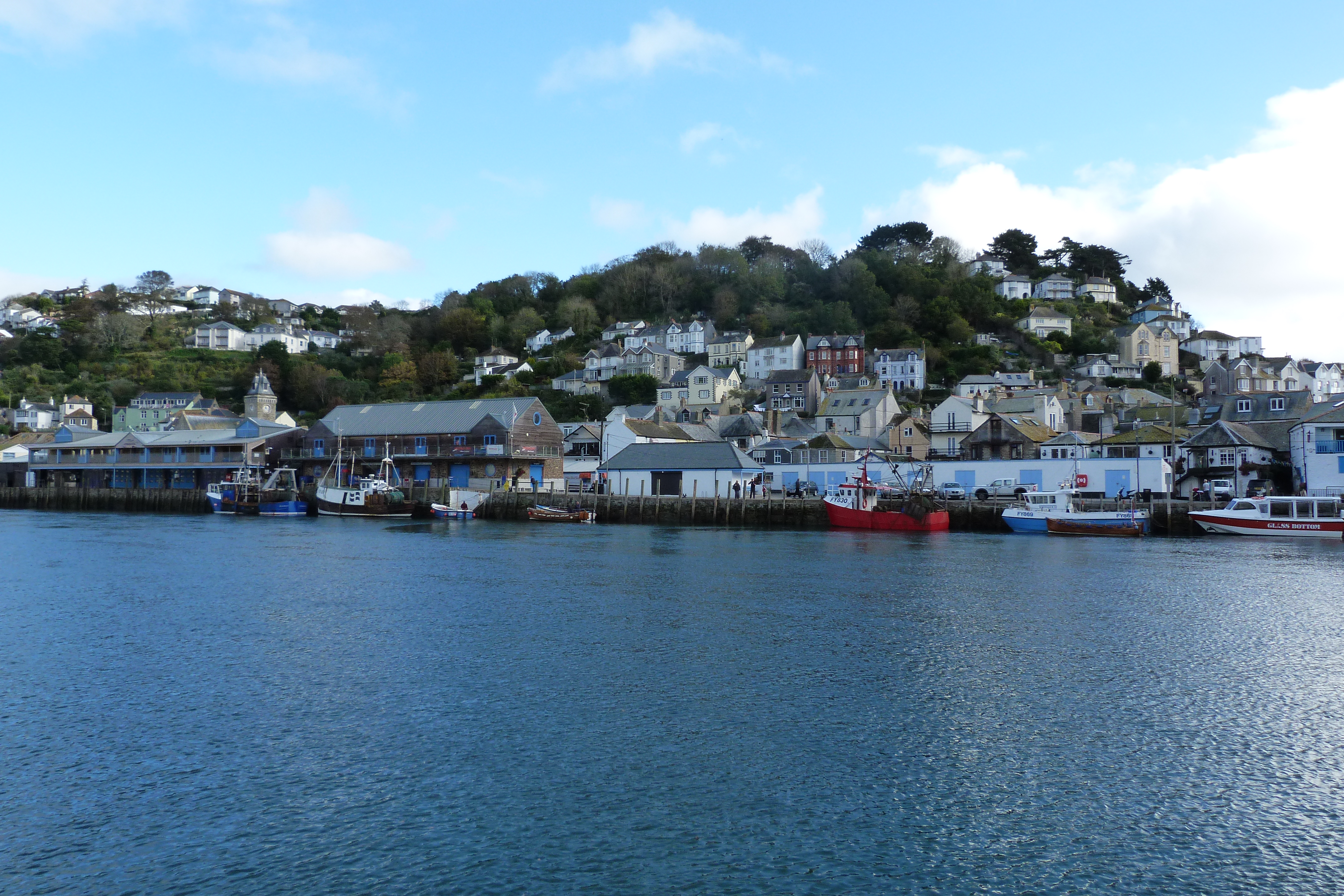
The harbor is around the corner and to get to the shops in East Looe we can either walk around the harbor (about 5 minutes) or take a “ferry” (one man in a motor boat) for 40p (1 minute trip).

Looking across to East Looe

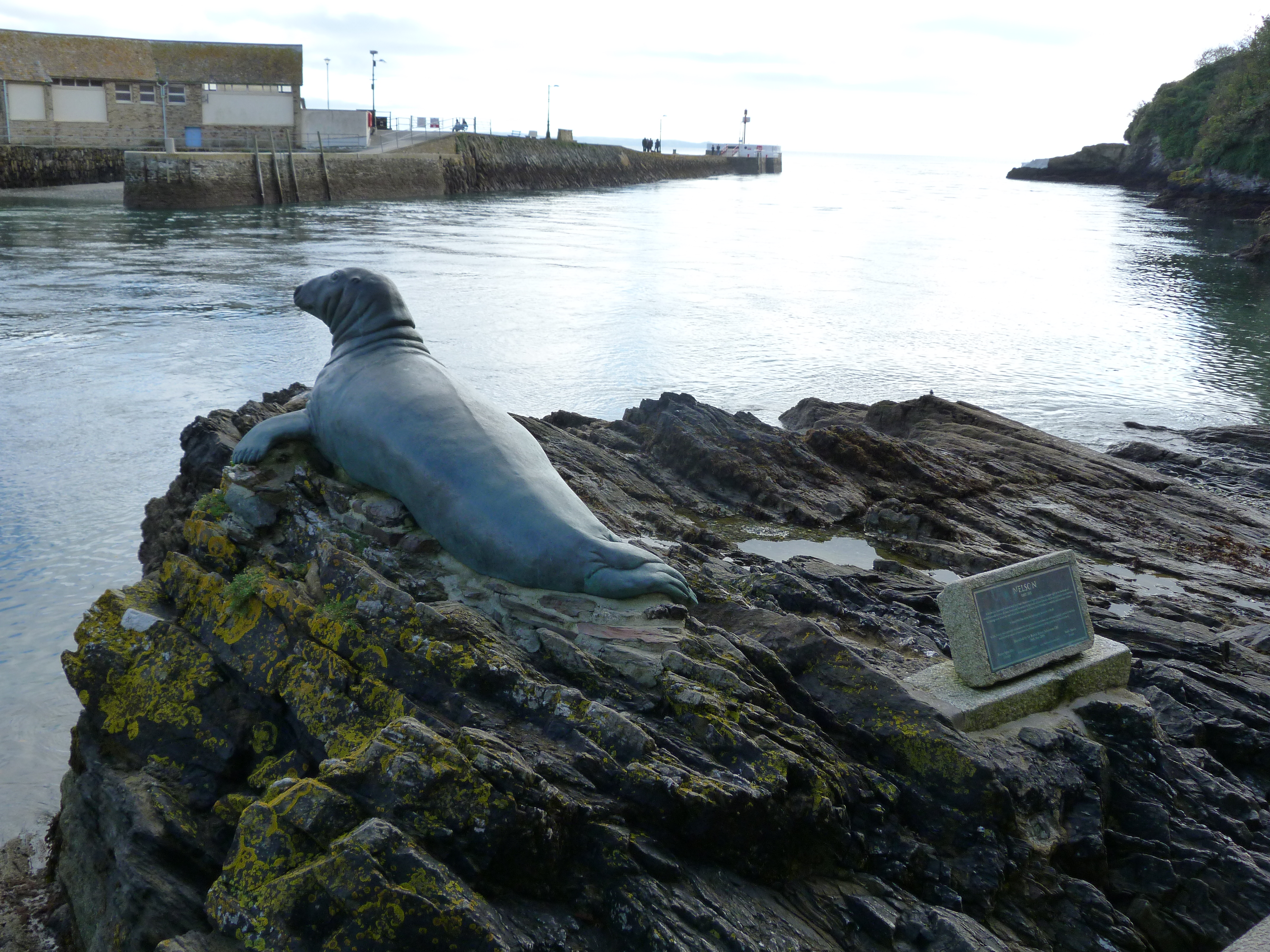
One of my favourite things on the West Looe side of the harbor is a dedication to “Nelson”, a distinctive, “one-eyed” Grey Seal who was well known along the Cornish coast for over 25 years.

The statue of "Nelson" in the harbour in West Looe.

He eventually “settled” on the rocks in Looe and the “Grand Old Man of the Sea” was apparently fed by local fishermen, villagers and visitors and was a great favourite of all.

After settling into Horton Cottage, we were anxious to walk about and get a sense of the town and points beyond. It was a warm and sunny Saturday, the tide was out and the beach was filled with families and laughter.

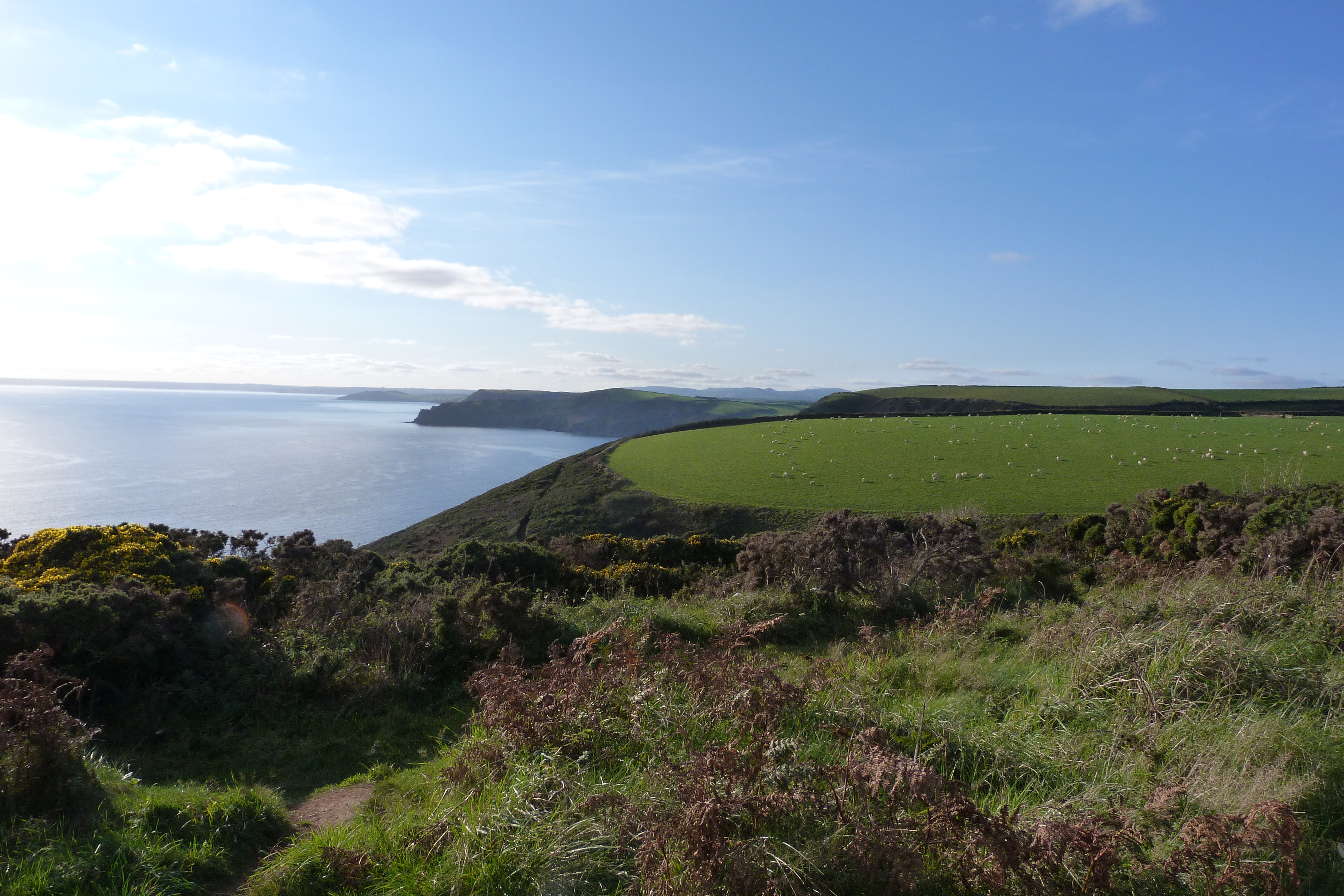
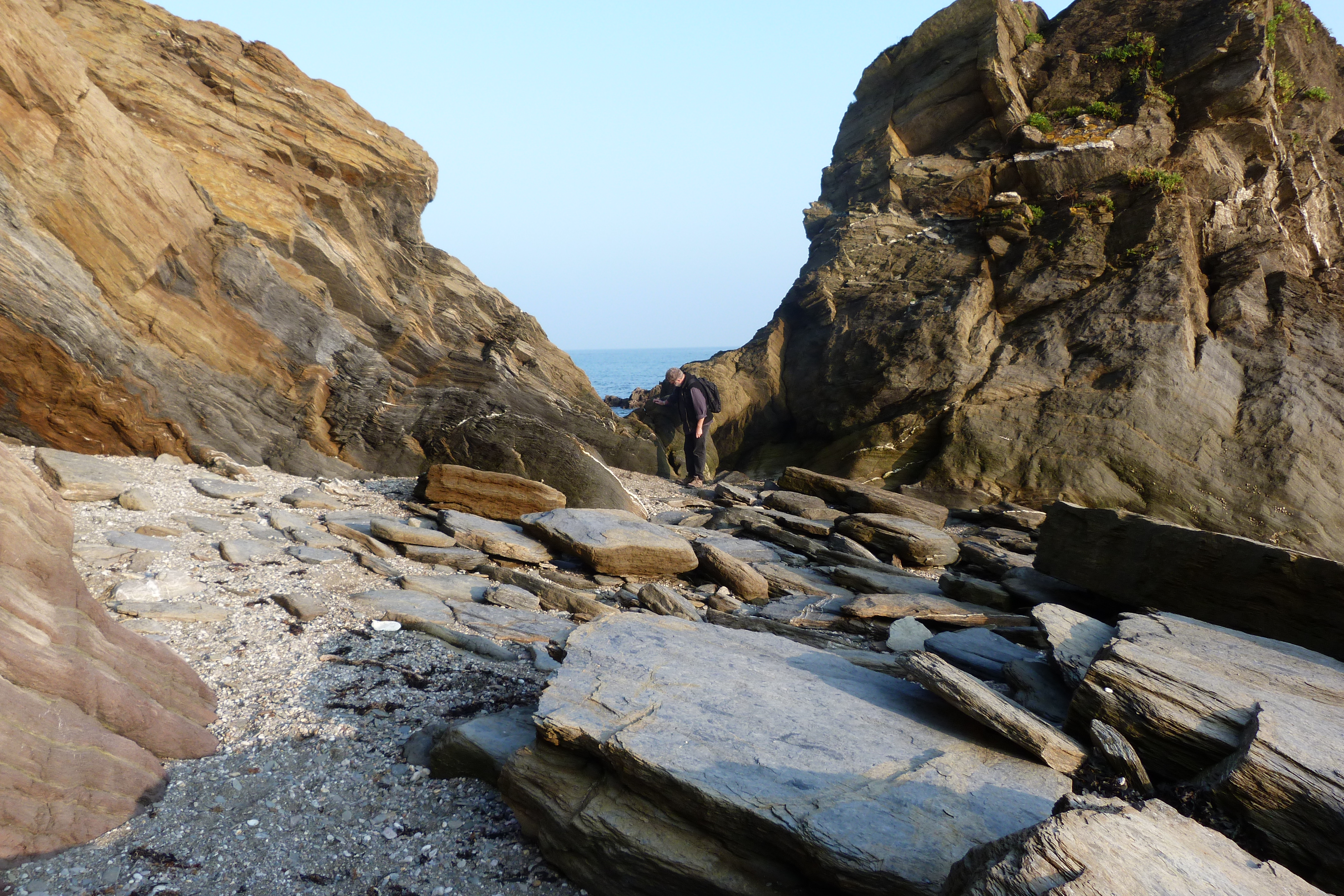
We walked a mile along the eastern coastal path to get our bearings, marveling at the rock formations and the quiet.

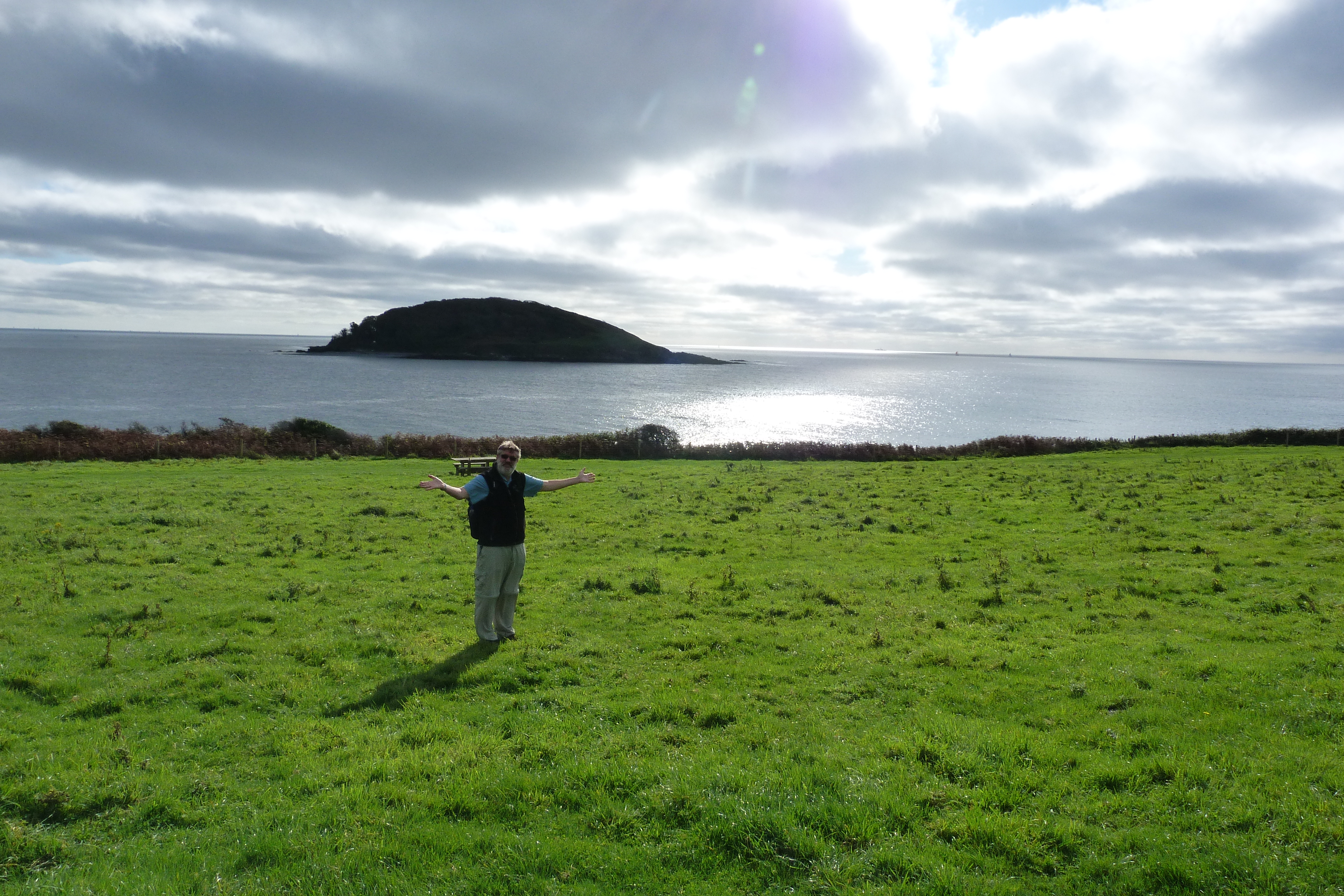
Rocks along the shore. Tim is in the centre of the picture for scale.

We hadn’t realized how much we missed vistas and fresh air.

Back in the village, we watched children set up around the edge of the harbor catching crabs just for the fun of it. They lowered little bait packages down into the water and then reeled them up covered in small (3 inch) crabs, which they put into buckets of fresh seawater. Inevitably, some crabs got away, and the kids squealed as they tried to catch them on the dock. The competition was in the number of crabs caught in any one lift (“Look, Look! I’ve got 5!!!). They were all released 15 minutes later.

Beside the dock, the tide was coming back in and so were the boats, laden with fish – John Dory, mackerel, lemon sole, crabs, halibut – to unload at the commercial market beside the dock. Looks like it has been a good day. Gulls cried overhead as we strolled lazily back to Horton Cottage.

Looking out to the beach at Looe

War and Peace and Giving Thanks

You can get £12 tickets to shows at the National Theatre on the day of performance. They start selling at 9:30 in the morning, so you have to get there first thing and line up. So I got up early on Saturday and headed to town and got a ticket for the matinee of “The Kitchen” by Arnold Wesker.

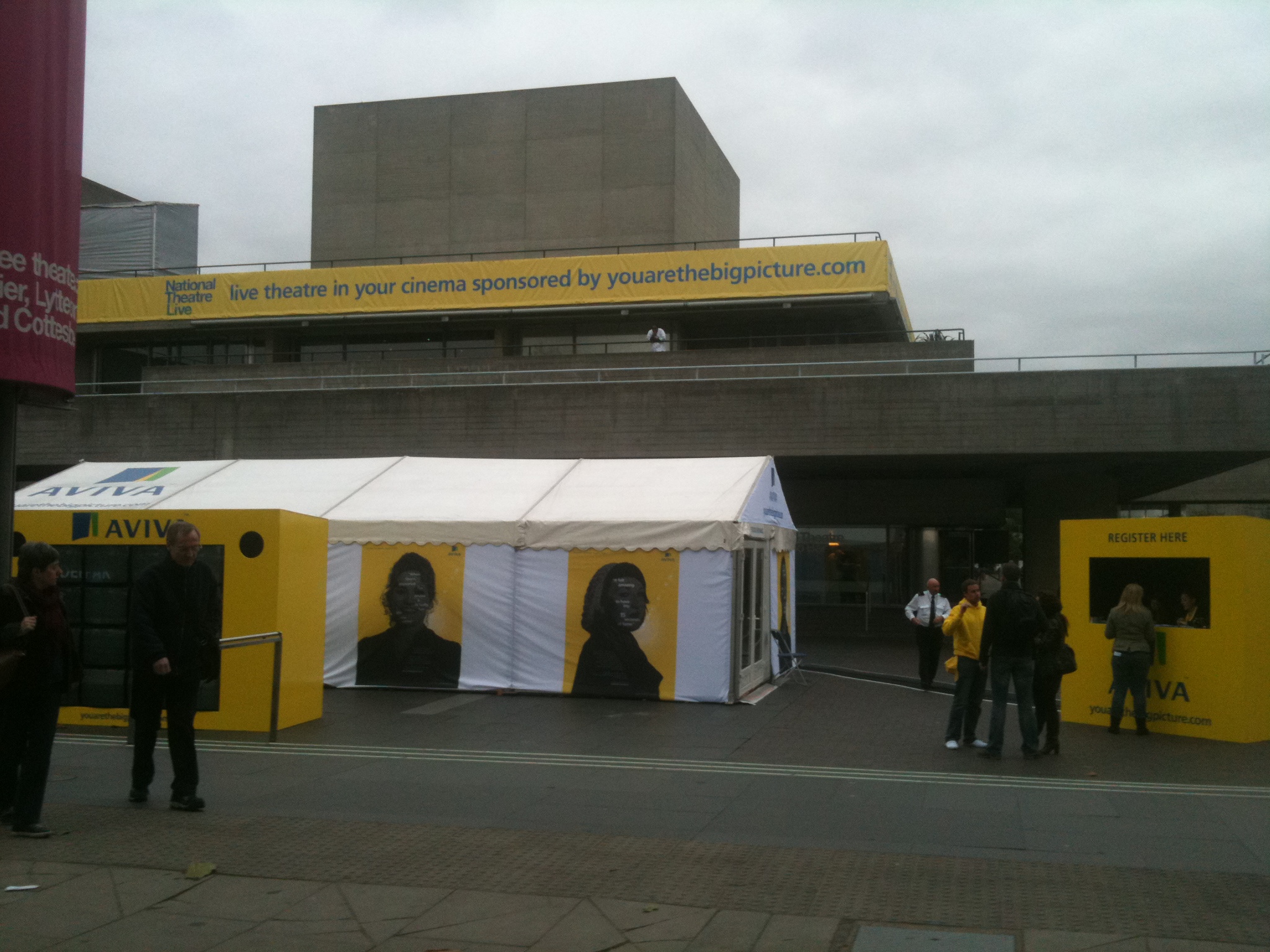
Ticket in hand, I had a lot of time before the show. I decided I would head over to the Imperial War Museum, a 15-minute walk from the National Theatre. But as soon as I stepped out of the theatre, I was approached by a couple of earnest young men asking me if I would take part in the Aviva Insurance “You are the Big Picture” campaign.

I am a fan of Aviva. They sponsor the National Theatre Live broadcasts that have allowed me to see great NT performances while in Ottawa. For “You Are the Big Picture”, Aviva is photographing thousands of people and for every picture they use they are donating £2 to Save the Children. I was asked if I wanted to take part. Aviva had set up a tent outside the theatre, and everything would take place right there. A makeup artist would “Just give me a little Jeuge” (have no idea how to spell this but everyone said it – keep the g soft when you say it), and a “world famous photographer” would take my picture. I would be given an 8 x 10 glossy – all free of charge. Well I said yes, of course!

The Aviva tent outside the National Theatre. My 15 seconds of celebrity.

Inside the tent, all shapes and sizes of people were getting “jeugged” and treated like celebrities. We told that our pictures would be projected on the wall of the National Theatre that night. Appropriately “jeugged”, I went into the photo shoot, had a bit of chit chat (click, click), smiled affably (click, click), was told I was very photographic (click, click) and thanked. My photo is being sent to me in the mail.

My 15 seconds of fame being over, I headed to the Imperial War Museum for a dose of reality. The War Museum was opened by King George V in 1920 and is a “museum of social history, concentrating on people’s experiences of war, the way they behave in war and the impact of war on society.”

Inside the Imperial War Museum

I wanted to go to the museum to see a special exhibit called The Children’s War. Focusing on the child evacuees during the Second World War, the exhibit gives a poignant view into war through the eyes of children. There are diary excerpts, toys, photos, evacuee kits and a recreation of a house from the 1940s to give you a direct and tangible sense of life at the time.

The British evacuation during the Second World War was the largest evacuation in history. By the end of the war 3.5 million people, mostly children, had been evacuated from their homes. They were primarily evacuated to the countryside in England but thousands were sent to Canada, the United States, South Africa, Australia and the Caribbean. Posters of the time exhorted mothers not to be tempted to bring their children back to the city:”Children are safer in the country: Leave them there.” It was an incredible exhibit and left me thinking a lot about Tim’s mother raising her 3 daughters in Gloucestershire during the war, while his father was in service. She always described their evacuation to the countryside as somewhat idyllic. For others, it was clearly a nightmare from which they never recovered.

On my way back toward the National Theatre, I came upon a market with just a dozen or so stalls behind the Royal Festival Hall.

The Market behind Royal Festival Hall

I bought a wonderful Moroccan Falafel with spicy Harissa sauce for lunch. Seems every weekend that I am out and about in London I come across a different market. This one was a perfect transition from the exhibit at the museum to the play at the National.

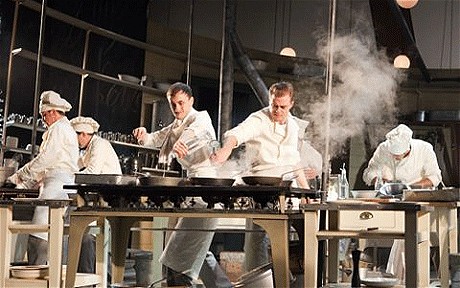
“The Kitchen”, by Arnold Wesker, takes place in a kitchen of a large restaurant circa 1950.

"The Kitchen" at The National Theatre

It is a director’s tour de force where 30 actors portray chefs, waitresses, cleaning staff, proprietors all in a balletic harmony and disharmony of action. Very few theatres in the world could produce something on this scale. It is a restaurant that apparently serves 1500 for lunch, and you believe it as the orders pour in and chefs chop and cook in a flurry of activity, flirting and fighting. It is a United Nations of workers “backstage” in the kitchen, all of whom are struggling to find their place in post-war England. A mammoth study of character and movement, there is also an element of allegory. A huge and fascinating piece of theatre, it would take at least 5 viewings to see all of the action.

I treated myself to a quick “Autumn Cocktail” at the market as I headed back to the train to Surbiton to begin Thanksgiving preparations for the next day.

Thanksgiving is not celebrated in England, or anywhere outside of North America I realize. But I am pretty hardwired for a harvest celebration at this time of year. Maddy hasn’t had a chance to celebrate Thanksgiving for years, and Amanda Lunberg is American and was definitely up for celebrating, even if it was not exactly the right time of year for her. So we all decided to do a big Thanksgiving dinner with Peta. Bryan, Penny & Eric.

The Brits are fascinated by the details of the holiday, trying to figure out if there is anything special that we do other than cooking and eating. “We are thankful. That’s all. Thankful for the harvest. Thankful to be with family and friends. Thankful for a holiday.” To which Tim adds, “Thankful that it has nothing to do with presents”.

Peta helped us to set up the harvest table. Jo made fresh salsa from the French tomato harvest for our hors d’oeuvres. We cooked a large, free-range turkey and made all of the “trimmings” – stuffing, mashed potatoes, roast potatoes, roast onions, gravy, squash casserole and Tim’s fabulous red cabbage.

Maddy's Pecan Pie

Maddy made broccoli casserole and her famous pecan pie (Bryan says she is not allowed in the house without one). Amanda Lunberg made delicious pumpkin pie and Penny made apple crumble from her apple harvest. Mid-meal we took a break and were entertained by Eric with photos of their recent trip to Turkey and Greece.

Bryan opened Cremant and we all got very noisy and thankful, together.

A Side Trip to Bristol

With Tim in Boston, I decided to take a trip to visit Annie Thomas in Bristol. We’d met Annie in France and liked her immediately. She teaches Language and Literature to high school students, helping them to get their “A” levels. Tim and I had been to Bristol in 1976, but I remember nothing about the visit save for a dim memory of pub with a parrot.

The weather was unusually hot and lovely. After lunch in Annie’s terraced backyard, we went walking along the Avon River.

Bristol is a port city that has checkered past. It rose to prominence when John Cabot (Giovanni Caboto) sailed from Bristol in 1497 and arrived at Newfoundland. Ah, a Canadian connection. A replica of his boat, the Matthew, was built to commemorate the 500thanniversary of the voyage, and it sailed to Canada in 1997.

The Matthew

The replica of the Matthew now sits in the harbor in Bristol, and it is amazing to think that such a small and delicate vessel could make it across the ocean.

Bristol became an important commercial port, but when I ask Annie what Bristol is known for she immediately says, “Slave Trade”. Bristol was on the triangle of slave trade that sent Africans to the New World to work the sugar, cotton and tobacco plantations. It is an infamous past that I see no acknowledgement of, although Annie says that all school children learn this history in school.

What I do see is a wealthy Georgian suburb, high in the hills, a sign of 17thcentury prosperity, built on slave trade.

Georgian Row houses on the hills above the harbour

In the 18th century, Bristol moved away from trade and developed as a prominent shipbuilding centre. It is still a working shipyard, although the boats repaired here are now pleasure crafts, not commercial vessels.

In recent years, the harbor has undergone a renaissance. Art galleries and museums have taken over the old warehouses, new flats give residents wonderful riverside views, and there is a profusion of small cafes and restaurants. There is an air of luxury, culture and fun.

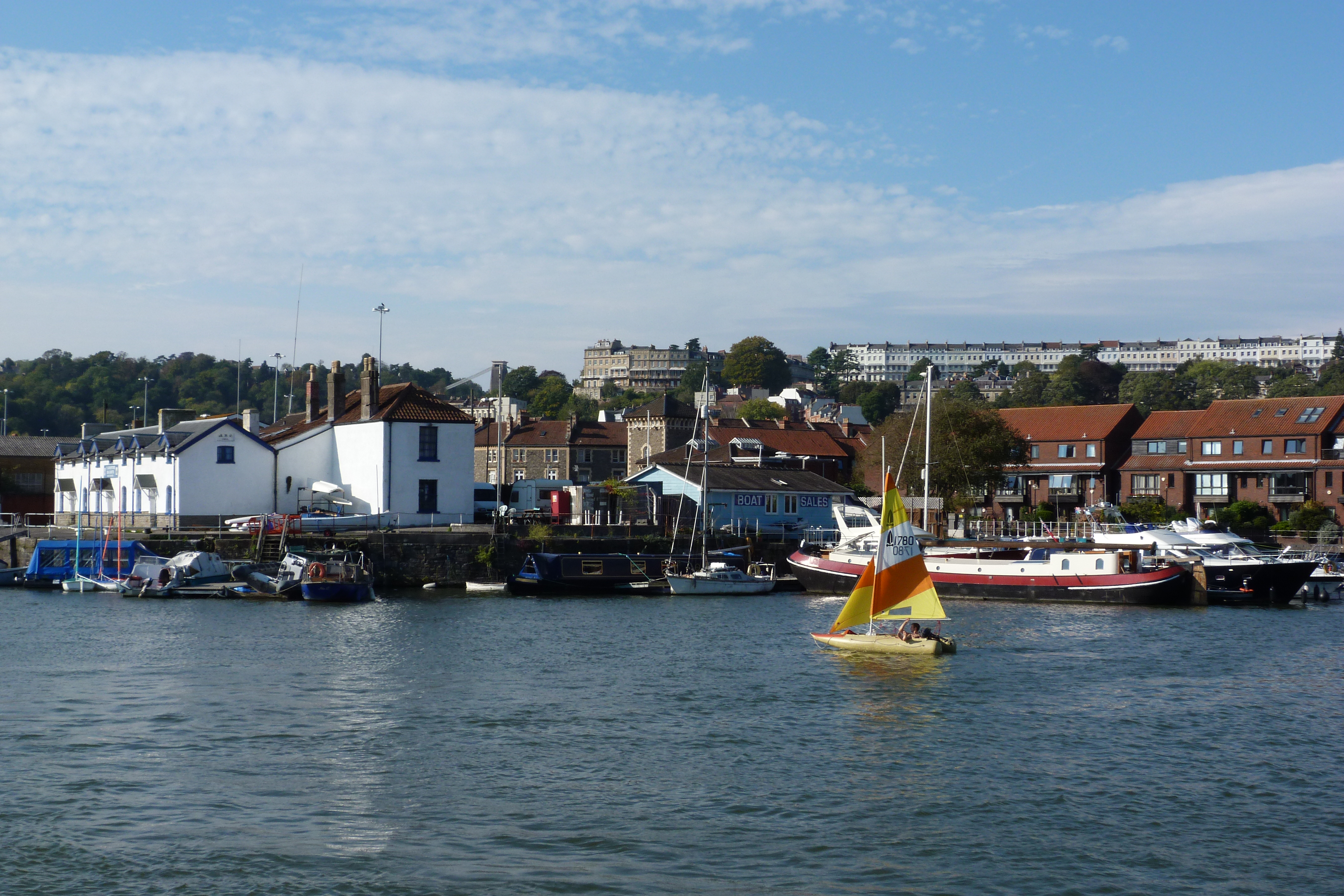
On Sunday, the whole town seemed to be out enjoying the hot sun glistening on the water. On the water there were model speed boat races (really annoying with a terribly whiney sound), rowboats and sailboats.

The Bristol Harbour

Annie and I walked and talked, stopping for coffee at The Olive Shed, an outdoor café on the river that oozed garlic from a profusion of tapas choices.

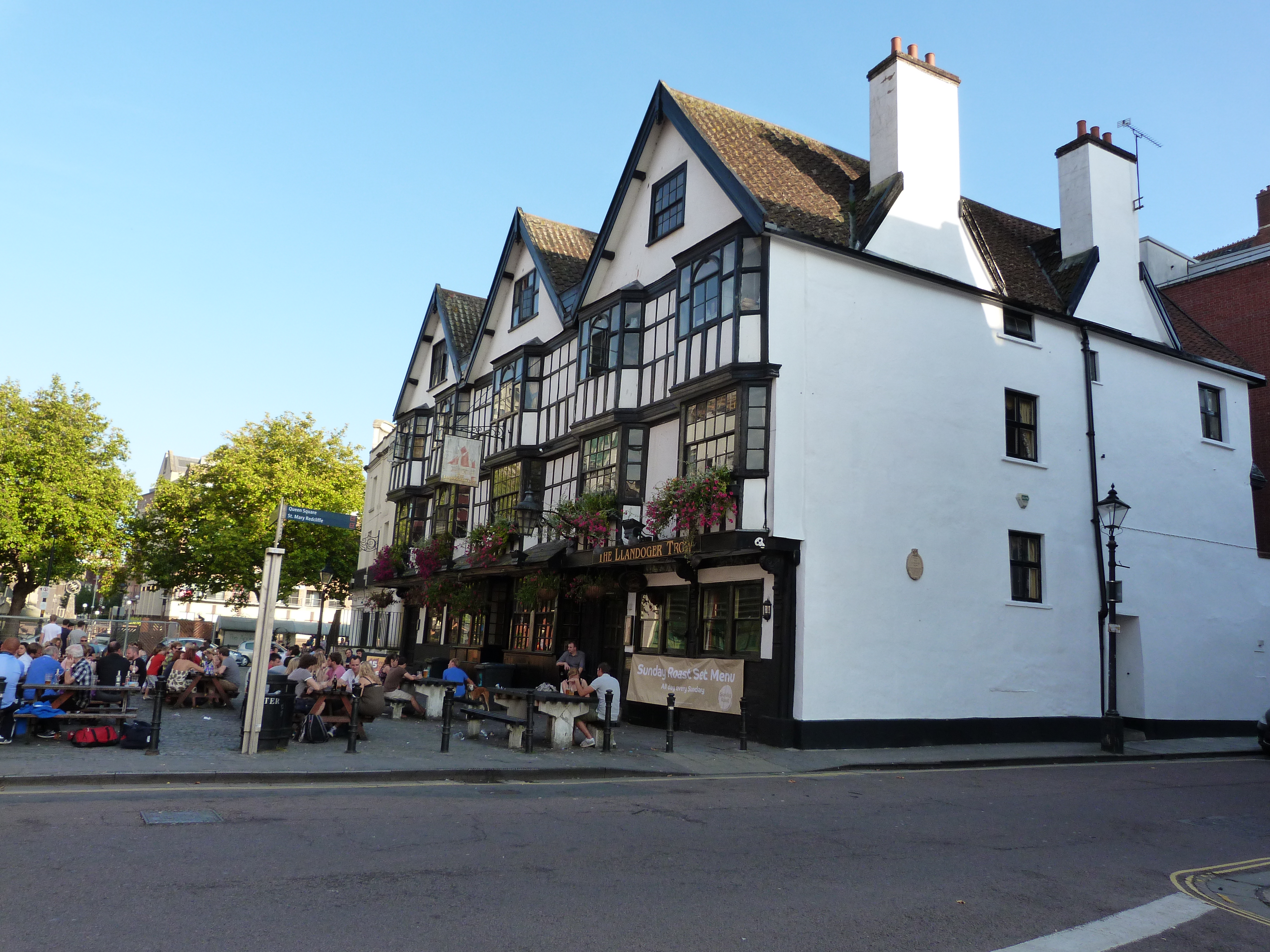
We walked the entire perimeter of the harbor, passing the Llandoger Trow, the pub where Daniel Dafoe met Alexander Selkirk, the model for Robinson Crusoe. I forget to go and check to see if they have a parrot.

The Llandoger Trow

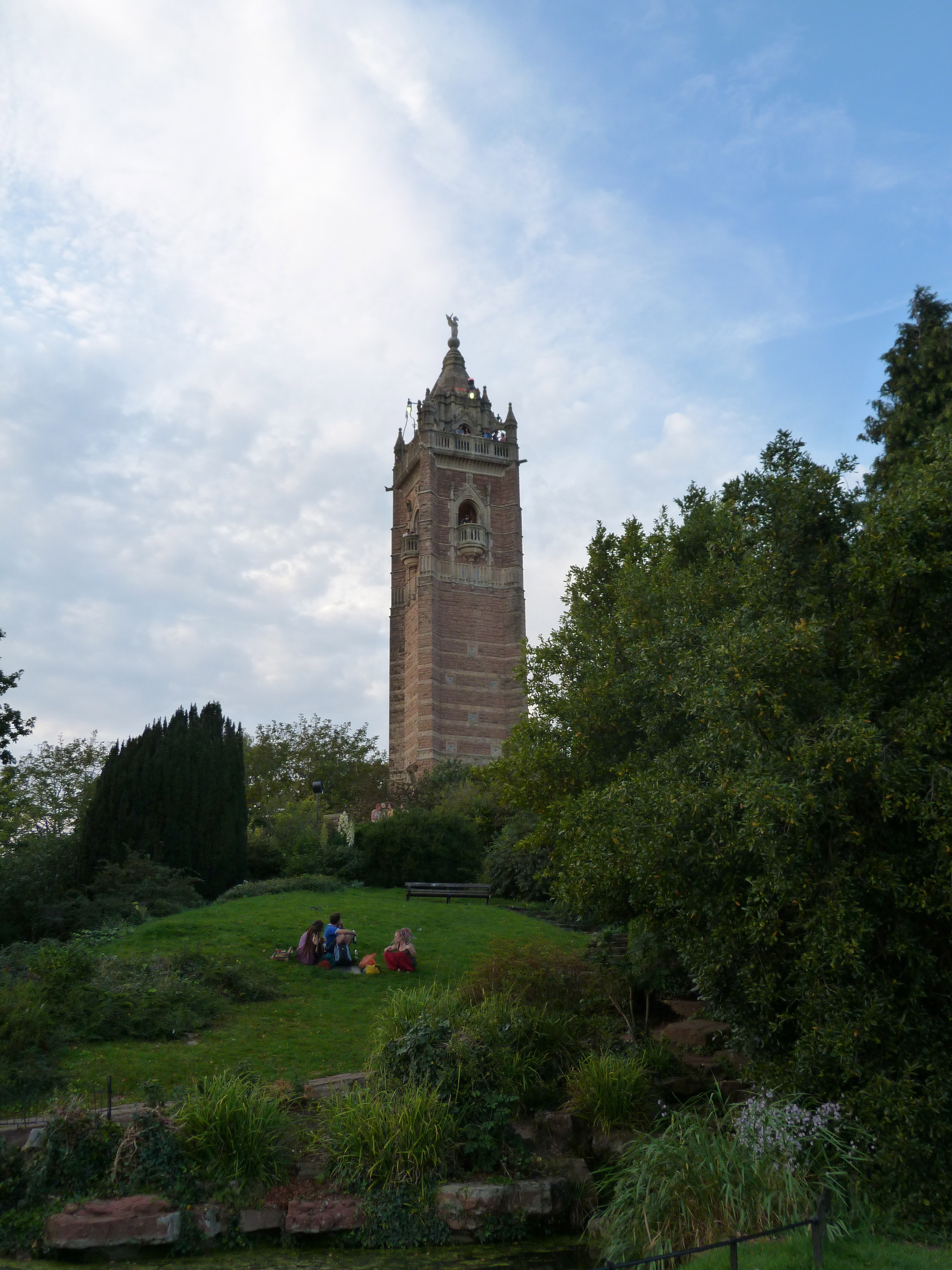
We headed up the hill toward The Downs. Bristol has 2 universities, and classes were due to start the next day. Consequently, the Downs were filled with university students picnicking, singing, drinking and gently smoking various substances. It was a peaceful, party-like atmosphere. We climbed up the Cabot Tower, which was erected in 1897 to commemorate John Cabot’s voyage. It gives an amazing view of Bristol and the lands beyond.

Cabot Tower

For dinner we went to Annie’s favourite, The Grain Barge, a ship converted into a pub. We sat on sofas on the deck of the ship and looked over the harbor, watching the evening lights come on and a crescent moon sink under the horizon. “Gert Lush”, which is Bristolian for “Really Good”.

The next day, Annie took me to Clifton Village, which is the wealthy suburb of Georgian row houses up the hill from the harbor. Because Bristol is built upon the hill coming up from the river, our walking took us on tiny streets zigzagging through the town. At the top of the town is the Clifton Suspension Bridge. Designed by Isambard Kingdom Brunel, the 76 meter high bridge spans the Avon Gorge from Clifton to Leigh Woods in northern Somerset.

The Clifton Suspension Bridge

The bridge was completed in 1864, and the workers that we spoke to were doing some re-pointing that hadn’t been done in 50 years. One lane of traffic can go over the bridge at a time, and apparently 12,000 cars can cross every day. We walked over, fighting vertigo, amazed at the engineering marvel.

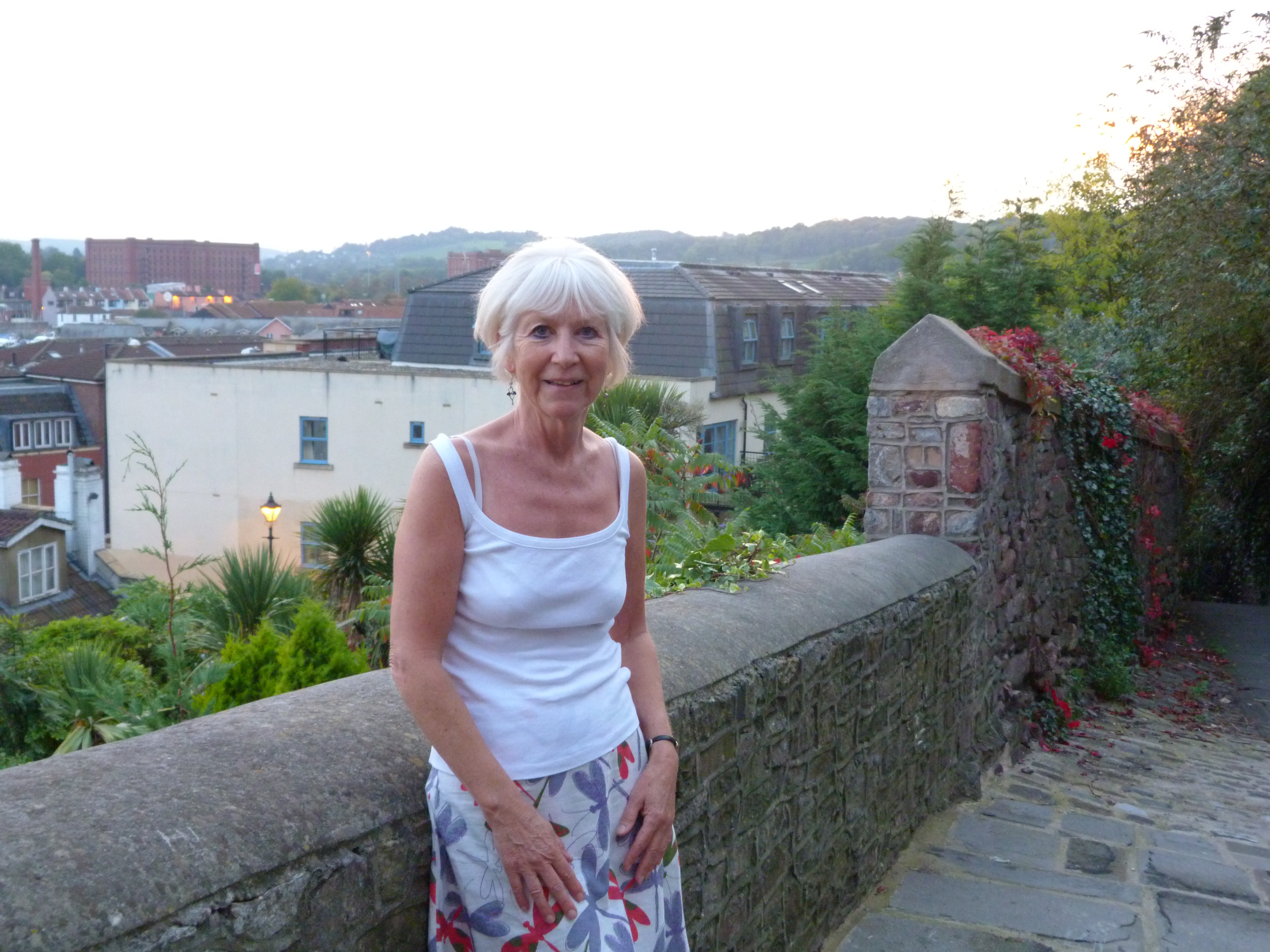
Bristol felt vibrant, beautiful and friendly. A city of 400,000, Annie boasted that she is able to walk to concerts, to the theatre, to her Italian, German and French classes, and to her work. And of course, she is able to walk down to the harbor, to enjoy dinner at the Grain Barge. A very livable city.

Annie in the walkways of Bristol

The Sound of Movement

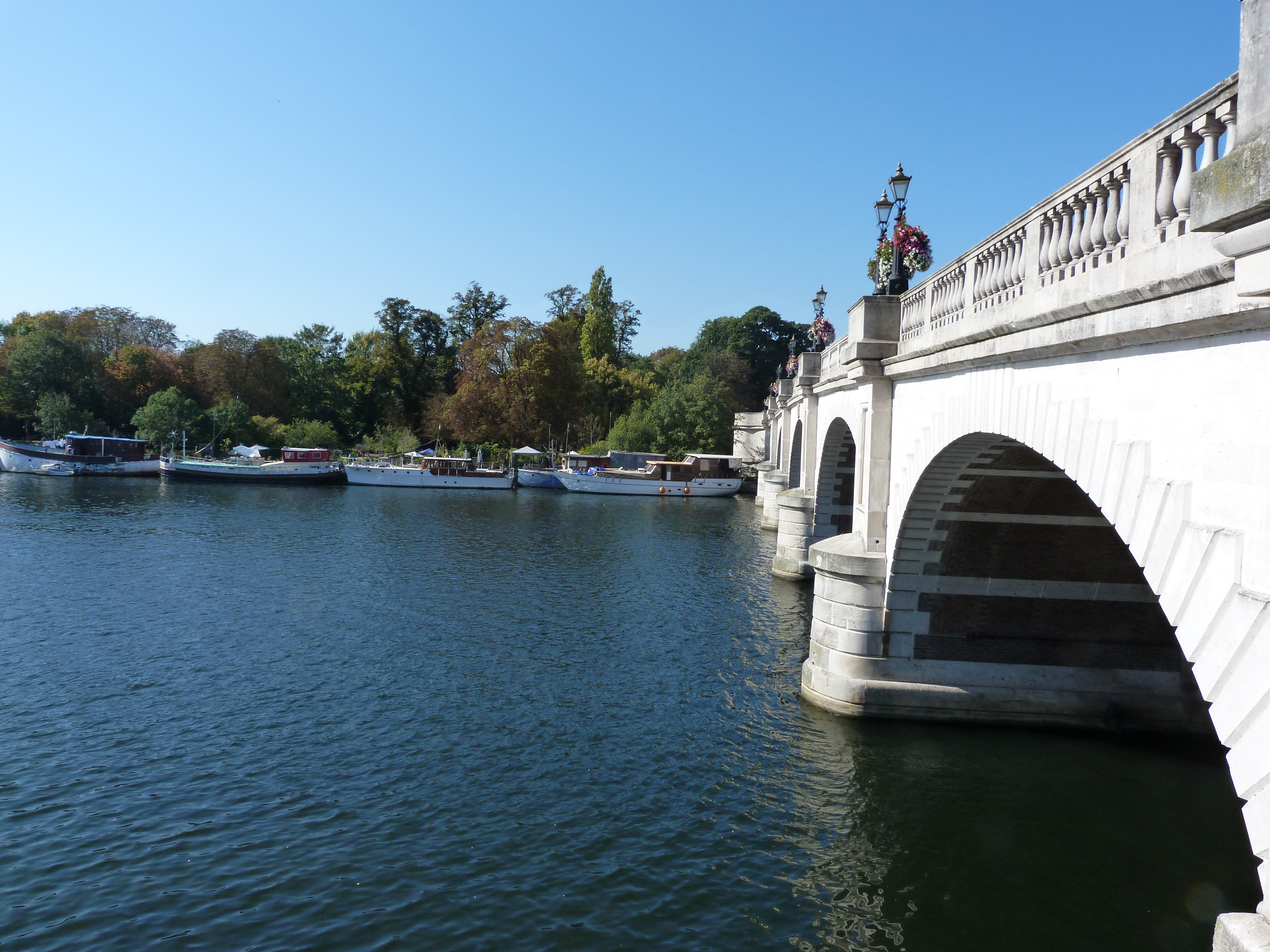
Summer came to London last week. Tim left for Boston, to receive the Boston Globe Horn Book Award for his book “Blink and Caution”. I was in a mood to enjoy the rare hot English sunshine, so I packed a small picnic lunch and set out for Kingston-Upon-Thames.

The Bridge into Kingston-Upon-Thames

Kingston is about a 10-minute bus ride from Surbiton. It is a lovely market town and was, in the 9th and 10th centuries, the place where Kings were crowned. At least 7 different Saxon Kings were crowned there. Hence the name King’s Town.

In the centre of town there is a thriving market, with stalls selling fruit and vegetables, as well as a very good butcher, fish monger, cheese seller, a stall of olives and hot fresh pretzels. Last week Tim and I came to the market late in the day, when the sellers are practically giving things away, and we got the ingredients for a fabulous Roasted Sweet Potato and Fig Salad. I’ve included the recipe, because it was really unusual and very delicious. Back in Canada, figs are usually too expensive to consider for something like this, but we got 5 for £1 at the market.

The Market, ready for Xmas

On Friday the market was in chaos because there was a film shoot going on for a Christmas commercial. In the blazing summer sun the square was filled with film extras in winter hats and Christmas decorations.

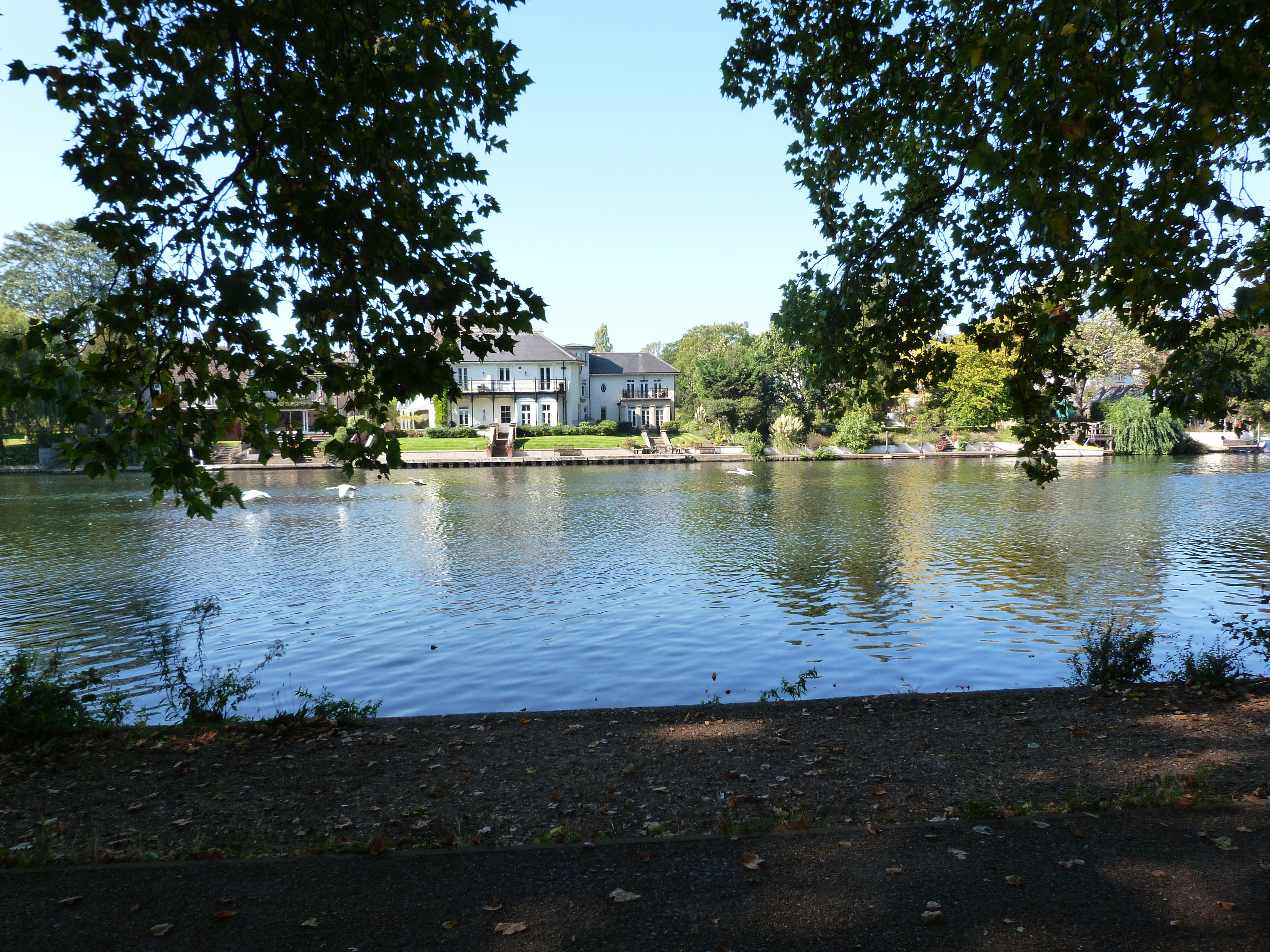
The river, however, was not disturbed. There are walks all along the Thames, and they were filled with mothers with children, students, business people, retirees – everyone out enjoying the day, many clearly playing hooky. I went along to Canbury Gardens and sat on a bench under the dappled shade of a tree to eat my lunch, read my book and just generally watch the world go by.

Looking across the Thames

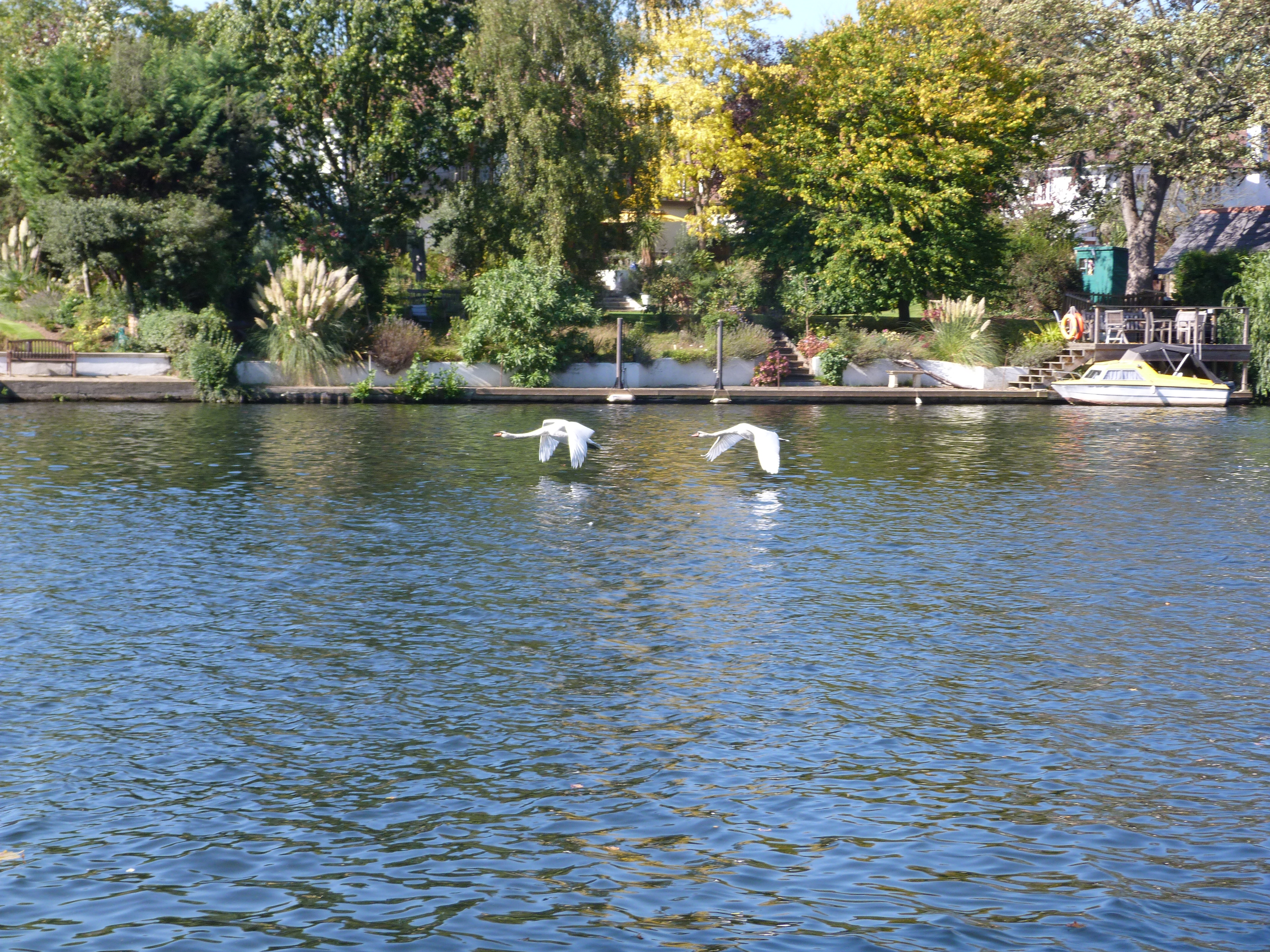
A few lazy canoes, kayaks and rowboats. A canal boat. A small motor boat. A tourist boat. Everything and everybody was moving slowly, gracefully. The swans glided by, occasionally rousing themselves to fly 50 yards up stream in the hopes of better eating. When swans fly they only barely rise out of the surface of the water, and they paddle their feet on the surface as though they are trying to get some traction from the water.

Swans flying along the river

Their feet make a great thwacking sound and, along the loud thumping of their wings, it is surprising how the sound of the movement of these ridiculously gorgeous birds is so noisy.

After my visit to Kingston I went into London to see the final performance of “Body of Work”, in which the sound of movement also plays a part.

Maddy in the tech rehearsal with the lighting designer

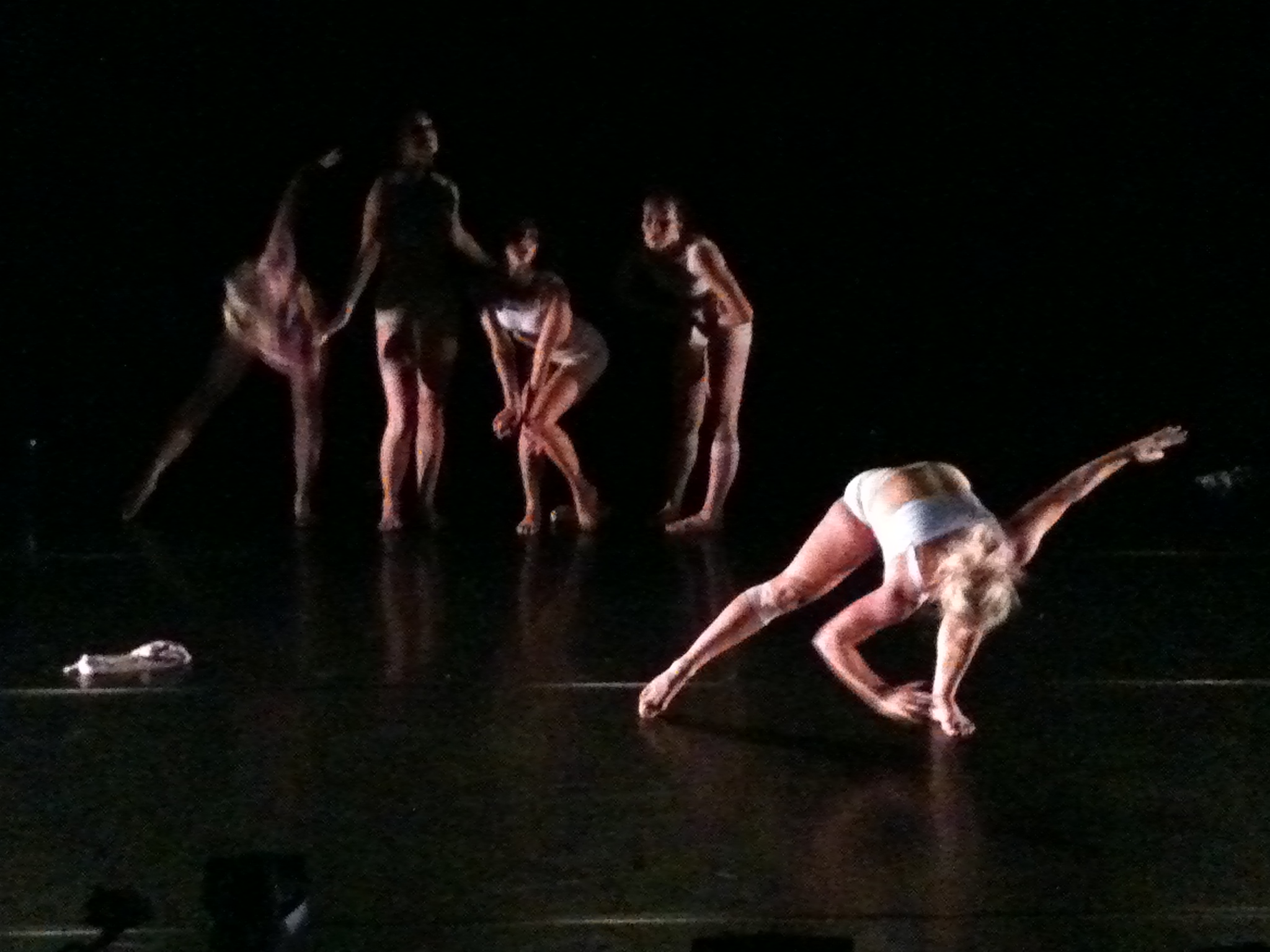
“Body of Work” explores body issues and body politics. It is a 60-minute piece with five dancers of very different body types. They work together and separately to question how we relate to our bodies. The music ranges from a kind of African drum base to synthetic scratching, but  one of the most striking sections uses the song “Will You Still Love Me Tomorrow”. A dancer breaks off to dance a fearful and passionate response to the song. The other four dancers each take a corner of the stage and begin to draw on themselves with lipstick. You realize that the drawings are marks for a plastic surgeon – a circle and an X on the thigh; a nip and tuck of the stomach. The question in the song becomes: “Do I have to change myself for you to still love me, tomorrow?”

Will You Still Love Me, Tomorrow?

In another section, the dancers draw “seams” along their legs and suddenly are on catwalks, striking the numb poses of fashion models. They break off, bind themselves in plaster gauze on sections of their body, and thrust themselves back to the catwalk. There are images of pre-natal life, of self-loathing, of longing and desire.

Sometimes the dancers appear as 5 individuals. Sometimes they seem to be different facets of one person, fighting to come to resolution. By the end of the piece the floor is littered in discarded clothes, bandages, water and mess, but the dancers are in smooth calm white dresses that resonate classicism. They move as a supportive and aware group. There is no sound but their breathing.

Childhood wasn’t far. We took a bus.

In 1925, A.A. Milne bought Cotchfield Farm outside of the town of Hartfield in East Sussex. Although the farm is now privately owned, there is a public path and we are in need of an “Expotition”.

We arrived in Hartfield by bus from the town of Tunbridge Wells. Hartfield is a tiny village, listed in the Doomsday book of 1086. It is basically one street, with tiny converted cottages and two inns. We stopped at the Anchor Inn (built in the 15thcentury) for a pub lunch (Fisherman’s pie, locally made).

Pope's Cottage

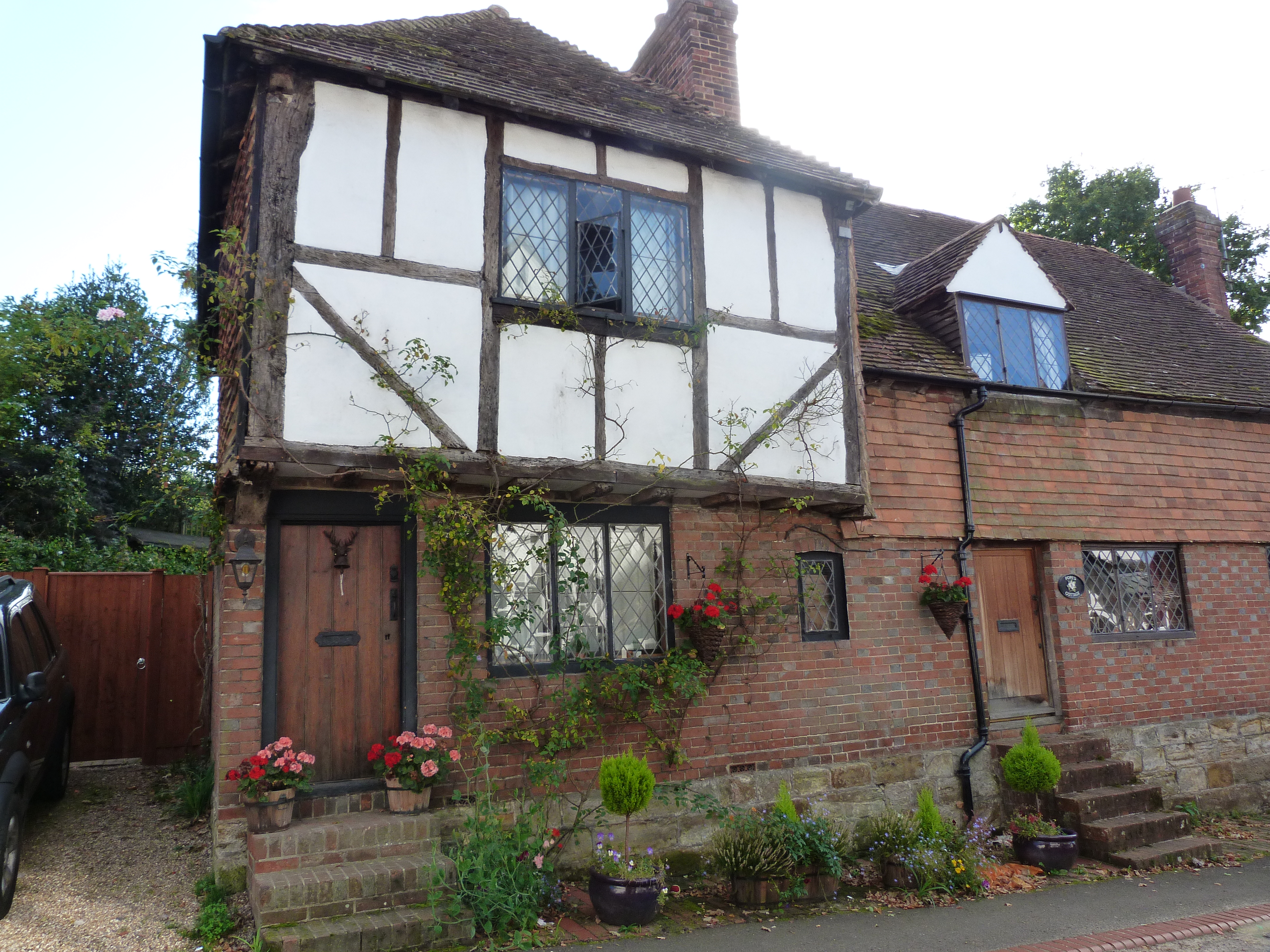
Across from the Anchor Inn was “Pope’s Cottage”, originally built in the 13thcentury. At the end of the main street was a little sweets shop that was frequented by a young Christopher Robin.

Sweets Shop

Our pilgrimage begins at the sweets shop, where we are able to pick up a map to Pooh Bridge. Maps are available in English and in Japanese, as are instructions for how to play “Pooh Sticks”.

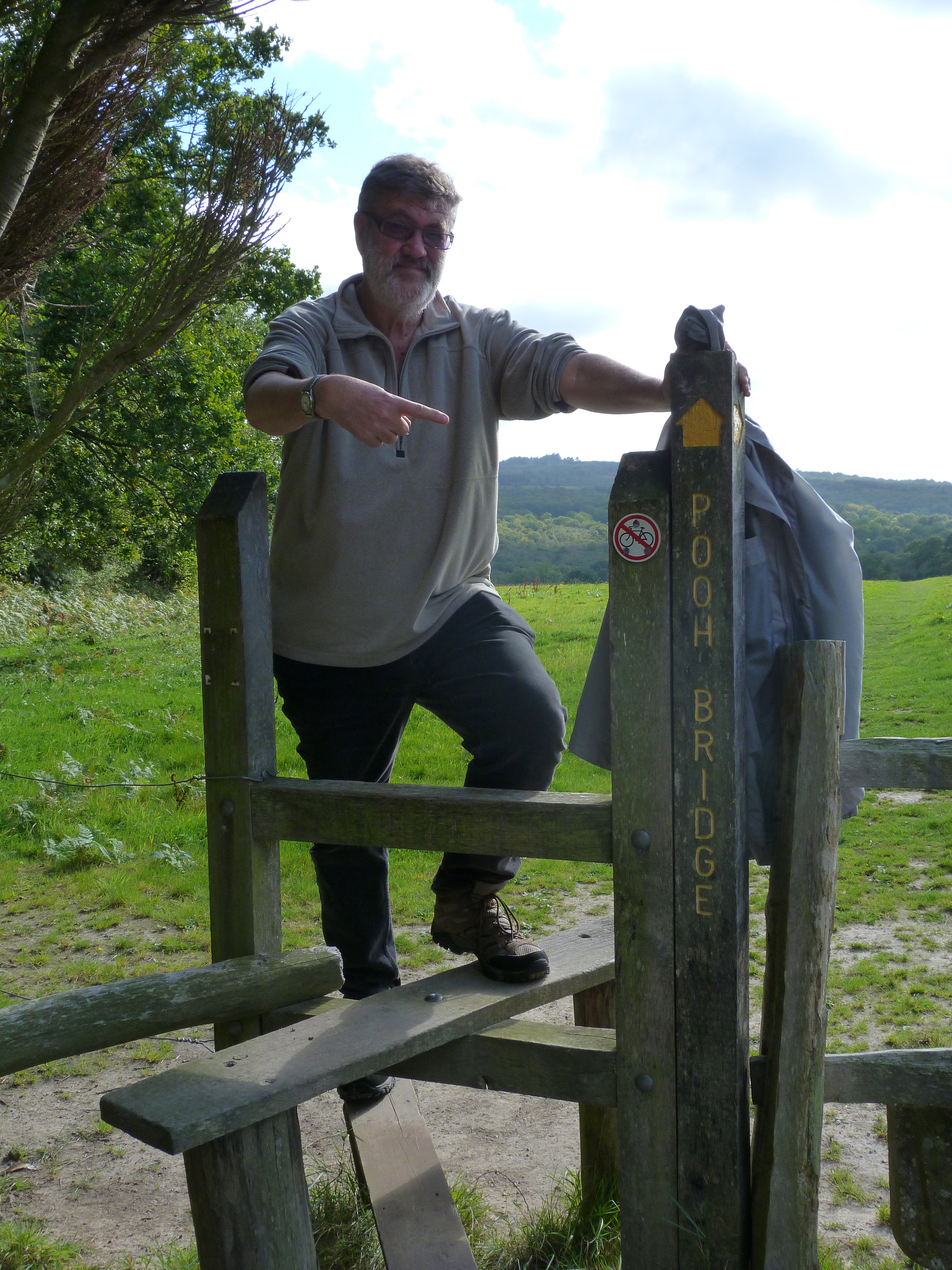
Tim stepping over the Stile

Our walk to the bridge takes us 2 miles out of the village, over wooden stiles, through sheep fields, along a public pathway bedecked with raspberry canes. The day is perfect, with billowy clouds against a bright blue sky and just a hint of breeze.

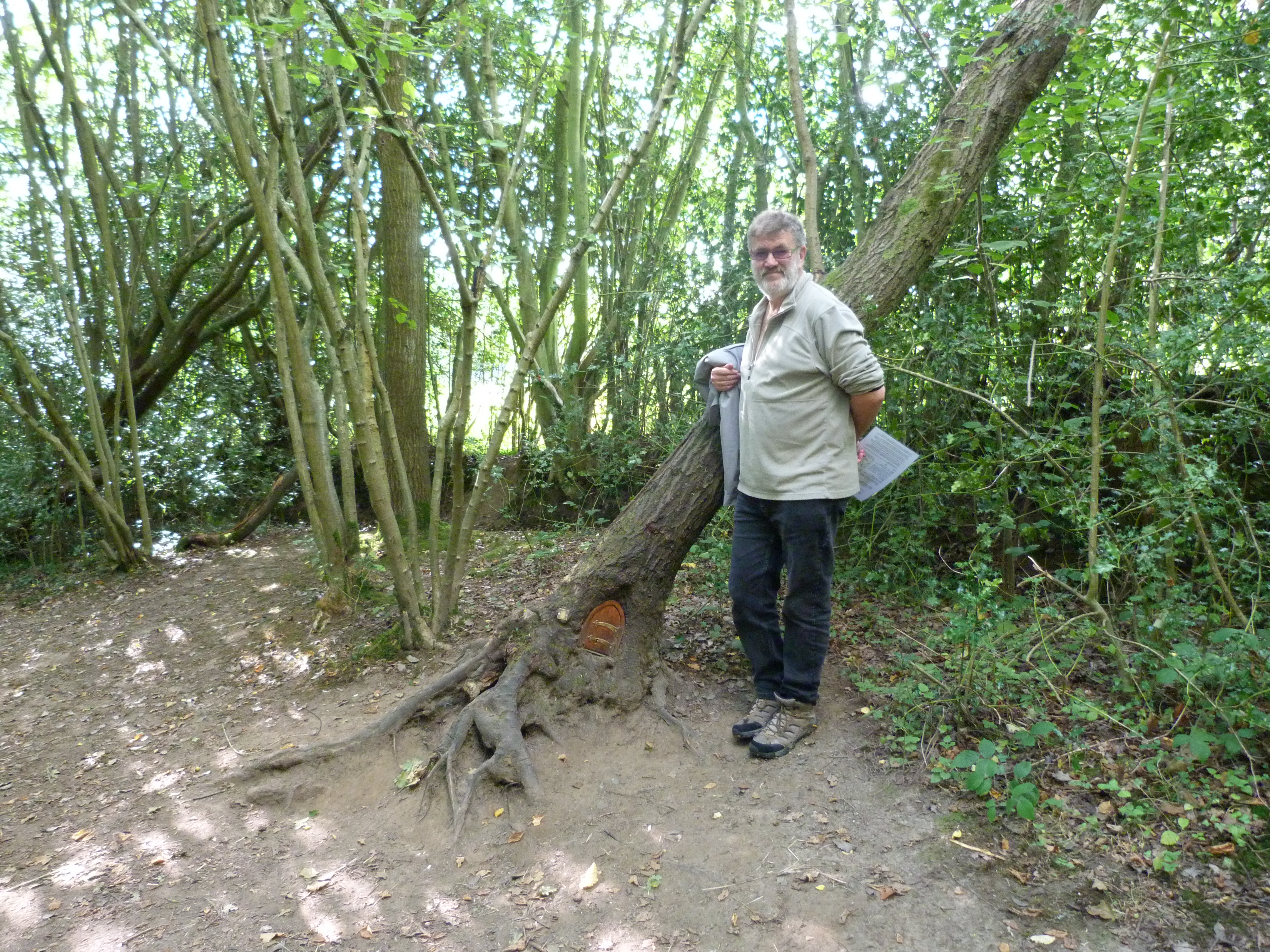
It takes us a leisurely 40 minutes, and as we come toward the bridge we see a beautiful tiny wooden door set in a tree.

A small door in the base of the tree

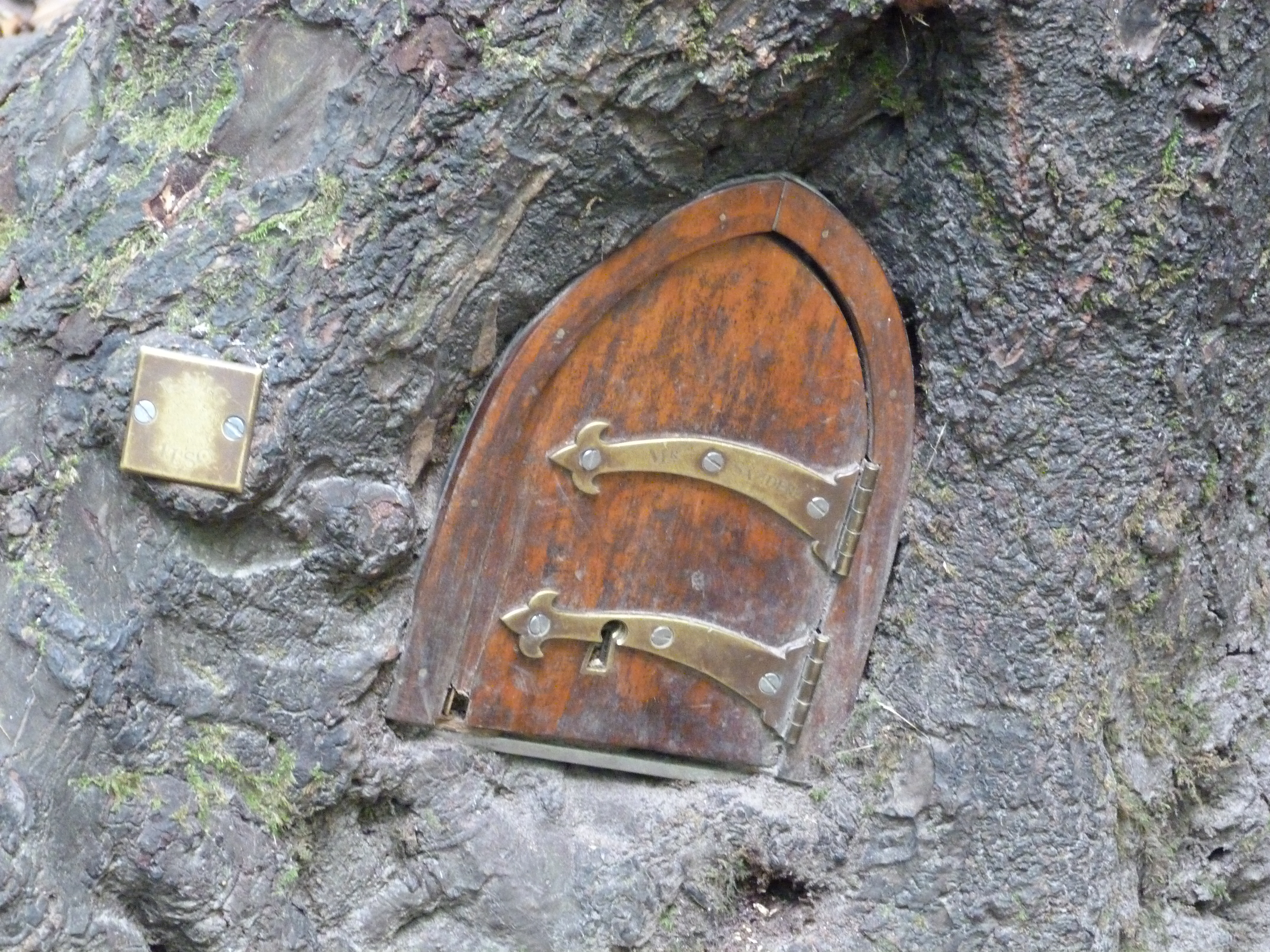
An inscription has long since worn off, but we can still see, at the top of the door, the engraving: “Mr. Sanders”. (“Winnie-the Pooh lived in a forest all by himself under the name of Sanders”)

Mr. Sanders

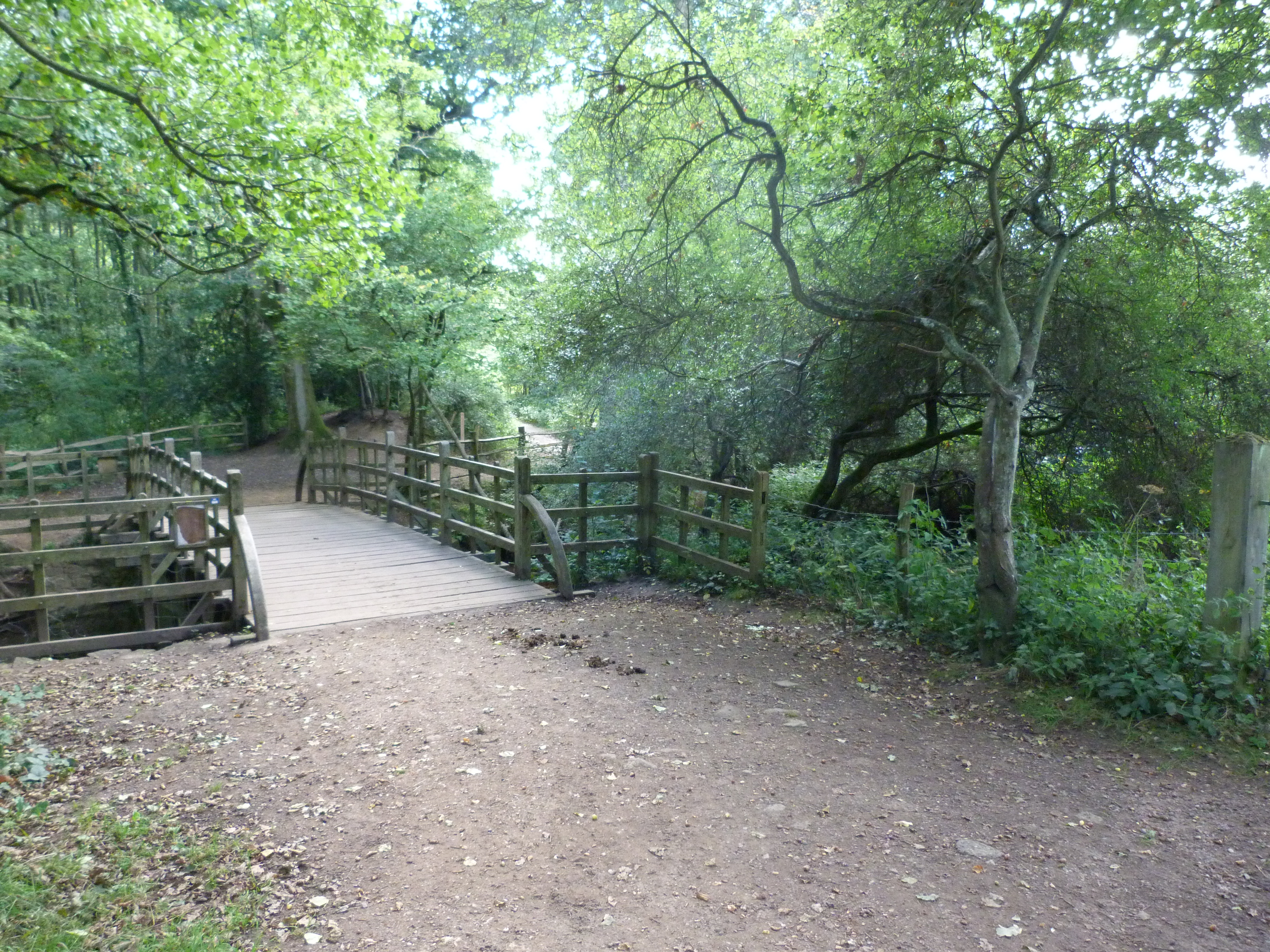
Beyond is the bridge.

Pooh Bridge

It was restored in 1979, and is solid wood, strong enough for the horse traffic that comes along this path. The sunlight dapples the river, showing a proliferation of small sticks on the downstream side.

Amanda plays Pooh Sticks

We add our small offerings into the pile, racing from one side of the bridge to the other to see them come through.

Back in Hartfield we have tea in the Rose Garden of the sweets shop (called “Pooh Corner” now). A perfect day. Some go to Lourdes. Others go to Pooh Bridge.

“Sometimes, if you stand on the bottom rail of a bridge and lean over to watch the river slipping slowly away beneath you, you will suddenly know everything there is to be known.” Winnie-the-Pooh

Where stories take you

A former student and friend of Tim’s, Trent Reedy, came into town from the States to publicize his book “Words in the Dust”, which has just been published in the UK. Trent was a soldier in Afghanistan. He went into the military to pay for his college education when 9/11 changed his life. His book for young adults came out of his experiences with the children that he met in Afghanistan.

On our way to meet Trent, we walked through the Old Vic Tunnels so that Tim could see where I had gone to see Orpheus and Eurydice.

Old Vic Tunnels

The tunnels led us into a long and wonderful stroll along the Southbank. Saturday on the Southbank is a festival of treats – there were booths selling every kind of food imaginable, living statues, dancers and musicians. A woman was playing an instrument called a “Hang Drum” that looked like a small cliché of a flying saucer and sounded like an unearthly combination of an oil drum and a harp. I couldn’t find a video of the woman we heard, but this clip from YouTube will give you a sense of the potential of the instrument. http://www.youtube.com/watch?v=c0xxnFqdBCE&feature=related

We met Trent for dinner at the Thameside Pub, near London Bridge. Other than his tour of duty in Afghanistan, Trent hasn’t been outside of the US, so his trip to the UK was quite an adventure. Trent also loves theatre, so we decided that his arrival in London gave us a perfect excuse to see the stage version of “The Railway Children”. After our pub dinner, we walked back along the Southbank to Waterloo station to see the play.
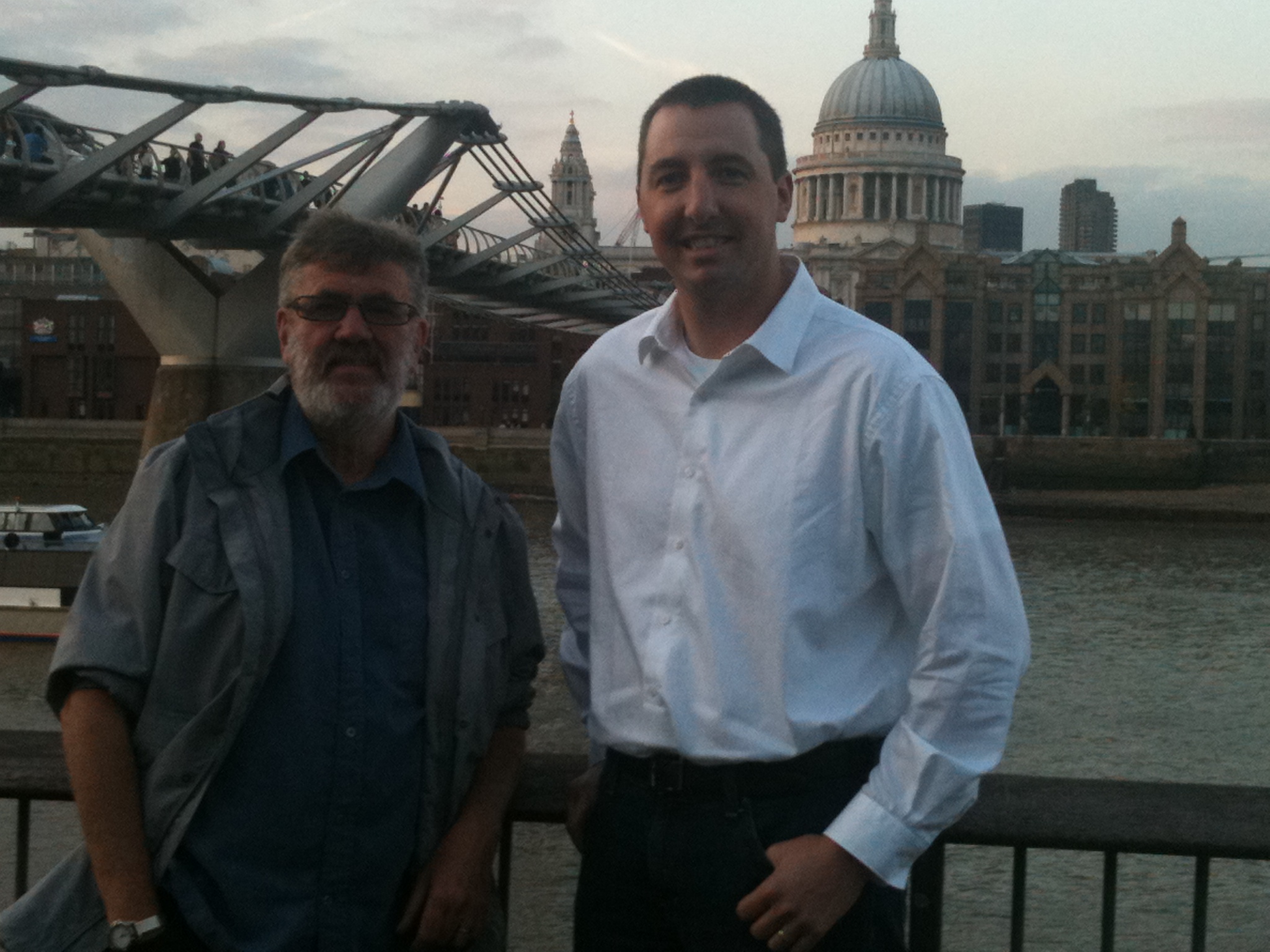
Tim and Trent Reedy on the Southbank

The Railway Children has been playing in London for a few years and one of the reasons for its success is the setting – the play takes place in the Waterloo train station (a Toronto version takes place in a train roundhouse). It is a part of Waterloo that used to house the Eurostar to Paris. The Eurostar now goes to St. Pancras Station, so a whole section of Waterloo is unused. And if there is one thing I am learning about London it is that NO space is ever left empty.

To get to the “theatre”, you must pass through the former customs and immigration areas. Snack bars are in use as such, so you can get any manner of treats before seeing the play. The bleachers for the audience seats are arranged on either side of the train platforms. The action takes place along the length of the platforms, as well as on sliding stages that come along the train tracks. At one point a full train arrives on the tracks. It is a wonderfully effective staging that easily transports you to a kinder, gentler time.

I had forgotten entirely that I had read the Railway Children, and as each new thing happened I could greet it like an old friend. It is a kind story, with a generosity of spirit. The children are aware that there are adult secrets they cannot to share, things outside of their understanding. They do their best to solve problems, but they are only barely players in their story. They have adventures while the larger adventures of life happen around them.
As an audience member, I was grateful for the respite from the intensity of the outside world. From wars, illnesses and consequences. It was a lovely little holiday of an evening.

Tate à Tate

Last Wednesday, we decided to have a Tate à Tate – an exploration of the Tate Britain in the morning and the Tate Modern in the afternoon. The Tate Britain was listing a show on “The Romantics”, which ended up as mostly a show on Turner. It was wonderful to see so many Turners, and to see the evolution of his style, but it was a bit disappointing not to see some of the others of the period. After a little pub lunch down the road we decided to go back to the gallery in hunt of Pre-Raphaelites. We were rewarded with a few of our most favourite pieces (some with a definite flair for the “Elegant Gothic Lolita” — see Camden Town!) – Millais’ Mariana and his Ophelia, Waterhouse’s The Lady of Shalott, Brune-Jones’ The Golden Stairs (looking for all the world like the angels out for a union break), and the magnificent Singer Sargent portrait of Ellen Terry as Lady Macbeth, which is enormous and vigourous. It is larger than life and full of passion, as she was.

Ellen Terry as Lady Macbeth

After we had feasted on those paintings, we hopped onto a river ferry to take us to the Tate Modern. The Tate runs a ferry between the two galleries and it really is the most wonderful way to journey down the river, past the Houses of Parliament, the London Eye, the Globe. The city was built on the Thames, and being on the river connects you to centuries of commerce and trade.

Tim on the Thames with the Houses of Parliament

When Tim & I go to galleries, we split up and agree to meet later. We both have different things we are interested in, and this way we have things to share when we meet up  — “Did you see the … ?!” is usually how it starts.

“Did you see the Sunflower Seeds?” said Tim. “Did you see the Staircase?” I countered.

“Sunflower Seeds” by Al Weiwei is a huge pile of what seem to be millions of sunflower seeds on the floor of the gallery. However, each seed is hand-made of porcelain, combining the idea of mass production (so deeply associated with China) and individual craftsmanship. Sunflower seeds are a common snack in China, but carry associations with the Cultural Revolution, when propaganda posters depicted Chairman Mao as the sun and the masses of people as sunflowers turning towards him. Weiwei also remembers sharing sunflower seeds as a gesture of compassion in a time of extreme poverty. “Your own acts and behaviour tell the world who you are and at the same time what kind of society you think it should be” Ai Weiwei

“Staircase – III”, by Do Ho Suh, is a polyester and wire installation that takes over a whole room. A perfectly made fabric staircase hangs in the centre of the room, complete with balustrade, electrical sockets and light fixtures. It hangs from a transparent fabric “floor” above, through which the balustrade can be seen. The staircase hovers tantalizingly above your head, opening out to a door in the middle of the air.

Staircase III by Do Ho Suh

Great discoveries.

We left as the gallery closed at 6:00. It was a lovely afternoon and we walked from the Southbank to Trafalgar Square, heading to the Crypt at St. Martin’s in the Fields. The Crypt has a cafeteria-style restaurant, with good wine, delicious tapas, a great vegetarian mushroom ragout, and Jazz every Wednesday night. This really is an 18th century crypt – the floor is made of gravestones and the beautiful brick arches make for fabulous acoustics for the band. Shanti Paul Jayasinha is a mellow trumpeter, playing original music in an Afro-Cuban and Brazilian style,

and his band suited this intimate venue perfectly. It was one of those nights when I could hear all of the layers in the music. Simple, clean and elegant. A perfect ending to a day of visual feasting.

A fashionable picnic

The weather was very blustery on Tuesday when Maddy suggested a picnic lunch. But we are hearty Canadians, and we gamely headed out to Victoria Park, near Chisenhale Dance Studios, where Maddy was working for the day.

Maddy has one of those great picnic backpacks with a full set of glasses, plates, cutlery, napkins, picnic blanket – it is one of those things that makes you wish you went on more picnics. For our lunch she made a wonderful Thai Noodle Salad, and we brought a mixture of olives and marinated vegetables. With a flourish, she pulled a bottle of chilled Cave (sparkling wine) out from the thermal section of the backpack. This is a girl who knows how to picnic!

Given the weather, it was not surprising that the park was practically deserted. Aside from a rather nosey squirrel and a Magpie (neither of whom liked olive pits, which is all we were sharing), we had the place to ourselves. It was a wonderful lunch, topped off with delicious coffee from a silver thermos. The weather may not have been inspiring, but the mood was perfect.

Maddy needed to work for the afternoon, but she directed us to Camden Town in search of a backpack for Tim. Built around canal trade 200 years ago, Camden Town today is a warren of shops – eccentric, extreme and surprising.

Part of the area is built on an old stable, used for housing the horses that pulled the barges. Hence the wonderful large bronze sculptures of horses everywhere as a nod to the history of the area.

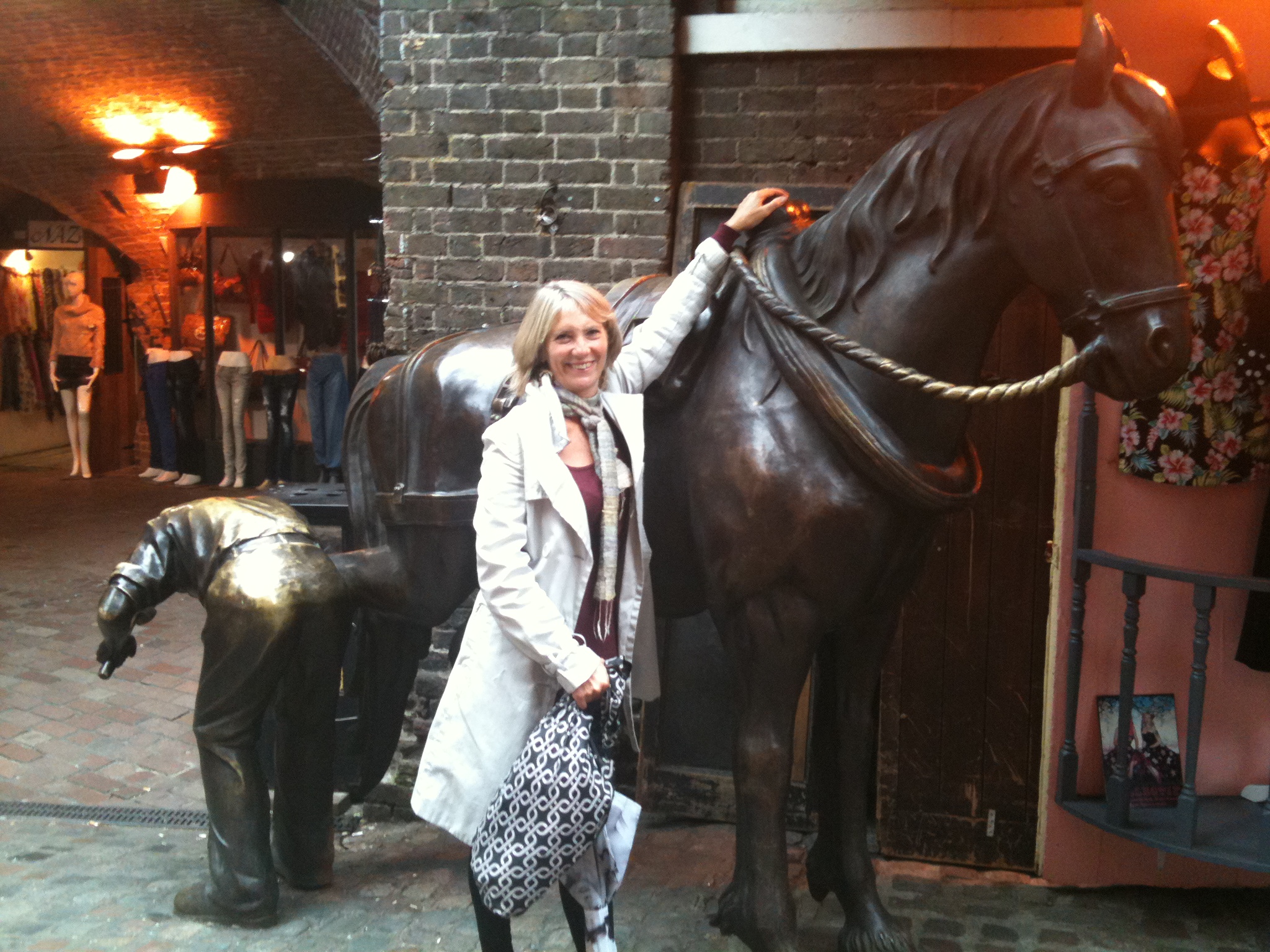
Amanda with a bronze work horse of Camden Town, shod by a bronze blacksmith

Tourist shops are mixed in with craft stores, “head” shops, vintage and designer clothes. Camden Town is famous for its clothing and accessories and is known for alternative fashion: Burlesque, Goth, Fetish, 50’s Rockability/Psycobilly, Punk, Cyber/Clubwear, Elegant Gothic Lolita (I am not making this up!), DYI/Cartoon, Hippy/Ethnic. It was hard to know where to start!

After much walking and exploring we found just the right kind of backpack for Tim. I may just have to go back for some of those fetish leggings…

Theatre under the trains

I could easily become paralyzed by the weight of possibilities on any given day. And easily end up in the poor house by trying to see all of the shows I’d like to see.

Because I have time in London I want to get out and explore what is being done in the smaller venues. But when Tim & Jan & I decided on Thursday that we wanted to see something on Friday almost everything was sold out – which is incredibly encouraging and exciting. While the West End theatres are full of tourists, the smaller venues are filled with a lively theatre going public of Londoners. For as long as there has been a London, people have gone to theatre, and they always will.

After a fair amount of searching, we managed to get tickets to a play at the Southwark Theatre. We chose it partly because Jan wanted to visit nearby Southwark Cathedral, where Shakespeare’s brother is buried (“What? A brother? Who knew?!”).

Jan outside of Southwark Cathedral. It is very large!

The Cathedral is beside the train tracks at the London Bridge station. A sacred site since the 7th century, it is reputed to be where Shakespeare and Chaucer worshipped. In the 17th century, the Archbishop was asked to be on the committee that wrote the King James Bible. In those days the church ministered to the actors, foreign craftsmen, merchants, “ladies of the Bankside Brothels” and the disreputable sorts who lived on the south bank. So it is a church with a very diverse and impressive history.

Outside the cathedral we came upon a memorial for Mahomet Weyonomon, a Sachem (chief) of the Mohegan tribes of Connecticut. The Mohegan tribes had helped the settlers in their first winter in the New World and became allies of the English. In 1705, the Mohegans were deeded their land by an order in Parliament, but New World settlers took over the Mohegan land. Mahomet, an educated man who spoke and wrote several languages including English and Latin, sailed to London in 1735 to petition King George II to return the lands. While awaiting an audience with the King, he contracted smallpox and died.

Because foreigners could not be buried in the City, his body was carried across the river and he was buried near the present day Southwark Cathedral. The memorial in his honour was erected at the request of the Mohegan tribe in 2006, and was unveiled by Queen Elizabeth II “symbolically granting Mahomet the audience he never received.”

A fascinating bit of history connecting the old world with the new world and with the even older world.

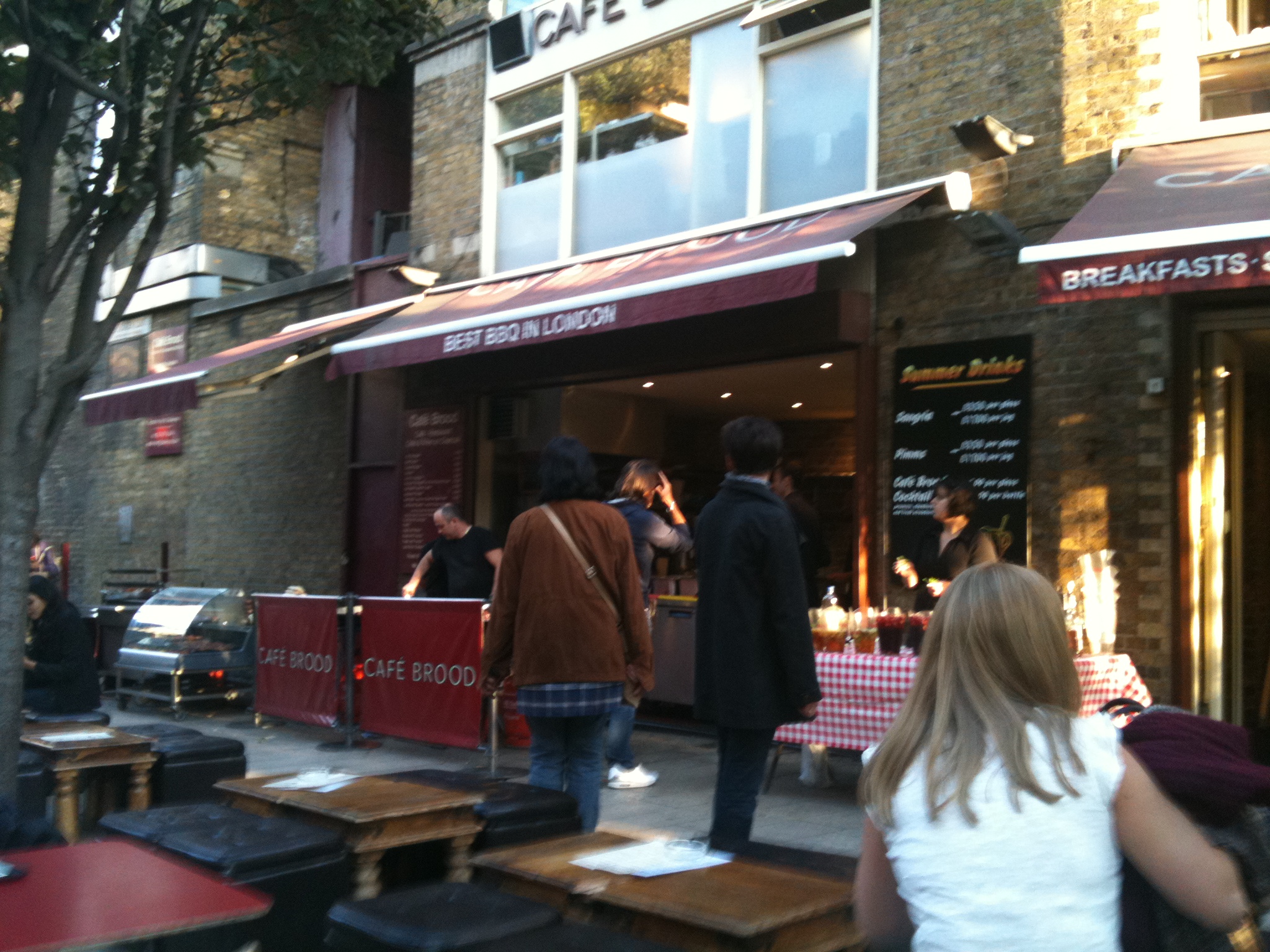
Mahomet’s memorial looks over the Borough Market beneath the railway viaducts, between the Thames and Borough High Street. We looked down from where we were standing and saw a great outdoor BBQ under the arches, where we could get heaping bowls of  paella (not as good as Tim’s but with enormous King Prawns).

BBQ under the viaducts of London Bridge

There are surprises around every corner. One minute you are reading a plaque about a first nations chieftain, the next you are eating paella. Walk a few blocks, and you are at the Southwark Playhouse. 

The Southwark consists of two small theatres, carved out of the space under the brick arches of the London Bridge train tracks. We entered through a narrow alleyway to find a cave-like theatre lobby, where an incredibly age-diverse range of people were getting drinks and lining up for the plays. Two plays were on: “Parade” (Jason Robert Brown’s musical) and “The Belle’s Stratagem”, a comedy of manners play by Hannah Cowley that first premiered in 1780. Apparently this is the first production since 1880, and it is fabulously fun. Not to be confused with George Farquhar’s “The Beaux’ Stratagem” (The Haymarket Theatre, 1707), “The Belle’s Stratagem” is a fantastic re-discovery.

With virtually no set other than some background curtains to decorate the vitally important entrance and exit doors, the 16 actors rely on wit and timing to charm us. Clothed in period costume, they occasionally burst out into Restoration style renditions of Spice Girls (“Tell me what you want, what you really, really want” scans perfectly if you pronounce every syllable.) The play is wildly funny and bawdy and works perfectly in this venue, where every London reference seems to touch the bricks walls and archways that form the backdrop to the action. It is one of the treats of being here that we can make discoveries like this.

After the show we bid a fond farewell to Jan, with hopes that she will join us again later in the year.

The next day I headed off to see another site-specific show, this time in the Old Vic Tunnels.  The tunnels have a theatre space under the brick archways of the train tracks under Waterloo station. The play that I have come to see is “Orpheus and Eurydice”, a production of the National Youth Theatre.

I am particularly interested in the work that the NYT is doing. Young people (approximately 18 – 21 years old) come from all over the country to audition to be cast in NYT productions. The show I am seeing is the result of students spending a summer in the National Youth Theatre Company. Written especially for the company, the students work with a professional director, composer, designers, choreographers etc.

This production of “Orpheus and Eurydice” is a modern opera re-telling the Greek myth. The dark tunnel setting perfectly creates the underworld where Eurydice struggles to hang onto life and to her belief that Orpheus will come to rescue her.

We entered the theatre space through misted tunnels, past gurneys with bodies hooked up to medical equipment. We negotiated scary looking guards – large men with tattoos, masks and clubs – and walked over a “river” under the floor boards. The world was dark and dank. Watching Orpheus and Eurydice facing various demons, memories and challenges and it became clear that the starting point for this modern version is an organ transplant that is going very wrong.

This was bold and gutsy piece, in a raw, dirty space. Hearing, and feeling, the trains rumbling above our heads added to the strength of the production. This is not clean and antiseptic theatre.

So in my first week of seeing plays in London I have gone from the lavish, historic theatricality of the Haymarket Theatre, to the graffiti encrusted walls of the Old Vic tunnels. I am definitely not in Kansas any more.

The London Theatre Season

Because of our idyll in France, I haven’t been paying a lot of attention to the cultural scene in London, so when our friend Jan Irwin arrived I was relying on her to choose some events that we could do together. Jan has been a wonderful mentor to me, and to most of the theatre community in Ottawa. Having her here was a great excuse for seeing a lot of theatre and exploring new parts of London.

Jan and I arranged to meet at noon on Thursday, in Trafalgar Square. On Wednesday, I decided to pop into the National Gallery. Because the galleries are free, you can just go in and out whenever you want. It is incredibly liberating. I visited the van Goghs, some lovely Manets and Monets, and a wonderful show on Norwegian and Swiss painters of the 19th century called Rocks and Forests. Sort of an equivalent response to environment as the Group of Seven.

When I came out of the gallery, I sat for a moment in the sunshine on the steps of St. Martins in the Fields. Staring out into the mass of humanity coming out of Trafalgar Square who did I see but Jan, a day early. In a city of 8 million (with probably another million tourists on any given day), the chances of running into someone seems slight, but there she was, and there I was. We went down into the Crypt of St. Martin’s, where there is a very reasonably priced café. Calm amid the intensity of central London. A quick visit to catch up and solidify our plans for the next day.

When we met as scheduled on Thursday, Jan was fighting a cold, so we decided to go to an Andalusian restaurant for lunch, where an inexpensive set 3-course lunch included a yummy garlic soup, guaranteed to fight germs. Our first show of the day was at just around the corner at The Theatre Royal Haymarket.

The Hay Market Theatre was originally built in 1720 and a theatre of many firsts – the first acting school (1741); first productions of Sheridan, Fielding, Oscar Wilde, Ibsen; and it’s a theatre that has been played in by every great English actor. Gielgud actually lived there, in the dressing room, for weeks on end during the blitz.

We’ve come to see the great Ralph Fiennes as Prospero in the Tempest. And he was brilliant. You feel that he was born speaking Shakespeare. Every word made sense and was entirely natural. He was not trying to “do” anything. The closing monologue was one of the most honest moments I have witnessed on stage.

Would that I could say the same for the rest of the production. There were a dozen different fairies/spirits that were heavy and earth bound, amateurish in their dances and awkward in their flying gear. Sent off by Prospero to “Go make thyself like a nymph o’ the sea”, Ariel returns, split into 3 different, chunky nymphs all dressed in diaphanous gowns that made them look more like heavy opera singers than nymphs. That they sang like castrati verified the image. Caliban was quite wonderful – a tortured slave, who has not yet learned civility but who, through the grace of being pardoned at the end, has come a longer road than anyone else in the journey.

All in all, some great acting, some inconsistent directorial decisions (how is it that Sebastian and Trinculo don’t hear the music that accompanies their song, but suddenly hear the music of the island, the music that accompanies the spirits songs?), some great lighting effects (terrific projections) and a lot to talk about over dinner.

Our evening show took us into a whole new area of London, down on the Thames past Tower Bridge to the quiet oasis of St. Katherine’s Docks.

These docks have been in use since 1125 AD. Bombed during the war, too small to now be a commercial port, St. Katherine’s Docks are now filled with luxurious yachts moored beside the walkways. The previous day, I had found a fabulous little Italian restaurant right on the water, so Jan and I arranged to meet Tim there for dinner before the show. We had one of those fast marvelous Italian dinners (with the most exquisite bread with olives in it) overlooking the locks and the Thames beyond.

Tim & Jan at St. Katherine's Docks

Two Towers. Ten Years. Twenty plays. For Headlong Theatre’s “Legacy”, director Robert Goold commissioned a group of writers to write short plays in response to the legacy of 9/11. There has been a lot of discussion here about the artistic responses to 9/11, and as such, a lot of controversy. Some people argue that fictional or artistic responses somehow lesson the importance of the tragedy. Some argue that not enough time has passed for artistic response. Some argue that Americans own the story and that Goold is an outsider.

The show is in a former trading hall in an office building called Commodity Quay. We were led from the street through a metal detector and series of uniformed security personnel before we arrived at “Windows on the World” – an amazing re-creation of the restaurant at the top of the World Trade Centre north tower. From the menus on the tables to the view of Manhattan beyond, we were immersed in this iconic moment in time.

The plays were fused together seamlessly. They took place around us, beside us, in front of us as we sat nursing drinks in the restaurant. The actors performed in a glassed corridor above us, sat at tables, stood on tables, and moved among us. Transcripts from official speeches were interwoven with fictionalized plays – an imagined annual meeting of widows, movement pieces of flight attendants and firemen, a poor Arab shopkeeper who is suddenly the victim of hate crimes. Powerful, iconic images. Looking up. Running. Dust everywhere. Lives forever changed. The location was part of the story, and we were a part of the discussion.

9/11 will always be the subject of many viewpoints and no answers. I found “Legacy” respectful and honest and a very good way to focus on the people and on the city of New York, devoid of ideologies.

It was a great day of theatre, and wonderful moment to be in London. Tim & Jan & I enjoyed being with each other so much, we decided to spend the next night seeing a play together. Whatever we could get tickets to. Which, in this city of theatre, proved harder than expected…