On our last day in London, we decide that what we want more than anything is a dose of city life. We realize with a shock that we haven’t been to the Victoria & Albert Museum since our first trip to London in 1976. We’ve changed a lot since then, and so has the V & A.
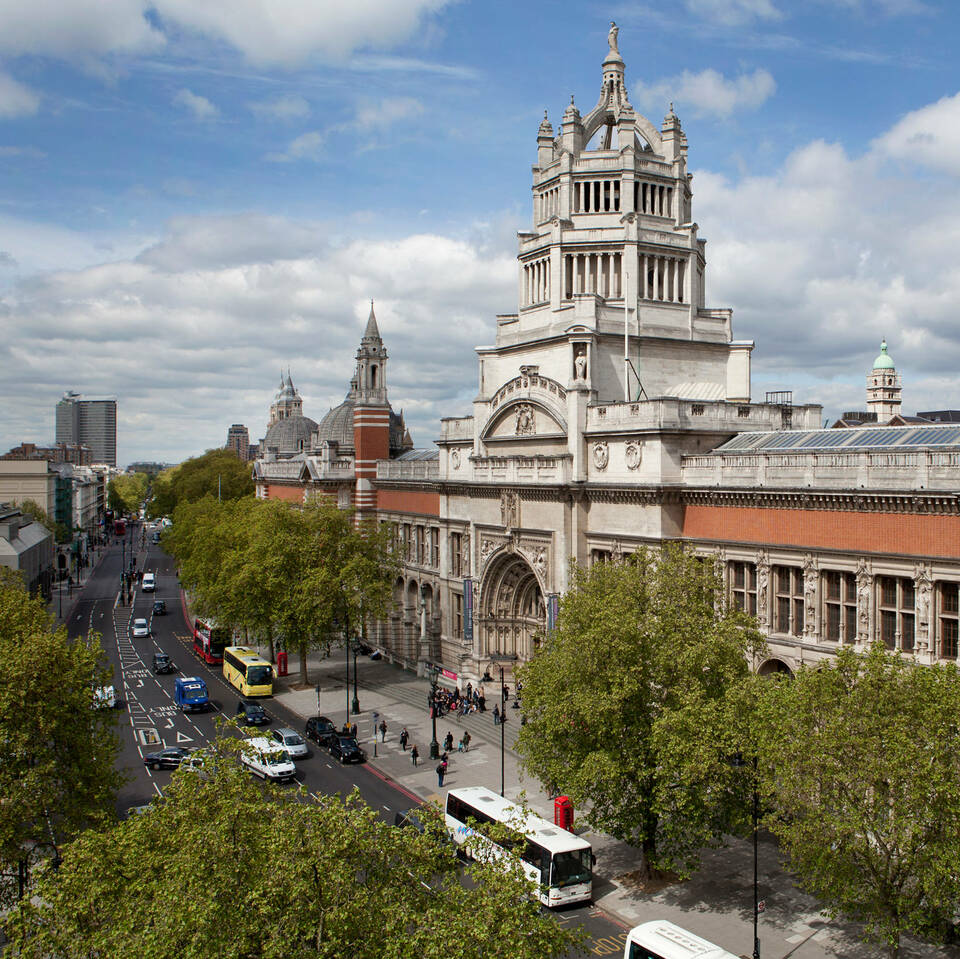
The V & A is a learning museum, originally dedicated to improving British industry by educating designers, manufacturers and consumers in art and science. That’s an ethos that still runs through the museum’s collection of over 2 million artifacts. One of the 10 largest museums in the world, the V & A is a constant source of inspiration. It’s a museum that you can spend a lifetime revisiting. This is the first of what I hope will be many revisits.
We don’t have a lot of time, so we decide not to plan. We’ll allow the fates to decide what we see, to allow our experiences to be a series of synchronous events. (I’ve just looked up the word synchronous and found that one of its meanings has to do with Astronomy: “making or denoting an orbit around the earth or another celestial body in which one revolution is completed in the period taken for the body to rotate about its axis.” This is a perfect metaphor. It takes time for an experience to turn and manifest itself within my thoughts. In the orbit, I can see the experience from all sides. But I digress…)
In the vast and somewhat overwhelming V & A, it seemed that with each corner I turned, with each new room I entered, I saw an object or a piece of art that felt like it was put there just for me. Something that reminded me of what I care about, about what matters to me. Something that showed me facets of myself and helped me remember and recognize the “person I take myself to be.”

We started our V & A ramble at the show “Re:Imagining Musicals.” Among the trove of records, playbills, sets, costumes, and curios, I saw an original handwritten score for “The Music and the Mirror,” from A Chorus Line, a musical that I saw in its first Broadway production. As with all aspiring actors, that song, in particular, was the anthem I sang as I headed off to theatre school. The manuscript was complete with changes made by both the composer and lyricist (Yes, the changed line “Let me wake up…” is better than “Let me awake…”) I was off on my journey.
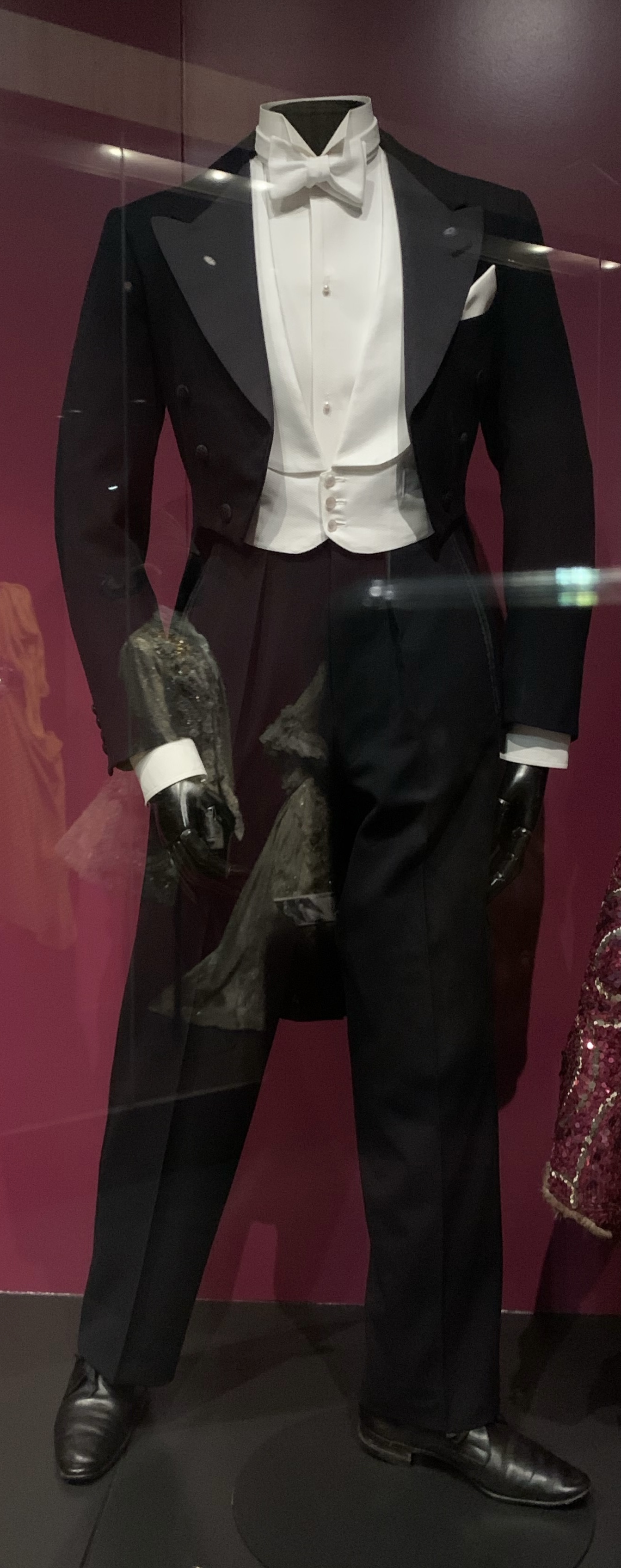
Musicals segued into the museum’s theatre and performance collection. Sir Laurence Olivier’s iconic costume for Henry V is here, beside Vivien Leigh’s Cleopatra. Fred Astaire’s tails for Top Hat keep company with Charlie Chaplin’s tramp hat and cane.
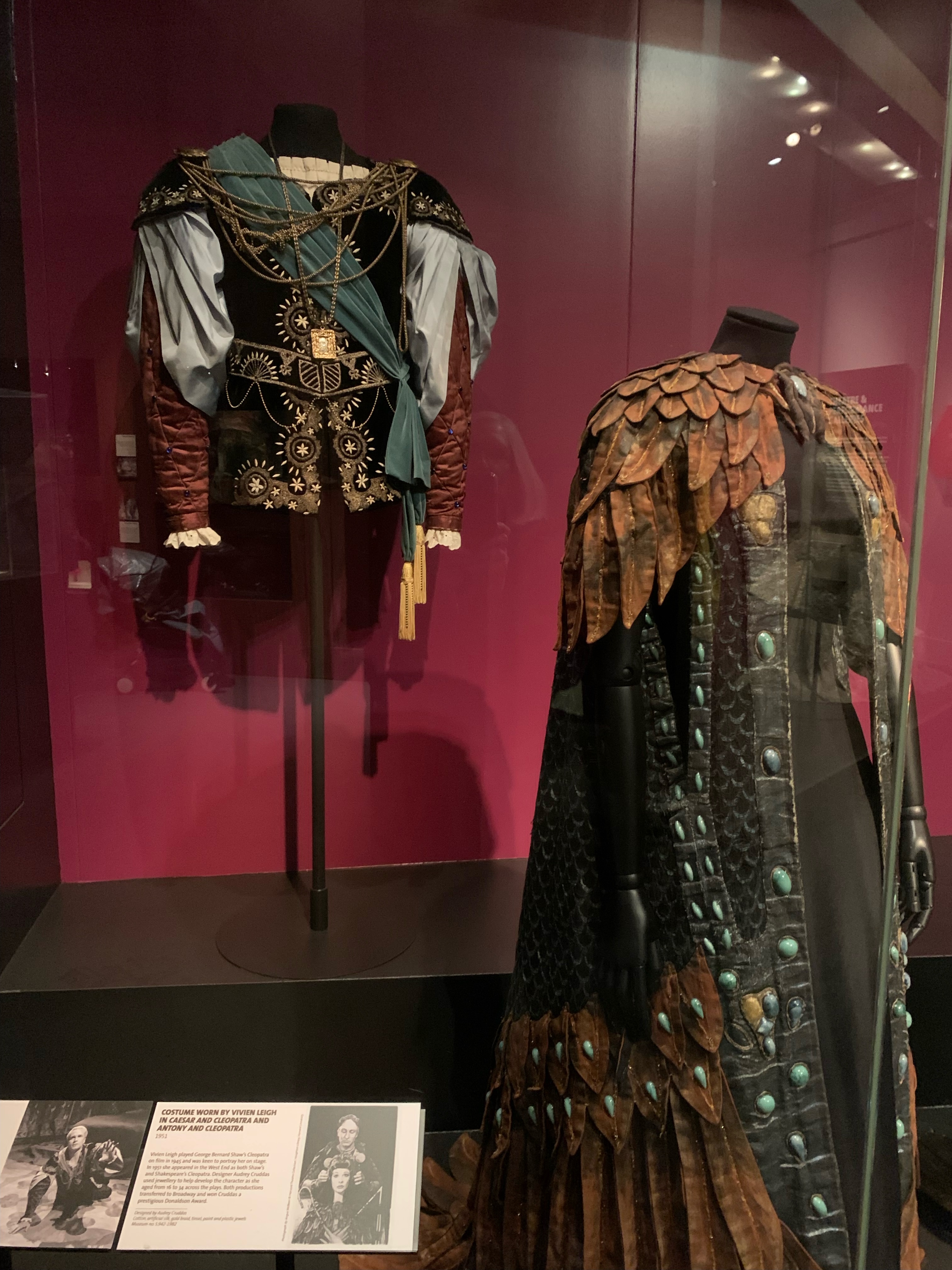
Full of emotion, with songs in my heart, I do a soft shoe out of the exhibit into the next room ––a collection of paintings donated by Constantine Alexander Ionides –– and come face to face with “The Day Dream,” a painting by Dante Gabriel Rossetti. When I was in my twenties, I went through a huge Pre-Raphaelite phase, and this was a favourite.
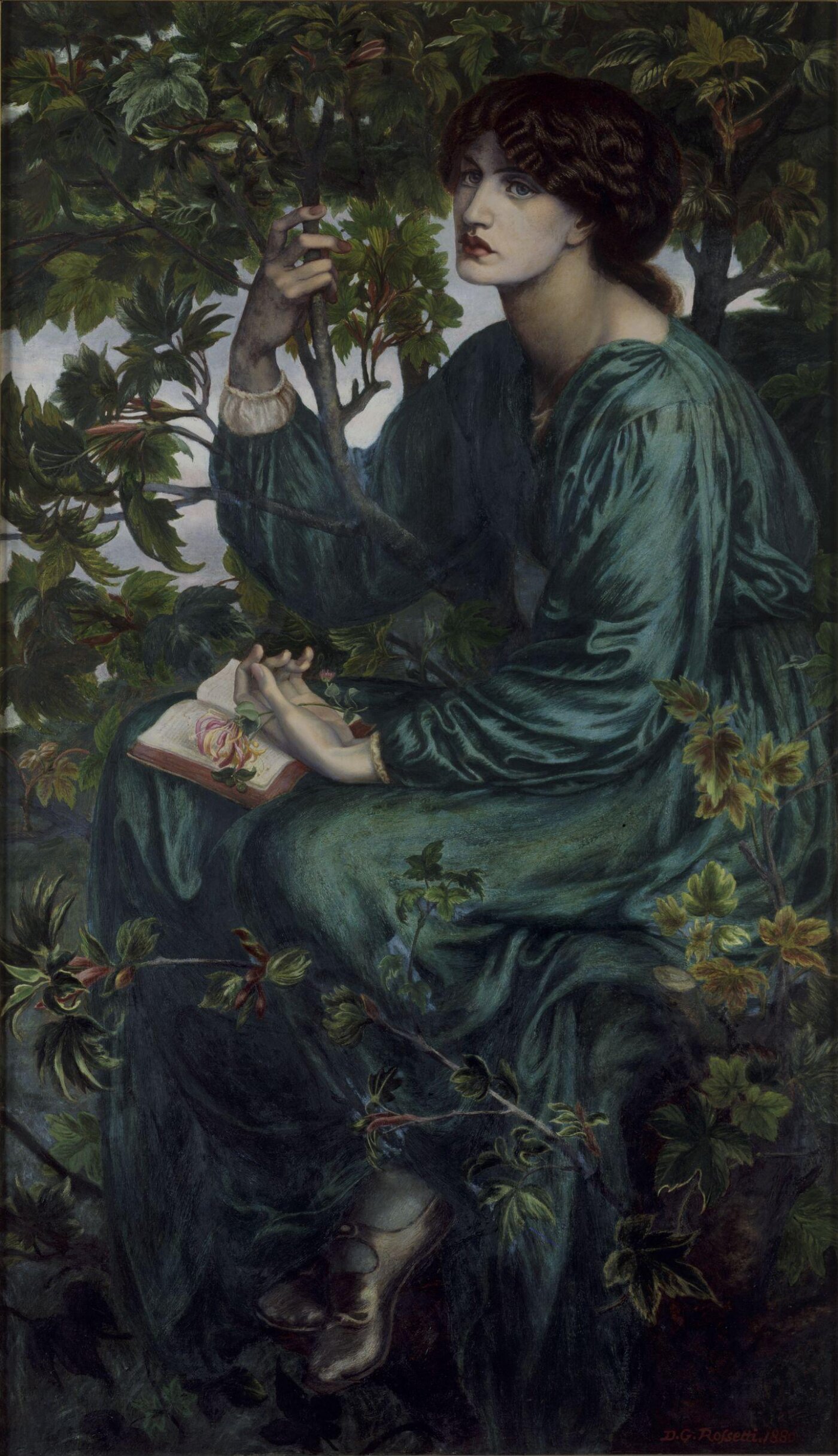
Rossetti was also a poet and often calligraphed a verse on the frame of his paintings. The poem on The Day Dream ends with:
She dreams; till now on her forgotten book
Drops the forgotten blossom from her hand.
Dante Gabrielle Rossetti
A young woman is quietly sketching the painting. My heart aches with love for her youth, and for her devotion to art. I am that dreamer again.
I meander. There is so much to see but I don’t want to choose. On this, our last day in London, I want to be surprised. And so I am. When I stumble upon the Cast Court, I almost collapse. There is a full-size plaster cast of the Trajan column, commissioned by Napoleon. I’m knocked sideways by memory.

In 1990, I travelled to Rome to study Roman lettering. The lettering on the Trajan column is the pinnacle for anyone’s study of the form. Completed in 114 CE, these letters are considered the perfection of letter design and creation. When I was in Rome, we climbed scaffolding to get up close. The column was being restored, and we washed the inscription lovingly before making rubbings to take home. It was an act of devotion.
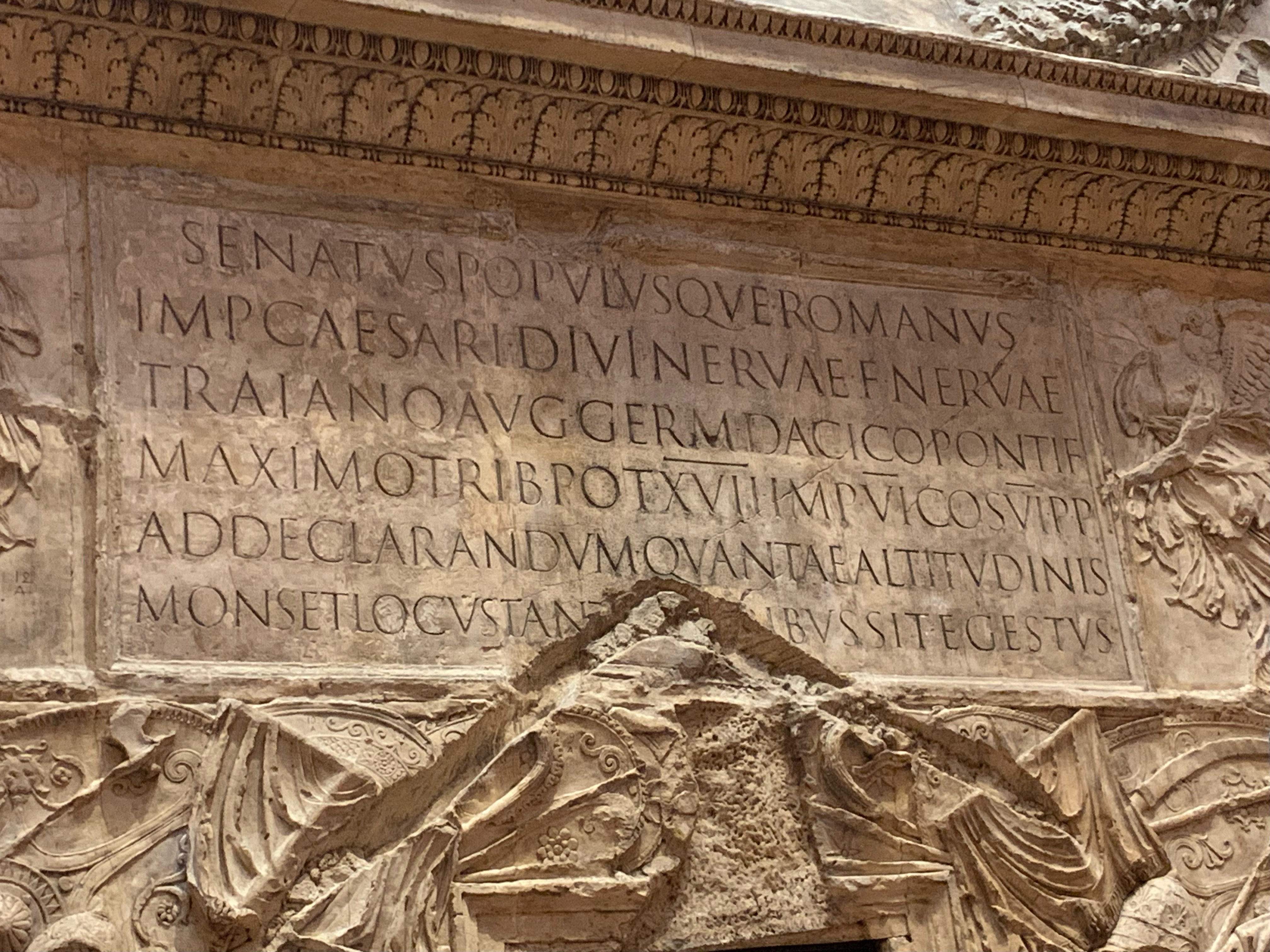
Seeing it again brought back all of the passion I felt at the time. It was as though the person who I used to be walked into the room to hold me, remind me. My heart aches with love for that young woman, and her devotion to art, too.
And so somehow, the afternoon at the V & A has become a metaphor for everything I had hoped the trip would be. It’s been a time to be with friends and family, and a time to discover new places. But importantly, it’s been a time to reflect on where I’ve been, where I am, and where I’m going. It’s been a liminal space, a transitional moment, where I have been turning in my own revolution, while revolving around the themes in my life.
I don’t know what is coming next. But I am ready to find out.


 Stepping off the Treadmill