There’s nothing like a cold, damp, blustery day to make you long for a cozy, warm shelter.
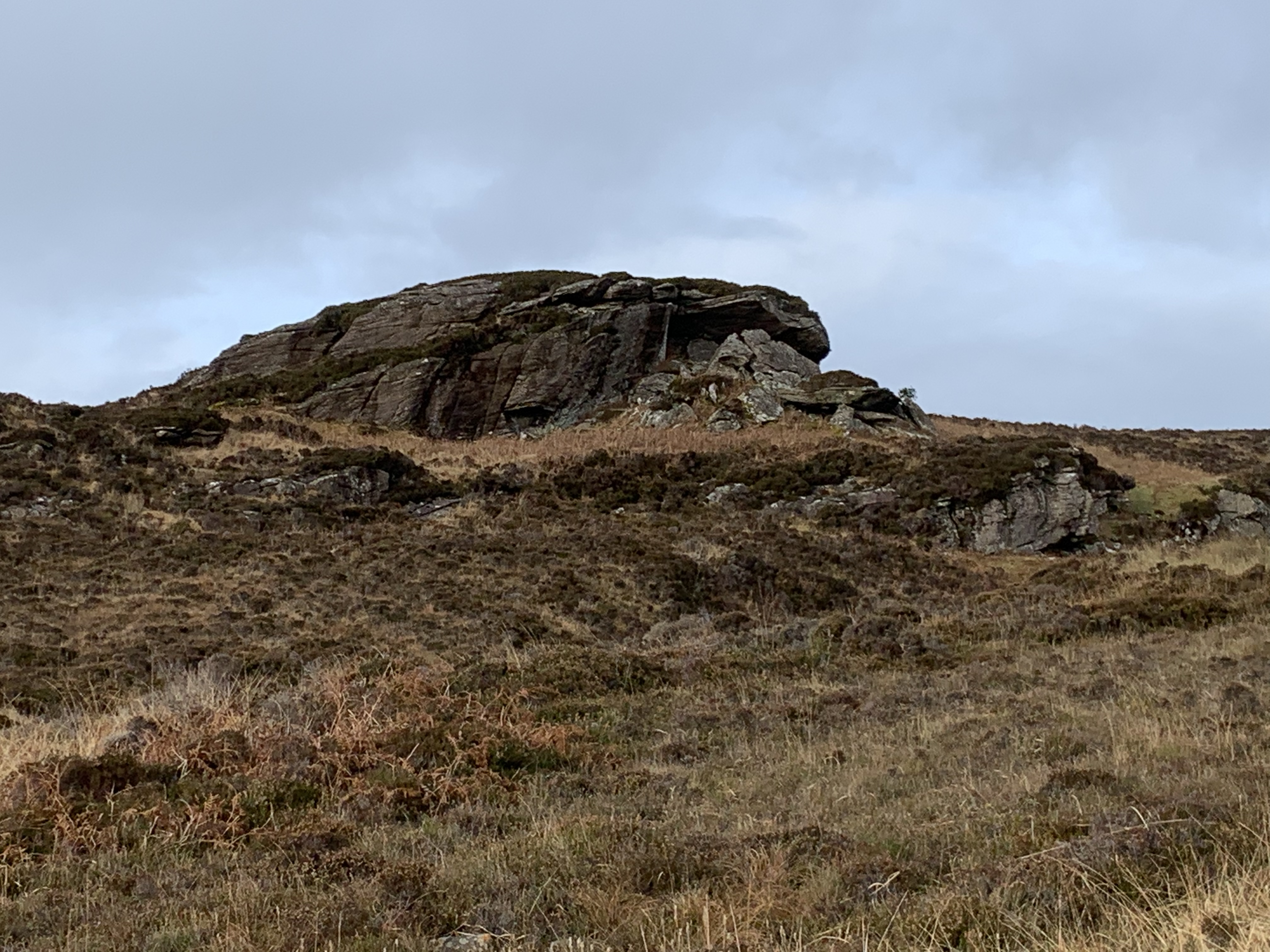
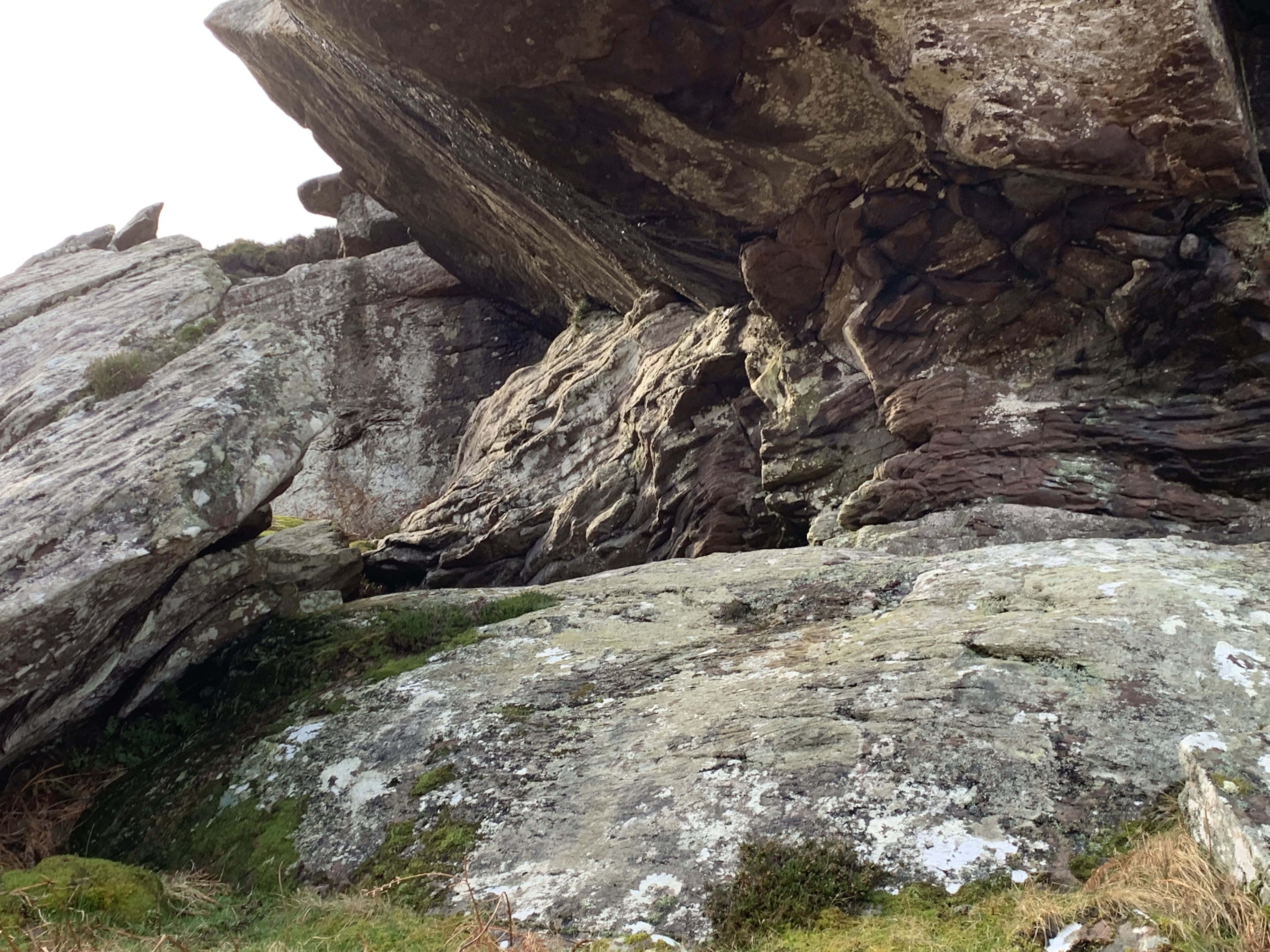
At Sand, on the Applecross peninsula, there is a huge rock with large overhang on the lee side. On a blowy February morning, it offers protection from the winds that drive across the Inner Sound of this North Western shore.
But it is hard to imagine this place as your “des rez,” as real estate people call it –– your desirable residence.
Yet habitation on the site has been dated to over 7500 years ago, when a collection of about 50 people lived here. The nomads would have had fish and shellfish in abundance, as well as birds and bird eggs, wild boar and deer. Archaeologists have found a dump of shells (a midden), tools made from antlers, and “pot boilers” –– large stones that were heated in a fired and dropped into a pot to cook food.
I’m relieved to know they had something warm to eat on days like today.
I walk down to the water’s edge. At low tide, rivulets of salt water stream back to the sea across a huge expanse of red sand. At the sea’s edge I can just make out something in the water. I watch and shapes form. There are heads bobbing off shore! More and more pop just above the waves and I realize it is a “bob” of seals, about 50 of them. Clearly they have found their own version of a “des rez,” filled with an ample supply of fish.
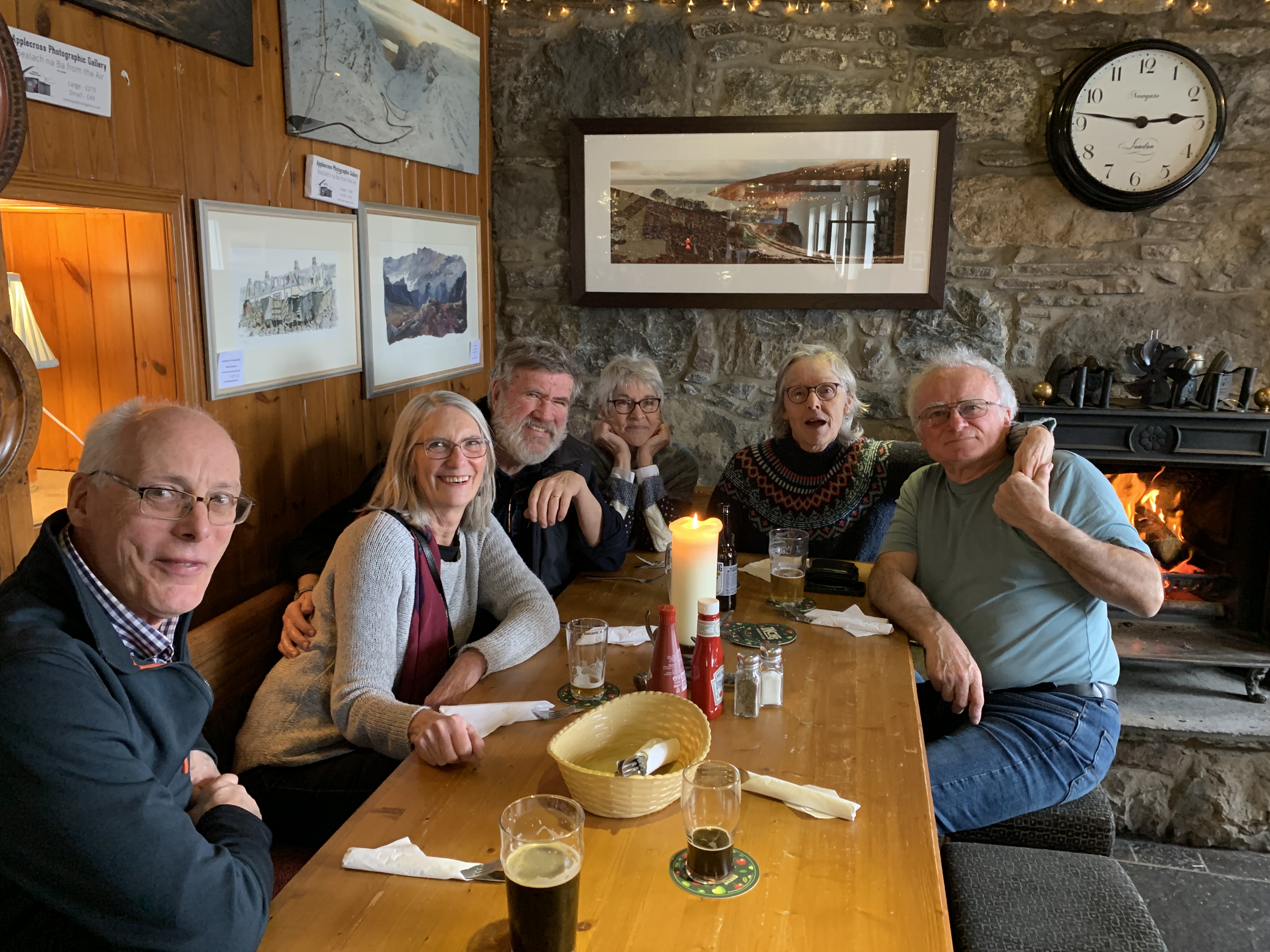
For my part, I’m relived to know that for us twenty-first century Homo Sapiens there is a cozy warm shelter further up the road. We tuck into the Applecross Inn for a local pint and some of the best Scottish Salmon I’ve ever had.
Tim has a lot of family in the U.K., cousins who he didn’t know when he was growing up. One of the driving forces of our trip has been to connect with family, to visit with them whenever possible and see where their lives have taken them.
Cousin Victor and his wife Ayleen live in Edinburgh, one of the great capital cities of the world. During the Enlightenment, the city spawned some of the world’s most influential thinkers. It continues to be a mecca for artists and scientists and is sometimes described as “The Athens of the North”. Apparently, Robert Louis Stevenson said “Edinburgh is what Paris ought to be.”
Old Tolbooth Wynd, the Tollbooth road into the city
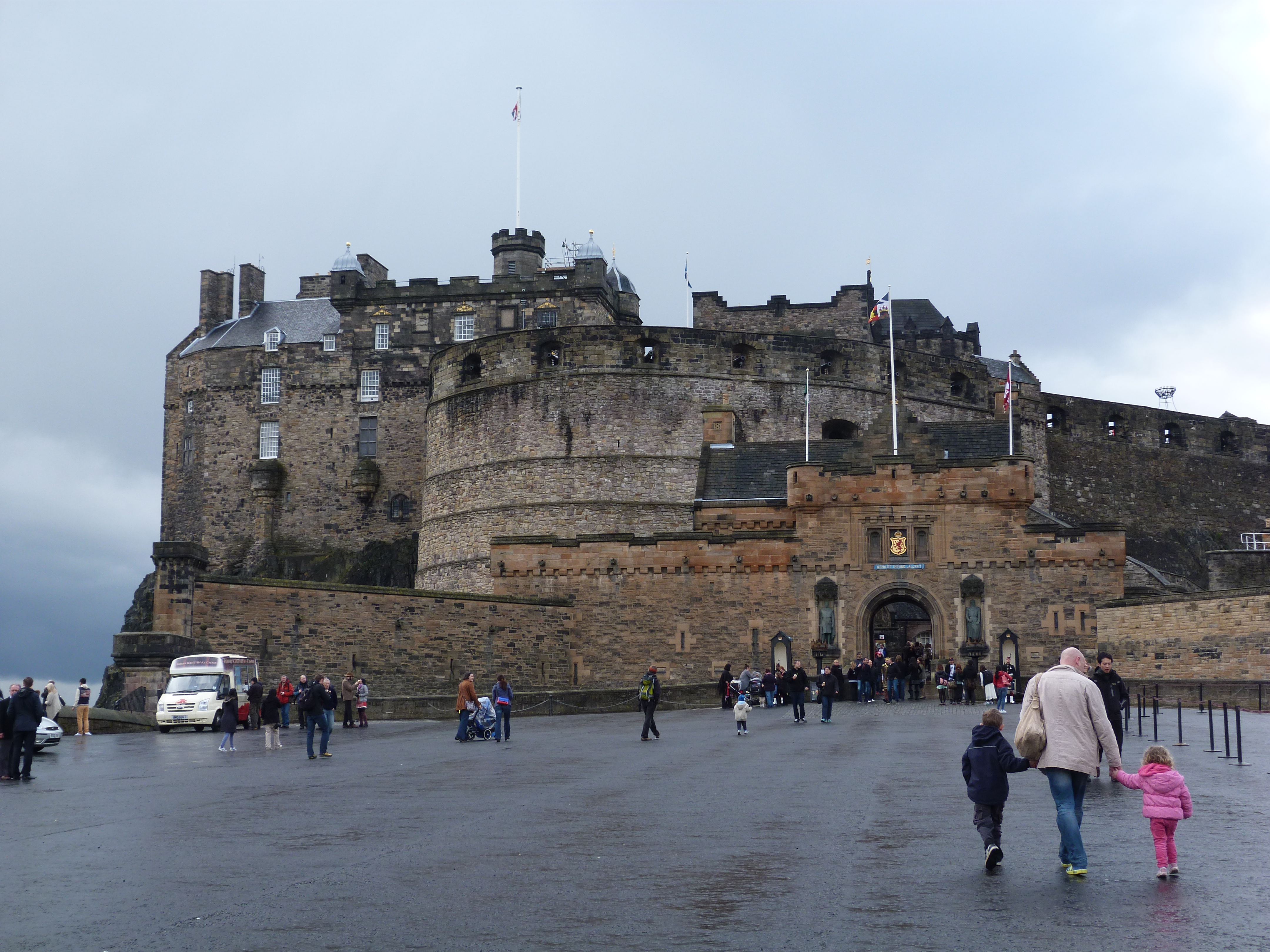
The protective Edinburgh castle, perched atop an extinct volcanic crag, guards the city.
Edinburgh Castle, atop an old volcano
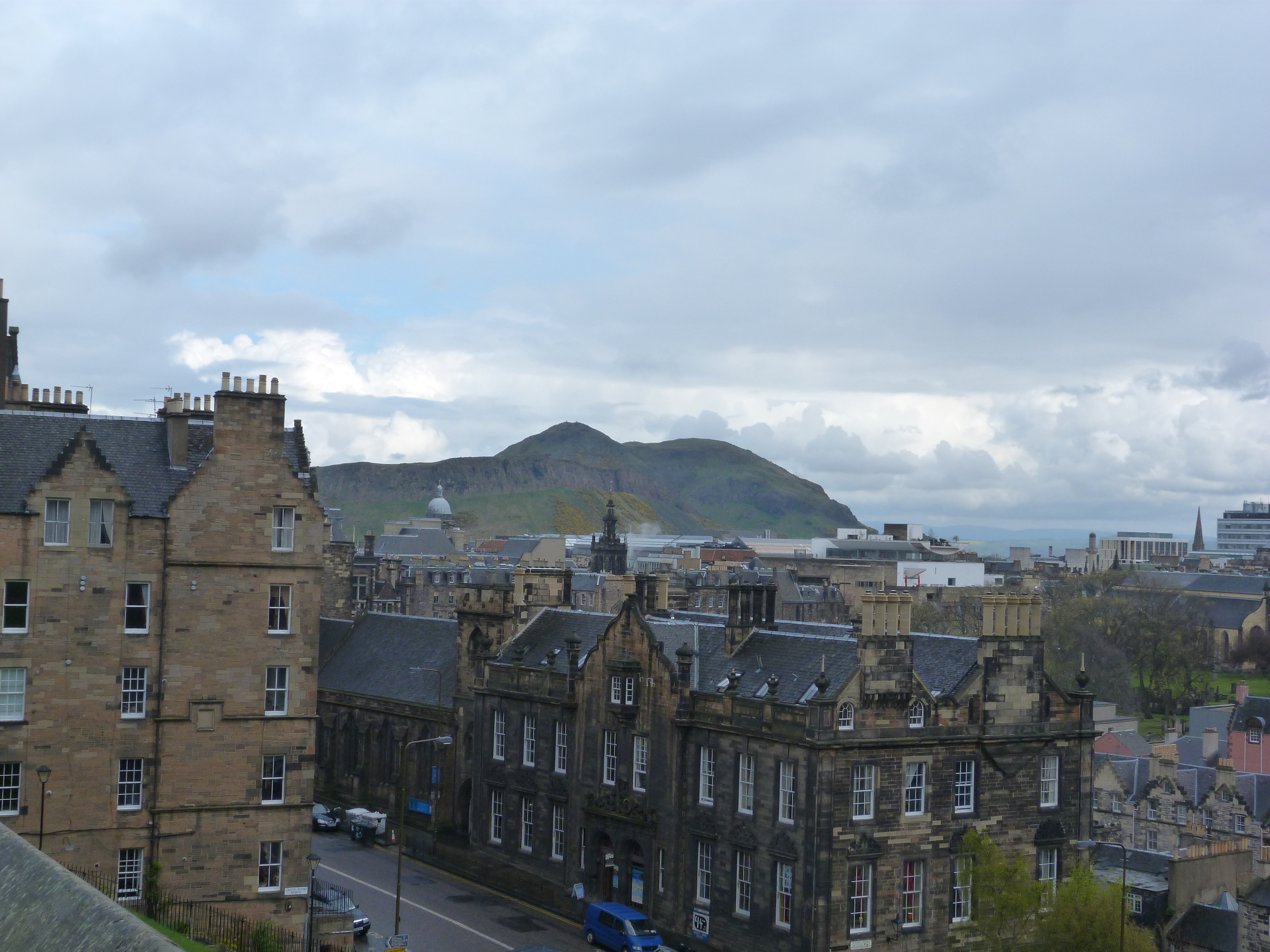
The Royal Mile, the main pedestrian thoroughfare, stretches from the Castle to Holyrood Palace, nestled under the ancient volcano of Arthur’s Seat, “a hill for magnitude, a mountain in virtue of its bold design” (Robert Louis Stevenson).
Looking from Edinburgh castle through the city to Arthur's seat
Our first destination was Holyrood Palace, one of 9 royal residences in the U.K. “Treasures from the Queen’s Palaces”, is a special exhibit at the palace, celebrating Queen Elizabeth’s Diamond Jubilee. There are Jubilee events throughout the U.K. this year, and we were lucky to catch this one in Edinburgh.
The Treasures have been selected from vast collections that have been assembled by various monarchs over the centuries. There were exquisite paintings, manuscripts and sculptures, but I think one of the things that most impressed me was a Faberge Egg, made of a delicate wire grid filled with a mosaic of tiny jewels. In the egg was a miniature with portraits of the Russian Imperial family. I’ve only ever seen Faberge Eggs in photographs and this was a stunning piece of art, although to my way of thinking it was also a frivolity symbolizing excessive Royal wealth. The kind that starts revolutions.
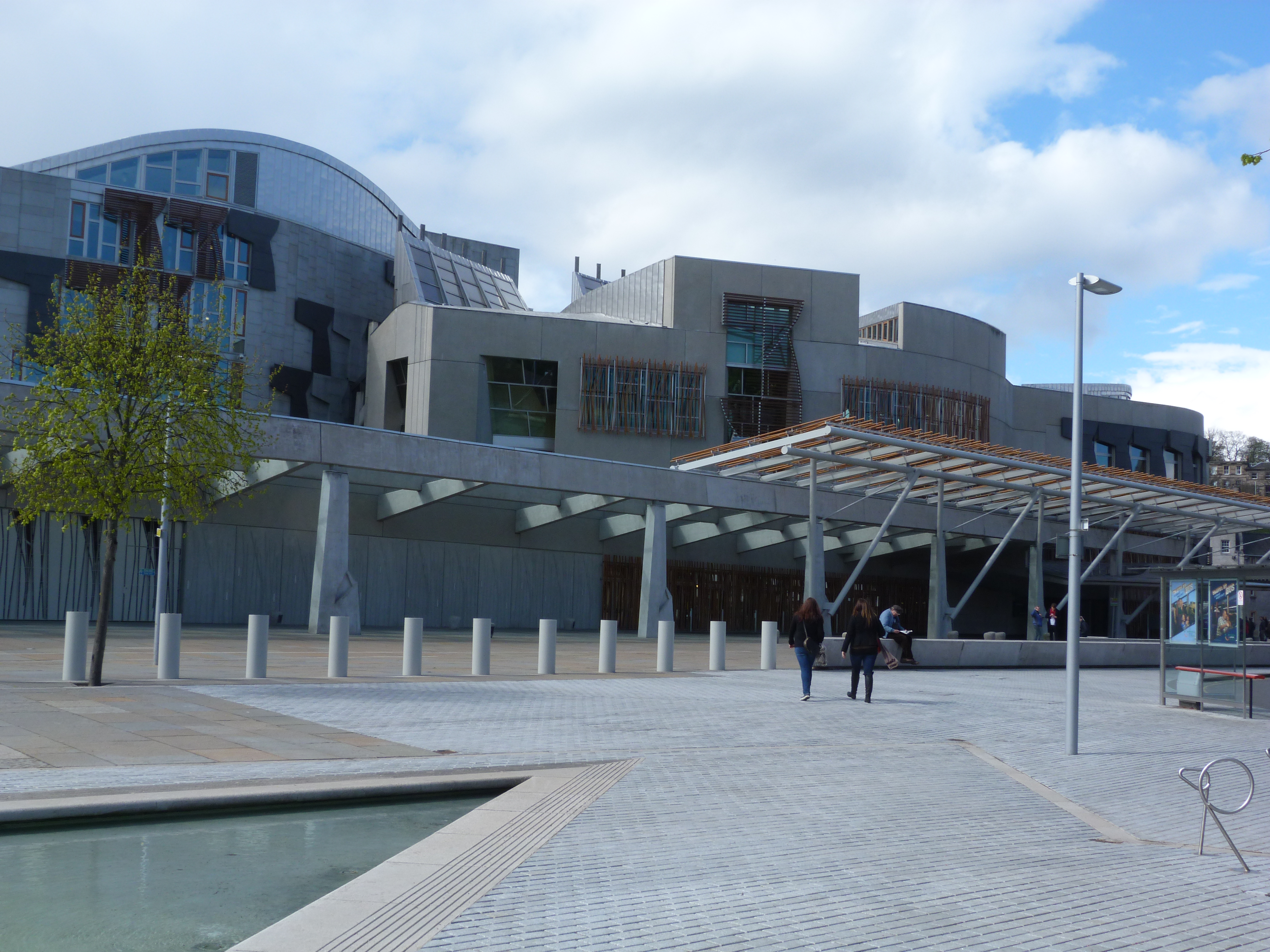
Directly across from the Palace is the new Scottish Parliament building. Built in 2007, it aims to reflect a union of the natural landscape and the urban city. It sits just at the confluence of the two, nestled at the base of the Royal Mile, under the shadow of Arthur’s Seat.
Scottish Parliament Building
It’s a striking piece of architecture that I think looks much better in the photos than it does in real life. The Scotland Act of 1998 brought in a devolved Scottish Parliament (the English and Scottish parliaments had been merged in 1707), and this building represents a pride in Scottish representation.
Scottish Parliament council hall
We had happened to arrive in Edinburgh on cousin Alistair’s birthday. Alistair is Victor and Ayleen’s son, a bright young man who had recently run in a bi-election and had an insider’s view of many facets of the Scottish electoral system. (“Alistair Hodgson: A New Voice for Edinburgh”) Although he didn’t win his seat this time, I fully expect he will the next time around. We celebrated his 28th birthday in style at restaurant eating fabulous Scottish beef and “Cullen Skink”, a smoked Haddock chowder.
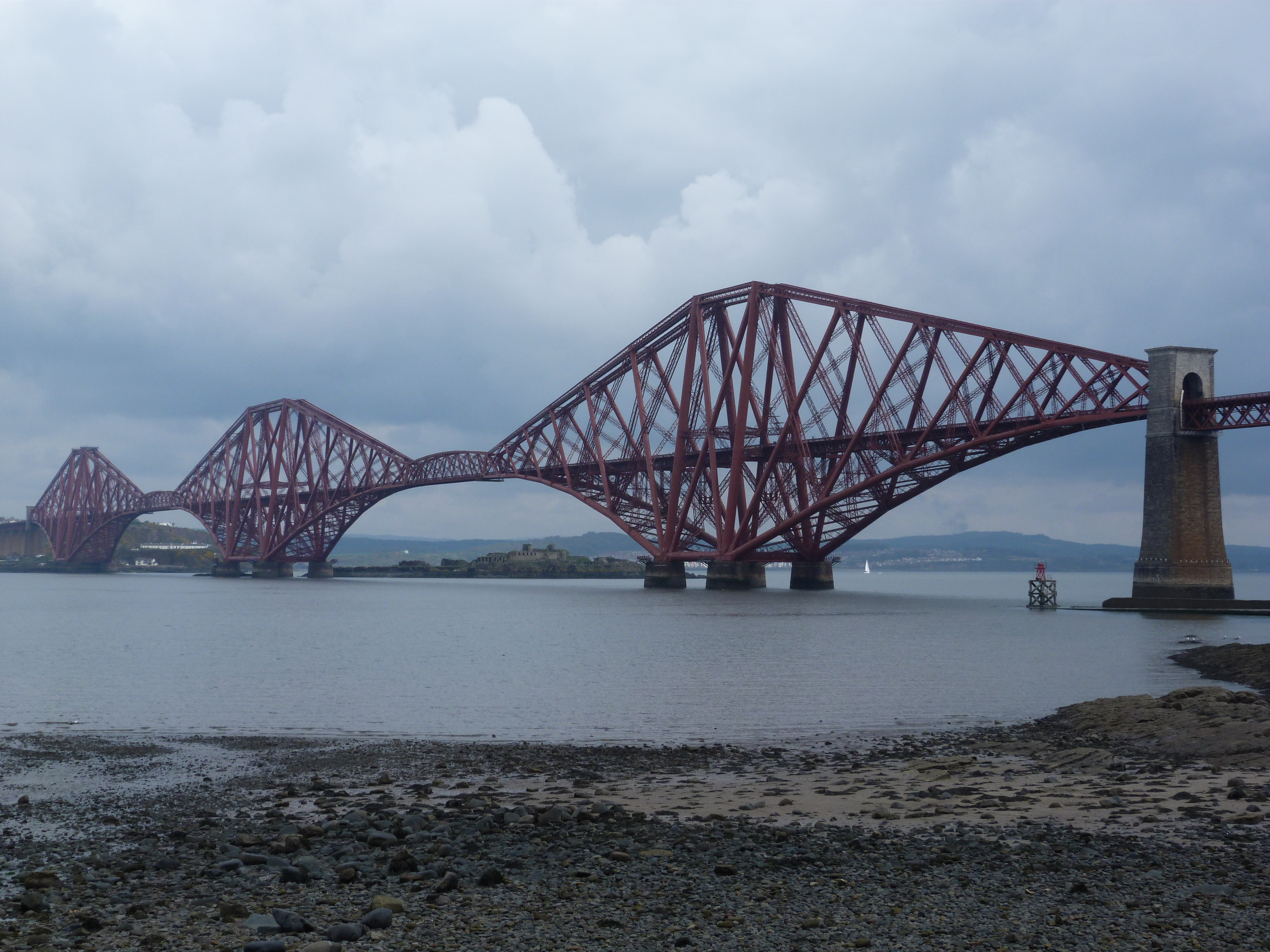
We had been to Edinburgh briefly before, but I had never been outside the city. We were thrilled when Victor and Ayleen took us out to explore the countryside and some of the historical towns. Our first stop was South Queensferry on the shore of the Firth of Forth.
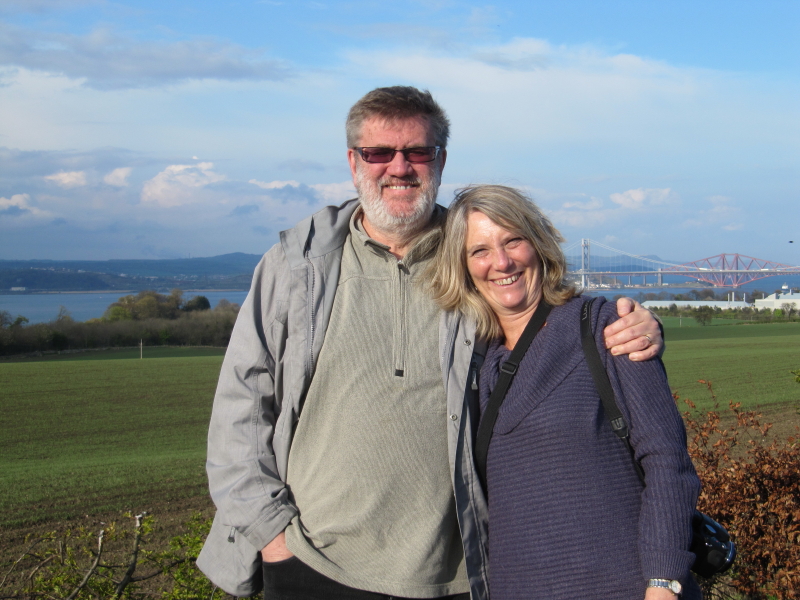
Looking across the Firth of Forth, from South Queensferry, to the Kingdom of Fife
As the name implies, South Queensferry was the location of the ferry going across the estuary (the firth) of the River Forth.
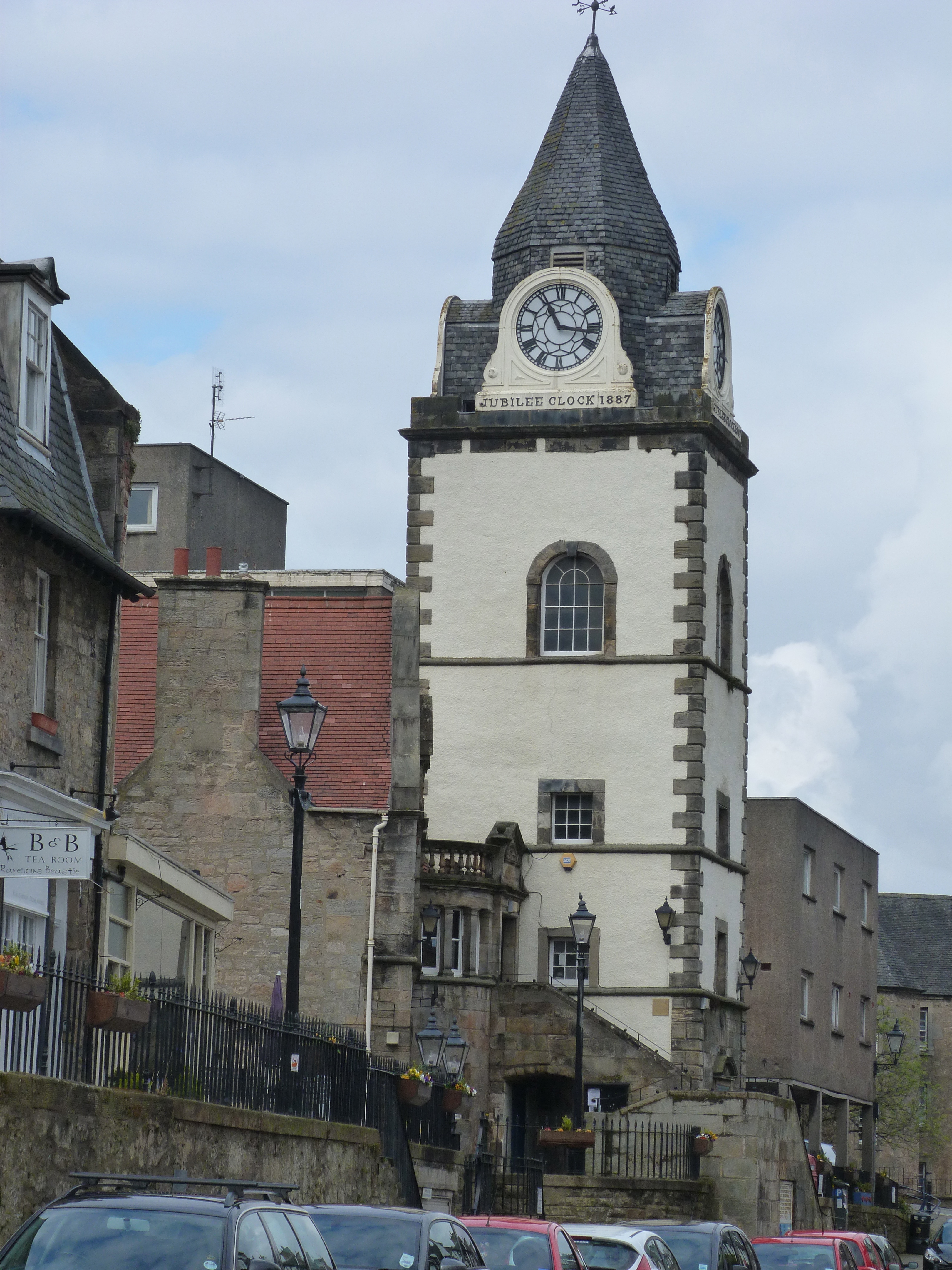
The main street in South Queensferry
It is a picturesque little village that has a long history of drying herring, bottling whiskey, pirates and smuggling.
South Queensferry
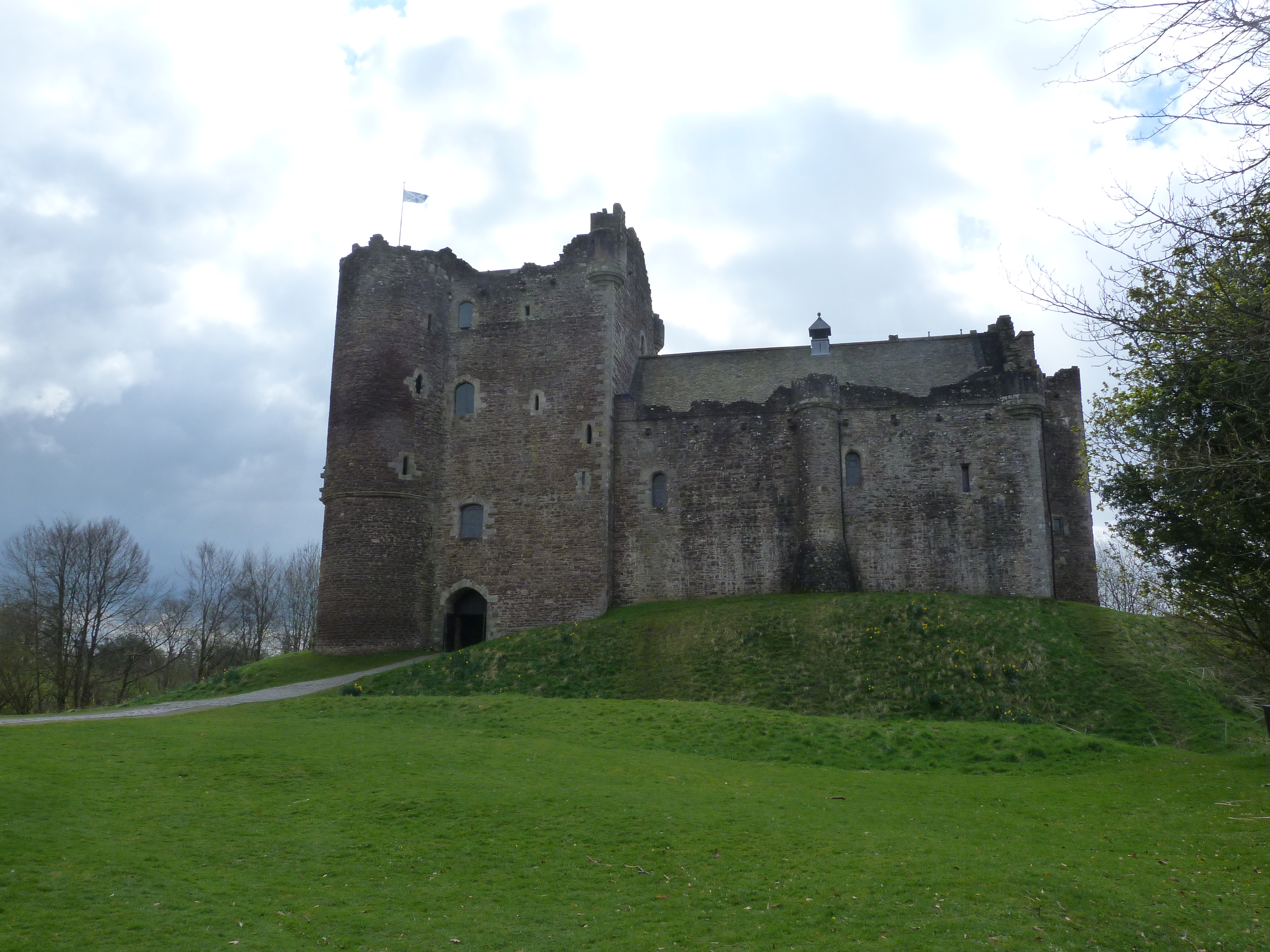
There seem to be castles in every corner of Scotland. On our way toward the Highlands, we passed Doune Castle, a 14th century courtyard castle that looks down protectively on the surrounding countryside. The 100 foot high gatehouse inspired its use as the castle in “Monty Python and the Holy Grail”.
Doune Castle
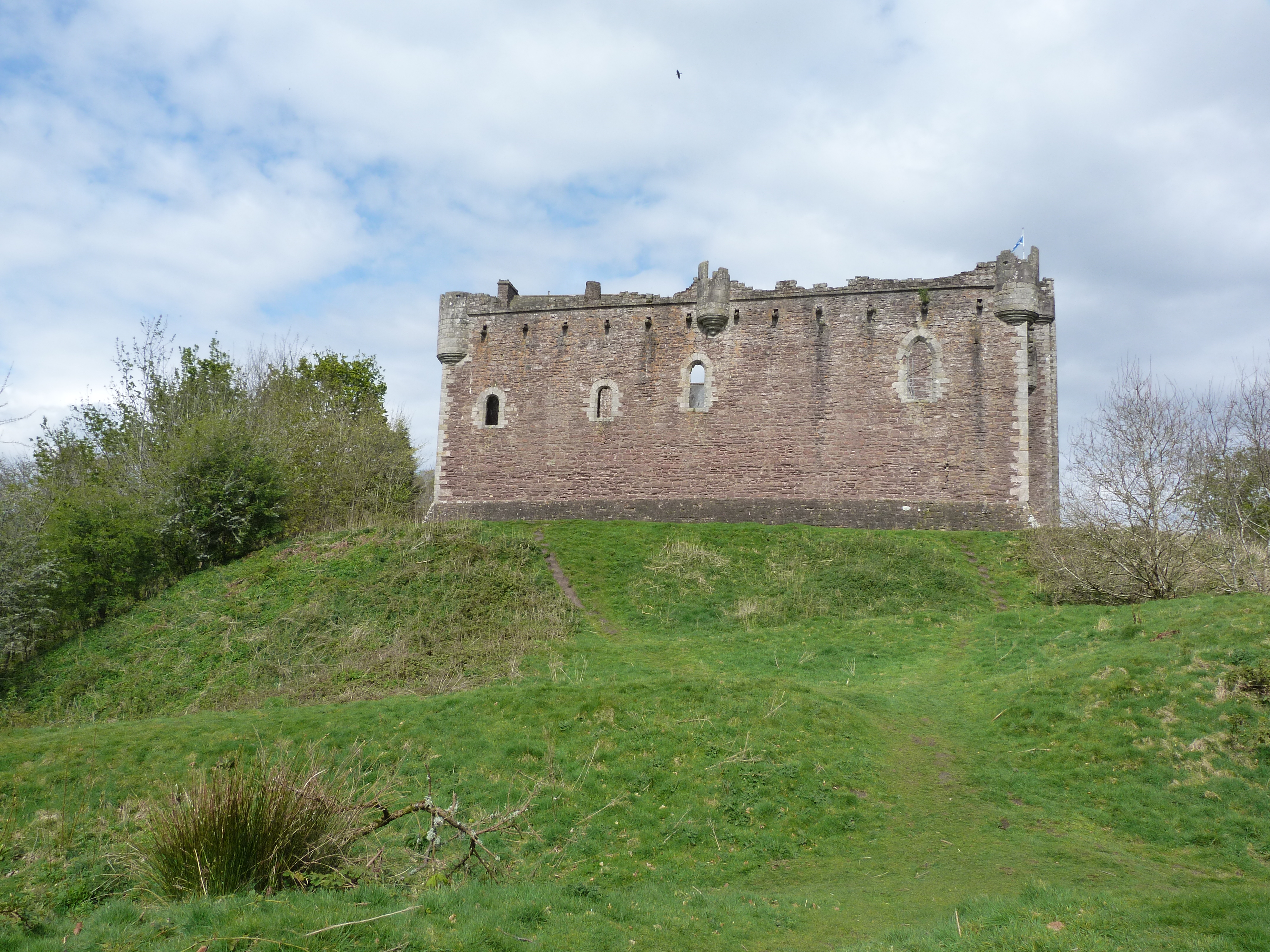
We made a brief pilgrimage around the walls, imagining the Trojan Rabbit.
The back of Duone Castle. Neep-neep.
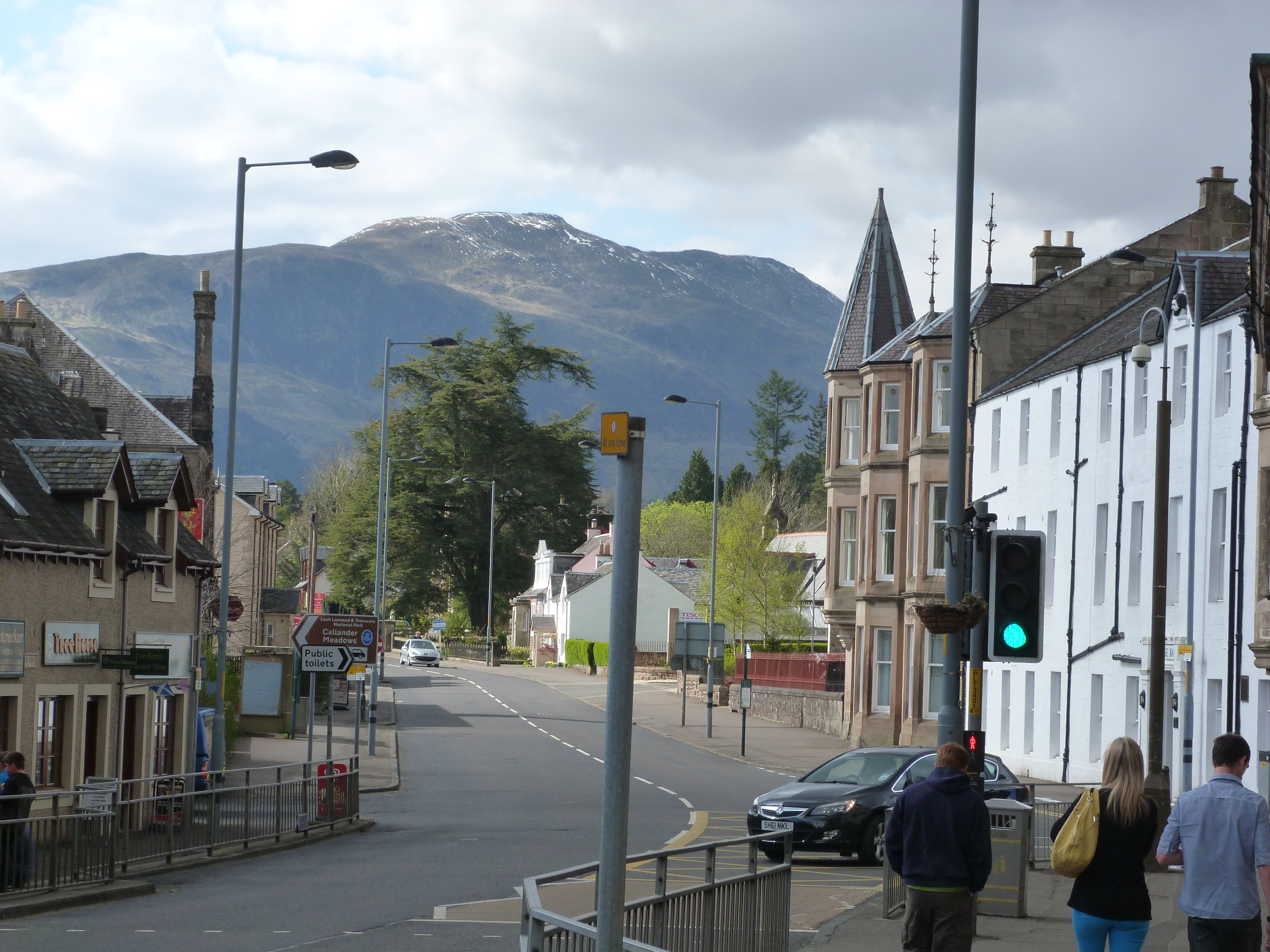
We lunched in the town of Callander, “a place where Lowland meets Highland”. Just beyond the town are the Tossachs, a beautiful area of locks, mountains and rivers. Dorothy and William Wordsworth stayed in Callander in 1803, and in the centuries since it has been frequented by many writers, taking inspiration from the landscape. Sir Walter Scott set his poem “The Lady of the Lake” in the Loch Katrine in the Trossachs, ensuring the area’s population as a tourist destination.
The main street of Callander, looking toward the Highlands
There is, apparently, the remains of a Roman Fort just outside Callander. Armed with a town map and guidance from the tourist office (“It is hard to see. It’s mostly overgrown”) we set off on a little walk along the River Teith in search of Rome. We found something that might, or might not, be a piece of the wall. But we had to turn back quickly as the weather began to change.
Tim, Ayleen and Victor, atop a Roman wall?
Within moments we were deluged by a downfall of rain and hail and had to race to the car.
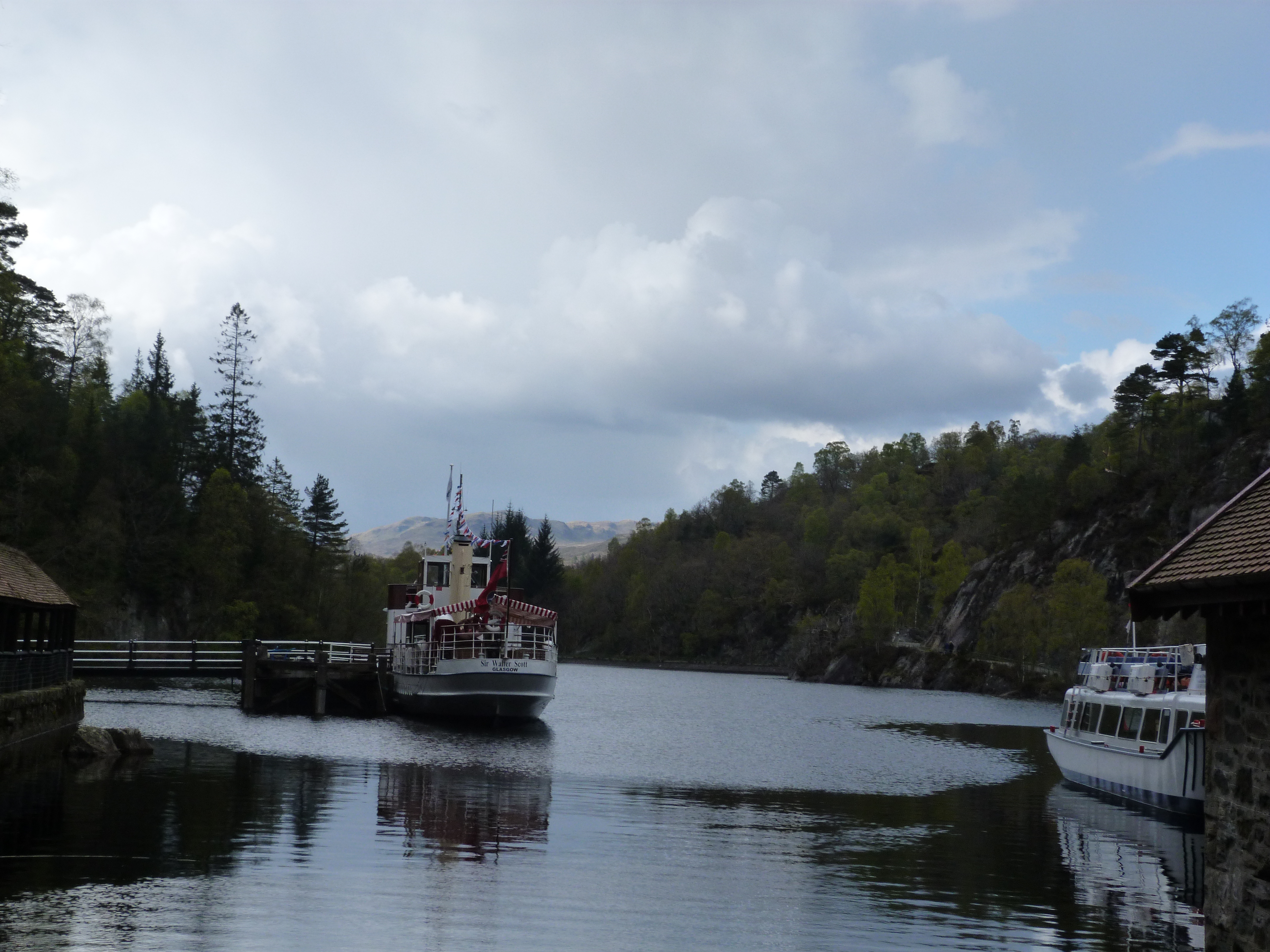
Drenched, but invigorated, we headed to “Loch Lomond and the Trossachs National Park” for a quick peek at Loch Katrine, the setting of Scott’s poem. This was our first view of the Highlands, and it was exquisite. You can easily tell why it so profoundly affected Scott and others. A century old steamboat can take you around the loch while giving you bits of history and recitations from the poem. “Each purple peak, each flinty spire /Was bathed in floods of living fire” Definitely a place we hope to return to and explore in more depth. Perhaps do a bit of fishing…
Loch Katrine and the "Sir Walter Scott" steamship
It was getting late. We were about 50 miles from Edinburgh, yet it felt as though we were in an entirely different world. The sun came out as we headed back toward the Forth and the bustle of Edinburgh, thinking how lucky we were to have family to open up new worlds for us.





 Stepping off the Treadmill