Málaga. Sunshine, Surprises, and Farewells.

It’s a beautiful city with wide thoroughfares bordered by magnificent palm trees. It’s a joyous place filled with history, contemporary art, and tapas bars.

We went to Málaga to leave it. And now I think we need to figure out how to get back again. Soon.

We had to end our Andalucian trip at an international airport so we could to fly to England to see family. Málaga is on the southern coast of Spain, has an airport, and gets, on average, 300 days of sunshine. It seemed a good idea to have a couple of days there before heading out to the UK. We don’t go to England for the weather.

I had booked us an apartment that was “on the beach” in an area called El Palo. We were traveling without a car and needed to be somewhere we could access on public transit. El Palo has a thriving community life — at this time of year the beaches are not filled with sunbathers or partying tourists. There were playgrounds filled with young families with children, people throwing balls for energetic dogs, and joggers and strollers sharing the walkway. The beach was there, as a fact of life. It gave us an untouristy view of life that was refreshing.
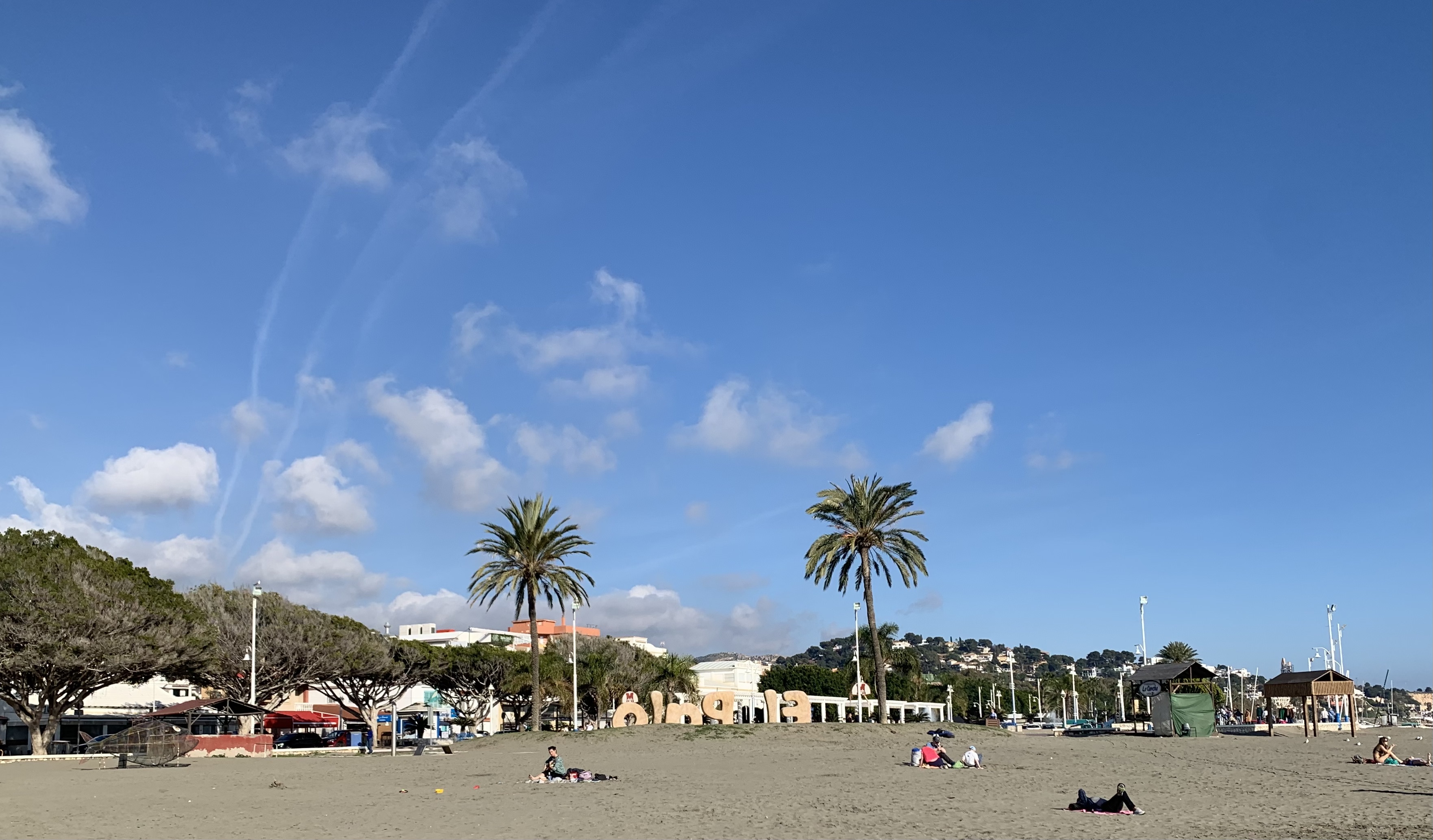
A sandy beach with palm trees and blue sky.
El Palo. You can see the large letters spelling El Palo backwards. There were only a few folks out relaxing on the beach.

Our apartment was above a restaurant right by the beach. We settled in and then came downstairs to sit outside and order a late afternoon plate of fried calamari and anchovies. While we were waiting for them to arrive, I looked out on the beach and saw a hut with smoke coming out of it. I went to investigate and found a small old boat, filled with sand, on which a wood fire was built. Beside the fire was a skewer with sardines grilling – the very thing Tim had been longing for on the whole trip! Five sardines for 2 Euros! The most inexpensive thing we ate on our trip, and one of the best tastes we had.

I looked down the beach and saw similar grills outside of all of the restaurants. We felt very hopeful for our time in Málaga.

However… while El Palo gets great reviews on Google, I expect those are from people who were not travelling there in February. We had arrived on a Sunday and by 5:00, all of the small restaurants in our area were closed. So we went in search of a grocery store. All of them were closed as well.  

As the evening wore on and thoughts of dinner surfaced, we walked for miles along the “boardwalk.” (It’s a sidewalk, really, but has a boardwalk feel about it.) There were tons of bars, but they were busy with the kind of partying trade that Málaga is famous for –– younger folks who were happy just to be drinking. Although the bars posted menus, no one was eating. Not a great sign.

I know, I know, the common wisdom is that Spaniards eat late. But we hadn’t encountered this problem anywhere else. In our experience, Spaniards love to eat all of the time. We walked the boardwalk in a desultory mood, aware that this was one of our last nights in Spain. We tried to cheer ourselves by listening hard for some sound of the movement of the waves. But even the waves had retreated.

However, we reminded ourselves that there was three feet of fresh snow back in Canada. We were warm and comfortable. And we were treated to a lovely sunset.
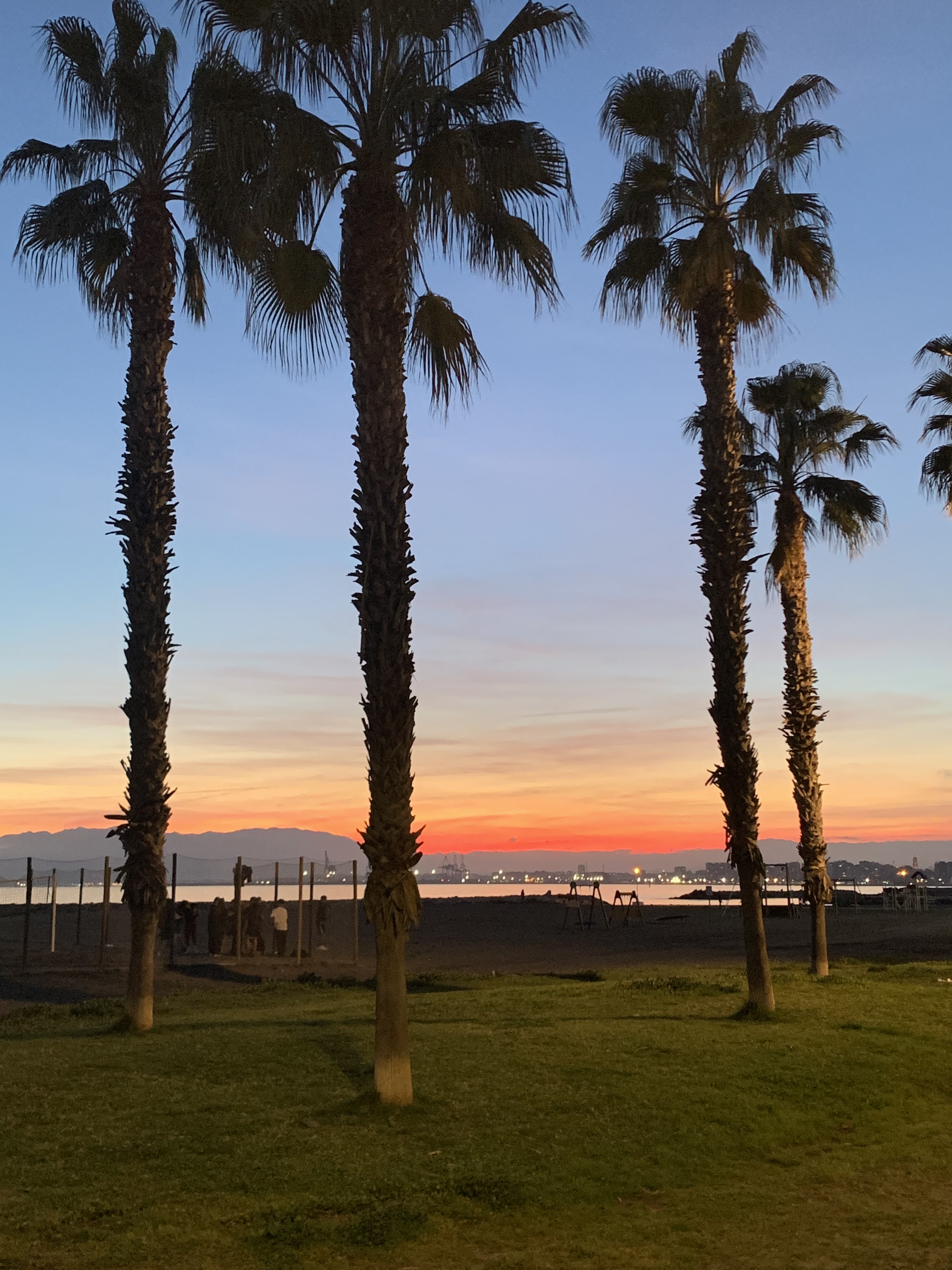
Sunset behind tall palm trees.
Walking the boardwalk. the grass gives way to sand — you can make out poles enclosing beach volleyball games.

The next morning, we found out that many of the local Tabernas were not open on Monday. While we could stock up on grilled sardines for lunch at our local restaurant, the beach wasn’t really that inviting and we didn’t want to spend another evening wandering aimlessly. We hadn’t originally planned to do any sightseeing in Málaga, but we decided to take a bus to the city centre.

It was a great decision. Central Málaga is beautiful and lively. Yes, there were more tourists, but for good reason. It’s a beautiful city with wide thoroughfares bordered by magnificent palm trees. It’s a joyous place filled with history, contemporary art, and tapas bars.
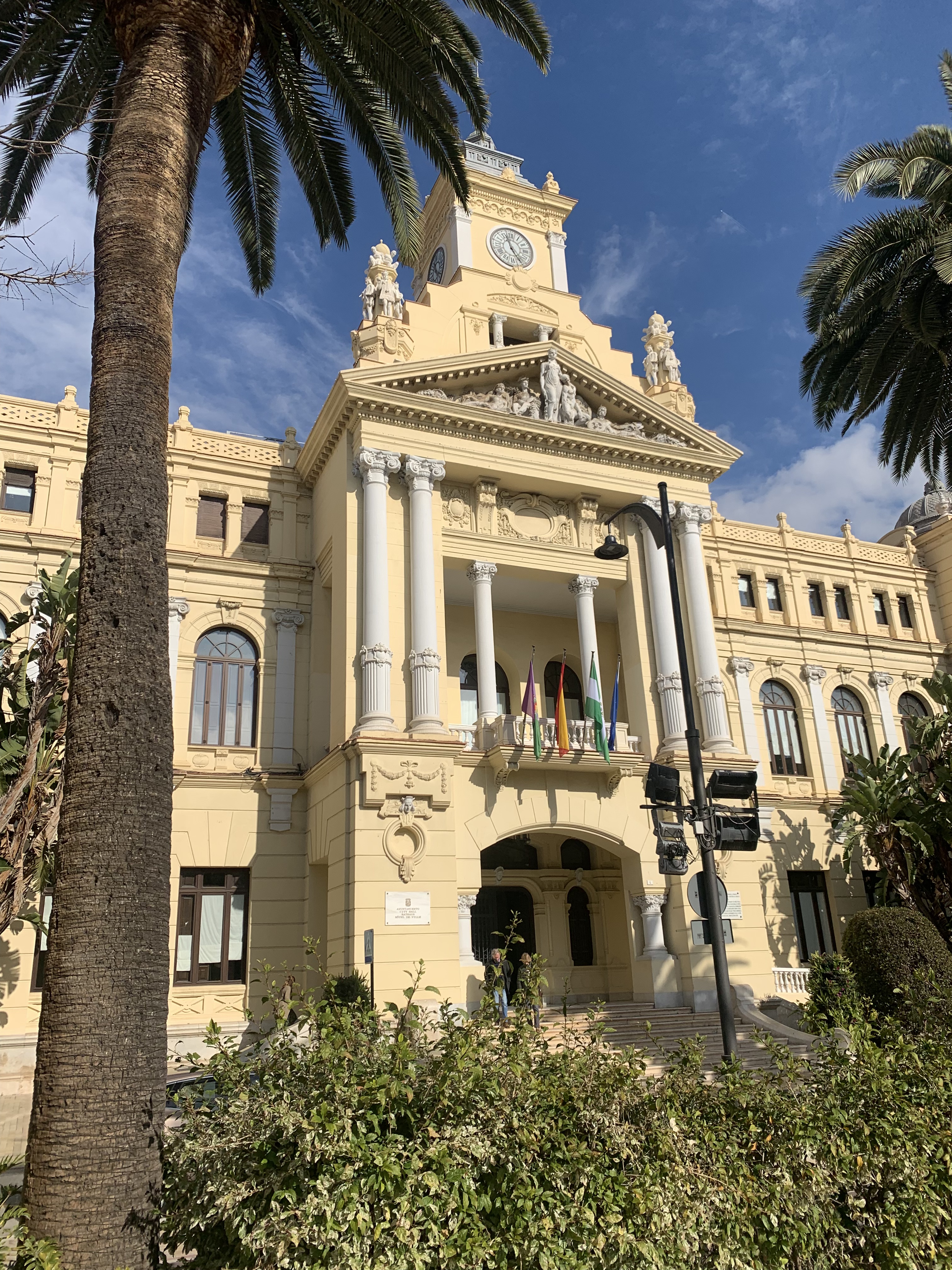
A baroque mansion with yellow stone walls and white columns, and a clock tower on top
The Málaga city hall, known as La Casona del Parque (the mansion in the park)

The Gibralfaro Castle (10th century ) overlooks the whole city from atop the Mount Gibralfaro. Beside it rests the Alcazaba, one of the largest Arab fortresses in Andalucia.  Below, a Roman amphitheatre dominates the square.
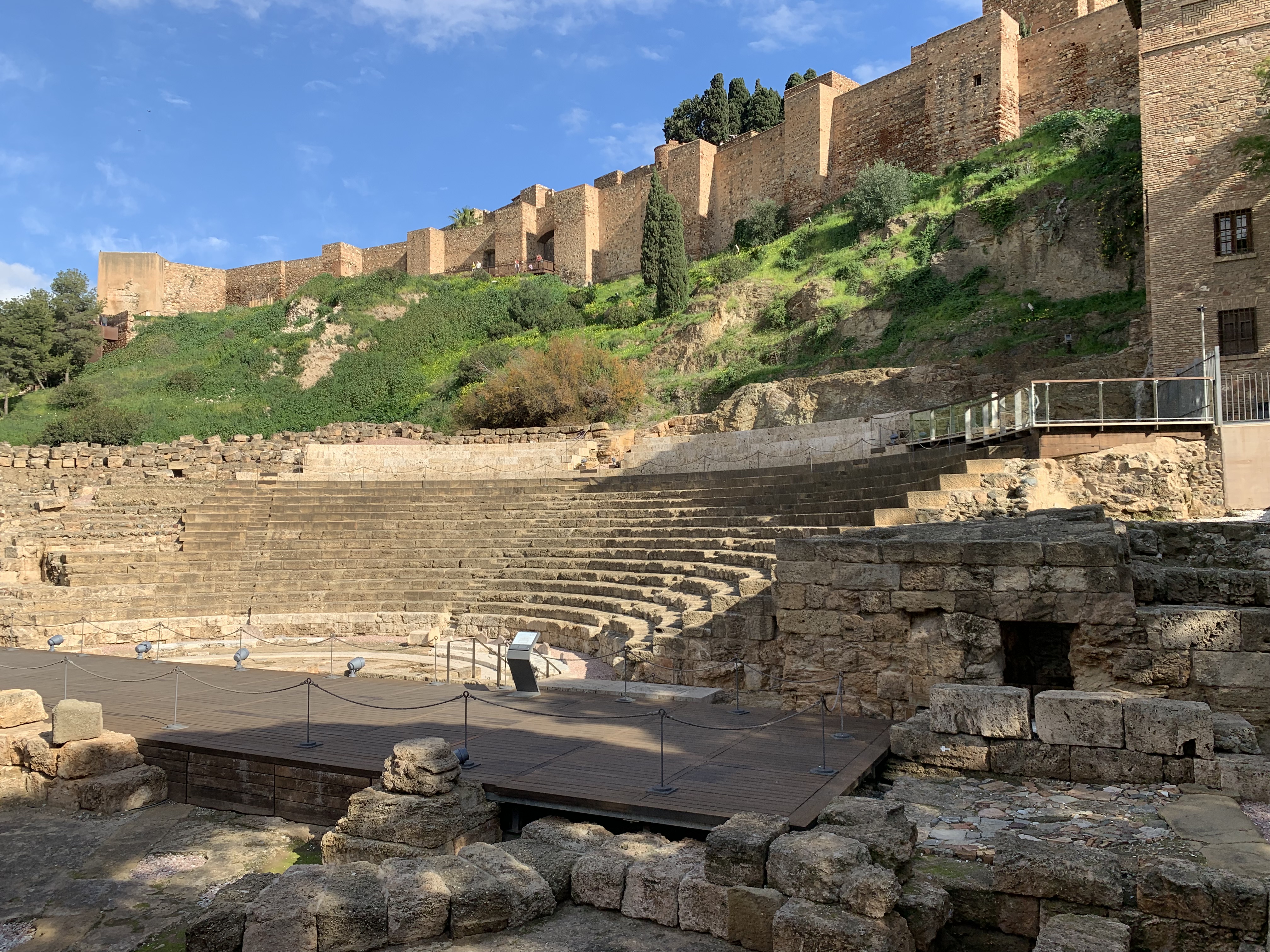
Roman Amphitheatre carved into the rock. Stone walled fortress above.
Roman Amphitheatre with Alcazaba beyond.

However, we didn’t visit any of those. We’d been very immersed into history in Granada, Córdoba, and Sevilla, we needed to slide ourselves back into the 20th and 21st centuries. So, we headed to the Picasso Museum.

Picasso was born in Málaga and spent much of his life in this area. His work is steeped in the sensibility of this land. The major exhibit was called Pablo Picasso: Structures of Invention. The Unity of a Life’s Work and it focussed on seeing Picasso’s work as a unity, rather than dividing it into “periods” as is usually done. It highlights both his inventiveness in numerous mediums, and his retrospective connection to previous artists. It was a holistic way to see Picasso that we’d never encountered before. There was a room dedicated to his sketchbooks that was like a secret window into his process. I began to see familiar works in new ways. I began, as we had started our trip to Spain, to open my eyes again.

Both Tim and I were bowled over by a guest piece by artist William Kentridge called “More Sweetly Play the Dance.” Kentridge was born in Johannesburg, South Africa. The piece is a 40-foot long video installation that combines film, animation, still life, drawings, and  music. It was created to reference the Ebola outbreak in South Africa in 2015, but has strong resonance to our experiences during Covid, as well as to the world-wide refugee crisis and displacement of humans. From the museum website: “It presents an infinite procession of moving figures, a device regularly used by the artist to champion the individuality of every human being, the importance of the body and the power of dance to keep death at bay.”

The piece is joyous, profound and provocative, probably one of the strongest pieces of art that we saw in our entire trip. There’s a great short video by Kentridge talking about the piece, and the place of dance: “…a belief in the middle ages that if the plague arrived and you kept dancing, the plague would jump over your village and go on to the next…”

I definitely think that the plague would skip over anyone dancing flamenco!

After that we emerged into the sunshine and connected differently to Málaga. We headed down to the port where a touring catamaran was just about to leave, and we jumped aboard for an hour of gentle sailing on the ocean.
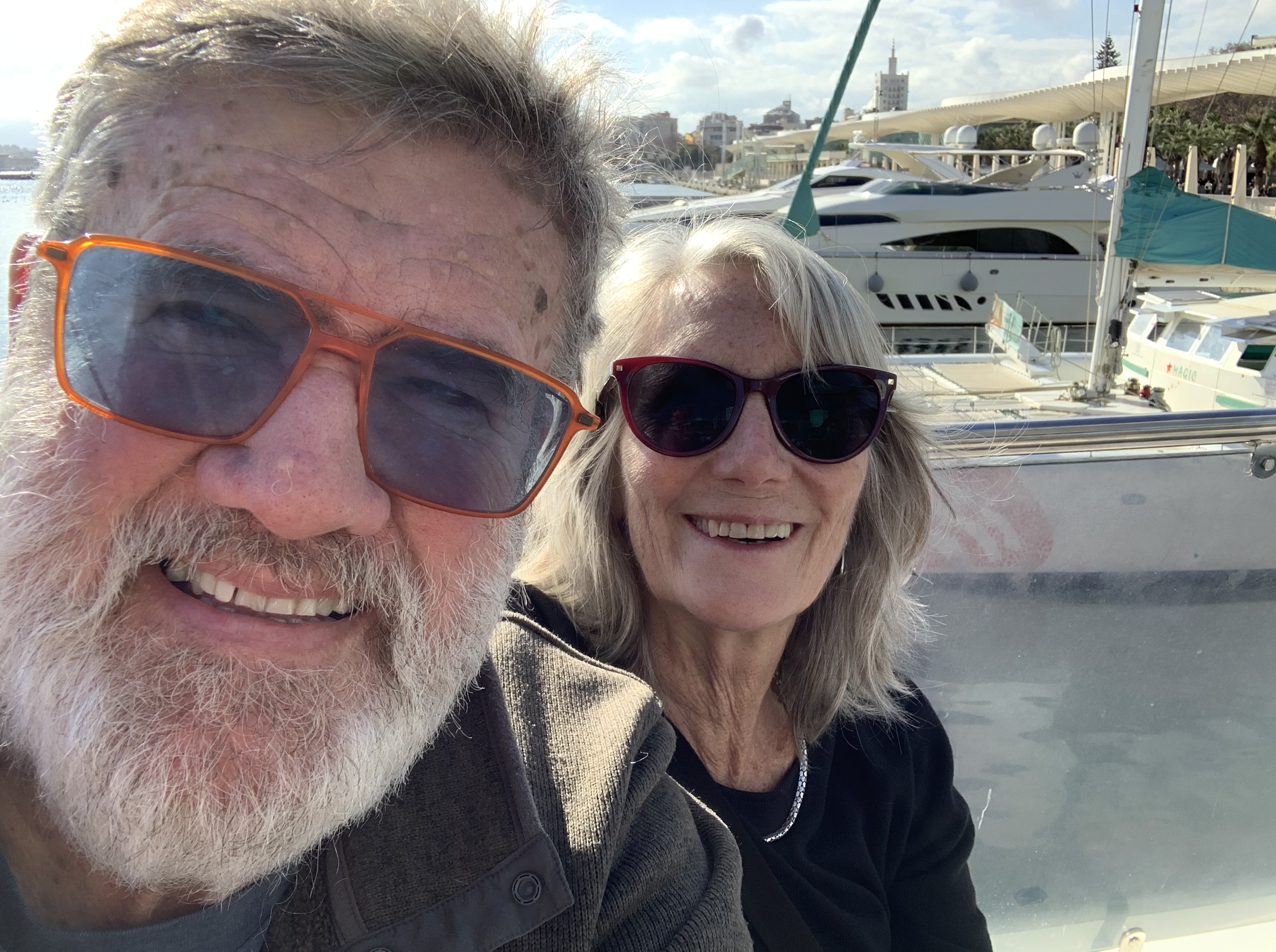
 Man and woman with boats behind them.
We hopped aboard!

We could see the entire coastline of Málaga and how much there was yet to discover.

Coastline with white houses in the distance, a mountain range, and clouds dotting a blue sky.
Looking back at Málaga

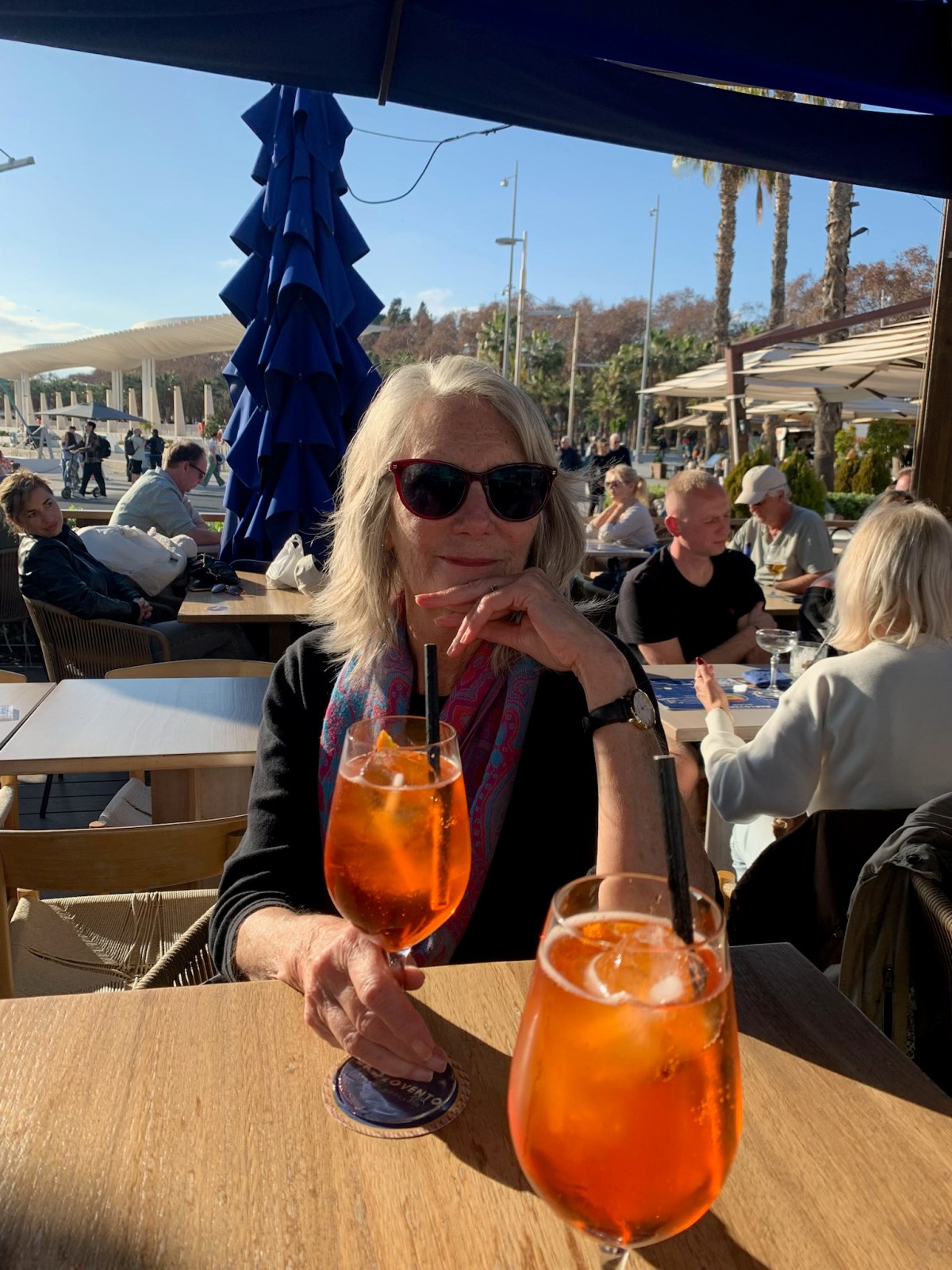
We finished our day with Aperol Spritz in the sunshine. That evening, we had one last paella sitting outside at a Taberna. We began planning our return trip.
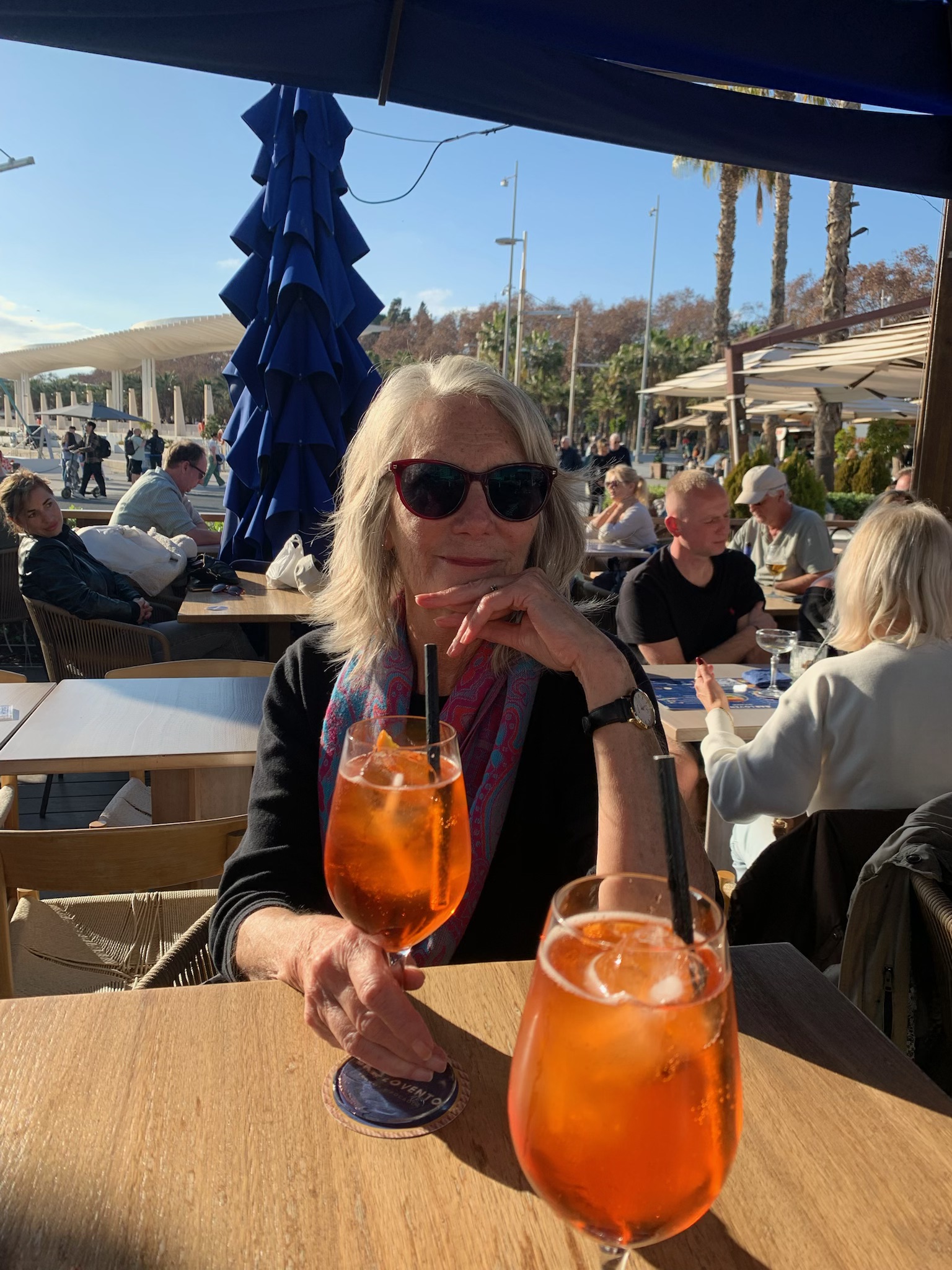
Woman sitting at an outside table in a bar, drinking an orange coloured drink.
Saying good-bye to Spain

Granada. Palaces and Dreams.

We spent a small fortune to sit and have wine on the edge of the rock, with the Alhambra and the snow-covered Sierra Nevada mountains in the distance. But it was worth every penny.

And then there is Granada.

If anyone were to ask my advice about visiting Granada, I would say “Spend twice as long as you are planning. It still won’t be enough.”

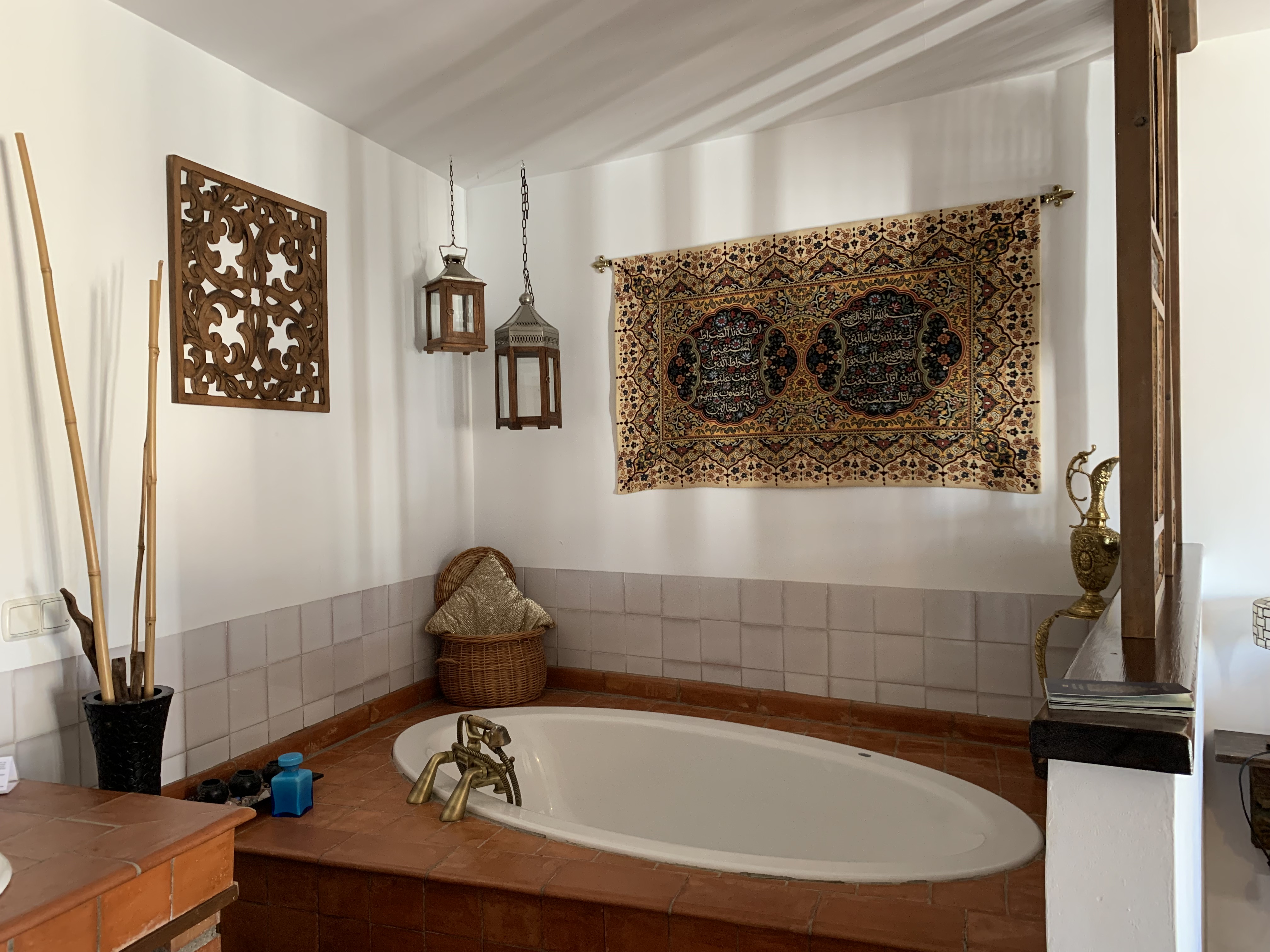
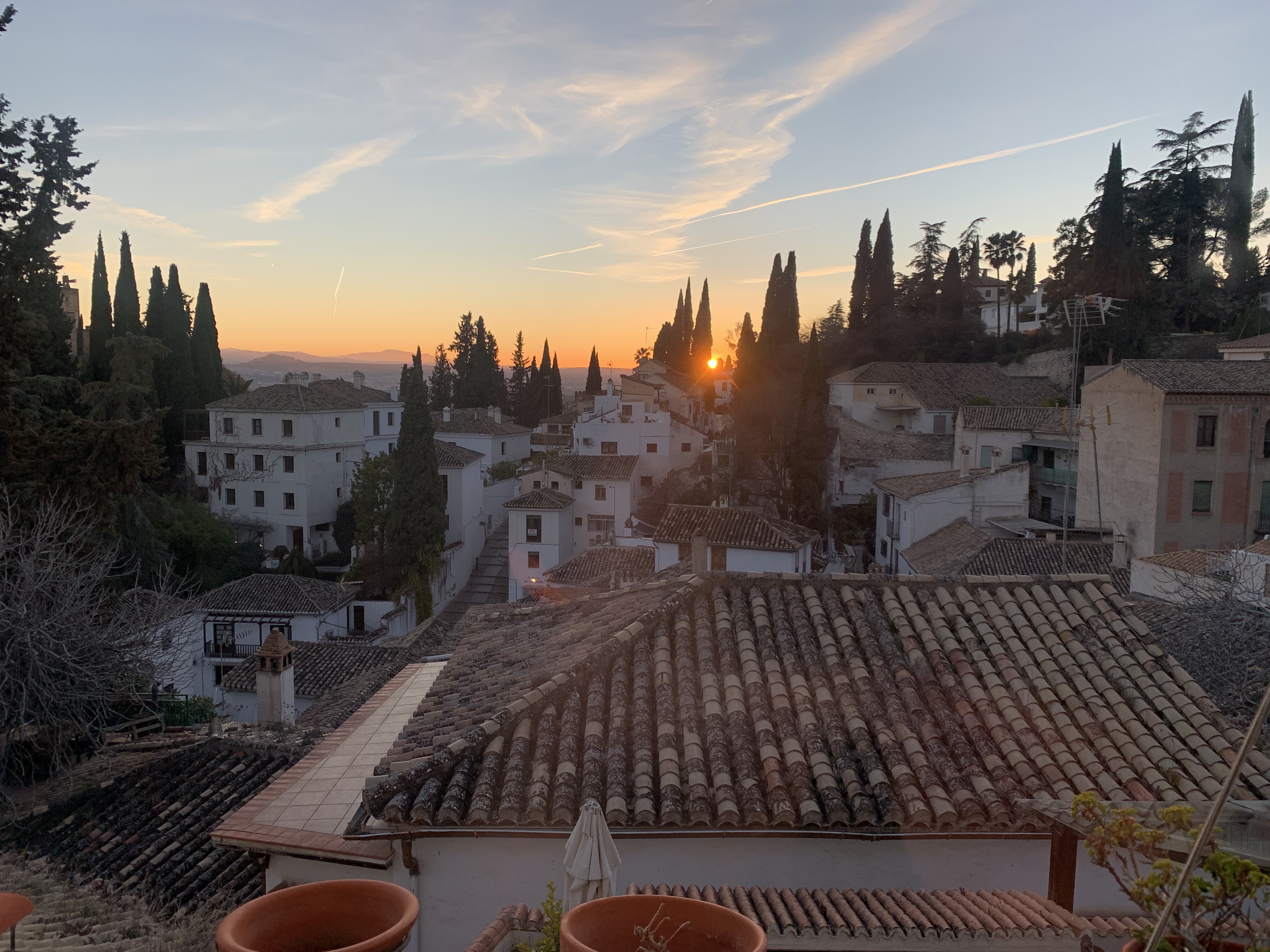
The main feature for tourism in Granada is the Alhambra, and that was why we went. I had no idea I would become so totally enchanted by the city and the culture. We had a magical room in a guest house, Solar Montes Claros, in a neighbourhood on hill above the city centre, the Albaicín. If we had done nothing else, the trip would have been worth it just to spend time there. Spacious and designed like something out of the Arabian nights, it overlooked the Alhambra and the city below with stunning sunsets.

View of houses, tall trees, and a sunset
View of Granada from our window at Solar Montes Claros

After a day of hiking in the hills, It was glorious to soak my aching muscles in a bath fit for a queen.

An elaborate bathtub
We didn’t go to the Arab baths, but this was a close second

The Albaicín is the oldest Arab district in Granada. The roads are a maze of narrow streets and the hills are steep –– perhaps not the ideal location for aged hips. But I’m so glad to have discovered it. It had a huge influence on our experience in Granada. We only just scratched the surface of what is there.

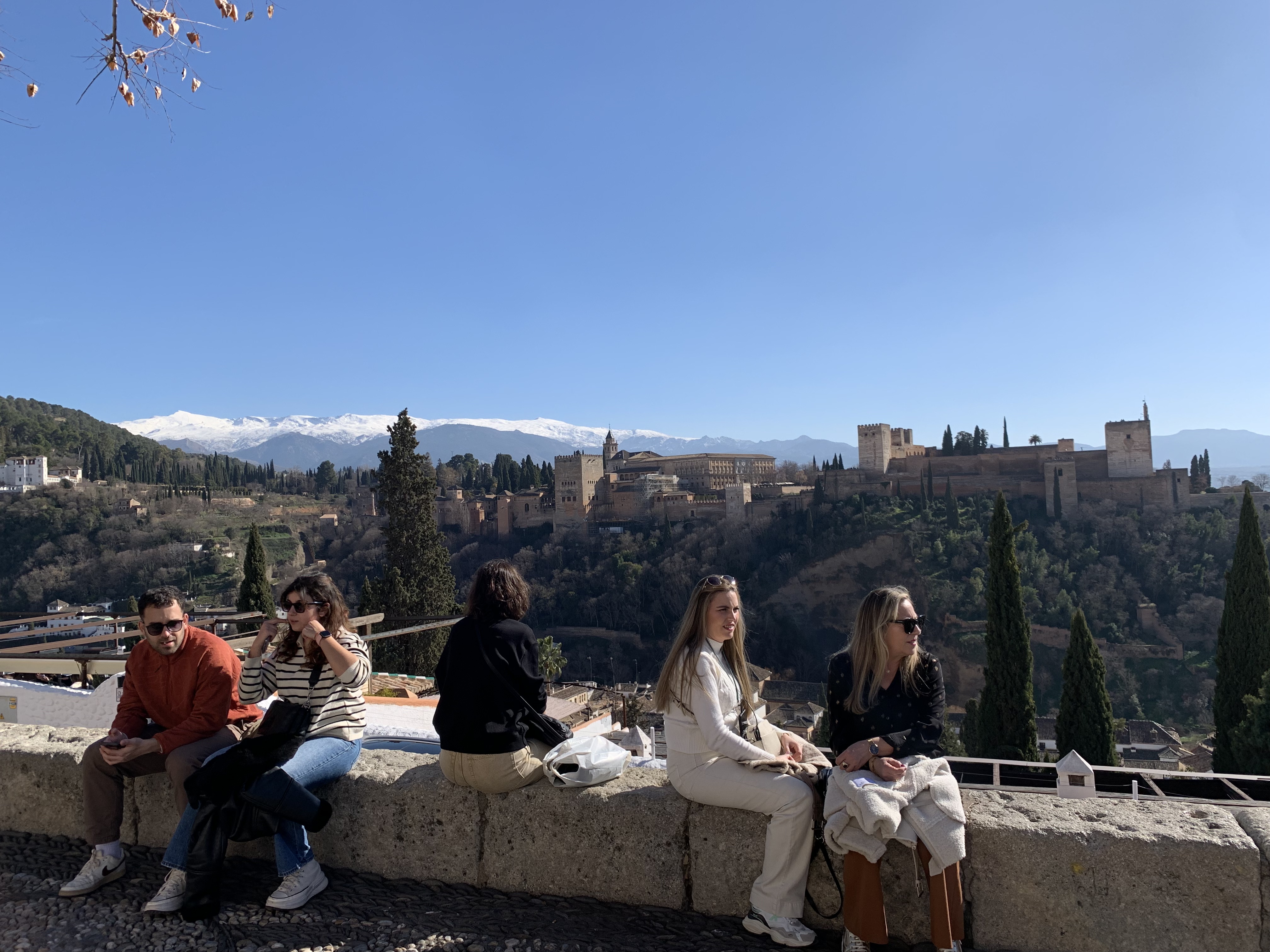
On our first afternoon, we navigated the streets up to the best look out point, the Mirador San Nicolás. I’m embarrassed to say that I had done very little research about Granada before we left –– if I had, I would have found out that this small square is considered the best view in Granada. It is phenomenal and somewhat life-changing. The sun shone and a handful of people gathered in the small plaza to soak it in.

A vista overlooking the Alhambra and the Sierra Nevada mountains, with people sitting on a wall in the foreground.
Mirador San Nicolás

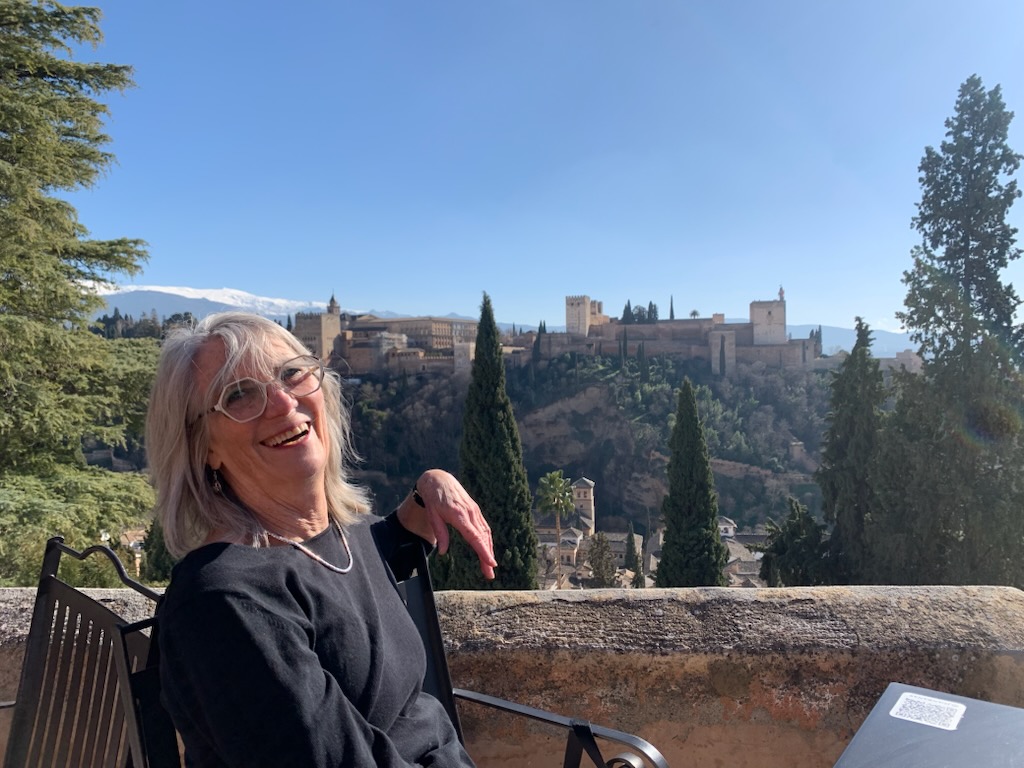
We spent a small fortune to sit at a restaurant and have wine, immersed in this beauty on the edge of the rock, with the Alhambra and the snow-covered Sierra Nevada mountains in the distance. It was worth every penny.

Woman sitting in the sunshine laughing, with the Alhambra and snow capped mountains in the distance.
Add in the Spanish white wine and the olives and you have a pretty perfect moment.

Albaicín is adjacent to Sacromonte, which is the neighbourhood that the Roma moved into in the 15th century. Both Albaicín and Sacromonte are known for the white-washed caves (cuevas) that were carved out of the rock for people to live in. The area is still a stronghold of Roma culture. Importantly, it is the home for flamenco in Granada.

The caves are small, and those that are used for flamenco have a few chairs and tables and a small stage. If they are really small, they may only have a few chairs tucked along the sides of the cave. You can often buy dinner as well. A drink is always included.

I found a cave called El Templo del Flamenco that sounded like it would not be too touristy, so I purchased tickets for that evening. We set off with our GPS lit up. It is very easy to get lost in the maze of roads. Sharp turns and steep cobbled inclines transformed into drastic plunges only to spike upwards again. I kept my eye on the GPS, but it turns out that while GPS is fine on flat landscapes, it struggles to differentiate levels. In other words, we would follow it to where it told us to go, only to find out that our true destination was on the street directly above us. Which would mean retracing our steps and re-negotiating the hills we had just been on. At one such juncture Tim was ready to bail. “How much did you pay for these tickets…?” But we persevered and finally found our way to El Templo del Flamenco and a cave that holds about 40 people.

I don’t have any critical eye to describe Flamenco. I know that this show was very good, but it didn’t thrill us as much as the raw energy we had felt in Cordoba. But that may have been entirely subjective. However, this was the only place we saw a male dancer and he was astonishing. Somehow he conveyed humour and passion in such a way that we thought he might explode on the stage. I thought back to the definition of Duende: A heightened state of emotion, expression, and authenticity. A tragedy-inspired ecstasy. He embodied all of that. I don’t know how his body contained that energy. Try to imagine Buster Keaton, Fred Astaire, Rudolf Nureyev, Michael Jackson and Leonard Cohen all wrapped up together. He was that good.

We were a bit dazed as we wound our way back to the guest house. We found a square where we stopped for a light dinner at a Taberna –– the owner told Tim what he wanted to eat and would brook no argument. But we were happy to eat whatever he brought (as it turns out, he brought a hot stone sizzling with some pork medallions on it), as we sat outside under a soft drizzle of rain, our ears and eyes filled with magic and questions.

The next day was our day to go to the Alhambra. In the morning, we walked down (and down and down) into the city and were stunned when we got there to see how cosmopolitan it was. In front of the Cathedral we came across a red carpet and what was obviously a paparazzzi moment. We learned that the Goya Awards (Spain’s equivalent of the Oscars) were being held in Granada that night. That gave the city an additional sparkle of glamour for us.

Front of large Cathedral with someone being interviewed on a red carpet and a security man in the foreground.
The Cathedral of Granada, built in 1518 overtop of the city’s main mosque. I don’t know who was being interviewed, but clearly you don’t want to mess with the guy in the foreground

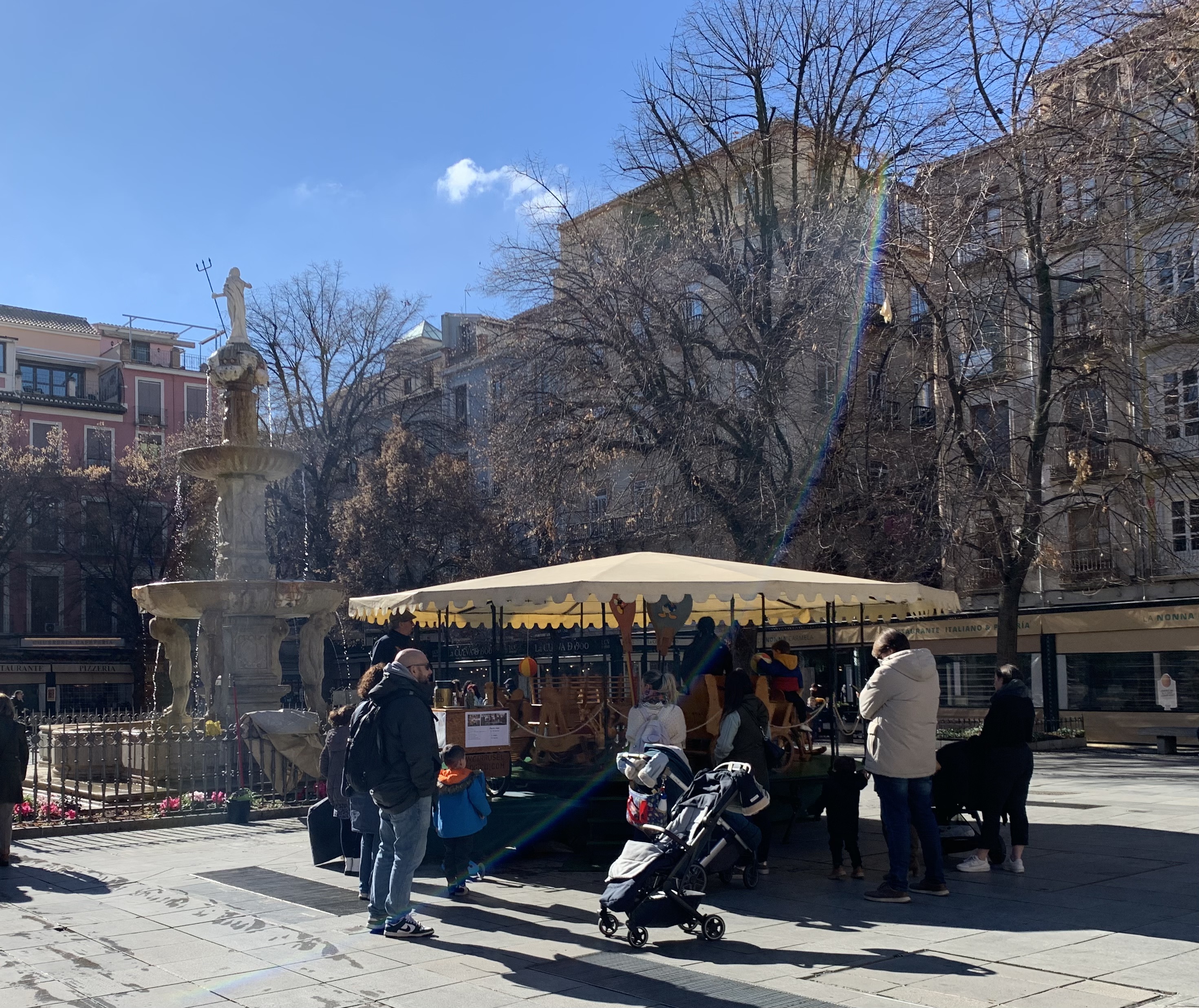
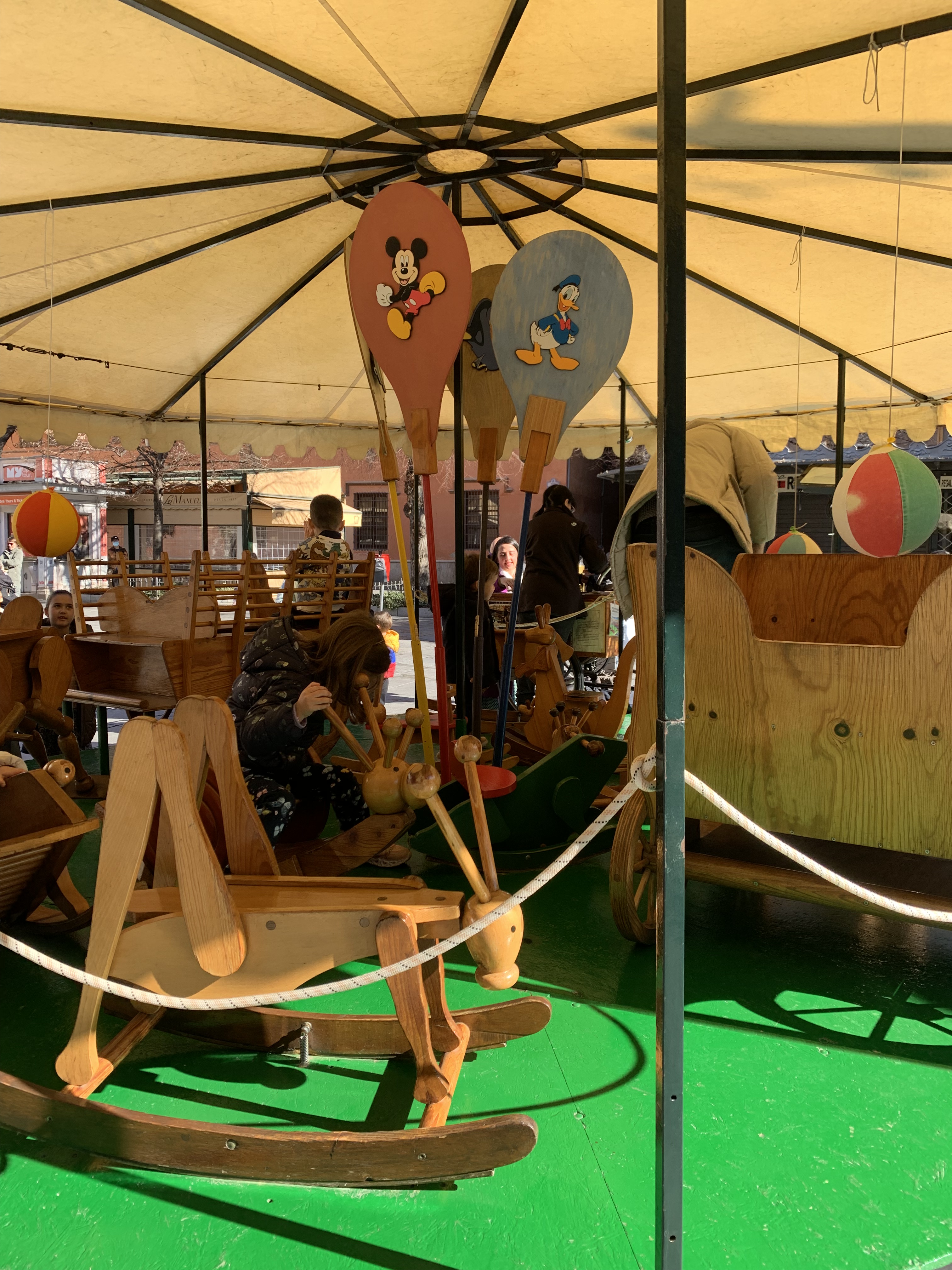
The centre of town has thoroughfares of dense traffic on spacious wide streets but leading off these are surprising narrow alleys that open out to plazas that feel like small villages. We found a children’s carousel made of wooden animals and powered by a man pedalling a stationary bicycle. An “eco-carousel.”

Children's Merry Go-Round in an open plaza.
The Carousel was doing a brisk business in the February sunshine.
Wooden rides in the Merry Go-Round
Apparently they’ve been in operation for 25 years.

We had coffee and absorbed a bit of city life until it was time to head up to the rarified atmosphere of the Alhambra.

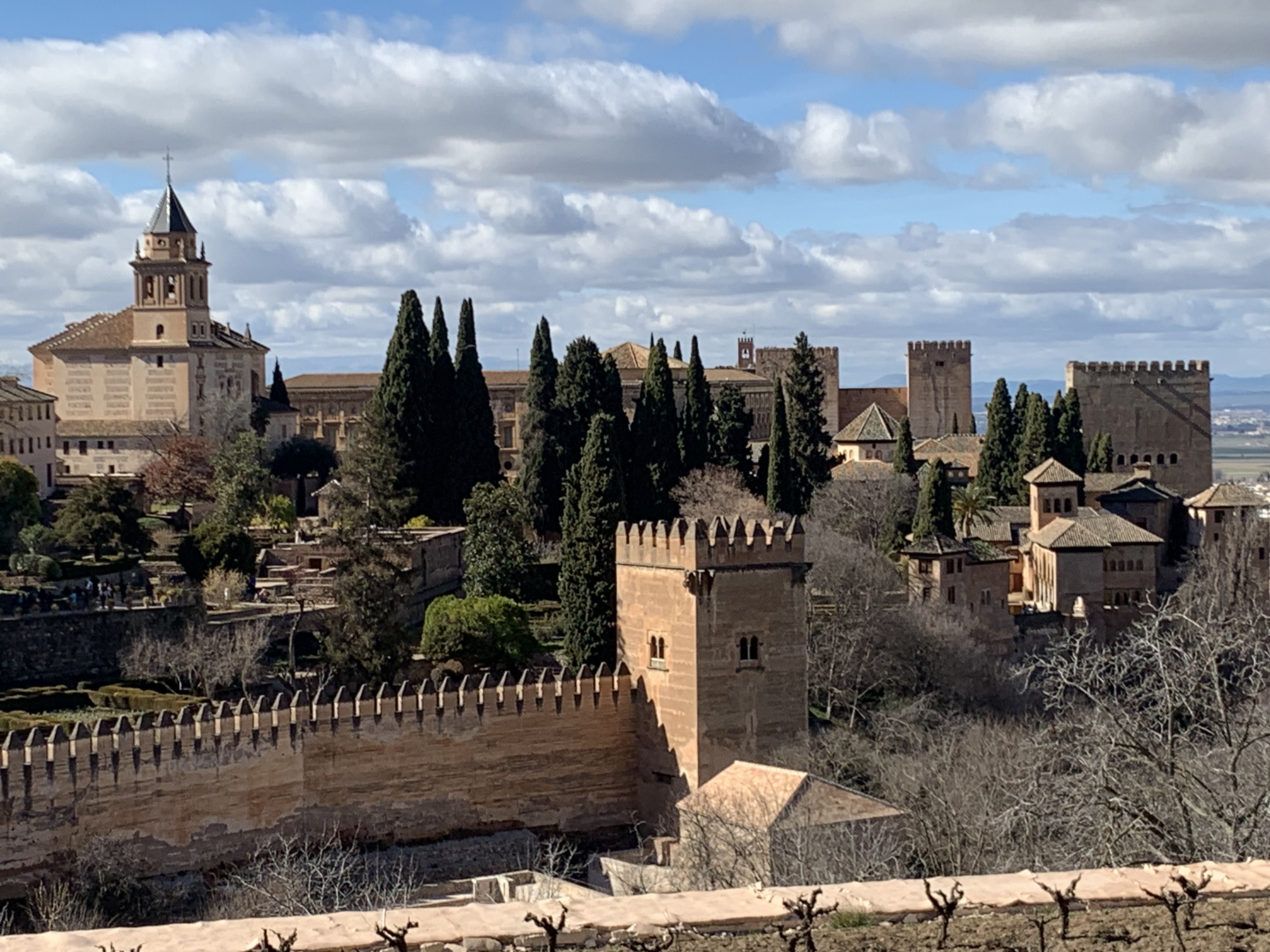
View from a distance of Nasrid Palace and trees.
View of the palaces from Generalife, the gardens

The Alhambra is one of the best-preserved palaces of Islamic architecture. The site atop the al-Sabina hill in the Sierra Nevada mountains commands the surrounding countryside. Constructed in 1238 by Muhammad I Ibn al-Ahmar (the first Nasrid Emir and founder of the Emirate of Granada) over pre-existing Visigoth and Arab fortresses, the Alhambra was to be the last holdout of the Al-Andalus empire. In its hey-day, it was a self-contained city that looked out to the town below.

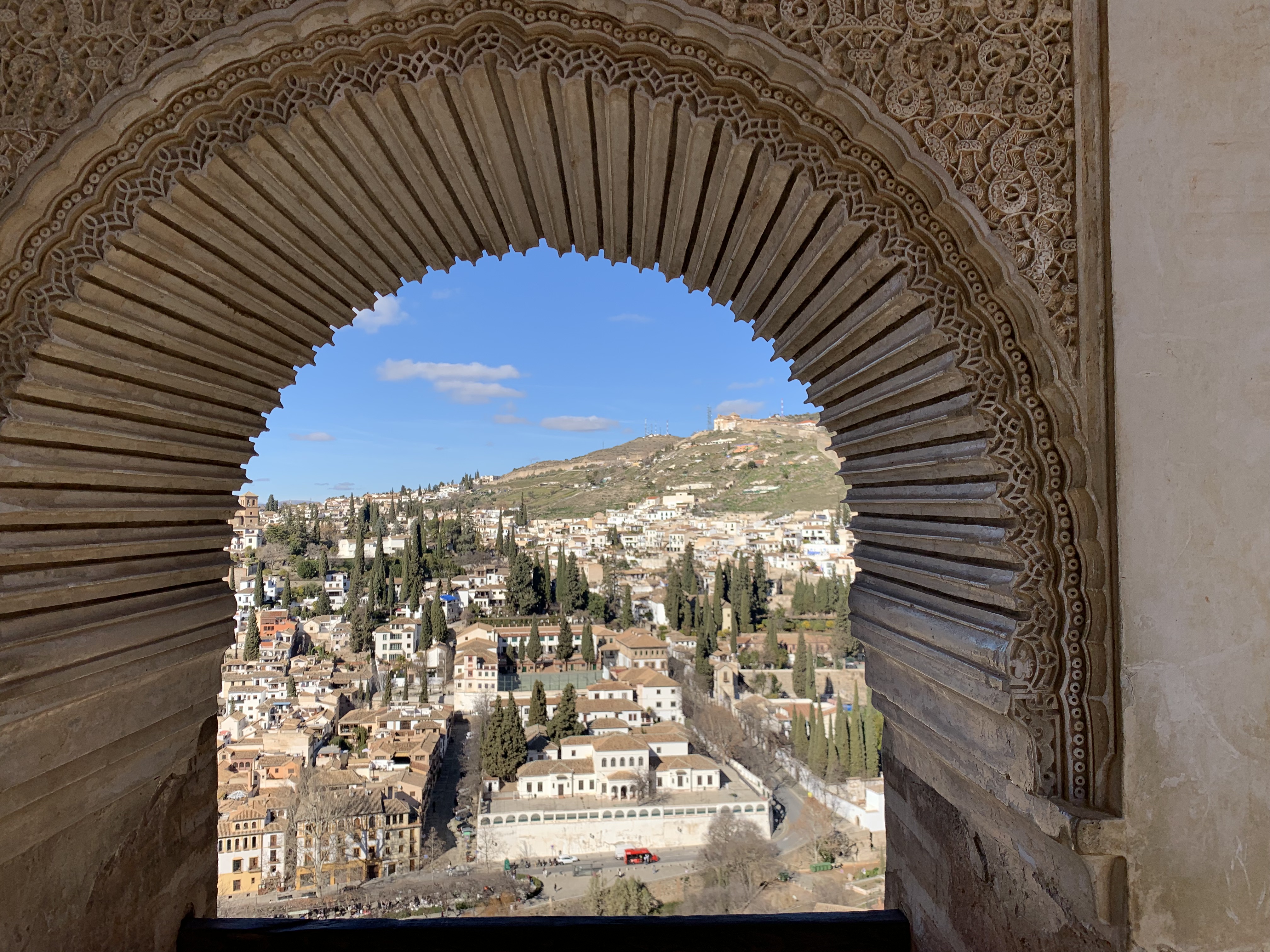
View through an arched window to the town below
Looking down from the Nasrid Palace

The Emirate of Granada fell to the Spanish Reconquesta in 1492. The Arab palace became the court of Ferdinand and Isabella. Christopher Columbus presented his sailing plans here, in the Hall of the Ambassadors. Today, it is a UNESCO World Heritage site that is astonishing for its location, gardens, complex tile and carvings.

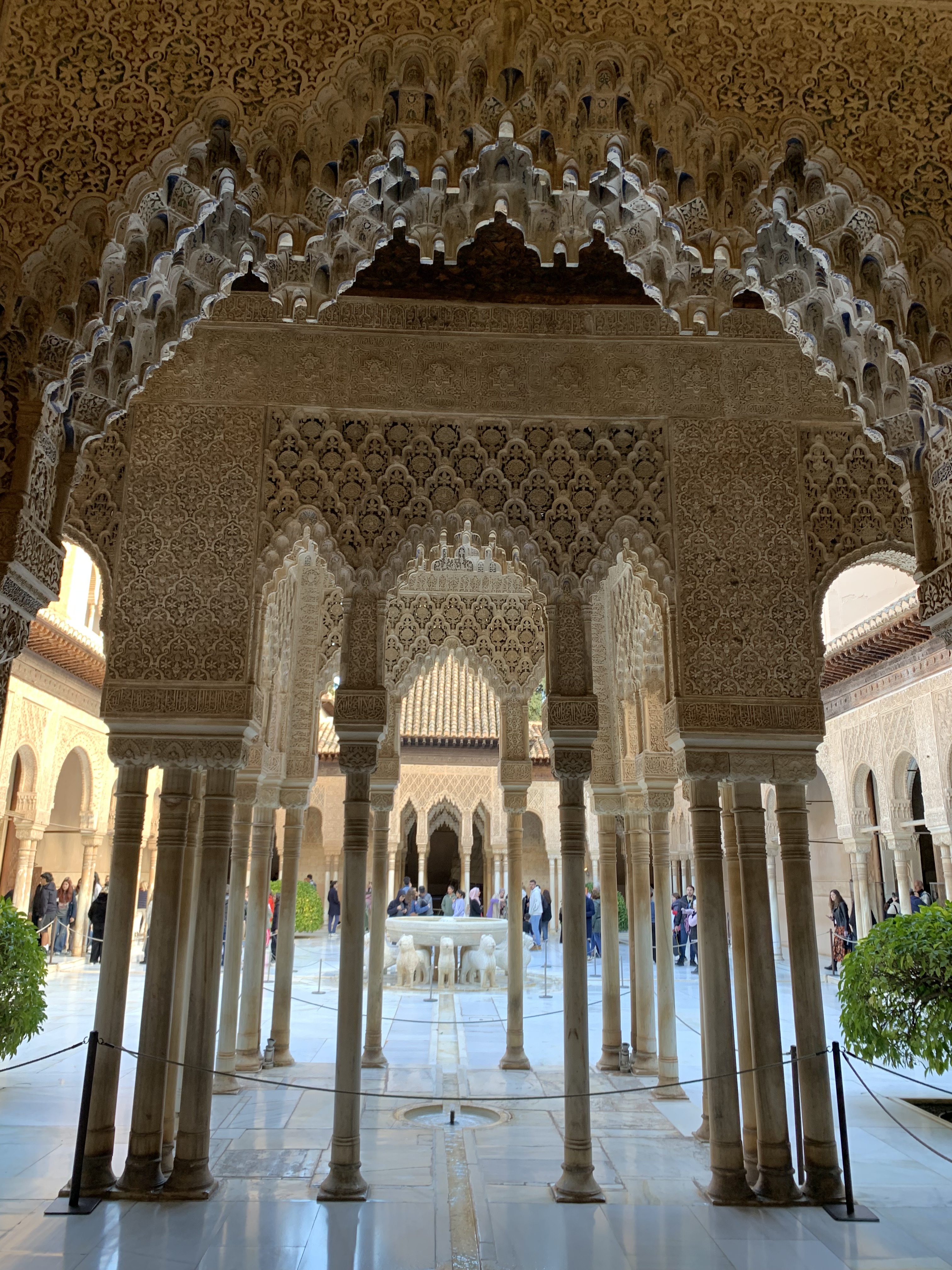
It is hard to grasp the beauty and detail in these tiled walls, arches, and fountains. Around every turn there is a window framing a courtyard or the vista of the landscape.

Columns supporting delicately carved arches, looking out to a plaza with a fountain surrounded by stone lions.
Court of the Lions

It would take many days to truly do justice to the grandeur of the Alhambra. The carvings, the gardens, the reflecting pools –– it is hard not to be overwhelmed by this beauty. It has inspired writers throughout the centuries, including Washington Irving whose Tales of the Alhambra (1832) brought the palace to international attention.

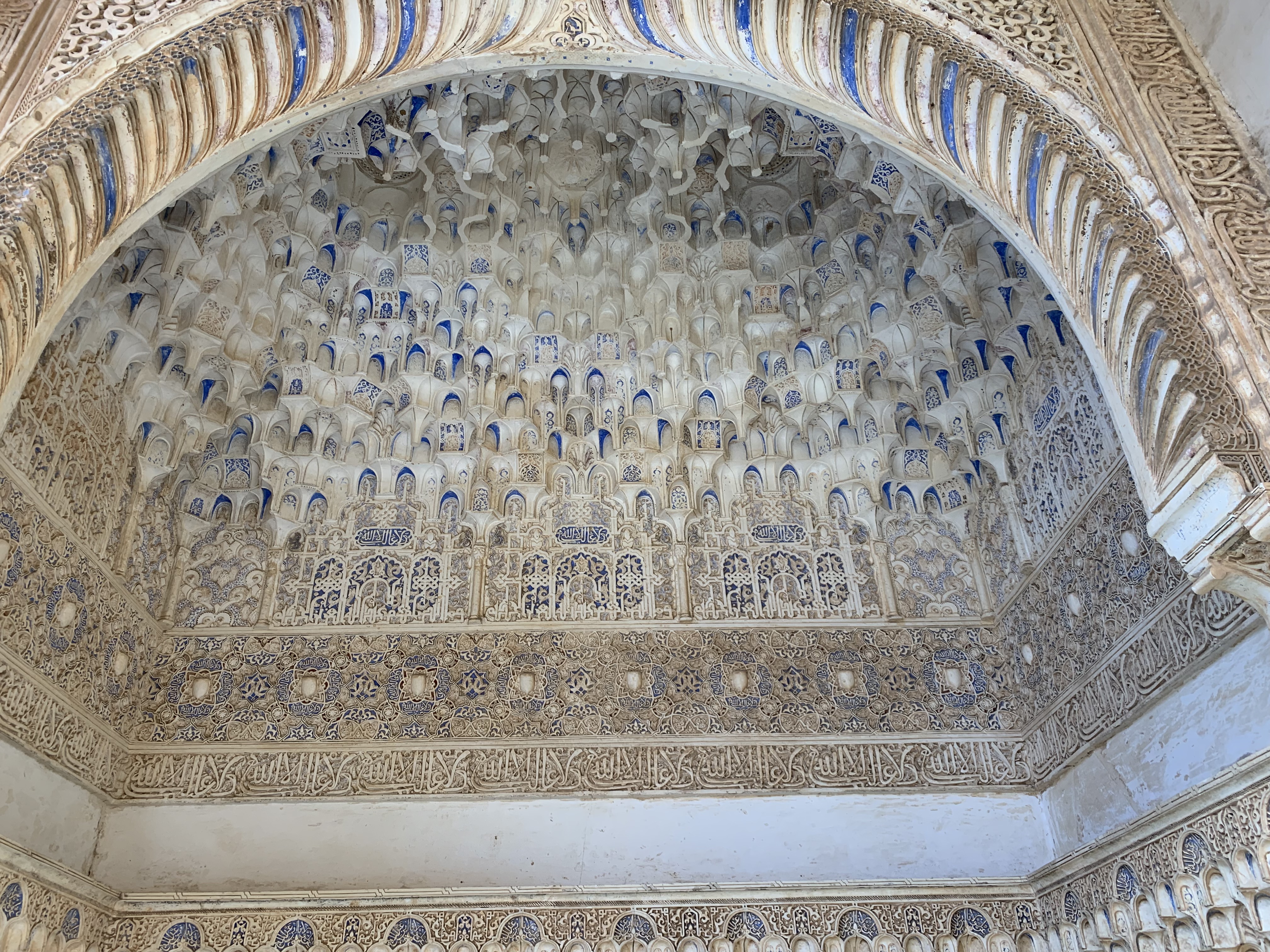
A ceiling dome made of marble and lapiz lazuli, with many small carved arches, geometric designs and Arabic epigraphy.
No photo could do justice to the intricate carving and Arabic epigraphy on this dome.

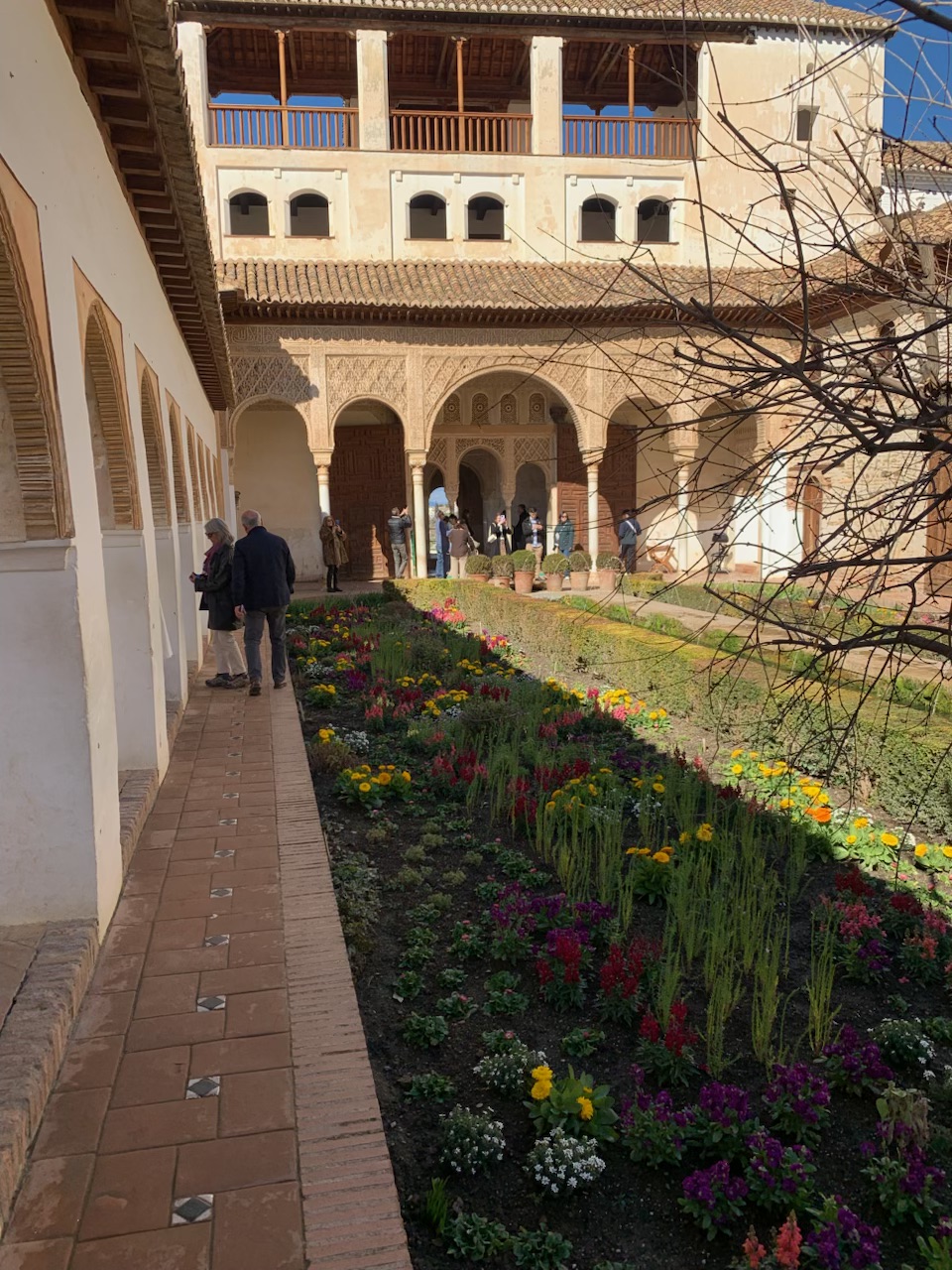
We spent two hours just walking in the gardens (Generalife) and even though it was February, when the plants in the gardens were dormant, we were overwhelmed by the grandeur.

Generalife was a kind of summer residence for visiting sultans.

The Alhambra was definitely the pinnacle of our journey into the Islamic architecture of Al-Andalus.

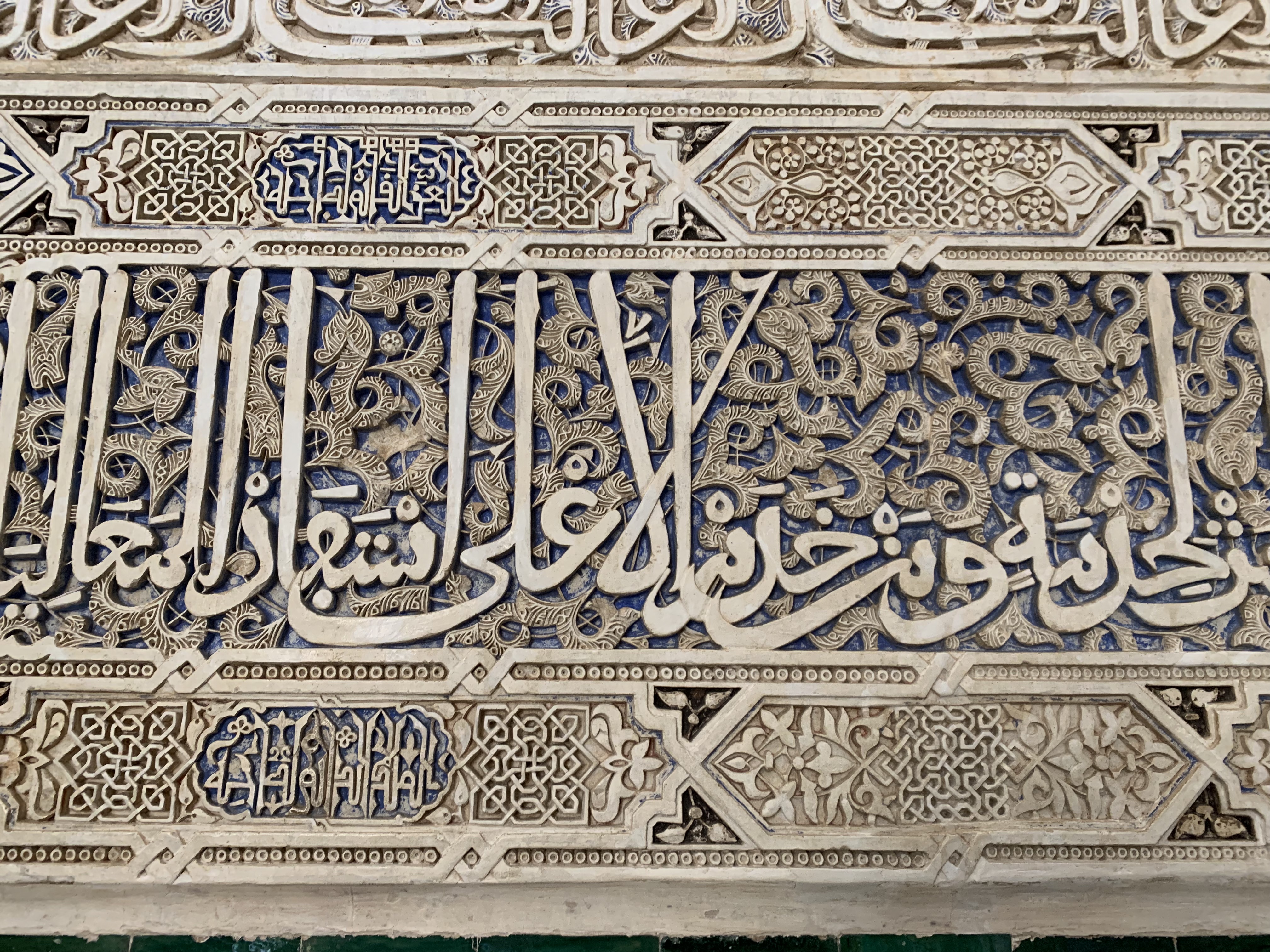
Close up of carved Arabic epigraphy with lapis lazuli behind
Detail of the epigraphy and geometric designs. You can see the use of lapis lazuli behind the marble. These carvings fill the walls of the Nasrid palace.

But Granada is far more than the Alhambra. At the bottom of the street where we were staying in Albaicín was another flamenco cave, La Cueva Flamenca Los Parrones. We had been approached on the street by one of the owners (we think he was – my Spanish isn’t great) who persuaded us to come to the show. We said we would since it was going to be the last chance we’d have to see more flamenco on this trip. But could they give us something to eat that night if we came? We were taken to the kitchen to smell the stew they would give us, an Adalucian specialty with chick peas, vegetables, and meats called Puchero. “Como tu abuela hacia!” (Like your grandmother used to make!) It smelled heavenly. We were sold. And so, after a post Alhambra rest, we went out for our last night of Flamenco.
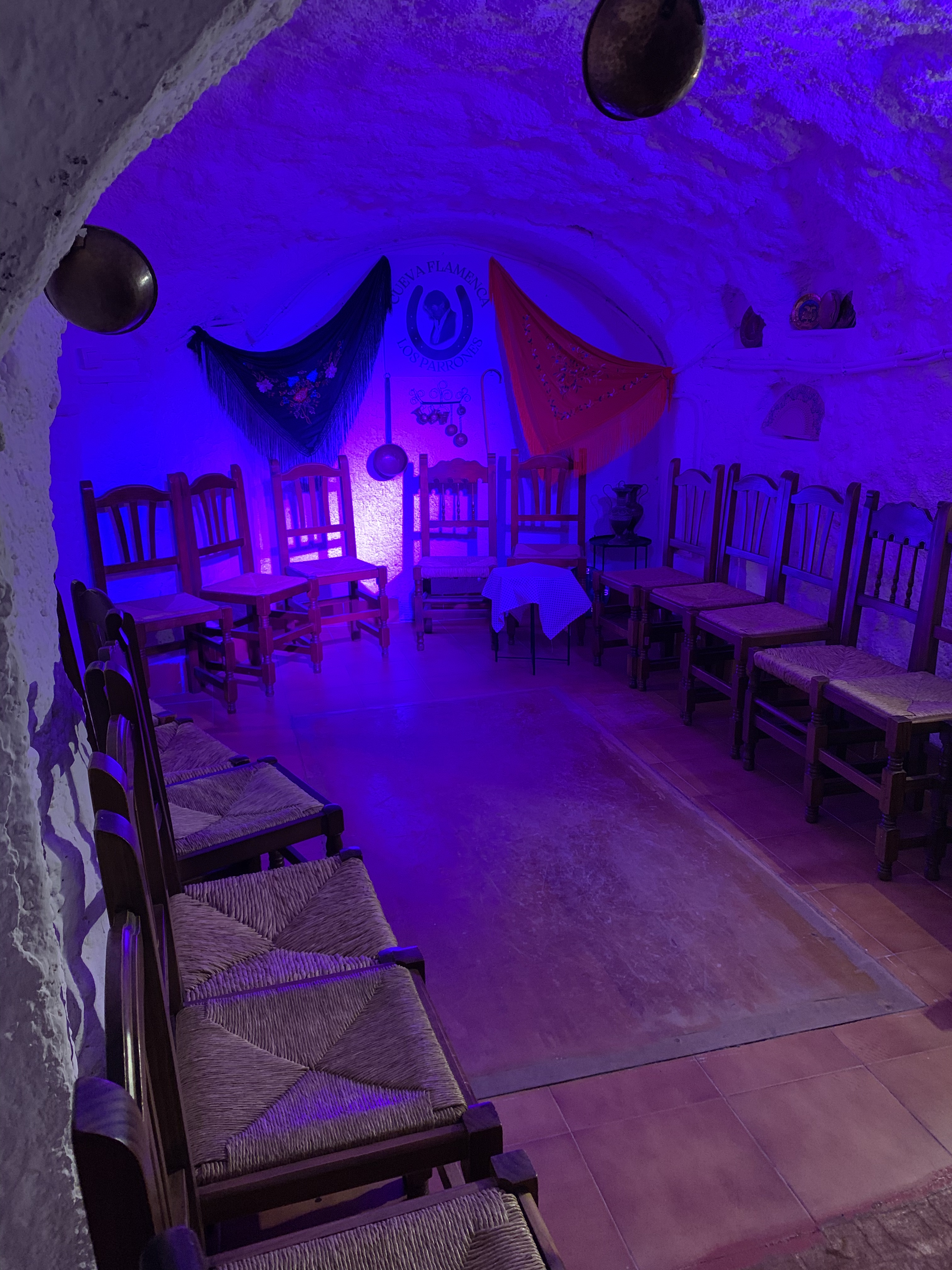
We sat with fourteen other people in a tiny room carved out of the rock.

A small room with wooden chairs along the side, lit with dim blue light.
We were sitting on the right, at the head of the room. The guitarist sat in the chair behind where the white cloth is, and I sat beside him.

We were given pride of place right beside the performers, literally so close that the dancer accidentally kicked Tim at one point. The guitar player needed to turn sideways so as not to hit me when he needed to tune. It’s not hyperbole to say we were transported by the music and energy of this moment. This was our experience of duende, although without the stripping of clothes or throwing chairs.

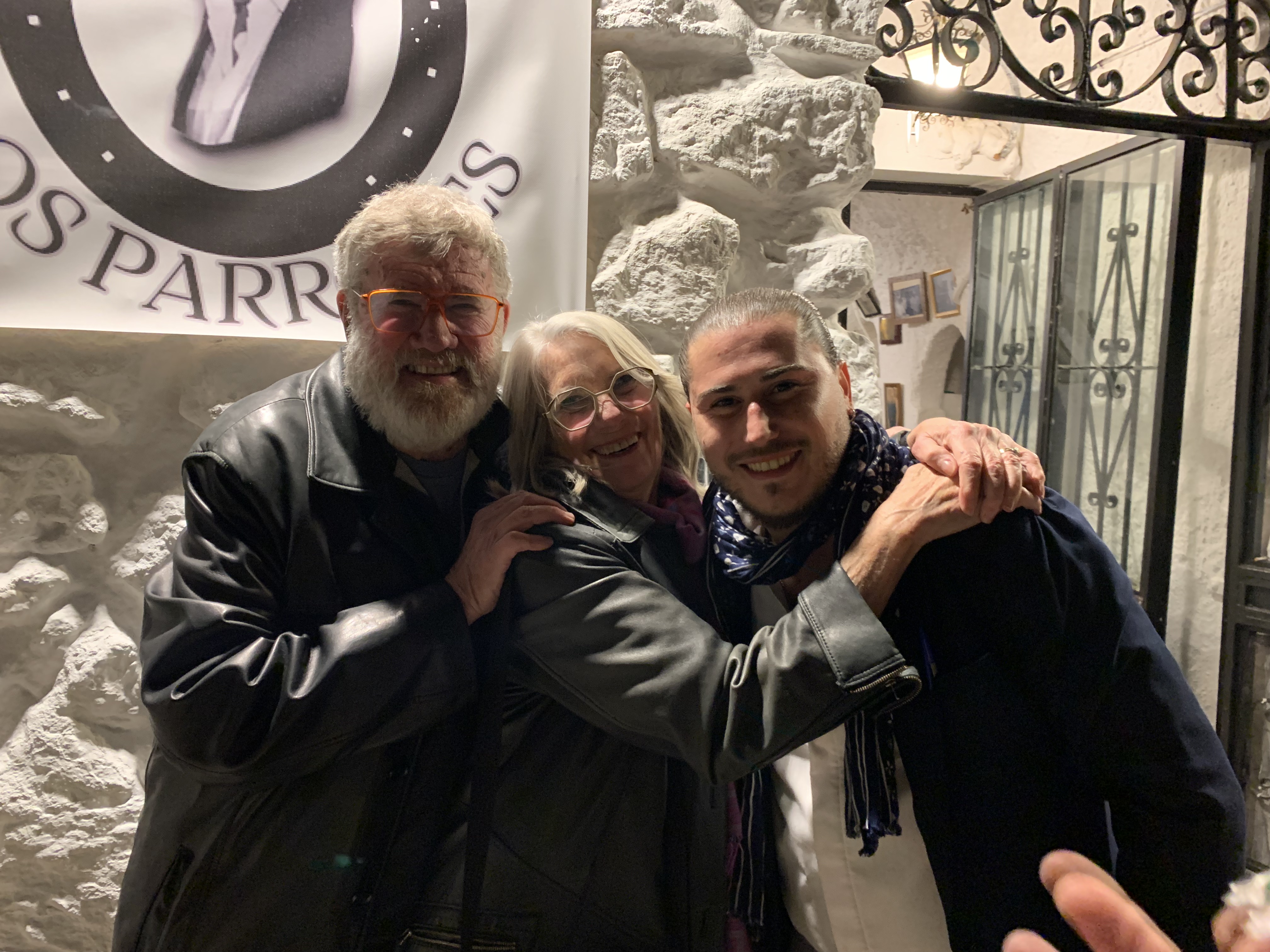
After the show we were taken into a side room and fed salad and soup and more wine. We were the only people eating — it clearly wasn’t something they were usually set up to do but they treated us royally. It turned out that this was only their fourth night of operation and everyone was partying in the other room. We were hugged by the guitar player, by the man who made our amazingly delicious stew, and by the man who had persuaded us to come (who you can see in the photo.) We were made honourary abuelos, grandparents, and I couldn’t be more honoured.

Man, woman, and man hugging outside a white stone stone wall

I left a piece of my heart there.

Córdoba. History, Change, and Duende

…it was one of the most advanced cities in the world –– a renowned centre for culture, politics, and finances…

I had no idea I would love Córdoba so much.

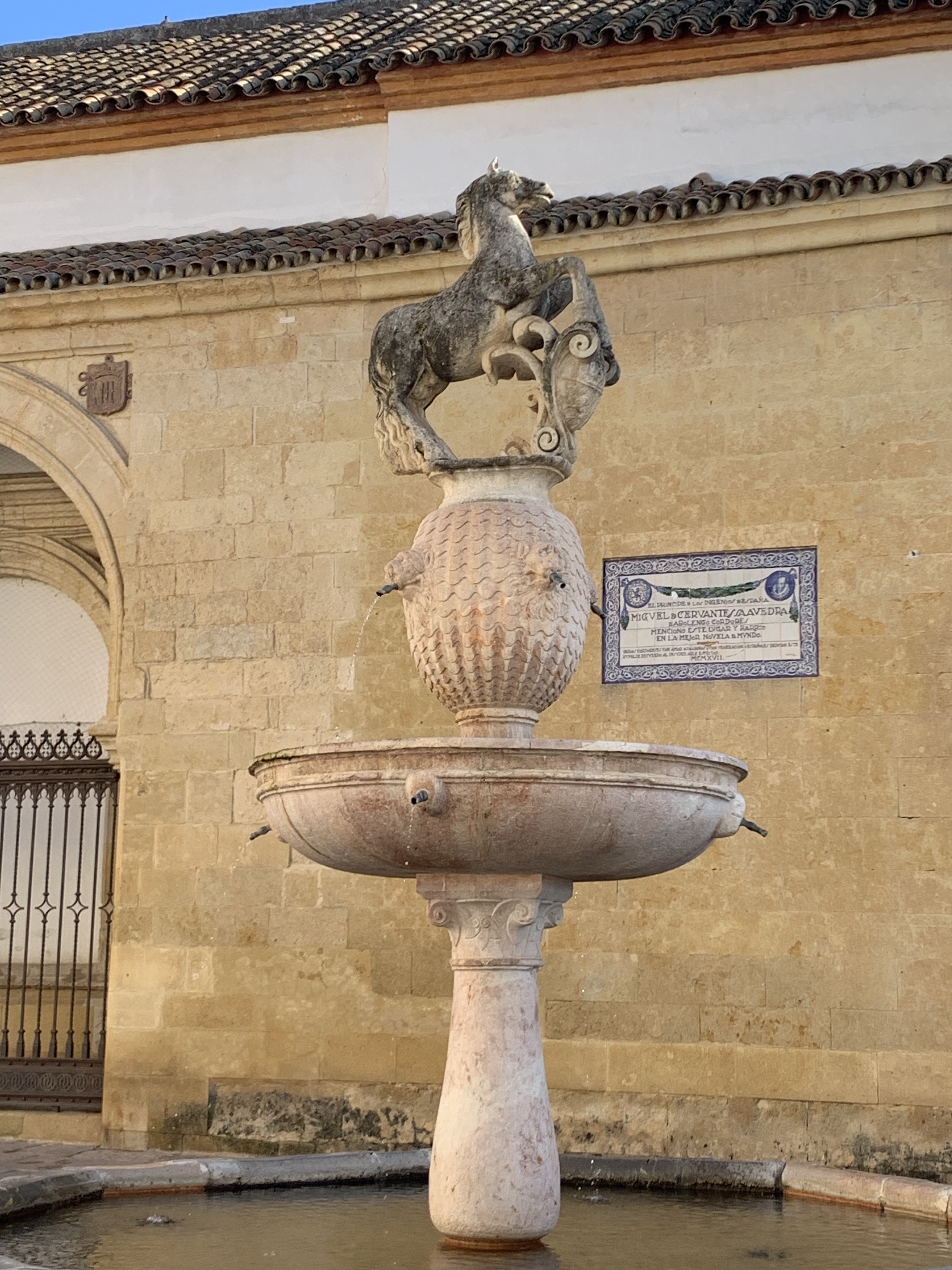
We stayed in the old city, in an apartment overlooking La Plaza del Potro (the Plaza of the Colt) with its wonderful Renaissance statue of a rearing young horse.

Looking down on a Renaissance Place with a horse sculpture and fountain.
The view of La Plaza del Potro from our window. The Inn mentioned in Don Quixote is in the large doorway on the right.
The Renaissance horse sculpture in La Plaza del Potro.
The horse sculpture

The Plaza was originally a centre for horse trading and all of the sketchy characters that go along with that. It has a literary history that includes a reference in Don Quixote to the Inn that operated in the plaza in the 15th century. It was here that poor Sancho Panza was hurled up and down on a blanket –– tormented because they couldn’t pay their bill.

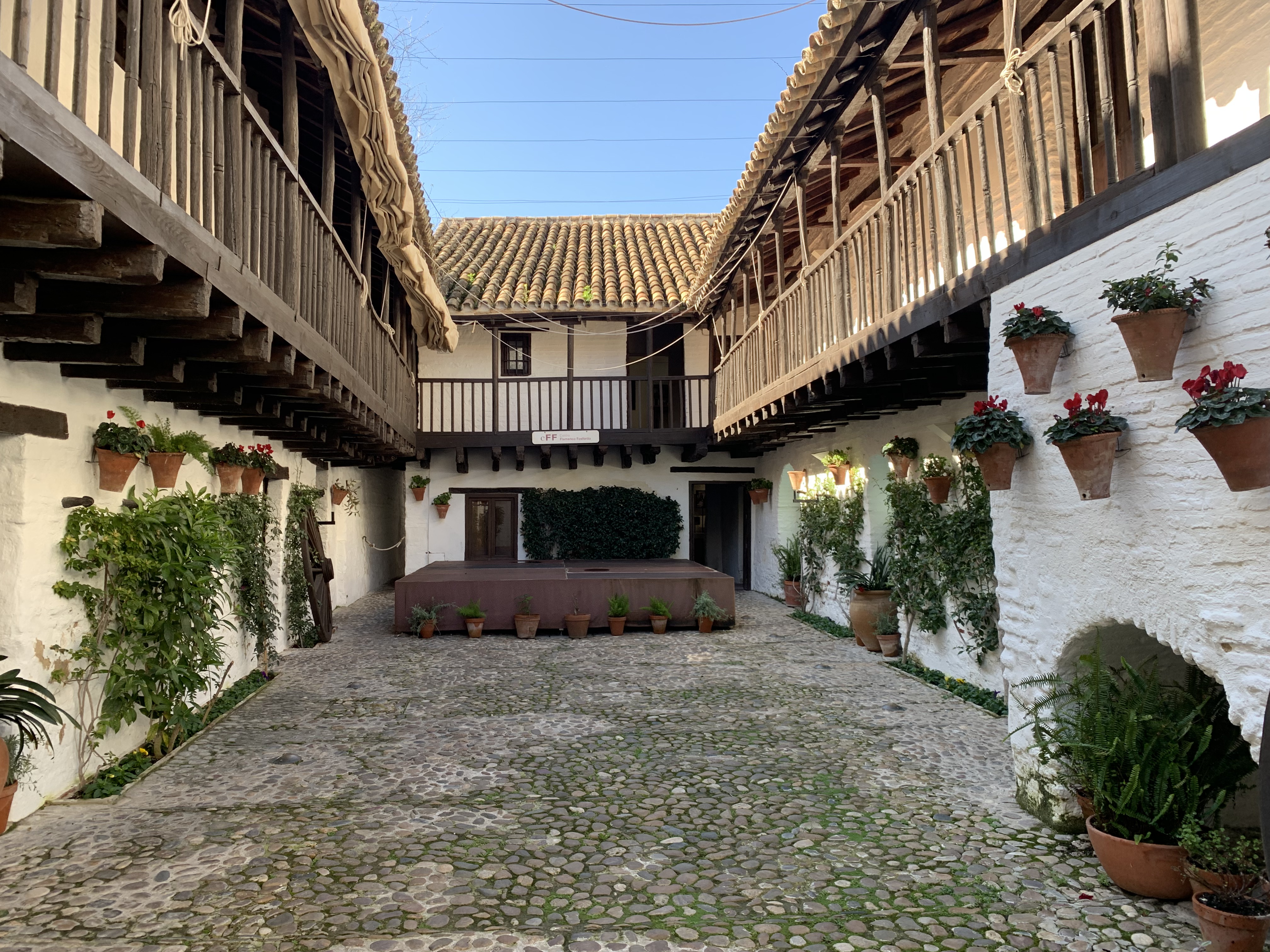
Courtyard with hanging pots of geraniums, tiled roof and wooden ballustrades.
The courtyard of the Inn, now the Centro Flamenco Fosforito

The Inn is now Centro Flamenco Fosforito, a flamenco museum, considered the best flamenco museum in Andalucia. We listened to recordings by Paco de Lucia, Vicente Amigo, and Antonio Fernandez Diaz –– all master guitarists known for advancing the form. We tried out quizzes about the rhythms and failed miserably. It is foreign to our ears, but so deliciously inviting.

“The Arabs call the experience of aesthetic perfection capable of dragging paroxysm ‘tárab’. It occurs when the artist’s mind strips away from his/her ties and reaches a state of grace; the audience cries, literally tear their clothes and throw chairs; the duende, an emotional load experienced especially by the gypsies (sic), takes hold of the environment. It is the quintessence of flamenco.” (From the Centro Flamenco Fosforito)

Duende is a term that I came across again and again in Spain. It means a heightened state of emotion, expression, and authenticity. It originally connects to a folklore figure, sort of like a gnome or, in J.K. Rowlings’ world, a house elf. But its larger meaning has to do with a tragedy-inspired ecstasy that is usually connected to flamenco. It describes what I was starting to feel in the presence of flamenco, and in Andalucia.

Although our apartment overlooked the plaza, this was off season and it was quiet and private. There were neighbourhood Tabernas that offered simple fare that suited us just fine. The river Guadalquivir runs at the bottom of the street and is a thoroughfare for joggers, bikers, and walkers with and without dogs and children. A Roman bridge spans the river and a huge Roman arch welcomes you into the city.

A Roman bridge across a river
The Roman bridge across the River Guadalquivir, looking north toward the old city and the Roman arch.

Córdoba’s history runs deep. Neanderthal remains from 42,000 – 35,000 B.C. have been found here. The Guadalquivir encouraged settlement and the Phoenicians moved in around the 8th Century B.C., soon to be followed by the Romans, Visigoths, and Muslim empires. It is the latter that built up the city as a major centre of power, learning, and influence. In the 9th century C.E., the population was somewhere between 75,000 – 160,000, and by the 10th century it was one of the most advanced cities in the world –– a renowned centre for culture, politics, and finances. There were over 80 libraries and schools.
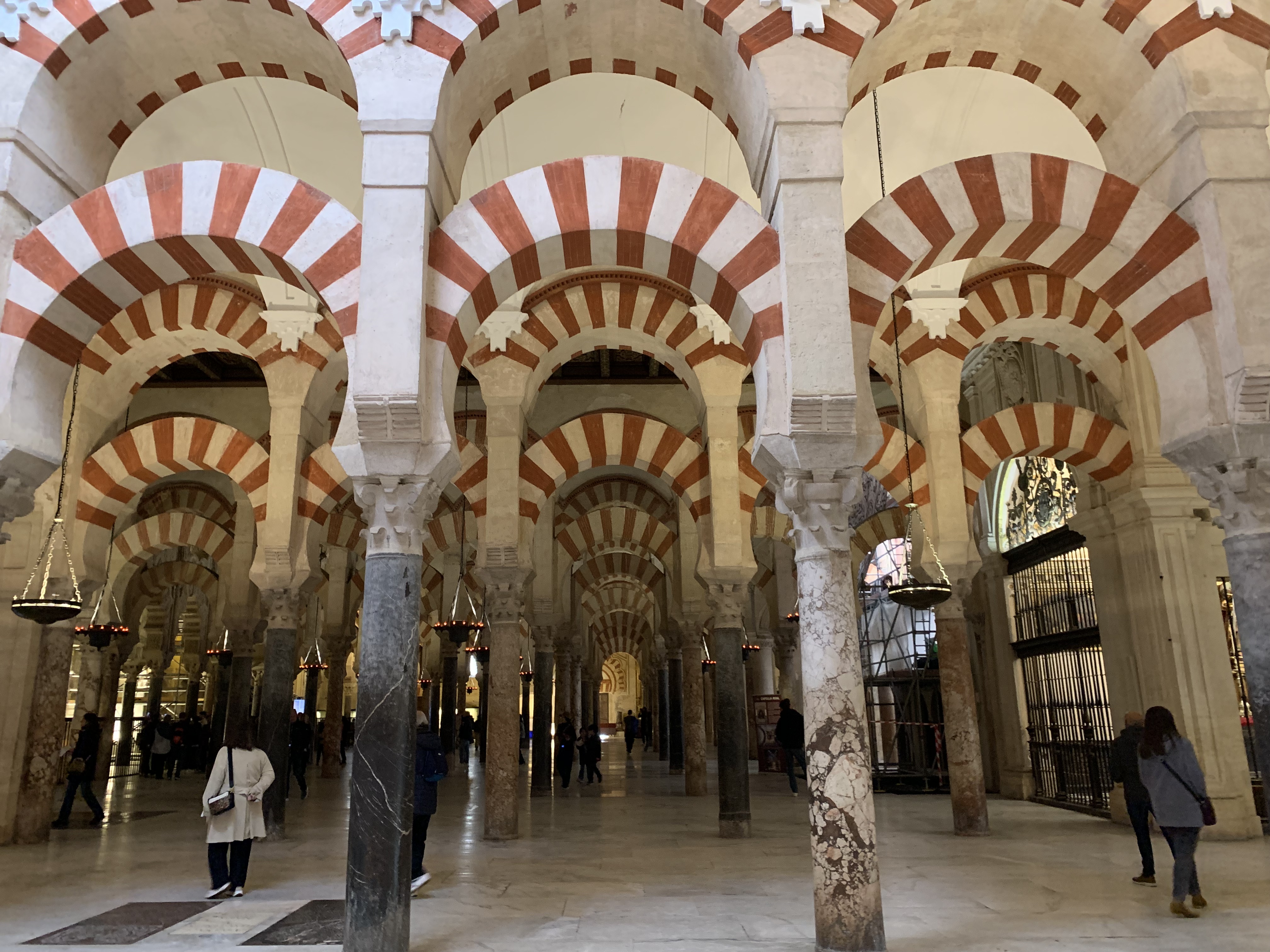
It was during this period that the huge mosque, La Mezquita, was built by Abd al-Rahman I in 785. The mosque reused some of the Roman and Visigothic materials from previous centuries, which you can see in variety of the capitals of the columns. But while they made use of materials at hand, they did not stint in the use of lapis, gold, and granite.

La Mezquita originally held 1500 worshippers and over the years it was expanded several times by al-Rahman’s sons to the point where, by the thirteenth century, it held 40,000 worshippers. It is open, spacious and incredibly beautiful with its soaring striped arches.

Inside La Mezquita, the mosque, with large red and white stone arches,
La Mezquita
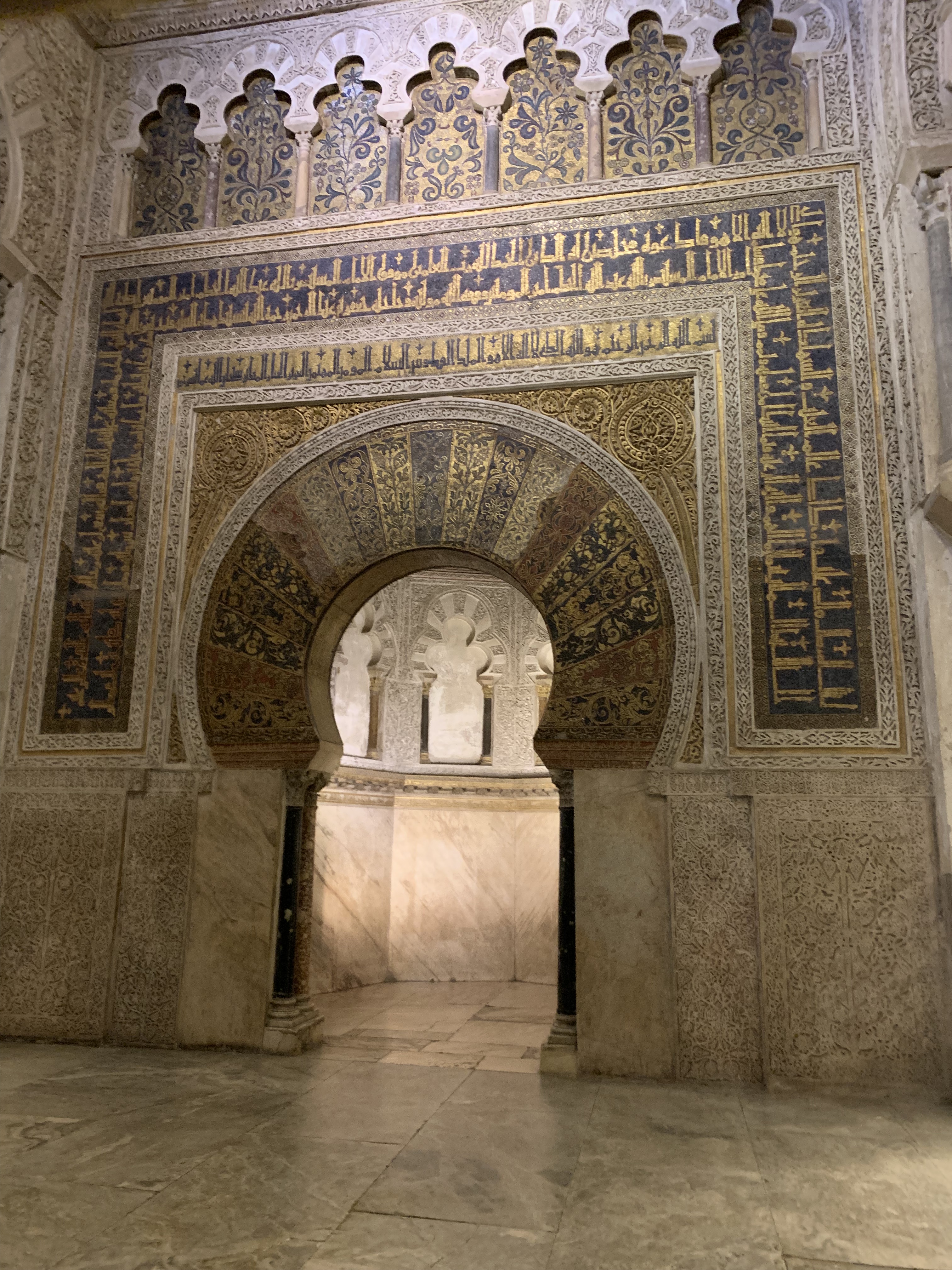
The Mihrab, indicating the direction of prayer.

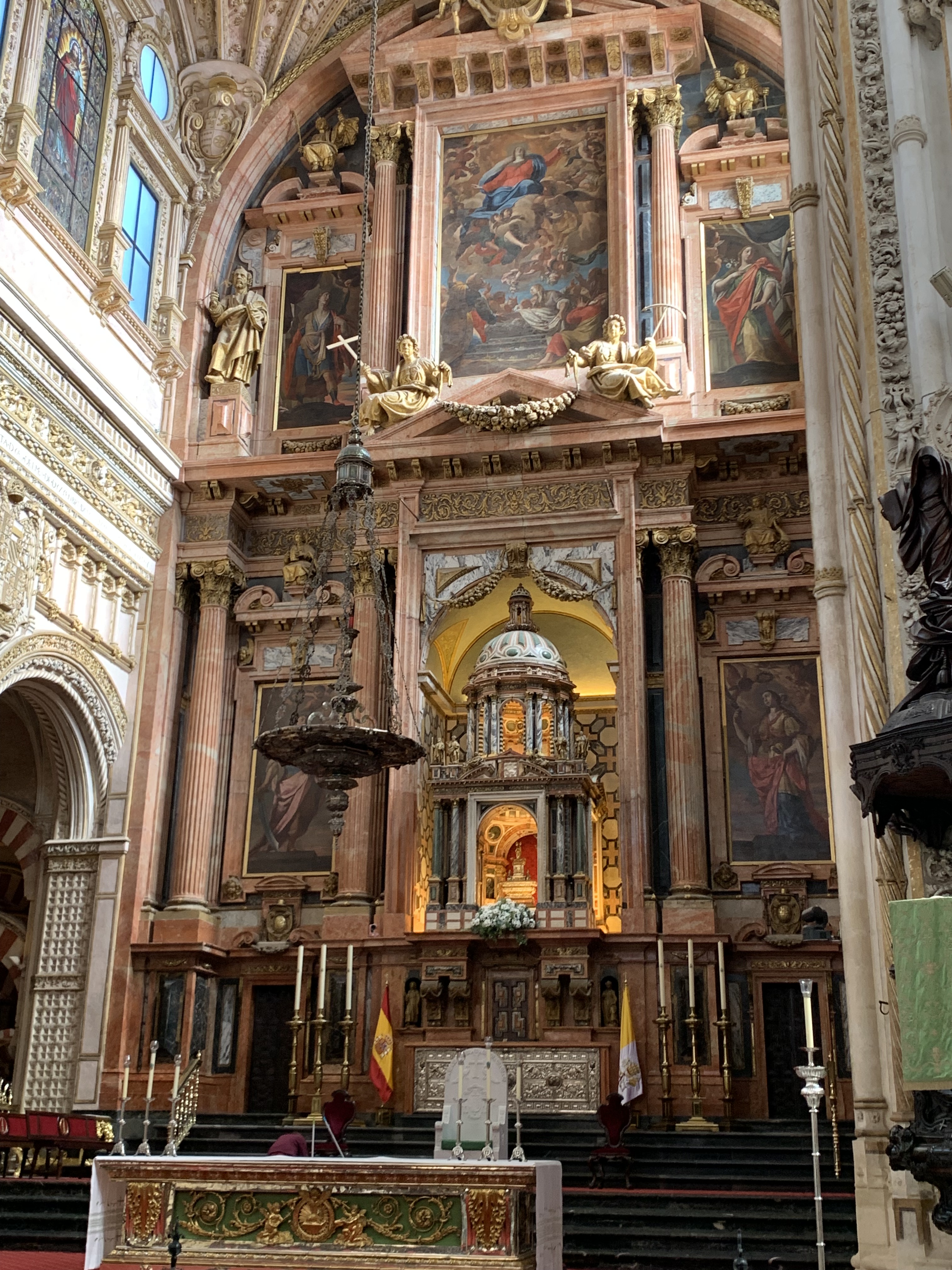
But when Córdoba was “reconquered” (La Reconquista) by King Ferdinand III of Castile in 1236, he put a Catholic cathedral right in the middle of the Mosque.

La Catedral de Córdoba. You can see the red and white stripes of the arches of the Mosque through the arch on the left.

It feels bizarre — like a life-size playhouse plunked in without any regard for the Islamic architecture. The Cathedral is still a consecrated Catholic Church. As a pilgrim from either religion, you can flow seamlessly from one to the other. La Mezquita and La Catedral were declared a World Heritage site in 1984.

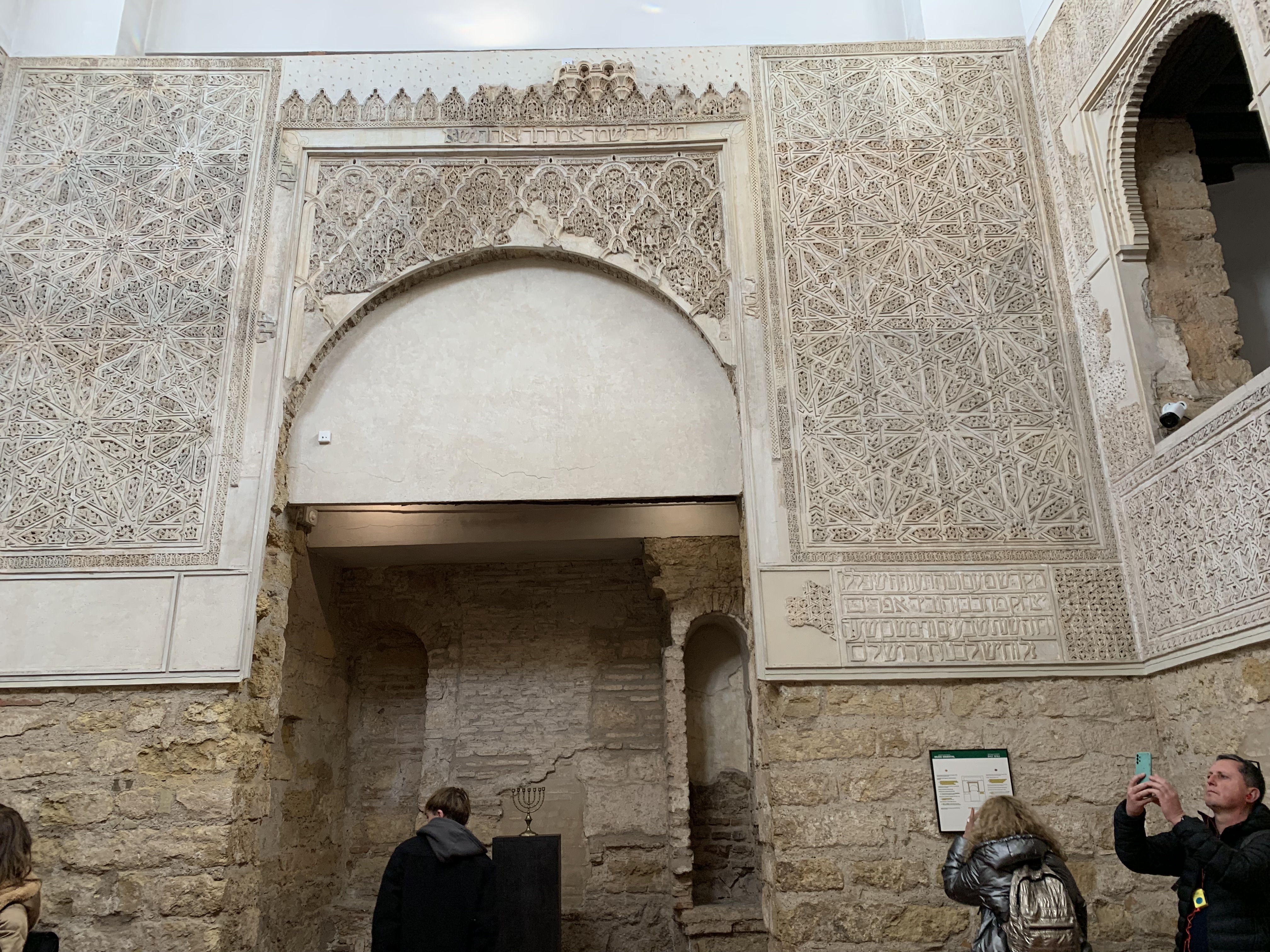
Córdoba was also known as a place of incredible tolerance, where Muslims, Christians, and Jews coexisted for centuries as neighbours and friends. We navigated the narrow winding streets to find the Sinogoga de Córdoba, one of the best preserved of the three surviving Medieval Synagogues in Spain.

Sinogoga de Córdoba

It was built between 1314- 1315 and was in use until the Jews were expelled from Spain in 1492. It’s small and was perhaps initially a private synagogue for a wealthy resident. It was obviously influenced by the Arab art and architecture, with intricate and lacing geometric carvings and arches. After we had been there for a few minutes, a group of visiting teenagers coalesced into a circle to dance and sing the Hora. They were giggling, slightly embarrassed, but absolutely charming and full of life.

The Alcazar de los Reyes Cristianos de Córdoba was built in the same period as the synagogue by Alfonso XI. He put it on top of an Islamic-era palace and it, too, maintains the Mujédar influence. It became a fortress by the river that served as a residence for Isabella and Ferdinand. Christopher Columbus had his first audience here with the monarchs. Infamously, it was used as one of the main headquarters for the Inquisition, and the Arab baths were converted into torture chambers.

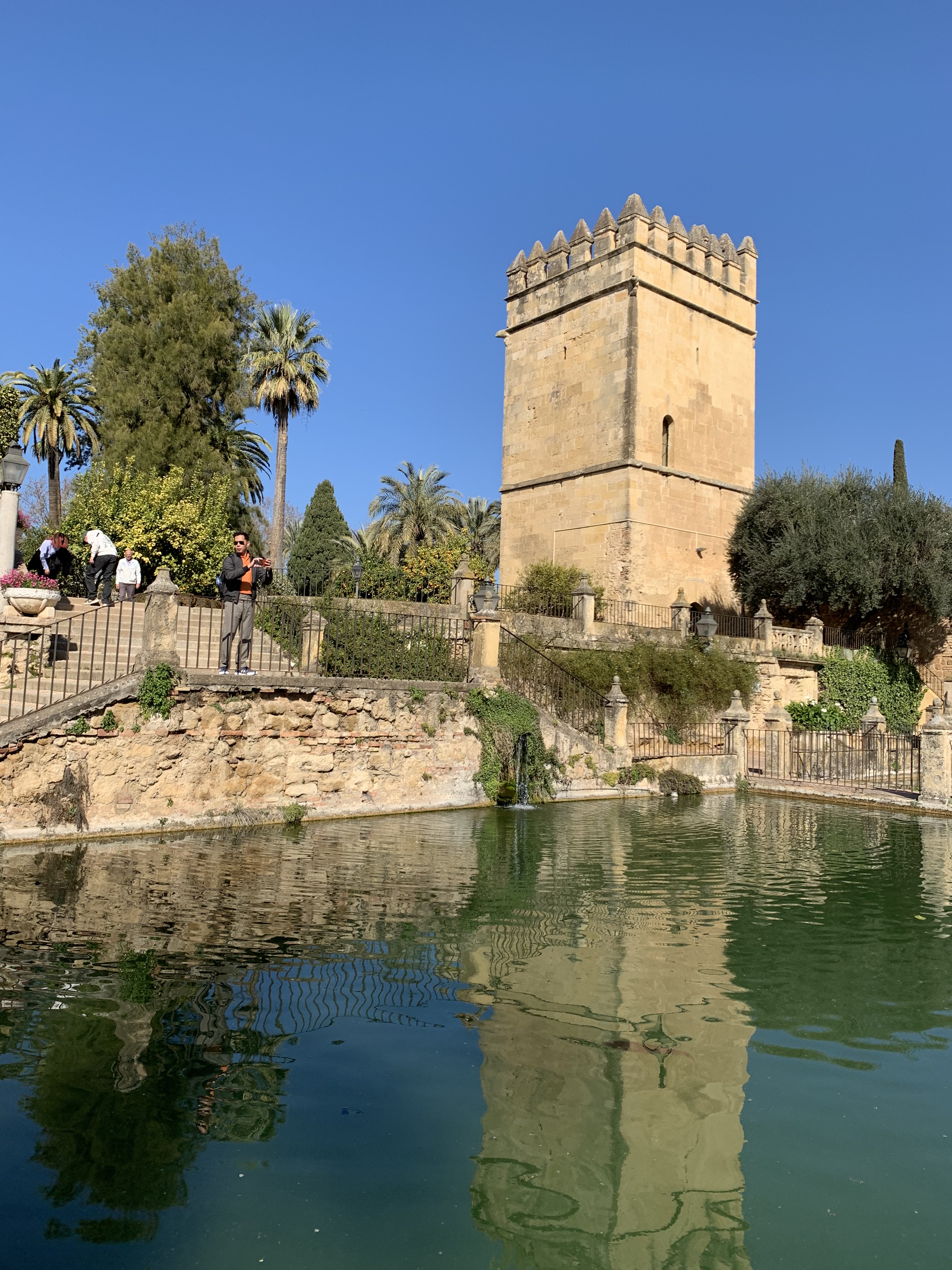
The tower of the Alcazar became known as the “Tower of the Inquisition.”

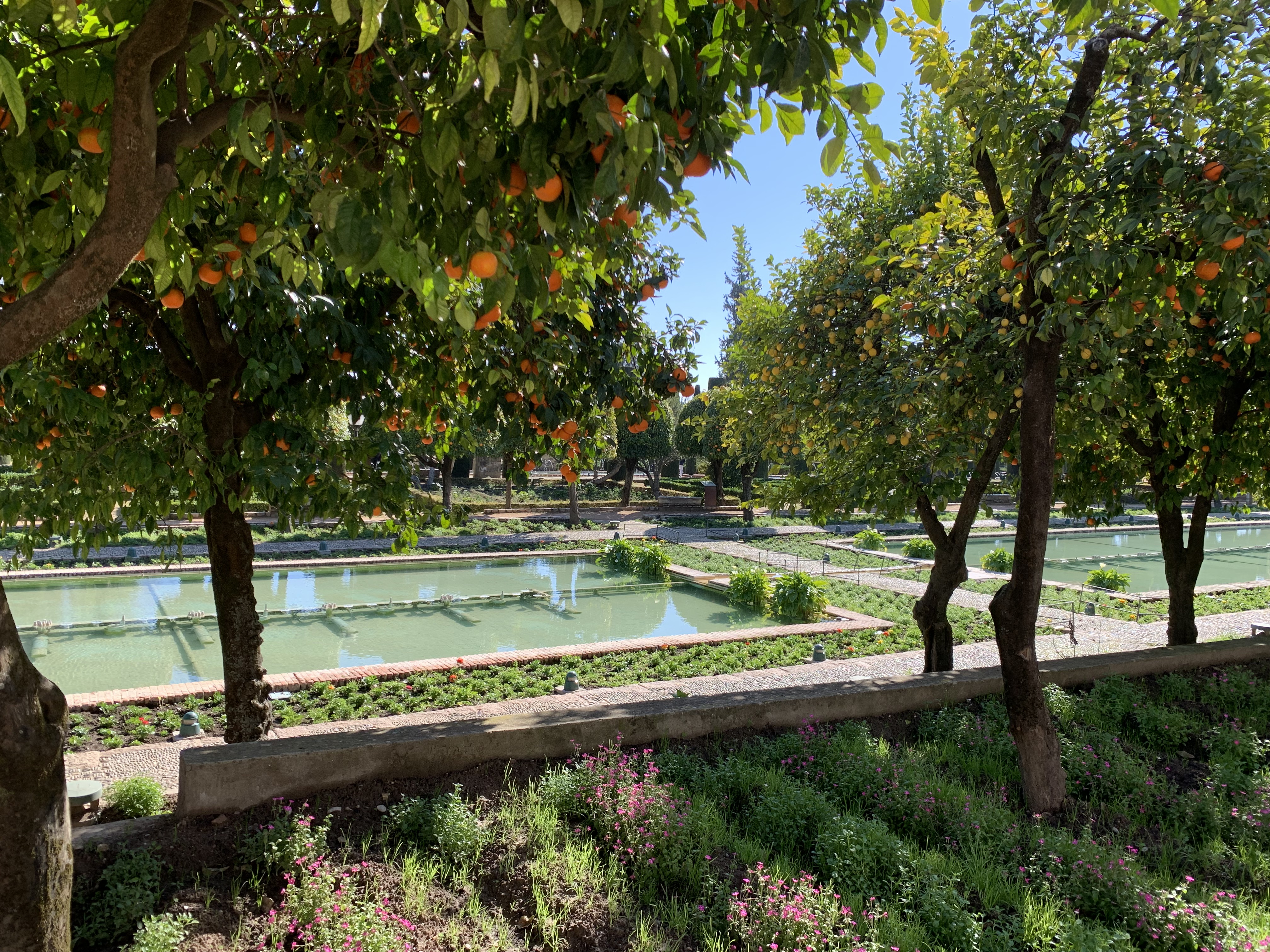
But today it is calm, gracious and restful. Even in the relative cool of February, with more weeds than flowers, we could appreciate the grandeur of the gardens and how they had been designed to ease the heat of the summer months.

Gardens of the Alcazar de los Reyes Cristianos

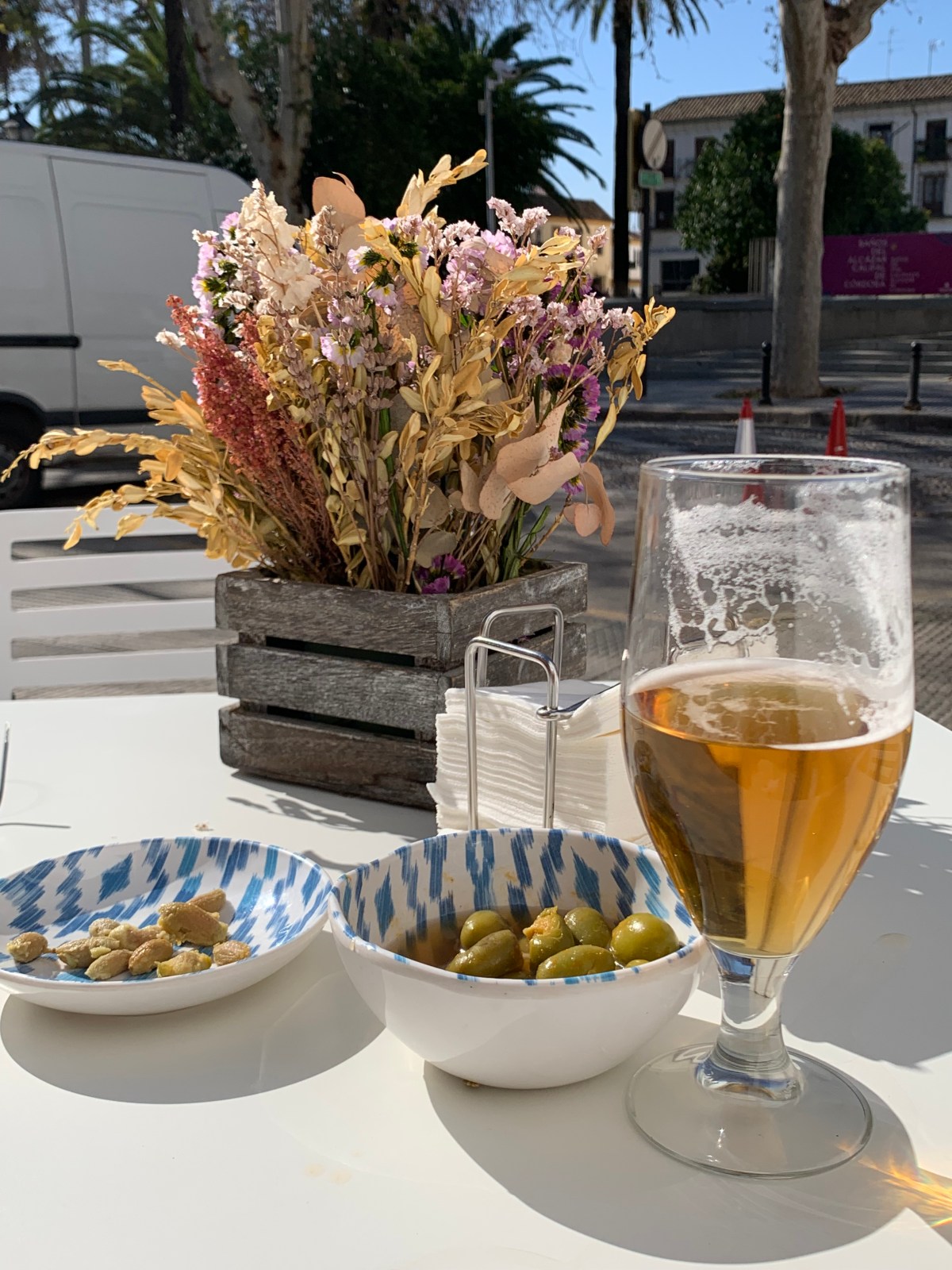
With all of this wealth of history and culture, you can understand why we spent hours exploring local artifacts in the Archeological Museum of Córdoba (built on top of a Roman Amphitheatre) before sitting outside to feast on lemon boqueróns — the delicately flavored white anchovies that are marinated in lemon before being fried. And olives, of course. The best way to understand a place is always through the food.

While we were in Córdoba, we also went to the famous Córdoba Equestre, the international riding school and stables about which Fredrico Garcia Lorca said, “In Córdoba, even the horses have their Cathedral.” The public performances combine the essence of flamenco with dressage. The horses are guided by their riders to execute delicate dance moves that exemplify the artistic height of the relationship between rider and horse. Andalusian horses are a special breed, and the stables in Córdoba have been breeding them since before Columbus set off for America. In fact, Andalusian horses were the breed that Columbus brought with him to the New World.

In those days, the River Guadalquivir was wide and energetic as it flowed into Córdoba. In the centuries since, the river has become silted up and Córdoba eventually lost its supremacy as a city of power and influence. Perhaps that is why I love it so much. There is grandeur without arrogance, and people are amazingly friendly and kind. It’s a city that doesn’t have to prove anything, one that I already long to go back to.

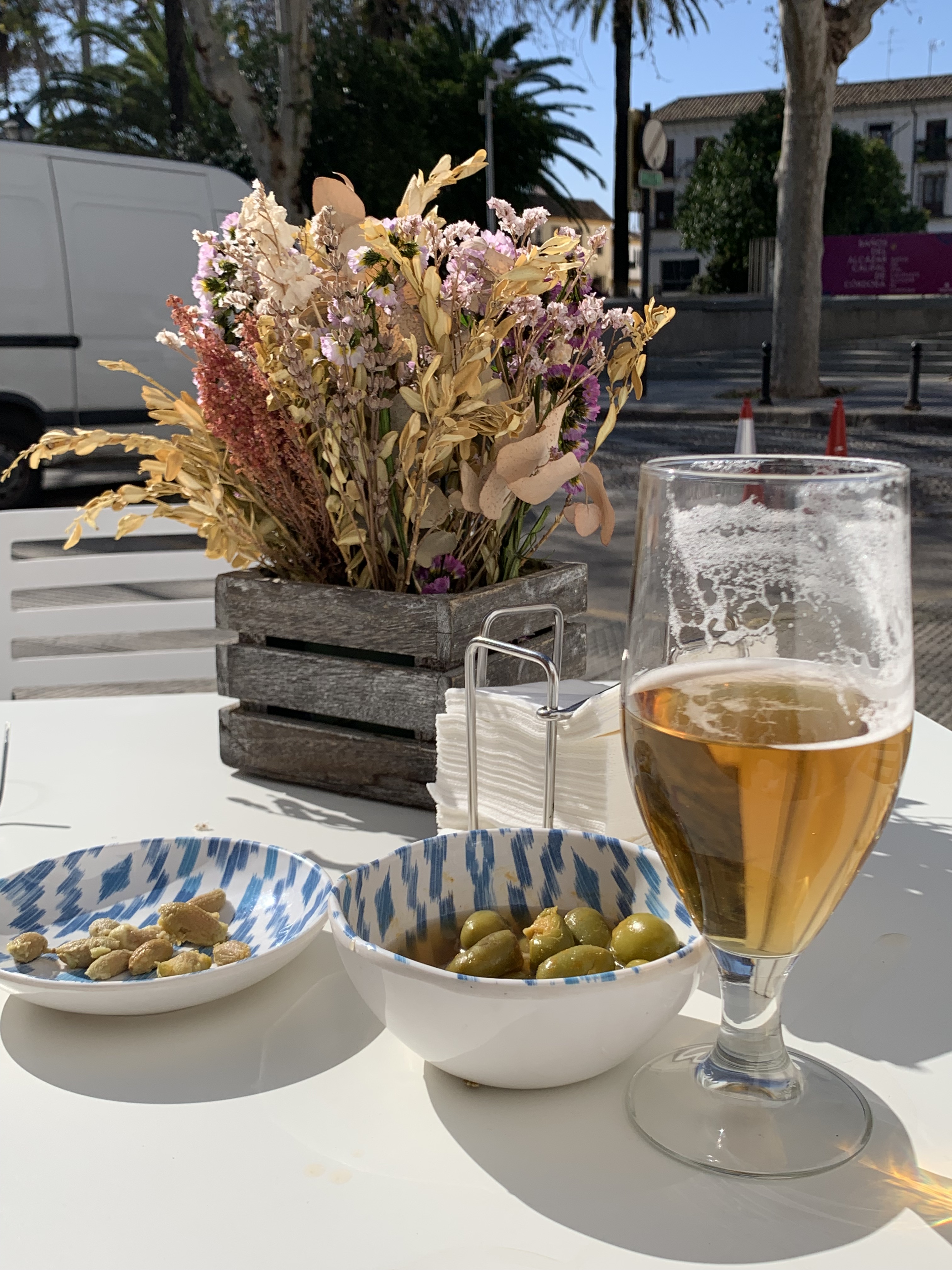
Table outside with green olives, pits, a glass of beer, and dried flowers.

Feasting Our Senses in Sevilla

We were sucked into the heart of Flamenco on the street, and hooked.

Sevilla is where we fell in love with Flamenco. But first, the city prepared us with its style, fun, and grandeur.

We stayed in the old city, getting appropriately lost in the narrow, twisty streets with inviting Tabernas on every corner. Although it is obviously a tourist city, we felt very welcomed. It’s remarkably friendly, with delights and surprises around every turn.

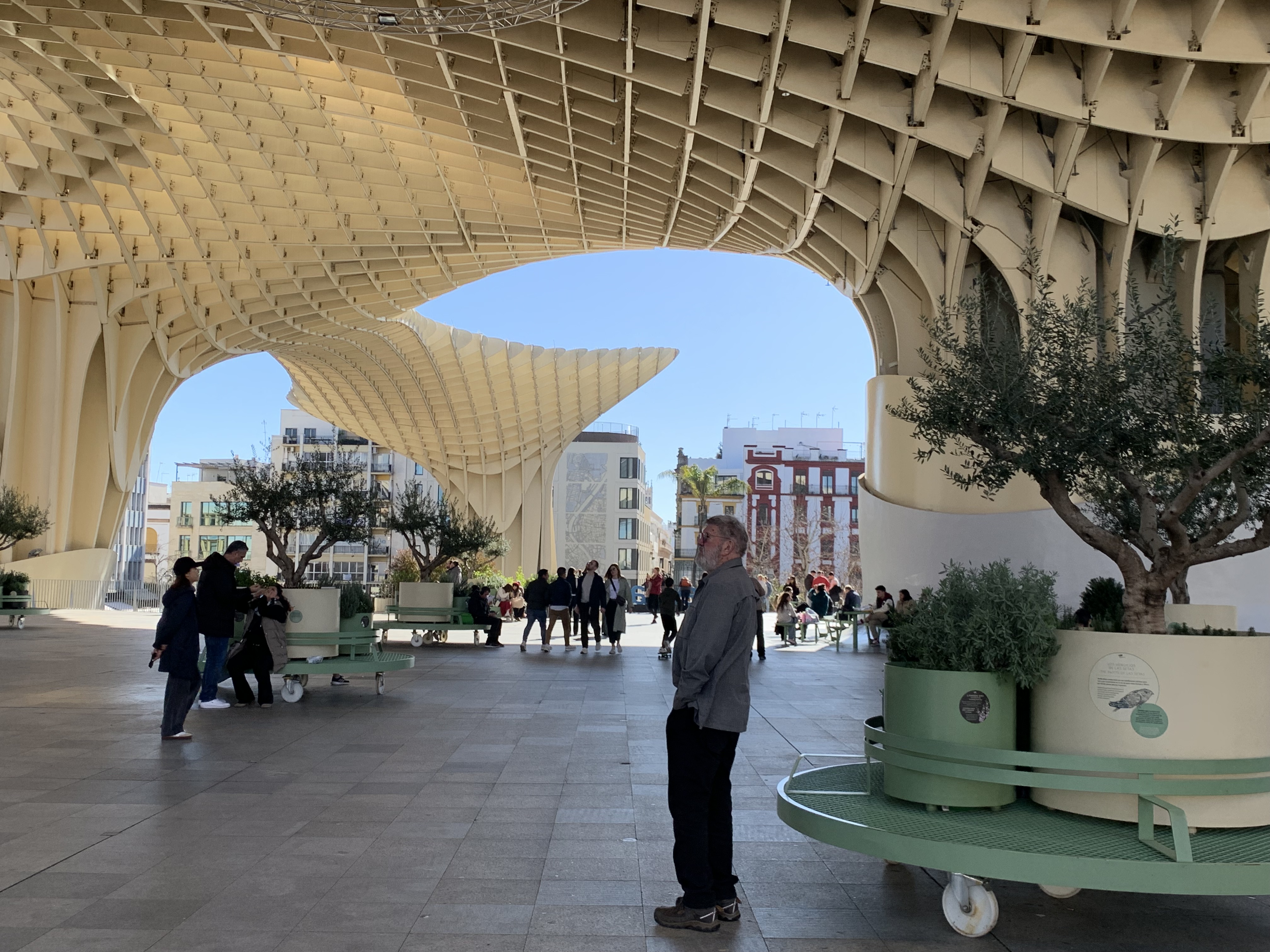
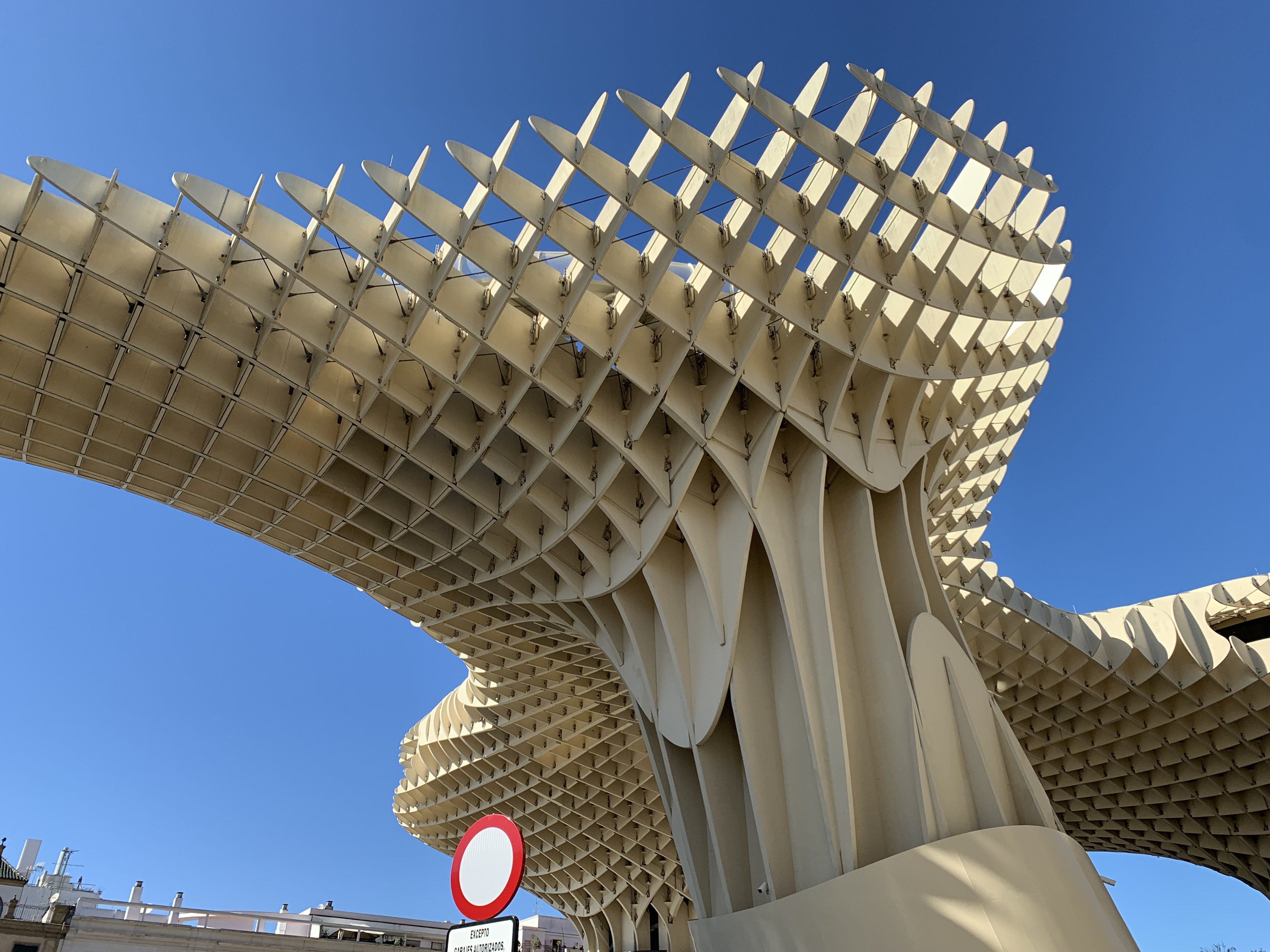
Nothing was quite as surprising as turning a corner and seeing the Las Setas (the mushrooms).

Standing under a curving wooden structure.
Under Las Setas
Las Setas

Considered the world’s largest wooden structure, we didn’t pay to go on top of the “Parasol” as it is often called. Las Setas is built on top of a market, La Encarnación that has operated here for centuries, but it was late in the afternoon and people were packing up. But we meandered through and had tiny perfect local beer and a plate of exquisite jamón Ibérico drizzled with olive oil and lemon juice. And a few olives, of course.

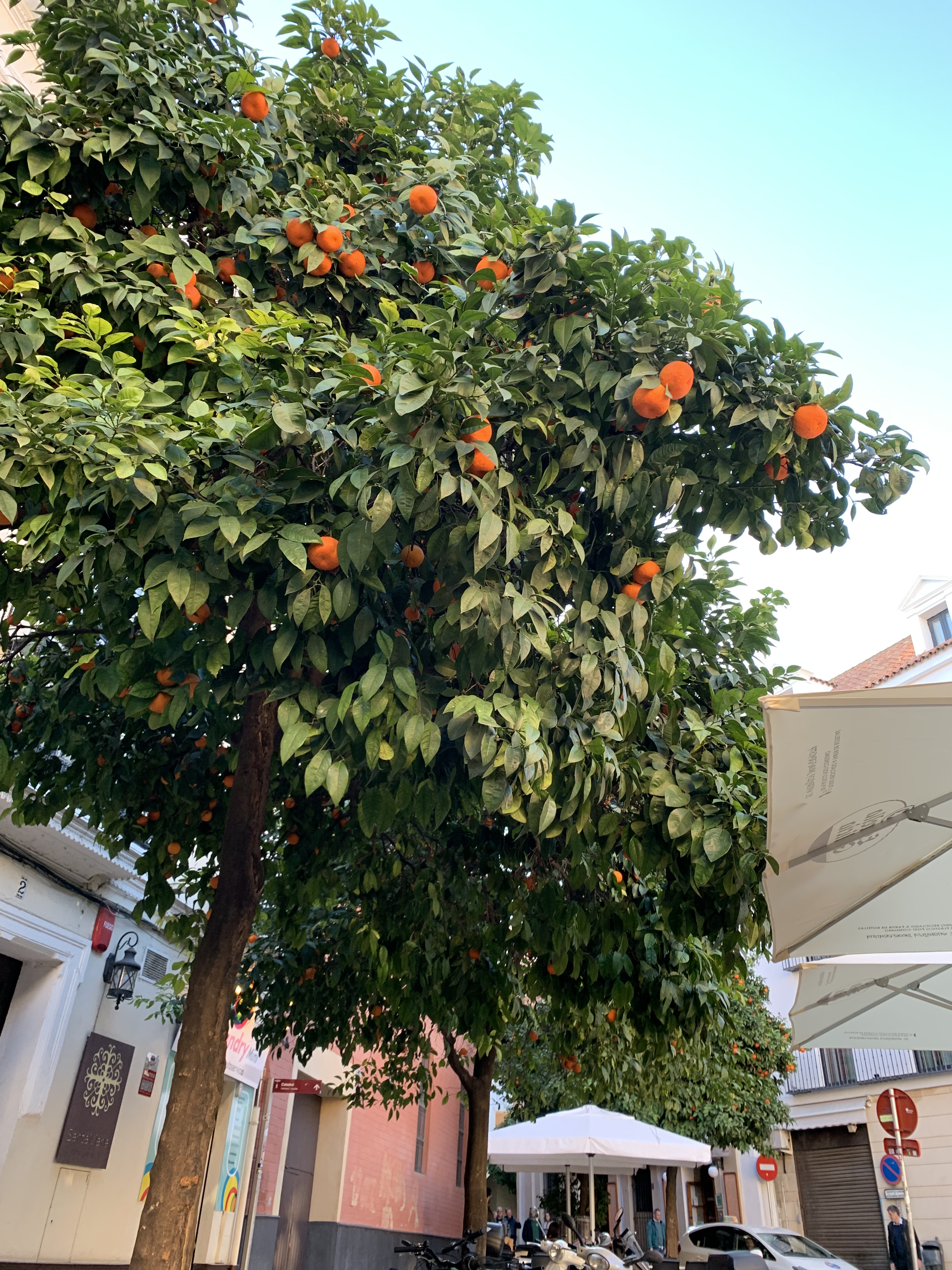
Sevilla is of course famous for its orange trees. They line the streets and are laden with fruit. The orange trees were introduced to Sevilla for their decoration and culinary uses around the 10th century.

Orange Trees everywhere

They are Seville oranges, of course, from which one makes Seville Marmalade. Bitter until you add a good quantity of sugar. In Spanish, mermelade just means jam.

And under the orange trees, Tabernas. It was tempting to simply move from one Taberna to the next, watching oranges fall and life go by.

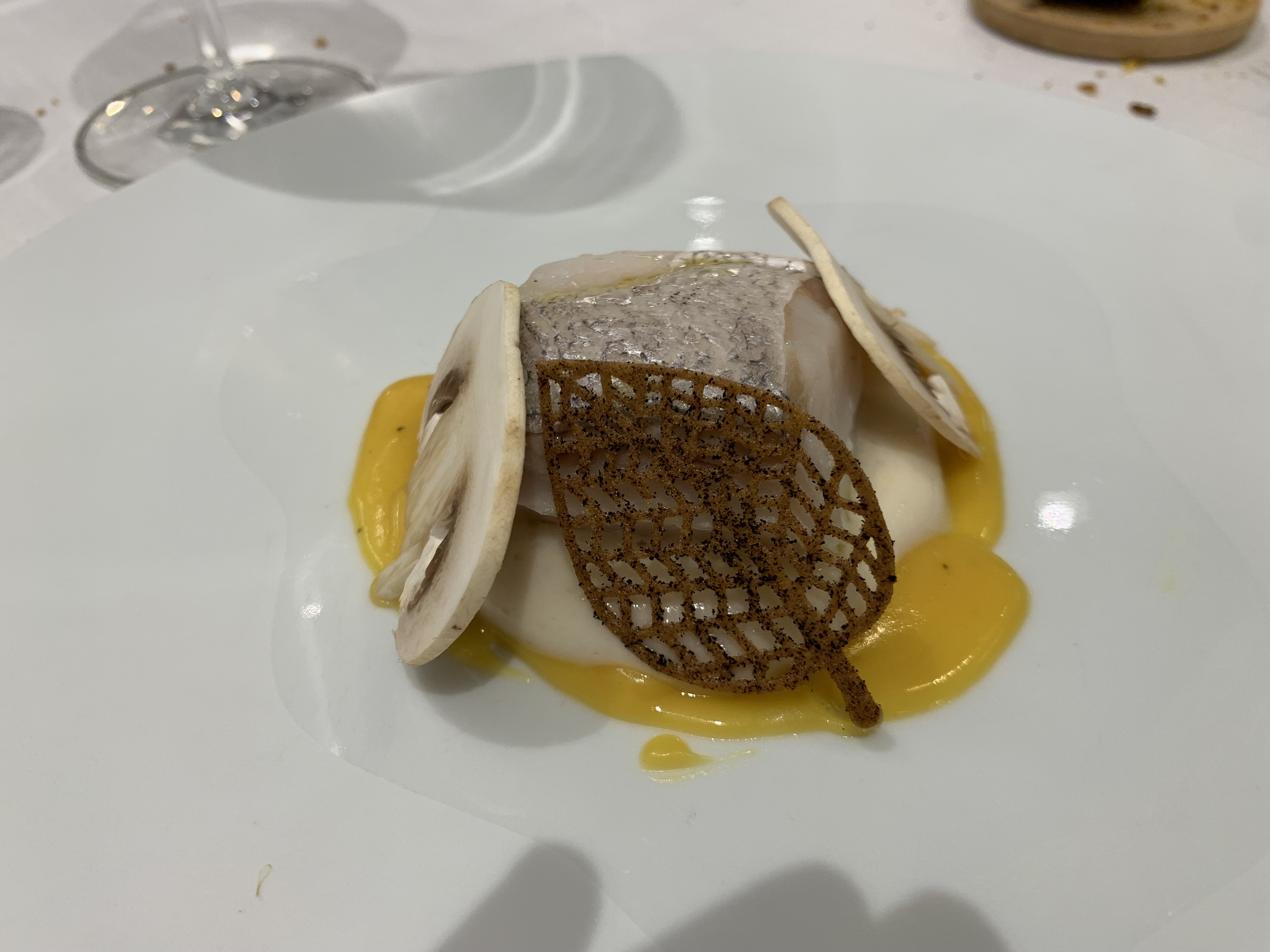
Our first night in Sevilla, we crossed the Guadaquivir river to go to a tasting menu that our son had gifted to me for my birthday. Ivantxu is a Michelin star restaurant that combines authentic Andalusian ingredients with a contemporary flair.  Our nine courses included a sea urchin bisque, Pigeon a la Royal, txangurro (spider crab) croquette, and traditionally prepared antxoa (anchovy) in a spray of sea foam.

Marinated Hake with Setas and sauce. The delicate leaf was edible and crunchy. It tasted of truffle and spices.

It was all astonishing and surprising and paired very well with a number of delicious Spanish wines!

By the good graces of GPS, we were navigated back through the winding streets to our apartment.

The next day, armed with my broken and faulty Spanish, I felt emboldened to try almost anything. We found a cheap and cheery local café, definitely not tourist fare, and sat outside for breakfast. Traditional working breakfast is usually some form of Tostada Con Tomate. If you’re fancy, you might have it with ham or a bit of cheese. I ordered something called Tostada con Zurrapa, which my phone translated as toast with “dregs.” The waitress assured me it was delicious, as long as I was all right with meat. I think the meat was probably bits left over from a soup bone (hence the dregs). It was combined with tomato sauce and spices, smeared over the toasted bread, then drizzled with olive oil. A great way to start a day of after a night of excess.

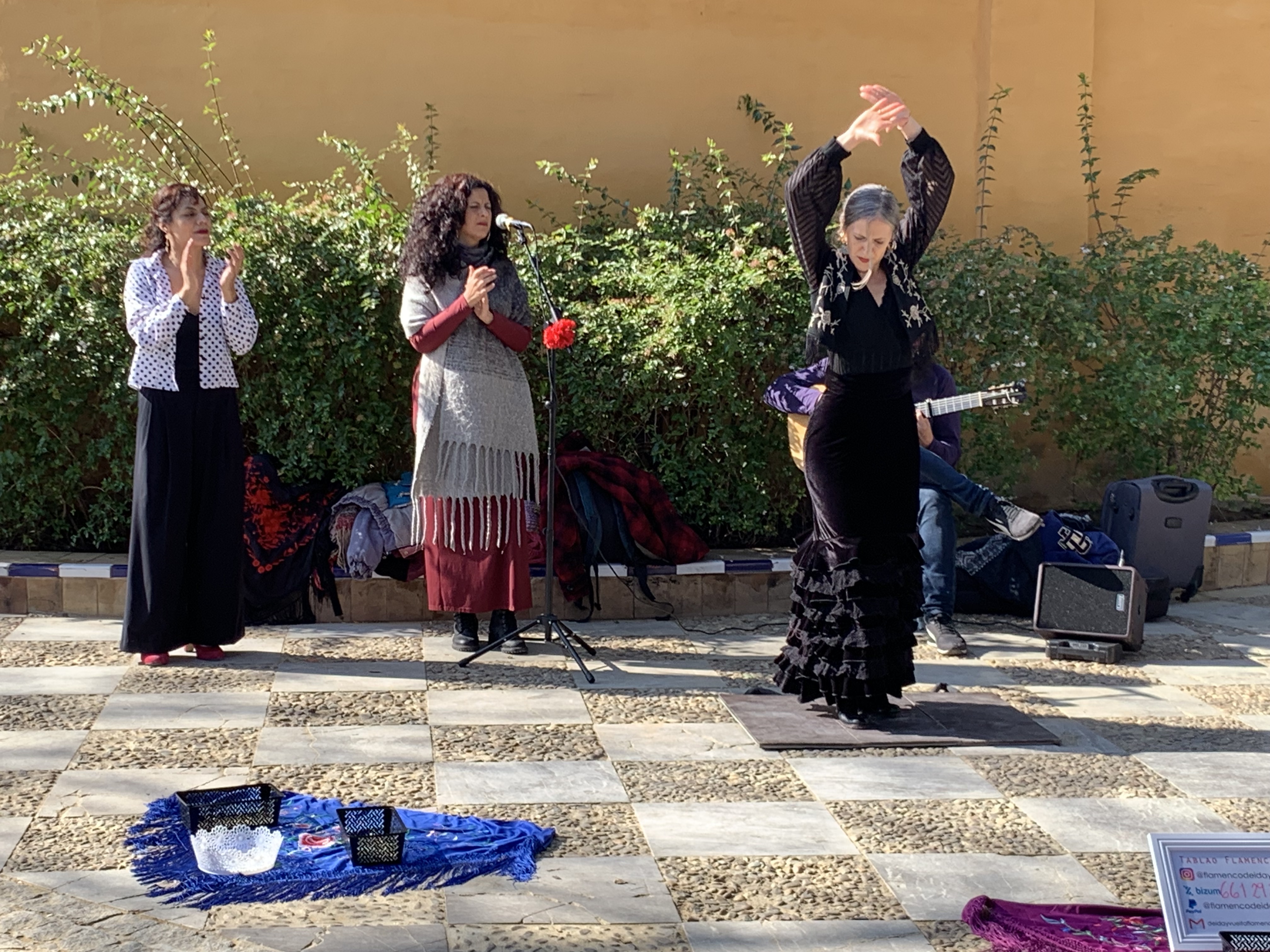
Our tickets for the Alcazar (the World Heritage site that is the main tourist attraction in Sevilla) were for late afternoon, so we settled into organized wandering throughout the downtown area near the river. We discovered a park and followed our ears to singing and dancing. We stopped dead. Never have I been so overwhelmed by sound. Flamenco. It is the “troubled air.” It is unfathomable rhythms, intense emotion, the call of something ancient and wild. There is of course a lot of “tourist” Flamenco, but this was honest and real. We were sucked into the heart of Flamenco on the street, and hooked.

A person dancing, two people clapping.
Flamenco on the street in Sevilla

We had to tear ourselves away to go to Real Alcázar.

In 913 AD, Abd al-Rahman III established Sevilla as the capital of Al-Andalus and built his palace over an old Visigothic Christian basilica. The palace remained Islamic until 1248, when Ferdinand III of Castile took it over. It has been remodelled in the Islamic Andalusian style ever since, and the Royal Spanish family still occupy one section of the palace when they are in residence.

The Palace itself is overwhelmingly regal and beautiful. The details of the carving are hard to comprehend. We wandered from room to room, trying to grasp an understanding through our audio guide and feeling totally inadequate. (Note to self – splurge on tour next time!) We eventually lost sight of each other and became increasingly disoriented.

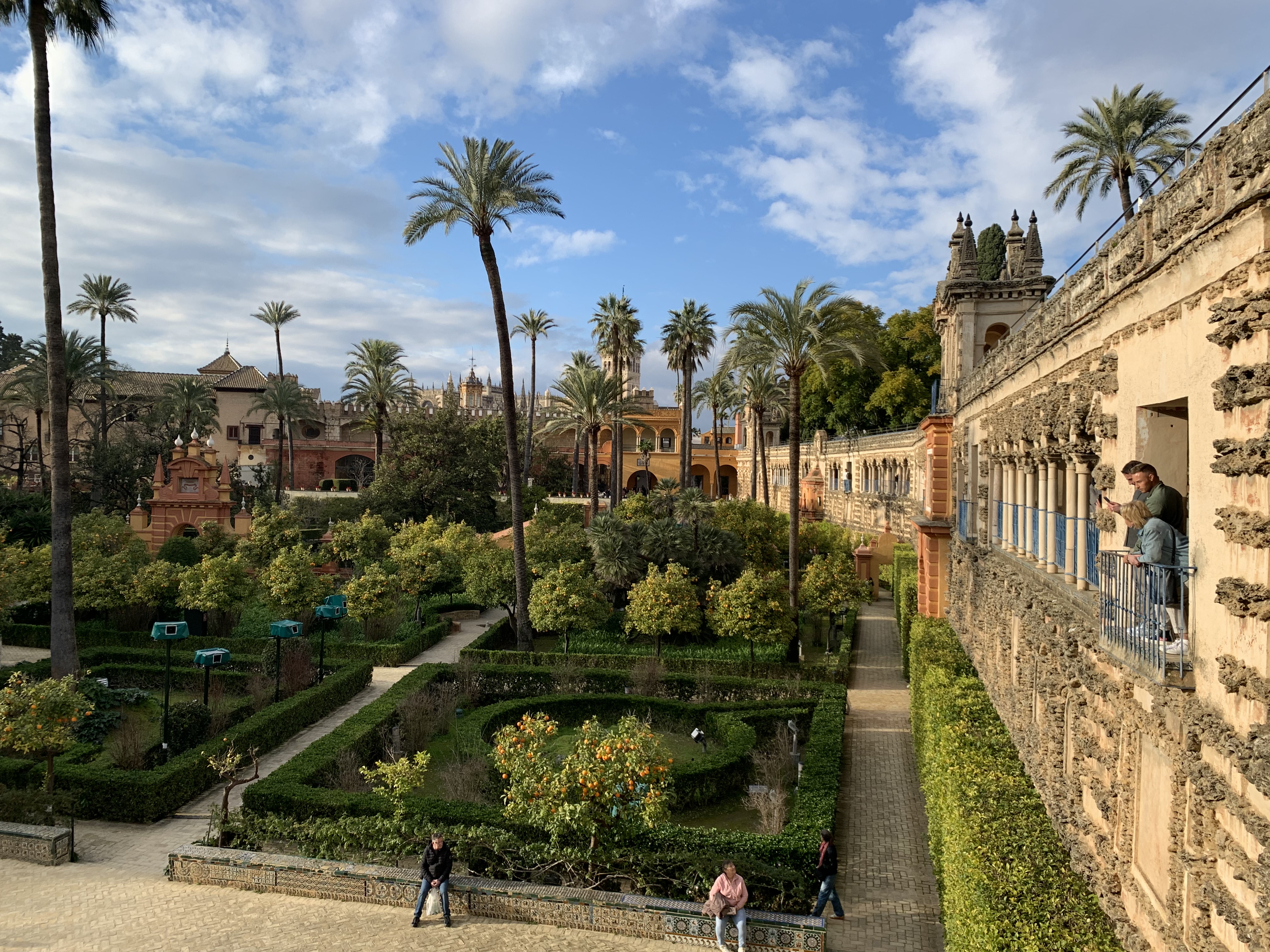
Until I got to the Gardens. They are designed for quiet contemplation and serve their purpose very well.

Gardens and grotto wall.
The gardens of the Alcazar and the Grotto wall

I can only imagine how beautiful these gardens are in the spring. With the orange trees, walkways, peacocks, fountains, they are the epitome of something out of the Arabian Nights. In the spring, you’d have the smell of blossoms too. The feast would surely go to your head and render you incapable of doing anything else except to luxuriate in your senses.

But with the setting sun, it was time for another Taberna and more “pescalitos fritos,” the tiny fried fish that are a specialty of Andalusia. Perfect to usher in nightfall and plan the next venue.

Our youngest son had told us about an authentic place to see/hear/experience Flamenco. La Carboniera is well-hidden, and, by the time we got there, packed. We were definitely the most senior residents. The Sangria was flowing and we shared a jug with a couple of fellow travellers, who shared their olives and cheeses. But when the Flamenco started, we were silenced and dumbstruck. Stories were told between the guitar, singer and dancer. It was alive and thriving and essential. Everyone in the room was drawn together into the heart of the guitar, voice and movement.

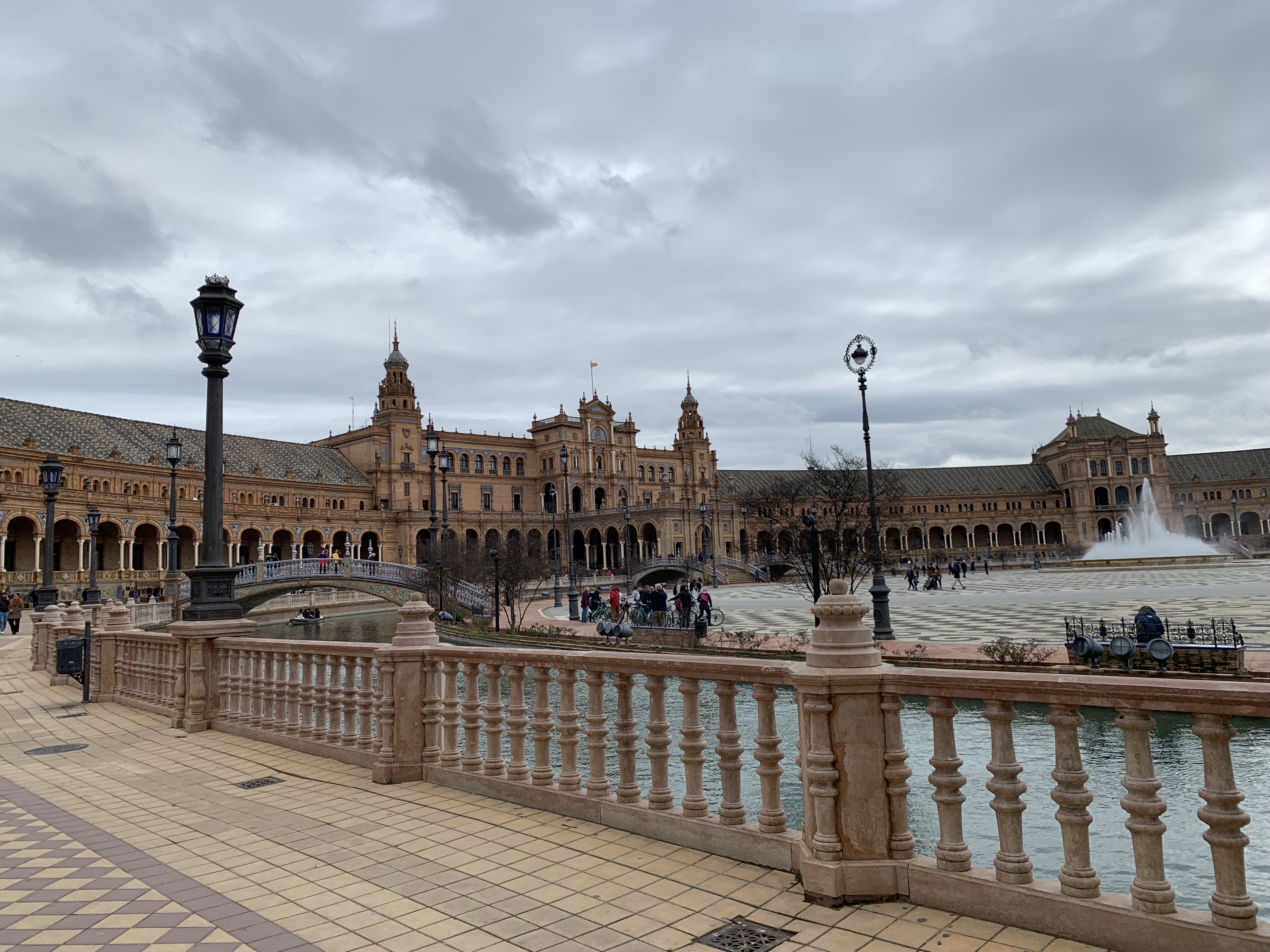
The next day was overcast and we spent a large part of it wandering in the Maria Luisa Park and exploring the astonishing Plaza España, which was created for the 1923 Expo.

facade
La Plaza España

There are tiled banquettes dedicated to each of the 49 Spanish provinces. I want to take a pilgrimage to each and every one. Because I suspect there will be equal surprises to discover…

Banquette for Barcelona

In the afternoon we braved the Cathedral and La Giralda.

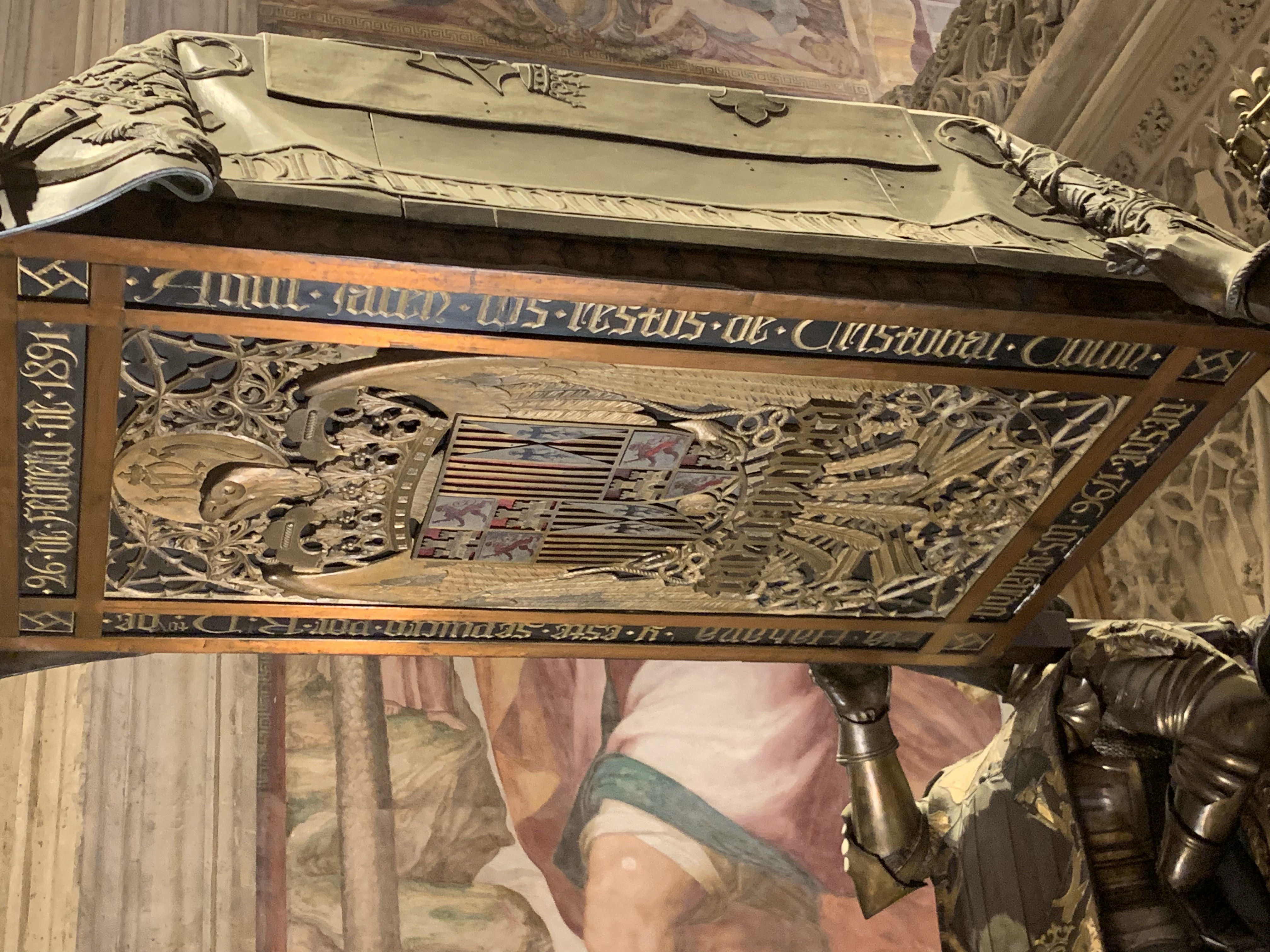
The Seville Cathedral is immense, built to impress. It’s one of the largest and most ornate Cathedrals in the world. Spain struck it rich in “the Indes,” and there is an appropriately lavish tomb in the Cathedral for the founder of the feast, Christopher Columbus.

The base of the tomb of Christopher Columbus. A plaque tells you that his remains have been authenticated.

With their new found wealth, the Spanish nobles turned their attention to hiring the finest architects, builders, carvers and artists in Europe. The Cathedral blends the civilization of the Almohads (the North African Berber Muslim empire that ruled Al-Andalus and created the original Alcazar palace) with the Spanish Reconquista (the Spanish Christians who fought to claim the Iberian peninsula). To this day, the Cathedral remains a central place of worship for Catholics where “The synthesis of faith, liturgy and art helps us to encounter the Invisible God through the visible.” (Archbishop D. Jose Angel Saiz Meneses)  

Although much of the architecture is influenced by the Almohads, most of the original Mosque on the site was destroyed. All that is left is La Giralda, the old minaret, which was converted into a bell tower in the Renaissance and crowned with a bronze statue/ weathervane inspired by the image of Pallas Athena.

La Giralda

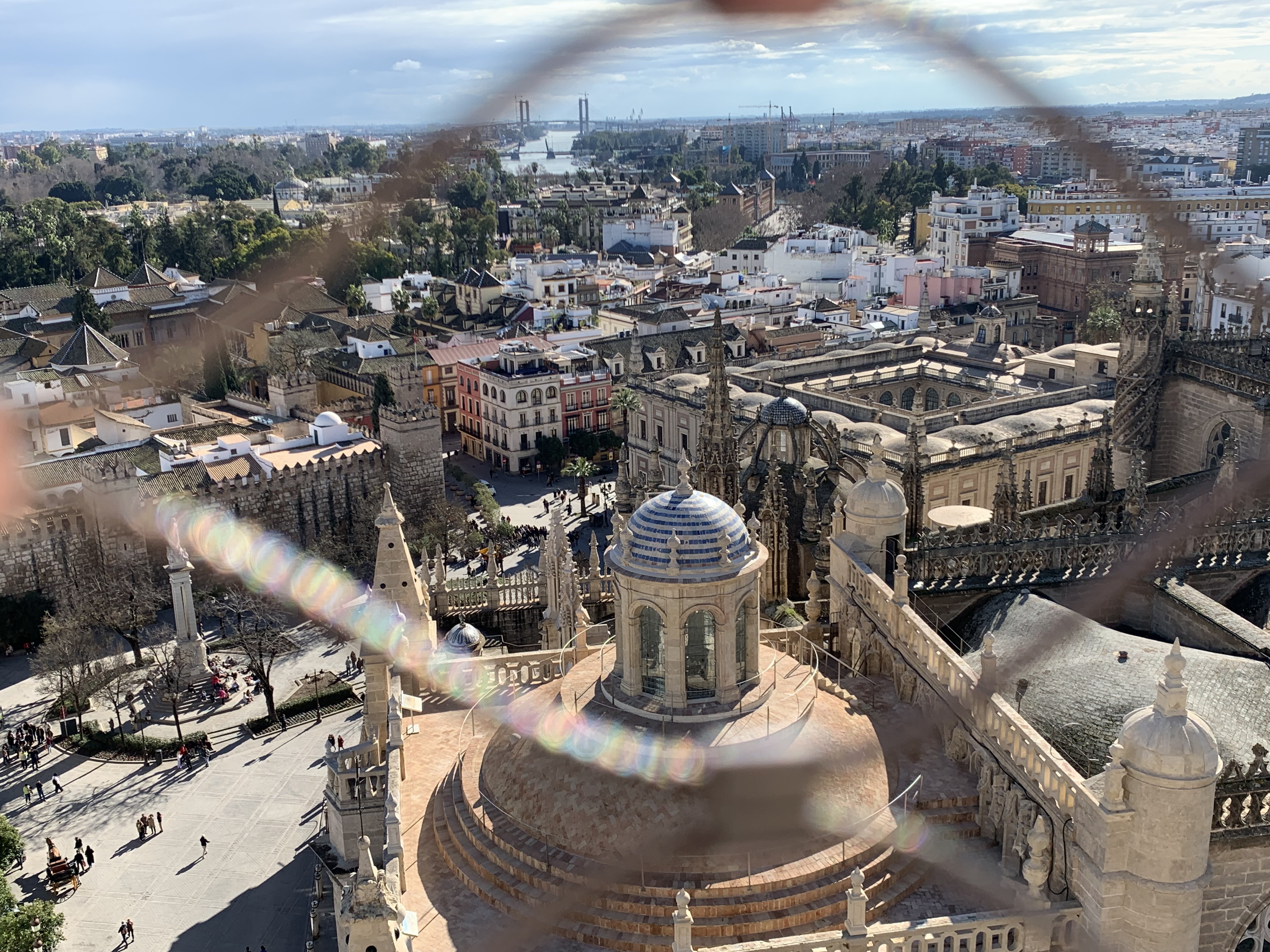
We braved the climb up all 36 stories to get to the top for a view of the city below. So much still to discover.  

View from the top of the city to the plaza below.
Looking down from La Girlada to the Cathedral.

We celebrated our time in Sevilla with a traditional Valencia Paella (Tim, who makes brilliant Paella, was on a quest to try as many different ones as he could), limped our way back to the apartment, and bid a sad farewell to the grandeur and beauty of Sevilla.

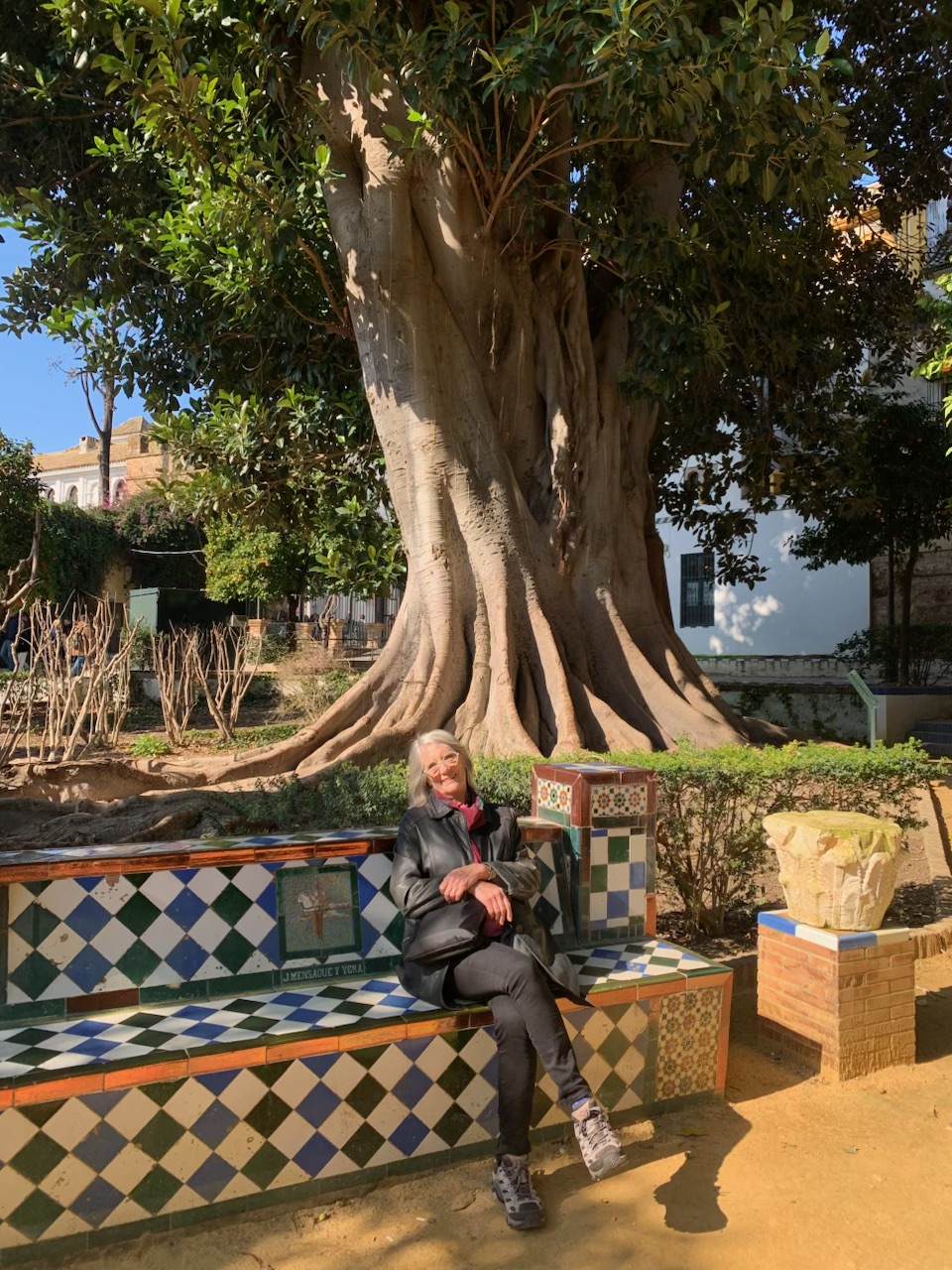
Person sitting on a tiled bench under a large tree

Learning to See Again

There’s that glorious feeling when you’ve been on a plane all night and you arrive in a different climate and time zone. When you stretch out your legs and everything is new.

We fled January in Canada and landed in Madrid.

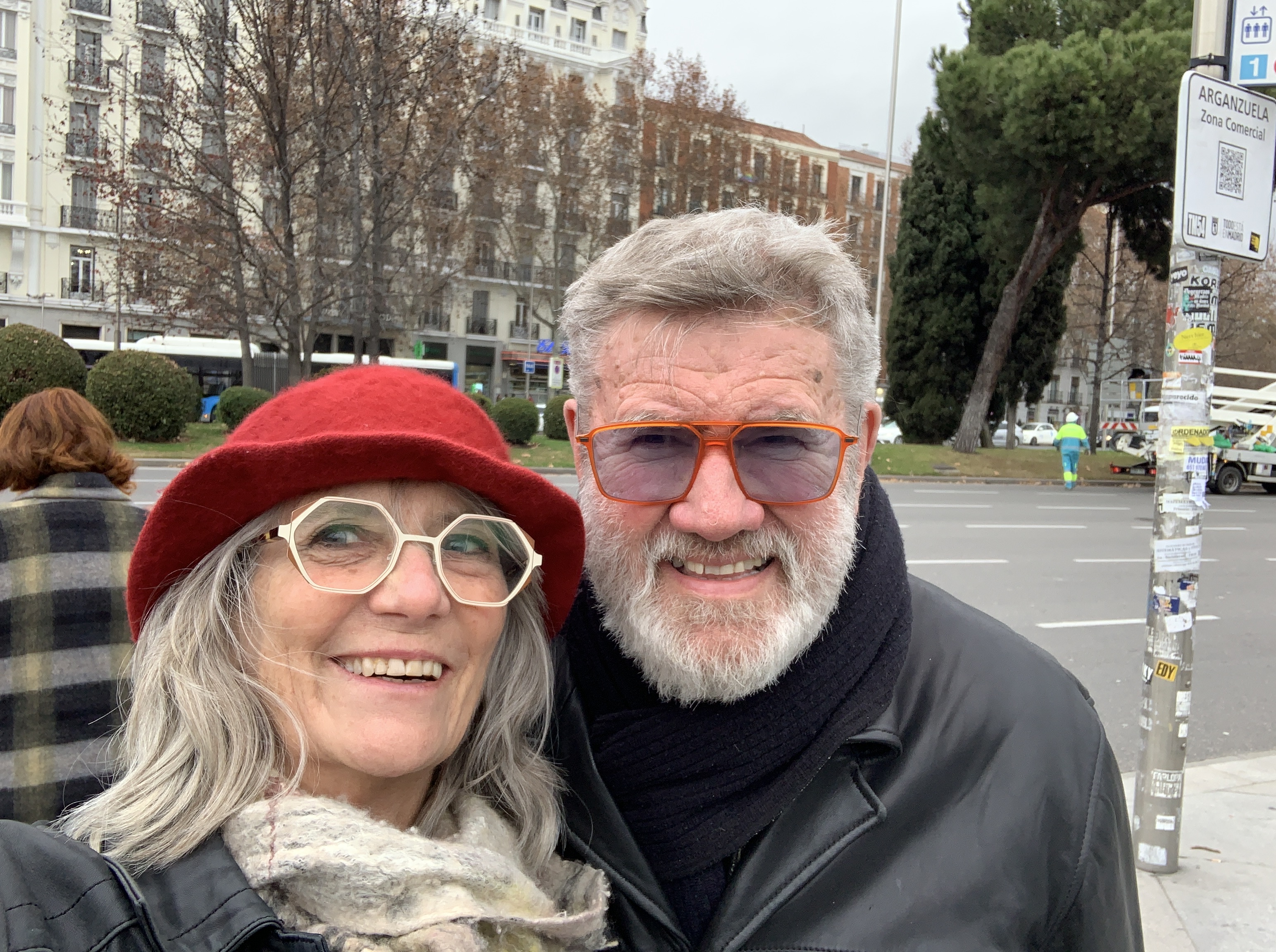
Amanda and Tim on a street in Madrid with the Hotel Mediodia in the background
Arriving in Madrid. The Hotel Mediodia in the background.

Our sole focus for going to Madrid was to go to El Prado, La Reina Sofia, and, if we could manage it, the Thyssen-Bornemisza –– iconic art galleries that have captured our imaginations for years but where we had never been. A first stage of the “input” journey. Open your eyes and see.

We had booked ourselves into the Hotel Mediodia. It is easy walking distance from there to all three galleries. We arrived before we could check in so, after the all-night flight, we blearily dropped our bags, had a breakfast of Spanish tortilla and patas bravas, and headed out to investigate. There’s that glorious feeling when you’ve been on a plane all night and you arrive in a different climate and time zone. When you stretch out your legs and everything is new. Everything stands in sharp relief, waiting to be noticed. Birds, streetlights, sculptures, building cornices, edges of park paths –– everything is there, waiting for you to see it.

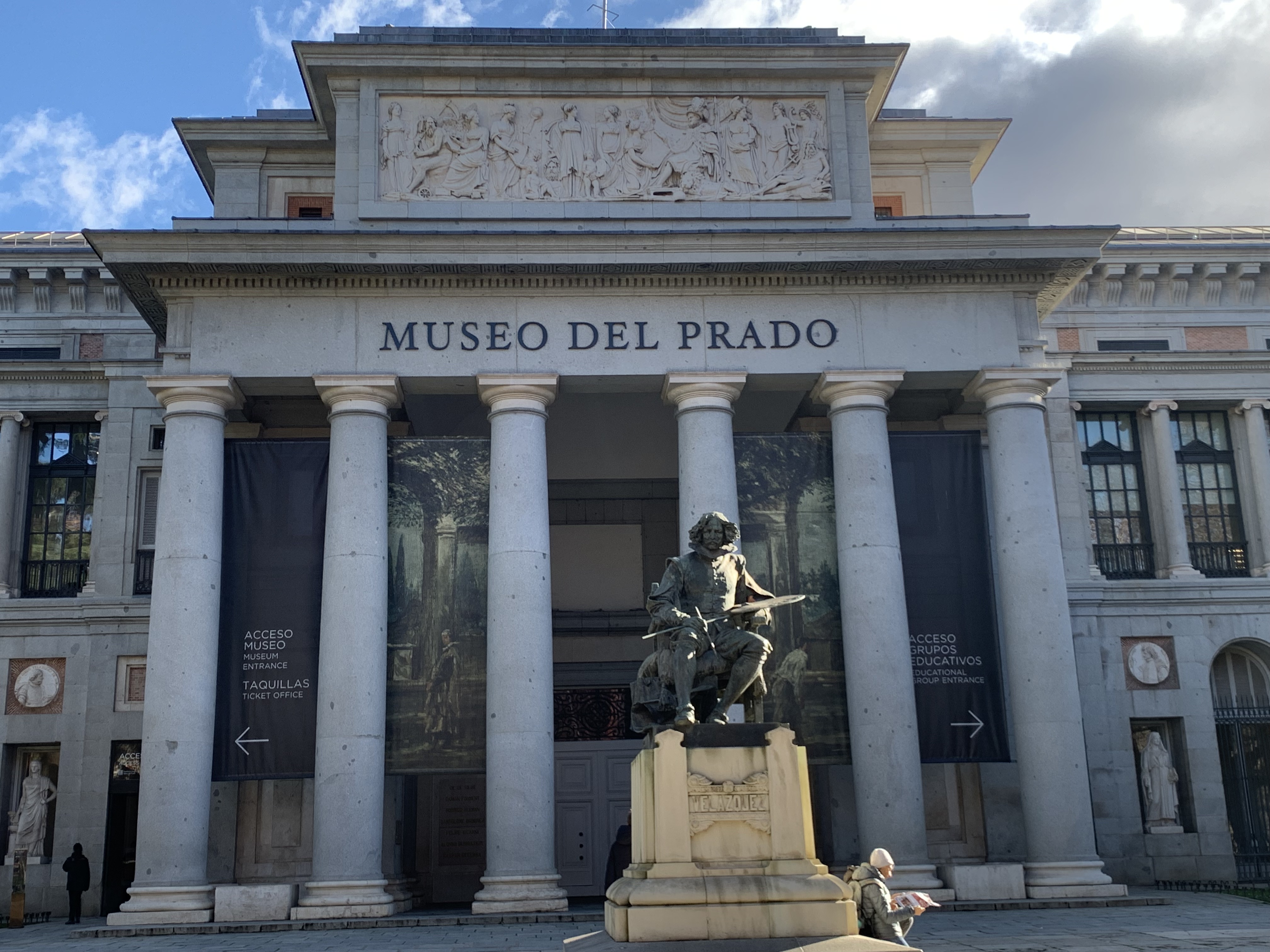
Museo Del Prado with a statue of Velasquez in front
Museo Del Prado

We wound our way to El Prado. Our thought was to just get the lay of the land and figure out where everything was. But when we got there, we were caught up in the idea of it all. We realized it was going to be too much to see in any given day, so we might as well start then, right away, and dive in. We decided to take a group tour to get a sense of the place. It was perfect. We were dazed but delighted by the information and surprises. Tim, who has a BFA and MFA in Visual Arts, said he learned things on the 90-minute tour that he never learned in seven years of art school.

The Prado. What can one say?  I geared myself to Spanish history and Spanish painters. I felt as though I was trying to suck it in all into my body, to bring the reality of this “old” world into my understanding. I began to fully appreciate the importance of the Spanish court and the fact that they sent Columbus out onto the sea with three ships and changed the course of human history.

We spent most of that first day the Prado, interrupted only by the need, eventually, to sleep and then to eat again. We found a welcoming Taberna, where the wine was cheap and the food excellent.

Well rested and with only slight cases of jet lag, we immersed ourselves in the Prado again the next day. Already, it felt like an old friend. We shared new-found favourites with each other (we travel separately in galleries) and went more deeply into Velasquez and Goya in particular. The breadth of Goya’s work, his journey from traditional to madness, was a window into intense creativity. Beauty, pain, passion. Inquiry, pride, politics.

Foot weary, we left, knowing that there will always be more. But needing to rest before navigating La Reina Sofia.

La Reina Sofia was almost too much to take. Seeing Guernica surrounded by rooms of war posters and art, gave it even more context. Especially now, as wars rage and refugees flee, Guernica and the “Prop-art” are even more vibrant, and all too familiar.

But what struck me most was an exhibition called “In the Troubled air,” a line from Federico García Lorca’s poem  Romancero gitano: “En la aire conmovido…” The curator has assembled many different pieces, different media, to explore the idea of the effect of the the movement of “air”, both in terms of atmospheric movement, emotion, and politics. From the website:

“ ‘In the troubled air’ sets forth a political anthropology of emotion in a poetic tone, sketching channels of respiration and resistance to confront the persuasive culture of capitalism which has filtered into everything…

For me, this became a theme for my whole time in Spain. A place where emotion and politics coalesce. The percussive elements of sound and movements of all kinds. It paved the way to opening up my eyes, ears, heart, and mind to Flamenco, and seeing it as a political statement. But that was still several days away…

Our last day in Madrid was sunny and cool. We walked up to the Puerta del Sol, the heart of the city. All roads lead there. All protests form there. But the square itself was a disappointment of higher end chain stores where rectangular architecture meets capitalism. We were glad to find the Museo Thyssen-Bornemisza close by, surprised to find it the perfect compliment to the day. A beautifully designed building filled with art from the 16th century to contemporary. Art to fall in love with. Art that leads you back to life. With all of the horror in the world (and we are currently going through our fair share), the art at the Thyssen-Bornemisza leads you back to humans and their wisdom and passion. How unique and extraordinary it is that humans struggle to understand life, and that we work to express something about being human in order to help us to see who we are.

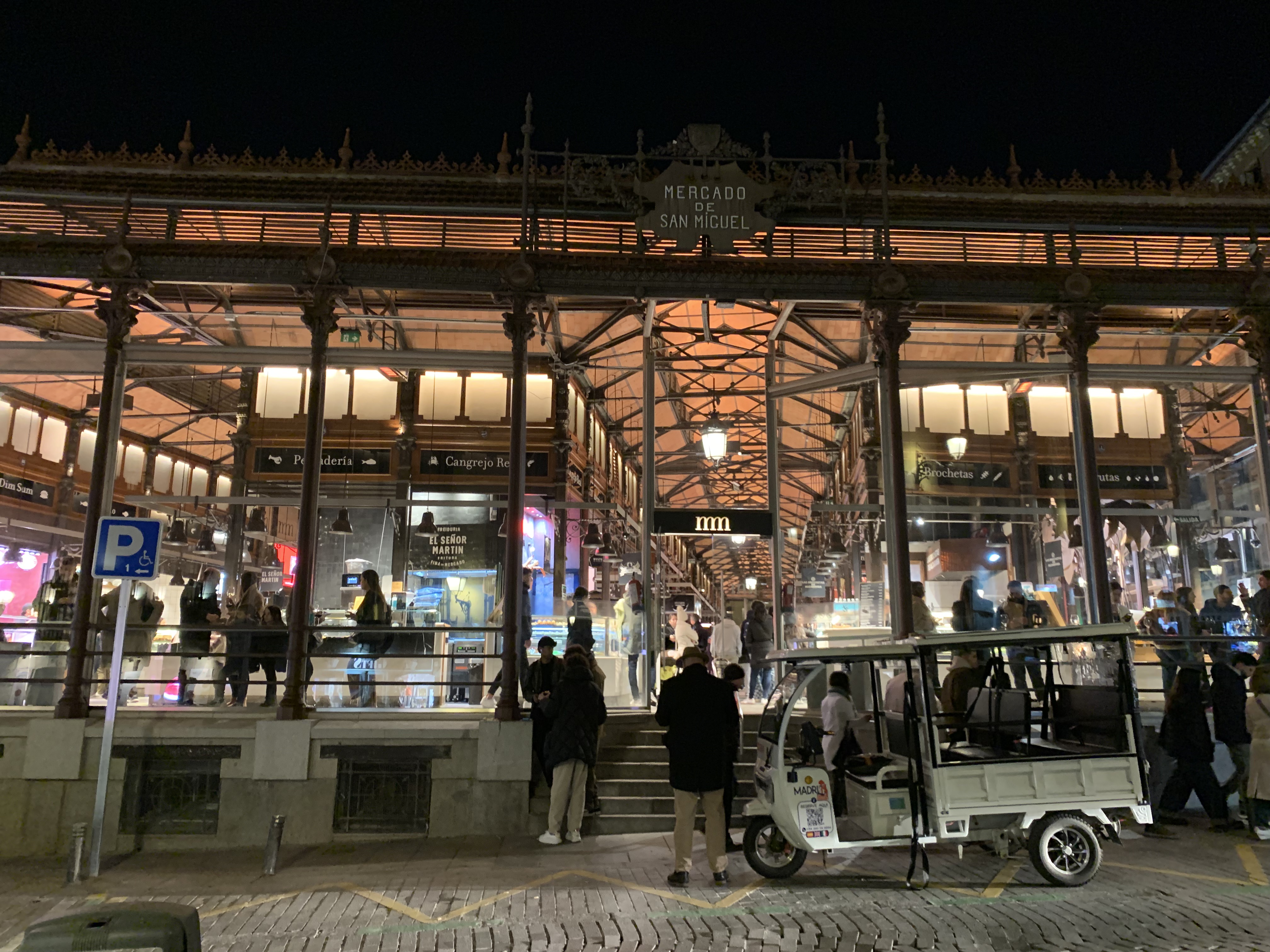
Our last wonderful event in Madrid was a walk to the Mercado San Miguel, where we feasted on art for the other senses.

Mercado San Miguel

The Mercado San Miguel is a covered market filled with tapas stalls of all kinds. We got glasses of chilled white wine and walked around tasting and sampling. I discovered the joys of a “Gilda,” a Basque tapas on a skewer with cheese (in this case a soft lovely cheese that absorbed all flavours), anchovy, pickled Iberian peppers and olives. Spanish olives really are like none other. I stood happily indulging in as many different kinds of olives as I could manage.

We ended the night at a table out on the street, eating Paella under the stars, watching people living their lives.

Feasts for all of the senses.