Entering the world of the lagoon

Even in January, Venice is filled with tourists. While the Piazza San Marco holds architectural wonders, we wanted to continue to enjoy the quiet nooks of Venice wherever possible.
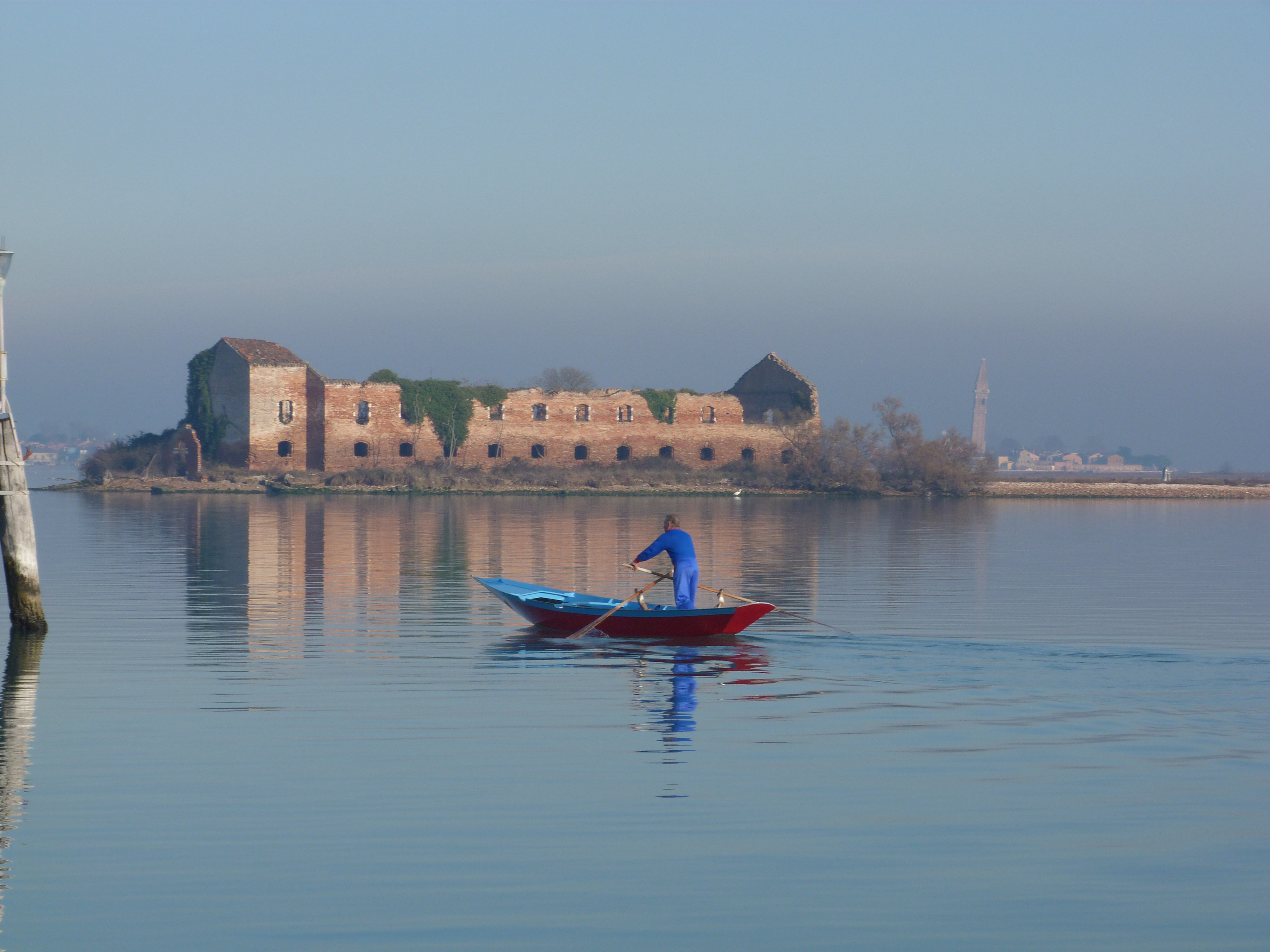
Deserted islands in the lagoon

The Venetian lagoon, at 520 square kilometers, is the world’s largest wetland. The islands are mostly empty, sporting bits of crumbling masonry from centuries gone by. They are used by the local population for picnics and for fishing. But there are a few islands where people live and one very important island for the dead.

We started the day on Cimitero di San Michele, the cemetery island.
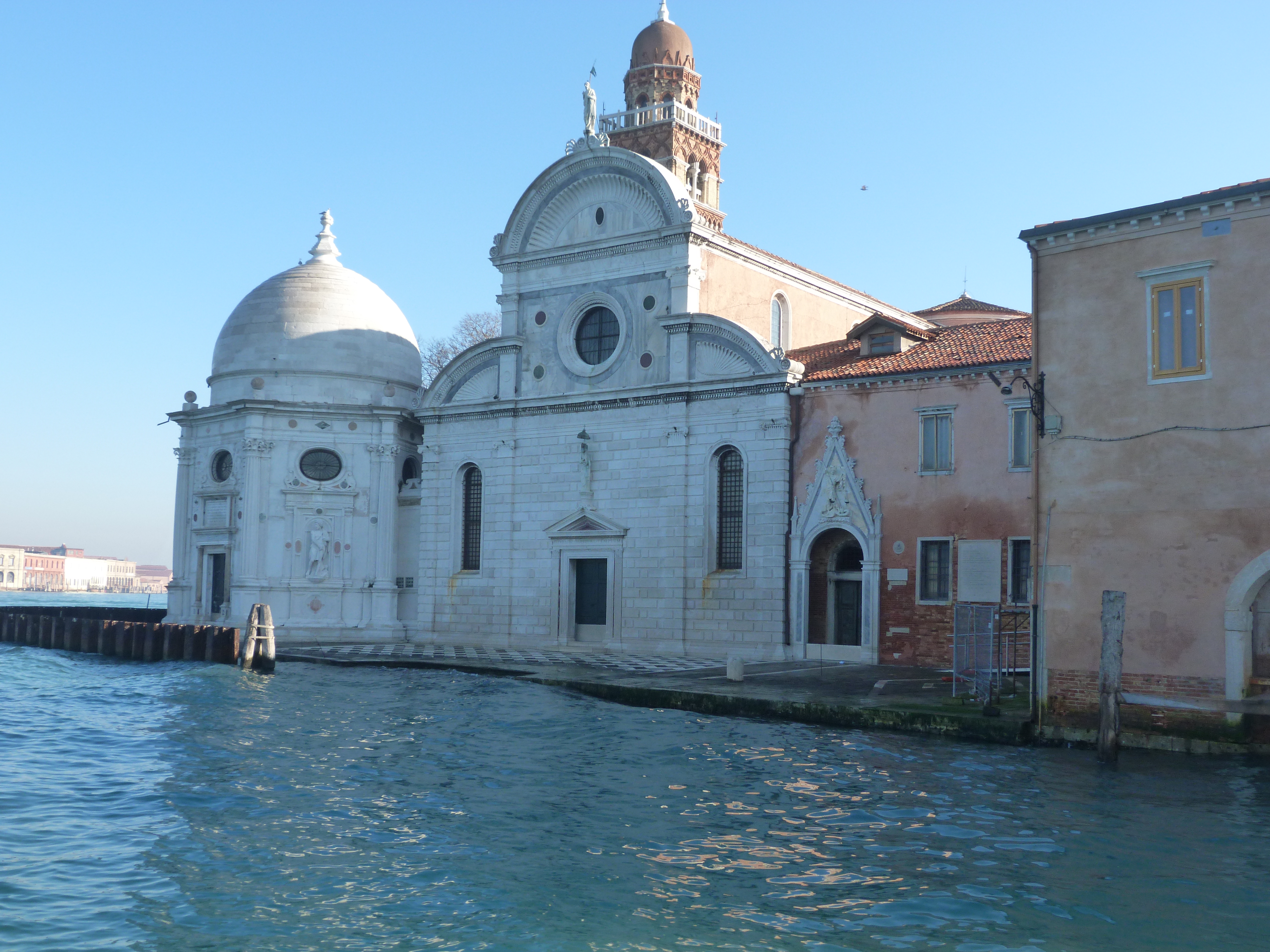
The church of San Michele in Isola
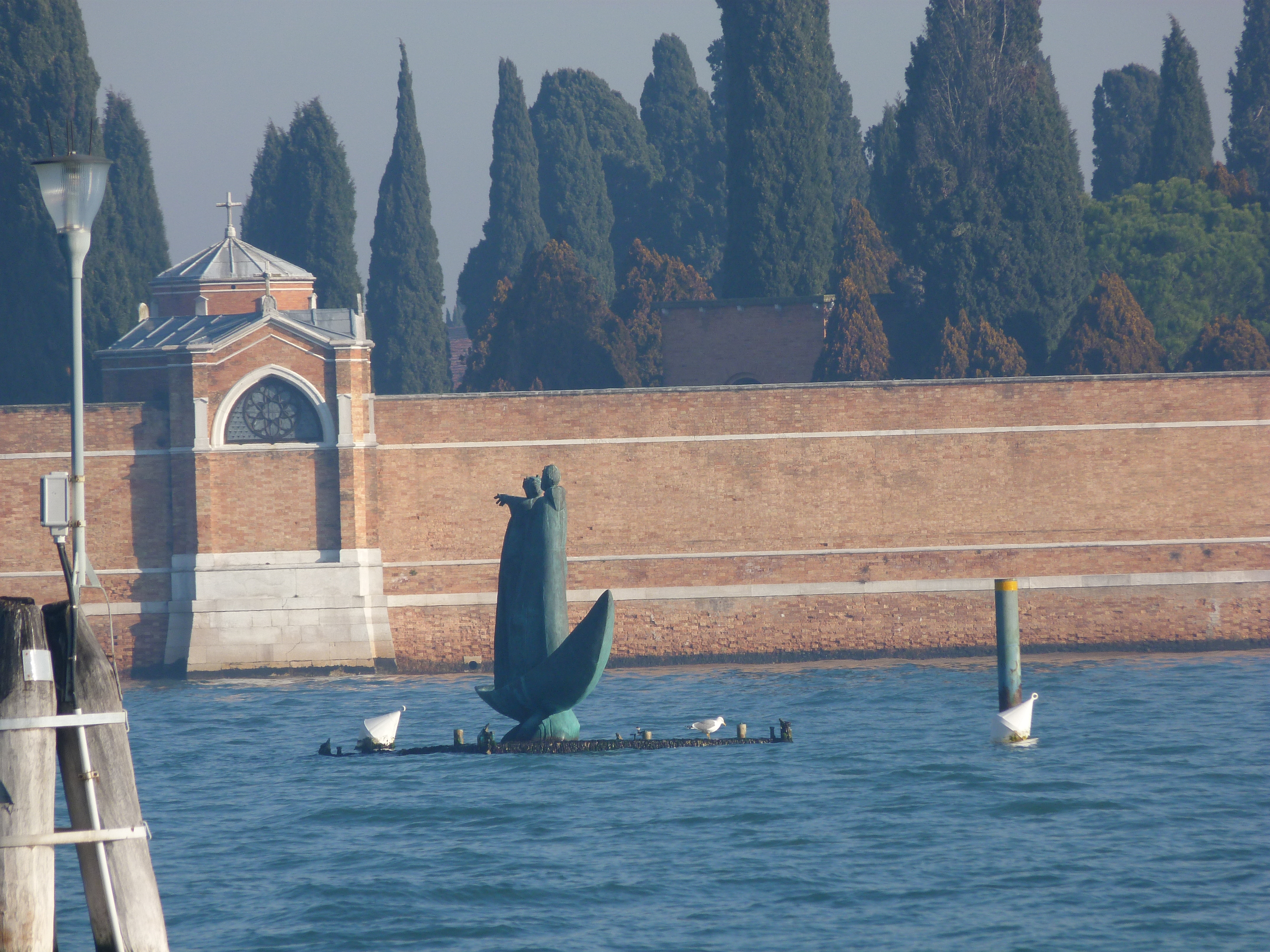
Cimitero di San Michele, a sculpture of the dead being ferried to the island in a gondola

The Roman Catholic church of San Michele in Isola was built on the island in 1469, on the site of an older church and in 1807, during the French occupation, the island was selected as the site for the city’s cemetery. Napoleon had decreed that it was unsanitary to have a cemetery within the city boundaries, so all cities had to move their burials plots outside of the city walls.

It is a beautiful and peaceful place, with tall cypress trees and large topiaries. There are different sections – the sad children’s section, the Greeks and Protestants, the war veterans, the gondoliers. There were fresh flowers on many of the graves, and we shared the early morning boat with Venetians paying their respects. Cimitero di San Michele is the final resting place for a number of famous people who died in Venice, including Igor Stravinsky and Sergei Diaghilev.
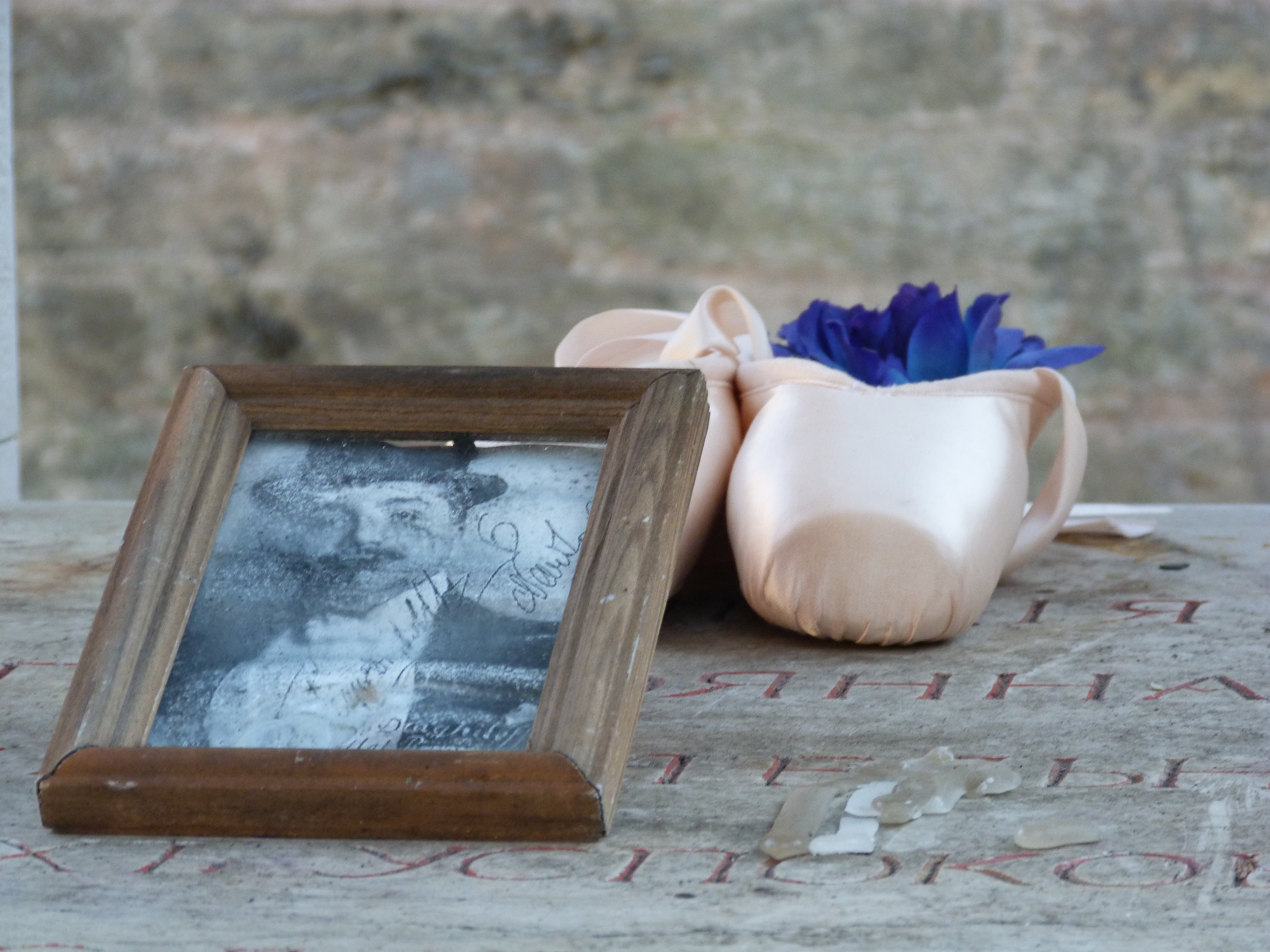
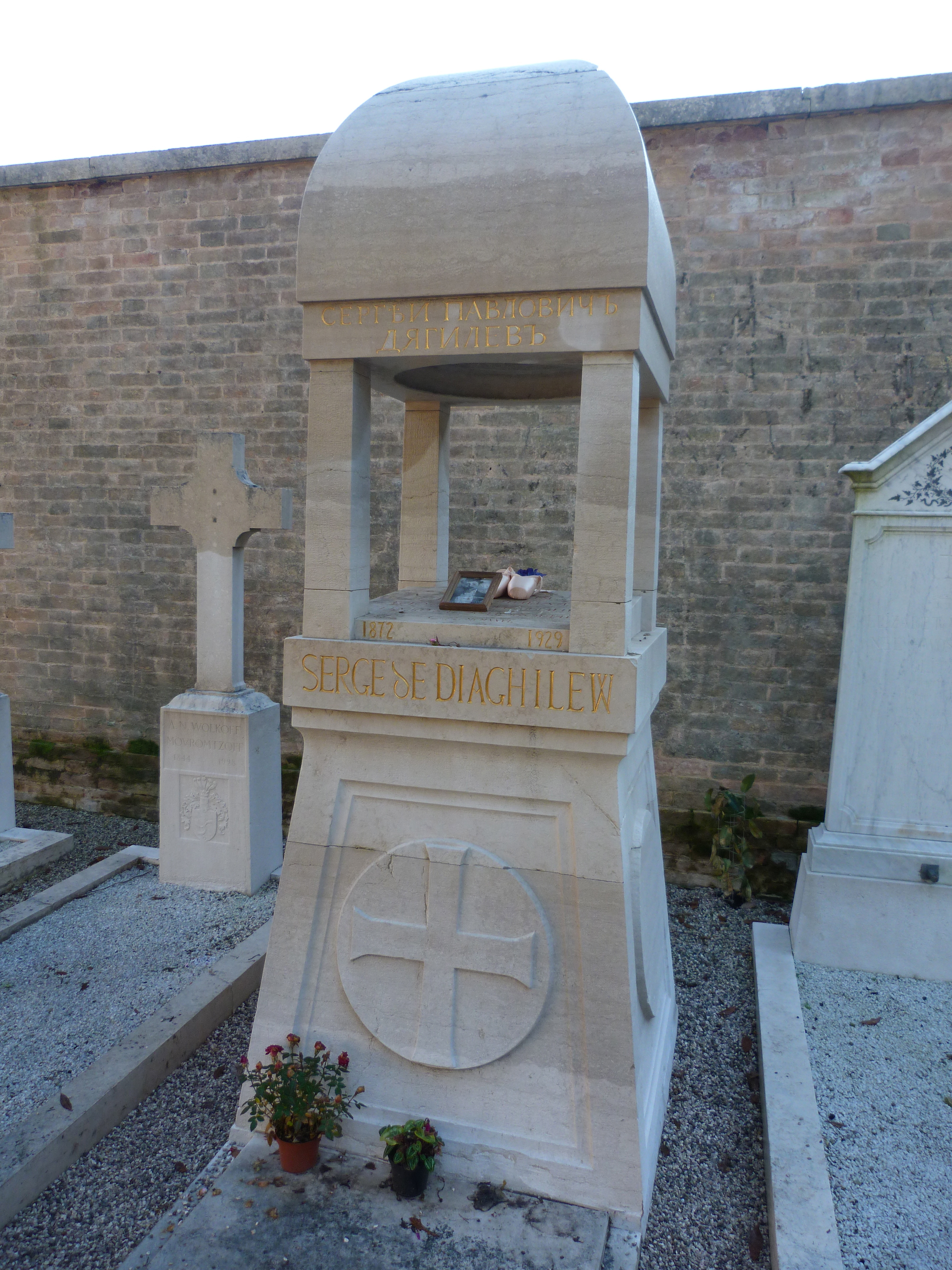
Photo and pointe shoes on Diaghilev's tomb
Diaghilev's tomb

The pointe shoes on Diaghilev’s tomb were fresh and clean – clearly recently renewed.

From Cimitero, we took the boat to Murano, the glass island. In 1291, the Venetian’s decided to move all glass making production to the island of Murano, for fear of the effects of a possible fire from glass factories in the main city. The expertise of the craftsmen flourished and by the 16th & 17th centuries it was the world centre for glass production. Murano trained craftsmen were not permitted to leave the island – anyone doing so was proclaimed a traitor. Today, the island caters to the tourist trade, with tours of the glass blowing facilities and stores selling an overabundance of mass market glass beads and knick knacks. In and amongst these, however, there are still fine craftsmen, producing unique and collectable art.

Coming in the off-season, we were not harassed by glass salesmen and could enjoy walking around the island.

The Grand Canal in Murano

The Murano Grand Canal weaves lazily through the town. There’s a great museum on the history of glass, the Museo dell’Arte Vetrario, housed in the 17th century Palazzo Giustinian. With huge glass chandeliers, a great exhibit of early Roman glass, and fabulous contemporary pieces, the museum helped us to see past some of the tacky glass shops to the history and beauty of glass.

From Murano, we took the boat to the small island of Mazzorbo. Mazzorbo has no claim to fame, other than to be a quiet and tranquil place to live. It was settled around the 10thcentury, but is not at all built up.
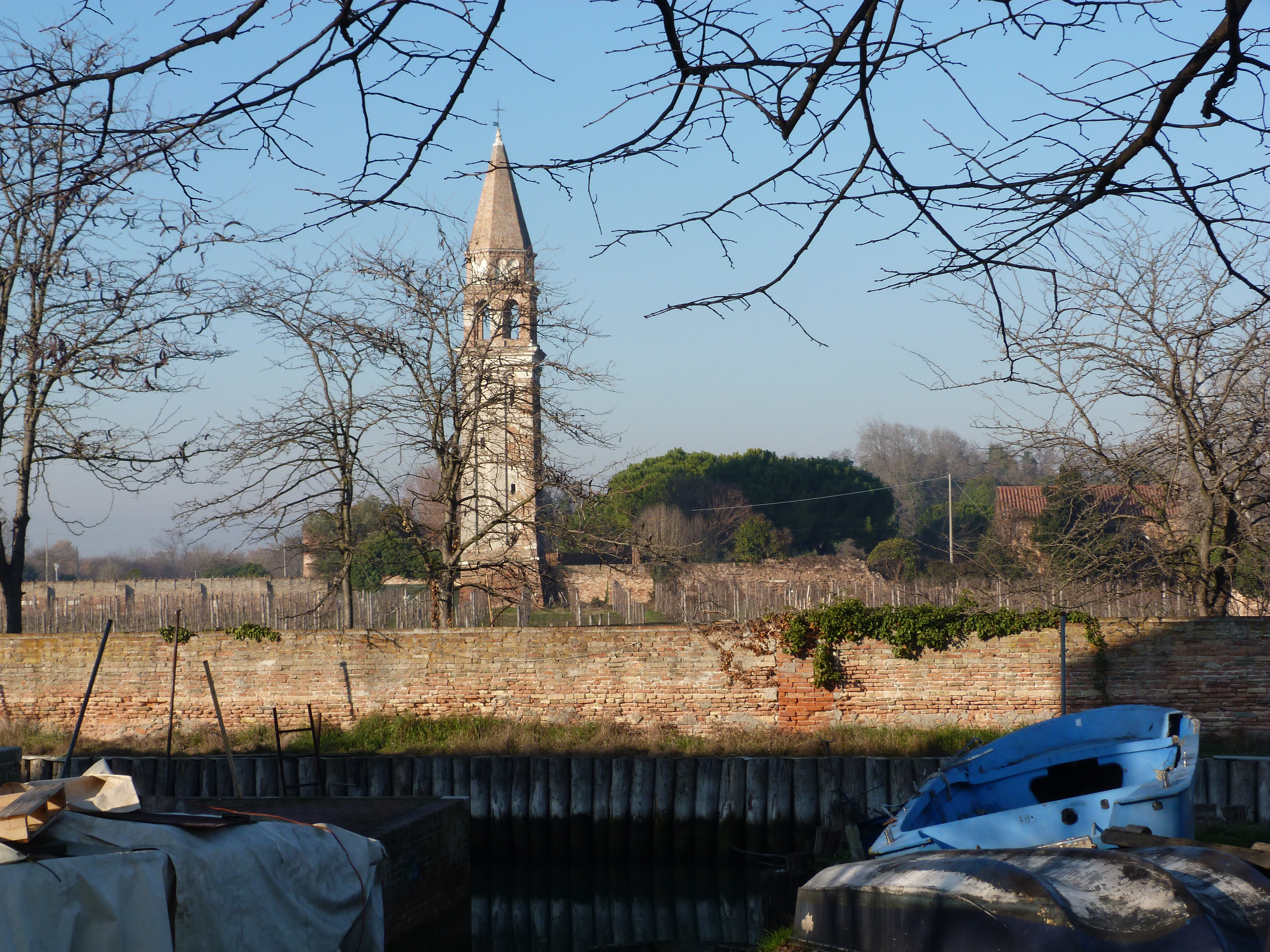
The quiet church of Santa Caterina on Mazzorbo

There are quiet garden plots, and little fishing boats. The 14th Century church of Santa Caterina still has its original bell, dating from 1318, making it one of the oldest in Europe. Apparently Winston Churchill, amongst many others, came here regularly to paint. Yet you can walk through Mazzorbo in about 10 minutes, cross the lovely wooden bridge and arrive at the island of Burano.

Burano is the lace island. It had a thriving lace industry in the 16th century, and an important lace making school in the 18thcentury, but today is mostly known for it’s colourful houses.
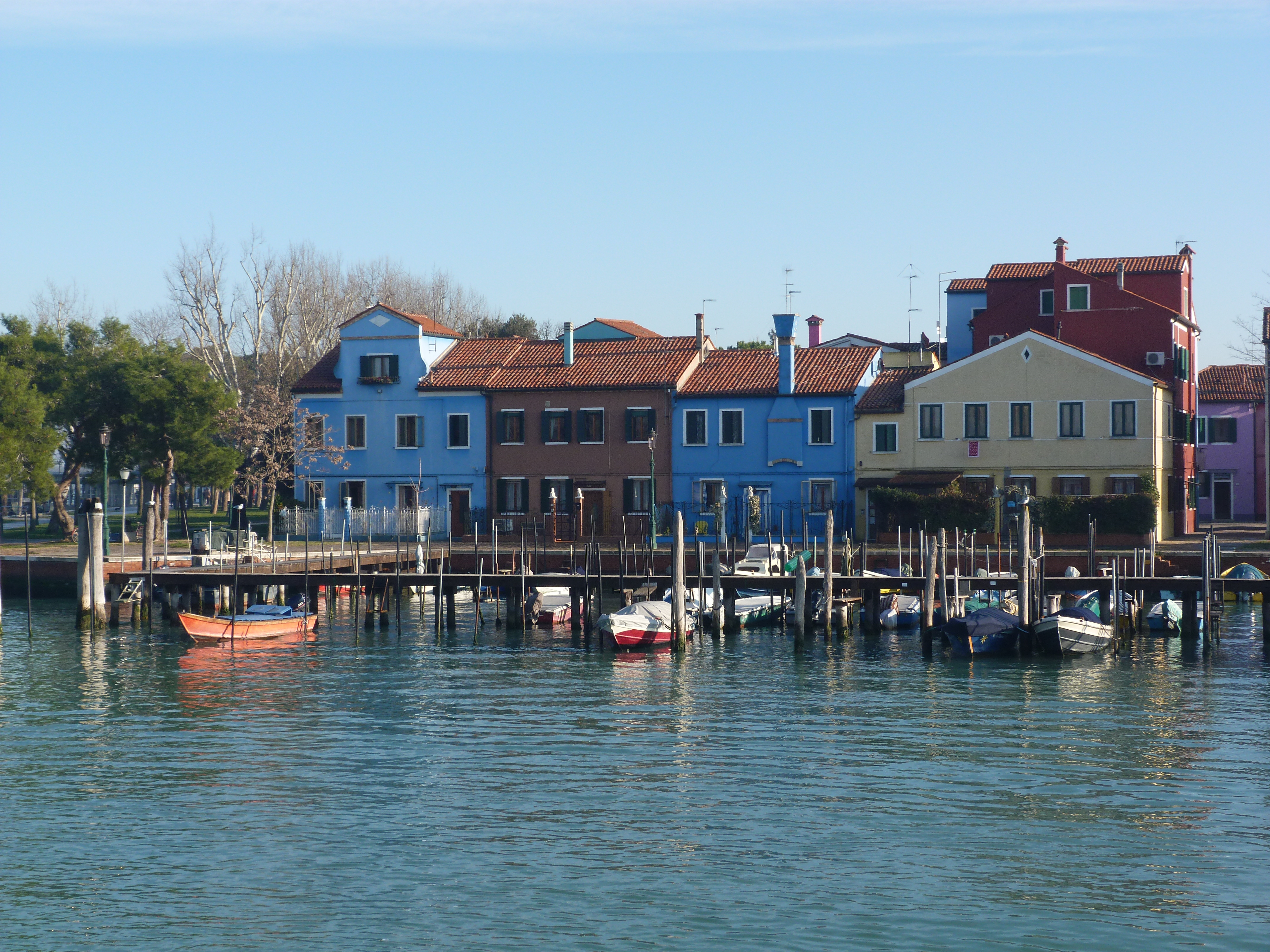
Looking from Mazzorbo to the colourful houses on Burano

The apocryphal story is that local fishermen all painted their houses bright colours so that they could see them from out in the lagoon. Apparently the colours are highly regulated now, and owners must apply to the local government to find out which colour they are permitted to paint. Because we were visiting in the off-season, the island was even quieter than normal.
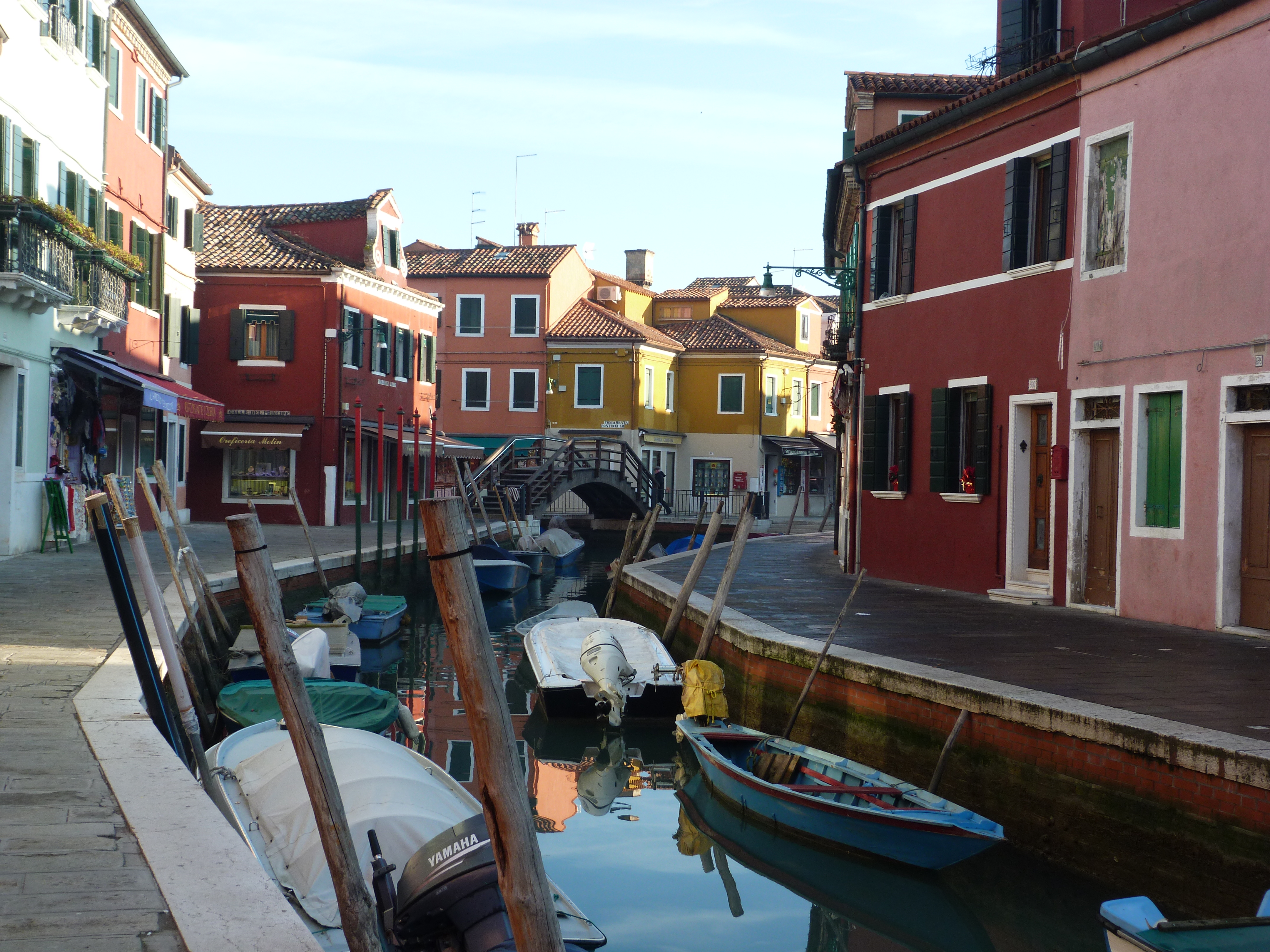
The colourful houses on the quiet canals of Burano

We found a great place to have some lunchtime pasta, but the charm of the island was mostly in the walking amidst such exuberant and vibrating colours.

From Burano we took the ferry to Torcello, said to be the birthplace of modern Venice.

Walking into quiet Torcello

It was founded in the 5th century by citizens of the town of Altino, fleeing from the mainland. In the 14thcentury there were 20,000 people living on the island. But it is the most boggy and marshy of the islands, and inhabitants suffered from the excessive mosquito population and thus plagues of malaria. Today the island is home to about 100 residents. In tourist season there are a couple of lovely places to eat, but when we arrived everything was closed and shuttered. It was late in the afternoon and we were just in time to enter the church of Santa Maria Assunta, one of the oldest and most beautiful of all the churches we saw in our time in Venice.
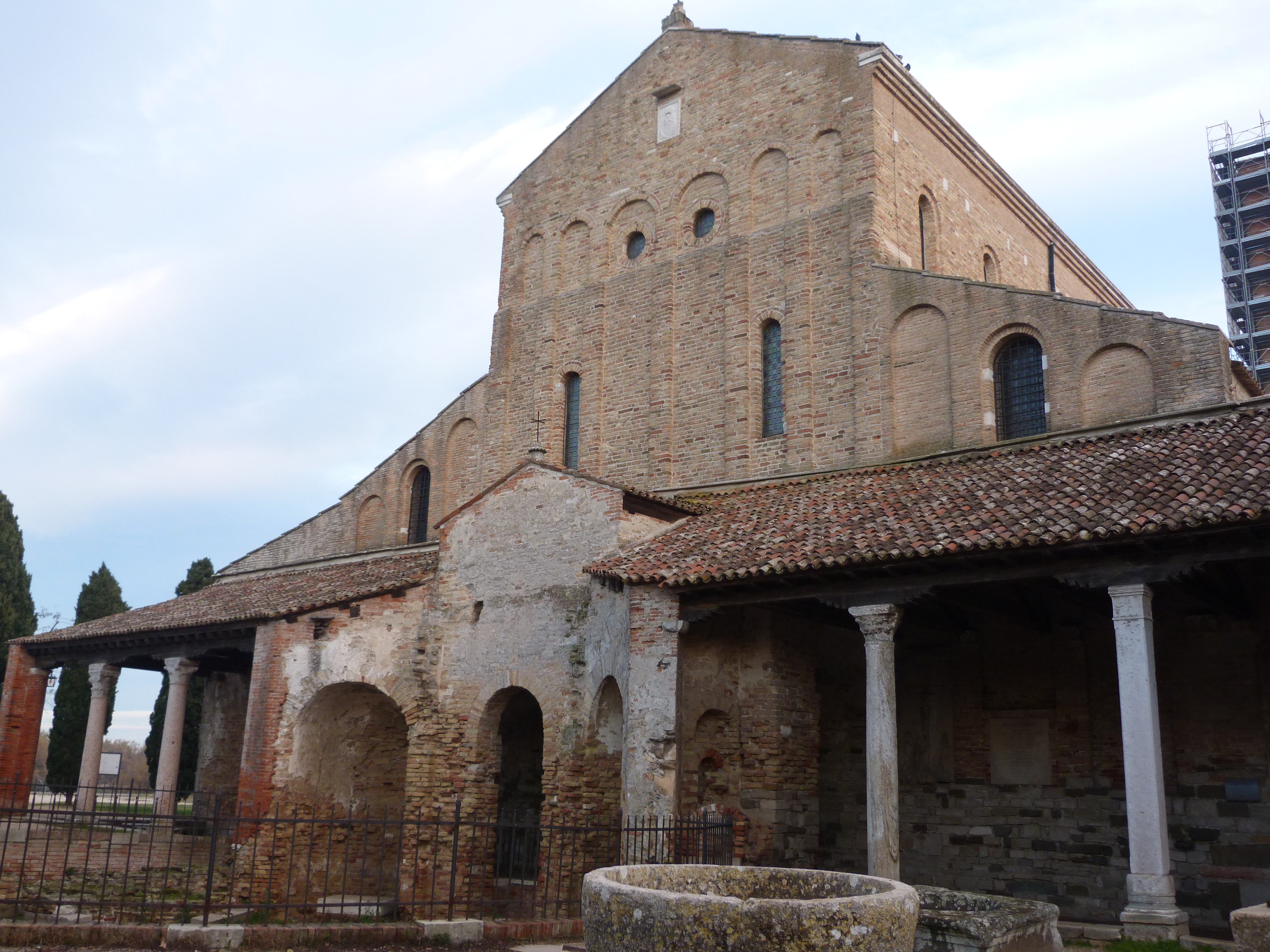
The church of Santa Maria Assunta

Santa Maria Assunta dates from 639 and has amazing floor, vault and wall mosaics dating from the 9th to the 12th century. A huge Romanesque/Byzantine wall mosaic of the Last Judgment covers one whole wall of the church and shows pictures of the blessed and damned, of heaven and hell. Sitting on the edge of a small, virtually deserted island, the church had a magical and spiritual feel that was stronger than all of the huge cathedrals in Venice combined.
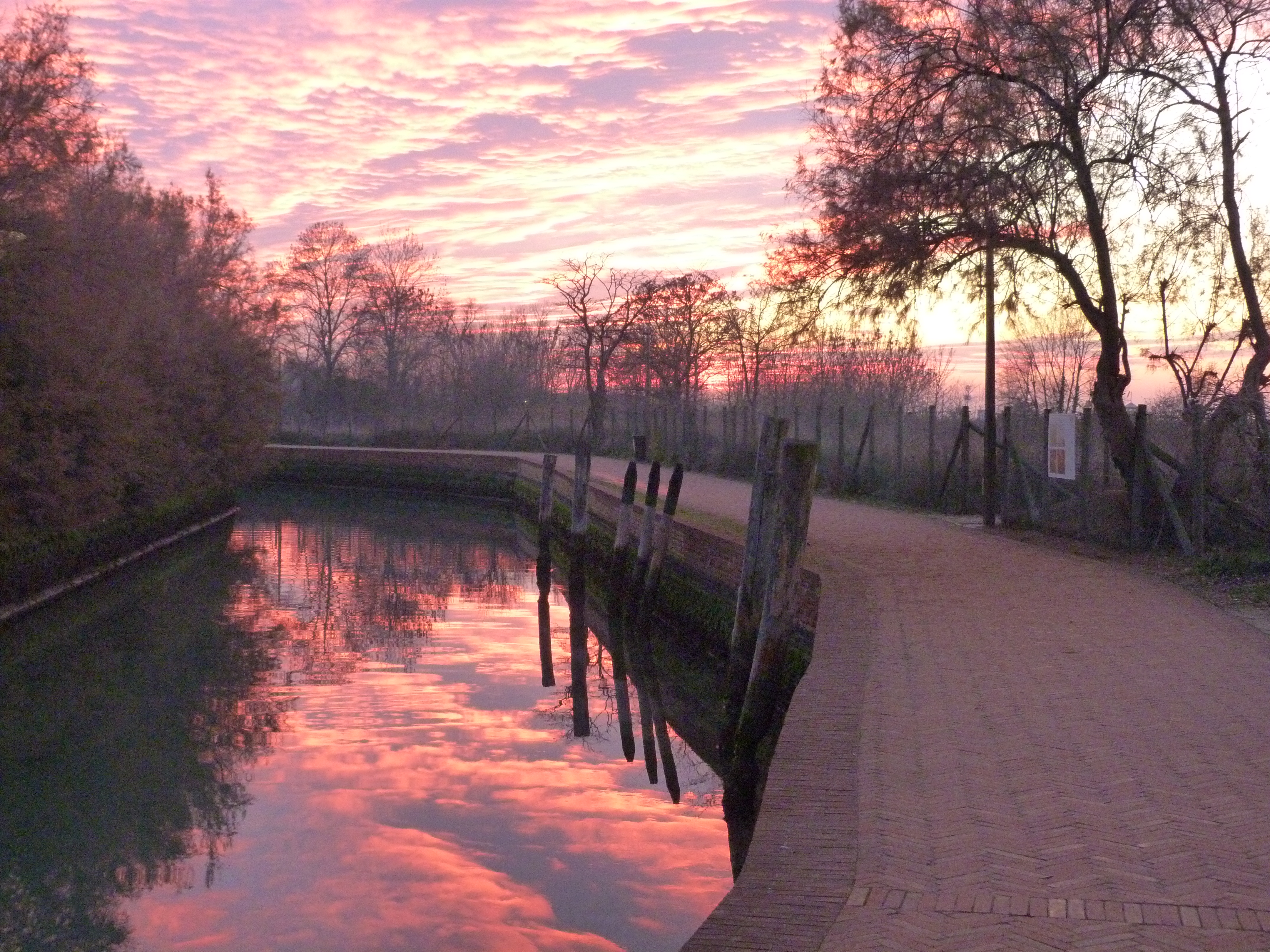
Sunset over the canal of Torcello

We walked back to the vaporetto dock into a magnificent sunset. We left the deep, murky mysteries of the lagoon and headed back on into the city, “the city of mirrors, the city of mirages, at once solid and liquid, at once air and stone.” –Erica Jong. We had travelled far.

“You may have the universe if I may have Italy.” –Giuseppe Verdi
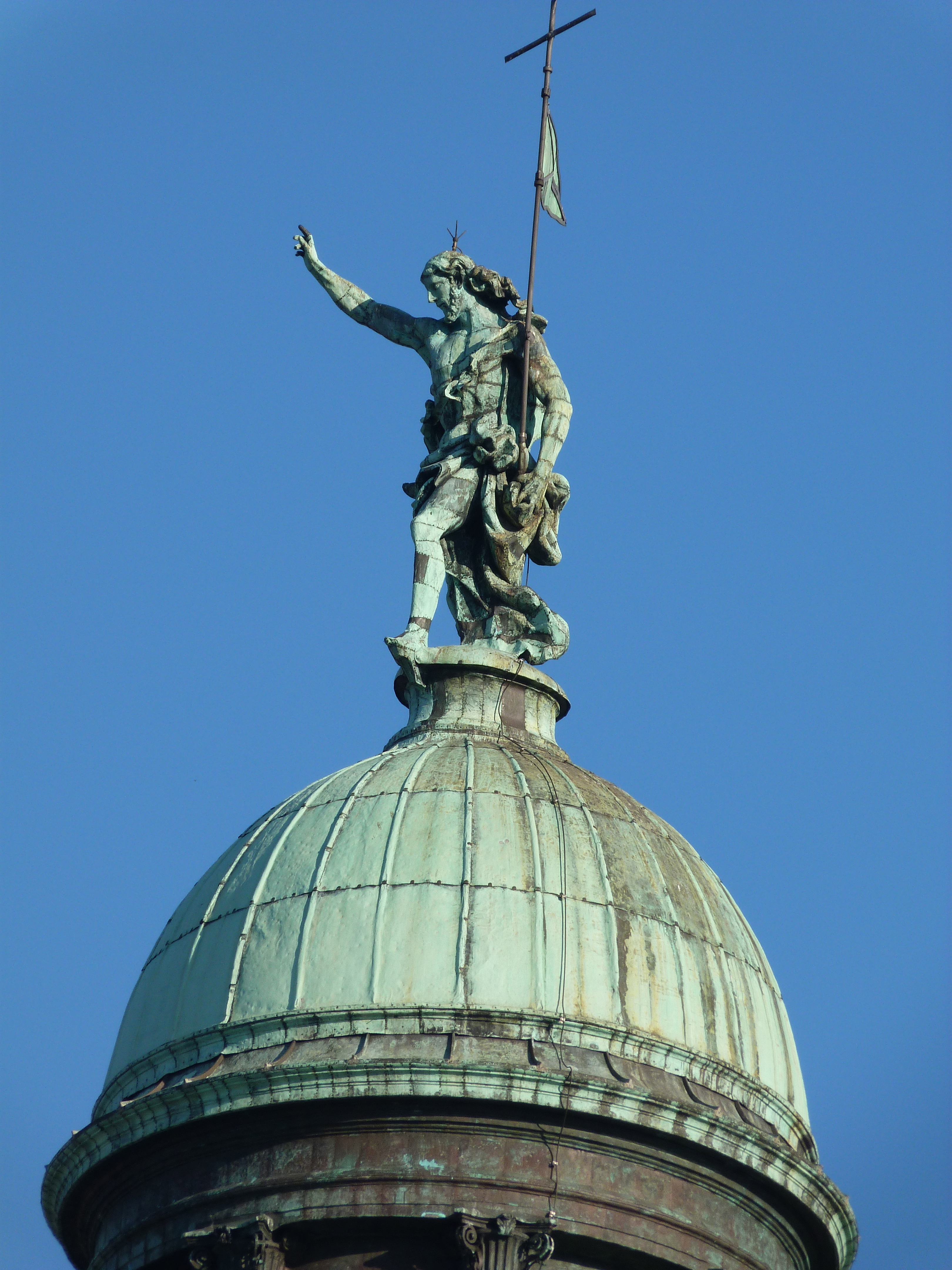
The shock of Venice

Welcome to Venice. Greeted by the church of San Simeone Piccolo

It is impossible to go to Venice without a preconceived vision. It must be the most painted, photographed, fictionalized and filmed city in the world. But it was still a shock. It was the most “foreign” experience I have ever had.

One knows that Venice in on the water. But I don’t think I had really understood what that meant. On another planet, in another universe, perhaps all cities are built on the water. Here on earth, there is only one.

The city of Venice is on a lagoon of 117 islands. While lagoon dwellers have lived there since the 10th century B.C., the impetus for modern day Venice began when people from northern Italy were fleeing Germanic and Hun invasions in the 4th century A.D. The early peoples brought wood from the forests of northern Italy and began the process of building on the lagoon and creating a unique world of interconnected islands. Their strategic position at the head of the Adriatic eventually gave the city naval and commercial supremacy and by the late 13th century, Venice was the richest city in all of Europe. It was ruled by the “Great Council”, made up of all of the leading Venetian families. They vied with each other to build the largest palazzos (palaces), decorated with the work of the greatest artists of their time.

But as with all empires, Venetian fortunes changed. Trade routes altered. Over a three-year period in the 16th century, the Black Death killed a third of Venice’s population. Venice would never have the same military force. But it has never lost its grace and beauty.

Today, the city relies on tourism to keep it afloat, quite literally. Over 50,000 tourists visit Venice per day. We were, again, very glad to be visiting in the off-season.

“Ask Venetians why they stay, nearly suffocated by mass tourism and rising water levels, and they will tell you that the tourists are supernumeraries, the acqua alta part of the scenery, and the play itself is still the greatest show on earth” (Time Out, Venice)

Of course, I love a good stage set. I love crumbling and fading beauty, where sculptures and painting are tucked in and around every façade. A world where attention is paid to every detail, and yet so little is kept in good repair.

And I love living in a city with no cars, where early morning deliveries are made by quiet barges skillfully maneuvered through narrow canals.

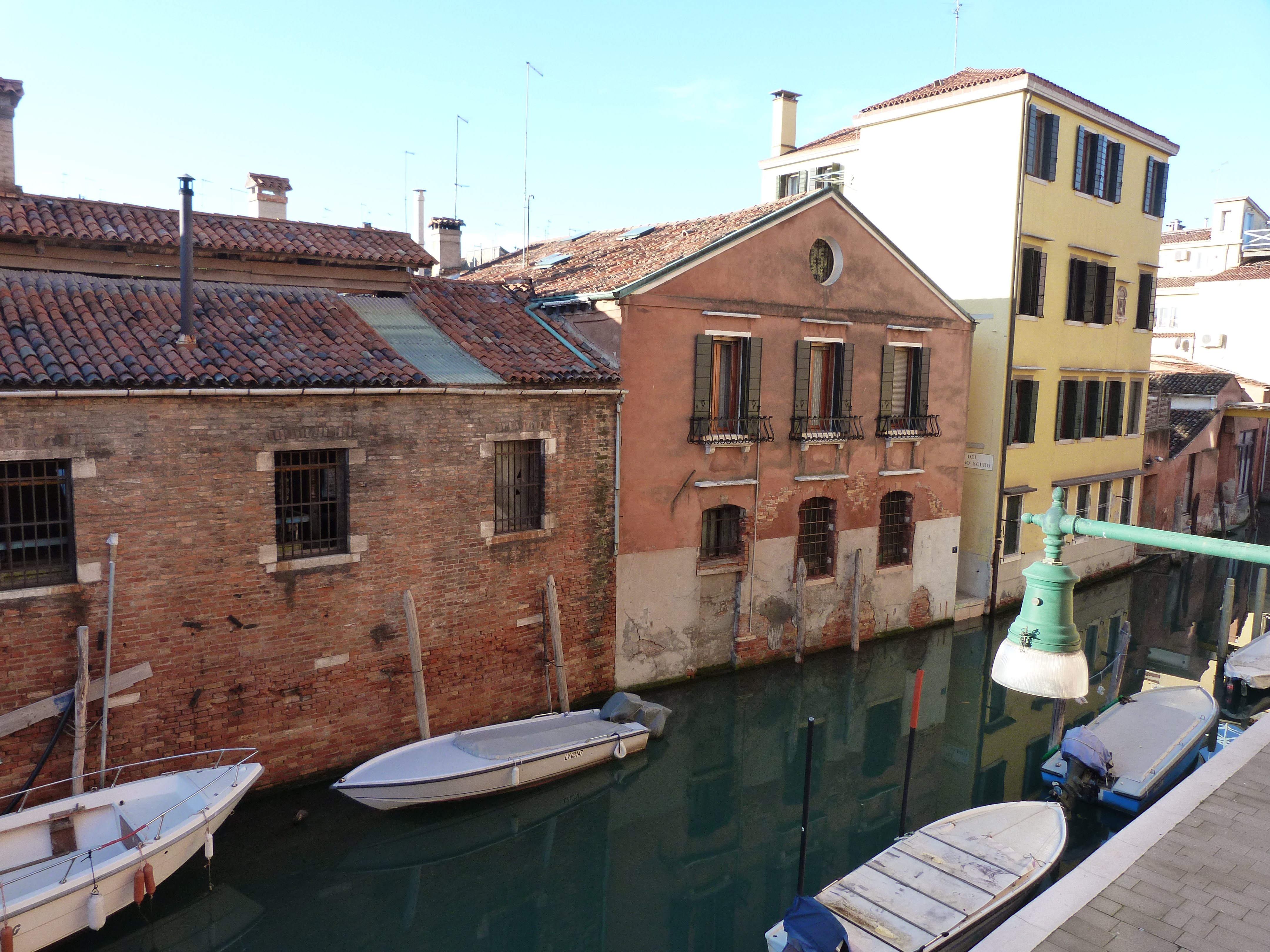
The view from our window in Cannaregio

We had rented an apartment in the Cannaregio region, near the Jewish ghetto, away from the mad tourist dash of San Marco and the consumerism of the Rialto.

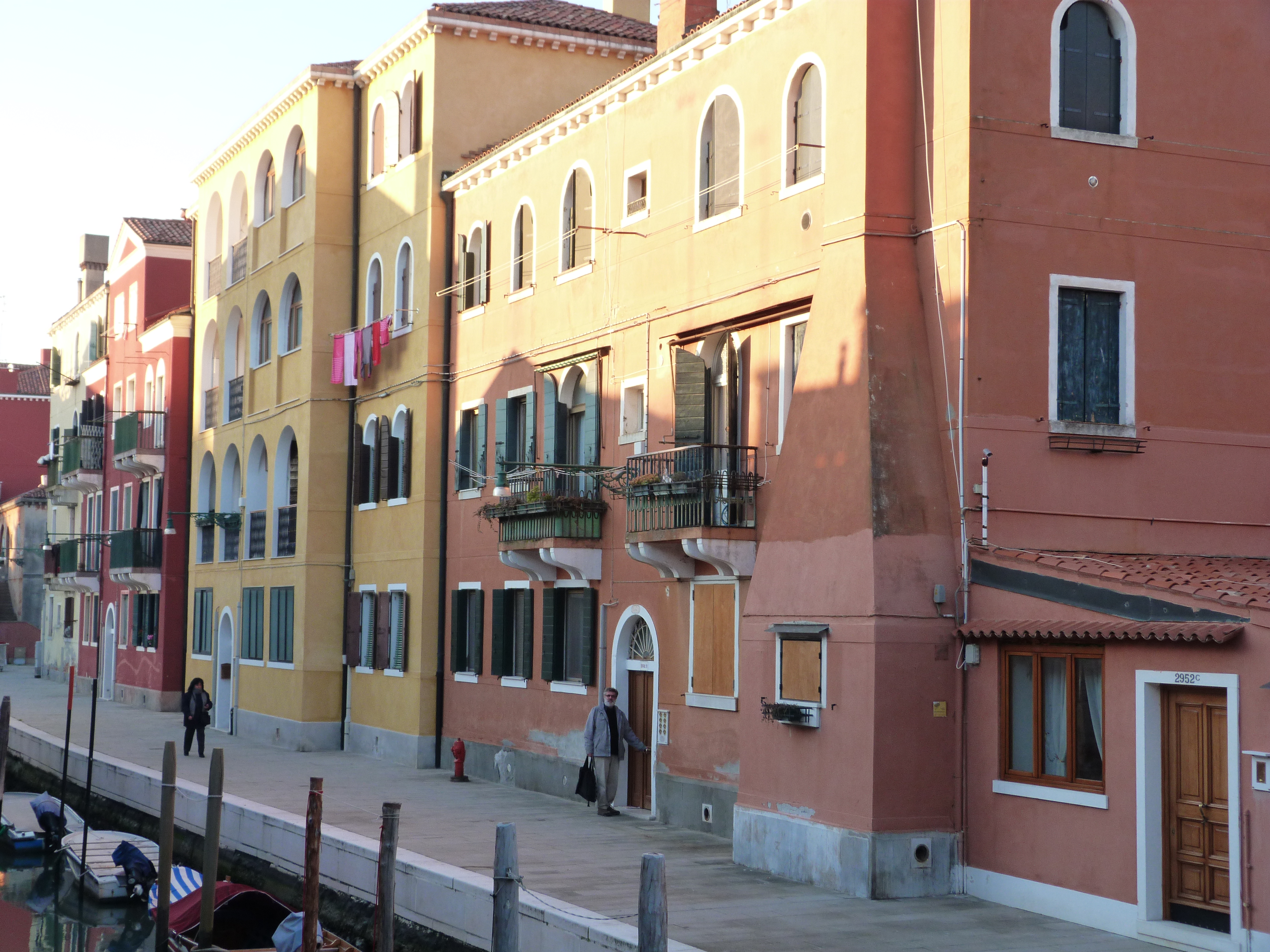
Tim outside the door of our apartment

Here, people were living their lives amidst the beauty and decay. There were little stores on every corner, with all manner of cheeses, meats and wines. There was a large fruit and vegetable market, fish market, bakeries and cafes.  What more could a person ask for?

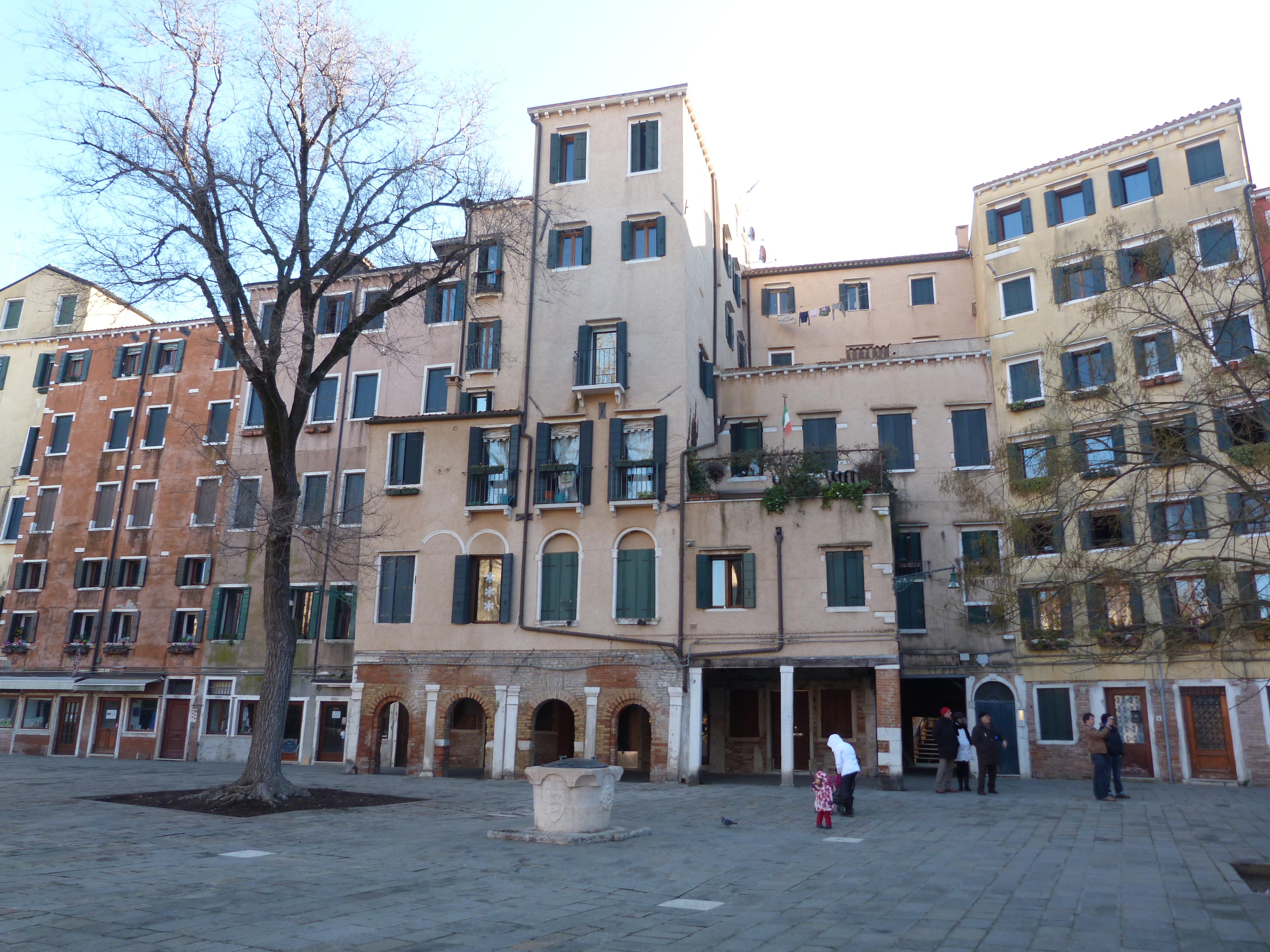
The word ghetto comes from Venice. It meant iron foundry, a place where iron was cast (gettato). The foundry was in the island of Cannaregio until 1390. In 1516, the Jewish population was given permanent residency status in Venice, but they were confined to this area. It was a haven for Jews who could take refuge here from other parts of northern Italy. But it also became a prison where the bridges were locked after dusk. It is the one region where there are tall buildings — since people were confined to a small area, they built upwards. It was not until the arrival of Napoleon in the 18th century that the Jewish population were given full rights of citizenship. Many chose to remain in Cannaregio.

The Ghetto

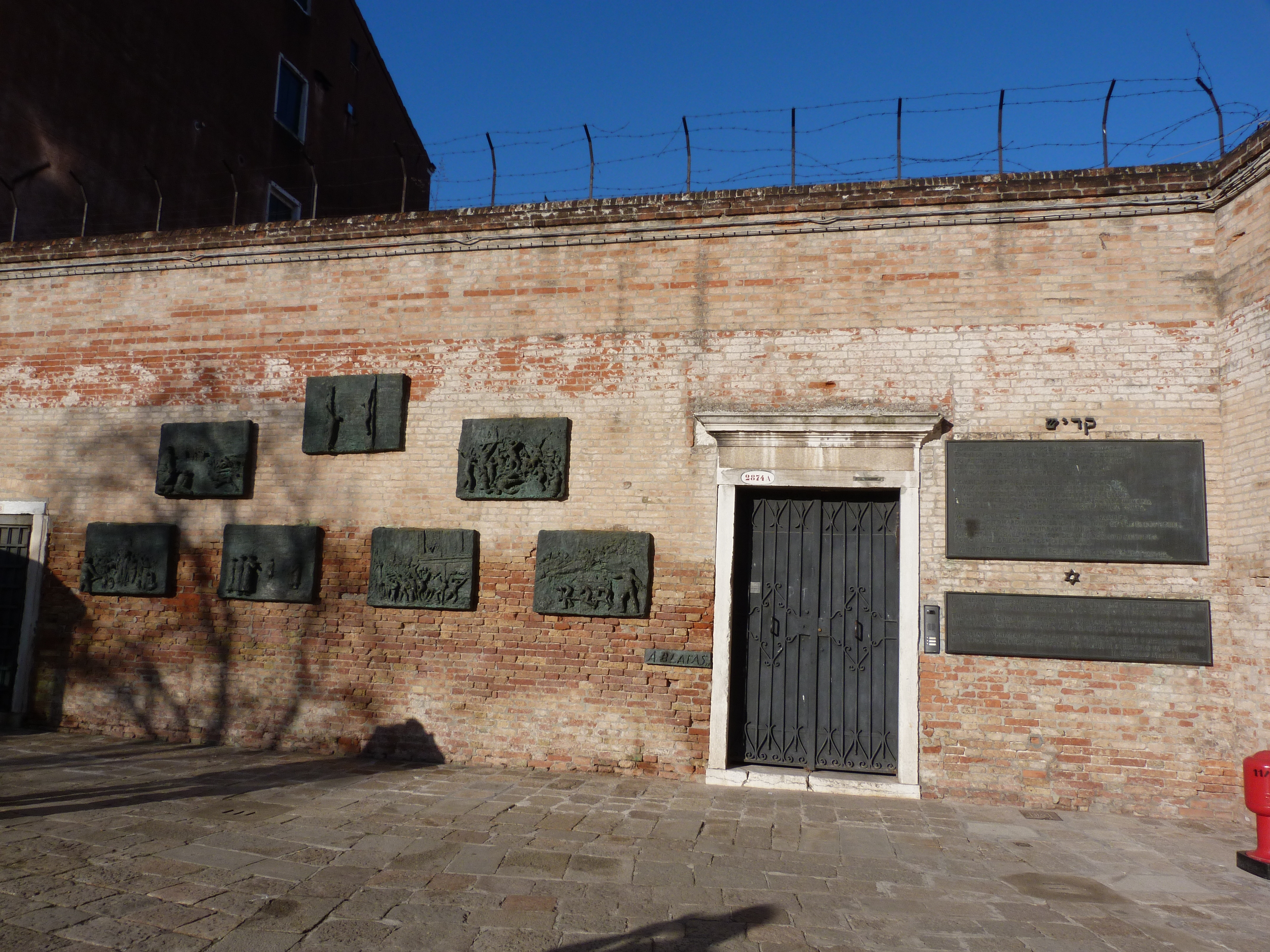
Living in Cannaregio, we decided to make our first stop a pilgrimage to the memorial for the 202 Venetian Jews who were deported from Venice to death camps in 1943. The central piazza in the ghetto was cold and still in the early morning sunshine. The memorial was overpowering.

Memorial for the Venetian Jews deported during the holocaust

Venice is a city built on water, but it is also a city made for walking and getting lost. No street is straight or long. It is an intense maze in which a map is almost useless.  We spent the morning walking. And walking. And walking. Trying to get a sense of the geography, and realizing that it is more like understanding a forest than a city. Learning to recognize shapes, trusting more to instinct than reason.

So we switched our perspective and took a trip through the city by boat. At 75 euros for 50 minutes, we couldn’t afford a gondola, but for 6.50 euros we could take the vaporetto (the water bus) through the city, enjoying the twists and turns of the Grand Canal. We armed ourselves with a great guide book and Tim read through the “tour” as we went along.

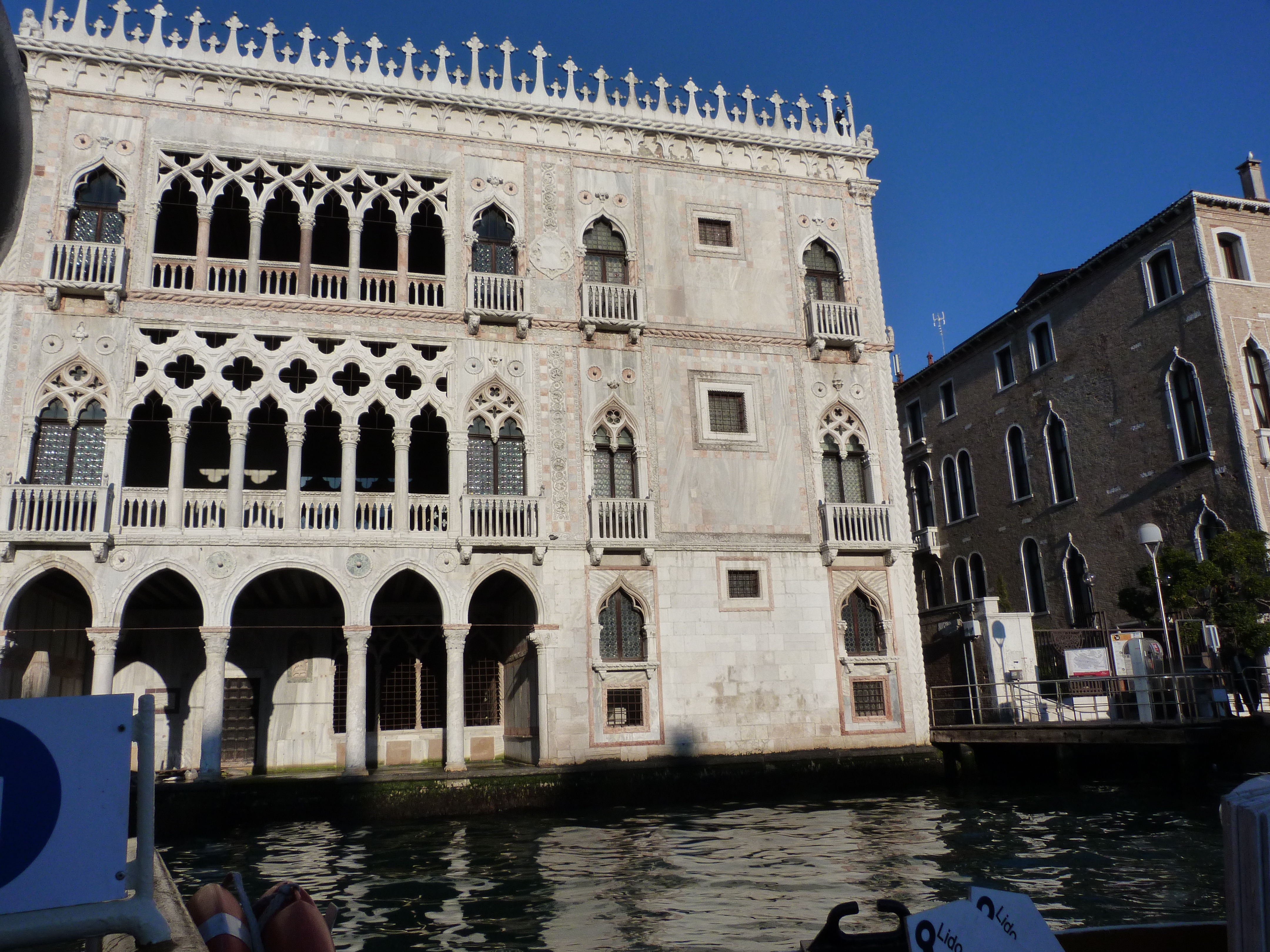
The perspective on the city is entirely altered from the water. Grand entrances, designed for water access and invisible from the streets, are revealed in all their glory.

Ca d'oro, The Palazzo Santa Sophia

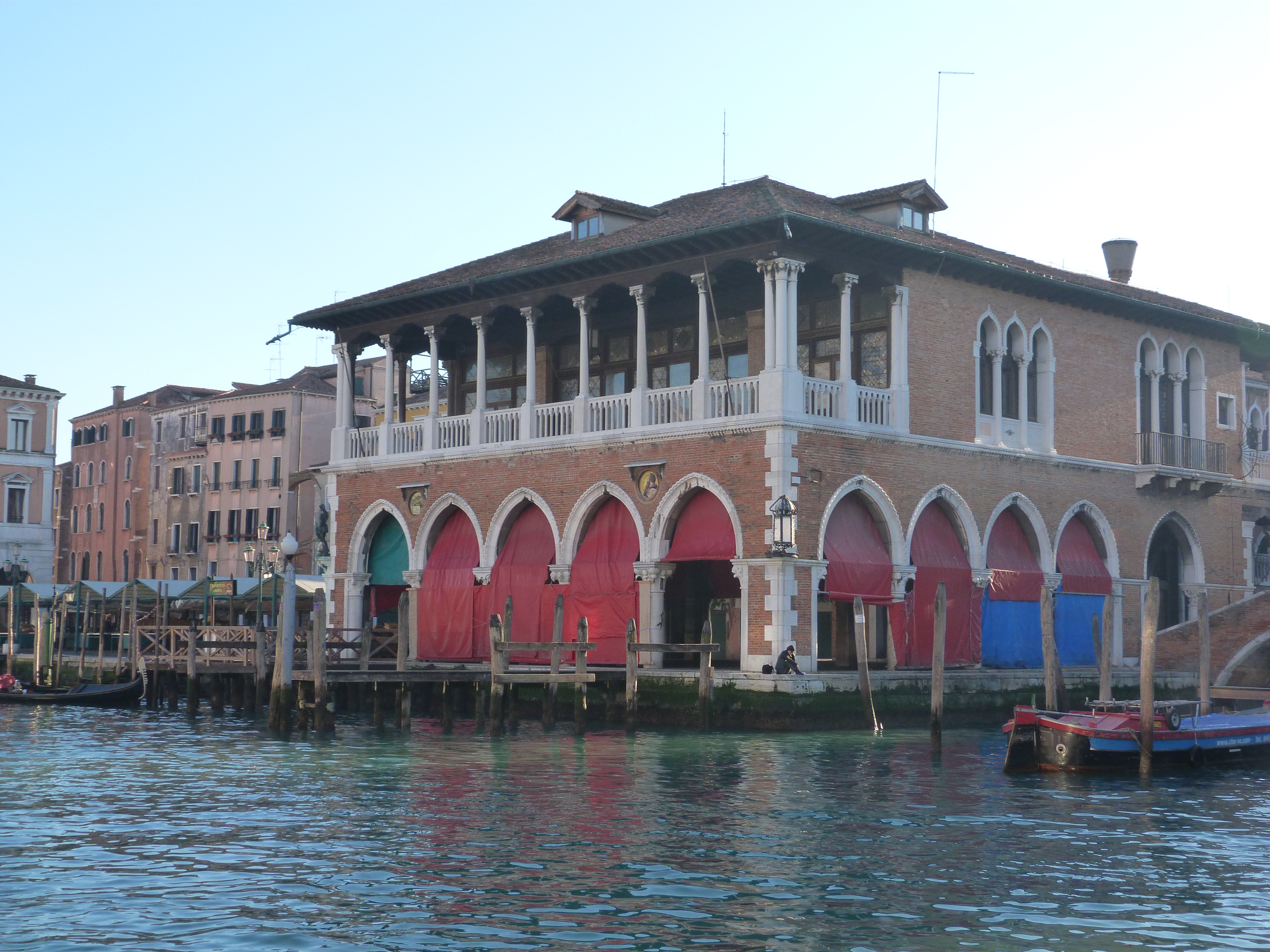
Commerce and daily lives are conducted here.

The fish market. Where fish can be unloaded directly from the boat.

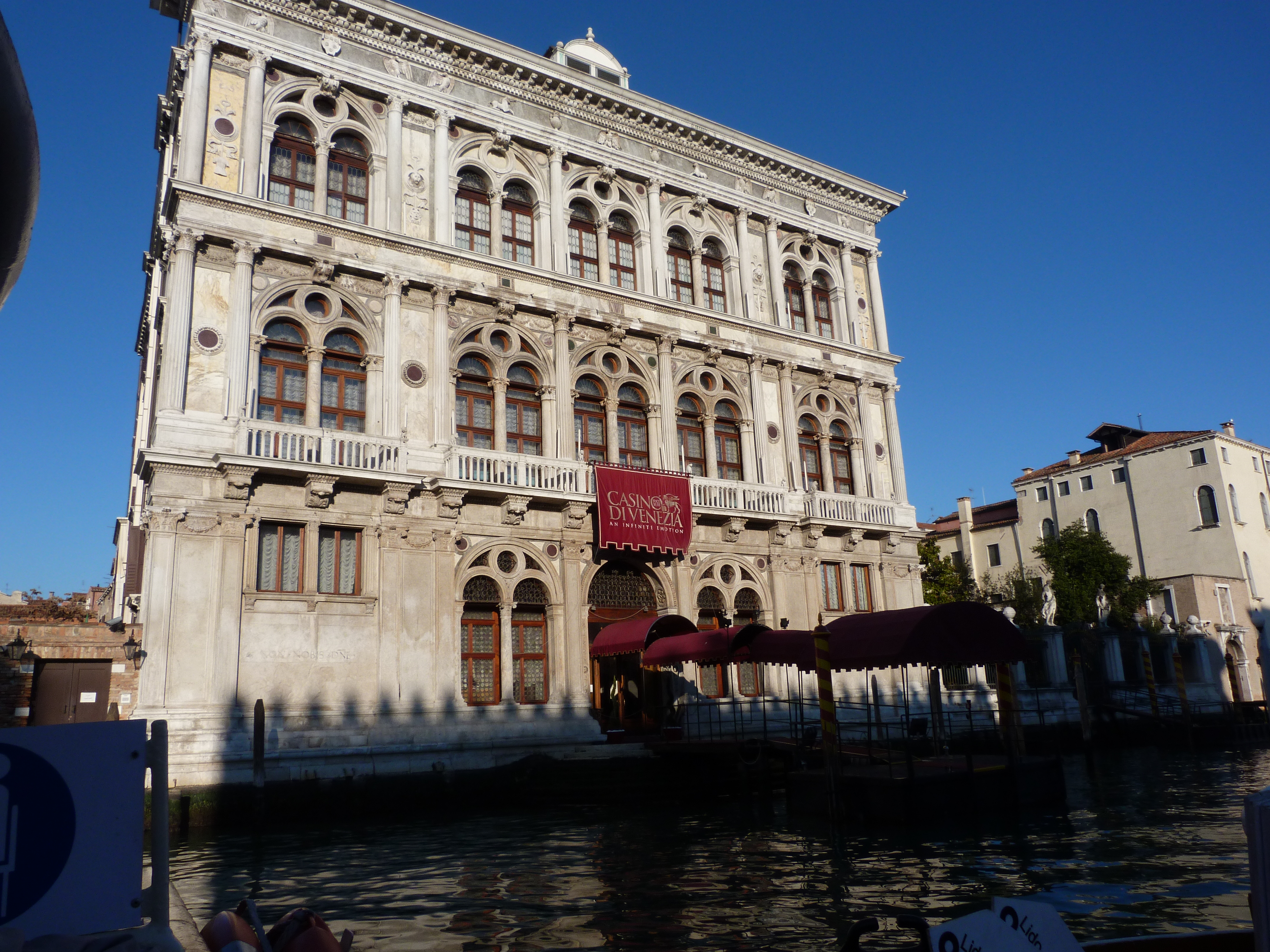
The rich and mighty socialize, wheel and deal. It is a vision of power, wealth and astonishing beauty.

Red carpet treatment at the grand Casino. Lives of the rich and famous

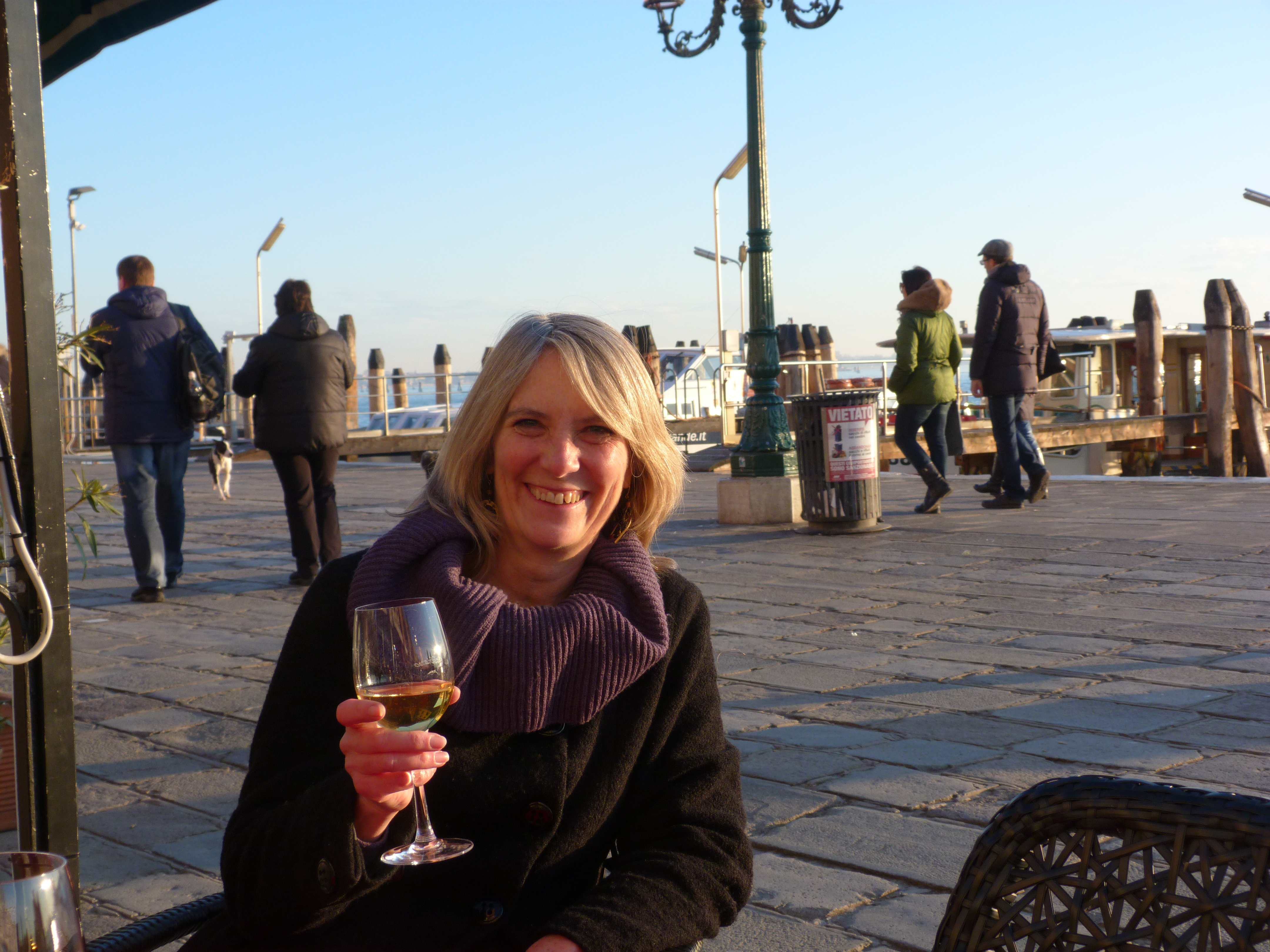
We finished our Grand Canal tour at the Piazza San Marco. But we decided that we needed to wait a couple of days before submersing ourselves in the intensity of San Marco. Instead, we walked away from the tourist hub, along the cobbled seaside walkway, far enough that we could find a glass of wine that we could afford (the closer you are to San Marco, the more expensive the wine, and the seats).

Wine in the January sunshine

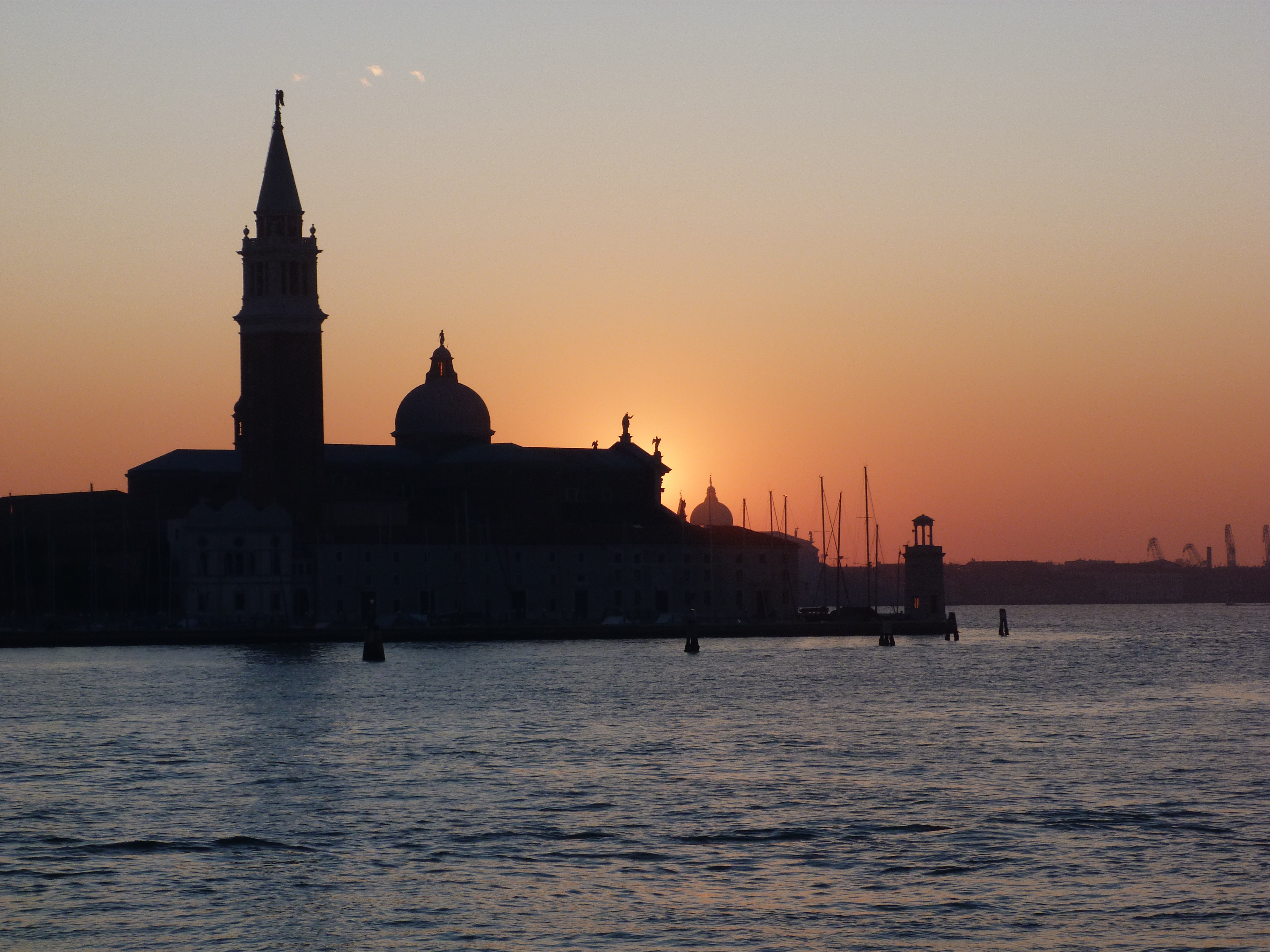
We watched the world go by, the boats heading to islands, the sun starting to set behind the island of San Giorgio Maggiore. As the dusk set in, we headed back through the narrow streets, finding new adventures around each corner.

Sunset behind San Giorgio Maggiore

An Epiphany in Florence

Exquisite architecture, extraordinary sculptures in every piazza, and more galleries than a person could see in one lifetime.

A view of Florence

To say that Florence is a city dedicated to art is gross understatement.Of course it is also filled with tourists and an infinite number of reproductions of Michelangelo’s David in all sizes and mediums. For me, the challenge was to try and come to the art with a fresh eye, and see if I could find a real city under the excessive tourist trade.

The David must be the most reproduced image in the world. Making the pilgrimage to see it “in the flesh” felt a bit false. A bit touristy, to say the least. Apparently 5 people a year die when they see David. True fact. Knowing this, could the sculpture possibly live up to the hype?

Yes.

We gasped. Our jaws dropped. We were weak in the knees. Words will not do. Art critic Giorgio Vasari stated in the 16th century that there really wasn’t any point in looking at any other art. He was probably right. Michelangelo was 26 when he began his commission on the sculpture. It took him only two years to complete. I felt as though I could have stayed routed to the spot for at least that long.

Gradually we began to breathe again, and slid away to see other works in the Accademia. There was a show of beautiful sculptures by Lorenzo Bronzino (19th century) that included his exquisite Nymph with Scorpion. But we kept circling back and paying homage and burning the experience  of David into our hearts and minds. We needed to be able to withstand the streets immediately outside the gallery, filled with David T-shirts, key chains and mugs.

Our trip to the Uffizi was moving on a more subtle scale, both of us soaking up the perfect Botticellis, every golden hair in perfect harmony with nature. The Uffizi building is in itself a marvel, with glorious painted ceilings, and an art collection developed over four centuries. It has a grand, dusty, jumbled up feeling that is drastically different from a contemporary, antiseptic gallery. It was built in 1581, by Granduca Francisco de’ Medici, son of Cosimo Medici I, and although there have been a few renovations over the years it has not been modernized in the least. It is an intense place. There is just so much there. You could go every day for a year and see something new each time. Tim and I travelled in different directions, at different speeds, and compared notes over afternoon macchiato having only just touched the surface.

The next day was Epiphany, and a chance to connect with Florentines outside of the galleries. Epiphany is an important holiday in Italy. Many businesses are closed and families celebrate the arrival of La Befana. According to legend, the Three Wise Men, when looking for the manger, asked directions of an old woman. They told her where they were going and invited her to come with them, but she said she was busy. A shepherd did the same, but again, she didn’t go. Later that night, when she saw a great light in the sky, she decided to go, bearing gifts that had belonged to her own child, who had died. But she got lost and never found the manger. Now La Befana flies around on her broomstick on the 11th night of Christmas (January 5), bringing gifts to children who have been good and coal to those who have been bad.

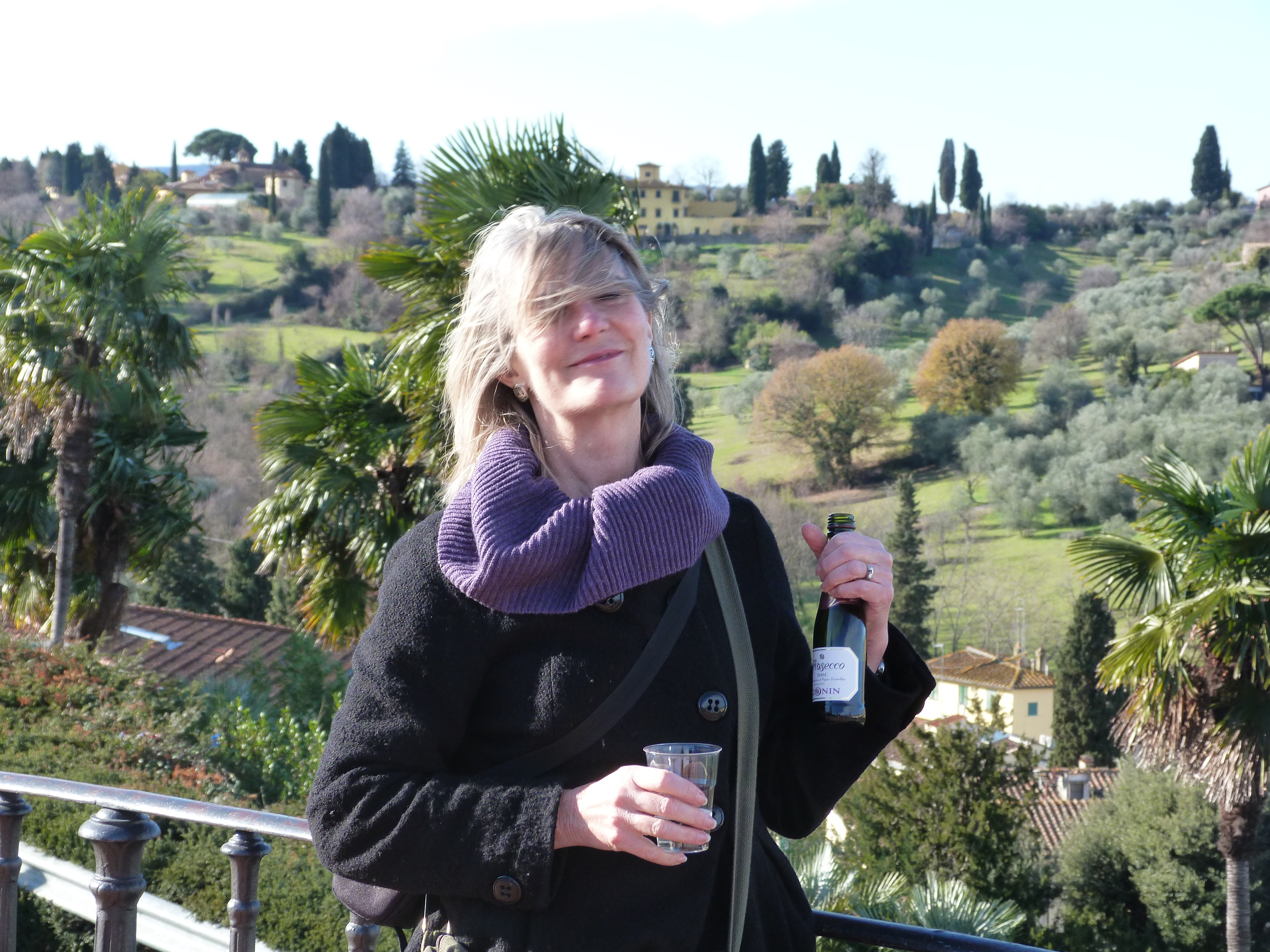
We began our Epiphany celebrations on the Piazza Michelangelo, high above the city of Florence. La Befana  bought me a glass of Prosecco from a roadside stand to celebrate the day.

Celebrating Epiphany, with the wind in my hair

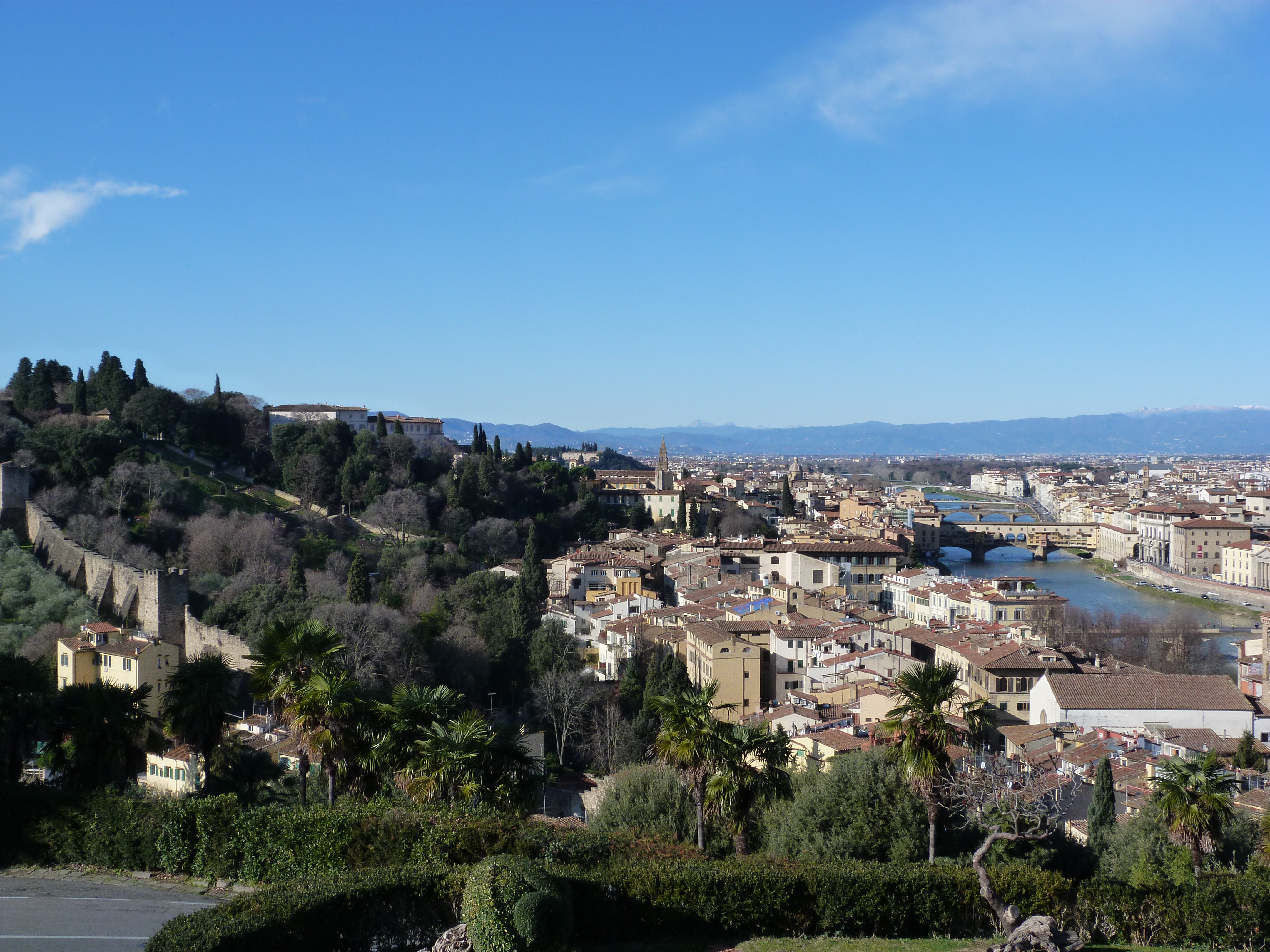
Piazza Michelangelo offers an amazing view of the city. You can clearly see the old Roman wall and fortifications delineating the separation between the city and the country.

View from Piazzale Michelangelo. The city/country divide along the old Roman wall

We walked high above the town, to the old Roman gate of the city, past palaces converted to luxury hotels and vast Italianate gardens.

Piazzale di Porto Romano

Well outside the tourist area, we were able to get a good, simple lunch of risotto and a great salad of thin shavings of fennel, orange slices and black Sicilian olives at a neighbourhood café. We headed to the Piazza Pitti for the Epiphany parade.
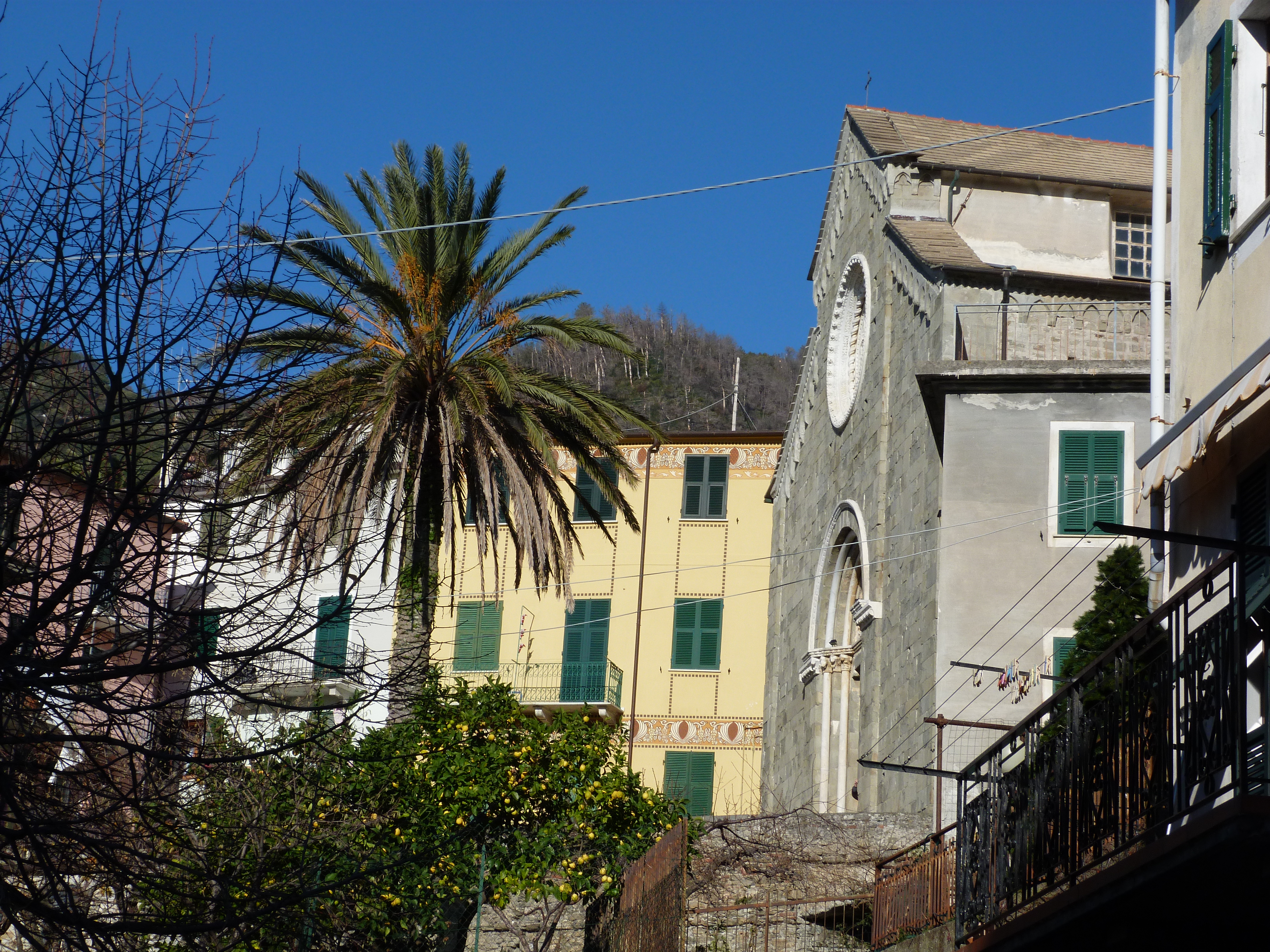
Being in this section of Florence, on the other side of the river Arno, we felt like we were in an entirely different town. Although there are many galleries that surround Piazza Pitti, we were there to feast our eyes on the “Cavalcade of the Three Kings” and to see Florentines out enjoying a holiday.

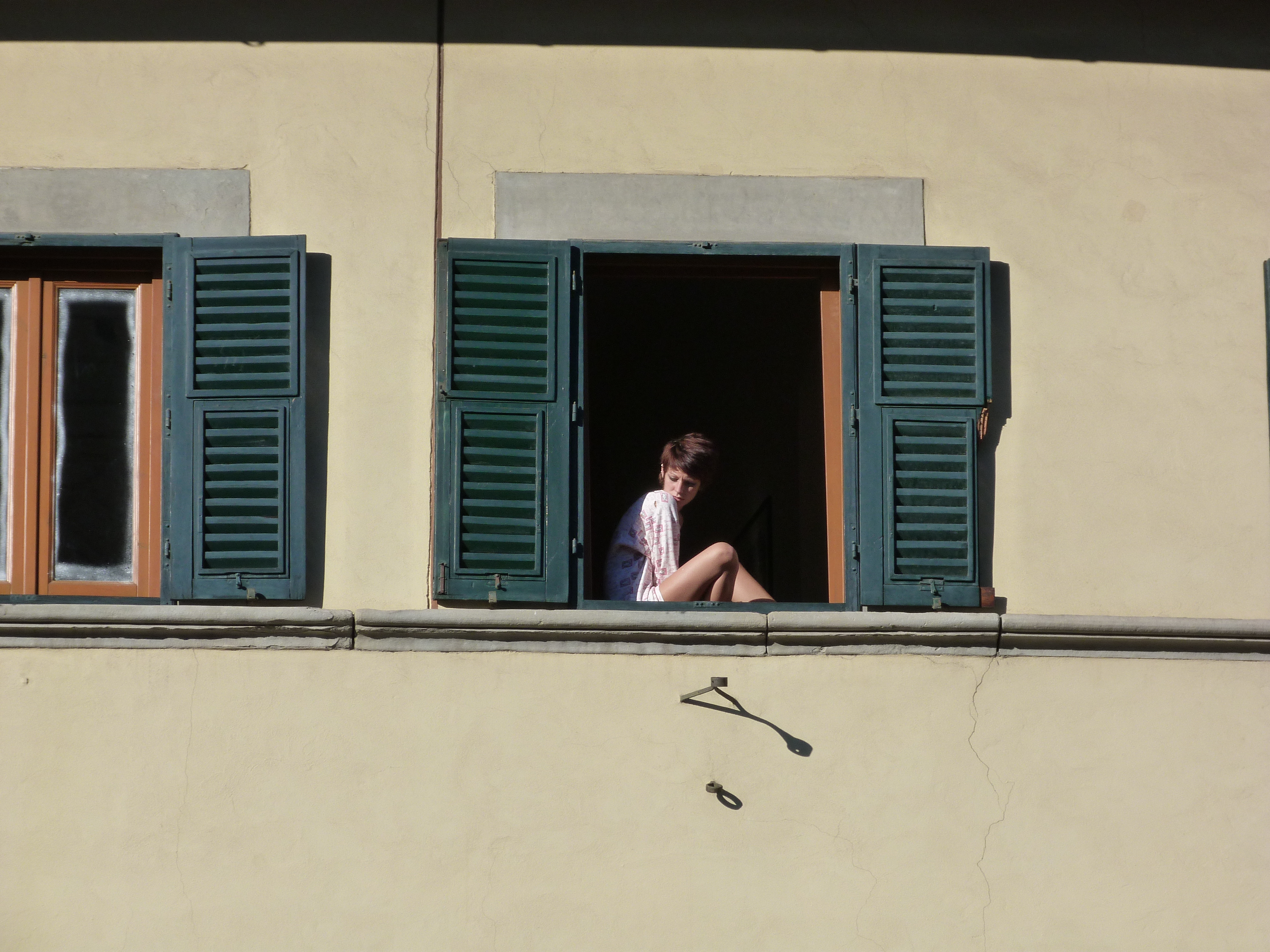
Looking from her window to the parade below

The parade participants were just gathering, preparing for the long walk through the city to the Duomo in the centre of Florence.

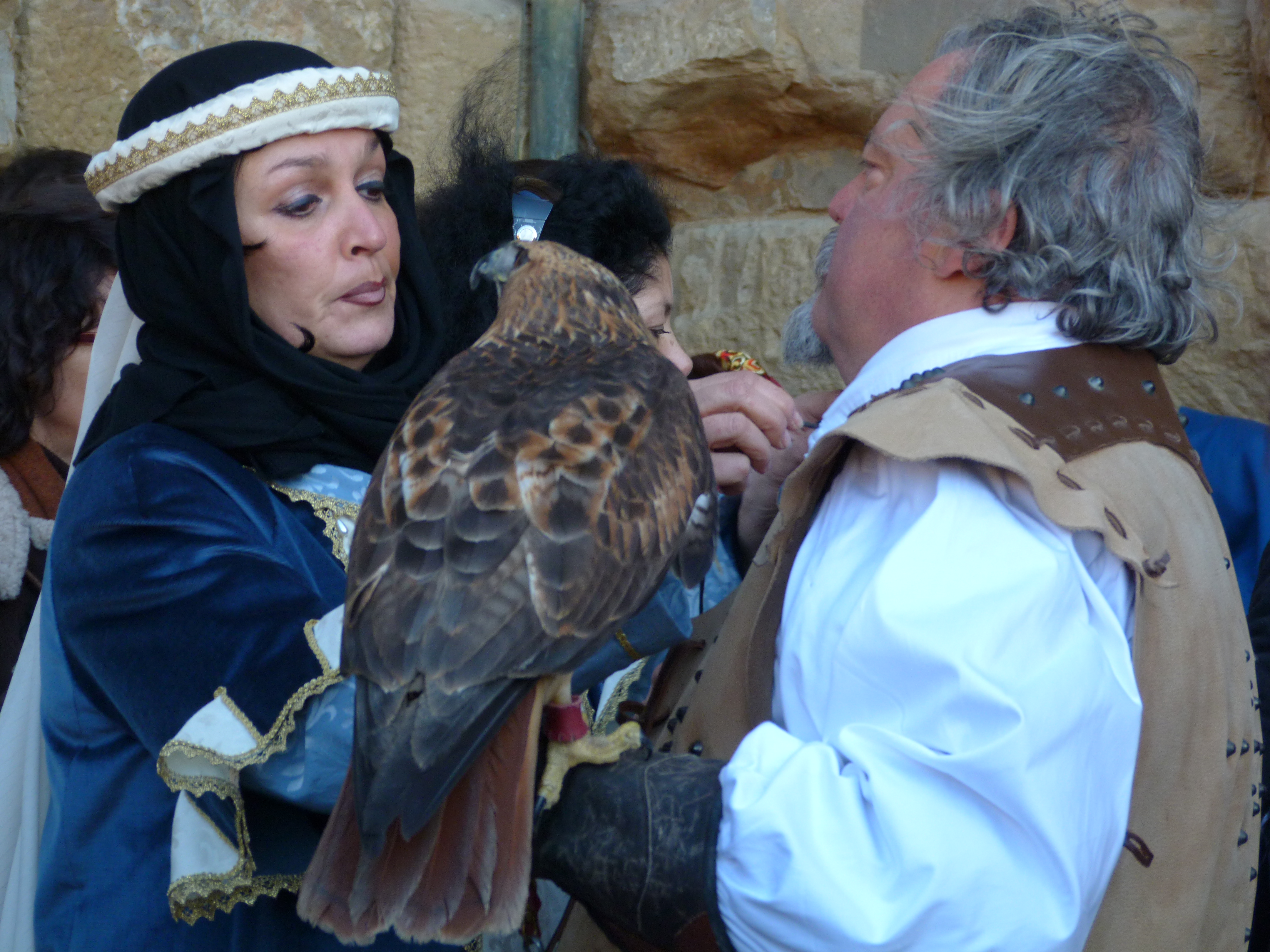
Last minute costume adjustments. The falcon is very real.

Various guilds, all in 15thcentury dress, were responsible for sections of the parade.

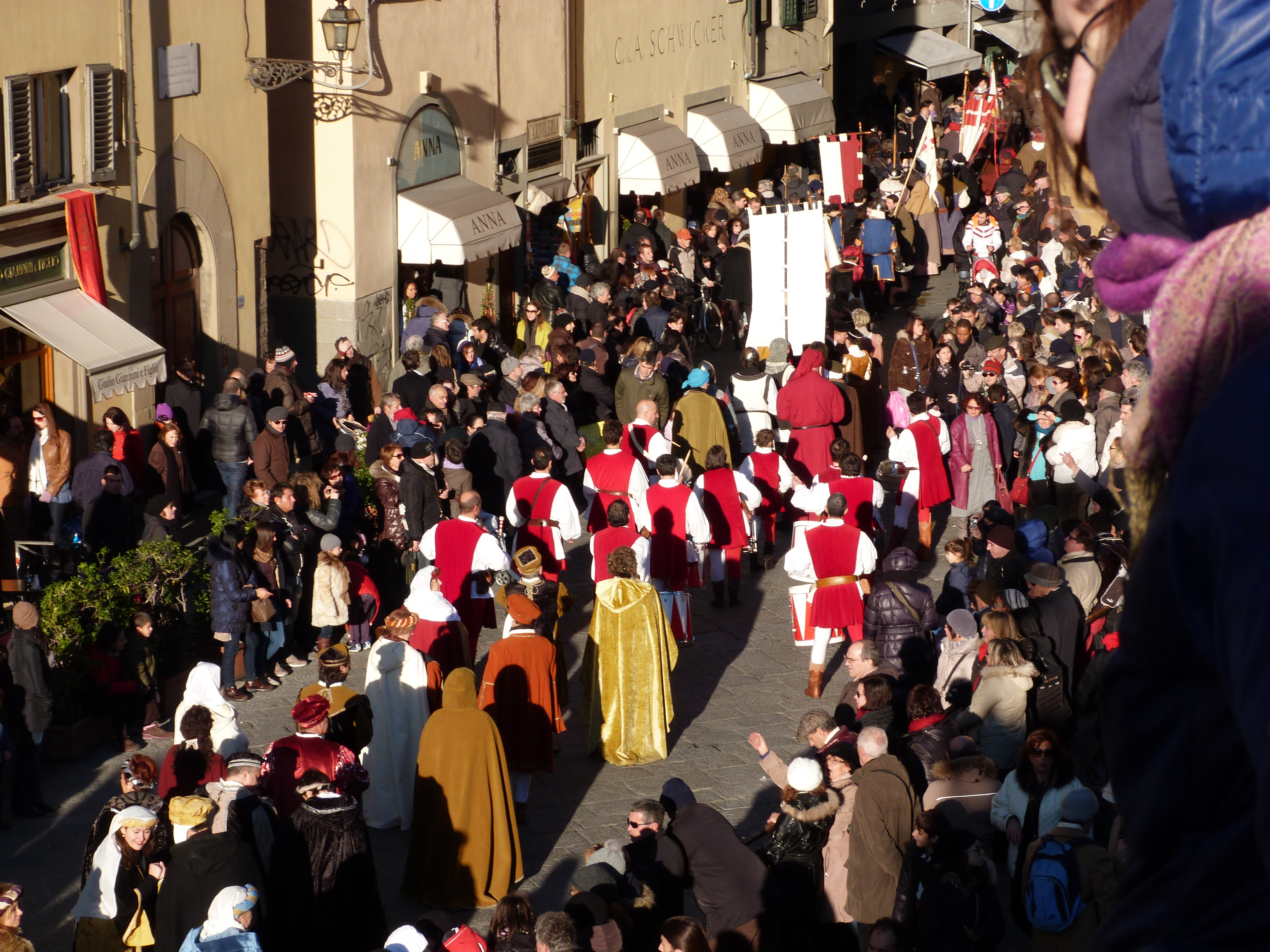
The parade moves past us on its way into the city

The Three Kings made their way first, followed by a shepherd and dignitaries on horseback. There were drummers, flag throwers, men at arms, beautiful couples, aging royalty and children – all very serious in their slow studied march through town.

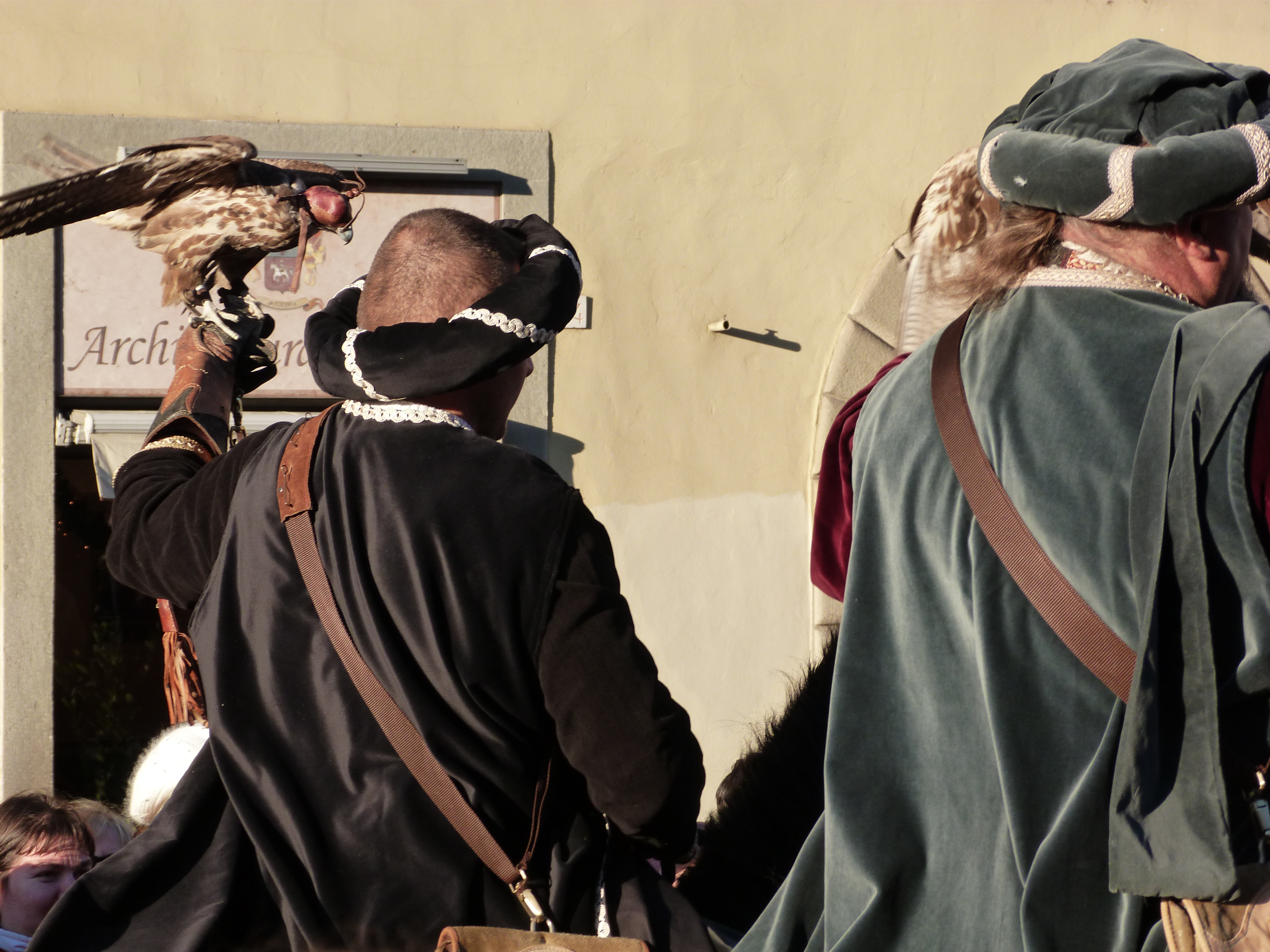
On horseback with a falcon

The Piazza Pitti filled with spectators of all ages, on the streets, hanging out of windows, to watch the parade go by. It was a celebration of life, of a proud history, of a very real and very beautiful city.

The parade leaves the piazza

A soggy Siena

Travelling in the off-season is terrific. Fewer tourists, lower prices, you get an honest feel for a place. For the most part, the weather has been fabulous. There has only been one day when we were badly rained out and that was when we met up with Xan and Meghan to go to see Siena.

Siena is an extraordinarily beautiful medieval city that in its hay-day rivaled Florence. It was an important trade route between Florence and Rome and like Florence was filled with wealthy patrons of the arts. However, Sienna was decimated by the Black Death in 1348 and never really recovered its stature. What is left is like a time capsule, one of the largest and most beautiful medieval cities in Europe.

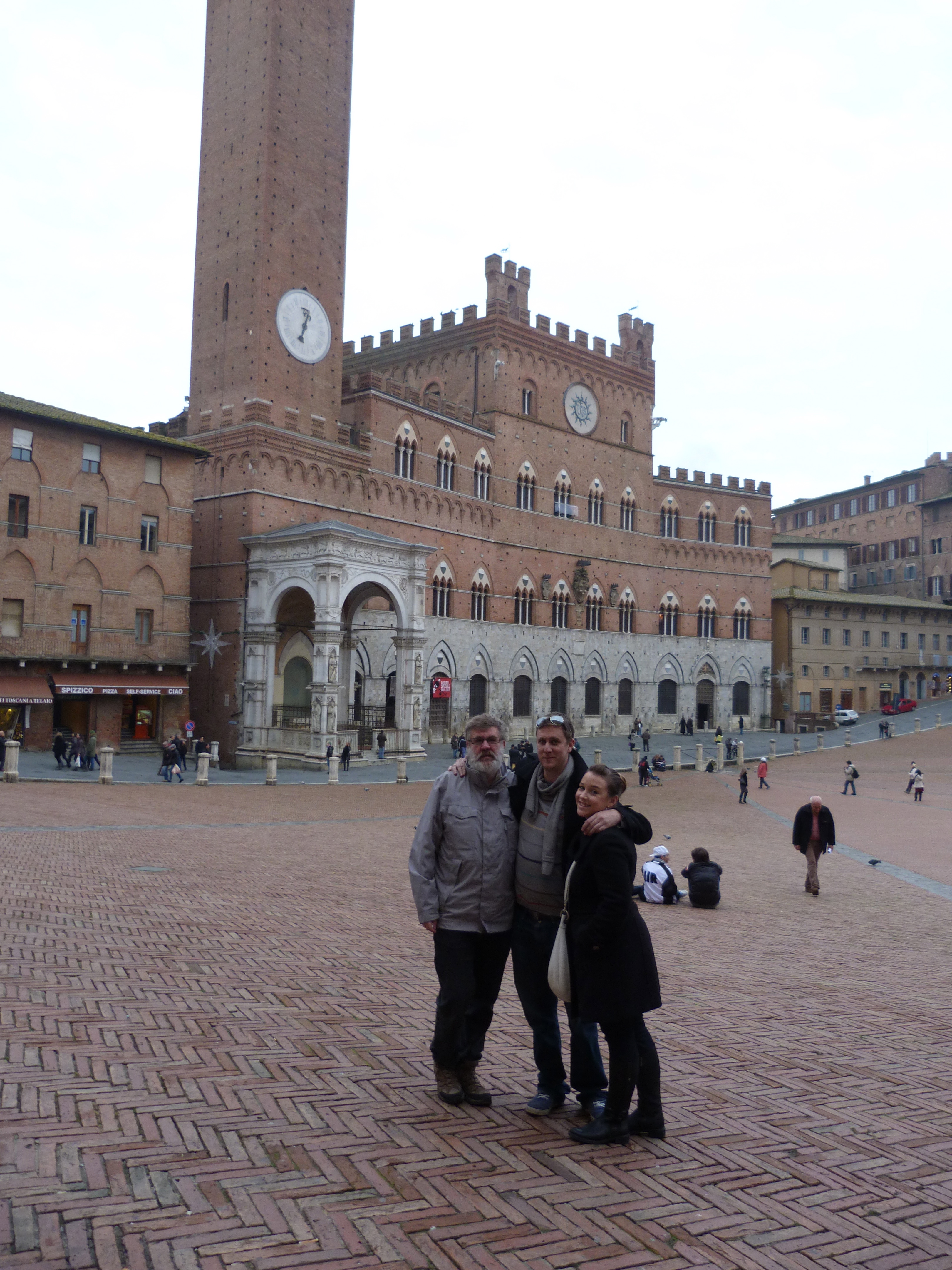
We arrived on an overcast afternoon to explore the grand piazza in the centre of town, the Piazzo del Campo.

Tim, Xan and Meghan in Piazzo del Campo

Famous for it’s curved scallop shape, it is the meeting place for thousands in the summer. We practically had it to ourselves, which gave us a chance to appreciate the grace and beauty of one of the largest piazzas in Europe.

Piazza del Campo in January. We could only imagine the summer crowds

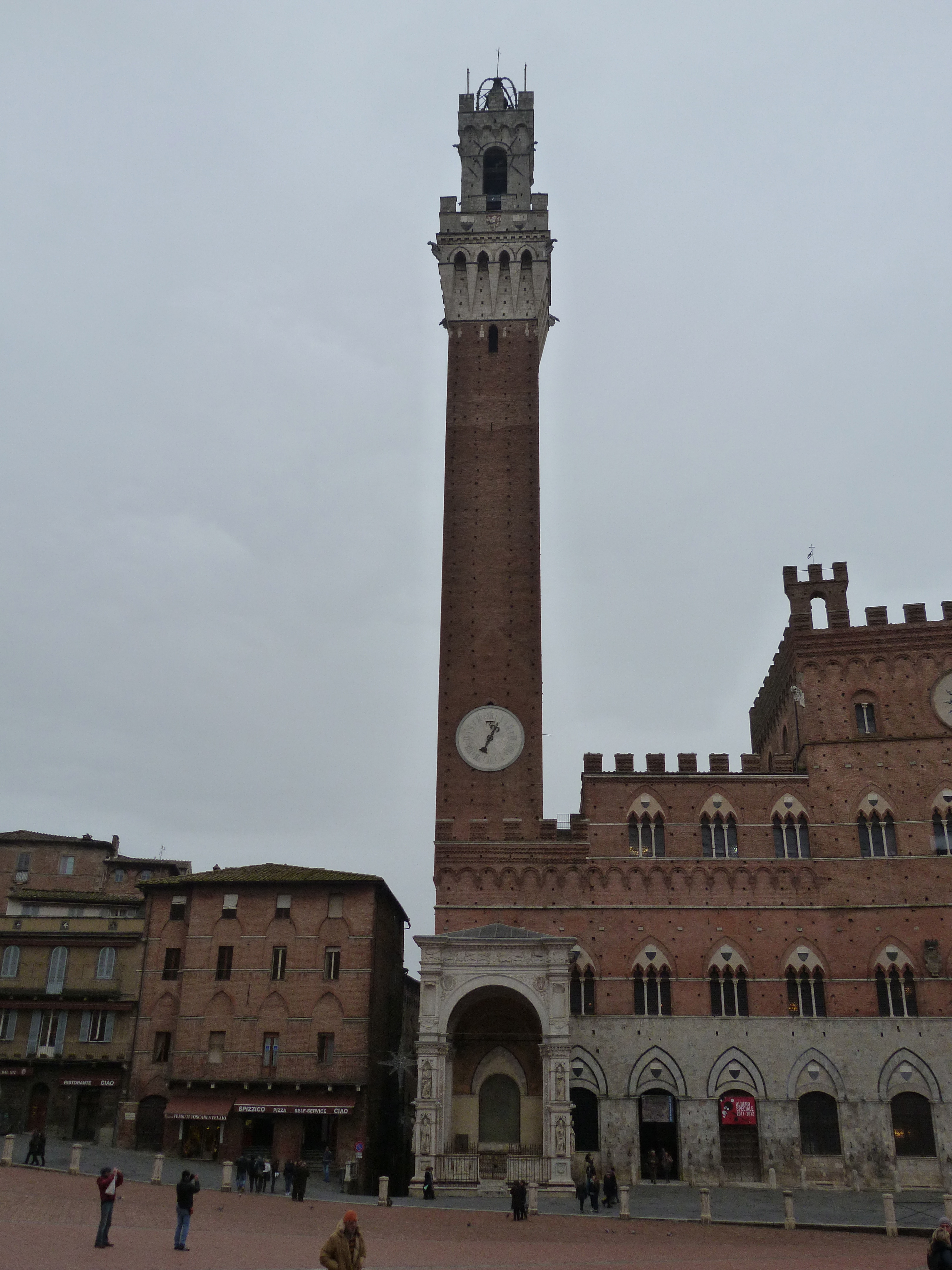
We had planned on climbing the famous tower, the Torre del Mangia, which overlooks the piazza. A great engineering feat in its day, the tower is 88 metres high. When it was built in 1338 it was was the tallest secular tower in Europe. It was named after the first bell ringer Giovanni di Duccio, who was nicknamed “Mangiaguadagni” which roughly translates as using all of his money to eat well. We felt an immediate affinity for him.

Torre del Mangia

All of the guidebooks write about the gorgeous view from the top of the tower. But as we stood in line to go up and read the cautionary notes about the climb, we started to have second thoughts. Four hundred steps? Climbing up a tower that is, at some points, only 20” wide? With ceilings less than 5’? Not to be done by people who might suffer from claustrophobia or anxiety? To look out over a mist covered city on an overcast day?

We decided to go have lunch instead and found a lovely place where we could sit outside under a plastic tent with heat lamps. We confined ourselves to a 2-course lunch, with fabulous local red wines, and delicious local specialties such as papparadelle di cinghiale (pasta with wild boar sauce). Feeling replete, refreshed and very pleased with ourselves (perhaps not unlike Mangiaguadagni), we headed out for a bit of sightseeing.

Perhaps it was the wine, perhaps it was the teeming rain, but I was fully confident of the location of the one tourist place we wanted to visit, the Palazzo Pubblico, a gothic palace which is a museum of medieval art. We arrived, bought the tickets for a special tour and just as we started to go in realized that it was the wrong palace, the wrong tour.  But there were only 6 people on the tour, 4 of whom were us, so we couldn’t retreat gracefully. Thus, we ended up touring the freezing cold palace of Palazzo Chigi Saracini, a palace built in the 12th century, filled with artwork collected in the 17th and 18th centuries. Reflecting the tastes of the last owner, Count Guido Chigi Saracini, we walked through room after room of quiet hideous Baroque furniture and excessively decorative paintings. The palace is now a music school, the Chigana Musical Academy, that was founded by the Count. The school has spawned many of virtuoso performers and is probably a great place to come for a concert in July. But the Count’s artistic tastes were not our own. Quite a hodge podge, in fact.  The best part was the chance to see Liszt’s piano. It is very small.

By the time we finished the tour it was almost dark. Rain was pouring down. We made a quick trip to the Duomo, which as far as Duomo’s go is of a manageable size.

The Duomo, before the rain

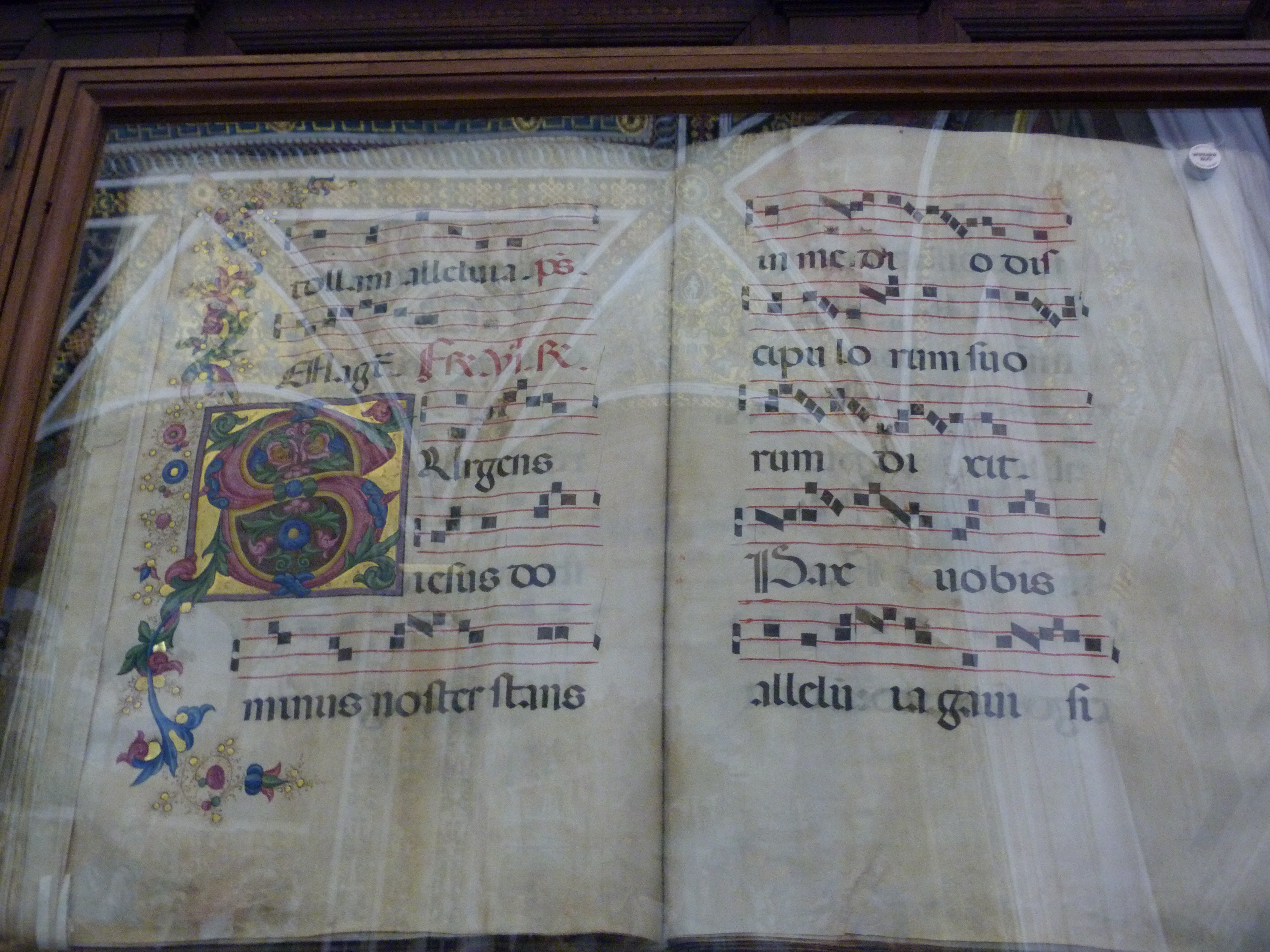
There is a small library attached, with a good display of liturgical manuscripts with gorgeous lettering and illumination.

Liturgical Manuscripts in the Duomo

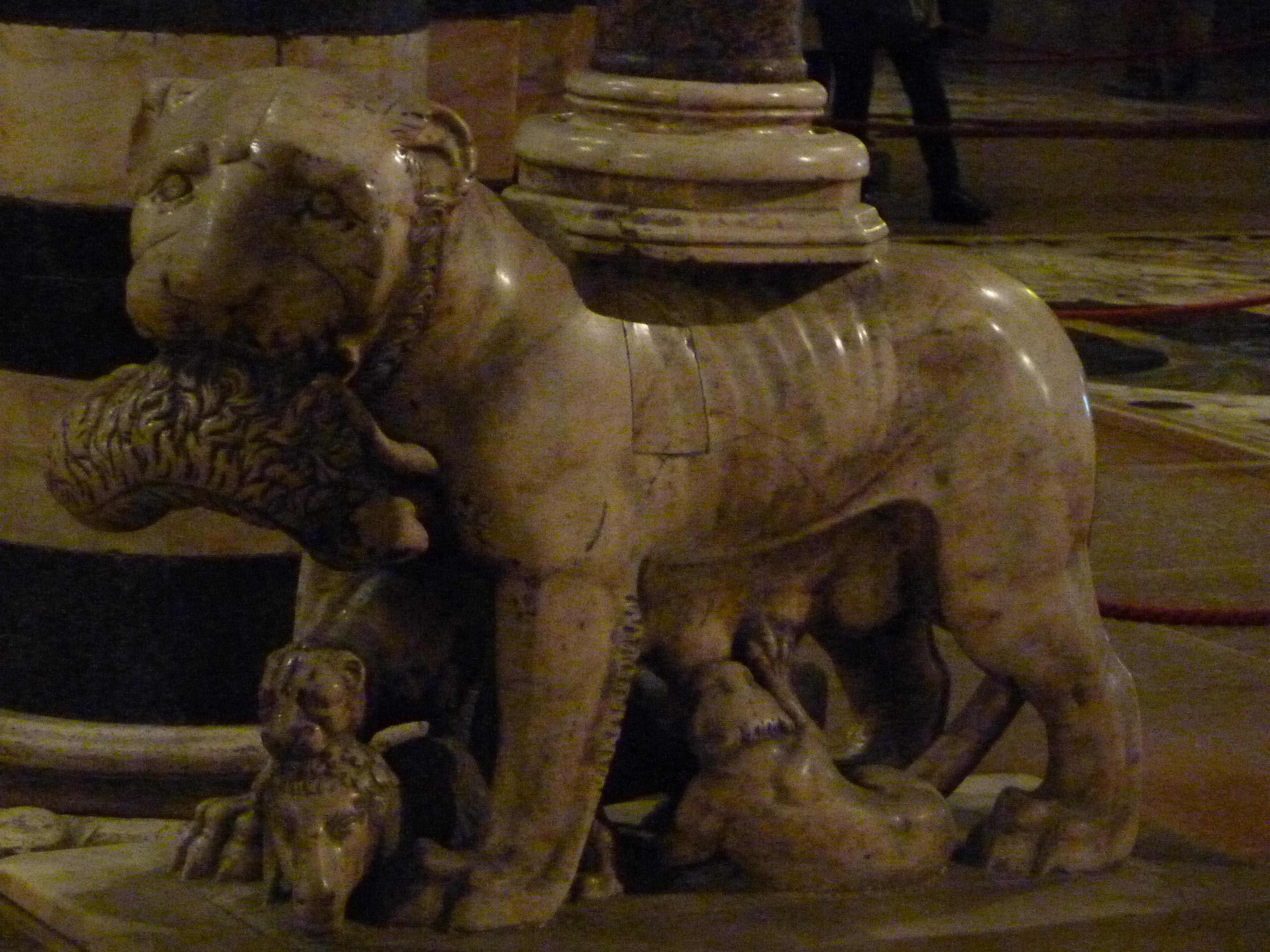
I particularly liked the Duomo’s marble pulpit, designed by Nicola Pisano in the 13th century, with four carved lions at the bottom.

Marble pulpet designed by Pisano

I felt a fondness for the lion that was eating one of the lambs. You just can’t tell with these lions.

One of the pulpit lions

As we headed to the train station, wet and weary, we realized how little of Siena we had seen. It will have to wait for another trip, and a sunny day. We arrived back to the dry streets of Florence, under holiday lights, ending our glorious family holiday with a final dinner with Xan and Meghan before they made their way back to the ice and snow of Canada.

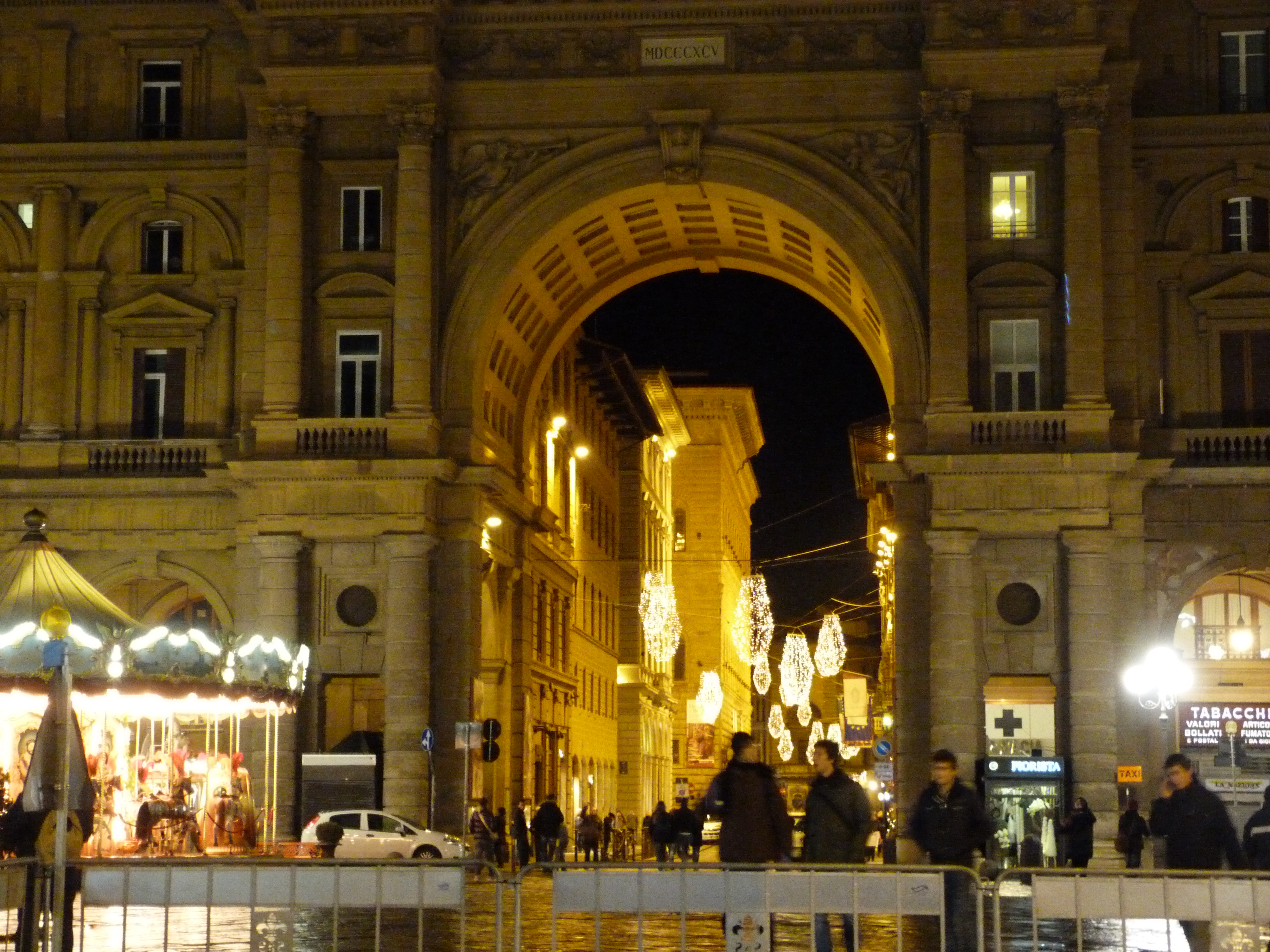
Evening lights in Florence

Starting the new year in a fort

New Years Day, January 1, 2012. The beginning of a new year and the end of our family time together.

The day before New Year’s eve, Tim, my mother and I were driving the hills above the villa in search of a local restaurant. We were lost and cranky. The restaurant was nowhere in sight. But suddenly we saw a sign for Ristorante Forte Mace’. This was not what we were looking for, but we thought we should check it out. We drove up to what looked like a fortification, set deep into the ground, atop a hill. Which is exactly what it was.

Forte Mace'

The restaurant was closed, but we peered in the window and soon a young woman and her mother came out. We explained, in broken Italian and a bit of Spanish, that there were 8 of us and we were hoping to have dinner on San Silvestro. They told us that they were full for San Silvestro, but could serve us on the following day, lunch at 1:00. A quick tour of the restaurant, a change of plan, and we gratefully accepted.

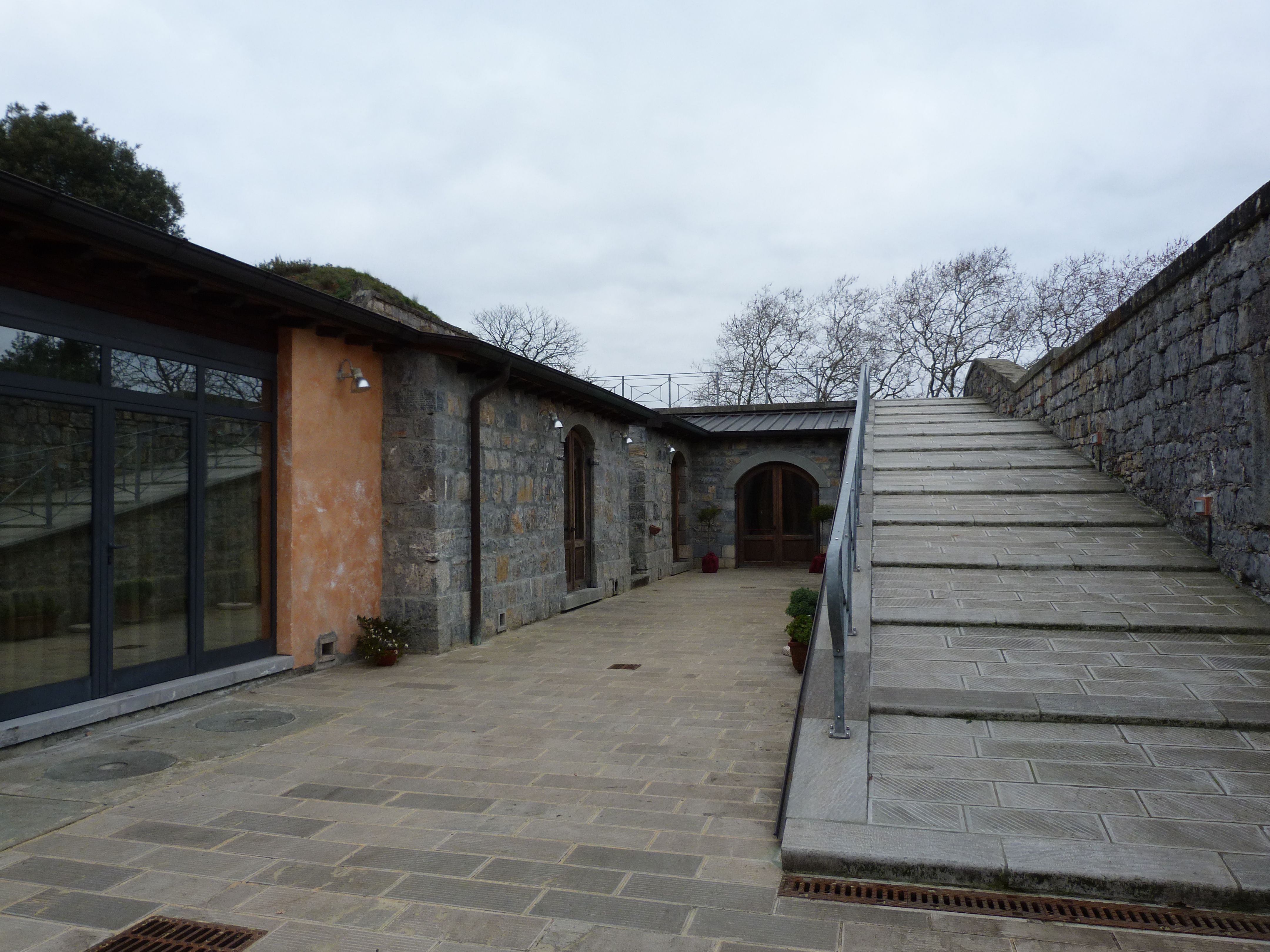
The entrance to the restaurant

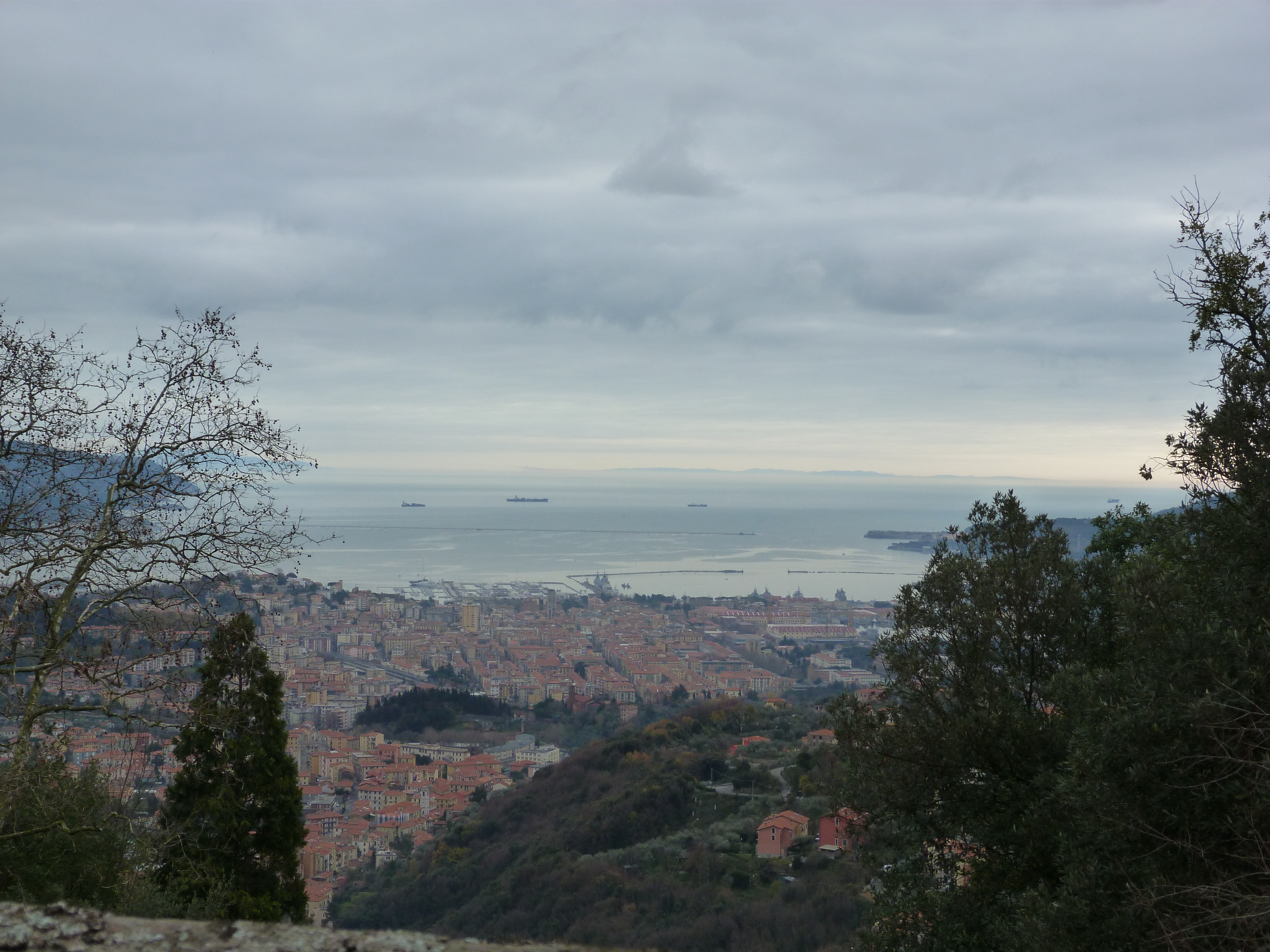
Ristorante Forte Mace’ sits tucked into the hillside, high above the Gulf of La Spezia.

The view from the fort of the Gulf of La Spezia

Built in 1889, the fort provided land defense for the entire region. It was in total disrepair when purchased 14 years ago by the present owners. The have turned it into an extraordinary family restaurant and it was there that we spent New Year’s Day.

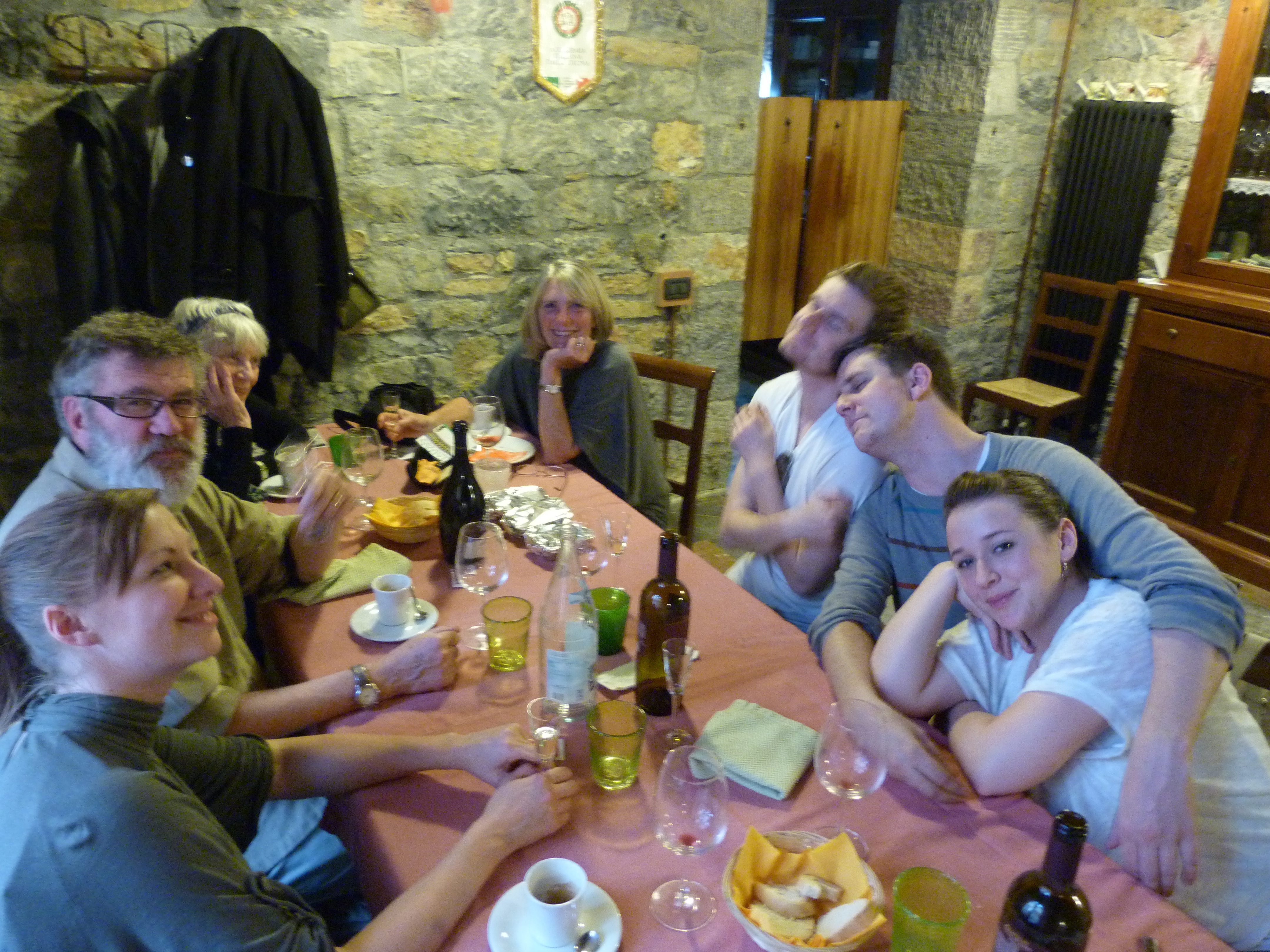
What we did not know was that the family opened the restaurant exclusively for us. We were the only diners, and they prepared a very special meal for us.

The son of the family, the business manager for the restaurant, speaks some English and was able to guide us through our meal. We started by ordering delicious local wines and began our way through the extraordinary menu, starting with the Antipasto Desgustazione.

We all shared plates of:

  • Bruschetta al lardo
  • Cipolline in agrondolce all’alloro
  • Crostini con acciughe
  • Torta di farro
  • Torta di zucca gialla

Our little Italian phrase book didn’t help with the subtleties of this menu, but we were able to get the gist of most things. Each taste was unique and special. The Cipolline (baby onions) in a slightly sweet sauce, the fresh anchovies and the Torta di faro (a hearty kind of grain) were especially memorable. The Bruschetta al lardo was amazing, soft and buttery. We were only a bit shocked when we looked at the menu and realized that it was lard.

For the pasta course we each had a choice:

  • Ravioli all spezzina al ragu di carne tradizionale
  • Gnocchi di farina di castagne con crema di zola
  • Gnocchi aromatizzati all zafferanao con speck e radicchio rosso
  • Pansotti con salsa di noci
  • Tagliolini al ragu bianco di granchio

We all shared around tastes of each dish. Meghan’s gnocchi di farina di castagne (chestnut flour) were really surprising and delicious, as were the gnocchi with red radicchio that Lewis had. While in La Spezia we have found a number of dishes that use red radicchio. I love the slightly bitter taste and burnt colour that it adds. I ordered Pansotti con salsa di noci, which were lovely fresh little stuffed pastas in a subtle and soft nut sauce. Amazingly delicate.

For Secondi Piatti we chose from:

  • Salsicce con patate al forno
  • Tagliata con scaglie di grana e rucola
  • Filetto di maiale al marsala
  • Coniglio fritto con melanzane grigliate
  • Acciughe fritte con insalata

We searched through the phrase book and placed our orders. A lot of us had the Tagliata con scaglie di grana e rucola. Thin slices of rare beef, mounded with shavings of Parmesan cheese on a bed of arugula. The perfect combination and incredibly delicious. Tim braved the Coniglio fritto con melanzane grigliate, little fried pieces of rabbit with grilled eggplant. They use a lot of rabbit in this part of Italy and Tim said it was marvellous, although not unlike chicken.

By the time that we had eaten all of these courses, there was very little room for Dolce. However, the owners had especially made a nut torte, so I willingly had a bit – light and airy, it was the perfect way to end the meal.

Well, not quite the end. When we found that the grandmother of the family makes homemade limoncello, we knew that we wanted to cap off the meal with a glass (or two).

Very full and very happy

Then the father of the family came out from the kitchen saying “Come. Come” to my mother. As he began to guide her out the door, Tim & I followed and he took us on a full tour of the fort. He is the one who has done the bulk of the restoration work, by hand, and we were shown a slideshow of the renovation process. This is more than just a little family restaurant. The daughter and her mother do most of the cooking and we saw a sign for the Italian Cooking Academy on the wall. They serve the specialities of the Ligurian coast and do it with grace and symplicity. The son does the business side and was our host for the afternoon since he was able to speak English.

This is a family that has poured their hearts into creating a unique experience for everyone who comes there. This was more than a meal. We were welcomed into their world and we felt incredibly privileged to be there with them.

By the time we left we were hugging and introducing our children as “Alessandro, Magdalena, e Luigi”, something which I suspect will go into family lore and which Tim & I won’t be able to live down. Laughing until our faces and sides hurt, we rolled down the hill, along the ancient path, to the villa. It was an amazing way to usher in a new year.

The Cinque Terre.

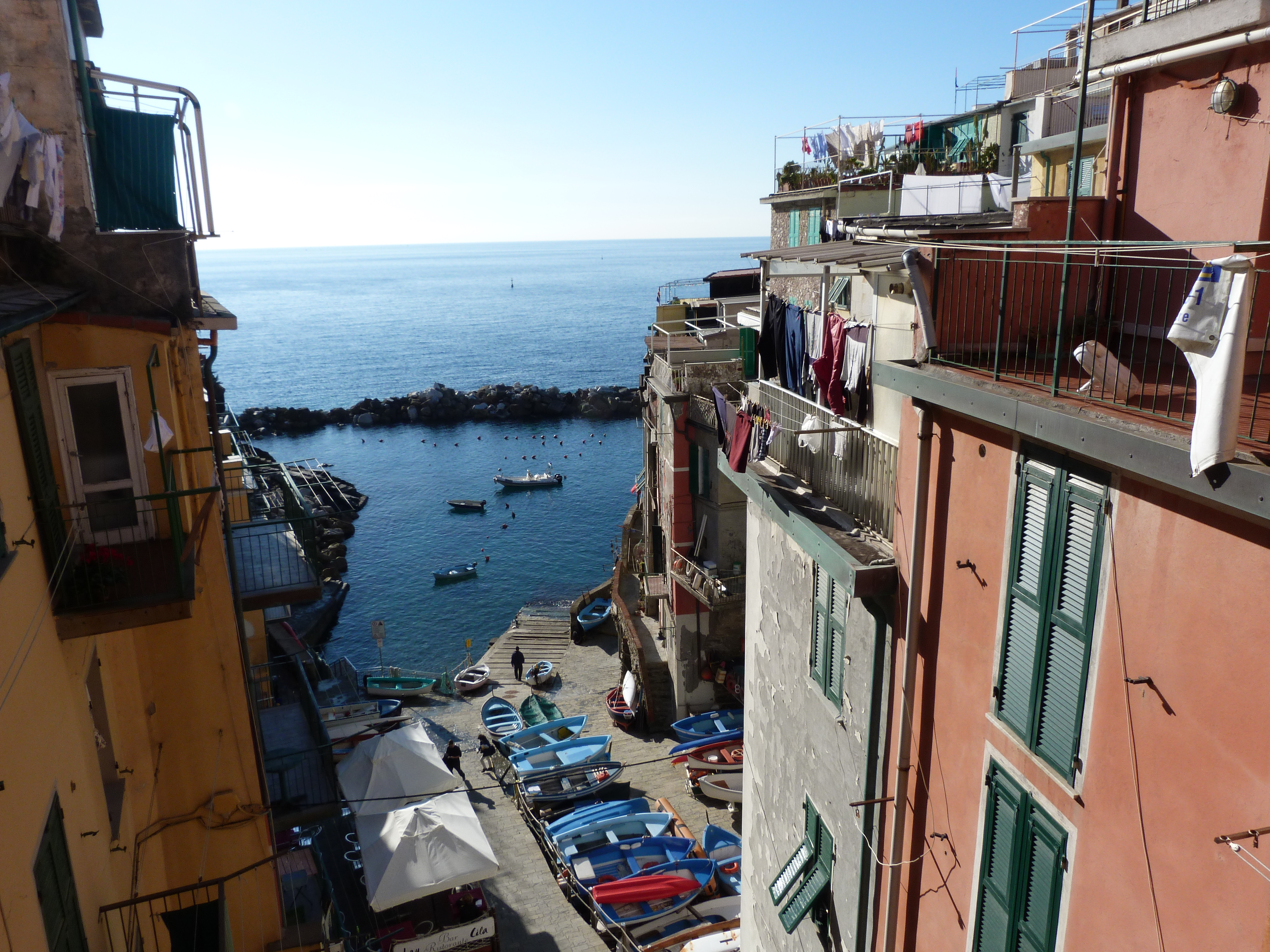
The Cinque Terre are 5 tiny villages that perch on the edge of the cliffs along the Ligurian coast. The name means five villages, not lands, and stems from medieval times. Cinque Terre comprises the towns of Riomaggiore, Manarola, Corniglia, Vernazza, and Monterosso al Mare.

Historically subject to raiding by pirates from North Africa, the peaceful little villages are now protected by the Cinque Terre National Park authority. Declared a World Heritage site by UNESCO in 1997, the villages are not accessible by car, but are linked by train and, in the summer, by regular boat service. There are also extensive hiking trails between the villages and through the surrounding hills.

Trains leave from La Spezia for Riomaggiore every half hour. The train ride itself is only 8 minutes long but the journey takes you from a busy, gritty working city to a magical fishing village of tiny shops and restaurants, carved into the cliffs.

Riomaggiore

We arrived in Riomaggiore on a gorgeous sunny day a few days after Christmas and set off to walk up the incredibly steep main road, finding churches and piazzas hidden away in the labyrinth of tiny streets. A recording of Placido Domingo was playing on a speaker in the street and we followed it into a tiny room, carved into the rock, filled with a massive nativity scene.

The Nativity Grotto

A whole village was reproduced, with figures fishing, shopping, washing clothes, all powered by water. It was the first of many nativity scenes that we have seen in Italy.

We decided to have lunch in La Grotto, a restaurant built into the cliff, with raw rock forming some of the walls. The village is known for its fish, so some of us decided to see what the local cuisine had to offer from the sea.

The harbour in Riomaggiore. A fish lover's paradise.

My mother Laurie and I ordered a specialty of the region called Ciupin’. “Cuipin’ di pesce fresco del golfo con pomodoro, pepe nero e romarino servitor con frette di pan tostato”. (Fresh fish from the Gulf with fresh tomatoes, pepper, rosemary sauce, served with toasted bread). We thought that it was a fish soup but when it arrived there was no real broth – just a massive amount of fish. Sea bass, sole, mussels, clams, scampi, 3 different parts of squid. All with heads and tails, each tasting unique, in the delicious sauce. It was a bit of work, but with the fabulous breads and local wine it was one of the most delicious meals I have had.

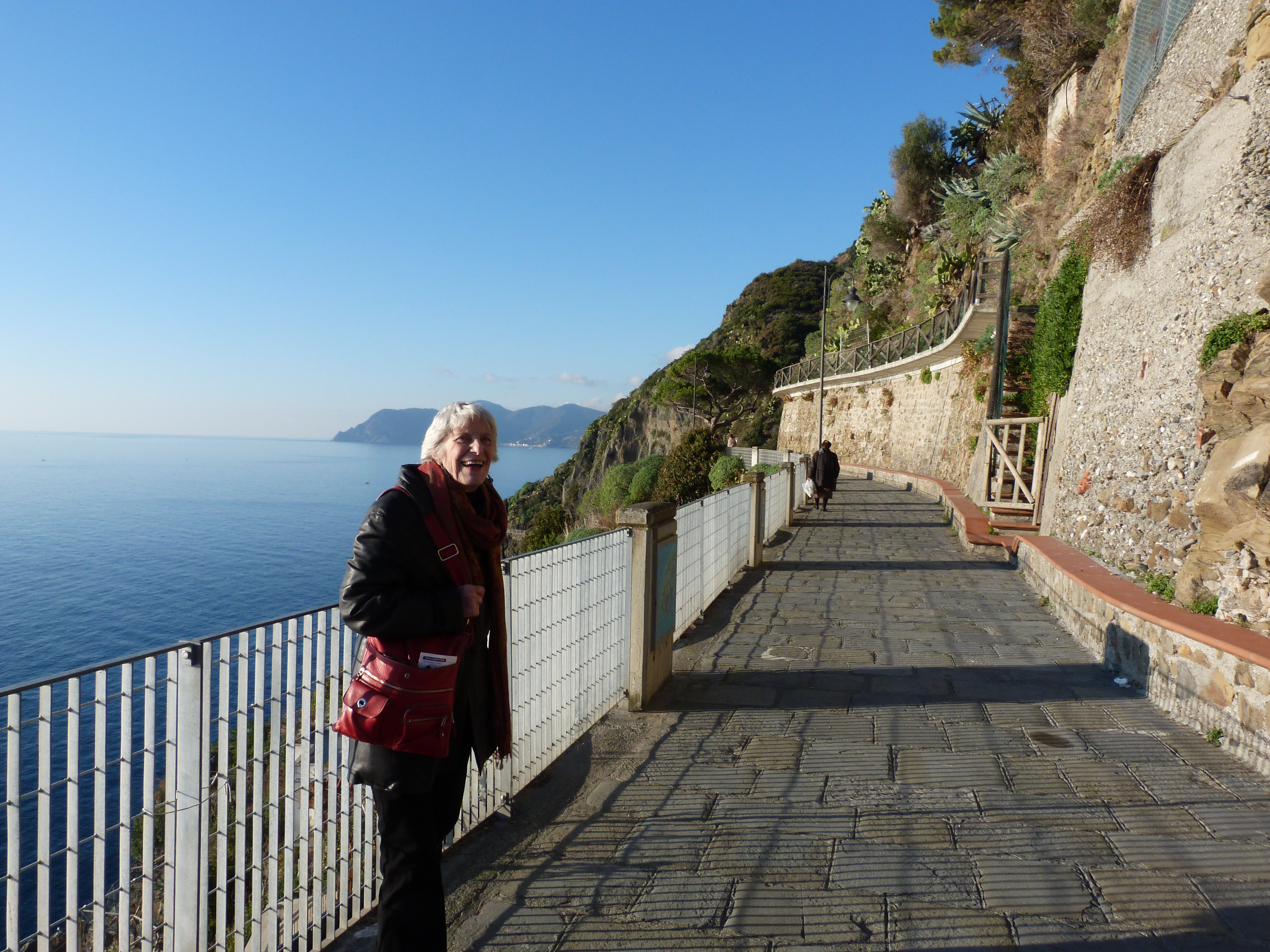
After lunch, we wended our way along the Via dell’Amore toward the next town, Manarola. In reading about the Cinque Terre, the walk is described as a hike, but I think it is better thought of as an exquisite promenade.

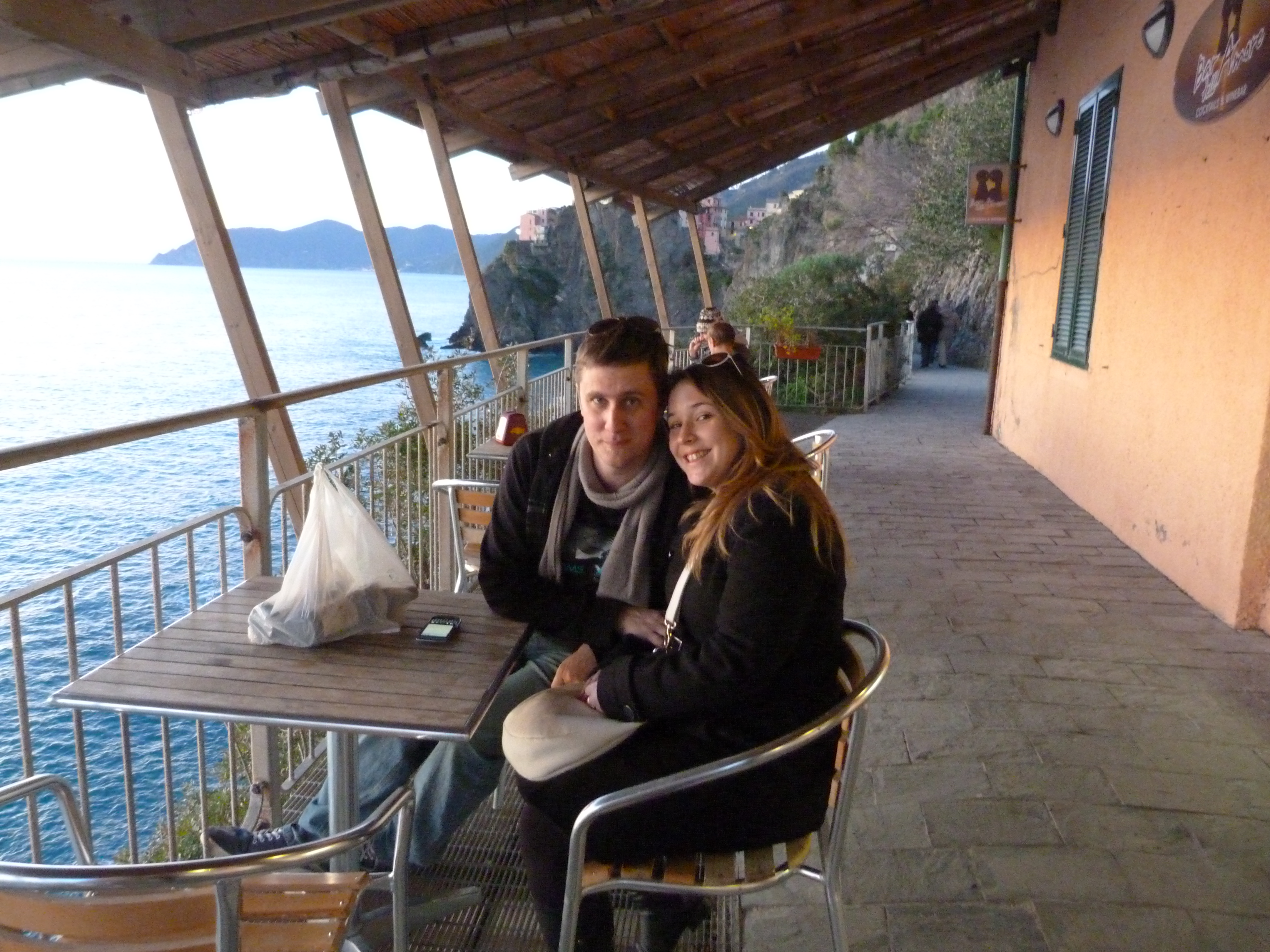
Momma Laurie hikes the Via Dell'Amore

It is a paved walkway along the cliff edge, festooned with tiny locks, left by lovers pledging their love together. It really is just about as romantic as you can get.

Lover's locks

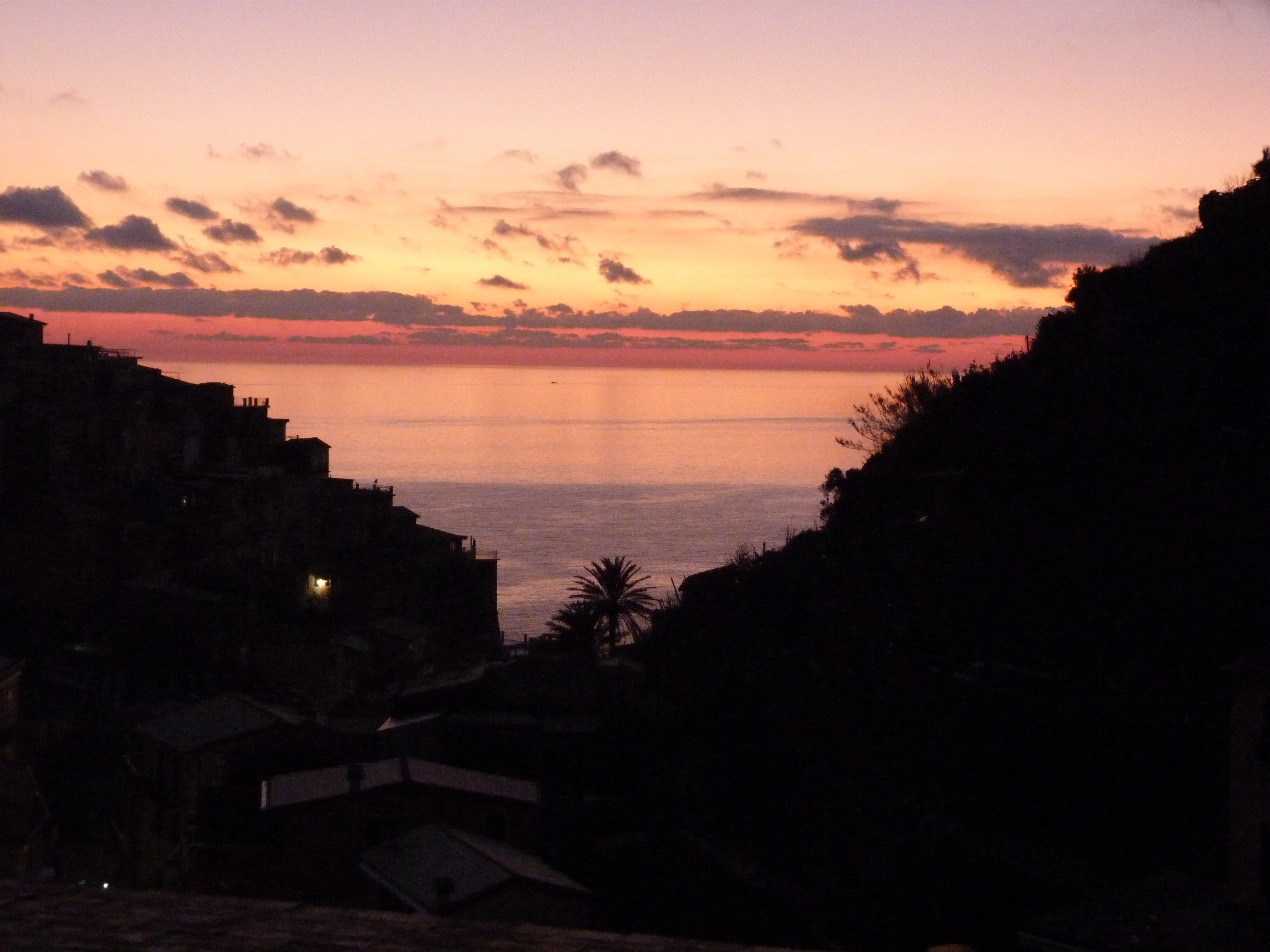
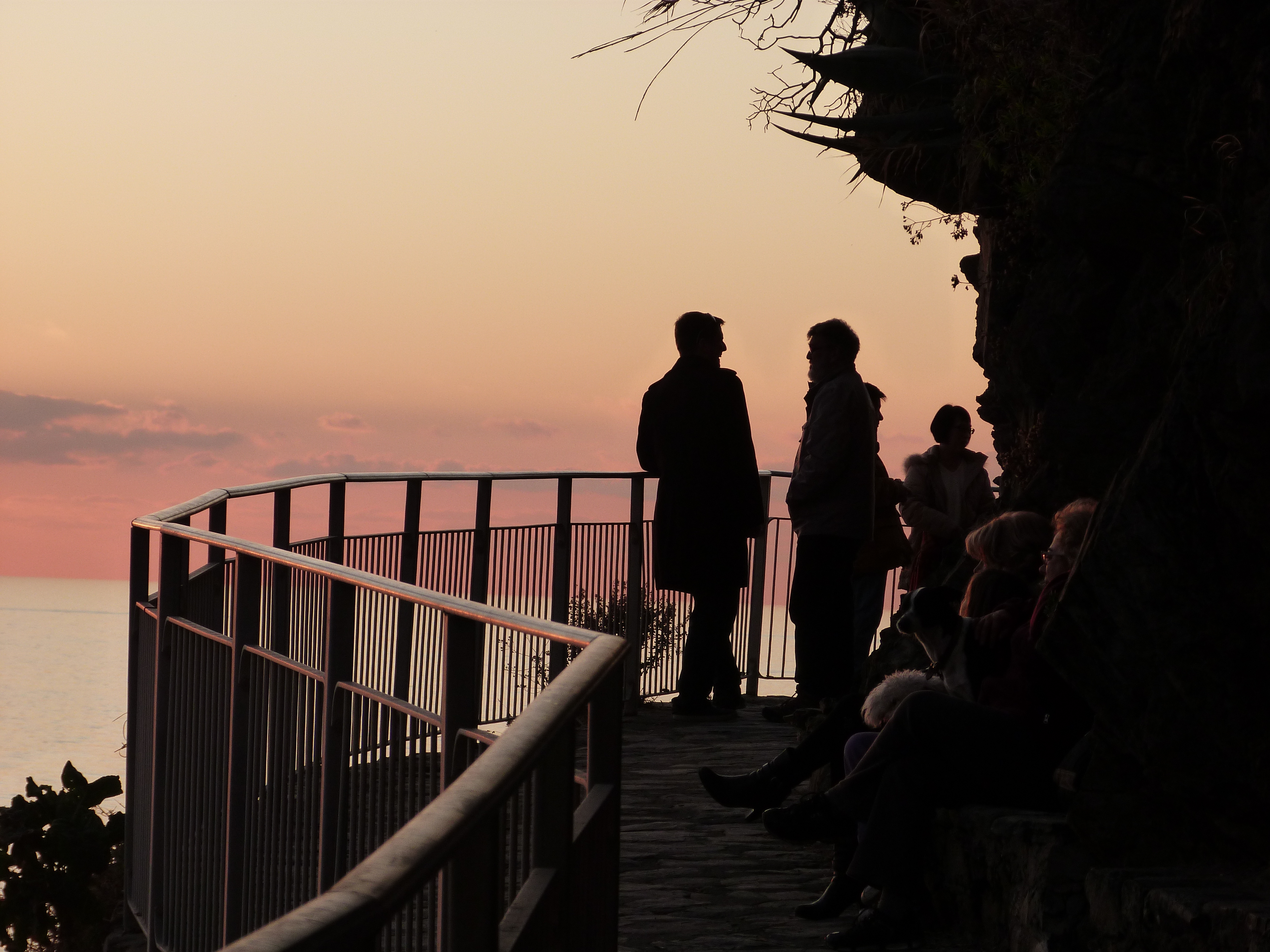
We arrived in Manerola as the sun was beginning to set. We walked to the top of the town and stood in the piazza outside the church (built in 1388), watching the sunset.

Sunset in Manarola

Just above the town, in the terraced vineyards above the houses, was a massive nativity scene. Figures of the nativity and of every day working people were lit up as the darkness set in. Apparently these are the work of a local resident, who sets up many different religious scenes as a tribute to his father.

Nativity scene in the terraced vineyards of Manarola

There are over 200 figures illuminated by 12,000 lamps, making it the largest nativity scene in the world. The picture does not do them justice, unfortunately. It was a very memorable sight.

We were a bit too late in the day to go on the vineyard tour, but made up for that by buying several bottles of local wine. There are miles of grape vines on the hills above the towns and the terraced vineyards are one of the reasons for the World Heritage Site status. The sheer number of stone terraces is equivalent to the building of the Great Wall of China. We are happy to take home a sampling.

Two days later, Xan’s partner Meghan arrived from Canada, and we knew that we wanted to go back and visit the third town, Corniglia, with her. The last two towns, Vernzza and Monterosso al Mare are currently closed to tourists. There were deadly mudslides in October that have closed the towns, as well as the path between Corniglia and Manerola. But we were able to take the train to Corniglia and explore.

The main square in Corniglia

It is the tiniest of the villages (population about 240) and sits highest on the hills. It is not as often visited by tourists, because it is a bit more remote. But it was well worth the climb, or the cost of the shuttle that drives up to the hill top.

Corniglia has been famous for producing good wines since Roman days, and in the regular season there are tours and wine tasting bars. It was exquisitely quiet when we arrived, and much of the town was closed. We spent time in the sunshine in the main square, the Largo Taragio, centre of which spouts the old town well that used to bring in water from the hillside to the locals who lived without plumbing.

The Largo Taragio, with a memorial to the dead from WW1, and the old town well

In the Oratory of Santa Caterina on the Largo Taragio the nativity scene included a tiny pizzeria, with a man putting pizza into the oven. From the square we continued to climb higher to a small clearing and the Santa Maria Belvedere, the most stunning look out point to the sea.

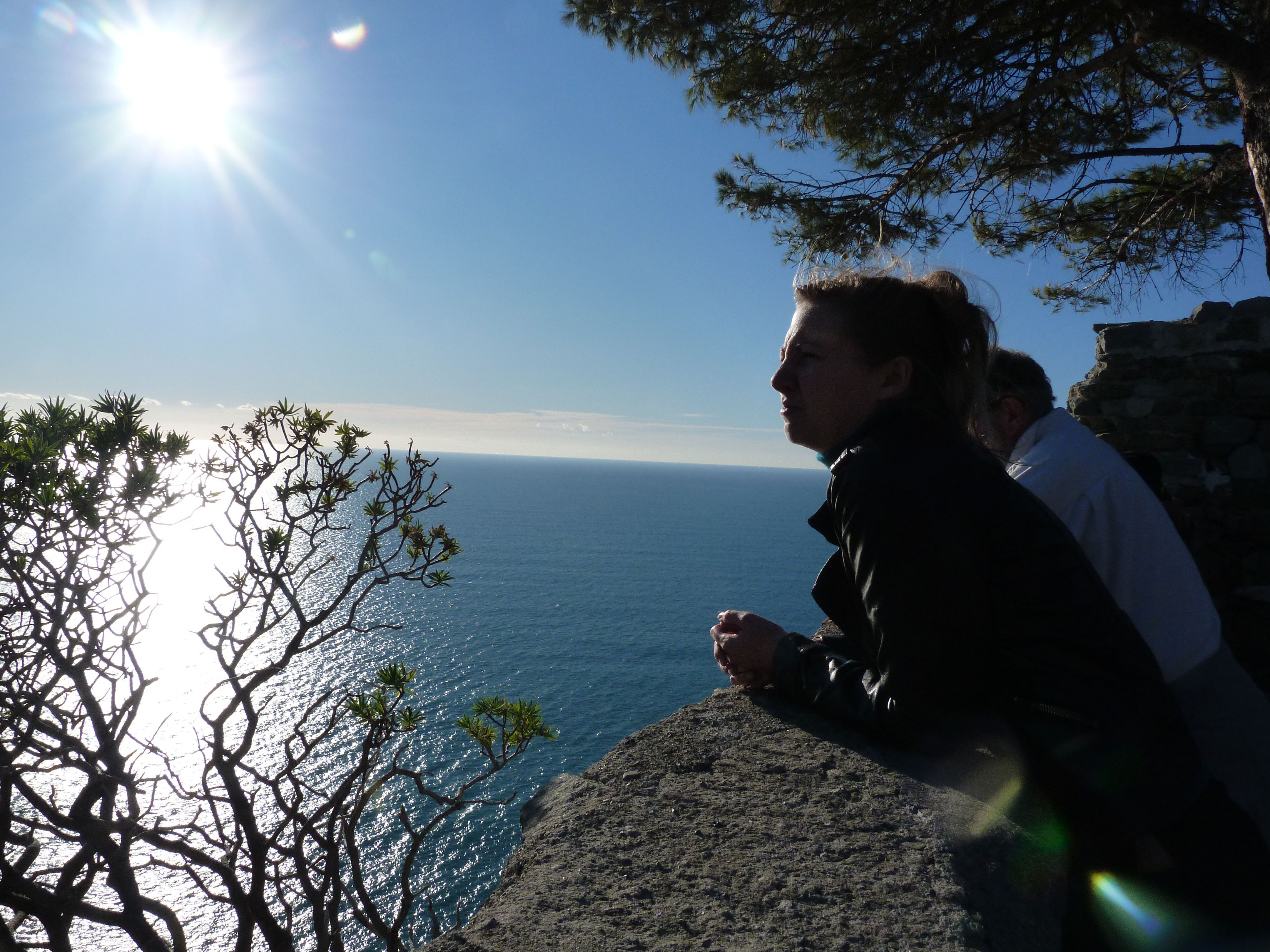
Maddy & Tim looking out from Santa Maria Belvedere in Corniglia

It is a natural sun trap and a perfect picnic spot.

However, we didn’t bring picnics – we were there to sample local cuisine. We discovered the Enoteca Il Pirun, a wine bar and tiny restaurant that served us an amazing meal of pastas. Tim & I shared a plate of acciughe sotto limone (anchovies marinated in lemon and olive oil) that was one of the highlights of our visit. Sweet and lemony – we were eating fish caught directly outside the village with lemons grown on the trees in the village and olive oil made from olives grown on the surrounding terraces. How could it be better? We all shared around our different plates of pastas with mussels, clams, pesto and rolled away from the table late in the afternoon to take the 3-minute train ride to Manerola. From Manerola we walked into the sunset of Via Dell’Amore toward Riomaggiore. A couple of new lovers locks were added to the collection.

Xan & Meghan on the Via Dell'Amore

We’ve only scratched the surface of Cinque Terre. There was so much to take in and we were overwhelmed by the outrageous beauty. We are already making plans to come back to visit the last two towns, to hike the high paths through the vineyards, and to perhaps pick up a few more bottles of local wine.

Sut set on the Via Dell'Amore

Portovenere

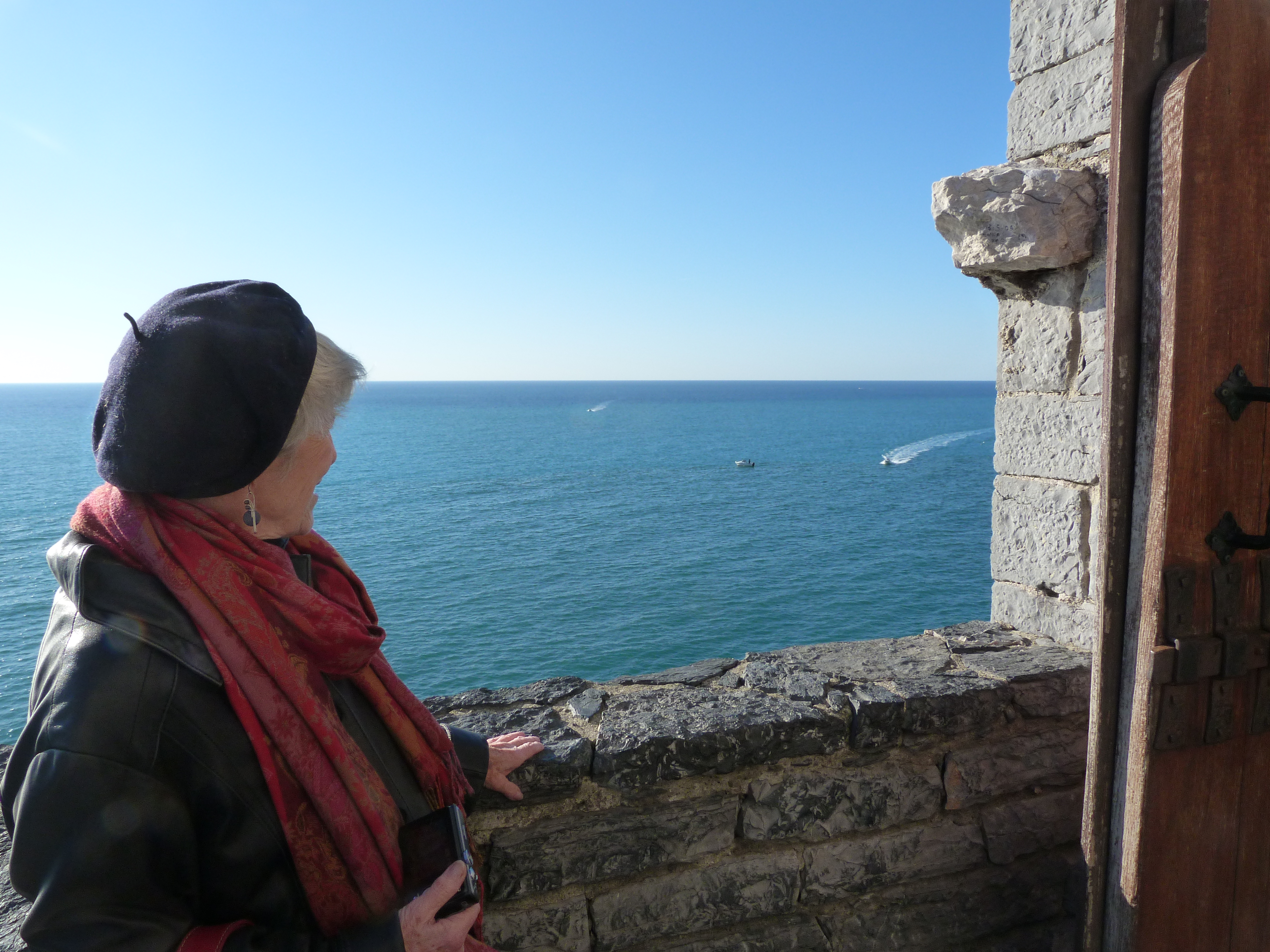
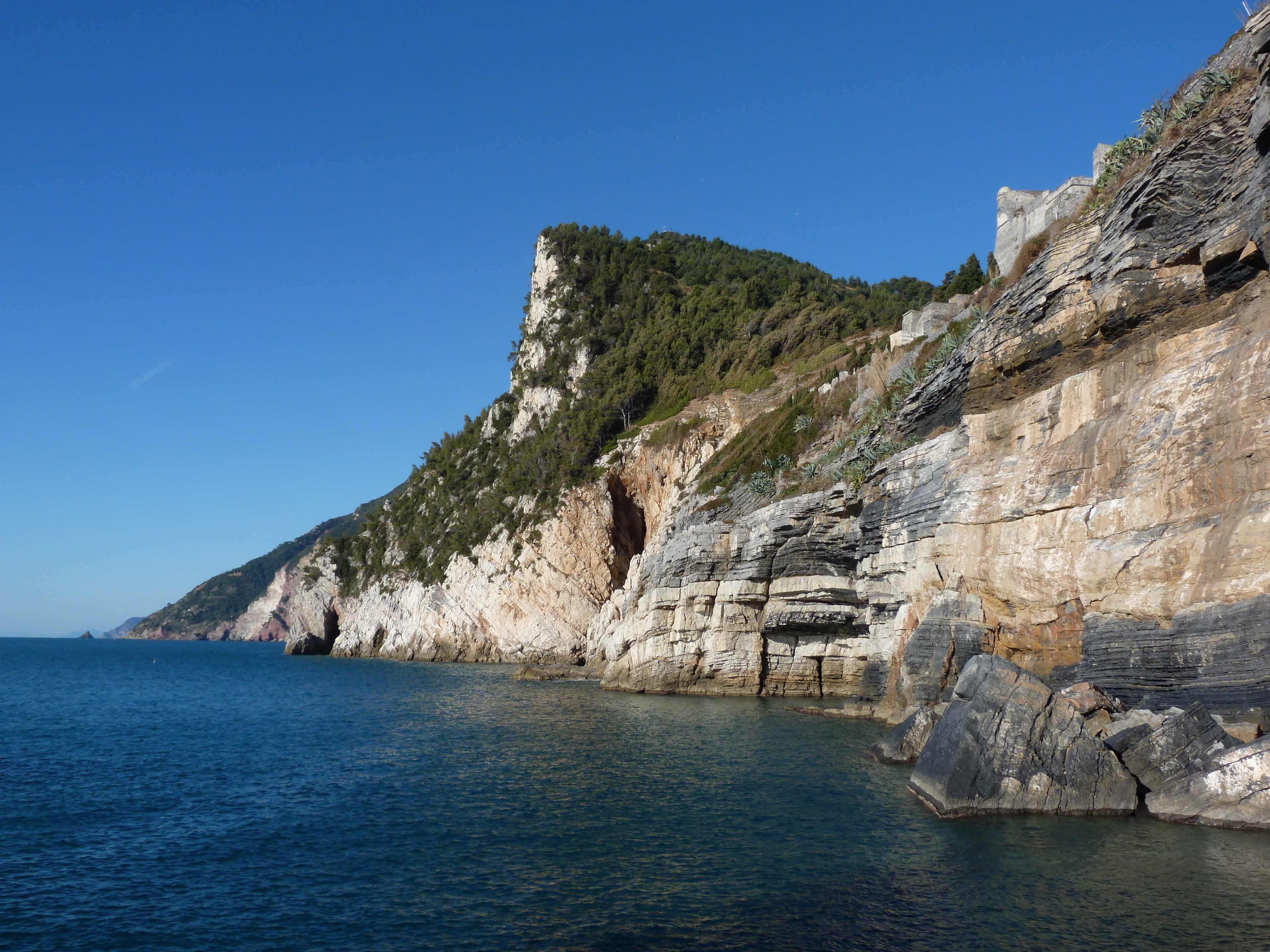
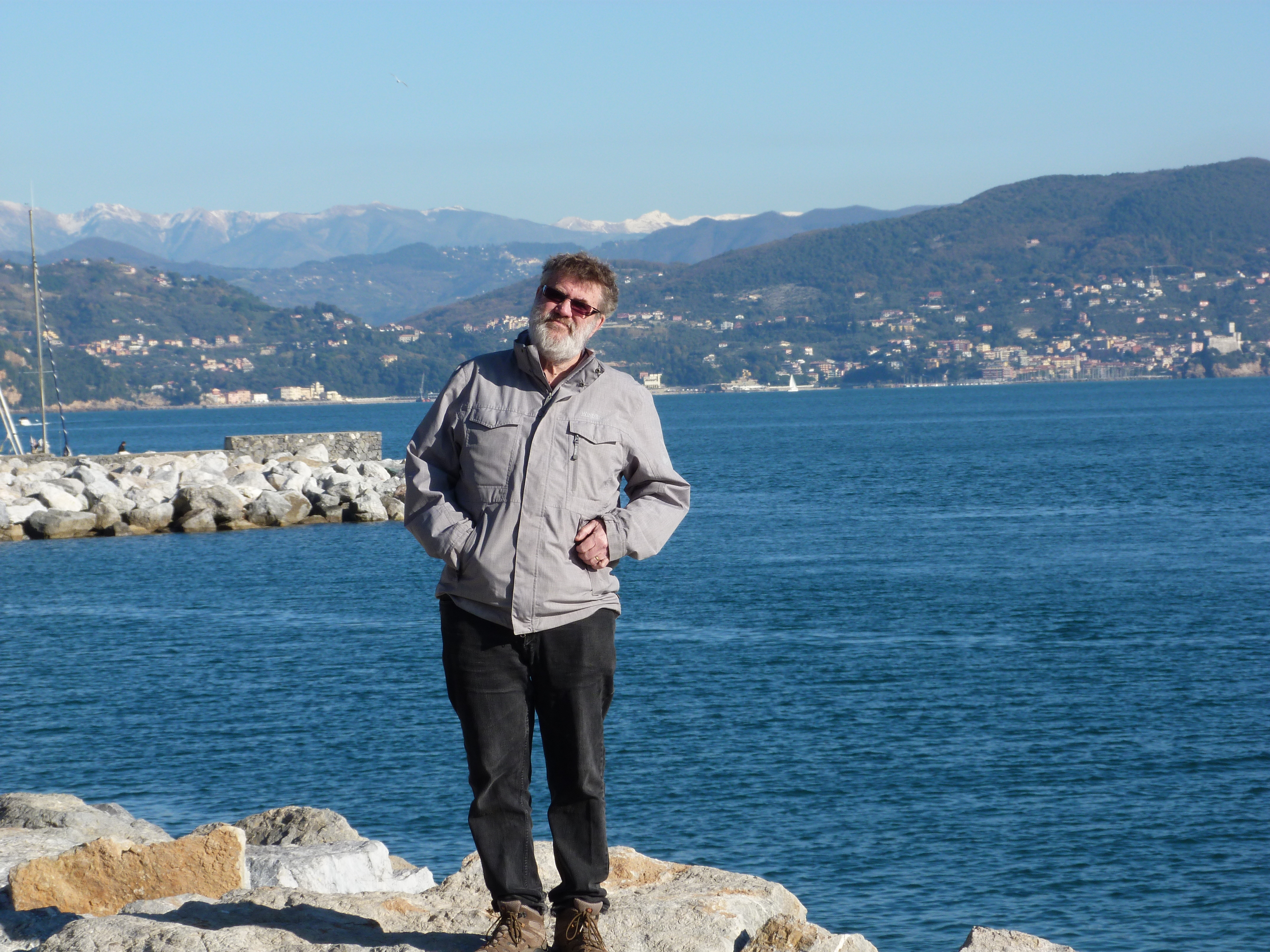
Portovenere is on a promontory that juts into the western edge of the Gulf of La Spezia. A 30-minute bus ride from the city of La Spezia, the roads snake along the coast to take you from the work-a-day world of La Spezia to a resort and fishing town of startling beauty.

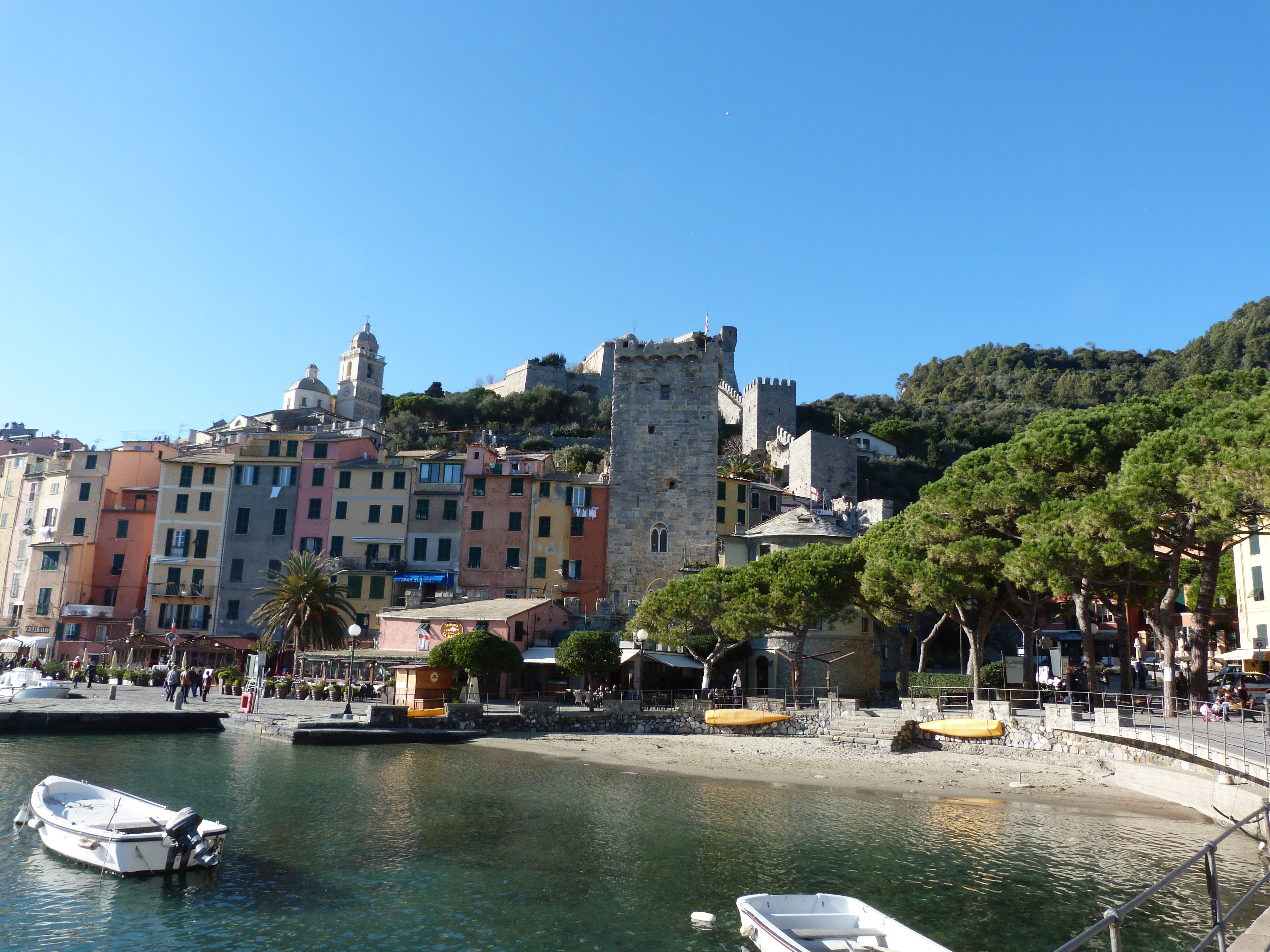
Portovenere

A piazza runs the length of the town, with restaurants spilling out into the sunshine. Fishing boats bob on the docks and ferry people over to the island of Palmaria, directly across from the town. It is a picture perfect Riviera town.

The Romans built an outpost here as a base en route from Gaul to Spain. The Byzantines, Lombards, the Genovese and Napoleon all passed through, leaving their marks. We walked around the piazza with our jaws dropped. It was our first experience of this kind of Mediterranean beauty.

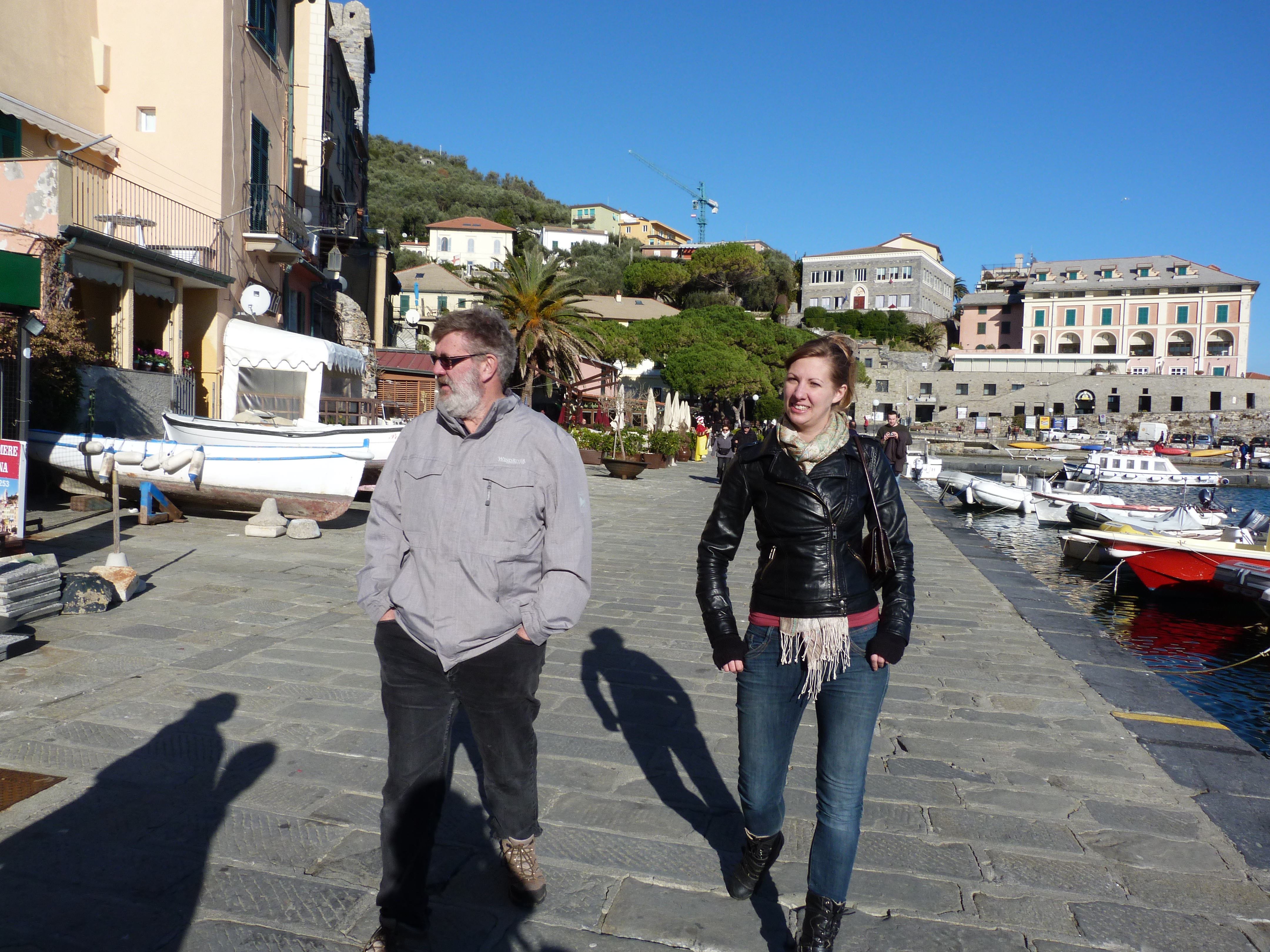
Tim & Maddy walking by the docks

The path led upwards on cobbled steps to the Chiesa di San Pietro.

Chiesa di San Pietro

Traces of a Roman temple have been found here. The temple is thought to have been dedicated to Venus from which came the name “Portus Veneris” —  Porto Venere. Like most sacred places, successive generations have added and adapted according to needs, and so the Chiesa di San Pietro is a mixture of Romanesque and Gothic styles. Built of white and black marble in the Gothic-Genoese style, it sits right on the edge of the water. A “back door” leads out to a small stone platform overlooking the bay. A perfect sun trap.

Mother Laurie Lewis behind Chiesa di San Pietro

The church sits on the edge of a large square with access to the Grotta Arpaia. The Grotta Arpaia opens out to the other side of the promontory and has steps walking down to the rocks below.

Grotta Arpaia

The Grotto is dedicated to the poet Byron. Byron and Shelly both spent a lot of time in Portovenere and in Lerici.  Byron made this grotto famous by swimming from here around the promontory and on across the bay to Lerici. Shelly was not so lucky, nor so adept at swimming. He drowned in the bay when his boat capsized, sailing from Lerici.

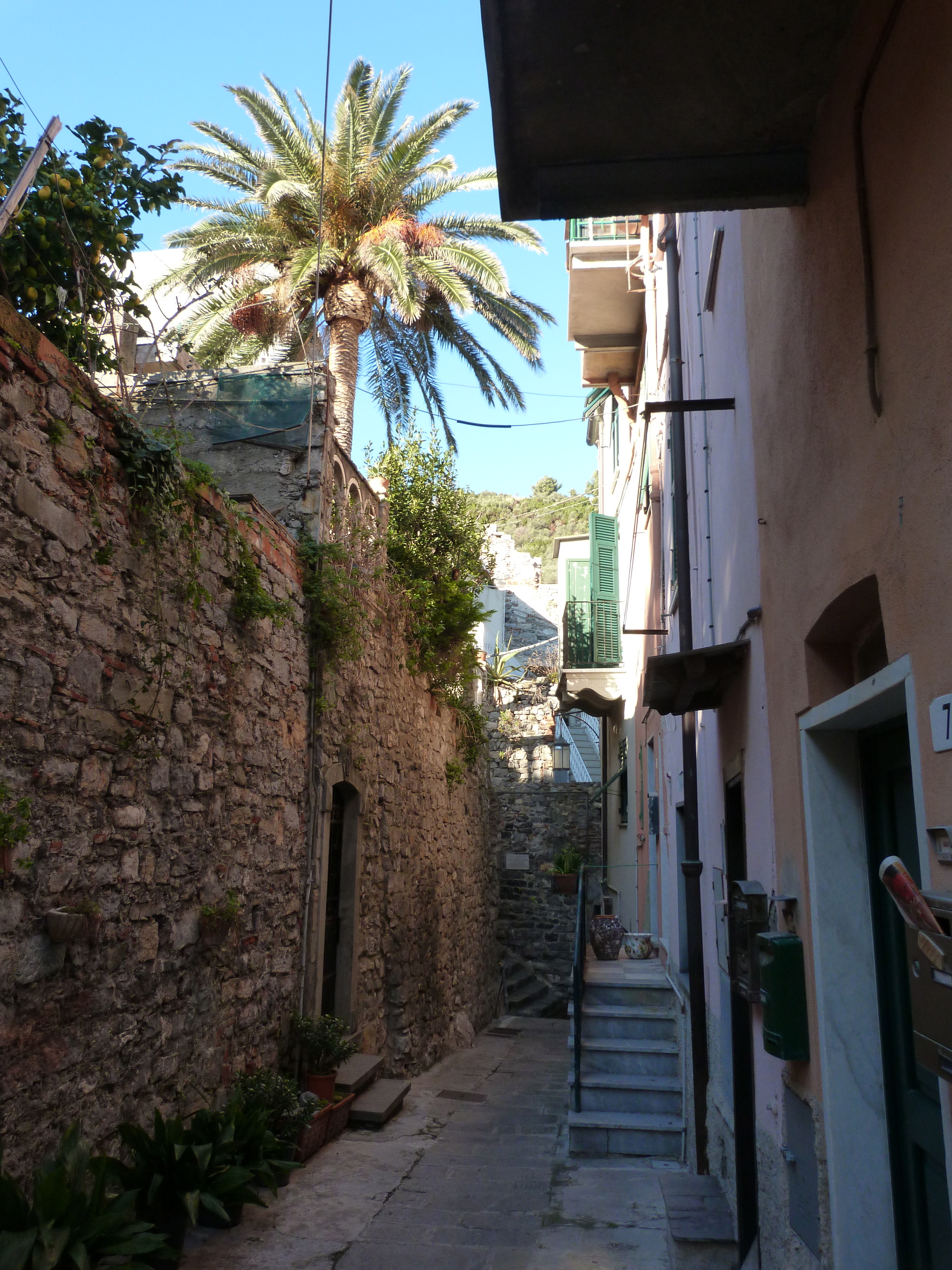
We explored the winding cobbled streets, with homes, shops and restaurants tucked into narrow alleyways and along steep stairs.

Narrow streets winding up the cliff

A labyrinth of walkways led us to the Chiesa di San Lorenzo, built in 1130. Tim & I were passing by on an upper level right beside the bells as they started to chime. We were almost deafened by the sound. But we were close enough to hear, well, really to feel, the harmonics of the two toned bells. An extraordinary experience.

Chiesa di San Lorenzo,

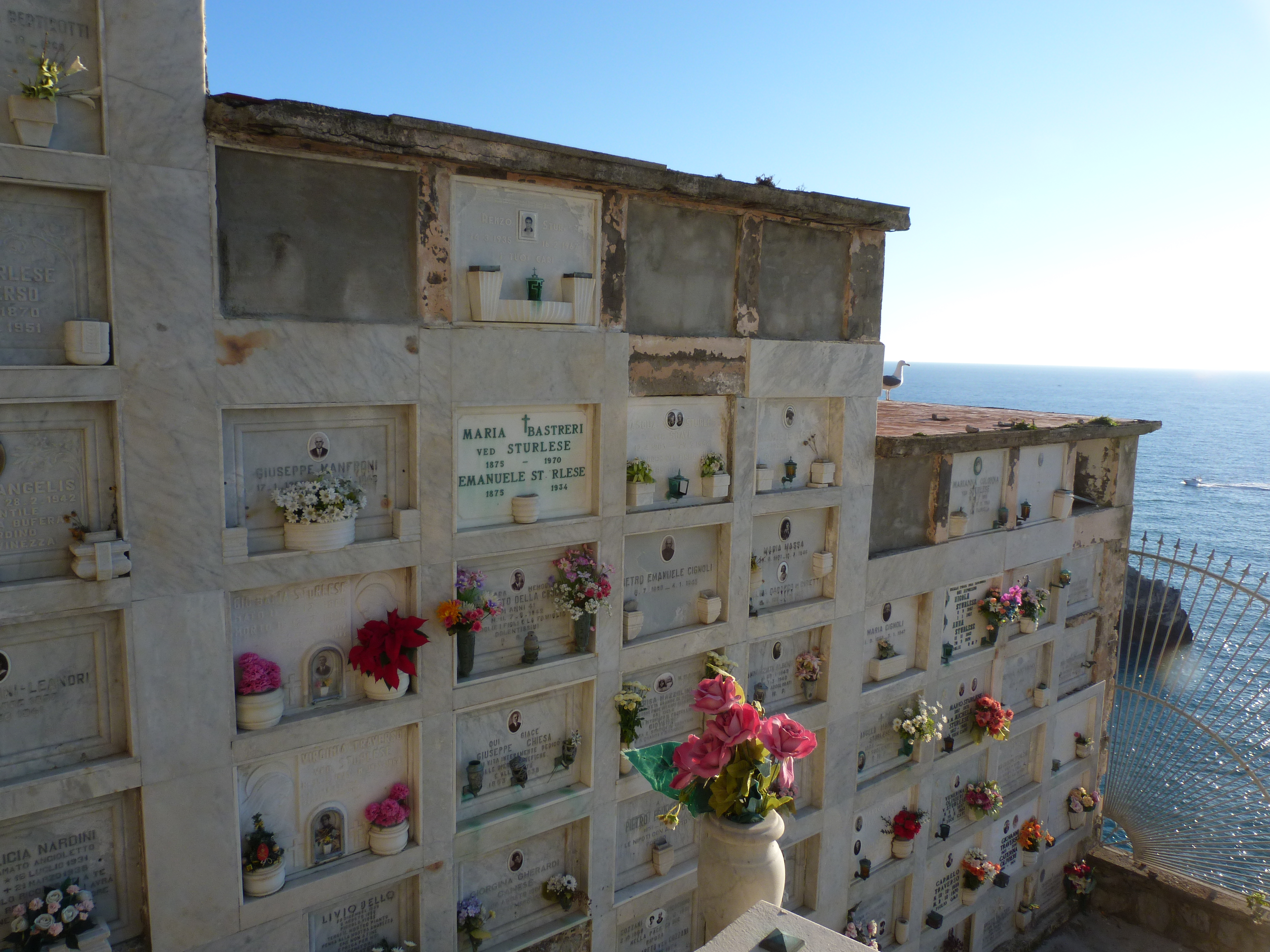
We walked higher, to the outer ramparts of the Castle, built in 1161. But rather than go in, Tim & I became distracted by a cemetery on the edge of the cliff below the castle. The cemetery has a few mausoleums, but the final resting places are mostly in marble walls facing the ocean. Apparently there is a rotational system – for the first generation after your death you get a fairly prominent position. Gradually, your remains are moved to one of the less accessible places. All in all, we think it is a lovely place to honour the memory of a loved one.

A beautiful final resting place

We ended the day thoughtfully, and happily bundled our family back to the villa for dinner.

Tim on the dock of Portovenere, Lerici in the distance across the bay

A sunny Christmas morning

Before coming to Italy, we warned ourselves that the end of December would be wintery and cold. We were prepared for grey rain, but decided that the weather didn’t really matter. We thought it would be fun just to be together, eating wonderful Italian food and drinking local wines.

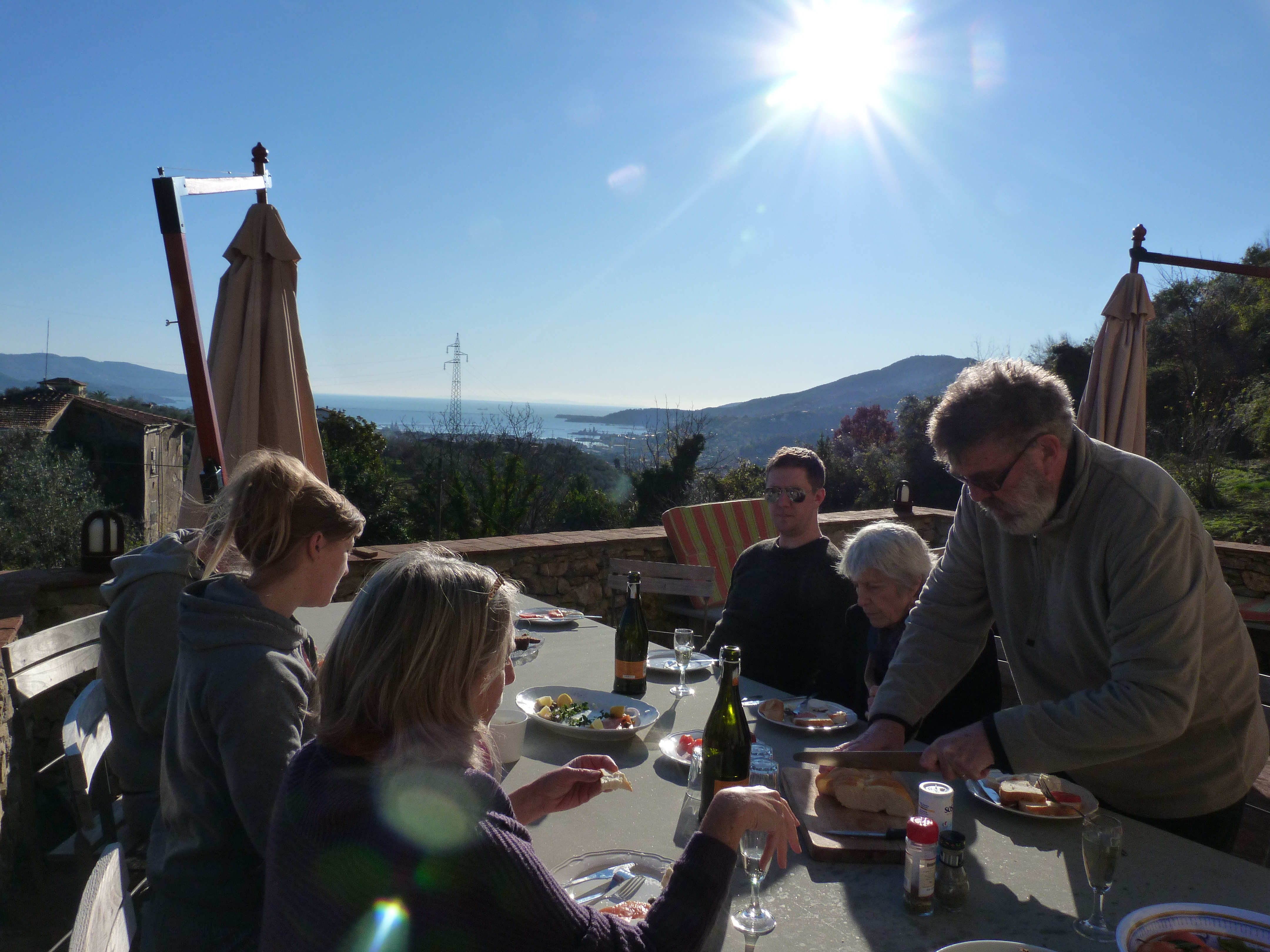
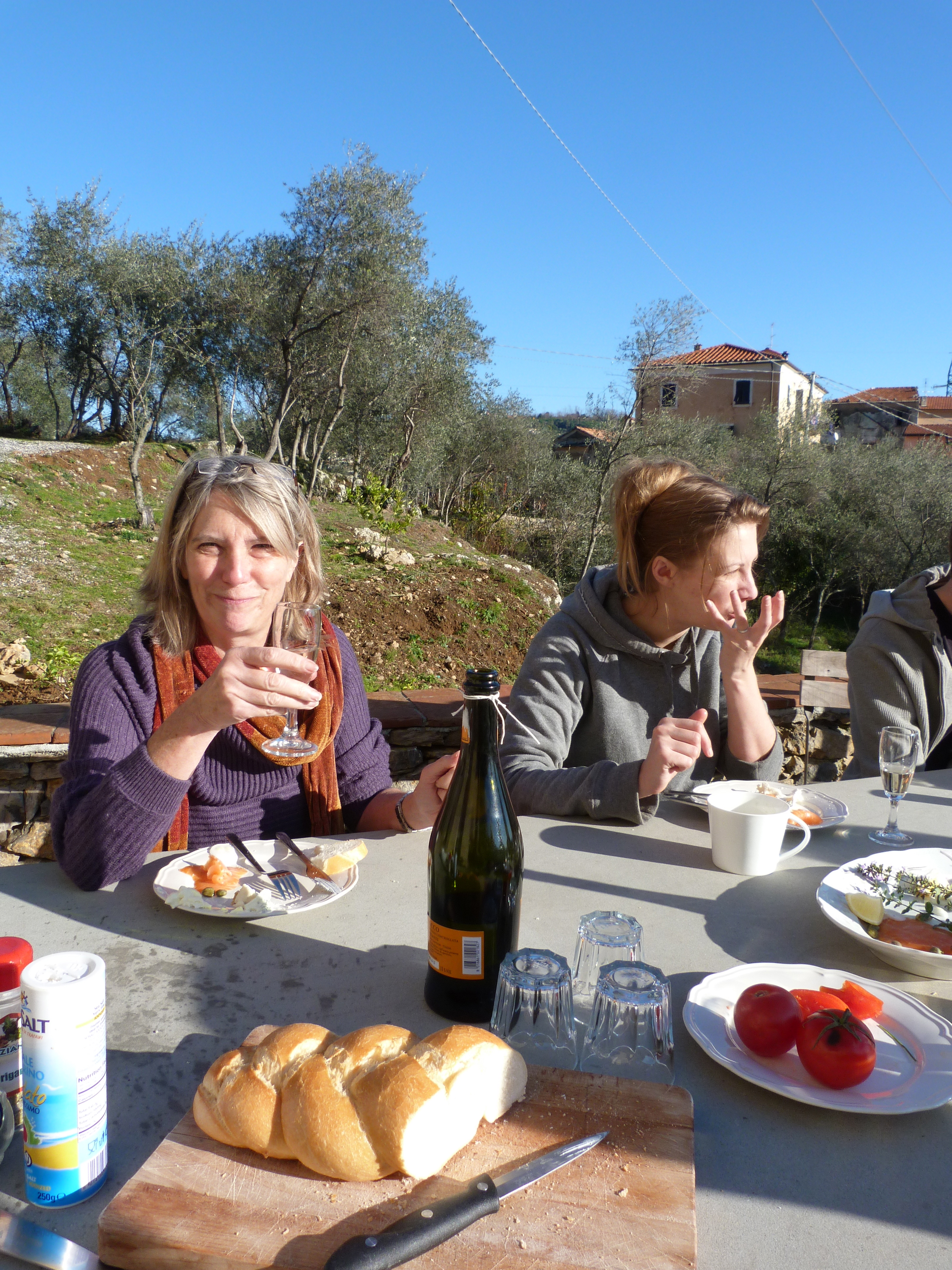
What we had not expected were hot sunny days, breakfasts and lunches on the terrace and long walks on the hillsides. Christmas Day broke with a thunderously beautiful sunrise. Unbelievably, it was warm enough for us to have our Prosecco, bread, cheese and smoked salmon sitting out on the terrace overlooking the sea. Church bells chimed as we launched into our Panatone.

Breakfast on Christmas morning
Celebrating with Prosecco

The villa is right beside the AVG, “Antica Via del Golfo”, a centuries old trail that connects surrounding towns and villages. Walking down it, we can get to La Spezia in about 15 minutes. Walking up takes a lot longer, and is brutal on the thigh muscles. It is really steep. But when we are on the path we invariably meet someone much older than us walking comfortably, not breathlessly panting as we are. We’re always greeted by a cheery buon giorno, or buona sera. So walk up we do, as often as possible, if only to save face and justify the huge quantities of food we can not resist eating.

The AVG also gives a unique opportunity to hike up the mountain and explore remote villages with breathtaking views. The path crosses a zig zag road with hairpin turns, clearly beloved of Italian drivers. It is the kind of road that Italian movies make famous. But walking the path gives you time to explore and see the pace of other people’s lives.

A view from the AVG, with a view of the La Spezia Gulf

On Christmas morning we headed up, unsure of where it would take us but mostly just wanting an excuse to walk and talk in the sunshine. We walked higher and higher up the mountain, surrounded by a feeling of celebration and the joy of being alive. We may see each other all together only once a year, but we know how to reconnect quickly, on a mountain top.

Maddy, Xan, Lewis and Amanda. Christmas morning in Italy

A Christmas Eve feast in Italy

Our Christmases have always looked a bit like an archetypal Christmas card. We decorate a tree with ancient ornaments, curl up by a roaring fire, and watch puffy snowflakes weigh down the enormous pine trees outside our windows.

But we knew that this year we would break with tradition. Since we are on the road, we decided that we would all gather as a family in Italy. Through the magic of the internet we found Villa Maggiano, a luxurious villa outside of La Spezia on the Italian Riviera. We headed there from our various parts of the world to rendezvous for Christmas.

La Spezia is a busy little city of 95,600 about an hour’s drive from Genoa, on the Ligurian coast. Tim and I flew from London into Genoa, and rented a car to drive to the villa. It had been 5 months since I had driven a car and the twists, turns and roundabouts were sobering, to say the least. On the edge of the city, we headed up a mountain and, fourteen hair-pin turns later, found ourselves at The Villa Maggiano.

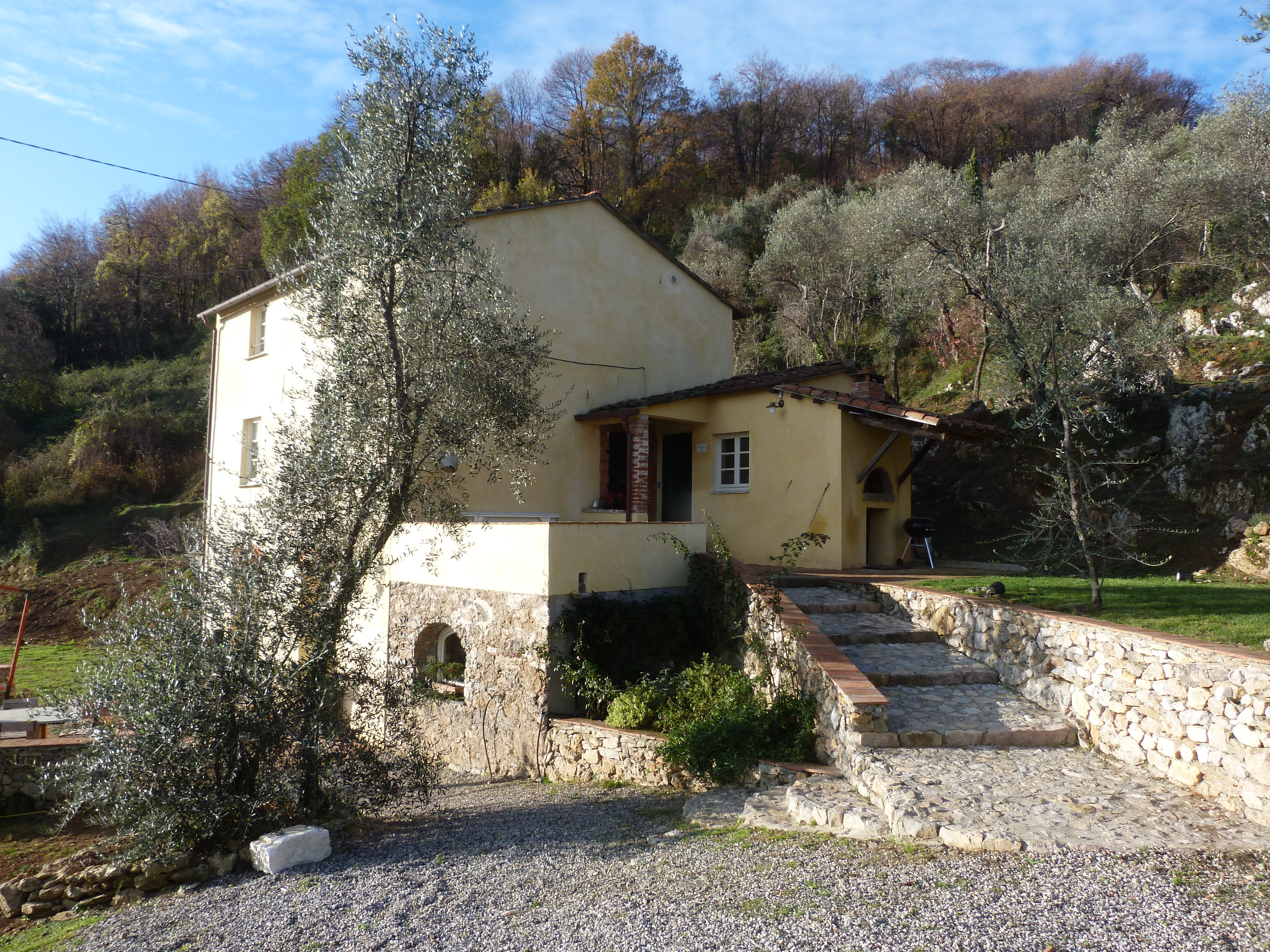
Villa Maggiano

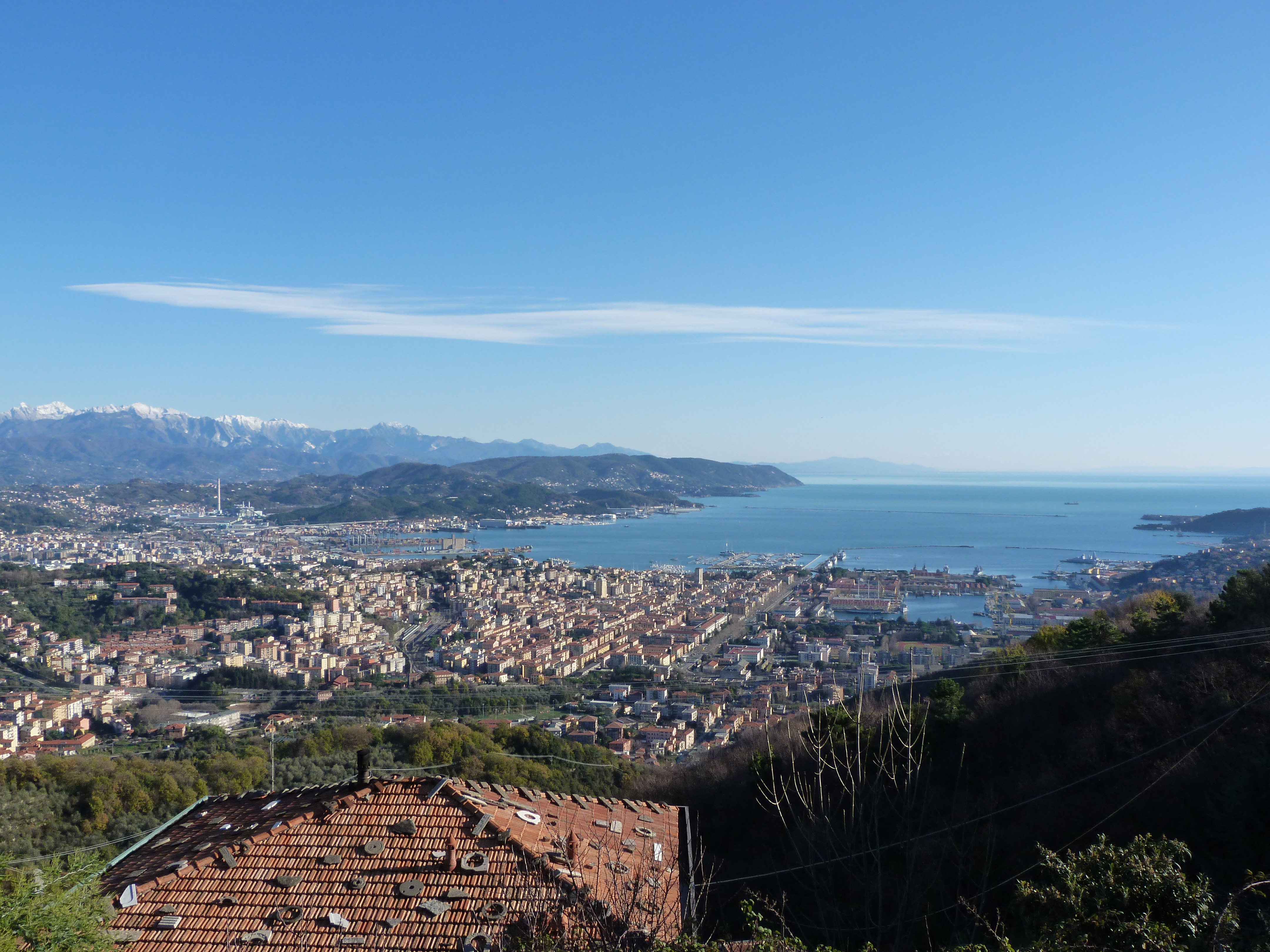
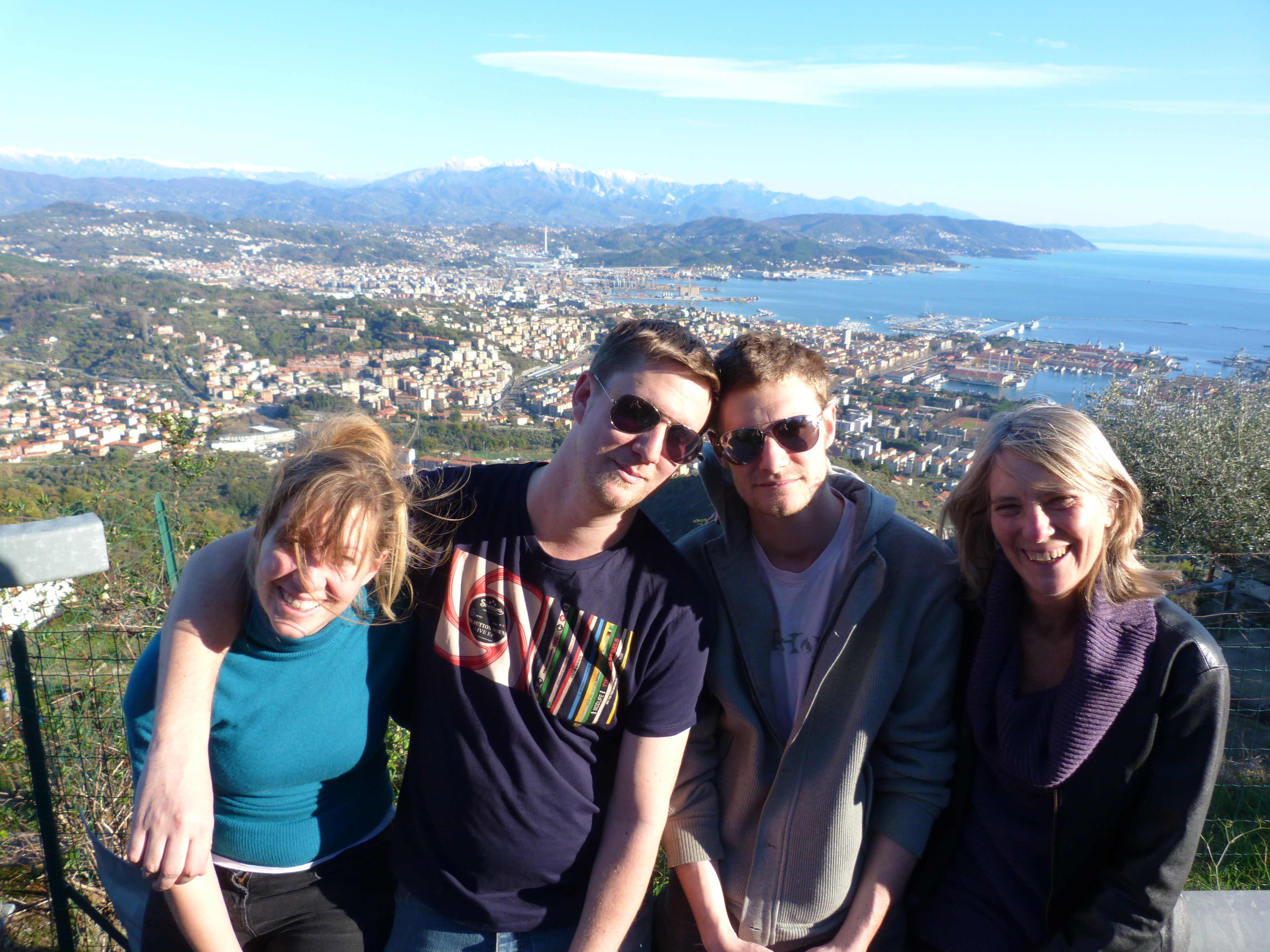
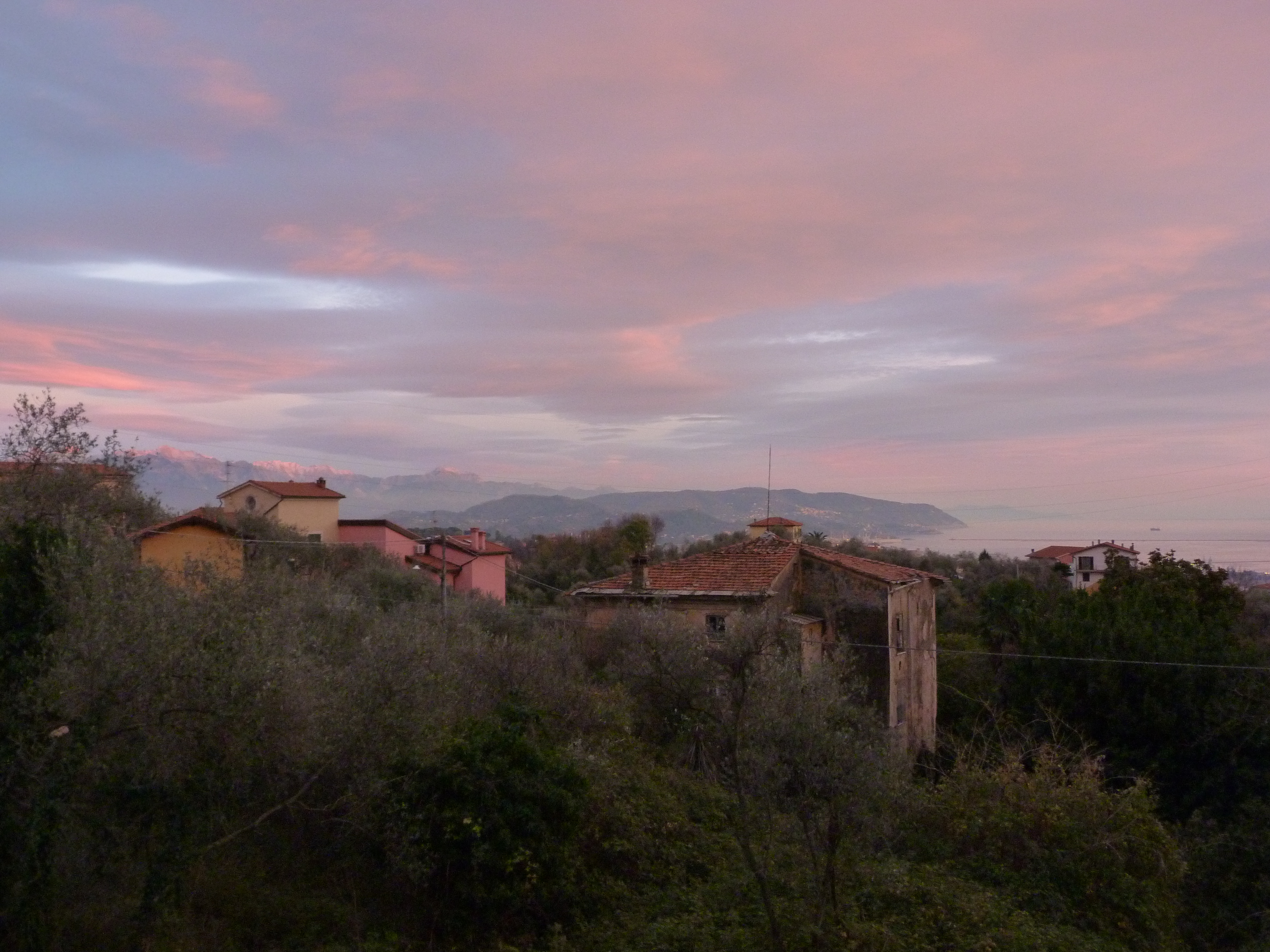
Set in an olive grove, the villa comfortably sleeps 8 and has a large brick terrace that looks out over La Spezia and the Golfo dei Poeti. Naval and container ships crisscross the bay. The Appennino mountain range in the distance changes colour throughout the day as the sun moves across the horizon and reflects off of the snow capped peaks.

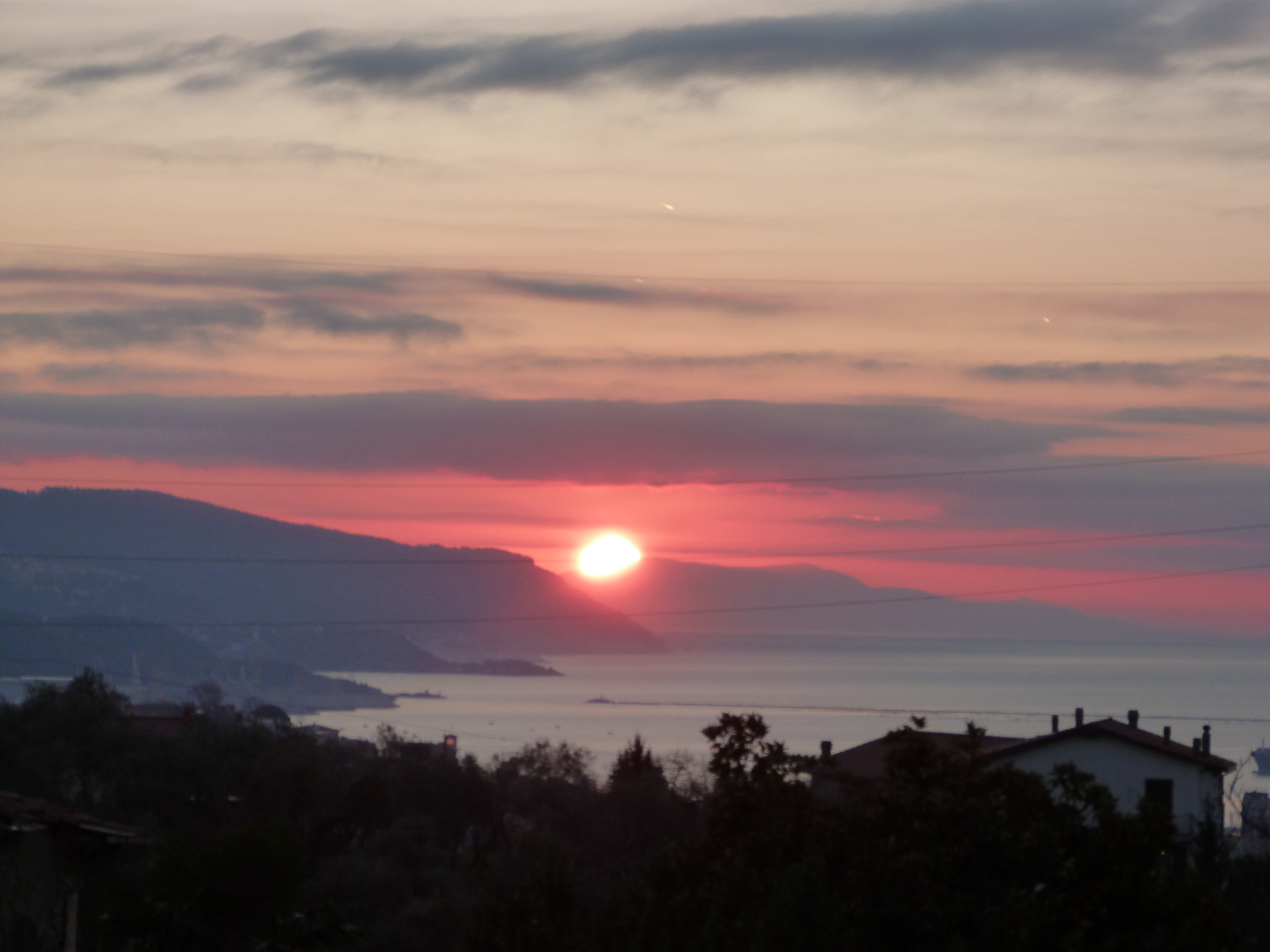
Sunrise over the Golfo dei Poeti

Each bedroom of the villa has a view of the sea and the mountains, and every morning the sun shocks us awake by its beauty. Every night, lights twinkle on the hills and the shoreline, and the mountains fade into silhouette. Could we ask for a better place to spend Christmas with the family?

Our host, Sarah Ferrari, had decorated the villa with poinsettias, wreaths and Christmas ornaments. She greeted us with a large  basket of Italian goodies, and wine from the family vineyard, making us feel at home and ready to kick off the festive season.

Tim and I had a couple of days in which to prepare for Christmas Eve, when the family would all be together at last. We headed down to negotiate the vast market in the centre of La Spezia. This is not a tourist area, and few people speak English. Neither of us speak Italian but we figured out how to ask for ingredients, how to ask for more, how to ask for less. As La Spezia is on the coast, there were about a dozen fish stalls filled with mounds of Branzino (like sea bass), Baccalà (dried salt cod), scampi, mussels, squid, cuttlefish, swordfish, tuna and eels, still moving on their icy bed. There were aisles of cheese and meat stalls with fresh mozzarella, Parmigiano (Parma is just down the road), various ages of Pecorino, Gorgonzola, Prosciutto, Carpaccio, and many things we couldn’t identify. There were rows and rows of fresh fruit and vegetable stalls, nut vendors and olive merchants.

The sun starts to set as we look out from the terrace

We tried (unsuccessfully) to stop ourselves from buying too much. But Christmas is a time for eating and drinking. And a gathering of the Lewis/Wynne-Jones clan happens only once a year, which justifies all kinds of excess. With an over-full larder, we created our Christmas Eve feast.

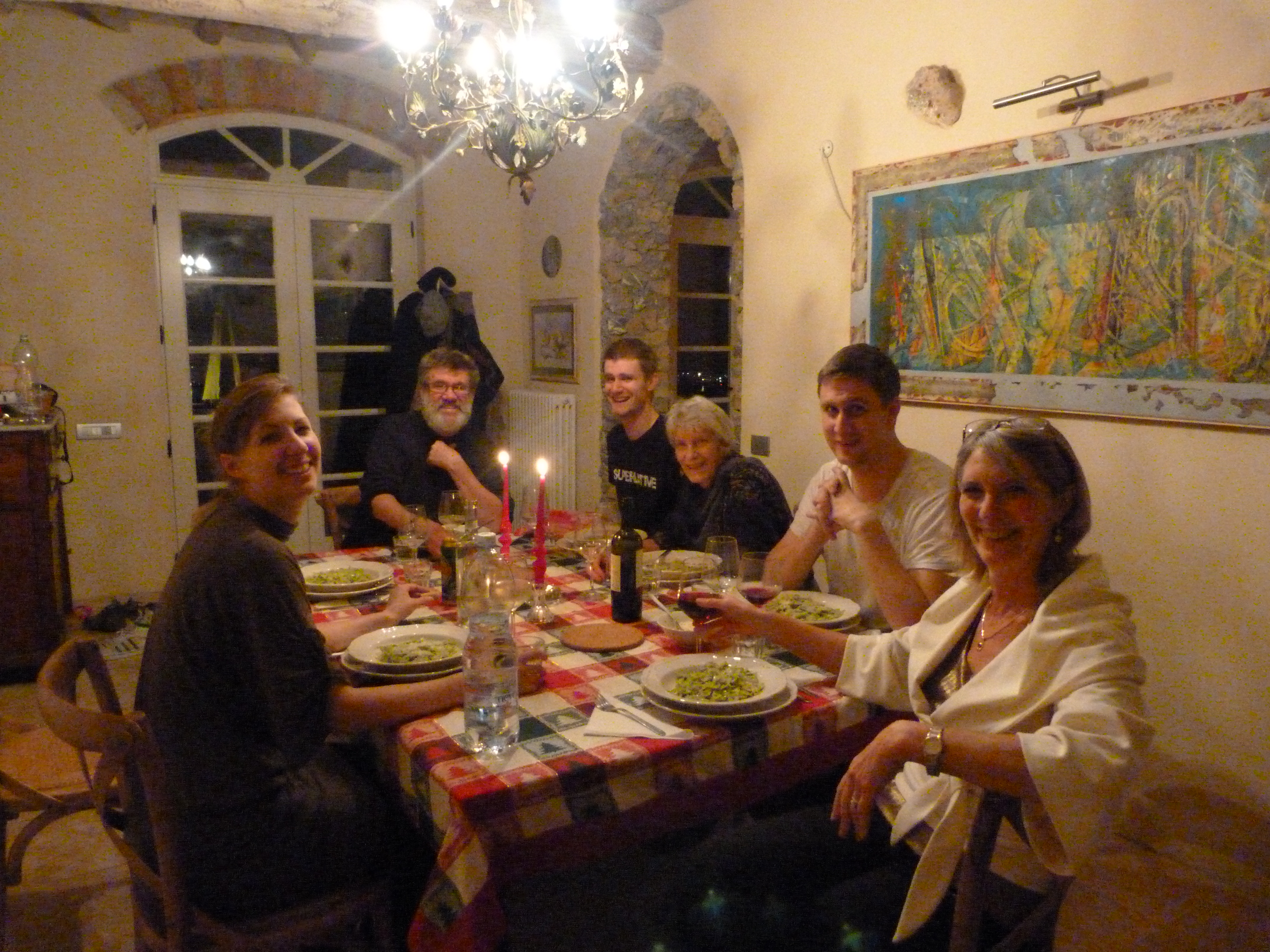
Opening the first of a number of bottles of Prosecco (a case of 12 for 15 euros) we began with an antipasto of olives, marinated artichokes, roasted peppers and fabulous focaccia bread. La Spezia is known for its focaccia and it is deliciously oily and salty, with chunks of olives imbedded into the dough. We followed this with a simple Pesto alla Genoese. This is the region that invented pesto and we bought a big tub of it at the market. It was like no pesto I have ever made or tasted before. Unlike other basils, Ligurian basil is grown organically and out of the direct sunlight to keep it fresh and sweet. The result is a smooth and lemony pesto.

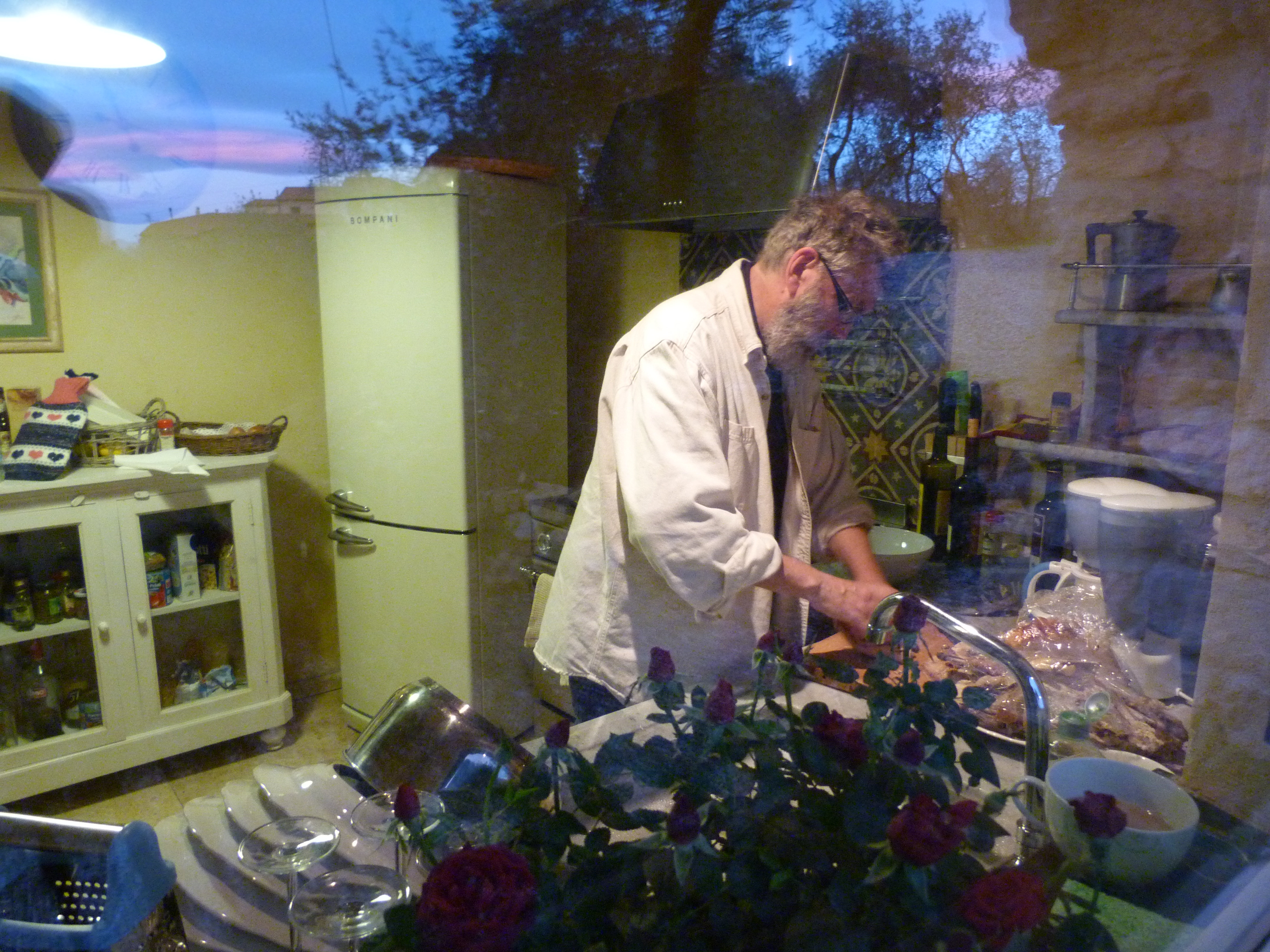
Looking through the window at Tim cooking, the sunset reflected above

We followed the pasta course with Tim’s fabulous “Melanzane (eggplant) alla Parmigiano”, which he has perfected over the last month, and slices from a buttery and soft pork roast that we had bought from the neighbourhood Macelleria (butcher), rolled with garlic and rosemary.

A light salad of mixed greens from the market cleansed our pallets. Amongst other greens, I had bought a lettuce head that was yellow, flecked with magenta. I don’t know what it is called, but it was slightly bitter and so beautiful.

Christmas Eve feast at Villa Maggiano

We finished the meal with some fruit, biscotti and dessert wine. Fireworks were exploding over the bay, and the bells chimed from numerous churches. In several of the coast towns below us, they were welcoming the arrival of the baby Jesus from the sea. “La Madonna, San Giuseppe e Gesu Bambino arrivano dal mare”.

Not a snowflake in sight. Our family Christmas spirit burned bright.

Croeso i Caerdydd

Cardiff (Caerdydd) is the capital of Wales. A city of approximately 850,000, it is going through quite a renaissance and is visited by over 18 million people annually. The city is billed as a “city of arcades”, and at this time of the year all of those arcades are in full Christmas glory. Walking in the centre of town, we went from arcade to arcade filled with unusual and tempting stores.

An Arcade lit up with Christmas lights

The decorations definitely lightened the gloom of the gray rainy skies.

By the time we headed to Cardiff Bay it was getting dark, as it does at 4:00 in November. Before the Second World War, Cardiff was the biggest coal port in the world. But of course its importance as an industrial centre made it a prime target during the war. 2100 bombs fell on Cardiff and decimated the port and many civilian areas of the city.

The bay has undergone massive renovation in the last few years. The focal point is the new Millennium Arts Centre,  a startling and massive arts complex dedicated to theatre, dance, opera and music. There was nothing on that we particularly wanted to see that day, although we were very tempted by Deffro’r Gwanwyn, the Welsh version of Spring Awakening. But it was amazing just to see the building, especially lit up in the dark of the night.

The Millennium Centre

While walking among the shops and pubs by the bay, a lovely young Welsh woman came over to offer us freshly baked Welsh cakes, made down the street at “Fabulous Welshcakes”    Now, I have made Welsh cakes every March 1st (St. David’s Day) for the last 28 years but I have never had them “in situ” so to speak. So I was thrilled. She invited us back to the store for more cakes and “Bubbly” – Welsh cakes and bubbly!! Who could refuse that?

For those who haven’t had a Welsh cake, it is a kind of tea cake, with currents, cooked on a griddle and always best fresh. I had tried some earlier in the day from a bakery at the market, but they were several hours old and by Tim’s estimation not as good as mine. These fresh ones, however, were very good and of course went beautifully with the bubbly. I am fairly proprietorial about my Welsh cake recipe, but I will give it to you as long as you promise to make them to share!

Warmed by cake and bubbly, we worked our way to a much less touristy part of town, Canton, where we ensconced ourselves at the “Chapter Arts Centre”. This fabulous arts complex was started almost 40 years ago, when a group of artists purchased an old school from the city. It is a thriving arts community with 3 theatres, 2 cinemas, a gallery, studios, 2 bars, a cafe, over 60 cultural workspaces. The night we went it was filled with people and was clearly an exciting place for artists from all disciplines to meet and work together. We saw “Resistance”, a movie set in Wales during the Second World War. It is posited on the idea that Germany has invaded Wales and all of the men from one village have disappeared underground. It is a story about how the women cope, and don’t cope, with the invasion. A good story and a great vision of the Welsh countryside, if you have a chance to see it. You might want to make a plate of Welsh cakes to eat while you watch.

A creature in Bute Park, on the way to the museum.

The next day we walked through the park to the National Museum where we began to understand the history of Wales as a series of constant invasions. Roman, Norman, English – it is a country always under siege of one kind of another.

One of the reasons we wanted to stop in Cardiff was to go to the Royal Welsh College of Music and Drama.  Students from the Masters in Musical Theatre program were doing a production of “Merrily We Roll Along”, a musical by Stephen Sondheim that we love, but have never seen. “Merrily” is famous for closing after a 2 week run on Broadway in 1981. Kind of a cult classic amongst those who know it, Sondheim has been re-working it and we were interested to see it live.

The RWCMD is housed in a brand new, huge, arts complex beside the park in the centre of town. We arrived early so that we could sit in the café with a glass of wine and listen to some jazz. Students from the music department were performing as part of their course work, and we were treated to standards, bee-bop and contemporary jazz as 6 different student groups performed. Great to be reminded of just how hard jazz is, and to see these young students keeping it alive.

“Merrily” was great. The students were very accomplished and passionate about their work. It is a school I would definitely recommend to anyone considering a career in musical theatre. And it was great to see how “Merrily” actually works. We both cried through “Not a Day Goes By” . If you don’t know it, you can listen to Bernadette Peters singing it.

We devoted our last morning to the castle in the centre of town. Cardiff Castle dominates the city and its history. Fortifications were built here by the Romans in 55 AD, the Normans in 1081, and subsequent English builders continued to make it a defensive barricade to protect their interests and keep out the rebellious Welsh.

The Norman Castle keep

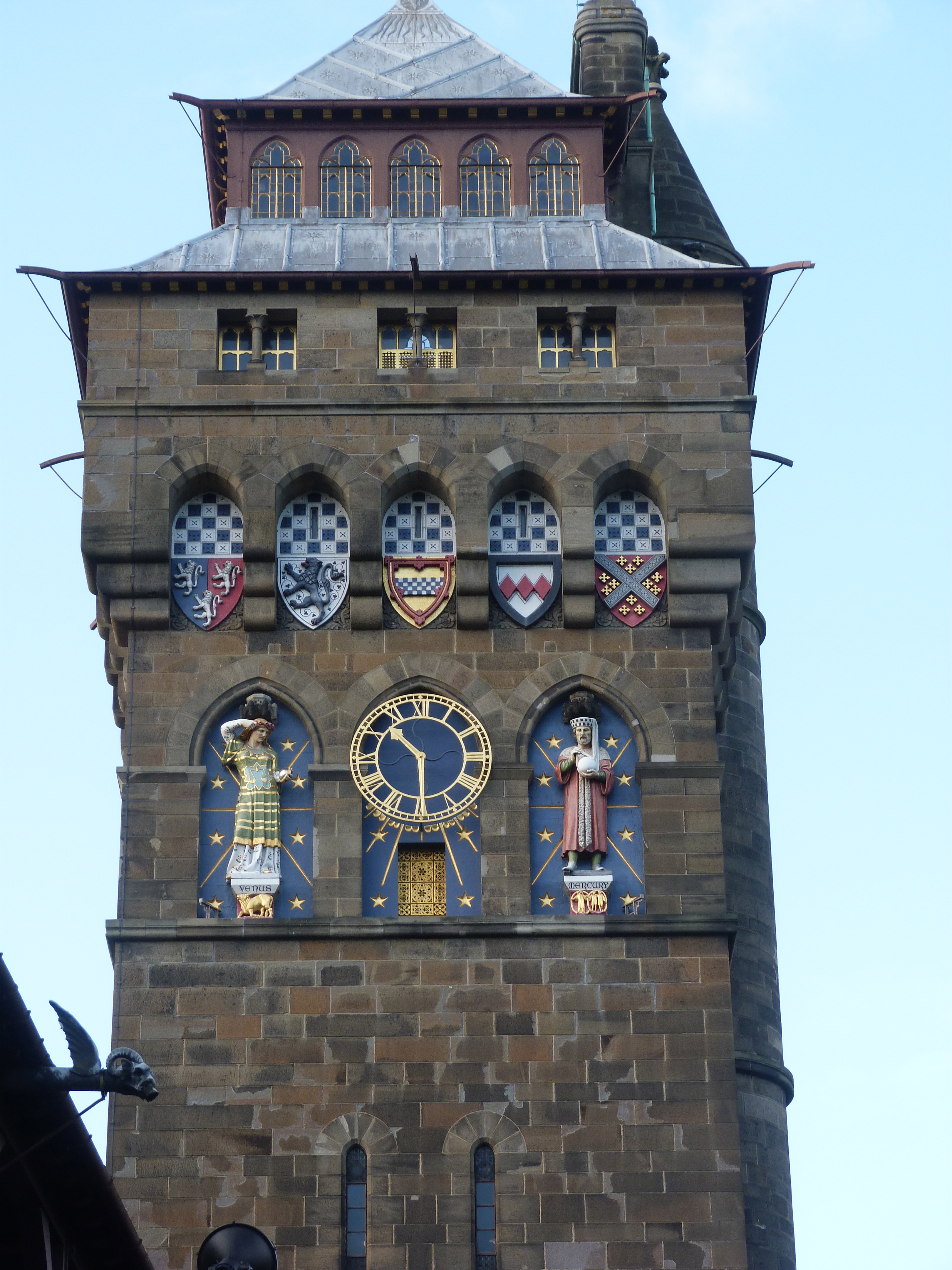
In the 19th century the 2ndMarquess of Bute turned it into a Victorian extravaganza.

The Victorian Clock tower connected to the castle wall

Bute is said to be the “father of modern Cardiff”, building docks and railways to export Welsh coal. He amassed a huge fortune on the backs of the Welsh coal miners and set about building a lavish castle. Working with the designer “Capability” Brown, he had the grounds of the Norman/Roman fort excavated and re-built, creating gardens and vistas for his castle.

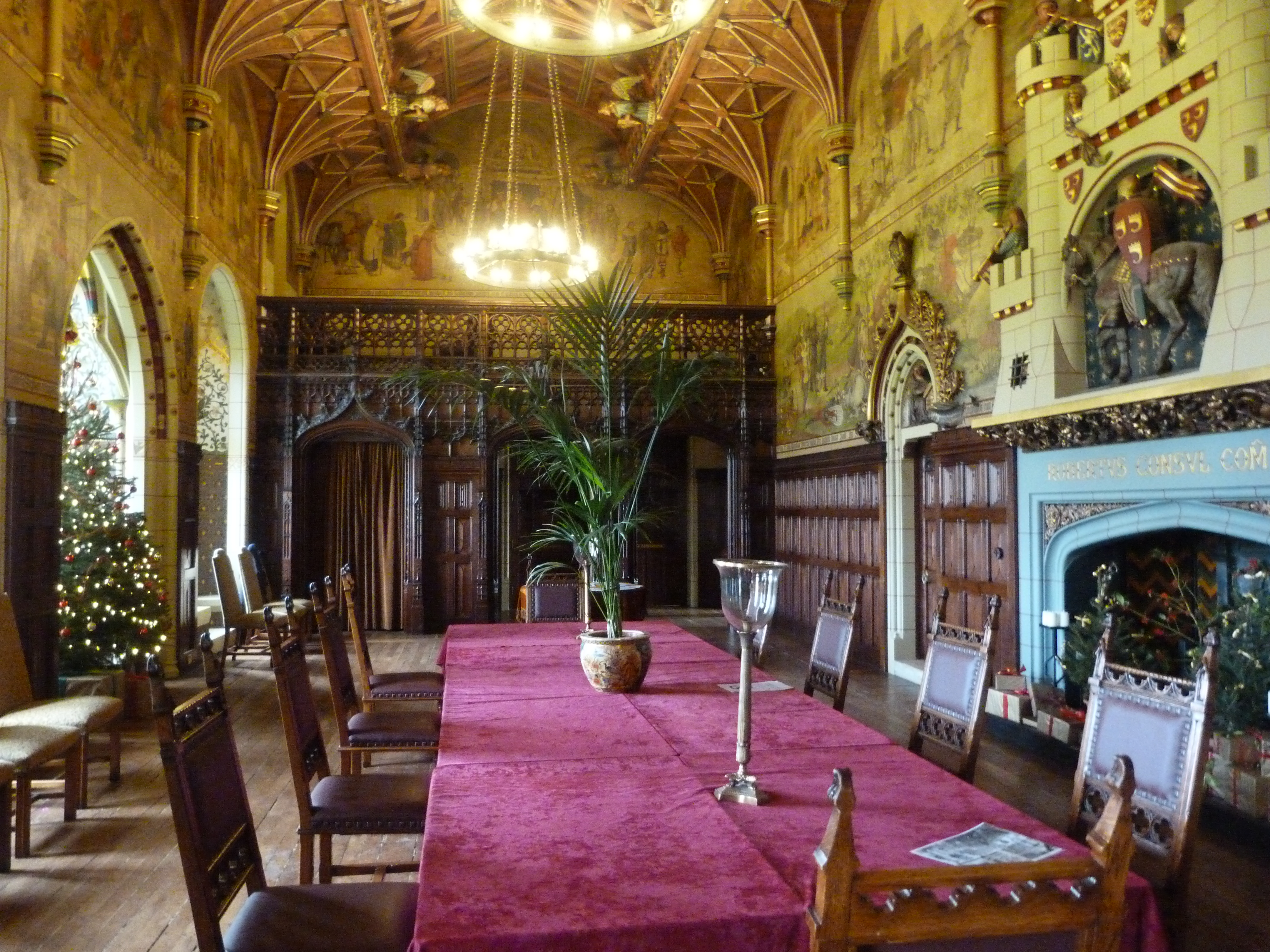
The Victorian Banqueting Room

The banqueting area is still in occasional use by the Royals (and apparently can be rented by mere mortals for £500 per hour).

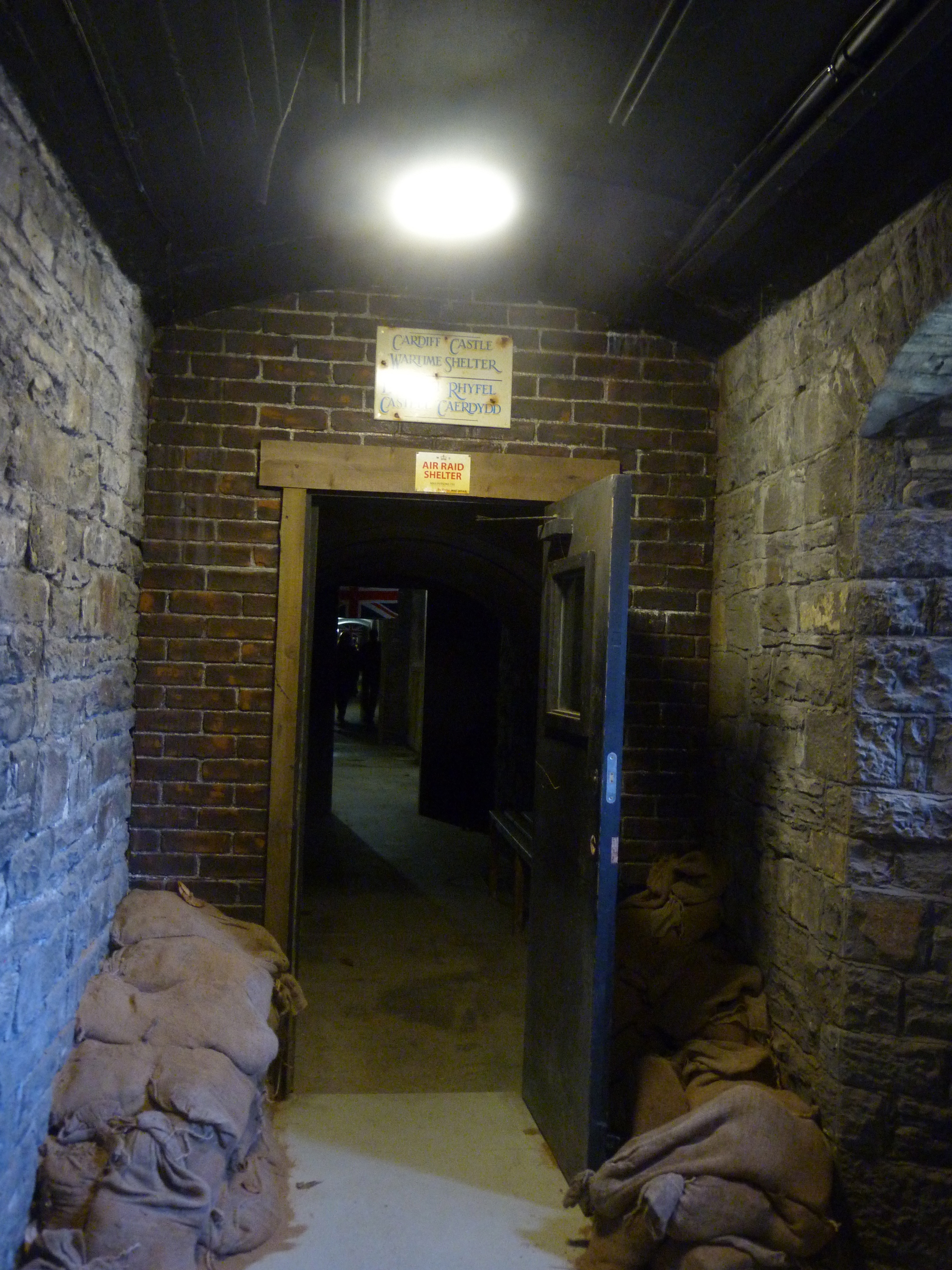
During the war, the Bute family built air raid shelters under the embankments. It was the safest shelter in the city and housed 1800 people during the raids.

Air Raid Shelters in the embankments

In 1947, the Bute family gave the castle to the people of Wales. It only took 2000 years.

Lion: one of the animal sculptures on the castle wall.