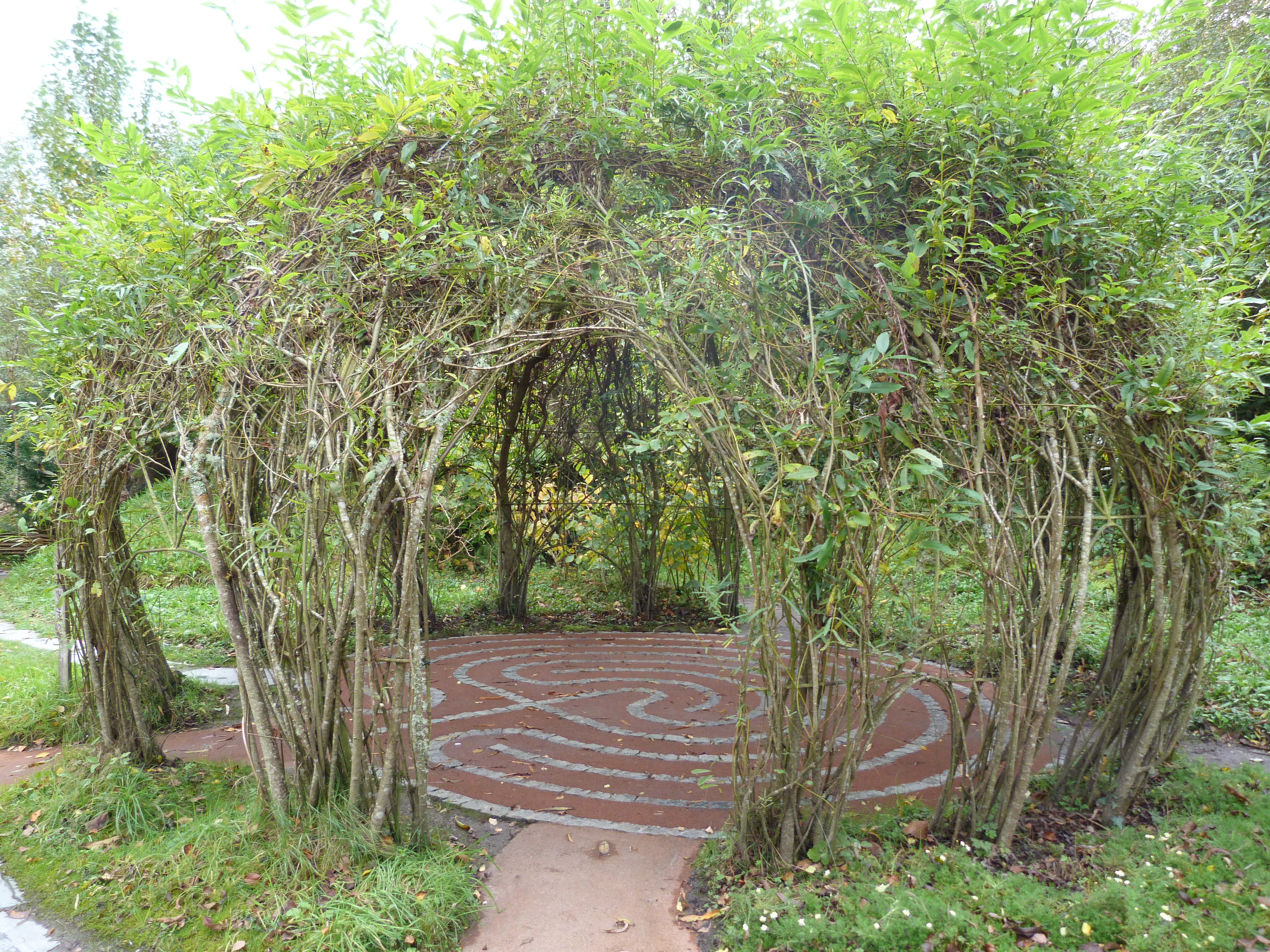
Croeso i Tyddewi

With the name “Wynne-Jones”, you know that Tim’s family is Welsh. His father was born in Wales, and going there was an important part of this trip. We also wanted to walk on whatever coastline we could get to. So we headed out to discover what we could of the Pembrokeshire Coastal Path.

The Pembrokeshire Coastal Path comprises 186 miles of south west Welsh coastline. It is remote and, in November, isolated. We decided to base ourselves in the city of St. David’s (Tyddewi) in case the weather turned bad and we had to just curl up with our books instead of walking. Late November is very much the off-season and we weren’t sure what to expect.

St. David’s is the UK’s smallest city. With a population of 1,800, it seems miniature in all respects.

Tiny cottages nestle together on two main streets, and you can circumnavigate the whole city in about 10 minutes of walking.
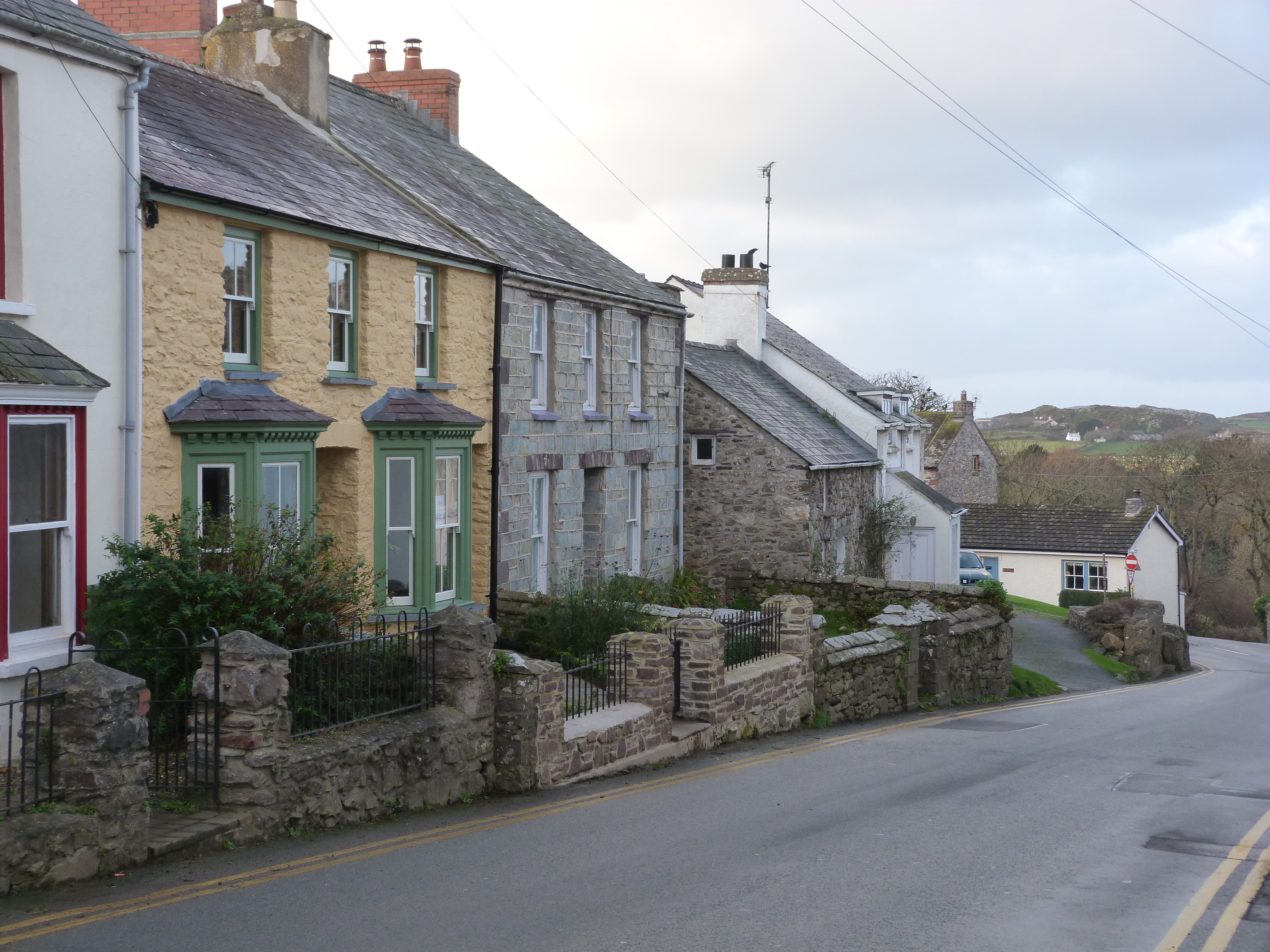
St. Davids/ Tyddewi

St. David himself established a monastery here in 589 AD, and it has been a place of worship ever since. The city status is due to its large and impressive cathedral.
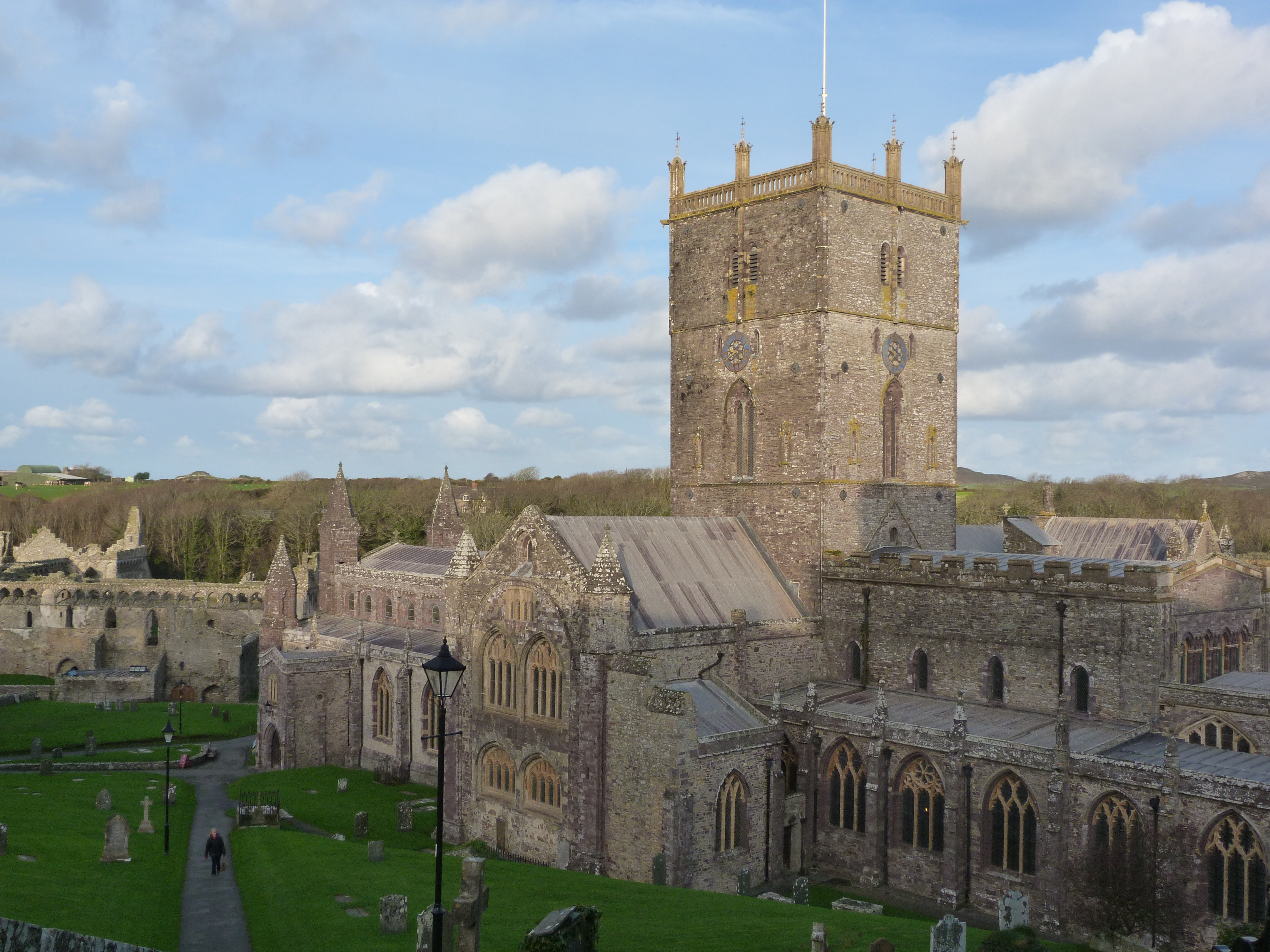
St. David's Cathedral

St. David’s Cathedral was begun around 1180 AD. An extraordinary feat of workmanship, the cathedral has beautifully carved and painted ceilings, tile floors, mosaics, sculptures and tombs throughout.

Inside the Cathedral

In the 14th century, Bishop Gower secured the importance of St. David’s when he appealed to the Pope to agree that two visits to St. David’s equals one to Rome. This means that pilgrims can be as blessed by visiting St. David’s twice in their lifetime as they would be by visiting Rome once. “This pilgrimage and the wealth that pilgrims brought though their gifts granted the bishops of St. David’s enormous power and wealth” (from the Treasure exhibit, in the Cathedral) The wealth of the cathedral is evident. Pilgrims, and tourists, have kept the Cathedral alive, and it is very much at the centre of the tiny city’s life.

But our days were spent appreciating a much older and more rugged beauty. Wales is a land of mystery and legend, and the Coastal Path, with 58 beaches and 14 harbours, has many stories to tell.

We began our first slightly rainy day with a visit to the superb tourist information centre. We picked up the path about ½ mile from the centre and found ourselves overlooking Caerfai Bay.

Tim about to take off in the wind, with Caerfai Beach beyond

The wind was fierce, but not cold, invigorating, not overwhelming as we set off along the edge of the cliffs.
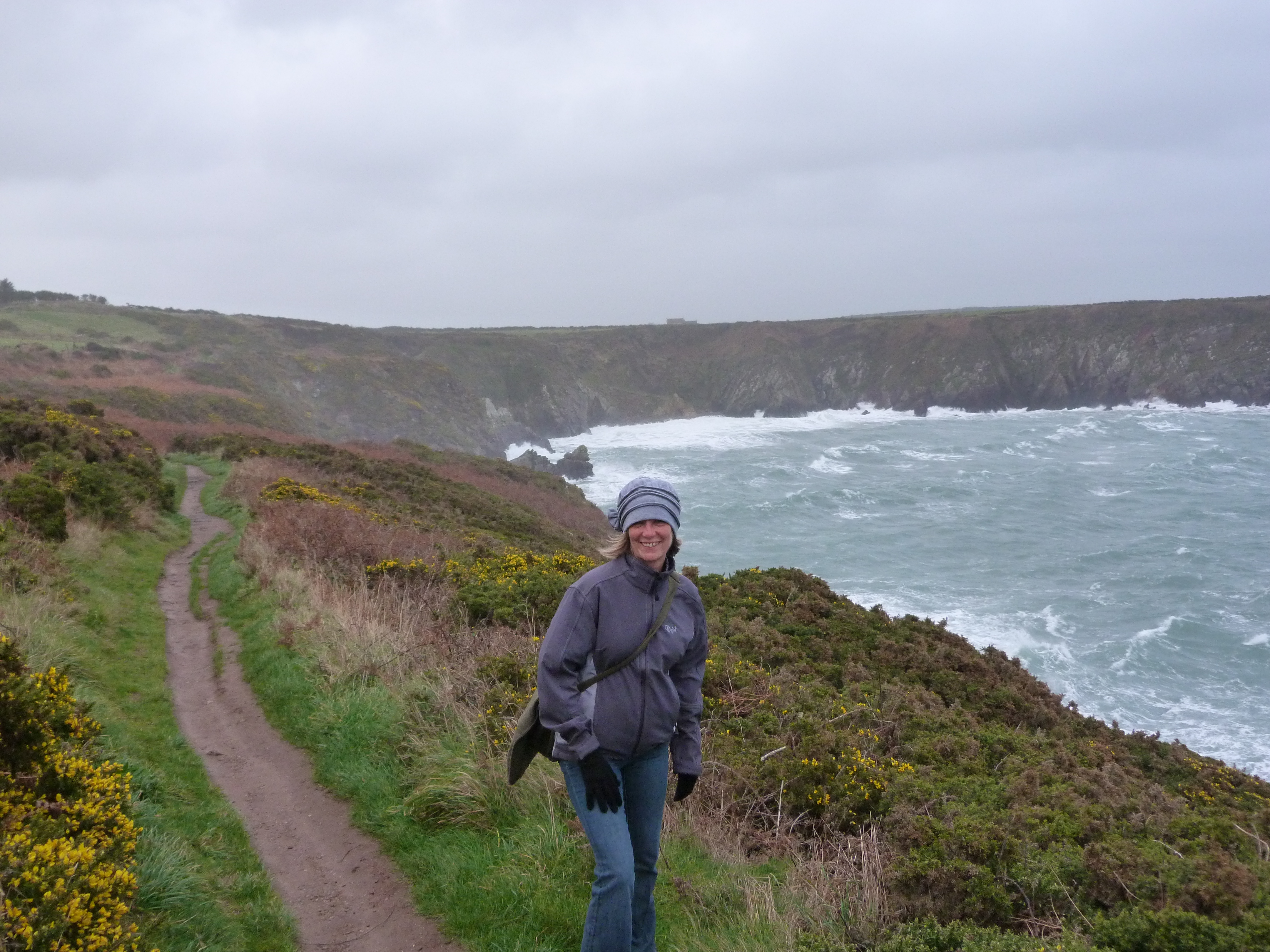
Setting off on the path

The walk took us to the most westerly chapel in Wales, St. Non’s.
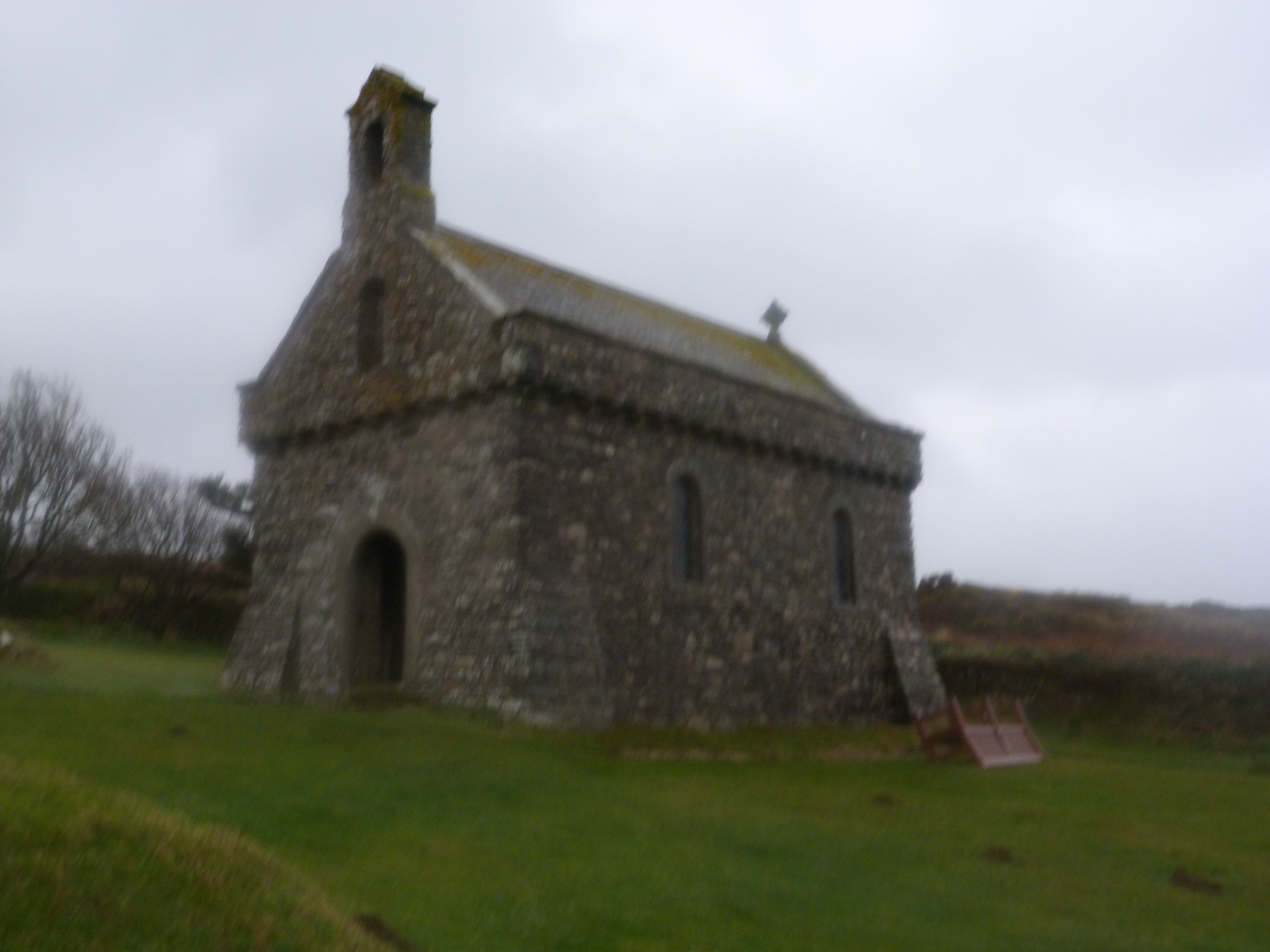
St. Non's Chapel

St Non was St. David’s mother and a nearby fresh water spring, credited with many miracles, is said to have sprung up at the moment when St. David was born.

The present day St. Non’s chapel was constructed from stones of the old chapel, built around 1300. A tiny refuge, we were surprised to find lit candles and offerings to the Saint with not a soul in site.

The chapel at St. Non’s isn’t used for regular service in the winter because the rains come through the 2 ½’ thick walls, despite the waterproofing. Coming out of the chapel, the rain hit us sideways from the sea and we didn’t have much on in the way of waterproofing. So we decided to abandon the path and head back to St. David’s.

We were drenched when we walked into the Farmer’s Arms, but after a bowl of leek and potato soup and a pint of Double Dragon we were dry, and so was the weather. A bit of sun came out so we headed out of town again, about 3 miles out, to join up the path at Whitesands Bay.
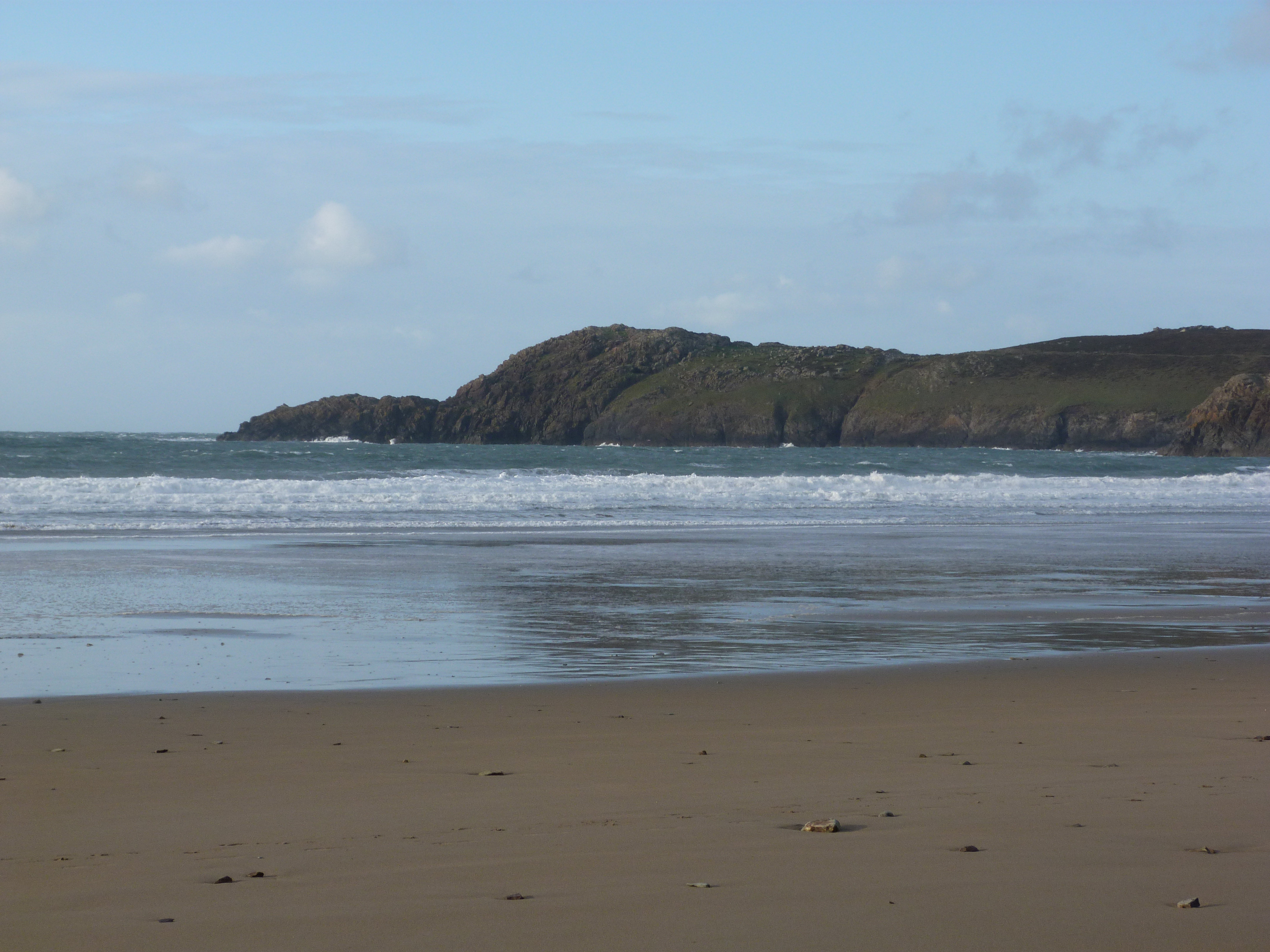
Whitesands Bay

Whitesands is breathtaking. Tradition has it that St. Patrick left from Whitesands on his mission to Ireland in 430 AD.

A long, pristine white beach with huge crashing waves, bordered by hard edge cliffs, we had the place to ourselves.

We worked our way back to the path, skirting the edge of the cliffs.
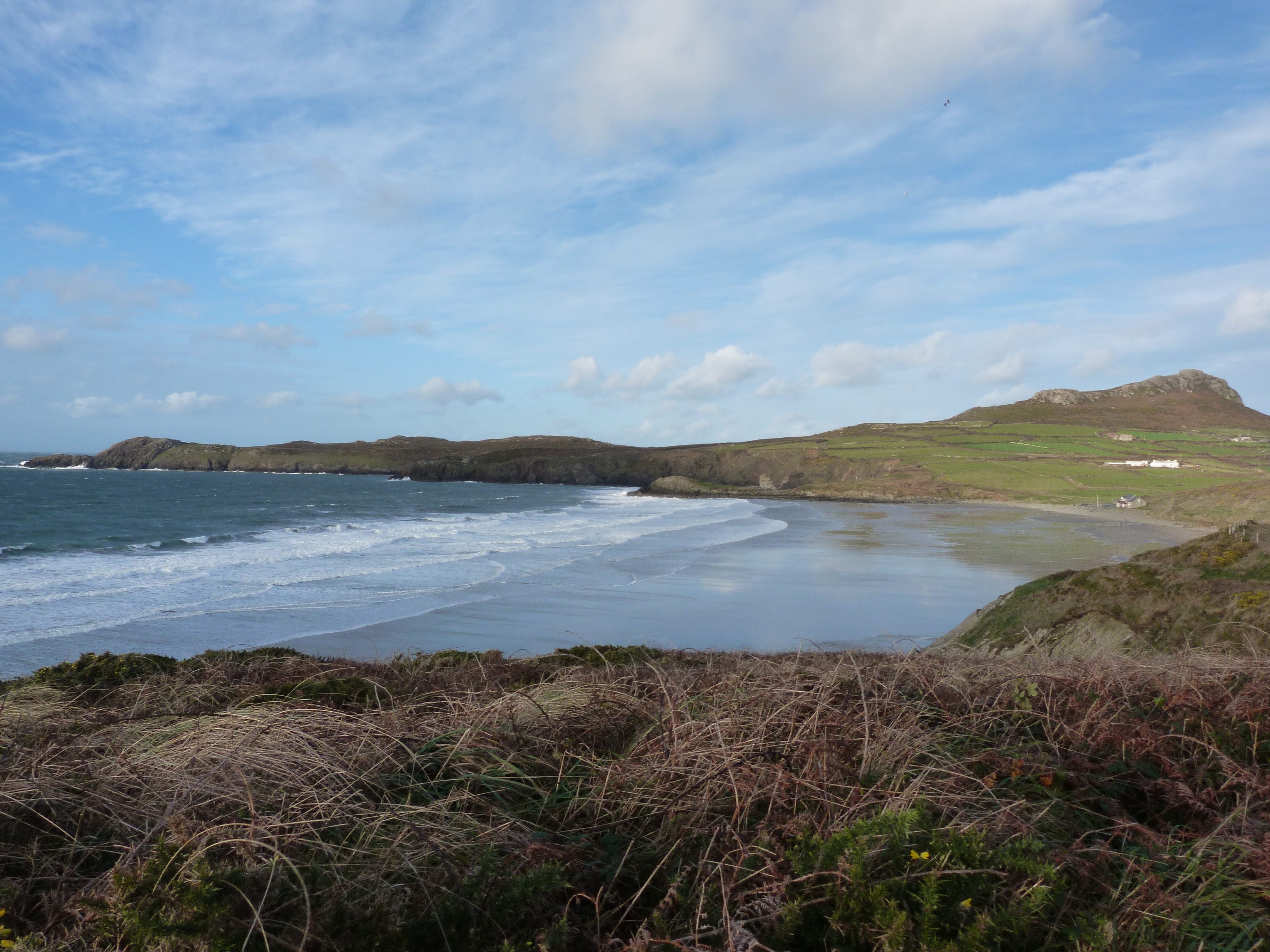
Whitesands Bay from the coastal path

The views are unbelievable. It is the kind of place where people go to extremes to get good photos – apparently a prominent photographer was swept to his death by the fierce winds while trying to capture a perfect shot. Signs remind us: “Cliffs kill! Keep to the path”. We did.
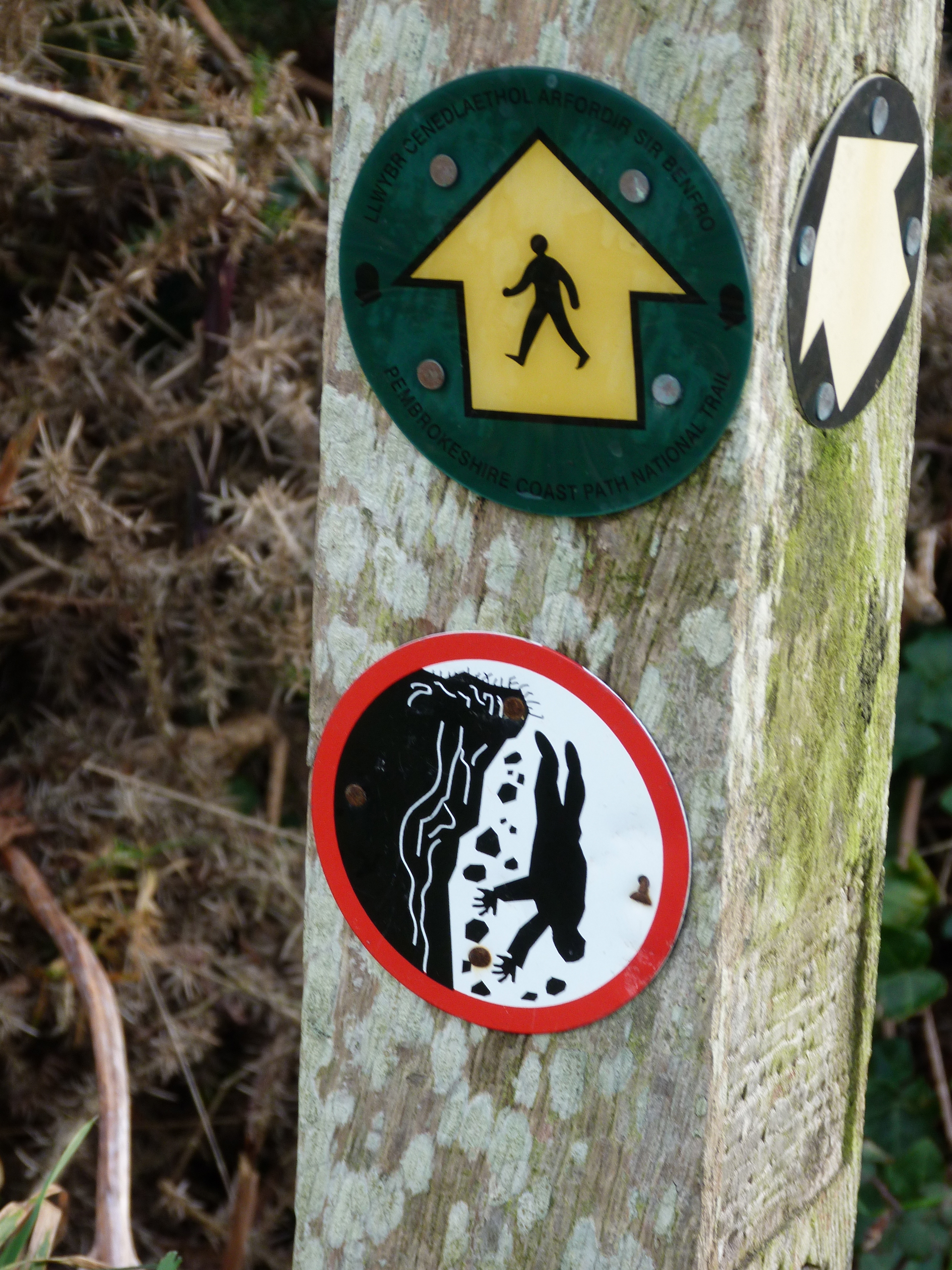
In case you can't read the signs

We walked as far as St. Justinian’s where there is a lifeboat station, built in 1869, tucked into the inlet. St. Justinian was St. David’s friend, a strict ascetic who lived on Ramsey Island. Legend has it that his disciples beheaded him (he was apparently a bit too strict!), but he picked up his head and walked across the water over to the mainland to die, where a chapel was built in his name.

Light fades quickly on these short winter’s days and we didn’t want to be on the cliffs at night.
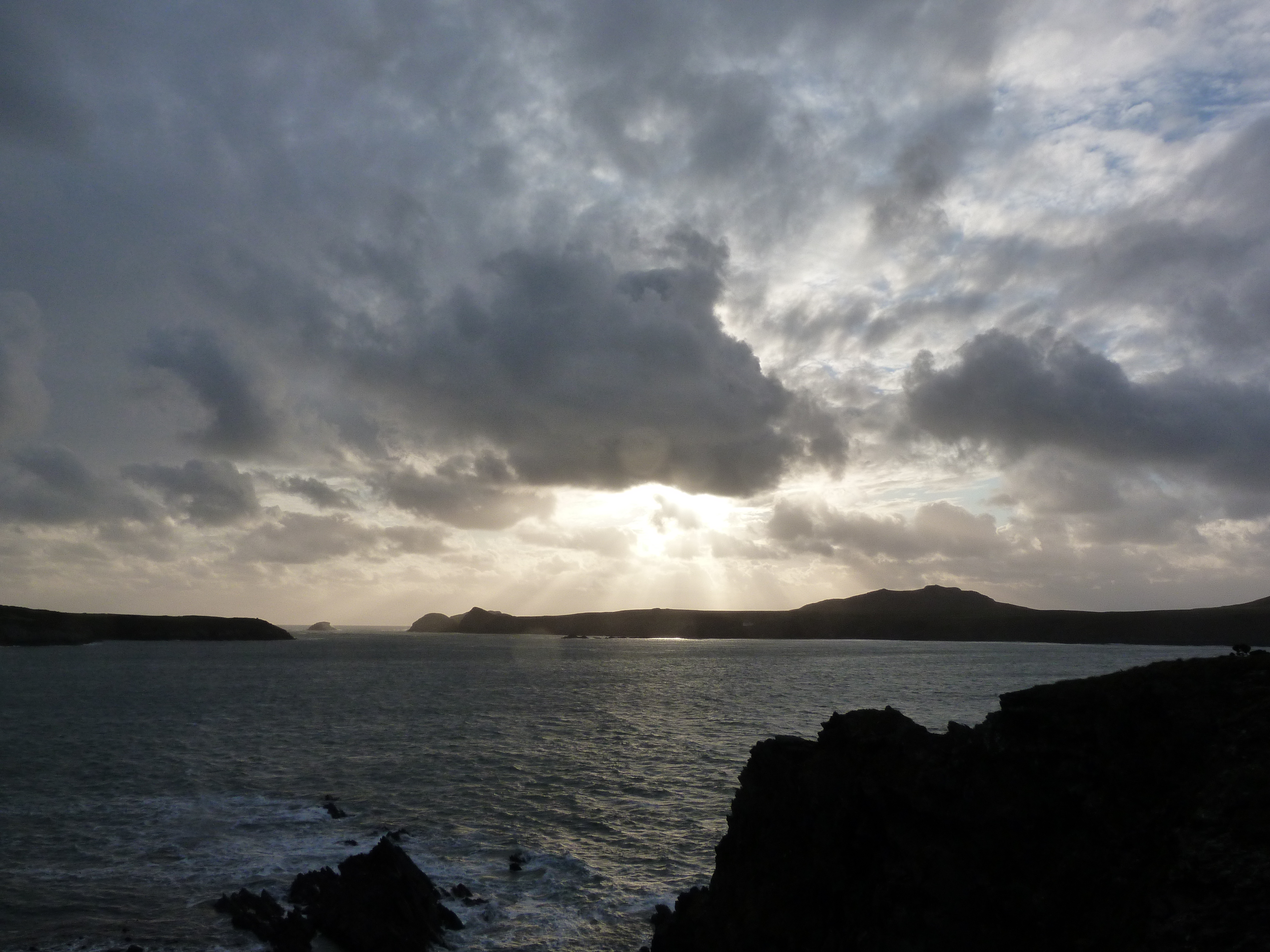
Late afternoon on the path

So we headed overland back to St. David’s, where even in the off-season we are able to find an excellent Indian restaurant that served a brilliant curried fish dish with coriander, lemon and smoked paprika – Tarkary Basa – like nothing I have ever tasted.

The next day dawned sunny and dry, so we picked up the walk at Porth Clais, a harbor featured in the Mabinogion (a famous collection of Welsh legends). It was the landing place of a giant boar, pursued from Ireland by King Arthur. More recently (18th century) it was an important trading quay with lime kilns in active use until the beginning of the 20th century. It is a perfectly hidden, tiny harbour, and from April to October it is the launch for boats and kayaks that head out to Ramsey Sound to see porpoises and seabirds.

The waves crashed, the wind blew and a new breathtaking view was around every corner.
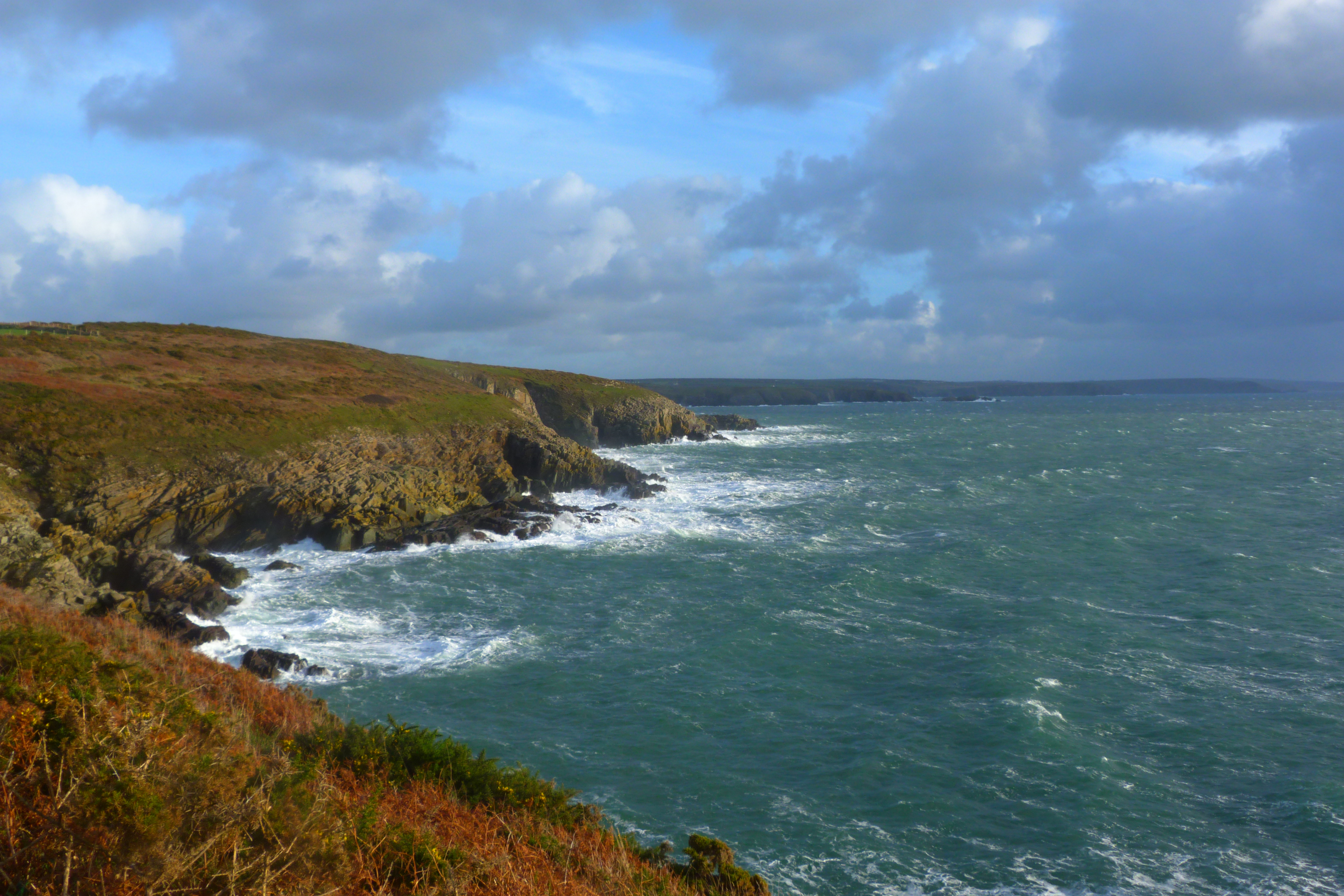
The water changes colour with the light

From Porth Clais we walked to Porth Lisky, a bay filled with red and green pebbles formed from Pre-Cambrian ash and lava.
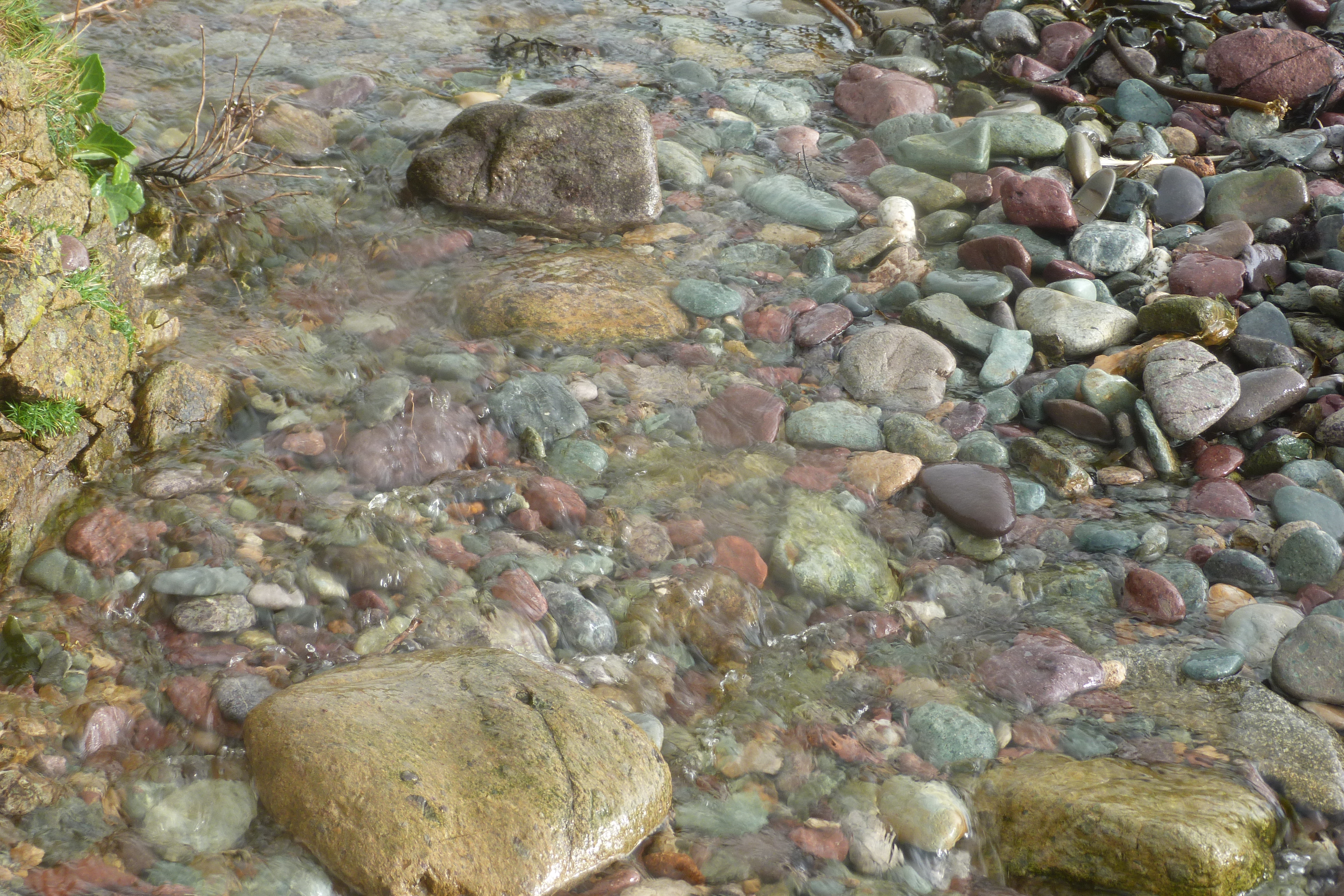
Rocks on the beach at Porth Lisky

The rocks are beautiful and the colours gleam like jewels as the water flows over them. We were treated to a sun shower, and although wet again, we were delighted by a rainbow overhead. The wind dried us quickly as we proceeded along the coast.

Remains of Copper mines, Ramsey Island in the distance

We passed 19th century copper mines, and the sheltered bay of Carn ar Wig, used by ferry boats since the 13th century. But the weather started to turn again, and we decided it was time to turn away from the shore, inland back to St. David’s where a late plowman’s lunch at the Farmer’s Arms awaited. We had met only one person on the path in our two days, Jimmy from Montana, who had devoted the whole month of November to this walk. He was heading to St. David’s with his life on his back (tent, cook stove, sleeping bag, everything). We couldn’t imagine what it is like to camp out in this constant wind! It was Jimmy’s last night before heading back to the States, so we shared a drink together and got advice for our next coastal walk.

The day ended with Evensong at the Cathedral. Even as an agnostic, I felt blessed.
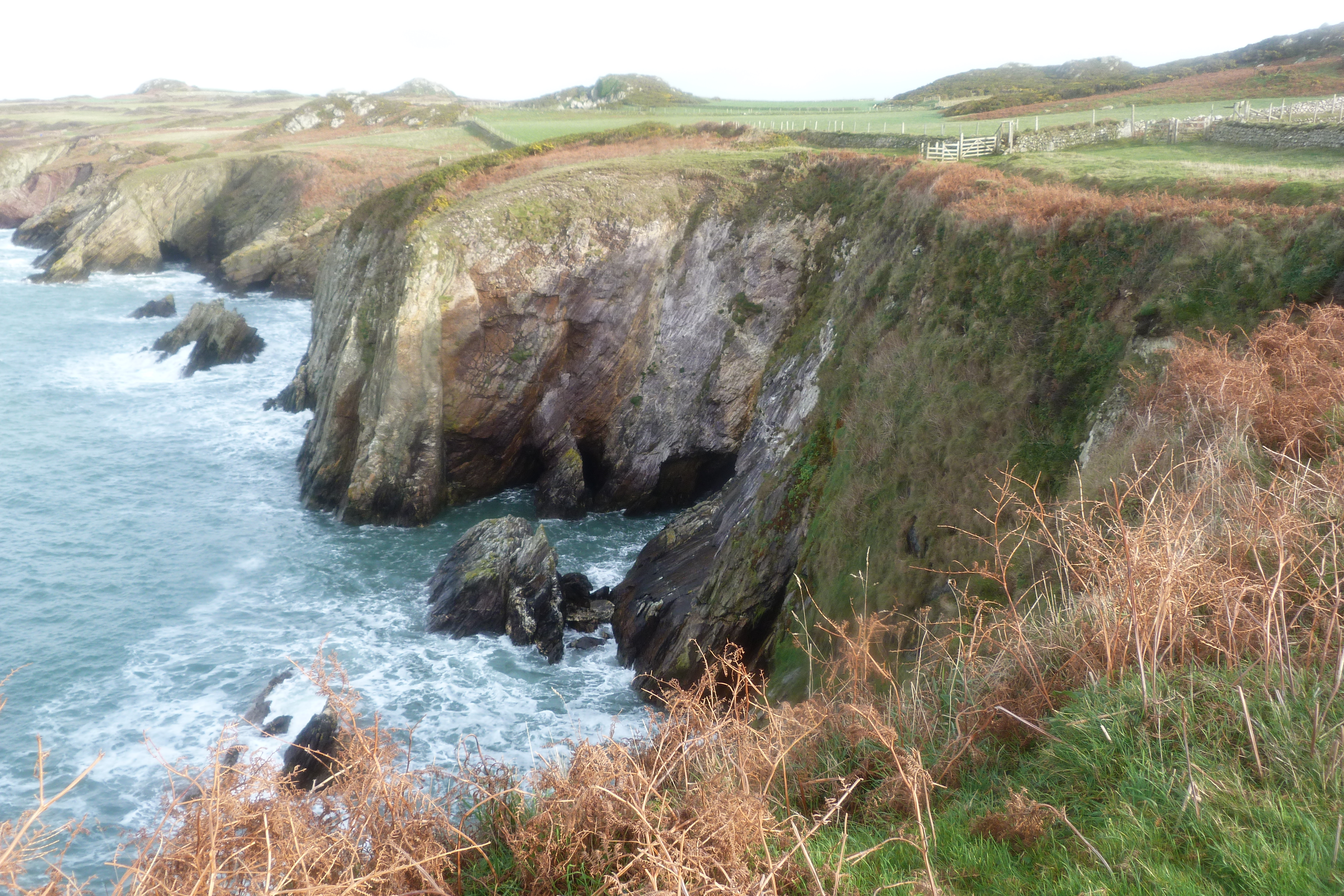
The Pembrokeshire Coastal Path

Steeped in history and tradition

It never ceases to surprise me that Britain is both large and small at the same time. It’s like a magic box. Some journeys are interminably long and complicated. But then there are times when you can go from London to an entirely different city for lunch, then be back in London in time for cocktail hour.

Such was our experience when we were invited to lunch with writers Jill Patton Walsh and John Rowe Townsend in their home in Cambridge. Tim has known Jill and John for years and I was very much looking forward to meeting them and to seeing Cambridge.

As a North American who grew up at a time when educational systems were under scrutiny (when I was a teenager I propped “Teaching as a Subversive Activity” by Neil Postman, on my desk as a flag to my decidedly out of date high school teachers), it is hard for me to understand how generations of people in the UK are affected by their university status. Getting into Oxford or Cambridge is the single most determining factor for the outcome of a life. That’s not to say that all Oxbridge grads are successful or happy. Only that the experience will mark (and some say mar) them for life.

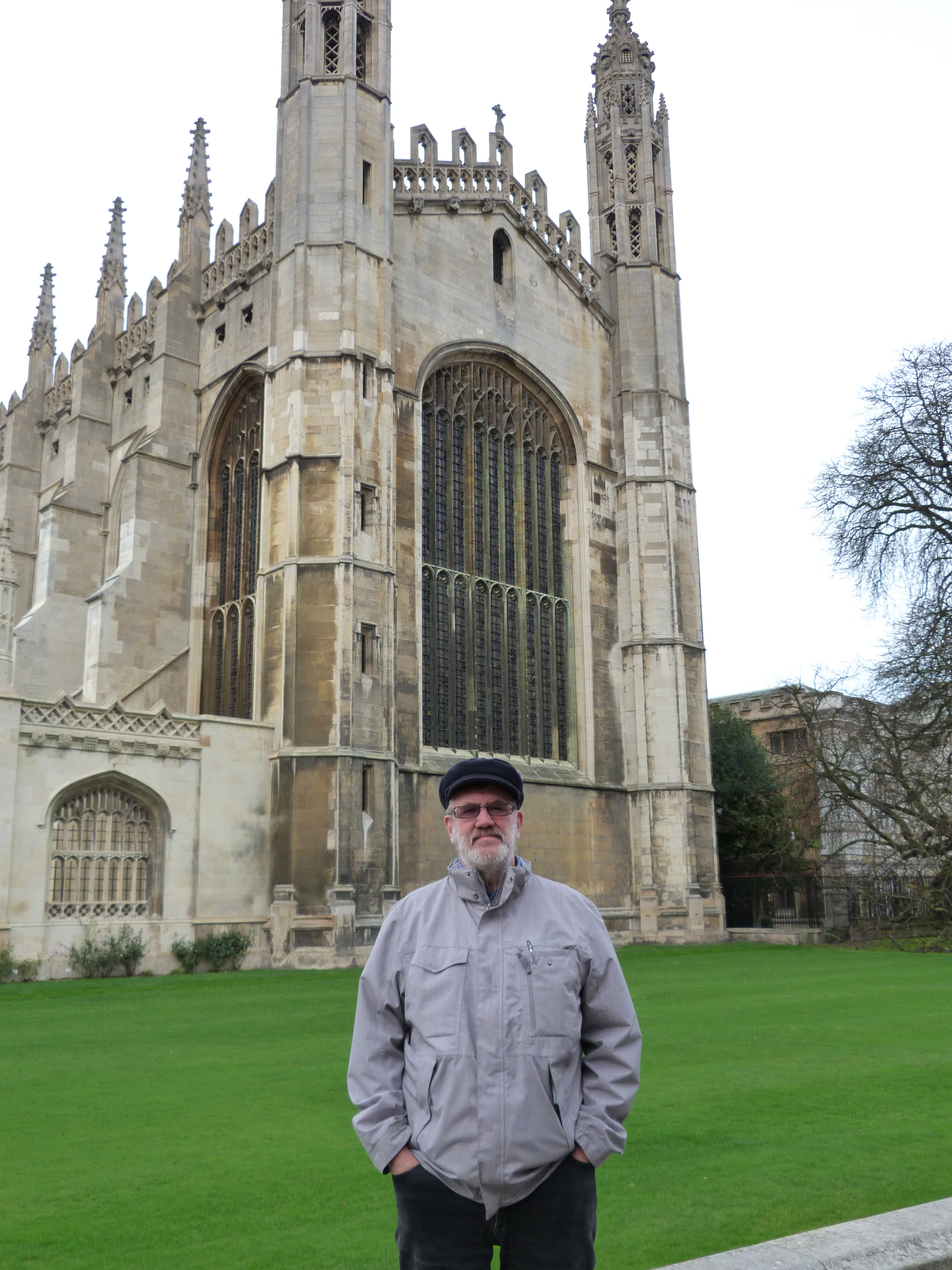
Tim in front of King's College, where he had hoped to sing as a choir boy

Cambridge is an exquisitely beautiful city with the university at the heart of everything. College after college proudly declares its noble patrons. Inner quads are immaculately kept.

One of the quads

Shops in the city centre are exquisitely tasteful, filled with expensive clothing, jewelry, handcrafted shoes and gifts one imagines visiting parents purchase.

The high street, filled with Saturday parents

History, and privilege is everywhere, as is the craftsmanship that creates these buildings, carvings and ornaments. But there is also a marvelous eccentricity about it all.

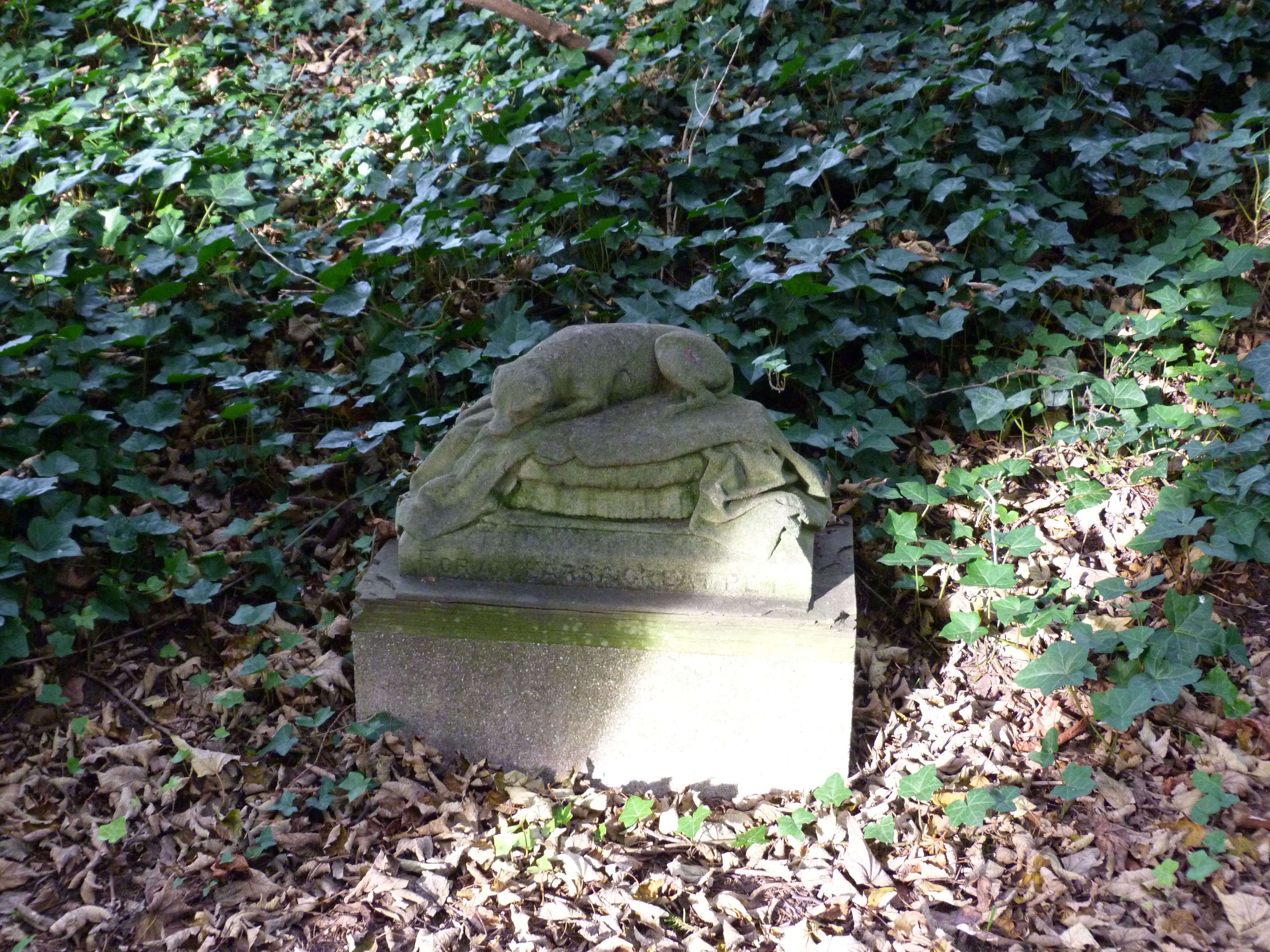
A tomb for a beloved 19th century dog

Walking through a peaceful path in Magdalene College, we came upon a few tiny, tasteful, carved memorials. A late 19th century graveyard for beloved pets.

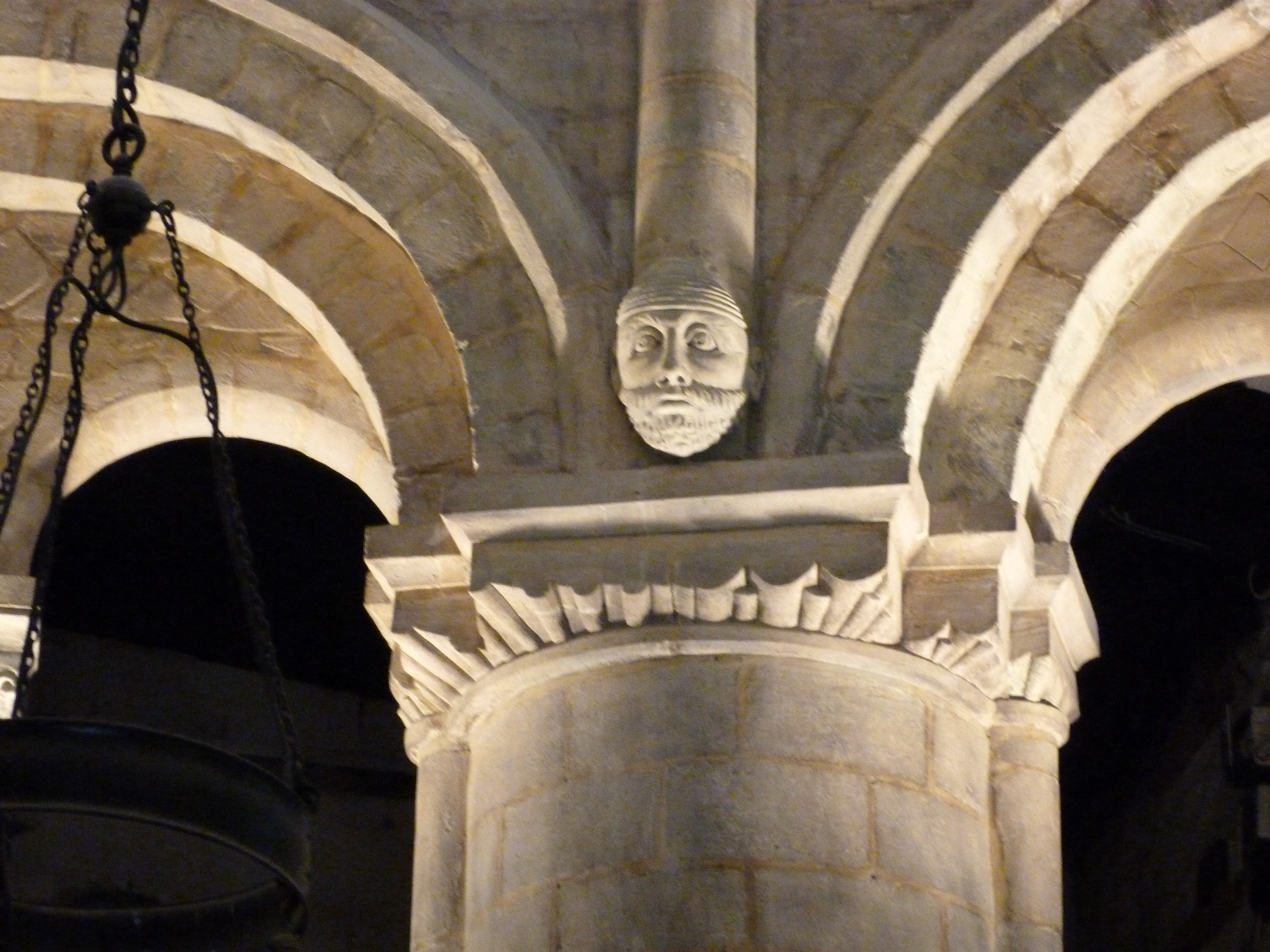
Inside the Round Church, the second oldest building in Cambridge

Gargoyles, faces and impressive statues watch you from every  angle of every building.

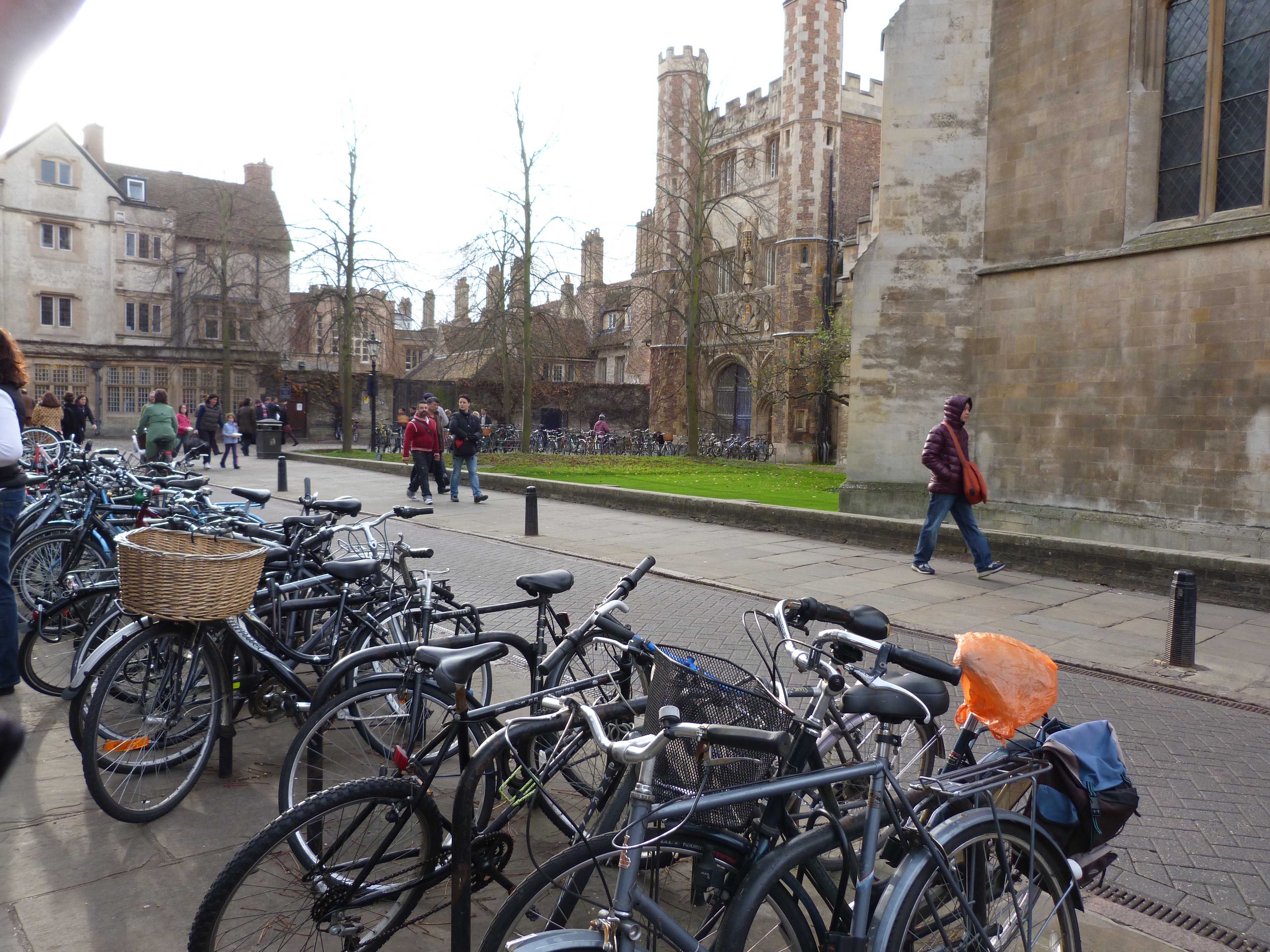
The streets are cobbled and cut off to car traffic. Thousands of bikes are chained up outside of the colleges and students whizz past, scarves identifying their colleges flying in the wind. They rule the road and low betide anyone stepping off the curb.

A city of bicycles

Is it any wonder that these young students feel and behave in an elitist fashion? That the city exudes a rarified atmosphere guaranteed to make us mere mortals envious? It is the epitome of a combination of wealth, intellectualism, beauty and youth. All we could do was to watch it all go by, and feel like somewhat lesser humans.

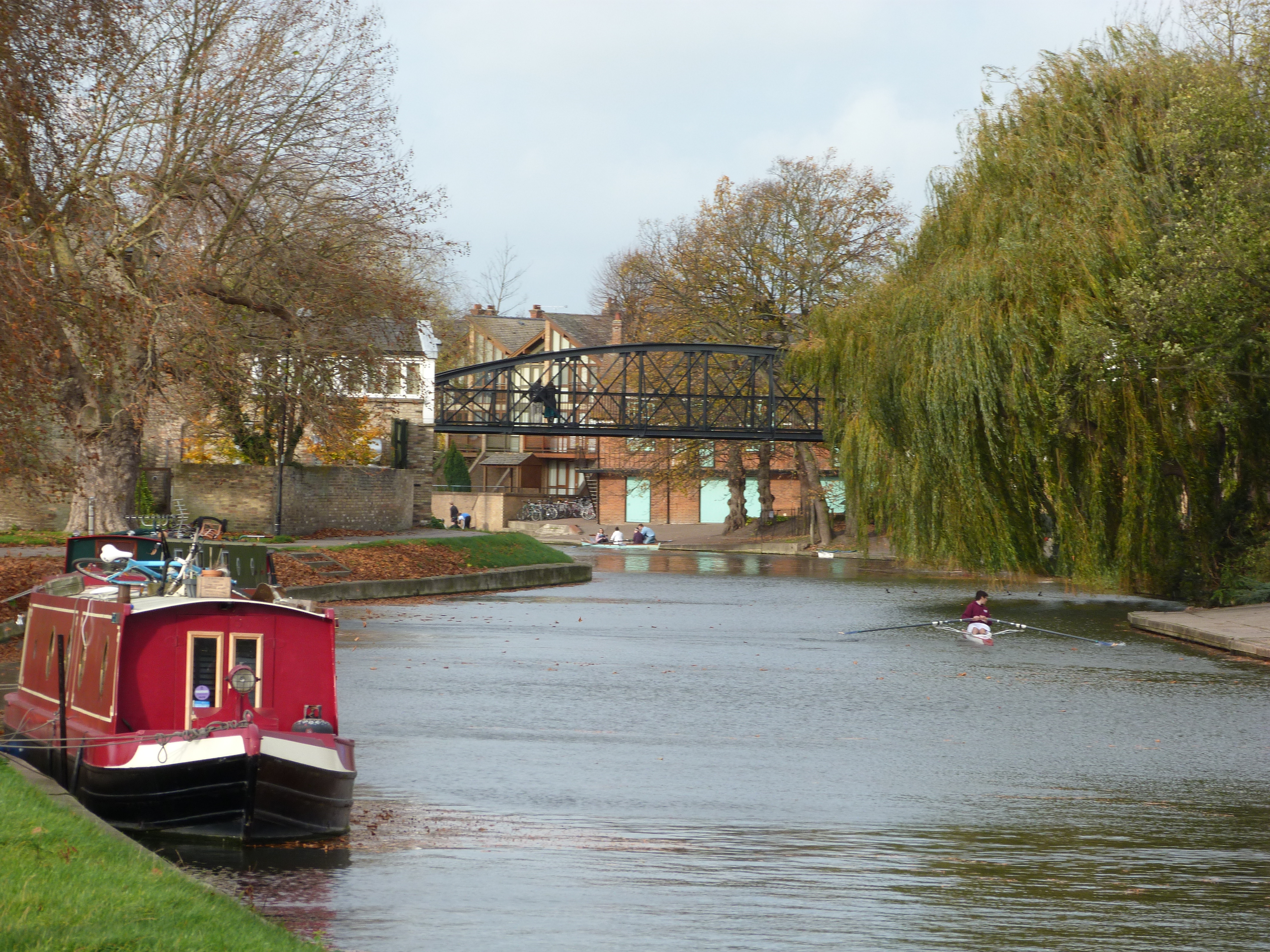
The river Cam. Even in November the rowers and punters were out.

But then we went to visit Jill and John, in a house that overlooks the river. They are as marvelous as Tim had led me to believe. It was a fabulous visit that blended politics, children’s literature and food. Salmon with wild rice, followed by a delicious apple tart (When I asked Jill about the apples she replied, “I always use Bambery apples when I can. They are perfect for apple tart”) and local chesses, including a particularly scrumptious Wesleydale with apricots. All enhanced by a delicious white burgundy supplied by their wine club.

We may not be a part of the Cambridge “set”, but for one lovely afternoon, we were fully welcomed and at home there.

John, Jill & Tim

A Sublime Day in London

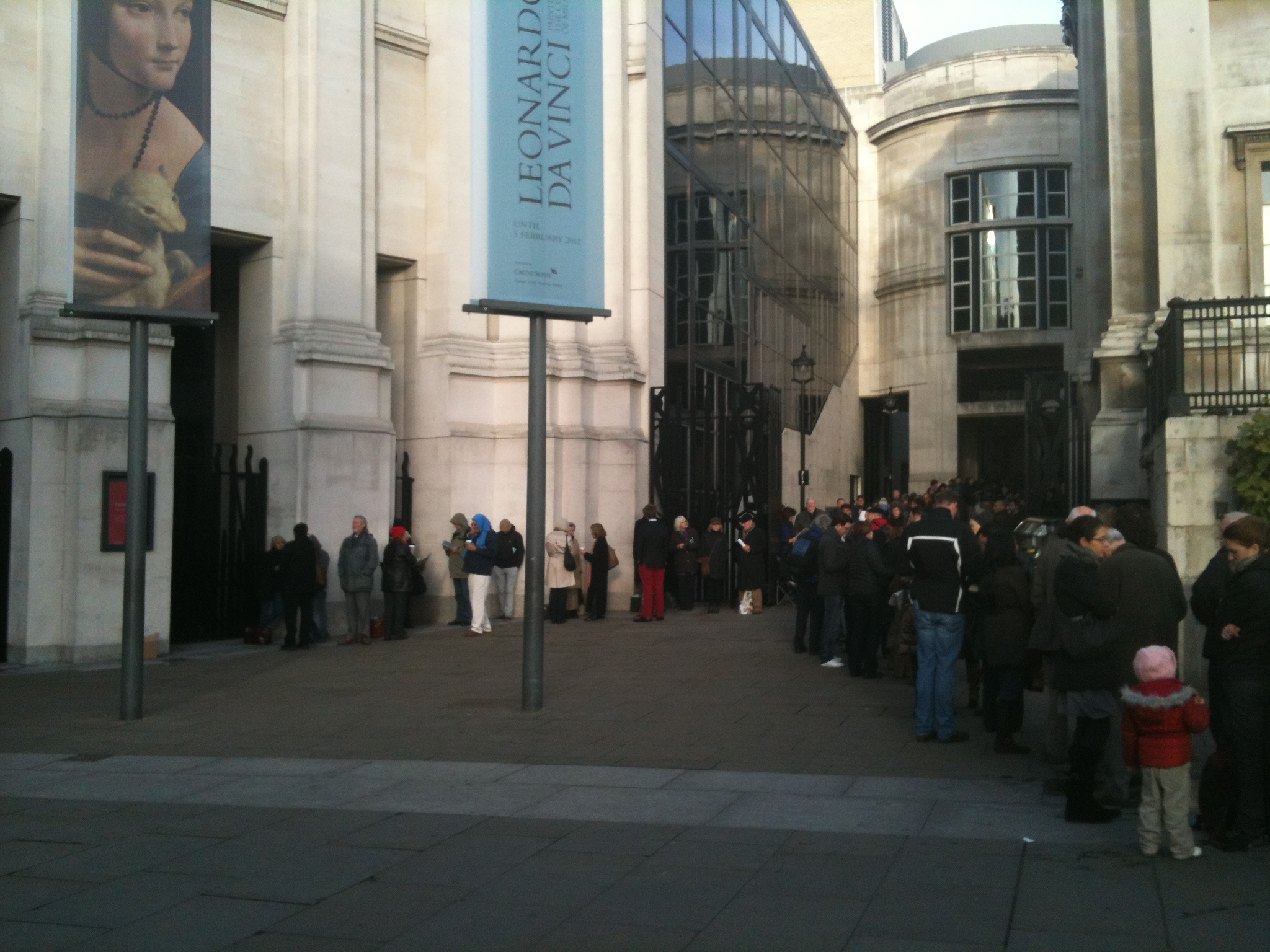
The Leonardo Da Vinci show at the National Gallery, “Leonardo Da Vinci: Painter at the Court of Milan”, is billed as “the most complete display of Leonard’s surviving paintings ever held” and has been the talk of the town since it opened. Advance tickets were sold out immediately, but the Gallery reserved 500 tickets per day, released on the day. The box office opens at 10:00 a.m and you are advised that you’ll spend about an hour and a half in line.

Tim got to the Gallery at 8:00 a.m. and there was already a good line up. He was told that he would get numbers 84 & 85, so he settled into coffee and chat with others in the queue, shivering in the November wind.

By the time that I arrived at 9:30, with more coffee, there were over 400 people in line.

The line up at 8:00. It goes way back under the archway

There was a vendor selling coffee and breakfasts, gallery staff giving everyone regular up-dates, and reading material about the show was provided to help us while away the time. The English really do know about queuing and there was an atmosphere of camaraderie and friendship.

We got in to see the show at 11:00. Inside, it was easy to feel claustrophobic. You could really only see the pieces by staying in the flow of the line up, moving slowly along the walls. I allowed myself to go into a calm state, reading the information, spending as much time as I needed with each drawing and painting, the crowd sometimes moving past me like a river gently bumping past a stone.

The show was a revelation. “The Lady with the Ermine” is hailed as the “second-most famous woman in Leonardo’s life”. It’s an astonishing painting of Cecilia Gallerani, 16-year old mistress of Ludovico Sforza, Da Vinci’s patron. In the painting, she is gazing off to the side, an ermine in her arms. It’s a provocative and mysterious portrait. She and the ermine (the symbol of purity) are said to be looking at Ludovico off stage, the light in the painting emanating from him. It is the first time that the painting has been exhibited in Britain and she is definitely the star of the show.

My favourite piece is “The Burlignton House Cartoon”, an unfinished drawing of the Virgin Mary, sitting on her mother’s lap (St. Anne) with the infant Jesus and St. John the Baptist beside them. There was a beautiful sketch of the same scene as well. The great maternal love in the pictures makes me weep. He catches a beautiful, human, relationship between Mary and her baby that is timeless.

There was a fabulous display of his sketches for the saints in The Last Supper. Da Vinci stressed the importance of gesture to show character: “A good painter is to paint two main things, namely, man and the working of man’s mind. The first is easy, the second is difficult, for it is to be represented through the gestures and movements of the limbs”.

A quote from his notebook reads like a playwright, taking notes. You get a vision of Milan, 1493, as Leonardo was contemplating gesture and groups of people: “One who was drinking and has left the glass in its place and turned his head towards the speaker. Another, twisting the fingers of his hands together, turns with stern brow to his companion. Another with his hands spread open shows the palms, and shrugs his shoulders up to his ears, making a mouth of astonishment. Another speaks into his neighbour’s ear and he, as he listens to him, turns towards him to lend an ear, while he holds a knife in one hand, and the other the loaf half cut through by the knife. Another who has turned, holding a knife in his hand, with his hand a glass onto the table.”

We left the Gallery feeling very full.

Having feasted our eyes, we decided to go to St. Martin’s-in-the-Fields for an evening concert as part of the “Just This Day” project. “Just This Day” is dedicated to promoting “Stillness” and in particular, “Silence in Schools”  Apparently, recent studies show the benefits of “strong silence”, a deliberate and focussed stillness, to include higher exam results, increase in self-esteem and a decrease in negative behaviour.

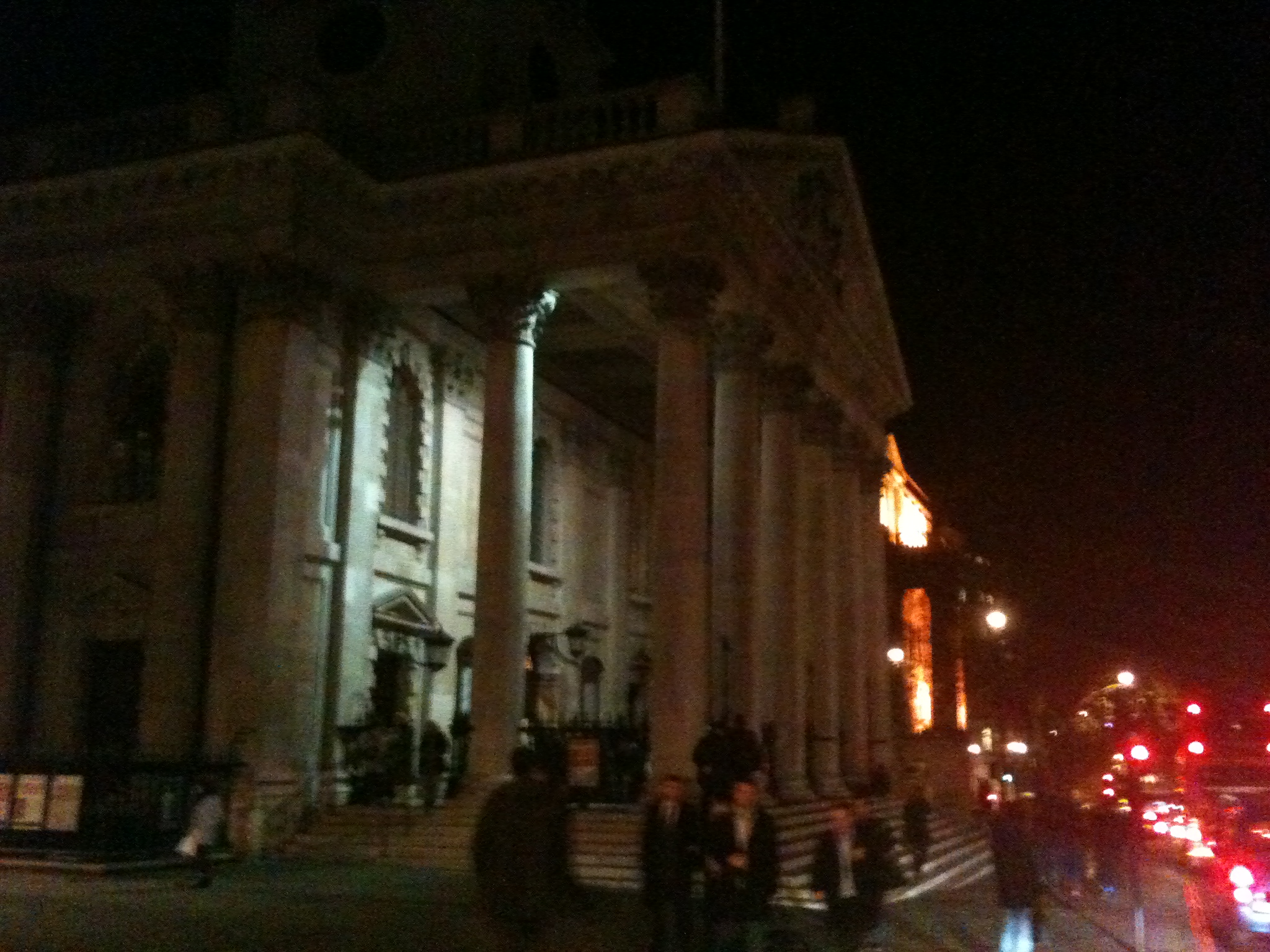
St. Martin’s is in the heart of busy London, yet is known as an oasis of calm. The church was hosting  “Just This Day” — a day of silence and discussion of stillness. But we knew none of this at the time. We just arrived. As the concert began, we were requested to sit, and feel the stillness. Why is it that stillness feels so much more profound when it is enjoyed together with several hundred other people?

Outside St. Martin's-in-the-Fields, after the concert

We were treated to an evening of music by Arvo Pärt sung by the “Choral Scholars of St. Martin’s-in-the-Fields” and played by the Ceruti Quartet. There was early Renaissance music sung by Dame Emma Kirkby and played on the lute by Jakob Lindberg, and a piece by contemporary composer David Stoll, “The Practice of Mediation”. It was all sublime. Music of the spheres. Spiritually uplifting.

We walked back to Waterloo station over the Millenium Bridge, the lights of the southbank reflecting in the water, happy and still in the middle of the city.View of the Southbank from the Bridge

Encore Une Fois, part deux

After a morning exploring the treasures at the Marche des Puces in Restigne, Bryan, Peta, Tim and I drove to Bel-Air. Our task for the week was to wash all of the inside beams, and to put everything away for the winter. Although we arrived to a cold house, we got the wood stove burning and it was soon it toasty and warm.

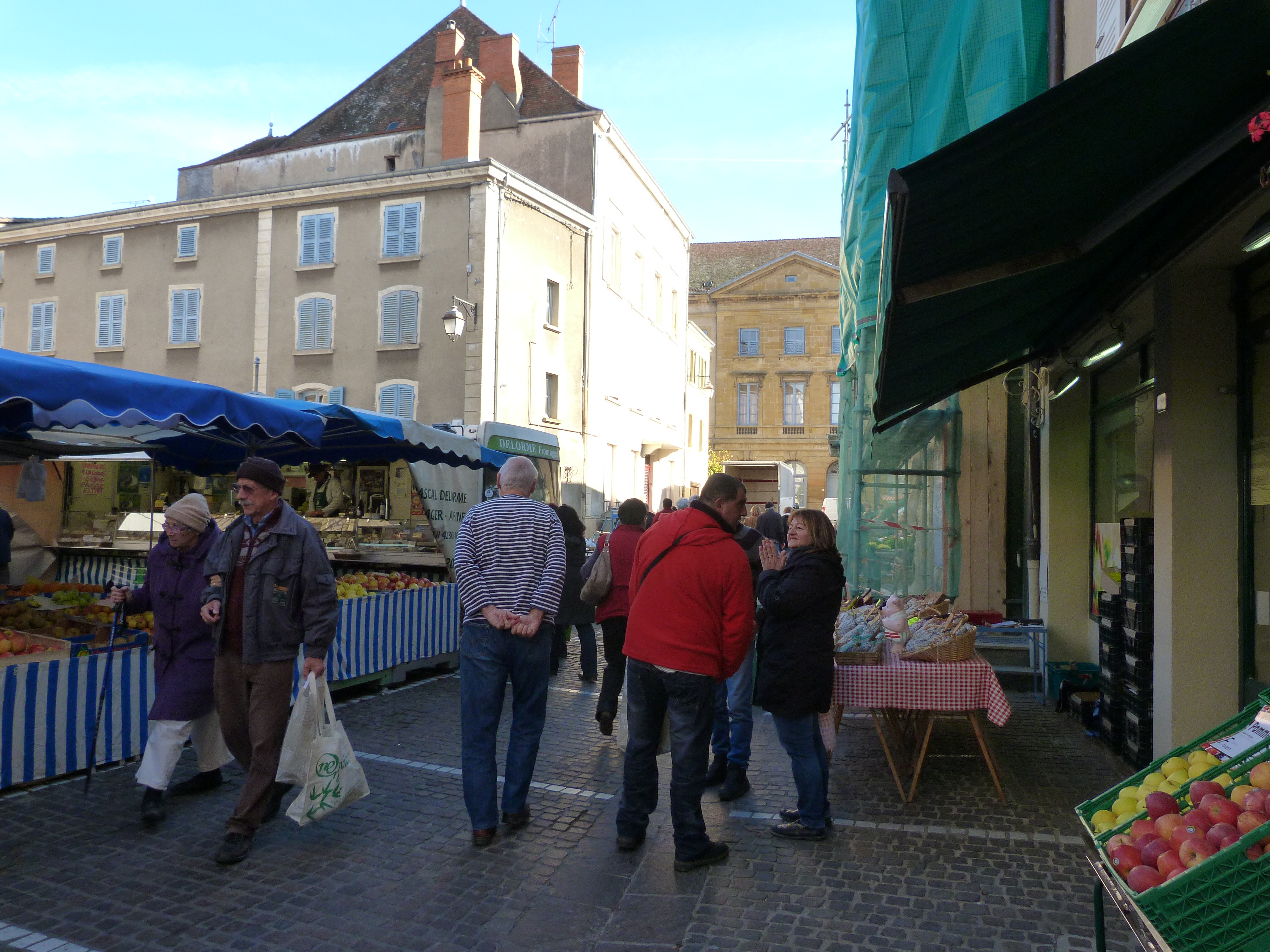
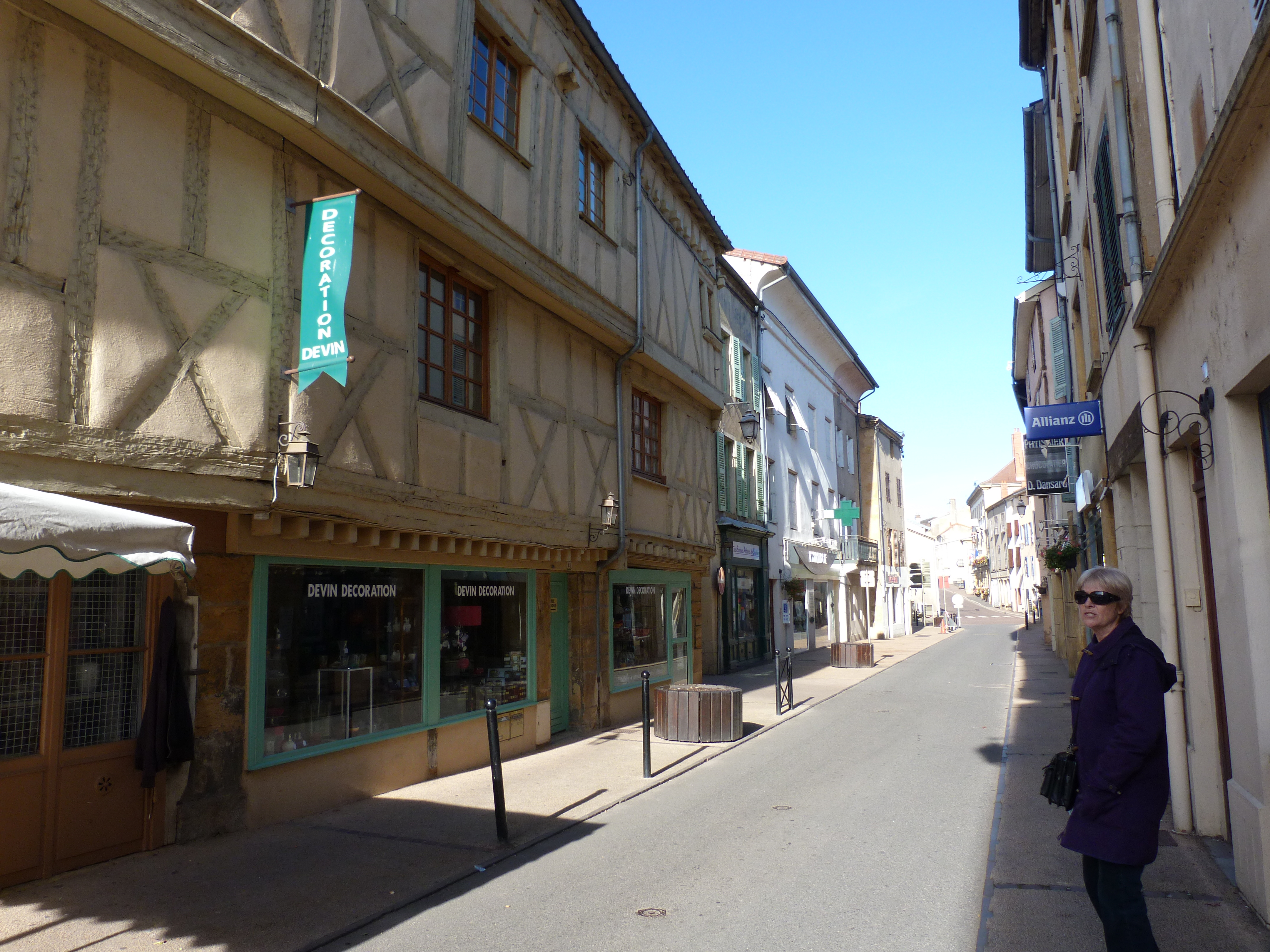
Of course the best part of being in France is market day. Mondays are market days in Marcigny, a little village of about 2,000 people, about 20 minutes away. The town has beautiful architecture that is well looked after.

The market in Marcigny

The Marcigny market is my favourite thus far. It was small, yet filled with stalls of delicious foods. Huge lettuces, about the size of the largest platter in my kitchen. Every vegetable imaginable – incredibly fresh and healthy-looking. A cheese vendor who sold the most remarkable Cantal Entre Deux (my new favourite – it’s a semi-hard cheese that is savory and earthy), a chèvre, aged, dry and nutty, and a runny, creamy something covered in ash that we didn’t get the name of but which we fought over with a passion. We bought some saucissons (dried sausage), selecting one with wild boar and one with Myrtille berries, and some delicious, dense whole wheat baguettes. Clothes, CDs, handbags mixed with food stalls wafting the delicious smells of paella, roast pork and cooked potatoes. Bryan decided to splurge on a treat that he has always wanted to try – Calamari Farci, calamari stuffed with vermicelli, mushrooms and spices. (Good, but not great. An unusual choice for a French market, but reflecting a Vietnamese influence perhaps). We walked by rabbits, pigeons, chickens and budgies in cages. Peta and I found cute winter hats, 2 for 10€ (about $12), perfect for the cool fall air.

It was about 11:00 in the morning when we finished, and we popped into a café for coffee to warm us up. Most of the people at the other tables were drinking small tumblers of white wine. By the time we left at mid-day, the market stalls had been packed up, and people had vanished from the streets.

Marcigny and Peta. Everyone has gone home to have lunch.

Our days at Bel-Air were spent scrubbing and cleaning, except for the day we were invited to lunch at Suzanne and Christian’s. Their friends Monique and Jean Michel were also visiting, and the meal certainly stretched our meager French to the limit. Both Tim and I feel constantly embarrassed by our lack of French, and are very shy in social settings. However, along about the third bottle of wine, both we began to understand far more of what was being said, and were able to contribute with more enthusiasm (but with just as many faults!).

Suzanne served us appetizers (salted cashews, spicy crackers, slices of a bread, like a brioche, with ham and cheese) while Christian served Crémant. First course was a delicious seafood tarte, with a dollop of mayonnaise, olive and an Auxerrois wine (Vin des Fossils, 2010) from the Loire. Everyone we have visited in France is proud to share local produce with us, and  it is one of the great pleasures of the trip to be able to try so many new foods and tastes. Suzanne and Christian had just returned from the town of Charlieu with a specialty from the Loire – Andouille. Andouille is an aged sausage, made from, as far as I can tell, the neck and lungs of pork, and possibly beef as well. It is a very old recipe, carefully guarded. “Une recette tirée des grandes traditions gastronomiques Charliendines qui date de la nuit des temps, des hommes fidèles et rigoureux de cette douce alliance vous garantit ce résultat exceptionnel.” (which translates roughly as: “A recipe drawn from the Charliendines culinary traditions, which date from the dawn of time. Add to this men faithful and rigorous, and the combination guarantees this exceptional result.” The translation is rough, but so is the original!) Suzanne served the Andouille with the traditional boiled potatoes, and sauerkraut cabbage casserole. The Andouille had a dark, extraordinary flavor. Deep, slightly smokey and aged. Like nothing I have ever tasted. Served with a special Macon-Cruzille, 2008.

The entre was followed by the cheese platter (another new favourite – Délice de Bourgueil –  an amazing creamy cheese, somewhat similar to the St. Andre that we get at home). The meal was topped off with chocolates and coffee. There were other wines, other tastes. Too much for my already struggling brain to remember. Local foods, local wines, new friends who are very much of the terroir. A lunch from which we rolled home around 5:00 p.m.

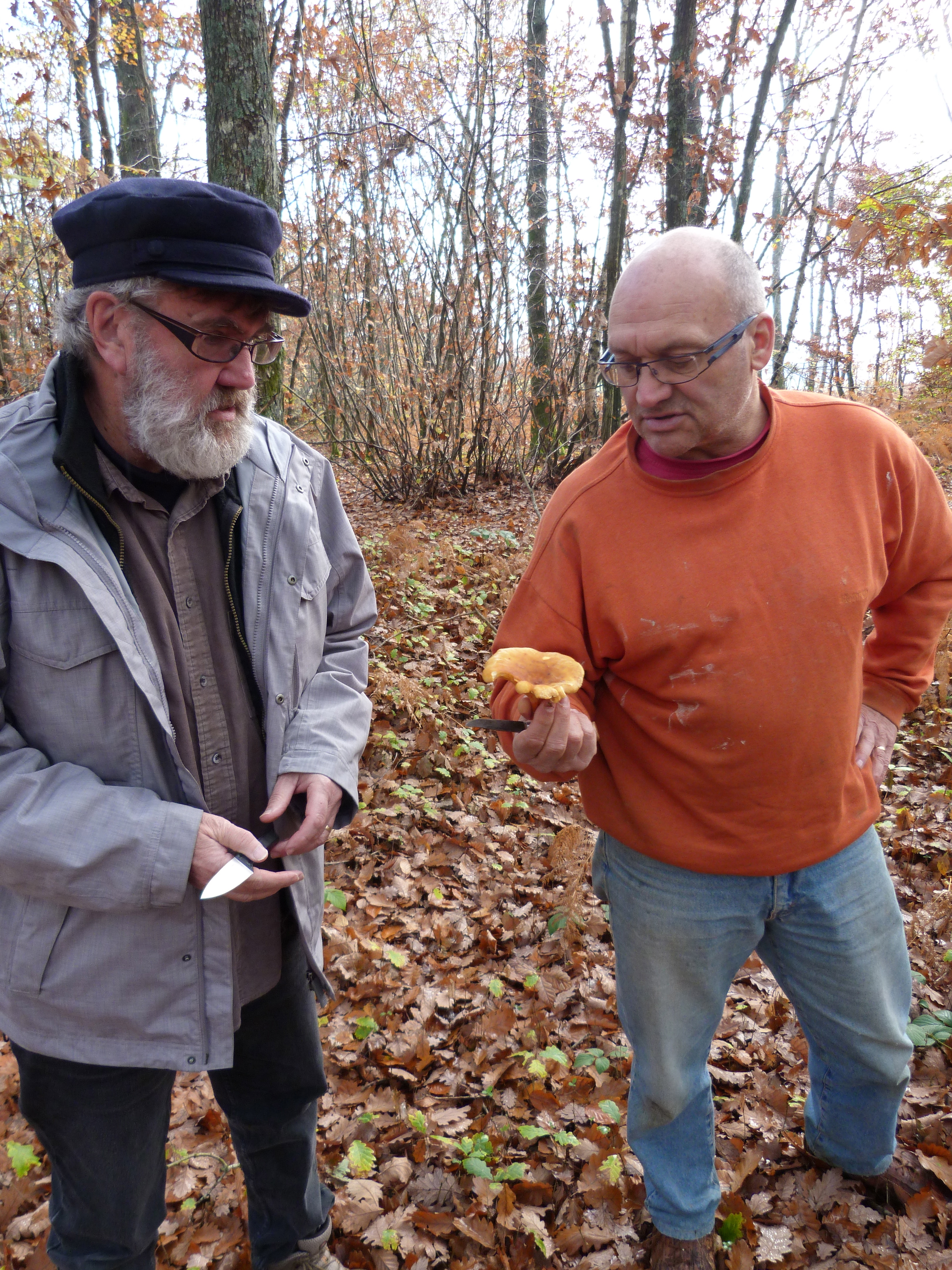
Understandably, we needed a good walk the next day. The weather was lovely, and Christian offered to take us mushrooming in the nearby woods. Finding mushrooms is akin to the proverbial needle in a haystack – at this time of year they are buried beneath mounds of fallen leaves, often camouflaged the same colour. The day started promisingly, with a large Chanterelle – a mushroom that Christian knows well.

Christian shows Tim a Chantarelle

But although we found many mushrooms after this first, they were mostly inedible and potentially poisonous. However, they were very beautiful and unusual (I never knew that there were mauve mushrooms!) and after a while we developed a “catch and release” attitude. The joy of being out and tramping directionless in a fresh wood made the adventure rich in every detail.

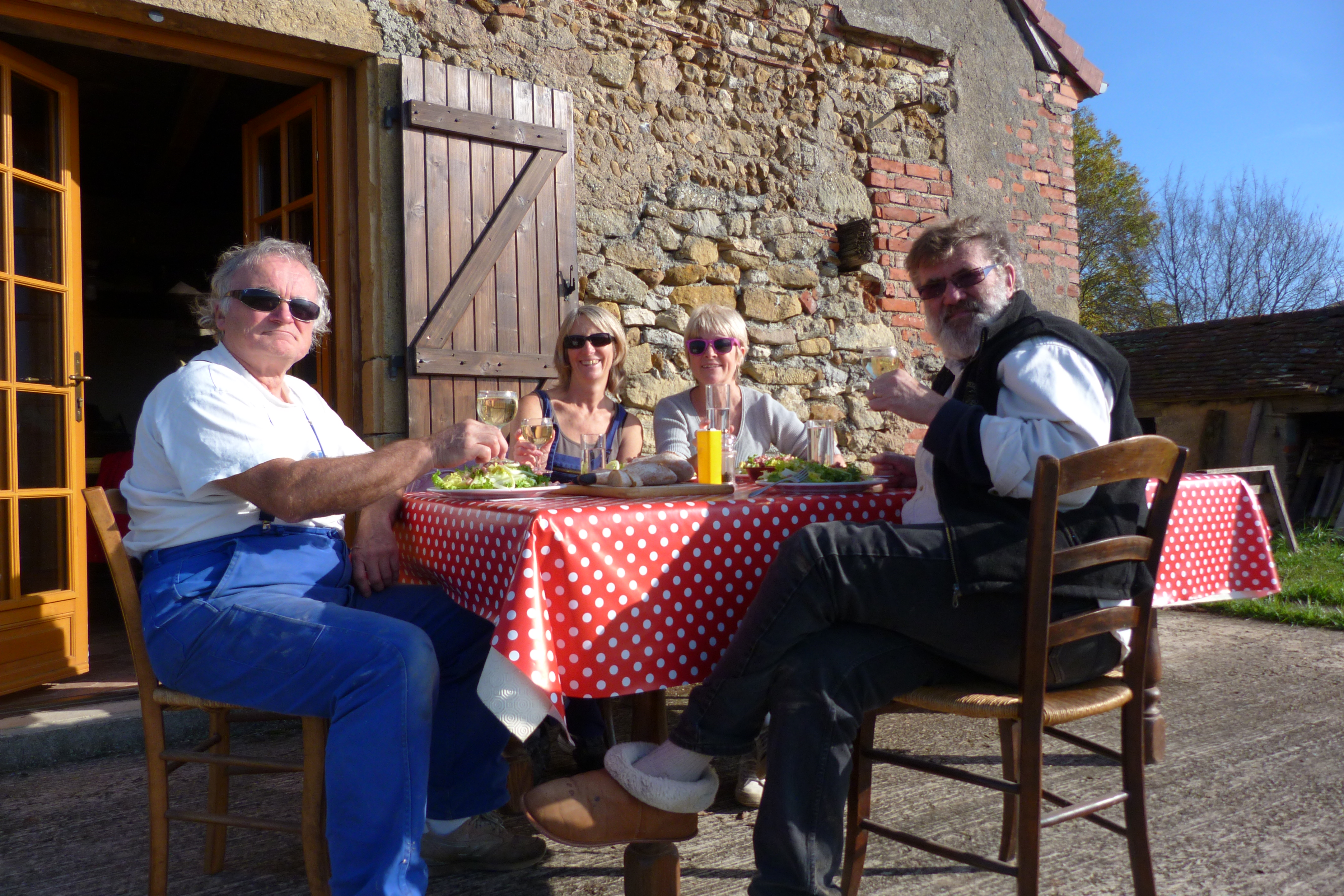
The next day, the last of our week’s visit, the weather went from nice to spectacular. Unbelievably for late November, we took the big kitchen table out into the sunshine and had a lunch of Frisée salad and white wine, basking in the hot sunshine and overlooking the fields of Burgundy. The grey skies of London seemed a very long way away.

A November lunch in France

Encore une fois

Peta and Bryan invited us back to France, to help close up the house for the winter. The trip coincided with a visit to friends in the Loire area, in a small village called Restigne. We were thrilled to be invited to see another part of France with new culinary, and vinicultural, treasures.

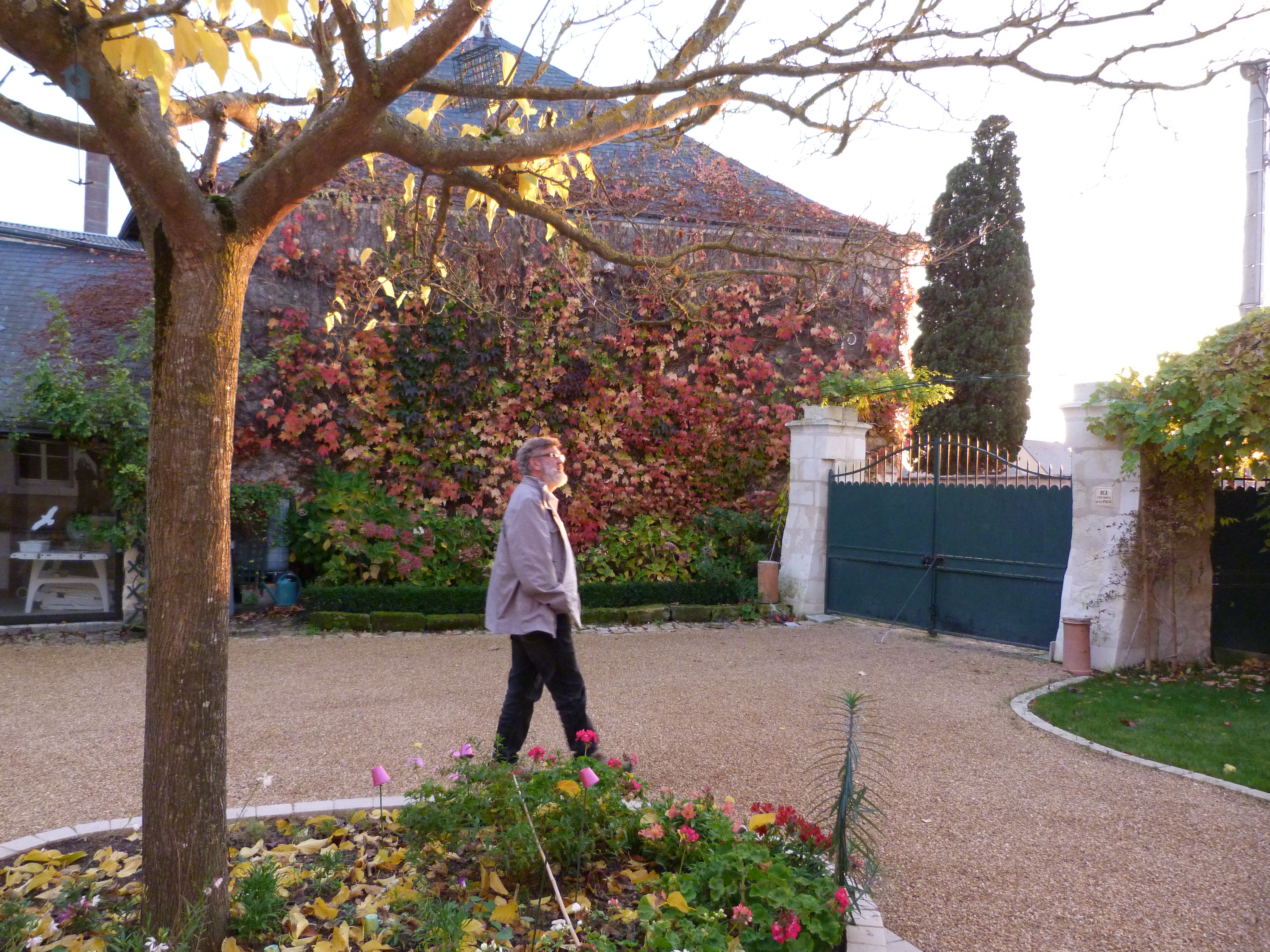
Françoise and Pierre live in a house that they have marvelously restored, complete with courtyard, gardens and guesthouse.

Tim in Françoise & Pierre's courtyard

Restigne is only several streets long and surrounded by vineyards.

The main corner of Restigne, with sign posts to local vitners

The nearest city is Tours, and Françoise offered to take us there so that we could go to a craft show to see the work of local artisans.

I have participated in a number of craft shows myself, and I was really intrigued to see the similarities, and the differences, at L’Art au Quotidiens in Tours.

Amongst the many wonderful potters, jewelers and clothing designers were fine furniture makers and restorers able to appropriately re-paint or re-plaster your 16thcentury home. The show was housed in the Vinci Centre International de Congrès, a contemporary building in the centre of town. In the middle of the building there is a large, ultra modern theatre, which was converted to a restaurant for the duration of the craft show. Large tables were set up on the stage where we had a lunch of an extensive salad buffet, hot entrees and seemingly endless glasses of white and red wine. A pianist played American jazz standards on a keyboard set up in the theatre seats. The French really do up a craft show in style.

Our lunch on the stage of the theatre

I have always wanted to visit Tours because of a beautiful manuscript that I studied many years ago, done by Alcuin of York in the 9th century at the monastery of St. Martin of Tours. It is one of the most graceful of the Carolingian manuscripts and is one of the reasons why humanist lettering styles are as appealing as they are.

The cathedral in Tours

Tours did not disappoint. It has a lovely old centre and on this warm November bank holiday (Armistice Day) there were hundreds of people out walking. Françoise told us that people are always out strolling in Tours.

Tim and Bryan in Tours

It’s a very friendly atmosphere. We stopped for coffee in the square, so that we could watch the world pass by.

Back in Restigne, the village is only large enough to support a single Boulangerie, a Charcuterie and a small chapel. But once a year the village is home to a mammoth Marche des Puces, and we have come to help Françoise organize her stall. But before we got started with collecting treasures from the attic and guest house, Françoise took us to see the caves outside the village.

Seven hundred years ago, when people started building in this area, they found large deposits of limestone from which they could easily cut blocks for their houses and Chateaux. They soon realized that when they took the blocks out, they were creating useful spaces. These spaces became caves used for storage, and in times of war, entire villages hid in the caves with their livestock. Today, the caves are still in use by the local vitners. Thousands of bottles can be stored at perfect temperatures. Aside from wine storage, caves are also used for a huge wine industry, as well as large (and rather legendary) parties and often for extra living spaces.

Françoise took us out of the village.

The vineyards outside Restigne

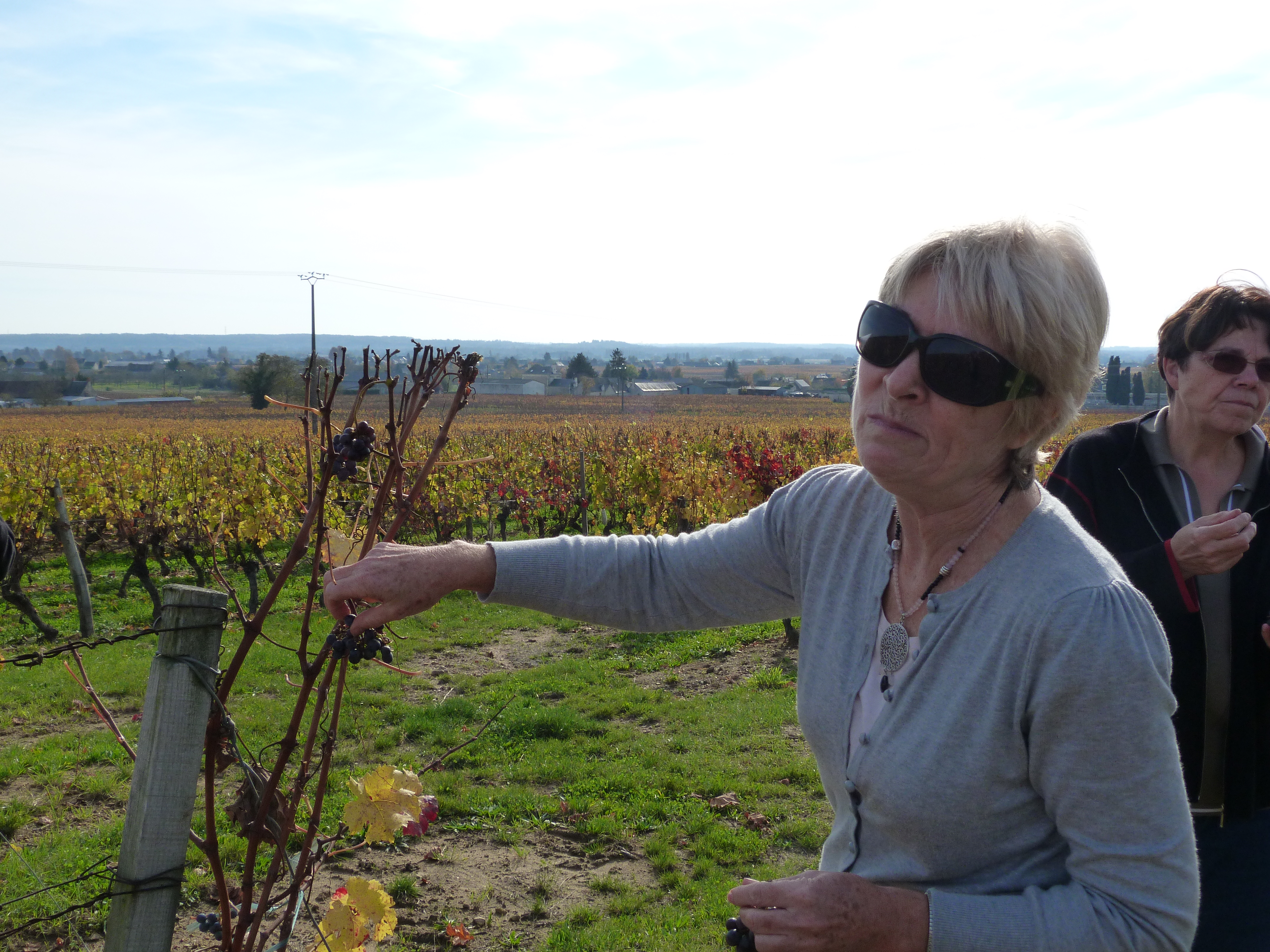
There are vineyards everywhere. As far as the eye can see in all directions. There are a few bunches of grapes left on the vines. They are sweet and warmed in the autumn sunshine.

Peta sampling the grapes in the sunshine

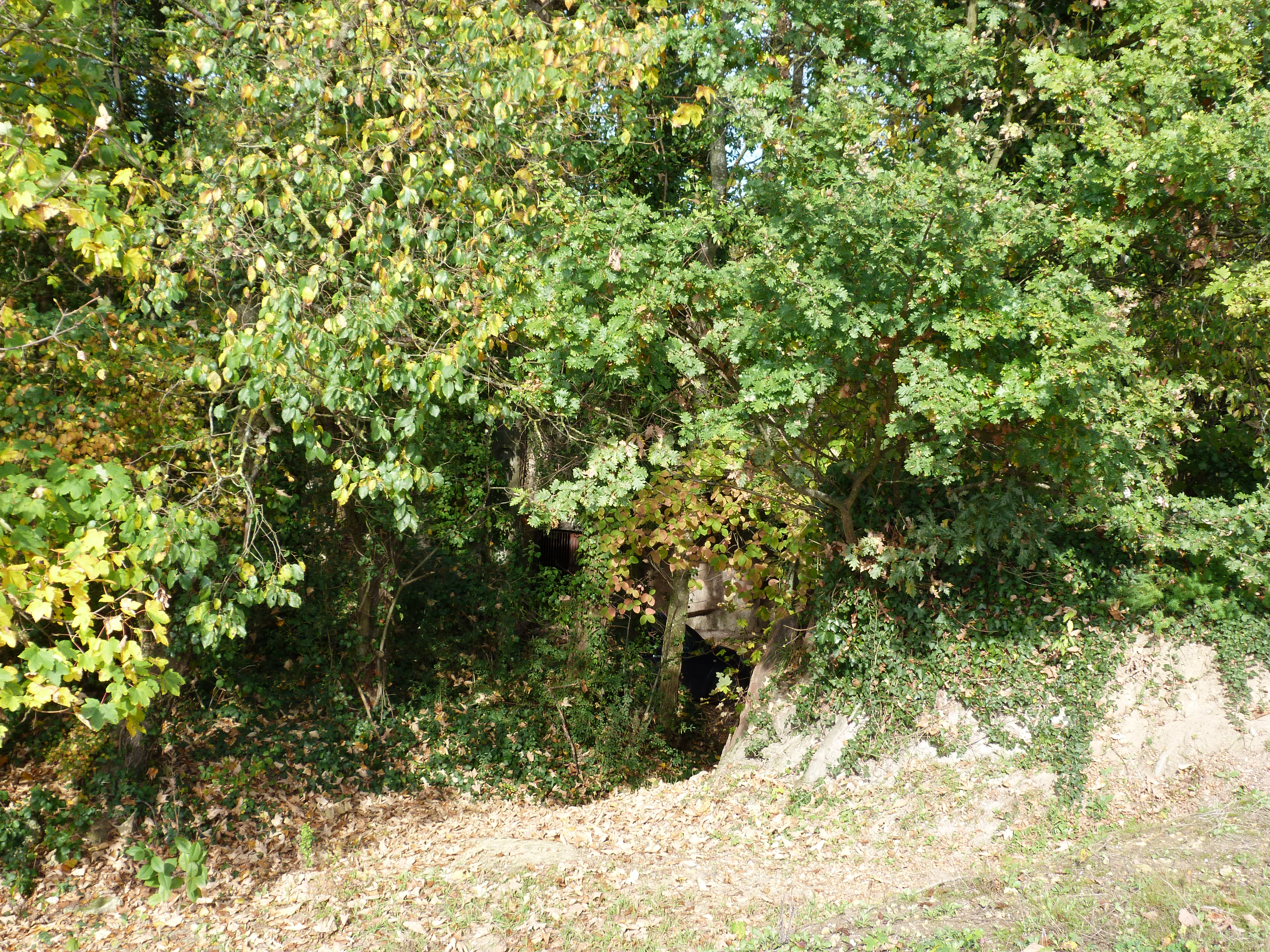
Along the sides of the fields, invisible unless you know where to look, are the caves. They are completely hidden away in the landscape.

The invisible Caves, in the fields outside Restigne
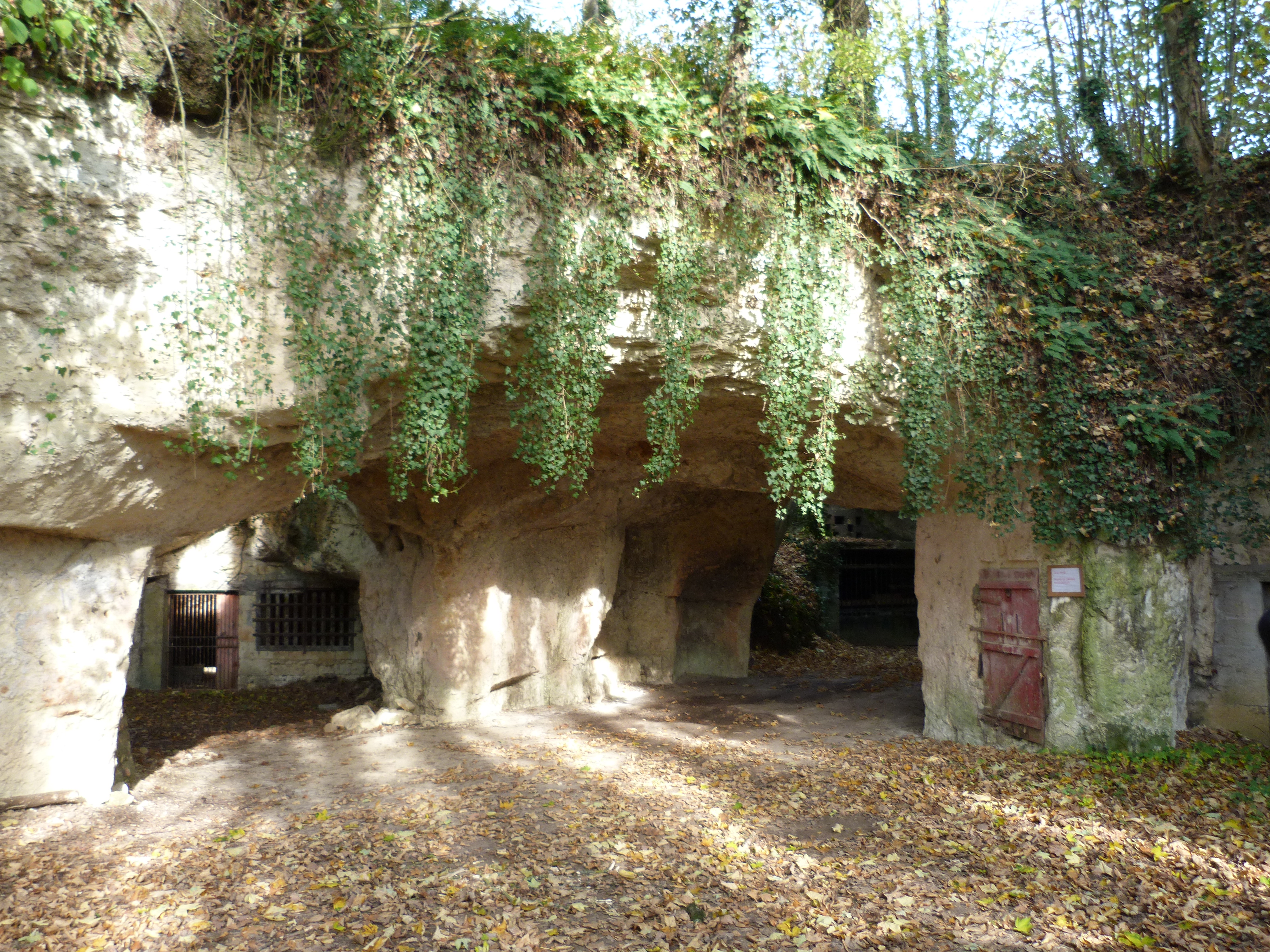
The Entrances
An archway leading to the caves

Back at Françoise and Pierre’s, we got a tour of their cave, tucked right under their house.

Dinners chez Françoise and Pierre are marvelous affairs, where we sit at table for many hours. We drank various vintages of the delicious Cabernet Franc that is made in the fields just beyond the village and stored below. There were numerous courses, concluding, always, with cheese platters followed by a dessert. As ridiculous as it may seem to bring cake to the French, I had made my favourite chocolate torte, Bonnie Stern’s California Chocolate Pecan Torte, (thanks to my wonderful friend Hinda who emailed me the recipe just in time) to give to Françoise and Pierre. Thankfully, the recipe is astonishing and the cake came up to their culinary standards. It helped that it was made with good French chocolate.

In response to my cake, the next day Pierre purchased a Galette Bourgueilloise – a specialty of the region. Where the chocolate torte was heavy and rich, this was such a light confection that you could almost believe you were eating flavoured clouds. Extraordinary. It, like the wine of the area, has an appellation controlee. Unique to the region, it is a very good reason to visit again.

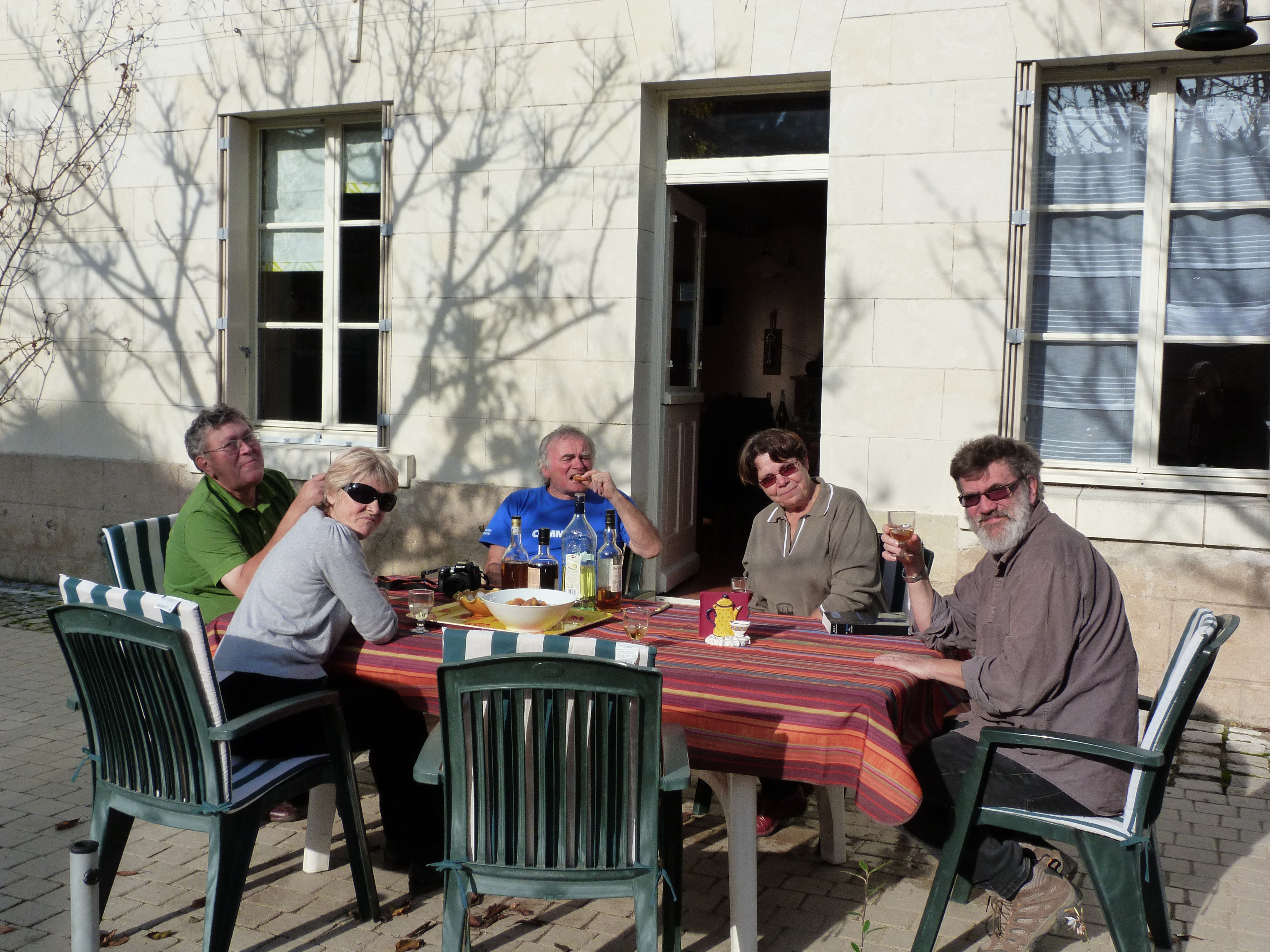
Aperitifs with Peta, Pierre, Bryan, Françoise and Tim in the courtyard in Restigne

A new doorstep in an ancient landscape

We had never met Mal Peet and his wife Elspeth Graham before we landed on their doorstep in Exmouth. Mal and Elspeth are writers. Mal and Tim share the same publisher, and have many mutual friends in the world of young adult literature. We were invited to spend a night if we ever found ourselves out their way.  So we conveniently found ourselves in Exmouth.

Exmouth is on the coast of East Devon and has stunning long sandy beaches. It is a part of the coast where there are wonderful seaside towns devoted to easy beach living. But it is also the entrance to the “Jurassic Coast”, an area of English coastline that stretches from Exmouth in the west to Swanage in the east. The “Jurassic Coast” is recognized by UNESCO as a World Heritage Site because it represents a geological walk through time. In ninety-five miles of coastline, you cover 185 million years of geological development, spanning the Triassic, Jurassic and Cretaceous periods. Too much for one day. It is an area that I definitely want to come back to.

Mal and Elspeth live mere blocks from the beach in Exmouth, in a wonderful Victorian house with their too adorable dog Pedro. As Mal cooked, we launched ourselves into riotous discussions about children’s literature, rogue construction, rock and roll, aging and everything we’ve ever encountered in our lives that brought us to this point. Literature, art, music, theatre, politics – we travelled late into the night solving the problems of the world.

The next morning, a little the worse for wear, Mal and Elspeth drove us through the lovely seaside town of Budleigh Salterton (and who could resist that name!) to the extensive salt marsh commons of the Otter Estuary Nature Reserve. We walked along an ancient public walkway bordered by huge chestnuts, oaks and tamaracks to get to the town of Otterton.

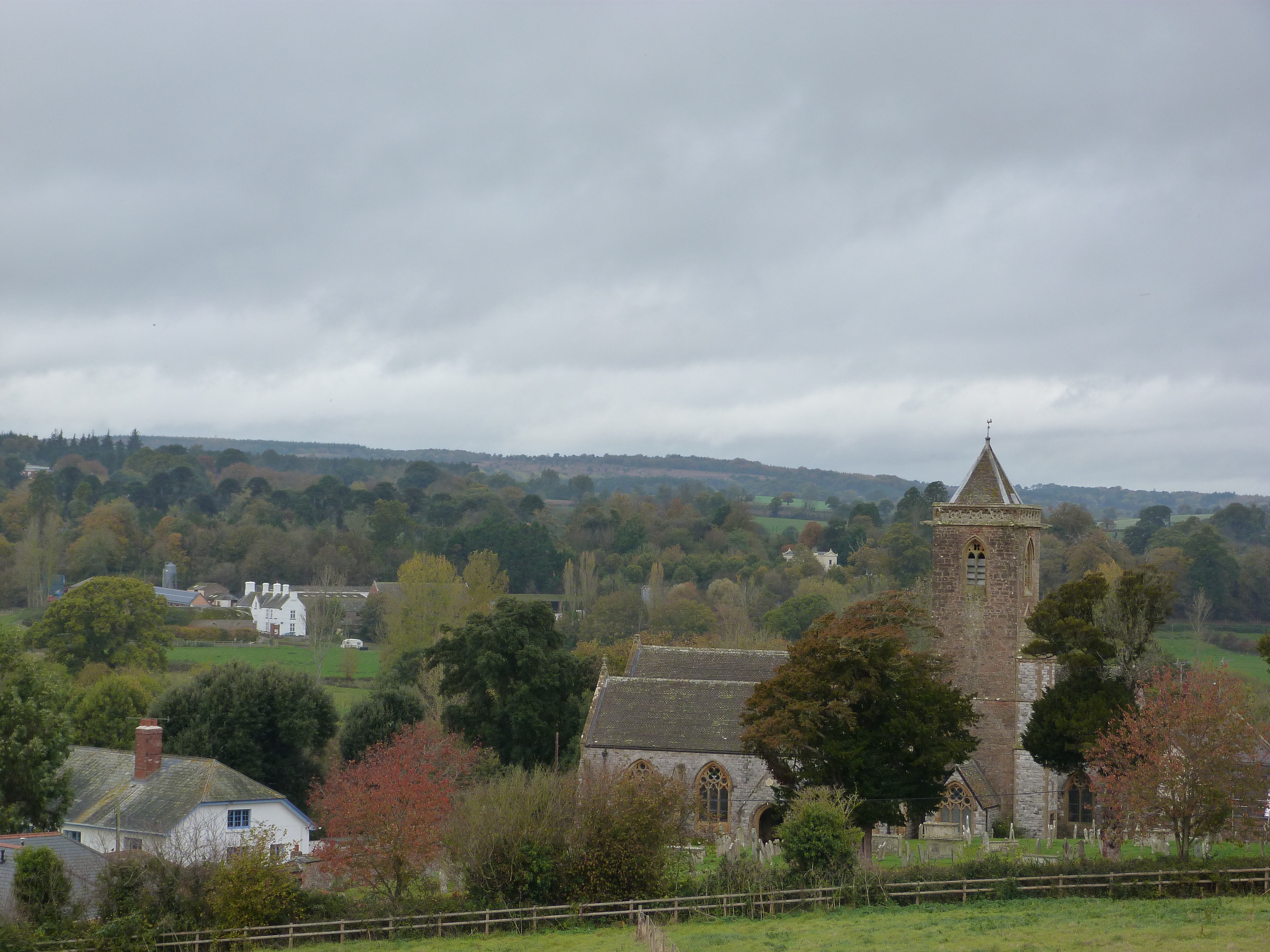
A view into Otterton

Otterton is an old Saxon village on the River Otter that used to be the largest settlement in South East Devon. Formerly a port, the river became dammed up with rock and silt several hundred years ago, and the land became agricultural. It is an archetypally beautiful rural town, with thatched cottages, cob and brick buildings and a restored mill. The Otterton Mill, which is open to the public, has been in use for 1000 years. The mill grinds locally produced organic wheat for the breads that they sell in the restaurant bakery.

Elspeth, Mal, Tim and Pedro outside the Otterton Mill

We had coffee in the outdoor café, visited the great local crafts shop (with some of the most exciting and dramatic pottery that I have seen in a long time) and walked back along the River Otter.

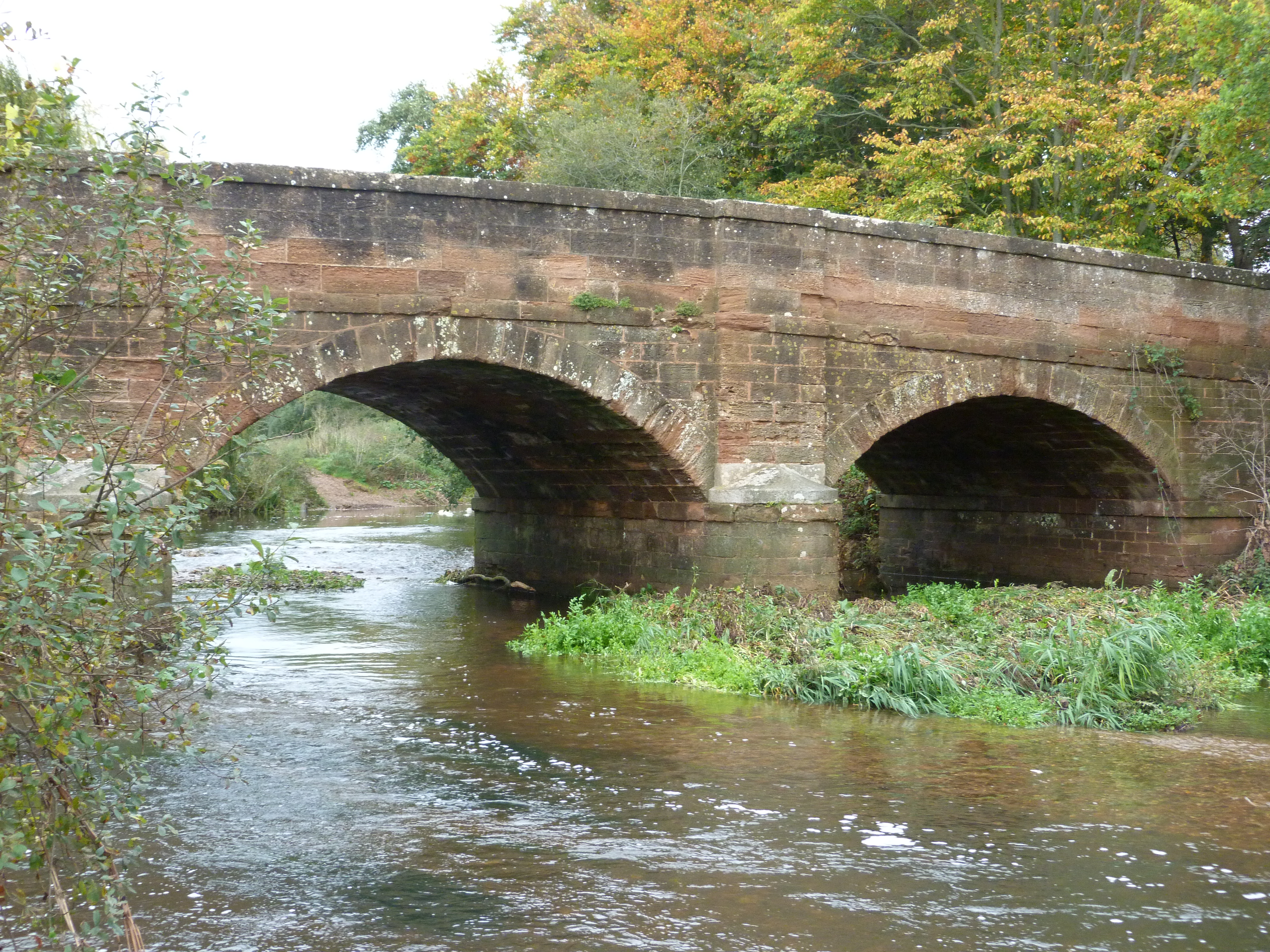
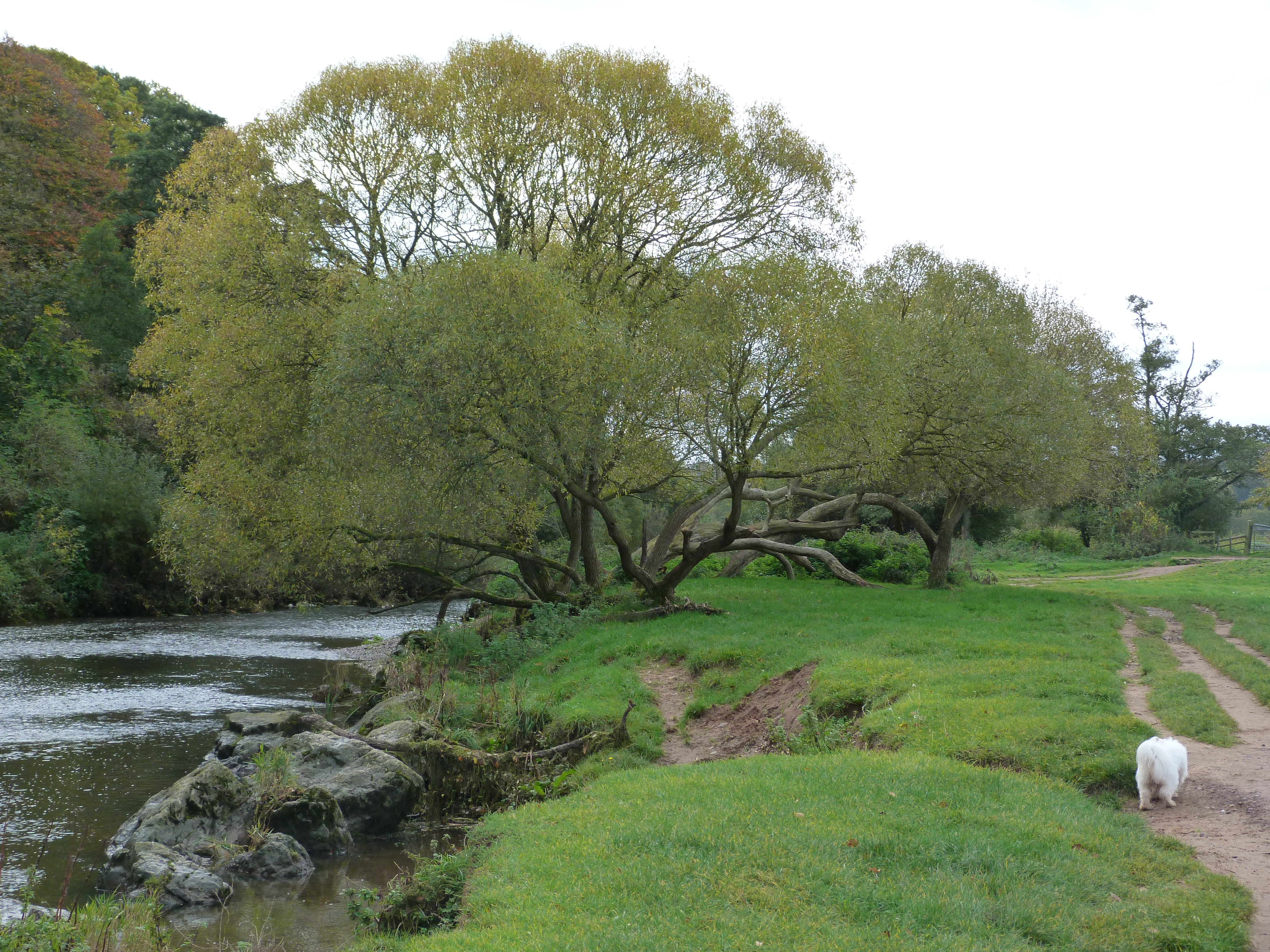
The River Otter

We had known Mal & Elspeth for only a few short hours, but it felt as though we were lifelong friends as we meandered our way back to Exmouth.

The Otter Estuary Nature Reserve, and Pedro

From Exmouth, Mal & Elspeth took us to Exeter where we were to meet up with cousins Penny & Eric. A trading town since 250 BC, Exeter, like Plymouth, suffered greatly during bombing raids in the Second World War. Recently however, the downtown has been revitalized and is now a great blend of contemporary and historical architecture. The downtown shopping district manages to incorporate the remains of the Roman wall, the 15th century St. Catherine’s Almshouse and chapel, and rows of well-preserved houses from every architectural period.

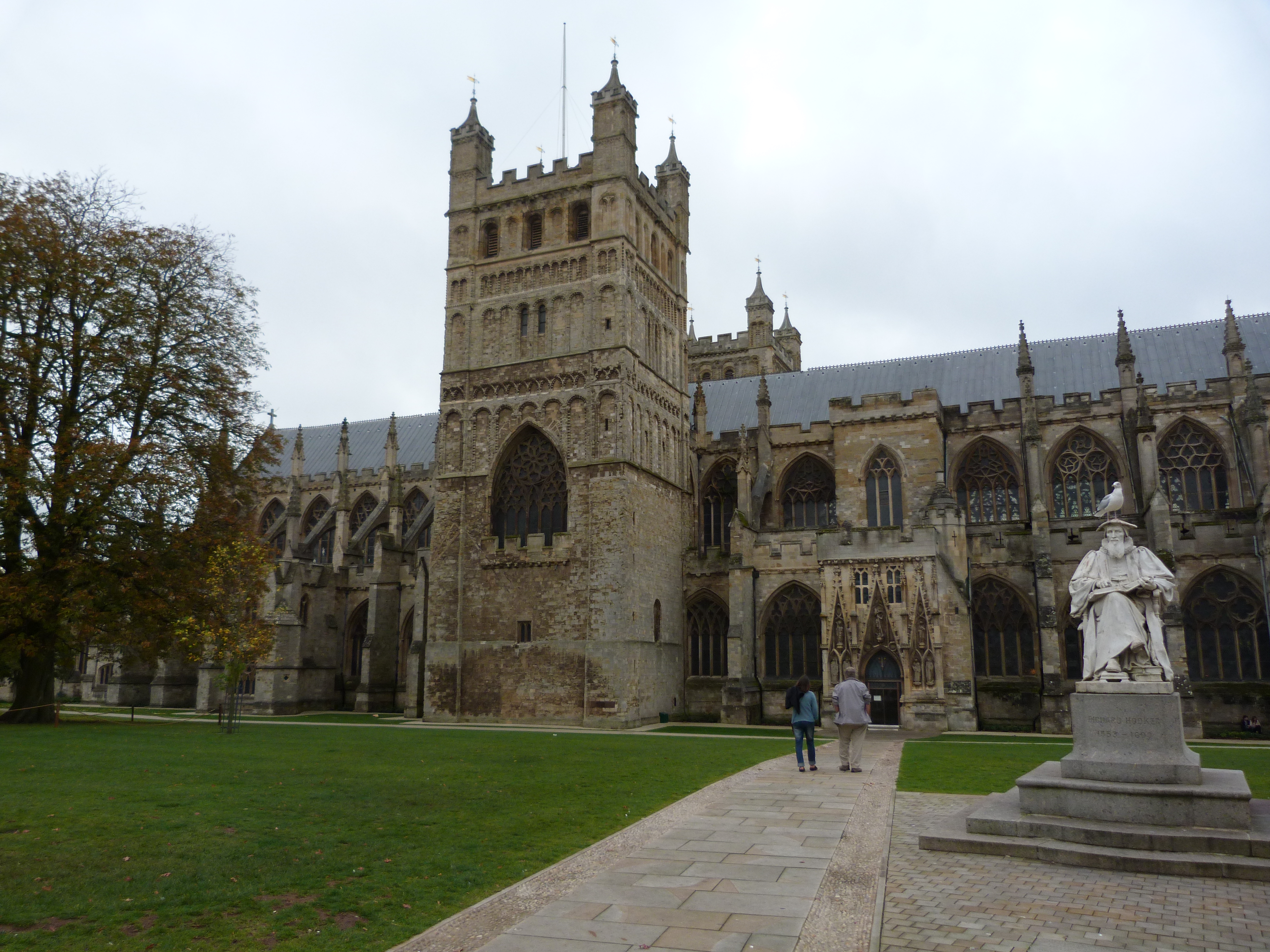
The central feature in Exeter is of course the cathedral.

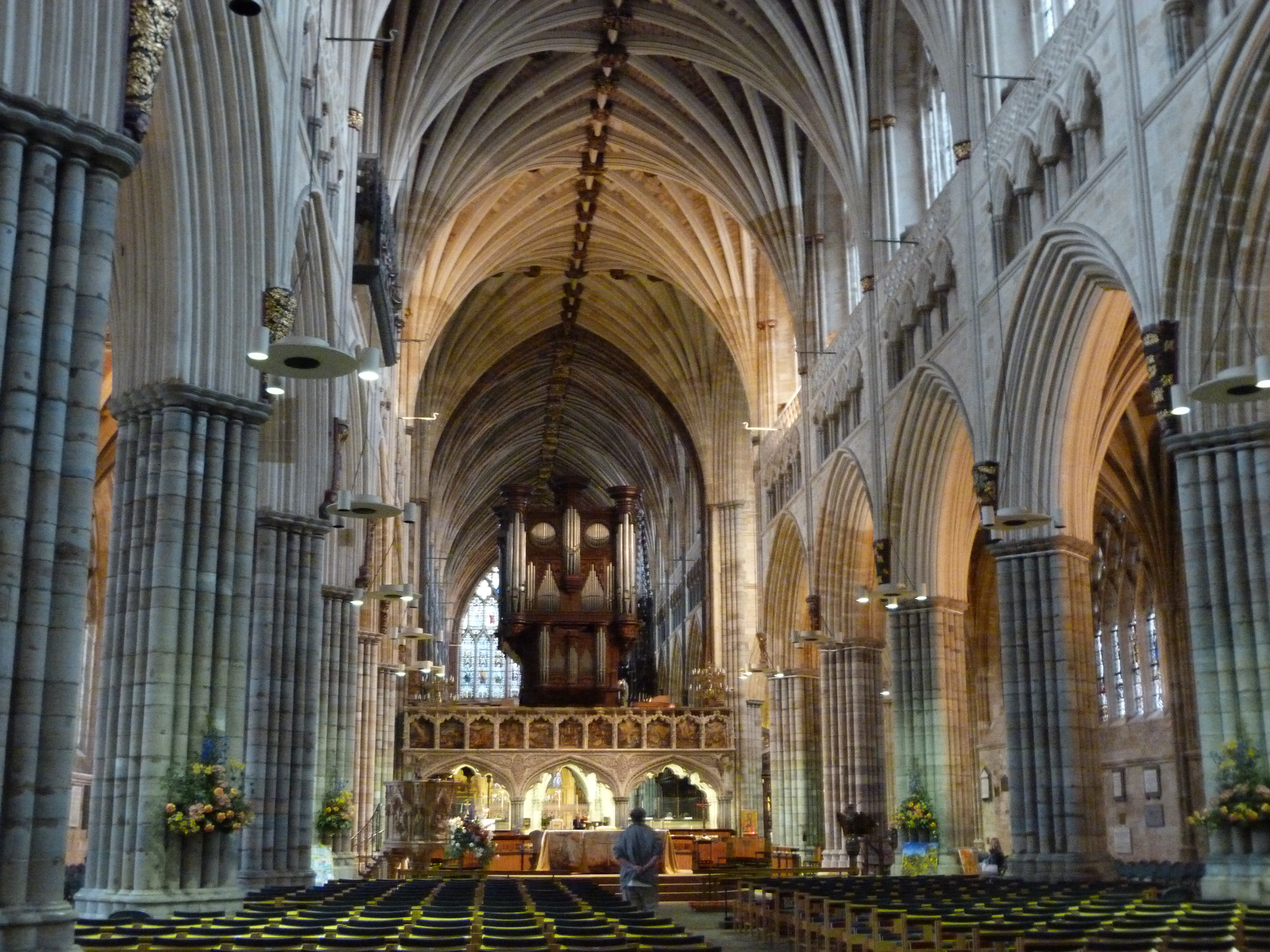
The Exeter Cathedral

Built in 1170, the cathedral has been added to and restored over the course of the last 900 years and is an imposing and inspiring sight. Inside, we were treated to the sounds of the choir and organ, reverberating on the stone arches.

Inside the Exeter Cathedral

A perfect way to send us off, bidding farewell to Devon, Cornwall and new friends, and heading back up through the country, to London.

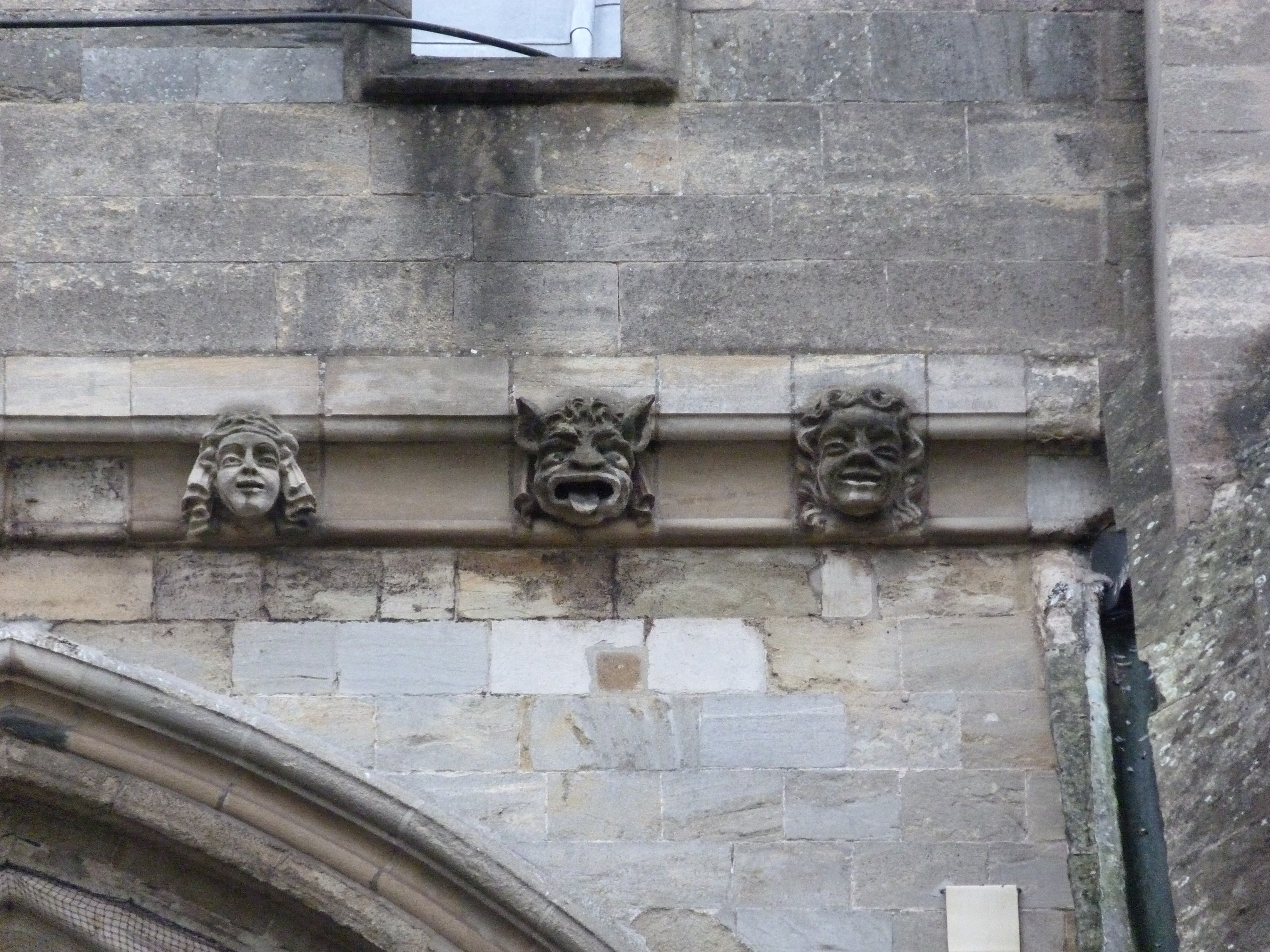
Cathedral Gargoyles

Discovering a corner of Devon

There is a reason why everyone raves about Devonshire Cream. When you eat it, you feel like you have a direct connection to lush green grass and sunshine. Even though it was the end of October, the fields of Devon were welcoming and the cream was plentiful.

Visiting Tim’s cousin Pip and her husband Steven gave us a chance to explore a bit of the Devon countryside. There is a huge organic farm, Riverford, right near their house, with open fields that we could see from the back windows. Riverford runs a kitchen, restaurant, stores and box deliveries of organic produce.

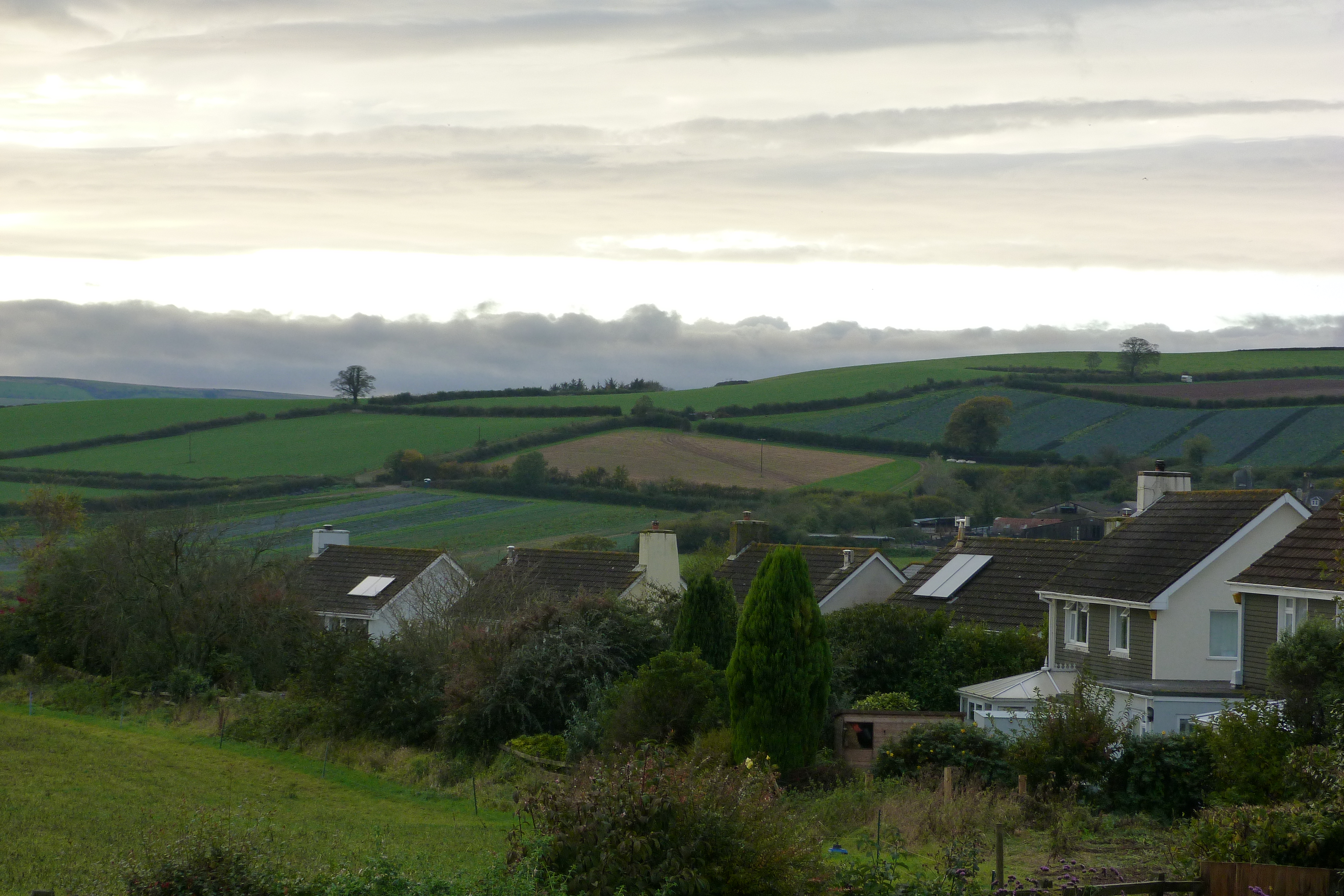
The fields of Riverford farms in Devon

After our Looe cottage with no views, it was wonderful to see land in every direction. And after our focus on the fruits of the sea, it was good to come back to such wonderful fresh produce.

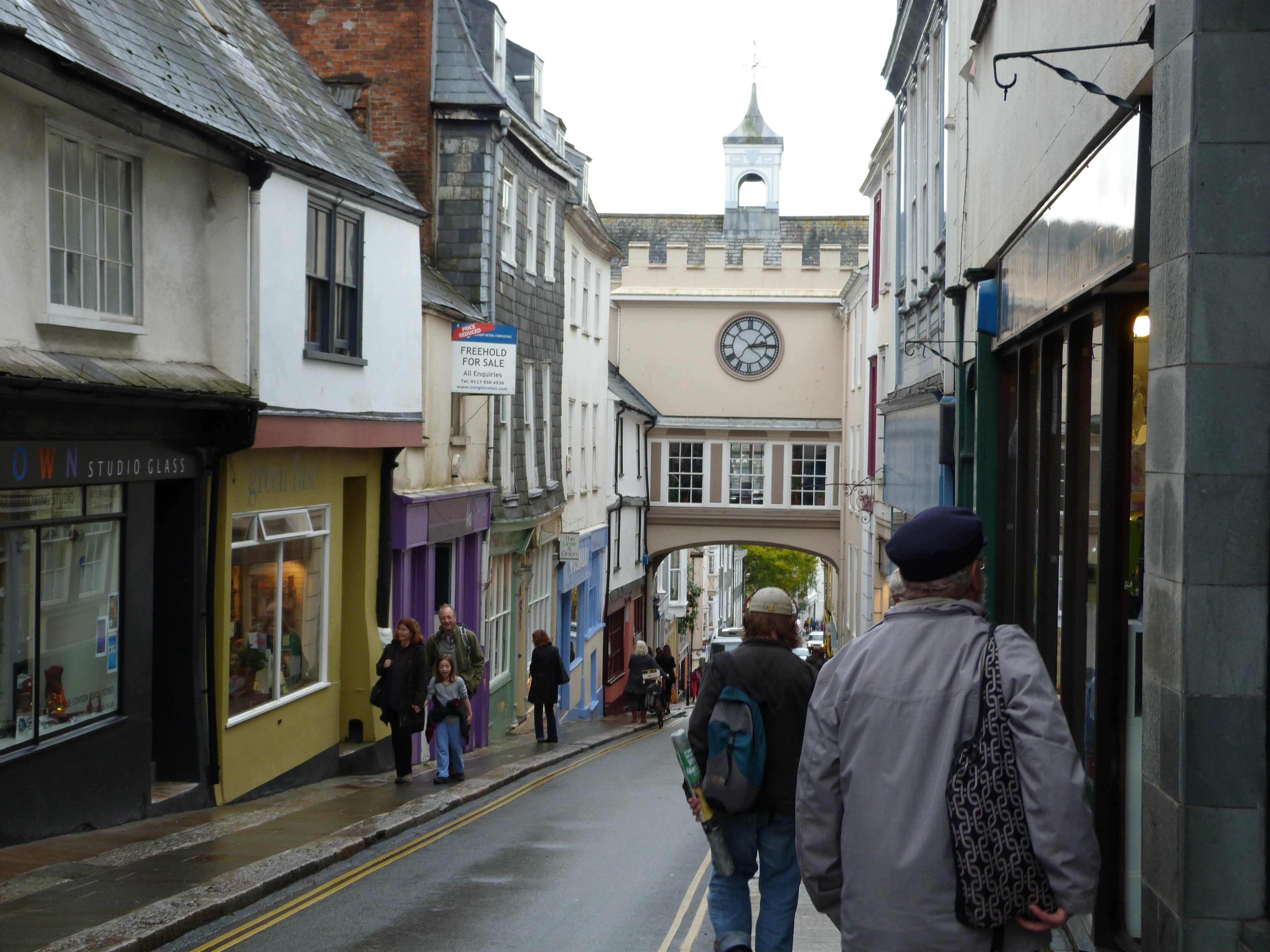
Pip and Steven live quite close to Totnes. “Did you inhale?” is the common question you get asked after you tell people you’ve been to Totnes. A town of only 7,600, it has a reputation as being a centre for the arts, healing therapies and alternative lifestyle choices. It’s an old market village, filled with “new age” stores, high end fashion, health food and book stores all set in the twisty streets under the shadow of a Norman castle.

Totnes High Street

Our mission, however, was only to find all of the ingredients to make Tim’s wonderful Thai fish stew. Tim’s Thai Fish Stew is our “default” meal – it is quick to make, comforting and delicious. In Totnes, the hardest ingredient to find on main street was the Nam Pla (fish sauce), but once we located a bottle of that, the rest was easy. The meal warmed up a chilly fall evening.

The next morning dawned bright and sunny and we were ready to head out for a walk and adventure. We started in the town of Ashburton, a lovely village of about 3,500. Formerly a “Stannery” town (the administration of tin mining), it has great produce stores, interesting crafts and a very welcoming atmosphere. Ashburton is on the edge of Dartmoor National Park, and we had hoped that there would be a good walk to near-by Buckfastleigh. But the only paths were along the highway, so Pip drove us instead to Dartmoor for a brief walk.

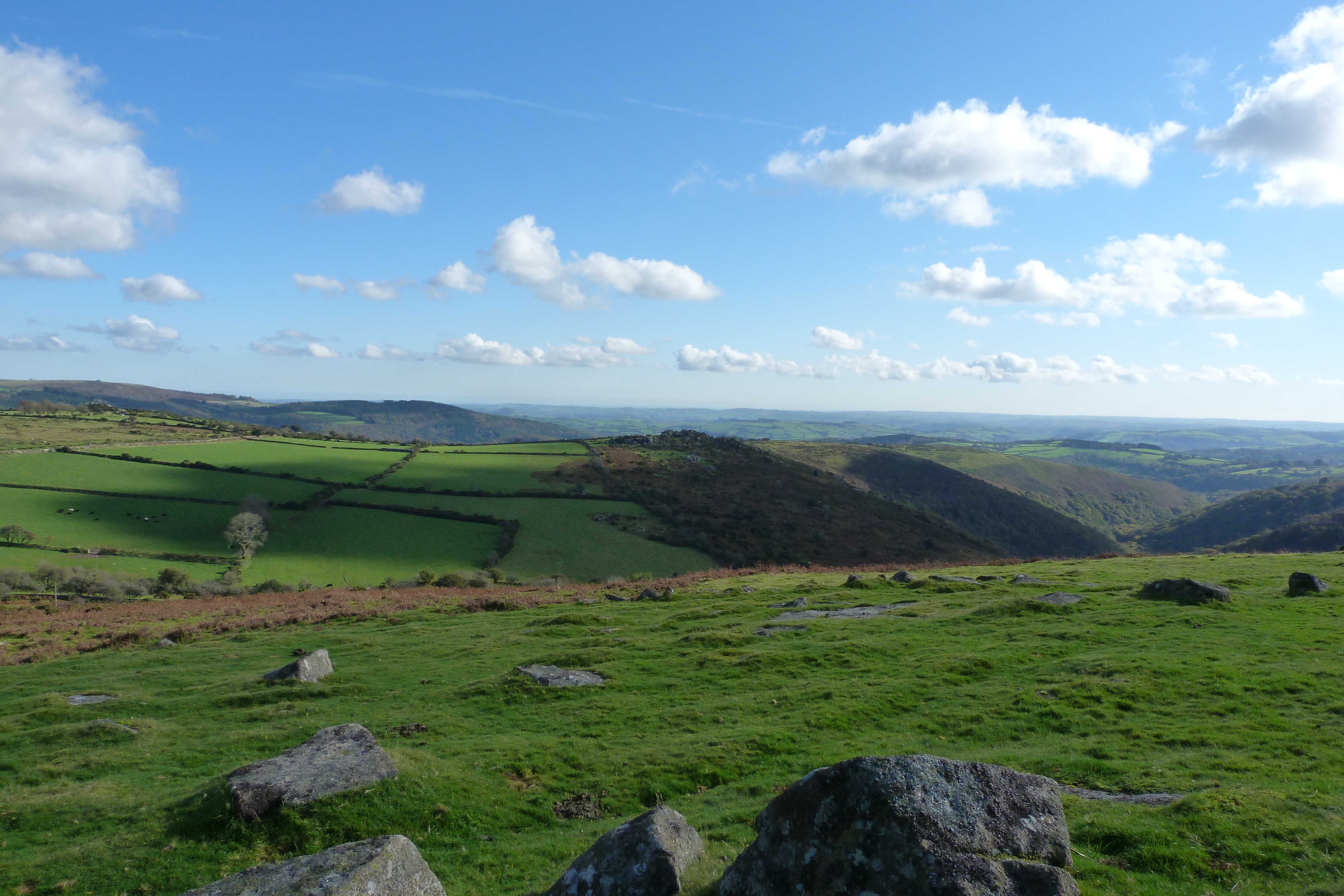
Dartmoor, with shadows from the clouds skittering across the land

This moor-ish adventure was quite different from our experience in Bodmin. The sunshine helped a lot, but there is defnitely a bit more colour in the surroundings. There was almost a lushness to the landscape. That is, if something can be lush and desolate at the same time.

Dartmoor is enormous. Vast. Once you are in the park, there is moor in every direction. But really, there is not a lot of variety in a moor. A little bit goes a long way.

Tim & Pip on a Tor

So after a great walk with Pip and Alfie the dog, we were fine to move on.

Pip dropped us in Buckfastleigh, a tiny town of about 3,600 that used to be a wool-producing centre. Now, however, the main attraction of Buckfastleigh (other than that the name uses half of the letters of the alphabet, and each only once) is the South Devon Steam Railway.

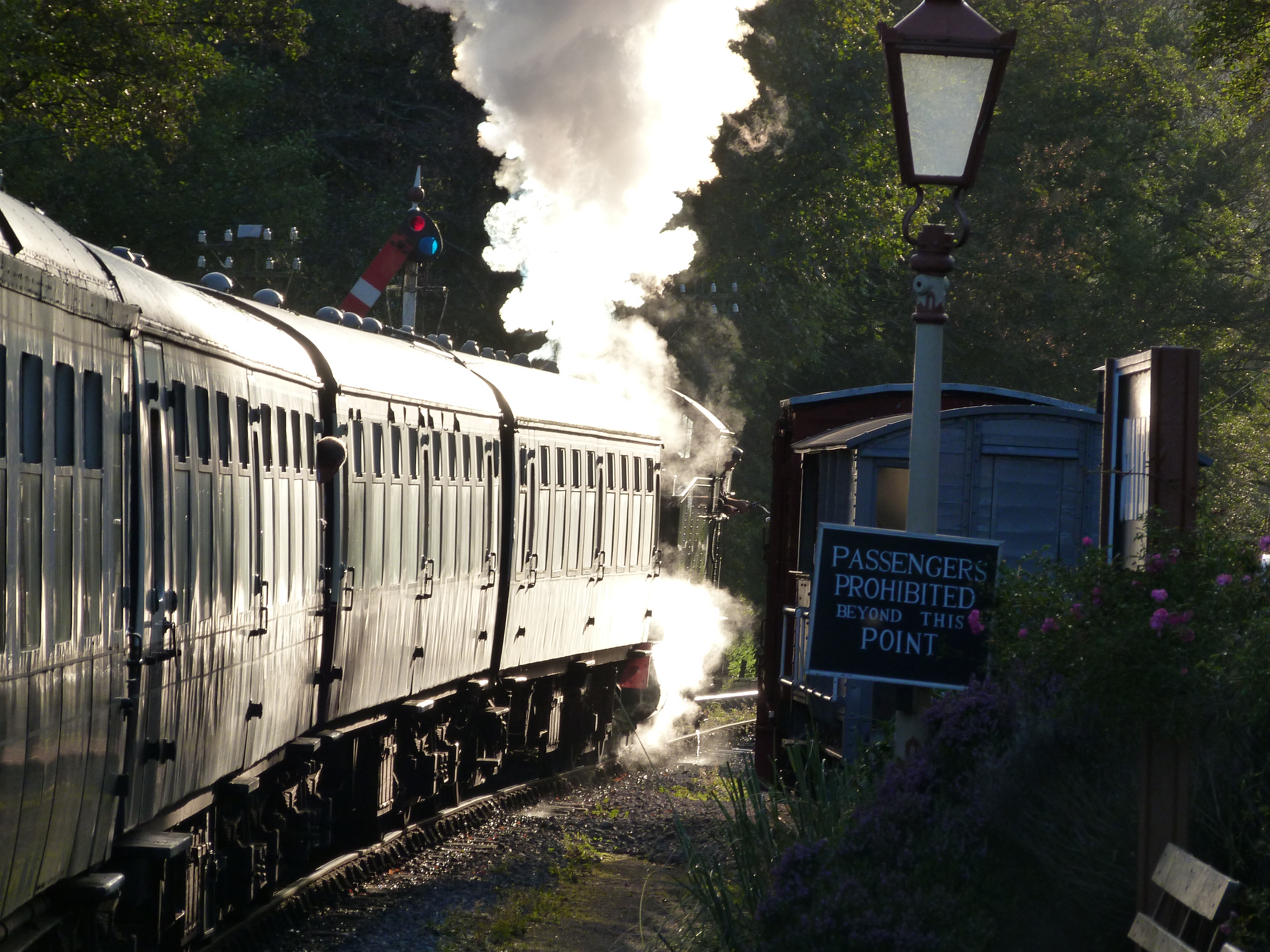
This lovely steam train runs from Buckfastleigh through Staverton to Totnes and having just seen the “Railway Children” in London, we wanted a chance to experience this adventure first hand.

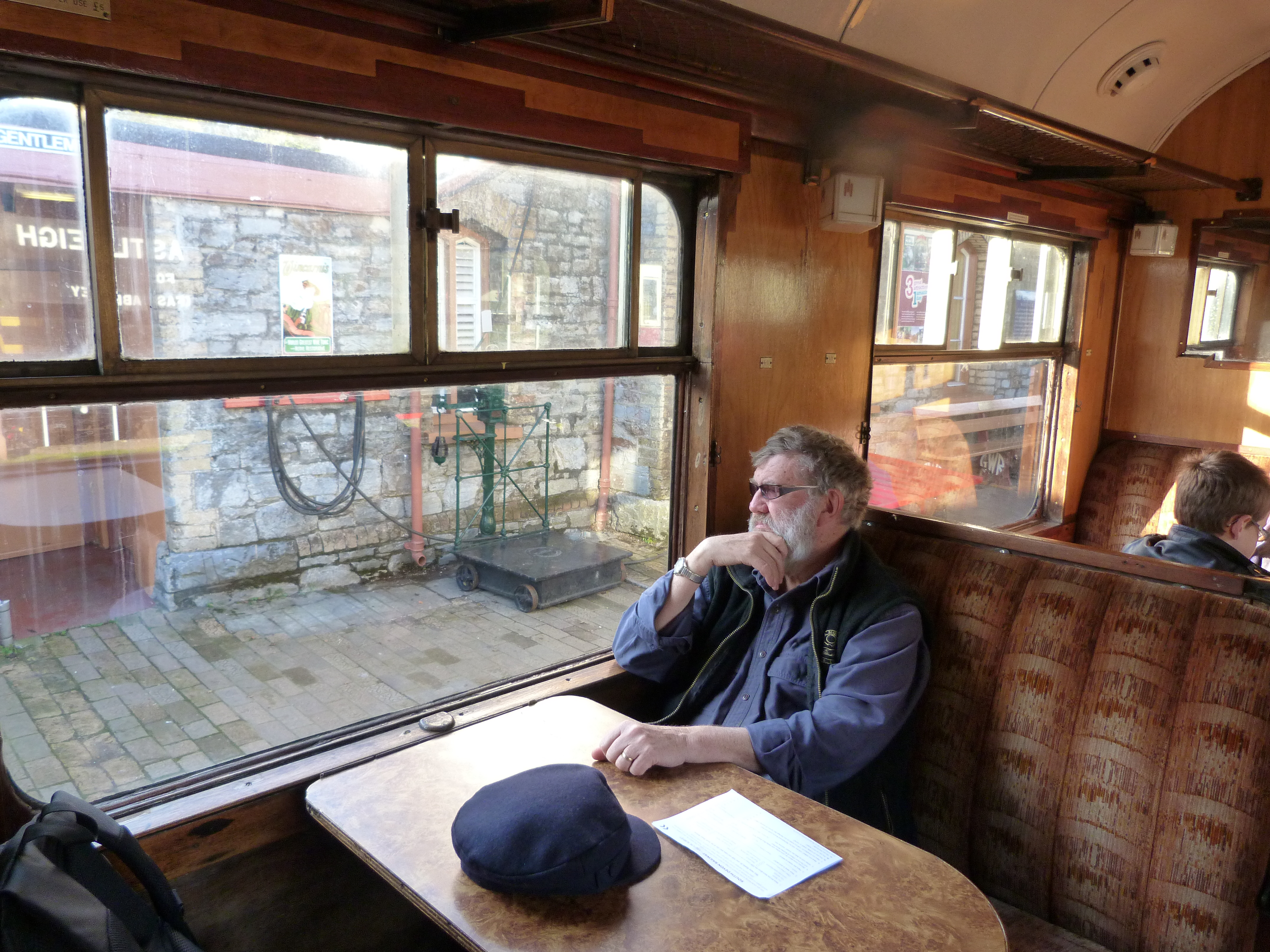
Tim, in the train, waiting to leave the Buckfastleigh Station

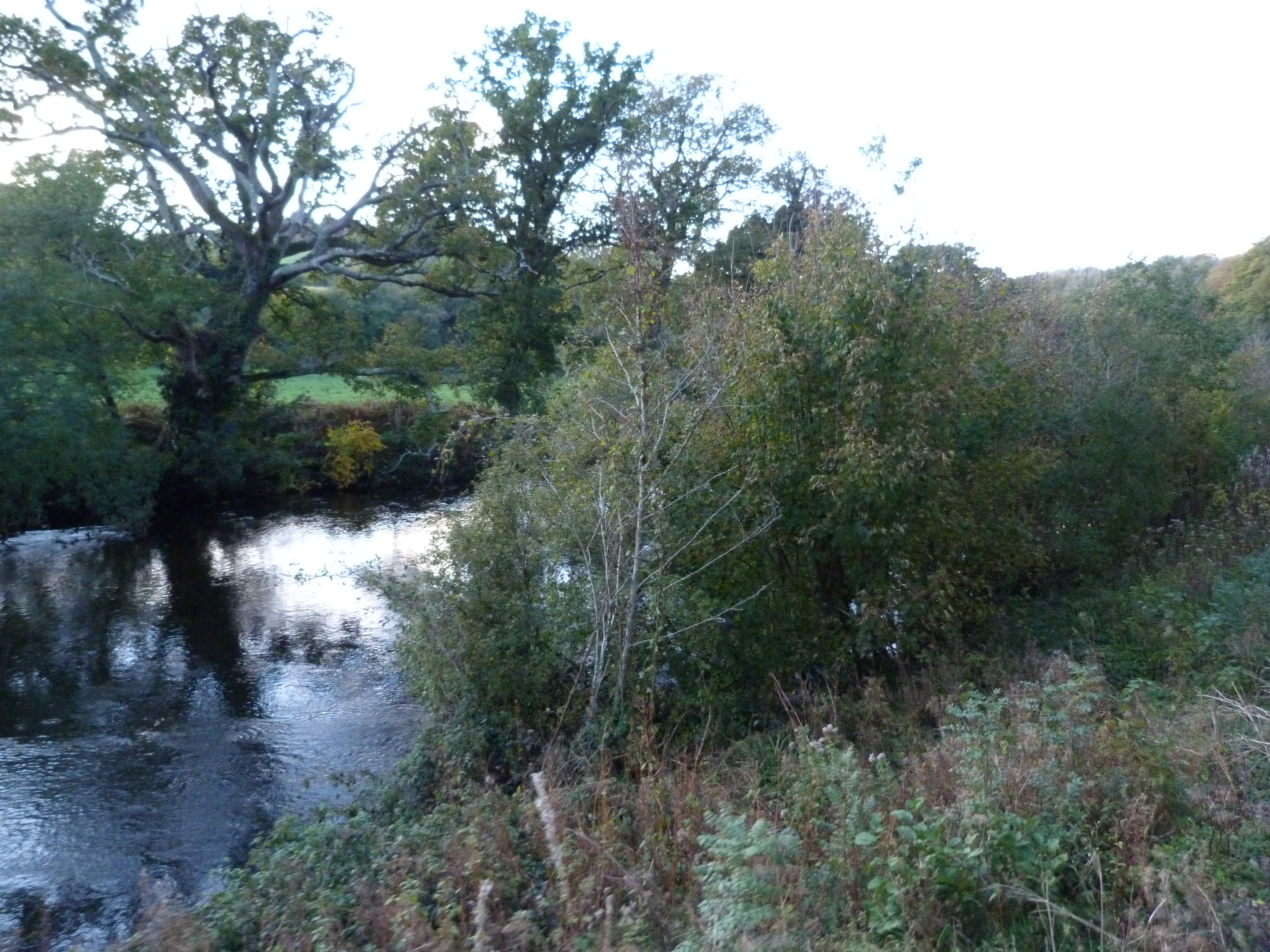
The train hugs close to the river Dart on a former Great Western Railway branch line through the Devon countryside.

Chugging beside the River Dart

Filled with train enthusiasts and excited children, we chugged along, steam pouring from the engine’s chimney and the train literally making a “Choo-choo” sound. I stuck my head out the window to watch the sunshine on the steam, the image from so many classic movies.

South Devon Steam Train

And yes, I got a bit of soot in my eye just as they say you will if you stick your head out of the window to watch the train. But it was worth it for the chance to step back in time.

Farewell to the Sea

Dynnargh dhe Logh. Welcome to Looe. I didn’t see this sign until our last evening. But I did feel very welcome.

Our last night in Looe was just about as perfect as it could be. The previous days had been stormy, but massive rains left everything feeling clean and fresh (and flooded – there were floods throughout the area).

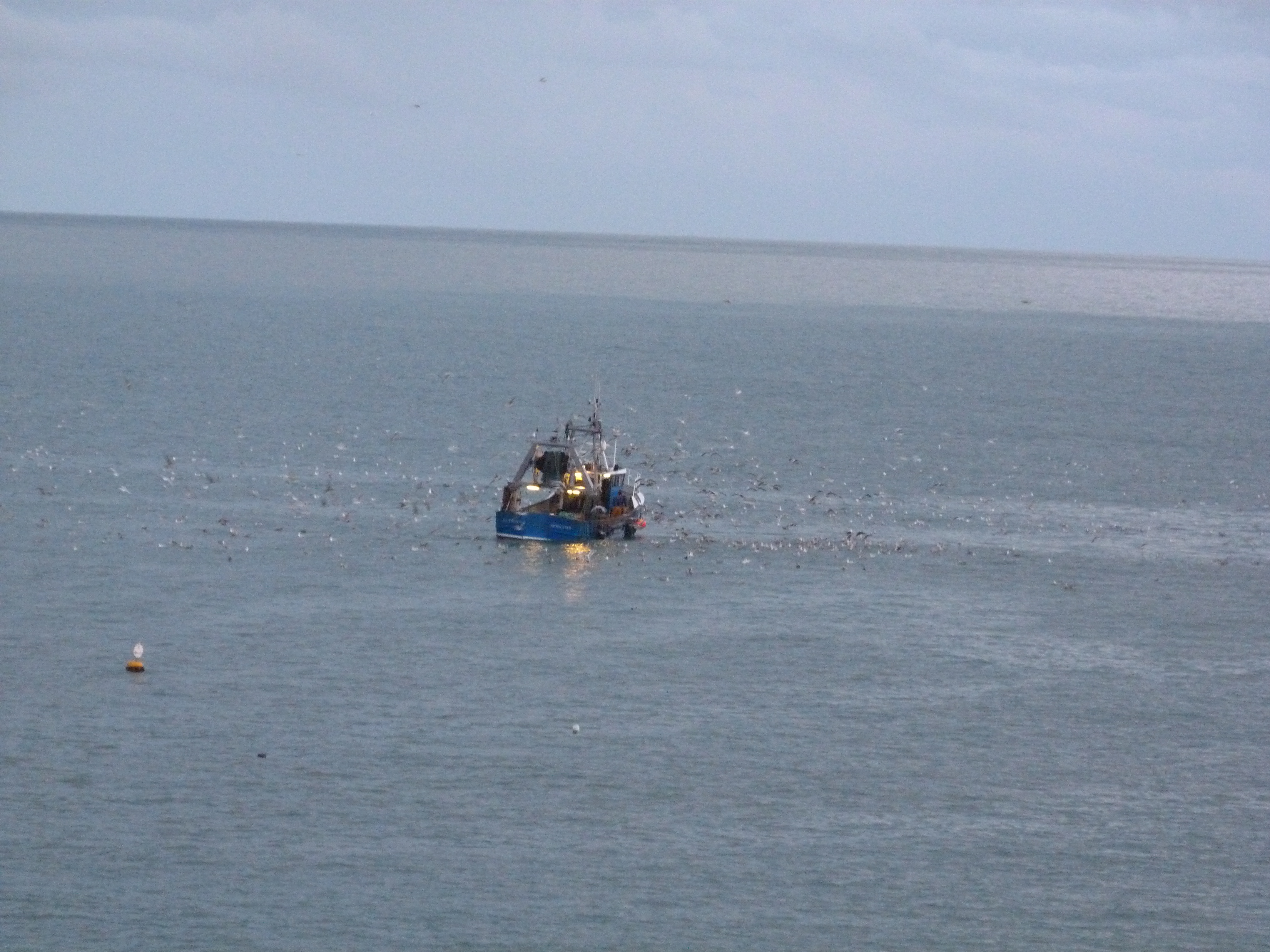
The early evening tide was very high, the fishing boats were coming in laden with mackerel and accompanied by masses of seagulls.

Fishing boat, surrounded by gulls

We walked up the cliff for pre-dinner drinks at our “lounge” in Hannafore, overlooking the sea. A last talk with the friendly bar tender (who is writing a book called “My Life Behind Bars”) Then as the sun was setting, we went down to East Looe for a dinner at Papa Ninos –  a little restaurant that has only 5 tables and makes everyone in the room feel connected to each other. As a starter, we had the best mussels we’ve ever eaten. They were fat and flavourful with a Marinière sauce of white wine, cream, garlic, onion and parsley that was sublime. I’ve had this dish in a number of restaurants in the area, and I would have to say it was the best at Papa Ninos. I’ve included my Moules Marinière recipe if you want to try and make them at home, although I can’t guarantee that they will be as wonderful. Fresh mussels have been a revelation.

I had red mullet that was grilled to perfection, and Tim had Turbot in a pernod sauce that was exquisite. In our 12 days in Looe we had, between us, 18 different varieties of fish and shellfish. This dinner was certainly the cap to an extraordinary seafood adventure.

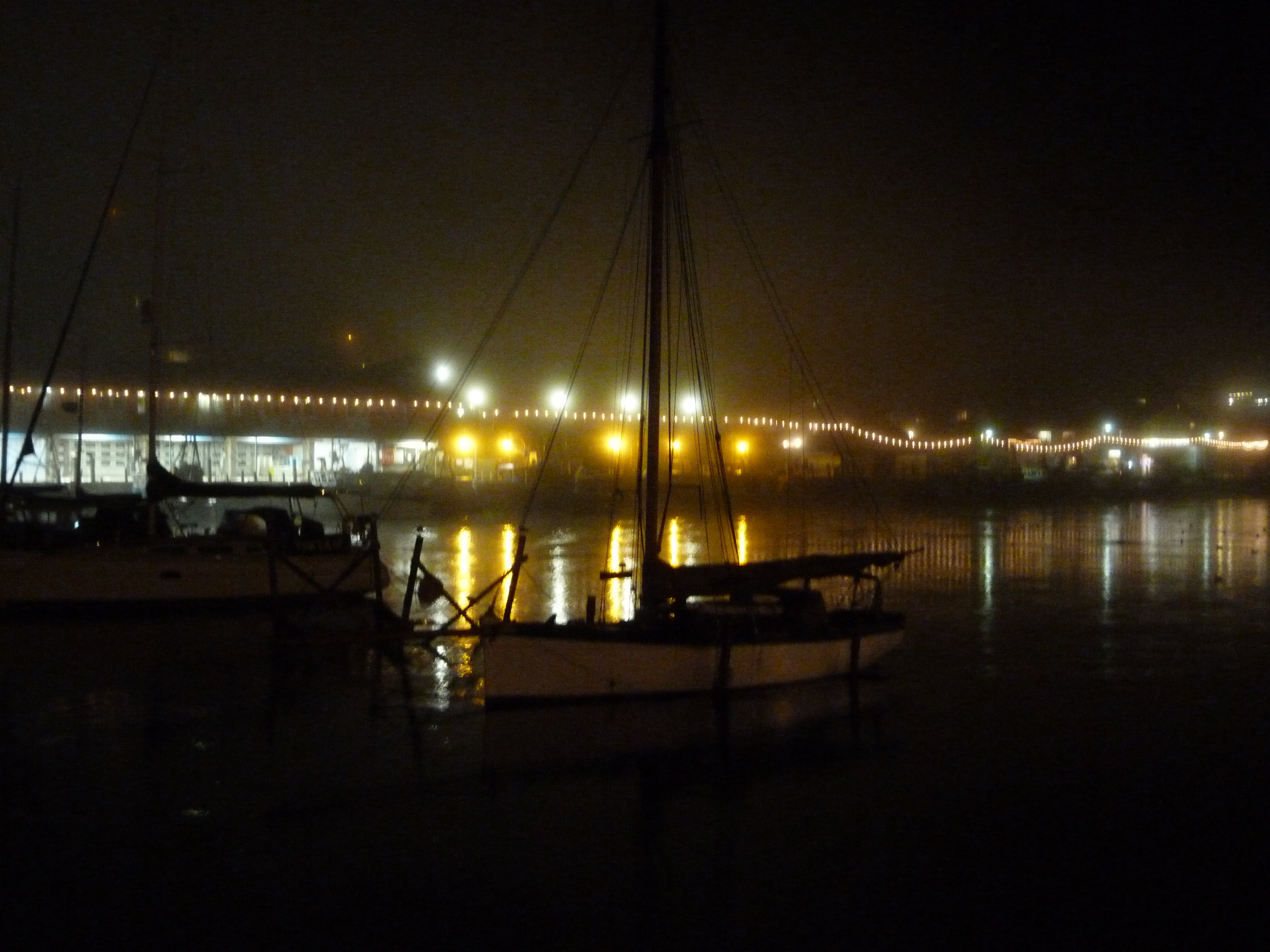
The Harbour at night

The harbor was dark and misty as we crossed the bridge to go back to West Looe and finish the evening singing with the locals in The Jolly Sailor. We’d been there the week before and were welcomed as old friends. The songs poured out, accompanied by guitar, bodrun, accordion, harmonica, banjo, recorder, penny whistle and that wonderful bottle cap rhythm stick instrument that probably has a name that I don’t know.

(sung to a rolling beat)

“It’s all the young fellows have gone to the city.

All the young fellows have gone to the town.

And soon they’ll be earning there double the money

Than they ever earned on the harrow and plow”

(sung to a sad and mournful tone)

“I asked them who

I asked them how

They answered you

They answered now”

(sung wistfully)

“For Cornish lads are fishermen

And Cornish men are miners too

But when the fish and tin are gone

What will the Cornish boys do?”

We drank local ales and Cloudy Cider and bid a fond farewell to Cornwall.

Trying to discover Plymouth

Looking for day trips from Looe, we decided to go to Plymouth, about an hour’s bus ride away. For North Americans, the big thing about Plymouth is that it is the place that the Mayflower sailed from. Filled with Pilgrims or “English Dissenters”, the boat’s inhabitants were looking for a new life in a land of religious freedom. The rest, as they say, is history.

For the English, Plymouth was a major shipping port, and with neighbouring Davenport as a shipbuilding and dockyards town, the area was of great strategic importance during the Second World War. That, unfortunately, led to it being especially targeted by the Germans. The Plymouth Blitz consisted of 59 different bombing raids on the city and resulted in the destruction of virtually the entire city centre.

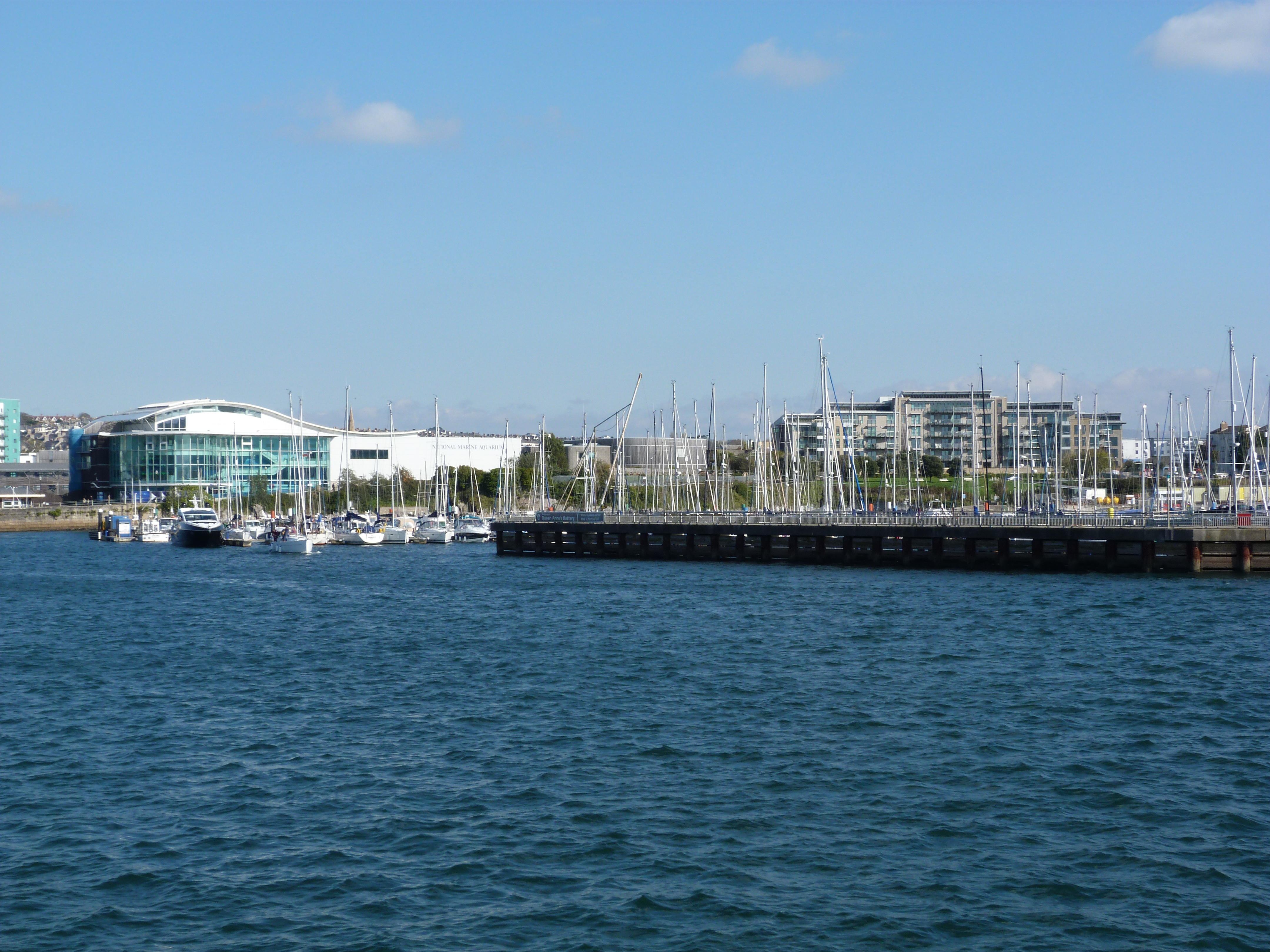
We arrived in Plymouth on a lovely sunny day. The harbor was busy with picturesque sailboats and tourists. It was the first day of English half term and there was a feeling of carnival in the air.

Plymouth Harbour

Our time in Plymouth was limited, so we decided to focus on the art exhibit “British Art Show 7: In the Days of the Comet”. The British Art Show happens only once every 5 years and is recognized as the most ambitious and influential exhibit of contemporary British art. There were 5 different galleries involved with the exhibit in Plymouth, so traveling to each of them would give us a unique view of the city.

Our first stop was to be “The Slaughterhouse” in the Royal William Yard. To get there we followed directions from the tourist information office that led us along the Grand Parade, a promenade along the oceanfront. Prominent on the waterfront is Plymouth’s Lido, and although I have always known the word, I never really knew what a Lido was: “A public open air pool or beach”.

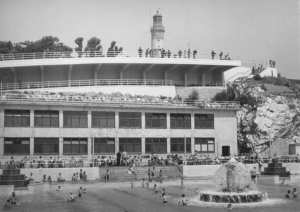
The Tinside Pool from Plymouth archives. circa 1958.

Plymouth’s Lido is the “Tinside Pool”, built in Art Deco style 1935. It survived the bombings, but it was apparently a rather convenient marker for the German raids. A 55-meter diameter semi-circle stretching out from the cliff edge, the Lido has a large fountain in the middle. There are segregated changing rooms and terraces where orchestras used to play above the bathers. It fell into disuse and was closed in 1992, but it has since been restored to its Art Deco glory and was reopened in 2005. Although only open in the summer months, there were a couple of intrepid swimmers on the beach directly beside the pool. It was that kind of a day.

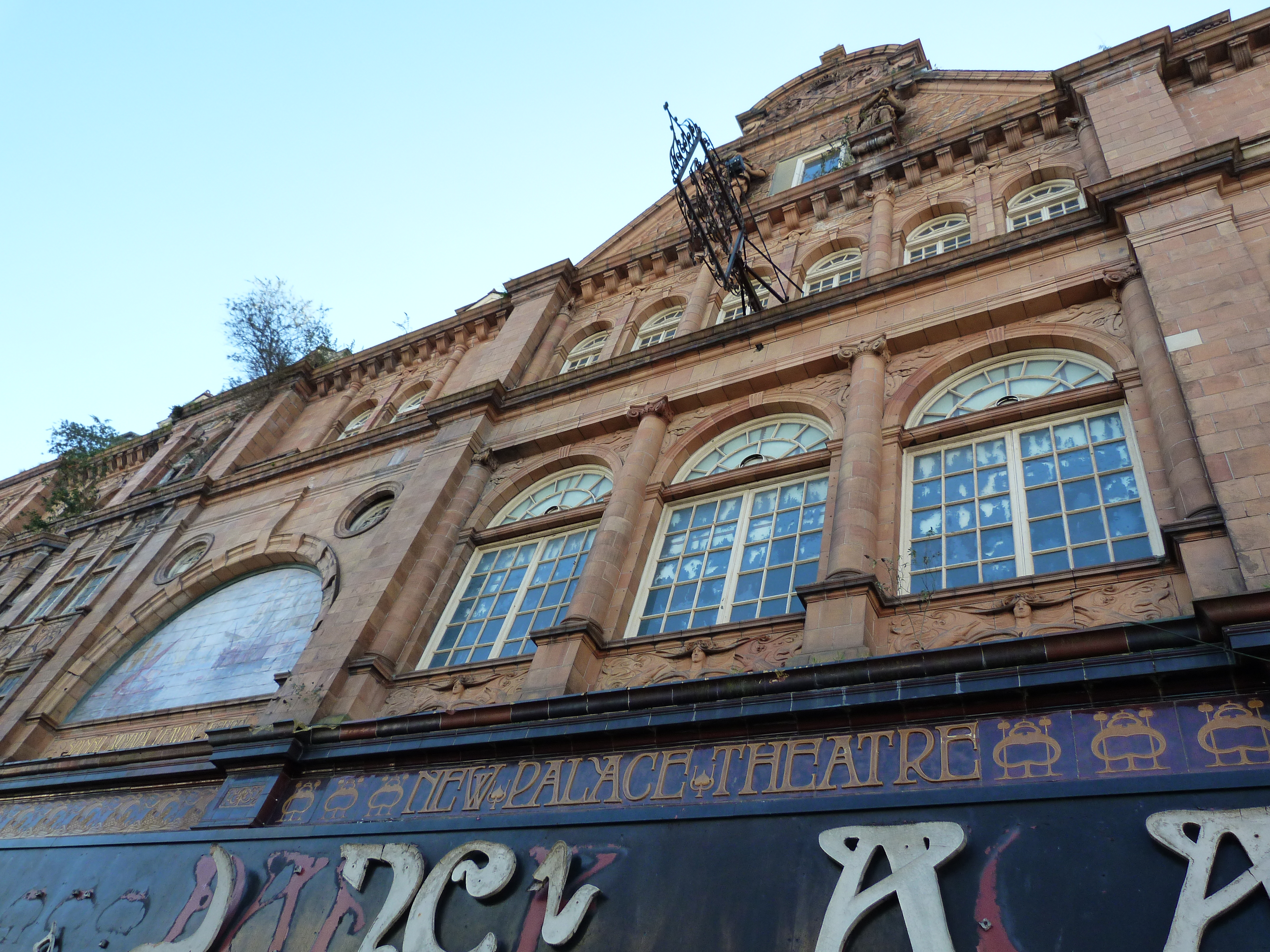
But as our walk progressed, the day turned cool and we went through other parts of Plymouth that have yet to be restored. In fact, we were surprised that the tourist office sent us along Millbank road, a very disheveled part of town. We passed by the marvelous but entirely decrepit Victorian New Palace Theatre. The New Palace Theatre opened in 1898, and most of the great vaudevillians played there over the years.

New Palace Theatre

But after vaudeville it went downhill and became a bingo hall, a dance hall, a disco hall and eventually closed in 2008 in what much have been a rather spectacular drug raid. Judging from the trees growing out of it, I suspect the days of restoration are passed. I’ve found a photo blog by an urban explorer that shows some of the inside. (http://www.28dayslater.co.uk/forums/showthread.php?t=64222)
Looks like all of the original Victorian fittings are still there, even down to the rigging for the fly gallery. It is horrible to think of something that beautiful being allowed to crumble.

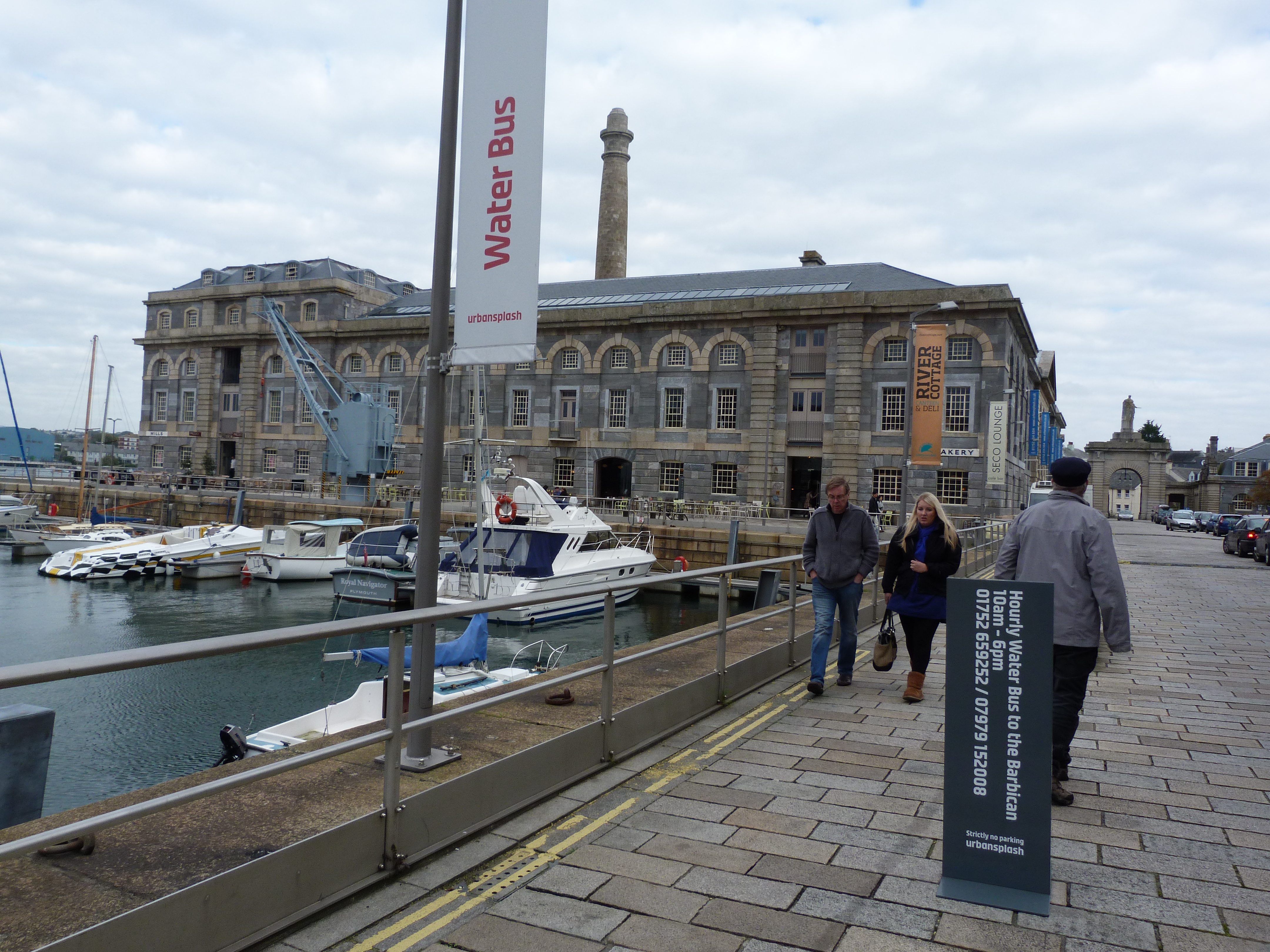
After a much longer and uglier walk than we anticipated based on the directions from the tourist office, we arrived at The Royal William Yard. This is a fabulous renovation project, still in its early stages. The former army barracks are being rebuilt as luxury condos and the surrounding buildings are restaurants, stores and galleries.

Royal William Yard marina. The bakery/restaurant is straight ahead.

We had a good tapas meal at the renovated Bakery building and the gallery we went to was in the old slaughterhouse. With a marina in the centre, this area is destined to become incredibly fashionable, similar to the Distillery district in Toronto. Except for one problem. You’d have to want to live in Plymouth.

Although the gallery itself is a gorgeous space, the art show was a huge disappointment. We travelled to the next location, and on and on, getting lost and frustrated as we negotiated the streets of Plymouth to get to the Art Gallery, the University, the Arts Centre and the Museum. Rebuilding after the war, much of the city centre is grey concrete and uninspiring. Much of the artwork, which is touted as cutting edge, is in fact idea-driven, technically uninteresting and empty. There are only a couple of the 39 artists whose work touches us in any way. George Shaw is up for the Turner Award and we hope he’ll win. He paints with Humbrol enamel paints, the kind used for models, and his work reflects the poverty of growing up in Coventry council estates. They are dark, lonely and melancholy. Wolfgang Tillmans has a huge photographic print (the size of a whole wall) that was made without a camera. He exposes photographic paper to points of light, creating textures and colour that are really uncanny.

By the time we had been to all of the art venues, the day was overcast, and so were we. Plymouth has no “feng shui”, says Tim. We caught the next bus back to Looe and treated ourselves to a wonderful fish dinner on the wharf at The Old Sail Loft. The Old Sail Loft is part of the “Fish Fight” campaign, fighting for sustainable fishing practices. http://www.fishfight.net/the-campaign/ We had a delicious meal of fish that had “extremely low food miles”. It was caught just off the coast by Looe fishing boats, and travelled only 200 yards from the boat to the restaurant. It was a perfect balm to warm us from the chill of Plymouth. We were very grateful for each mouthful.

Starting with an idea: The Eden Project

The Eden Project has already reached mythic proportions. Conceived by a group of visionaries in the early ’90s, it has become, in 10 short years, a beacon of hope and inspiration around the world.

We travelled to The Eden Project by bus. If you arrive by public transit you get £4 off of the admission price. The bus drove through the small villages of Cornwall, into the middle of countryside, into the middle of an idea.

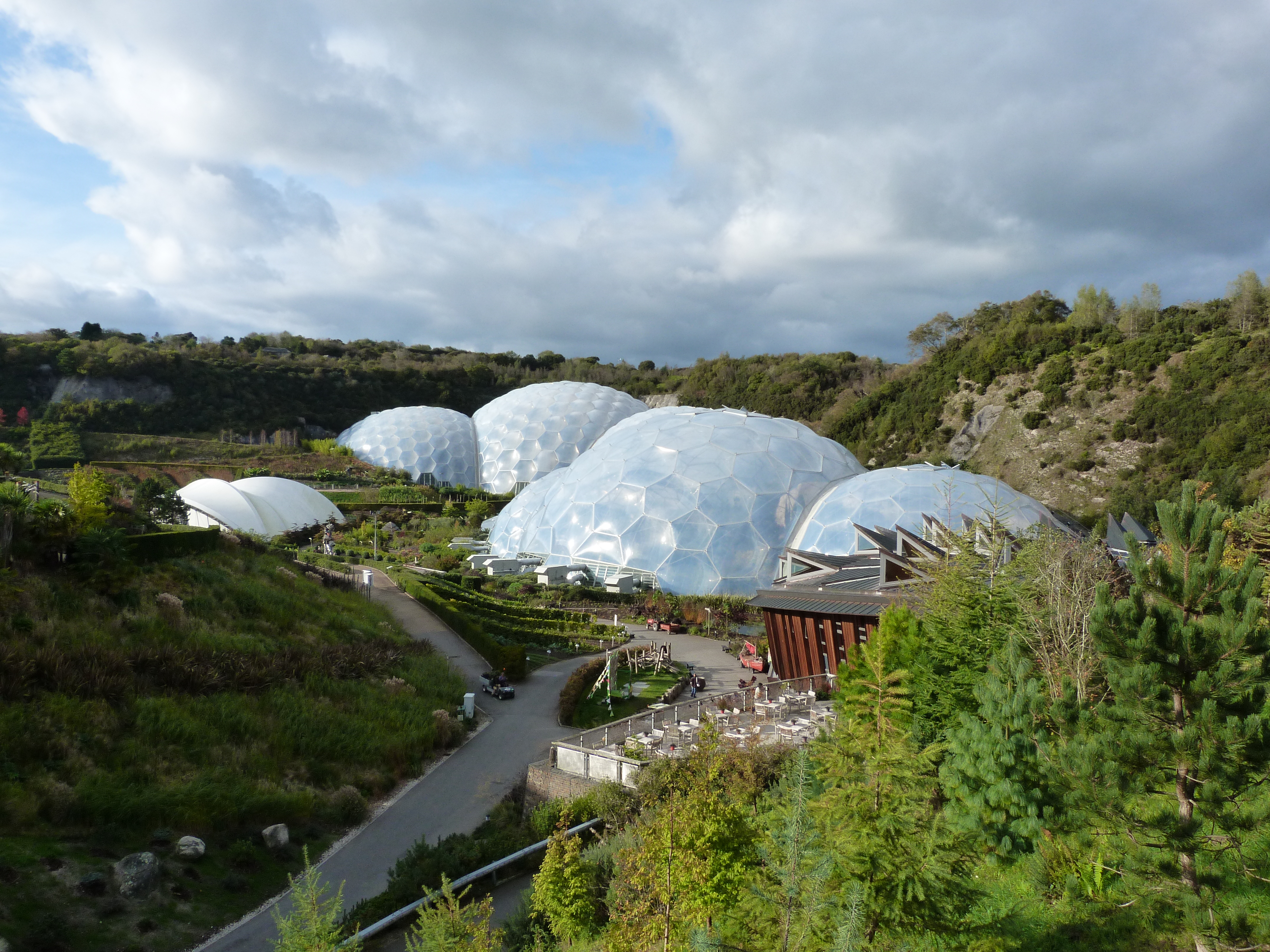
The Eden Project

“There’s no rule book for a successful future, so imagination, creativity and enterprise are needed to try to find new solutions” (from the Eden Project Guide).

The idea – “to create a place like nothing anyone had ever seen before; a place that explored human dependence on plants and the natural world; a place that demonstrated what could be done if people who wanted to make a difference got together.” Tim Smit

With funding from the Millennium Commission, and a variety of public and private sources, the Eden Project bought an old, steep sided clay pit, 60 metres deep, with no soil. They filled it with soil made from waste materials (seriously, they worked with Reading University to make soil from mine wastes, composted matter and worms), populated it with a huge diversity of plants (“the plants that changed the world”) and built structures and infrastructures that have resulted in an astonishing educational centre.

The Driftwood Horse by Heather Jansch

We were greeted by one of the most wonderful horse sculptures I have ever seen, made entirely from driftwood and capturing the grace and elegance that is the essence of a horse.

Once inside the grounds we worked our way through the zig zag path of the “Outside Biome, the one with the sky for the ceiling”.

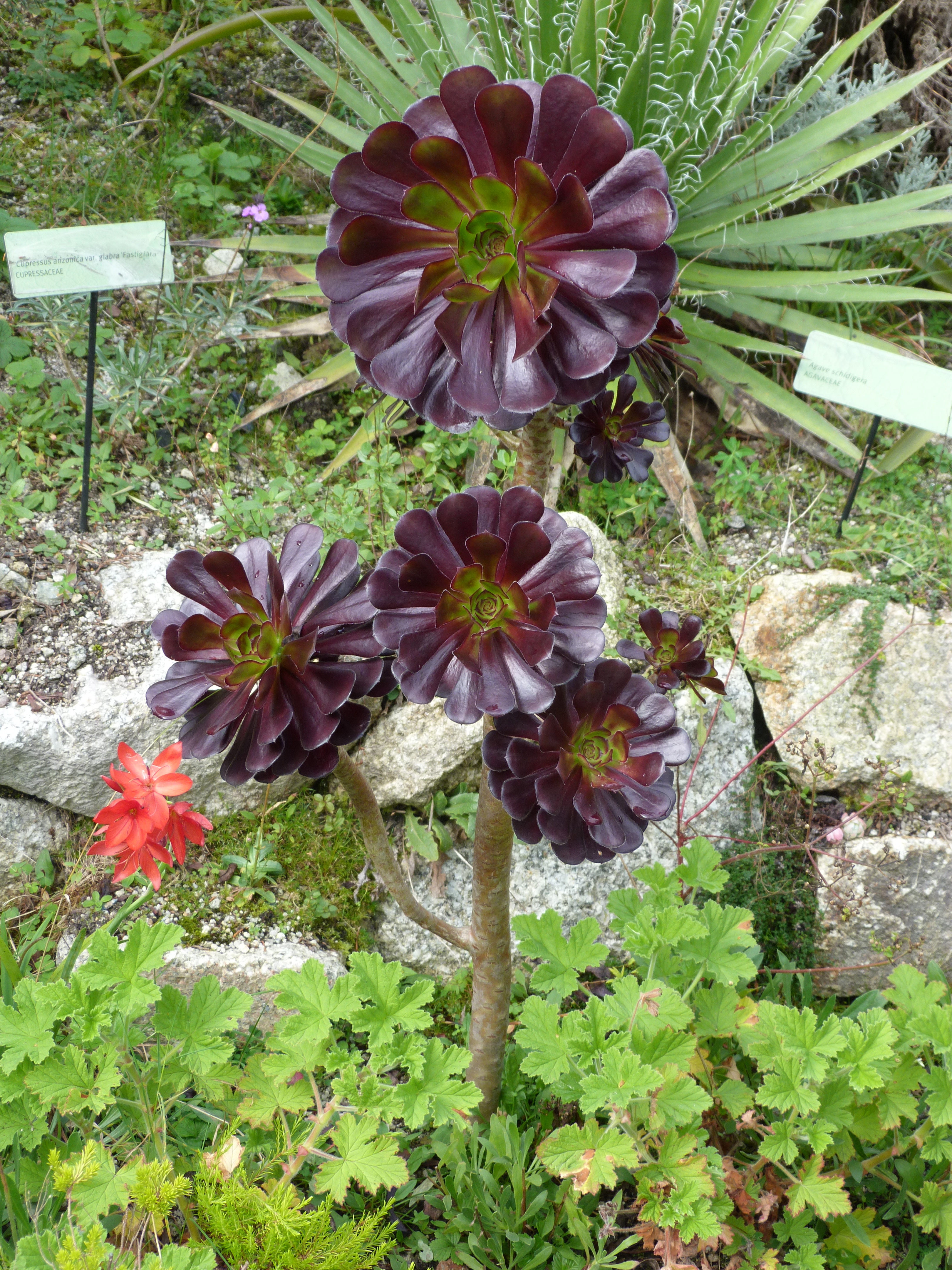
Plants for a changing climate. An unusual succulent, living outside.

The plantings explore the crops used for food, fuel, medicine and materials. There is a whole section devoted to plants used in mythology. The project engages in “extreme gardening”, developing plants that will survive changing conditions, and, of particular importance for the Outside Biome, will develop strong roots to hold soil on slopes.

All of the displays combine stories with plants. Founder Tim Smits realized that “plants could be made far more interesting by weaving human stories around them, tales of adventure, emotion and derring-do” (from the Eden Project Guide). Everywhere we go there is information, stories and artwork.

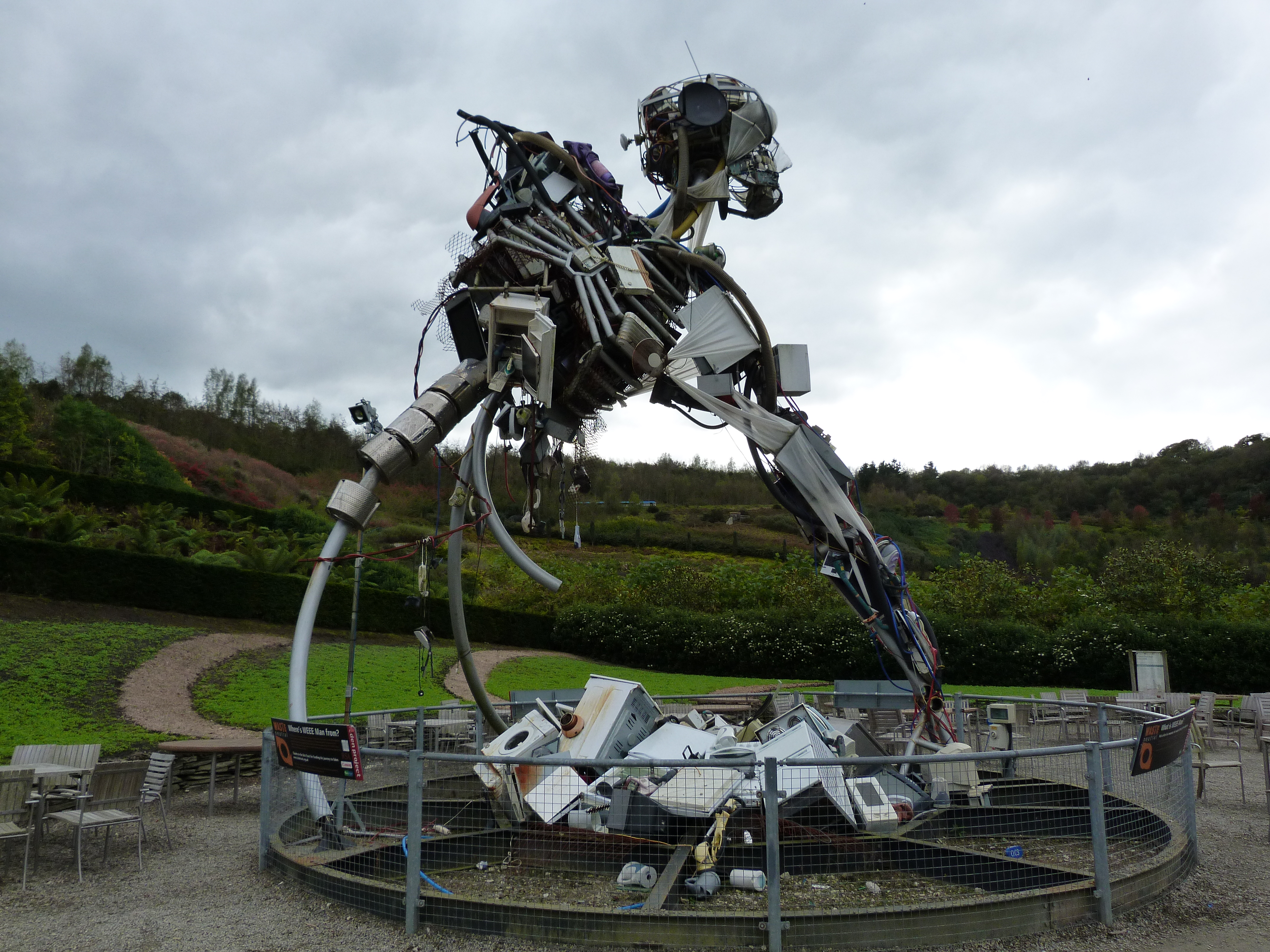
The Weee Man by Paul Bonomini

The Weee Man is a giant sculpture created by Paul Bonomini made from all of the Waste Electrical and Electronic Equipment that one person throws away in a lifetime. He weighs 3.3 tonnes.

There is an outside stage for performances. Bands from around the world play in huge outdoor concerts at Eden. In the winter it is converted into a magical ice rink.

The “Inside Biomes”, constructed in huge geodesic domes, are the Rainforest Biome and the Mediterranean Biome, each with its own climate, propagating and cultivating the plants from those regions.

Inside the Rainforest Biome it is heavy and hot. With an average temperature of 25° C and humidity of 90%, the signs warn us to make sure we have water with us and not to climb too high if we have a heart condition. The Biome is divided into regions: Tropical Islands, Malaysia, West Africa, and Tropical South Africa. There is information and displays on crops and cultivation as we pass by banana, rubber and coffee trees, spices and waterfalls. We’re introduced to “Architecture Sans Frontières”, a program that designs and builds shelters for people in disaster zones. It is overwhelmingly rich, dense and authentic.

We took a lunch break in “The Link” which joins the domes. The cafeteria-style café has a range of wonderful food made on site – earlier in the day we could watch people making the pizzas and bakery items at long wooden tables. Wooden slabs functioned as our plates/trays and we loaded them up with Greek salad and broccoli, leek and cheese torte. Signs told us to remember what we have taken to eat and to pay for it once we had finished. A trusting and gentle environment.
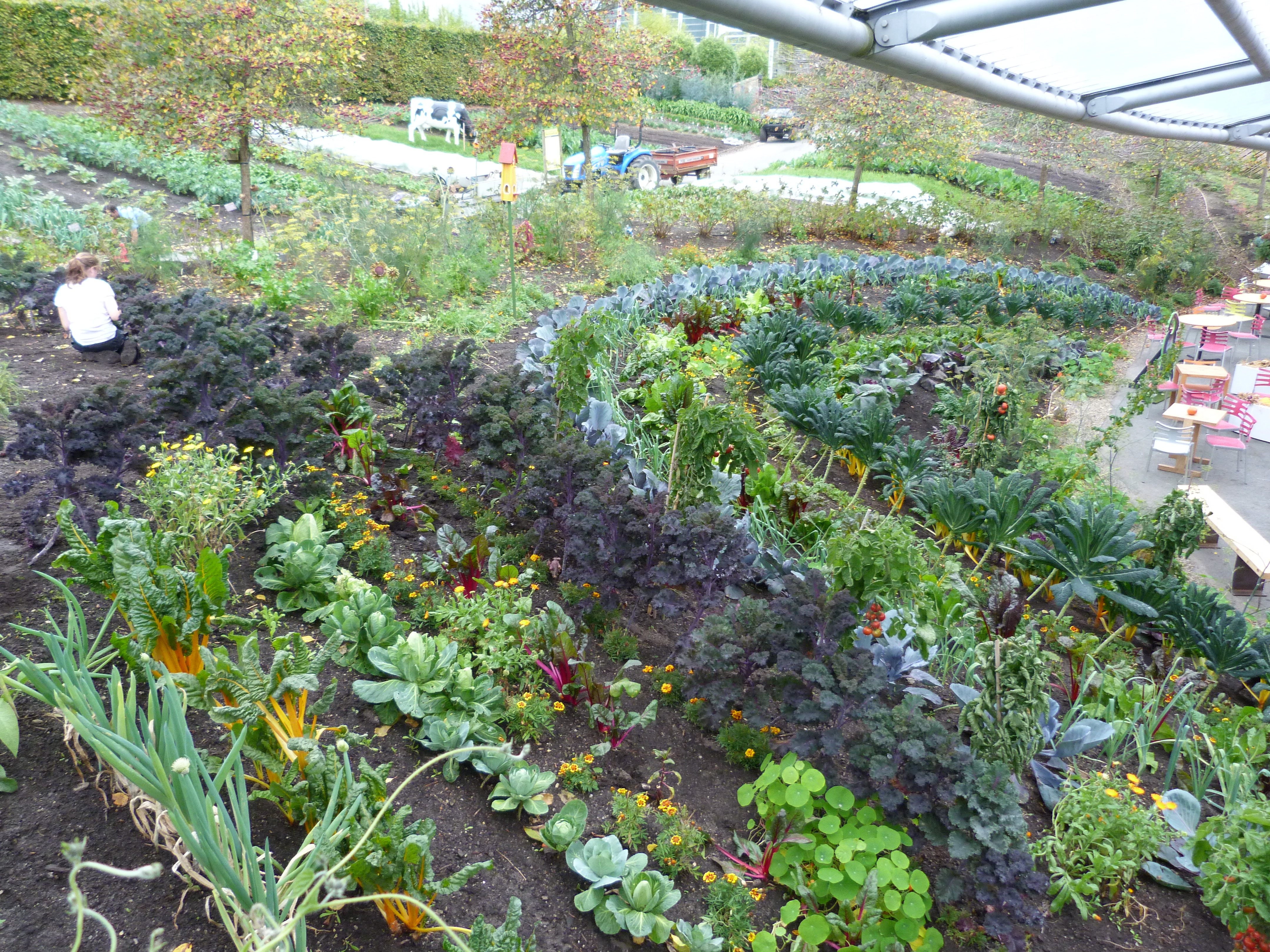
Plantings of colourful winter vegetables

The Mediterranean Biome is divided into the Mediterranean, South Africa and California. The air is cool and dry. We’re advised that the Biome doesn’t shield us from ultraviolet rays and that on sunny days we’ll need our sunscreen lotion. But it is autumn now, and I realized that the Biome is seasonal – we have not stepped into an artificial recreation of a hot Mediterranean day. Rather, it is autumn inside, as well as outside. This is not a recreation — it is a functioning environment.

A fish stew is cooking on the “outside” stoves. We see olive, lemon and orange trees, grape vines, a huge range of pepper plants. We smell sage and sweet scented plants used for perfumes.

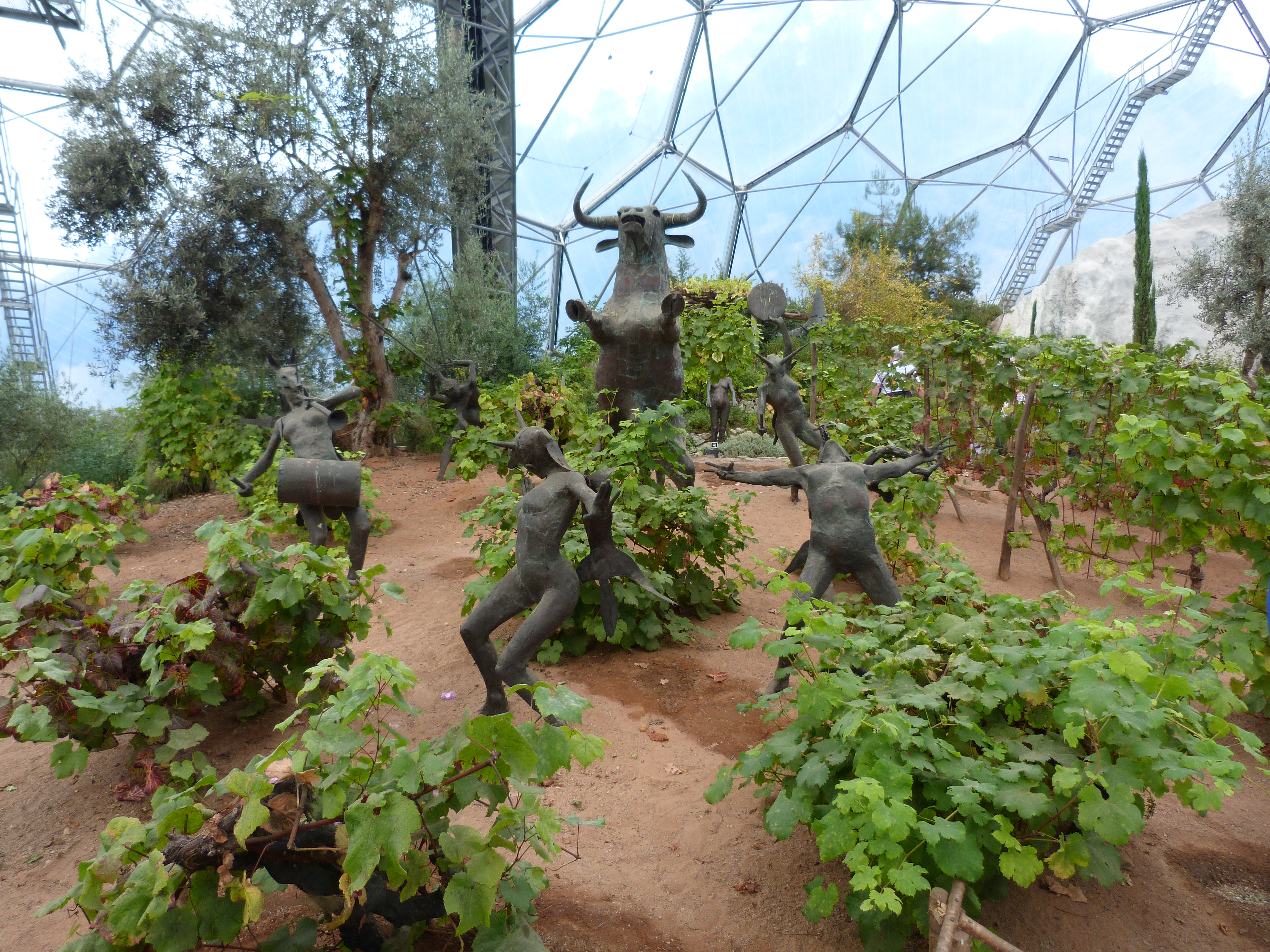
Bacchus and the grape vines

There’s a great sculpture dedicated to a Bacchanalian feast. We don’t quite feel like joining in, but there are locally produced wines, should we feel like imbibing.

The “Core” is the education, arts and events hub, from which the project operates school programs. “It isn’t just a building. It’s a metaphor”. The building design is based on a sunflower and at its centre is a 75-ton Cornish granite sculpture of a seed that “plants a symbol of hope, to grow ideas for the 21st century”.

We finish our day at the visitor centre that sells Eden grown plants and a wide range of responsibly made items and foods.

Tim and I were overwhelmed by all of this. The design, the inspiration, the scale. Every detail has been clearly thought through. There are on-going projects and calls to action, but everything is done in a gentle and respectful manner, because there is an understanding that change can only happen through collaboration.  www.edenproject.com

Willow Dream Catcher