We went to Málaga to leave it. And now I think we need to figure out how to get back again. Soon.
We had to end our Andalucian trip at an international airport so we could to fly to England to see family. Málaga is on the southern coast of Spain, has an airport, and gets, on average, 300 days of sunshine. It seemed a good idea to have a couple of days there before heading out to the UK. We don’t go to England for the weather.
I had booked us an apartment that was “on the beach” in an area called El Palo. We were traveling without a car and needed to be somewhere we could access on public transit. El Palo has a thriving community life — at this time of year the beaches are not filled with sunbathers or partying tourists. There were playgrounds filled with young families with children, people throwing balls for energetic dogs, and joggers and strollers sharing the walkway. The beach was there, as a fact of life. It gave us an untouristy view of life that was refreshing.
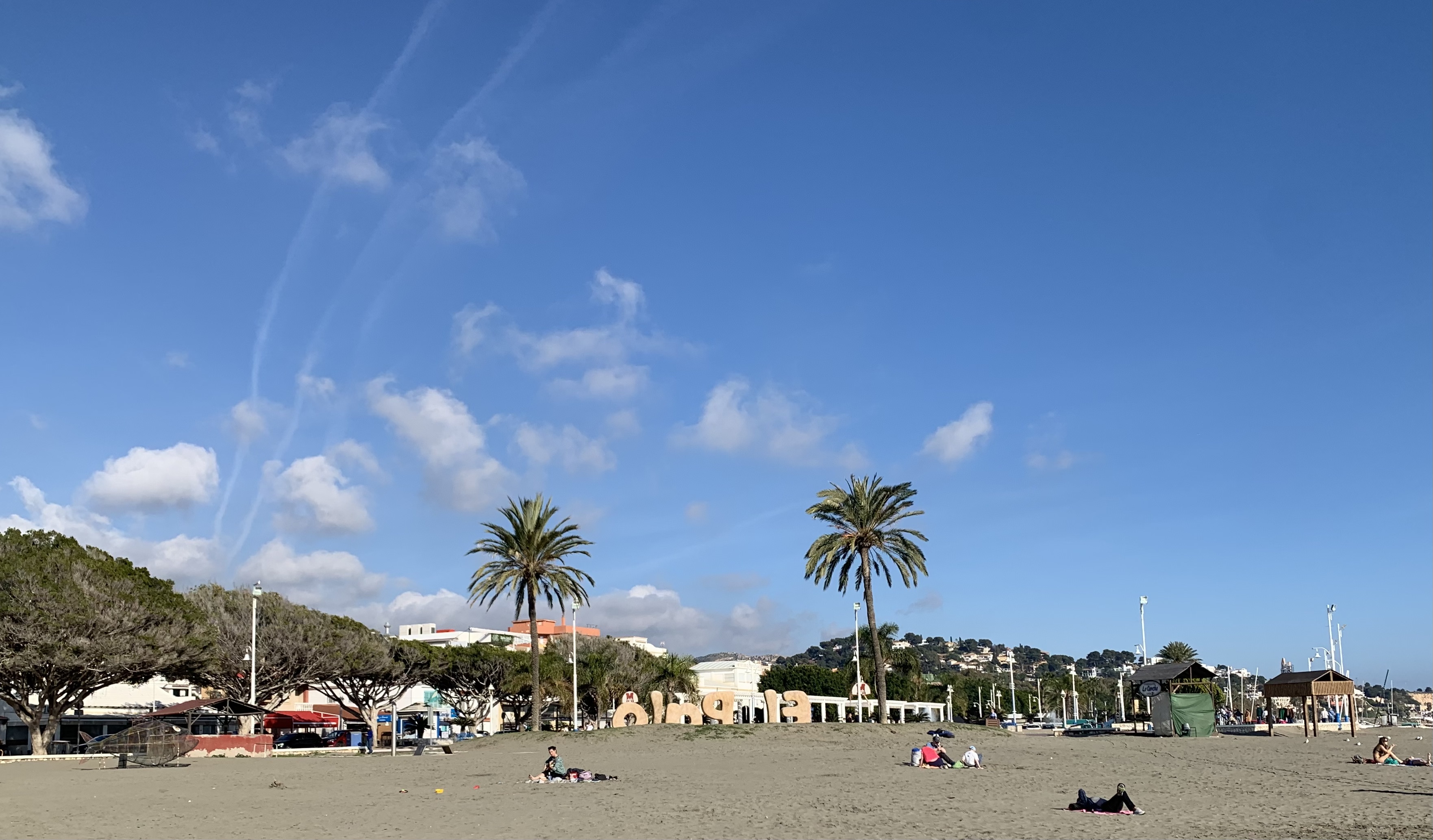
Our apartment was above a restaurant right by the beach. We settled in and then came downstairs to sit outside and order a late afternoon plate of fried calamari and anchovies. While we were waiting for them to arrive, I looked out on the beach and saw a hut with smoke coming out of it. I went to investigate and found a small old boat, filled with sand, on which a wood fire was built. Beside the fire was a skewer with sardines grilling – the very thing Tim had been longing for on the whole trip! Five sardines for 2 Euros! The most inexpensive thing we ate on our trip, and one of the best tastes we had.
I looked down the beach and saw similar grills outside of all of the restaurants. We felt very hopeful for our time in Málaga.
However… while El Palo gets great reviews on Google, I expect those are from people who were not travelling there in February. We had arrived on a Sunday and by 5:00, all of the small restaurants in our area were closed. So we went in search of a grocery store. All of them were closed as well.
As the evening wore on and thoughts of dinner surfaced, we walked for miles along the “boardwalk.” (It’s a sidewalk, really, but has a boardwalk feel about it.) There were tons of bars, but they were busy with the kind of partying trade that Málaga is famous for –– younger folks who were happy just to be drinking. Although the bars posted menus, no one was eating. Not a great sign.
I know, I know, the common wisdom is that Spaniards eat late. But we hadn’t encountered this problem anywhere else. In our experience, Spaniards love to eat all of the time. We walked the boardwalk in a desultory mood, aware that this was one of our last nights in Spain. We tried to cheer ourselves by listening hard for some sound of the movement of the waves. But even the waves had retreated.
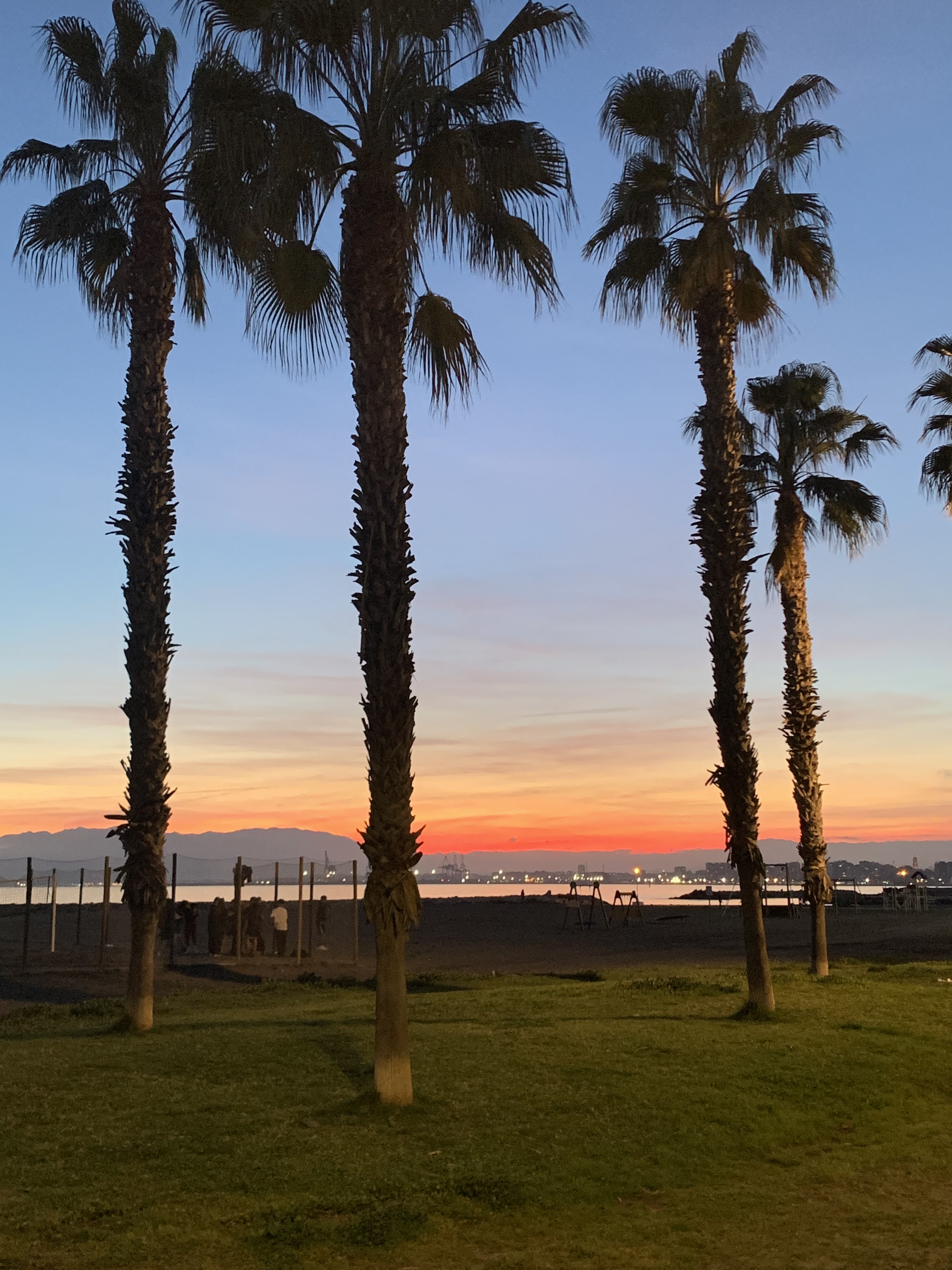
However, we reminded ourselves that there was three feet of fresh snow back in Canada. We were warm and comfortable. And we were treated to a lovely sunset.
The next morning, we found out that many of the local Tabernas were not open on Monday. While we could stock up on grilled sardines for lunch at our local restaurant, the beach wasn’t really that inviting and we didn’t want to spend another evening wandering aimlessly. We hadn’t originally planned to do any sightseeing in Málaga, but we decided to take a bus to the city centre.
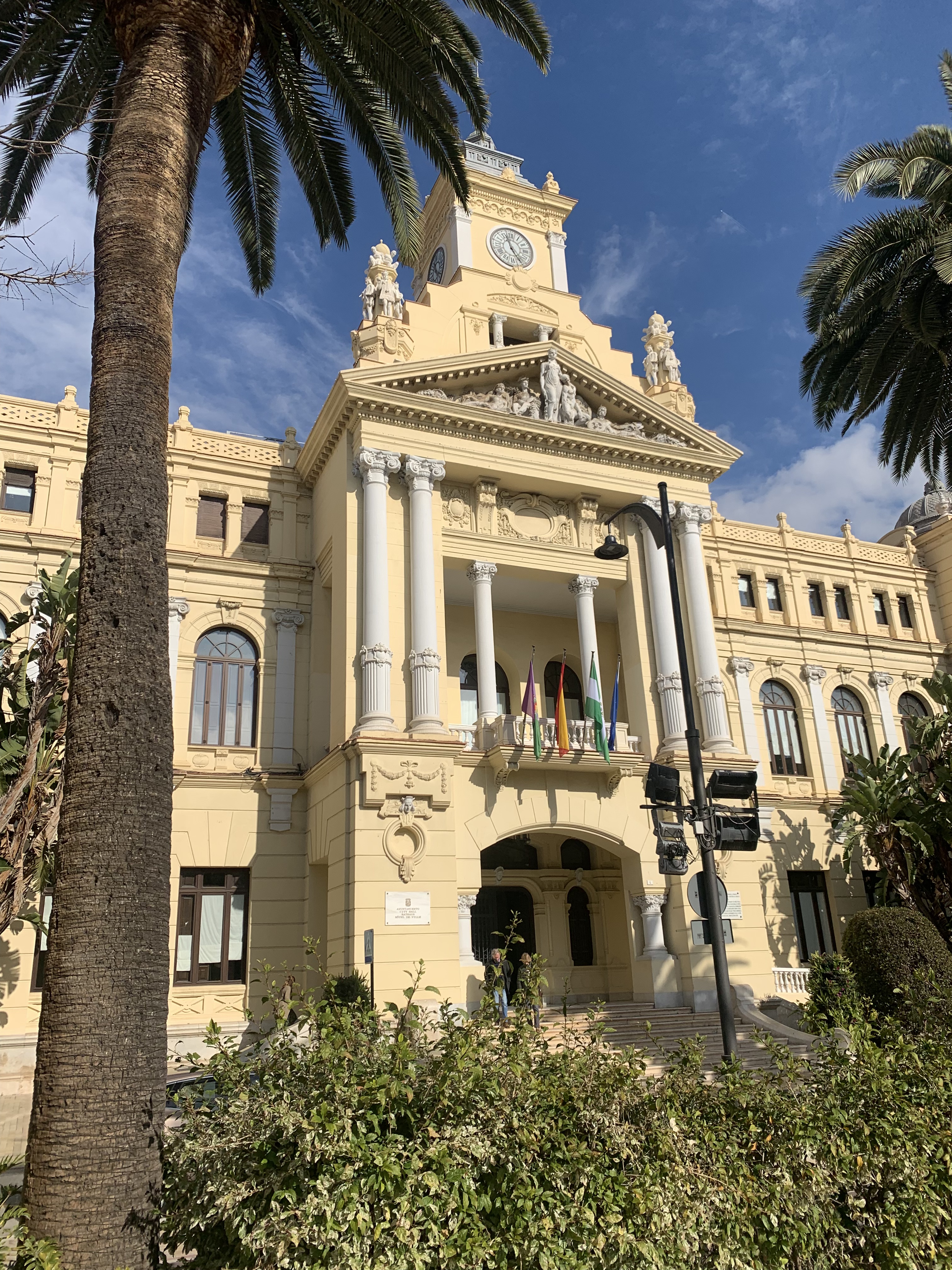
It was a great decision. Central Málaga is beautiful and lively. Yes, there were more tourists, but for good reason. It’s a beautiful city with wide thoroughfares bordered by magnificent palm trees. It’s a joyous place filled with history, contemporary art, and tapas bars.
The Gibralfaro Castle (10th century ) overlooks the whole city from atop the Mount Gibralfaro. Beside it rests the Alcazaba, one of the largest Arab fortresses in Andalucia. Below, a Roman amphitheatre dominates the square.
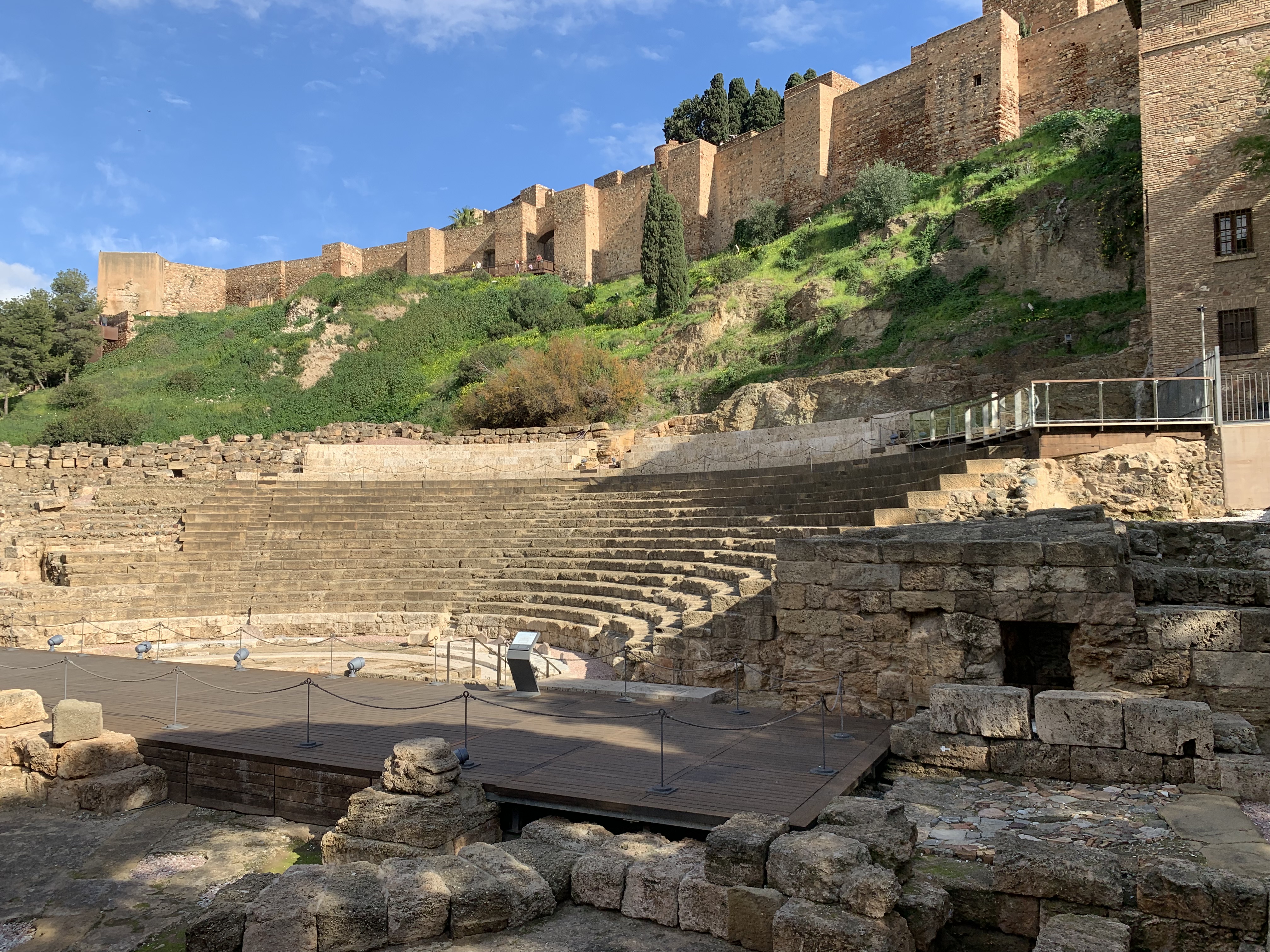
However, we didn’t visit any of those. We’d been very immersed into history in Granada, Córdoba, and Sevilla, we needed to slide ourselves back into the 20th and 21st centuries. So, we headed to the Picasso Museum.
Picasso was born in Málaga and spent much of his life in this area. His work is steeped in the sensibility of this land. The major exhibit was called Pablo Picasso: Structures of Invention. The Unity of a Life’s Work and it focussed on seeing Picasso’s work as a unity, rather than dividing it into “periods” as is usually done. It highlights both his inventiveness in numerous mediums, and his retrospective connection to previous artists. It was a holistic way to see Picasso that we’d never encountered before. There was a room dedicated to his sketchbooks that was like a secret window into his process. I began to see familiar works in new ways. I began, as we had started our trip to Spain, to open my eyes again.
Both Tim and I were bowled over by a guest piece by artist William Kentridge called “More Sweetly Play the Dance.” Kentridge was born in Johannesburg, South Africa. The piece is a 40-foot long video installation that combines film, animation, still life, drawings, and music. It was created to reference the Ebola outbreak in South Africa in 2015, but has strong resonance to our experiences during Covid, as well as to the world-wide refugee crisis and displacement of humans. From the museum website: “It presents an infinite procession of moving figures, a device regularly used by the artist to champion the individuality of every human being, the importance of the body and the power of dance to keep death at bay.”
The piece is joyous, profound and provocative, probably one of the strongest pieces of art that we saw in our entire trip. There’s a great short video by Kentridge talking about the piece, and the place of dance: “…a belief in the middle ages that if the plague arrived and you kept dancing, the plague would jump over your village and go on to the next…”
I definitely think that the plague would skip over anyone dancing flamenco!
After that we emerged into the sunshine and connected differently to Málaga. We headed down to the port where a touring catamaran was just about to leave, and we jumped aboard for an hour of gentle sailing on the ocean.
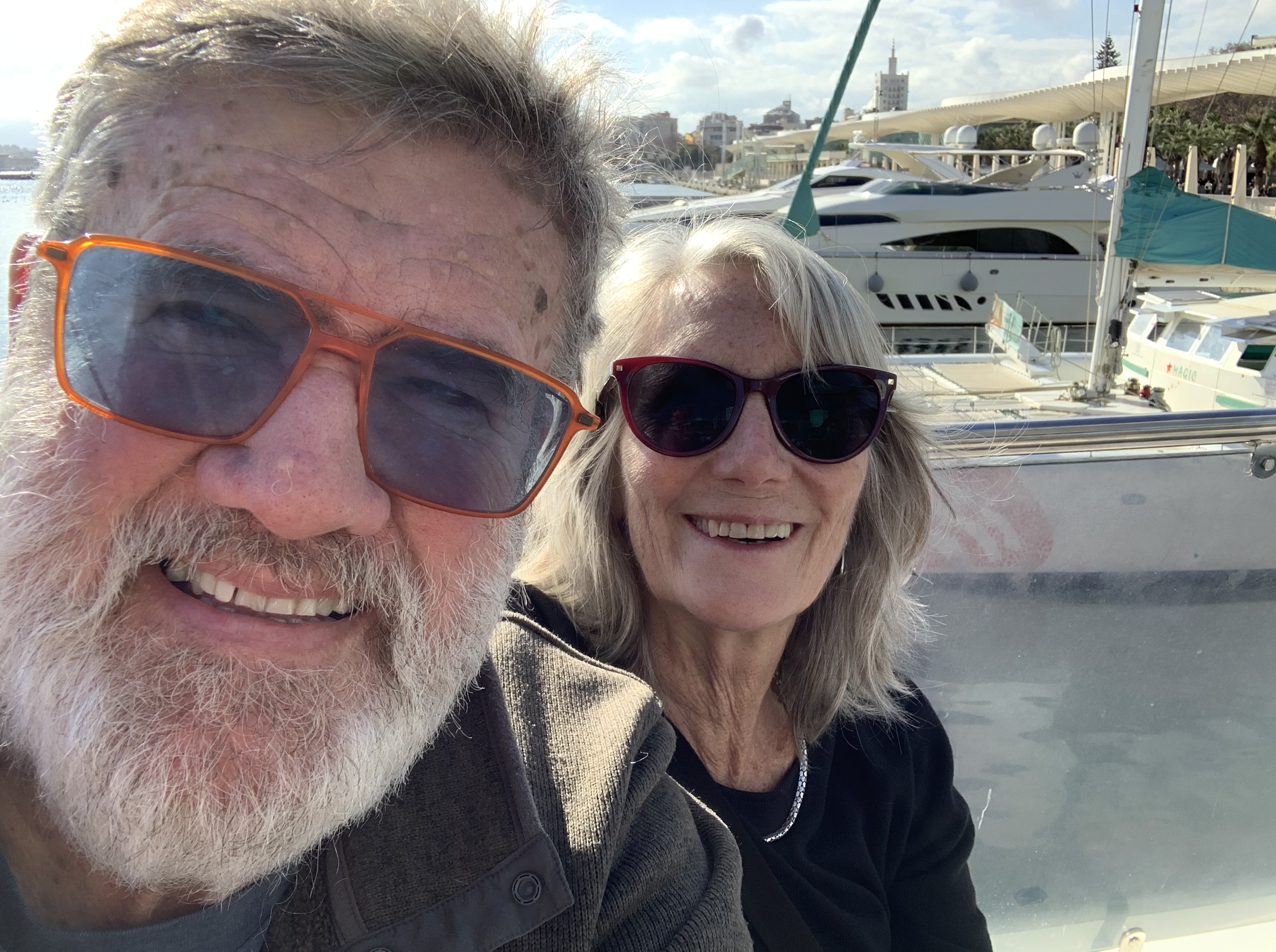
We could see the entire coastline of Málaga and how much there was yet to discover.

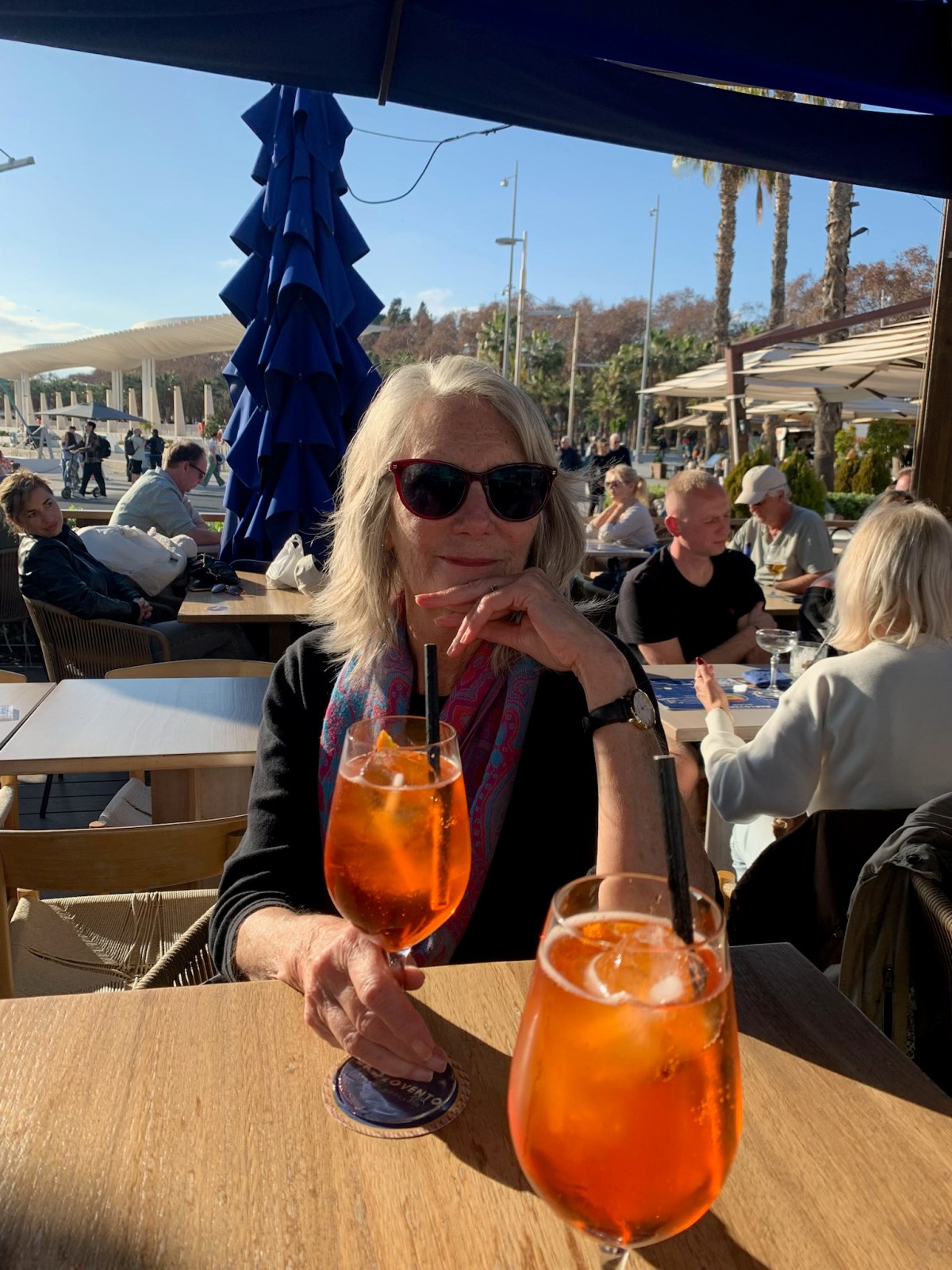
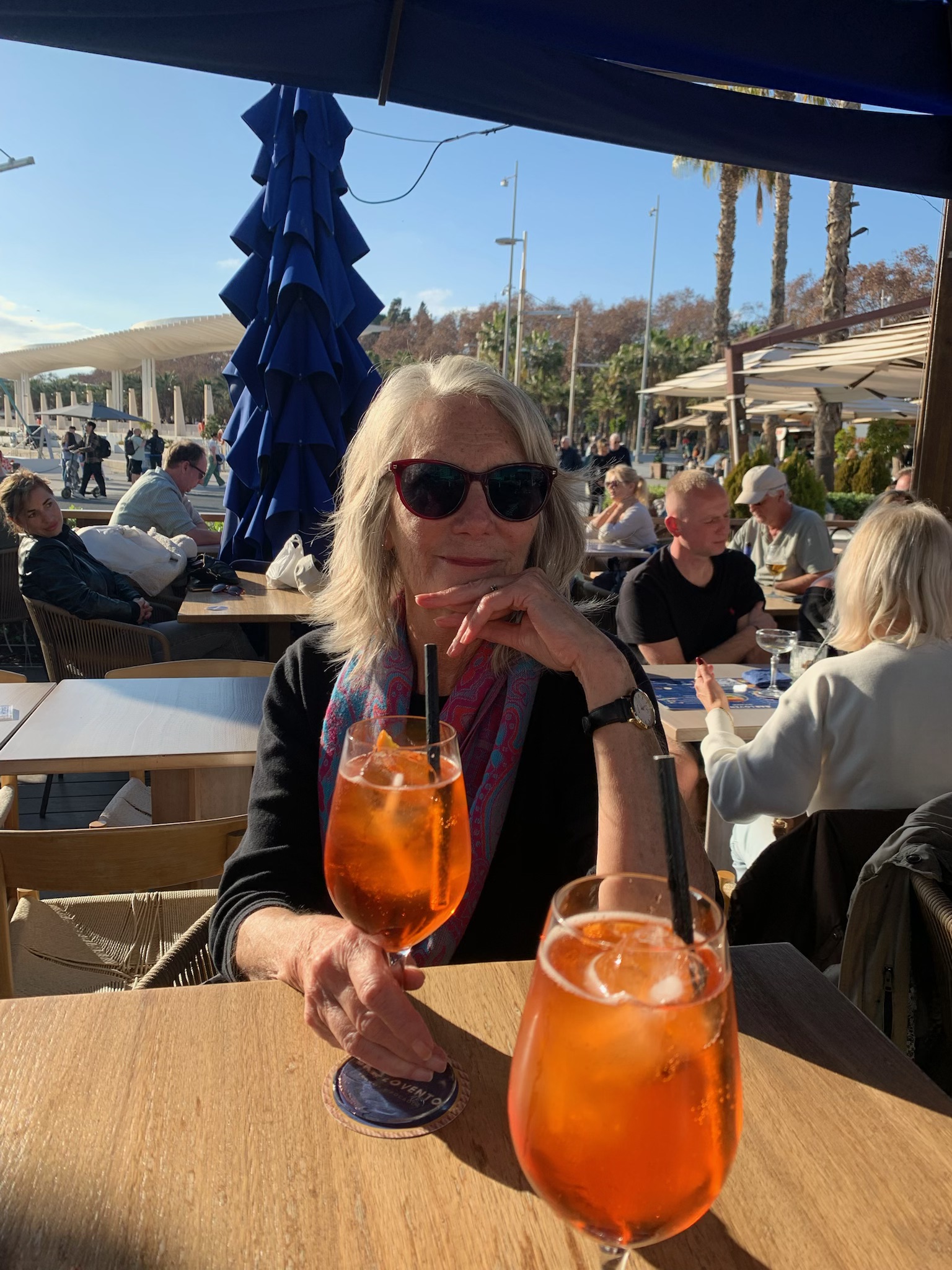
We finished our day with Aperol Spritz in the sunshine. That evening, we had one last paella sitting outside at a Taberna. We began planning our return trip.

 Stepping off the Treadmill
Always fascinating reading about your travel adventures Amanda — I hope there’s more about your trip home.
Thank you, Heather! I’m so glad you have been enjoying the travelogue. I don’t think I’ll be writing about the return journey. It’s absolutely wonderful to be home. But not, I think, quite as interesting for others to read about here. However, I do have some fun projects upcoming that I look forward to sharing…