Oaxacan Diary 2: Travels with my mother at the top of the world

The main plaza at Monte Albán

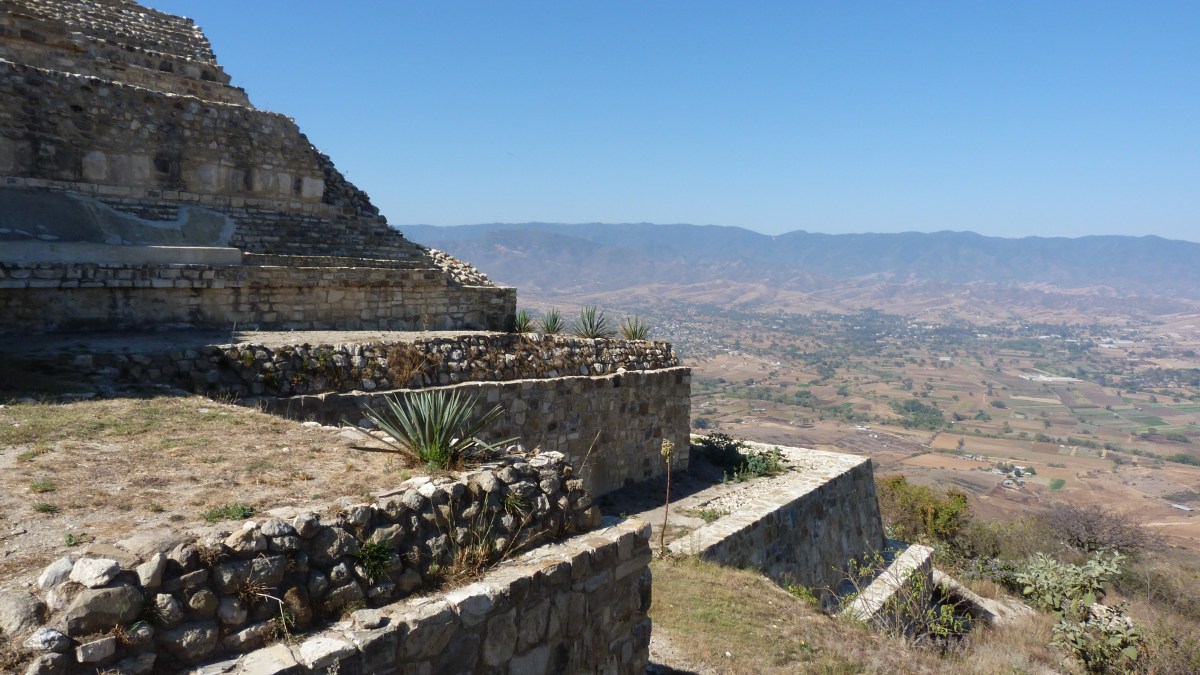
For more than a millennium, successive generations of Olmec, Zapotec and Mixtec peoples ruled the life of the Oaxacan valley from the city state of Monte Albán. Carved into a mountaintop 6400 feet above sea level, vast areas  were levelled in 300 BC for terraces and plazas. Temples and residences that allowed for seismic movement were built using layers of quarried stone and adobe. By 800 AD, 50,000 people lived in the city of Monte Albán. It was so large that suburban satellite neighbourhoods were built on surrounding mountaintops.

Monte Albán was declared a World Heritage Site by UNESCO in 1987.

When you are in Monte Albán, you feel as though you at the top of the world. There is nothing between you and the sky. The scale of the city is overwhelming. The central plaza is exactly oriented on the cardinal points (I checked with a compass), and so large that it dwarfs people as they cross. Stone staircases seem built for giants. It was built to impress.

Looking north to the observatory of Monte Albán

My mother and I have been to Monte Albán before, and wanted to go again, but we wanted to start with a visit to Atzompa, one of Monte Albán’s satellite neighbourhoods.

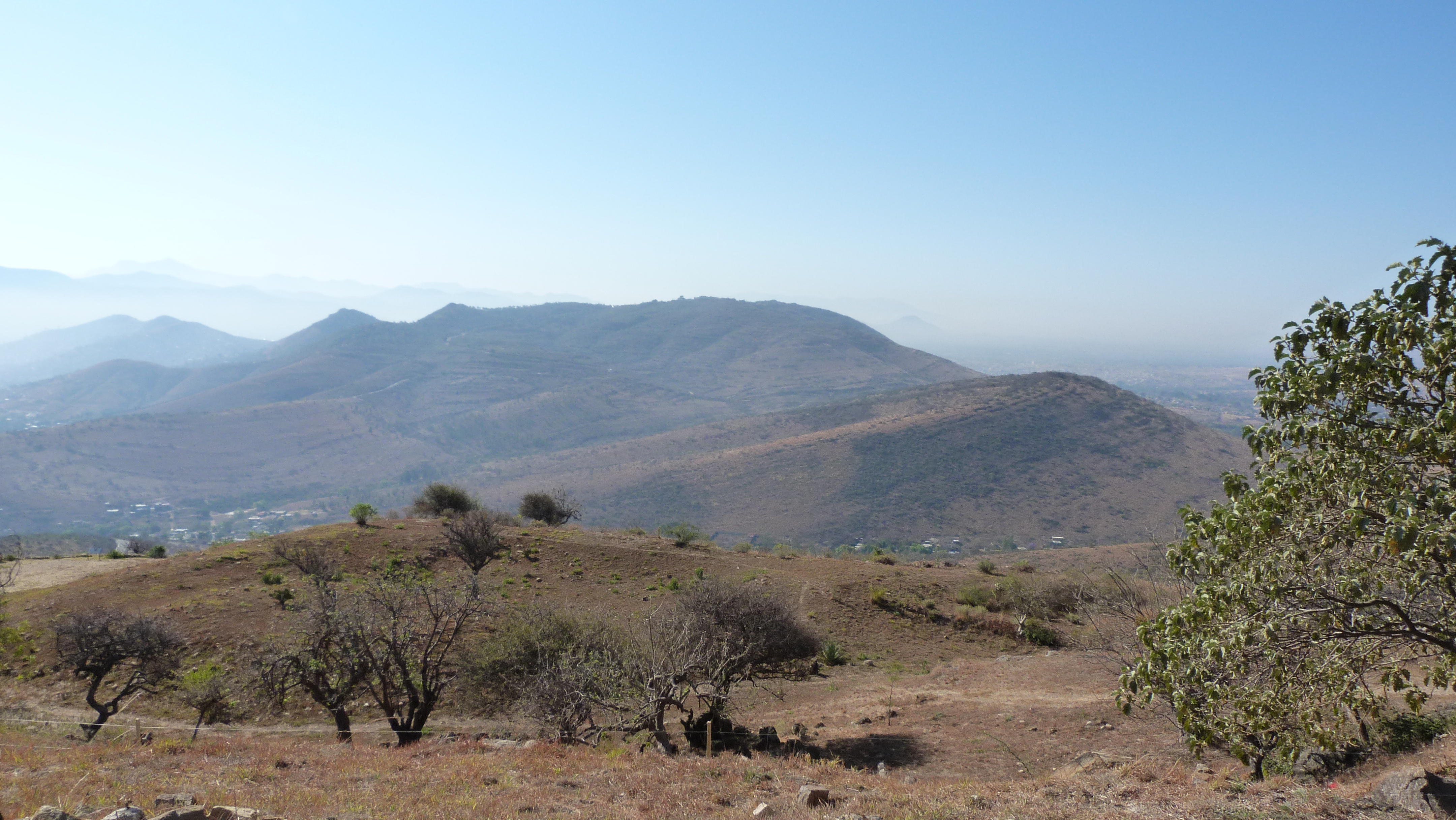
Looking north from Monte Albán to Atzompa on the mountain beyond

The Atzompa archeological site has only been open to the public since the fall of 2012, and there is little information about visiting. New roads are being built to access it, but as yet there are few who travel there and it remains undiscovered by most tourists. So we hired a car and driver to take us to the top of the world.

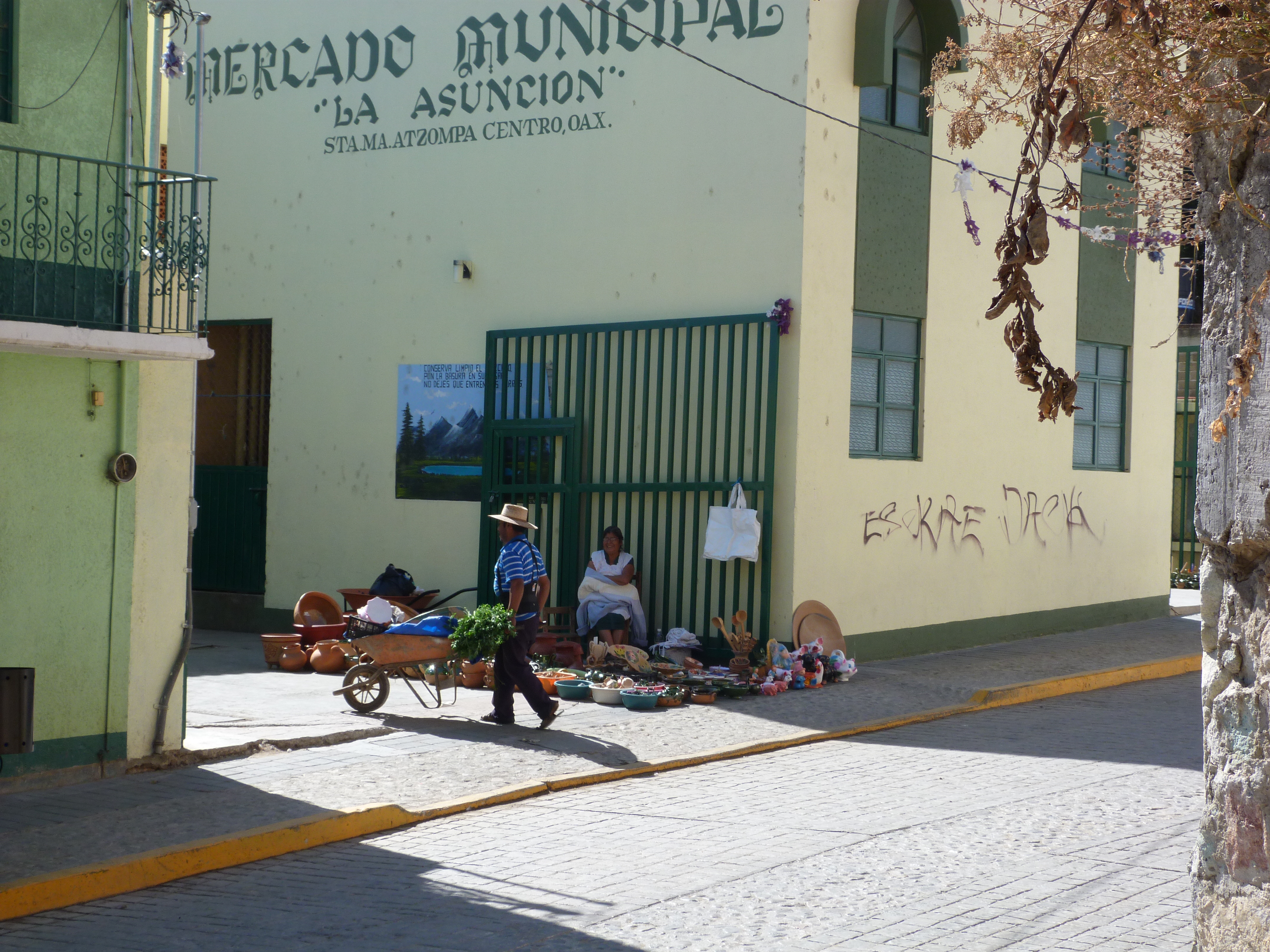
We left early in the morning to avoid the heat of the day. Our driver Vincent took us out of Oaxaca, edging upwards through villages with dusty, winding streets. The “modern” village of Atzompa is known for its distinctive green pottery. About 90% of the villagers are involved in making pottery. It’s a traditional village and there is terrible poverty, but people are scraping by somehow.

The contemporary village of Atzompa

There’s a small artisan’s market for intrepid tourists, but we passed by, and headed up the mountain. We passed a man with a burro, laden with something that looked like coal or maybe just rocks. We passed workers building the new road. Up and up Vincent drove, weaving past barriers, until he could drive no further. Mom and I set out on a newly created gravel stairs, leaving Vincent to wait in a newly built but vacant parking lot.

There is an entrance to the Atzompa archeological site, where we signed in. From the sheet I could see that there were 4 visitors yesterday, 18 the day before. Today, we have the place to ourselves.

The name Atzompa is Nahuatl meaning “at the headwaters”. It was built by Zapotecs from Monte Albán about 1200 years ago. After about 600 years of Zapotecs, it was inhabited by Mixtecs for over 600 years. The pottery making inhabitants of the contemporary village of Atzompa are descended from those Mixtecs.

Atzompa was built in a similar style to Monte Albán, although scaled down. There are small plazas, a temple, a tomb with funerary chambers, an artisan’s area, a stone quarry, and a large ball court.

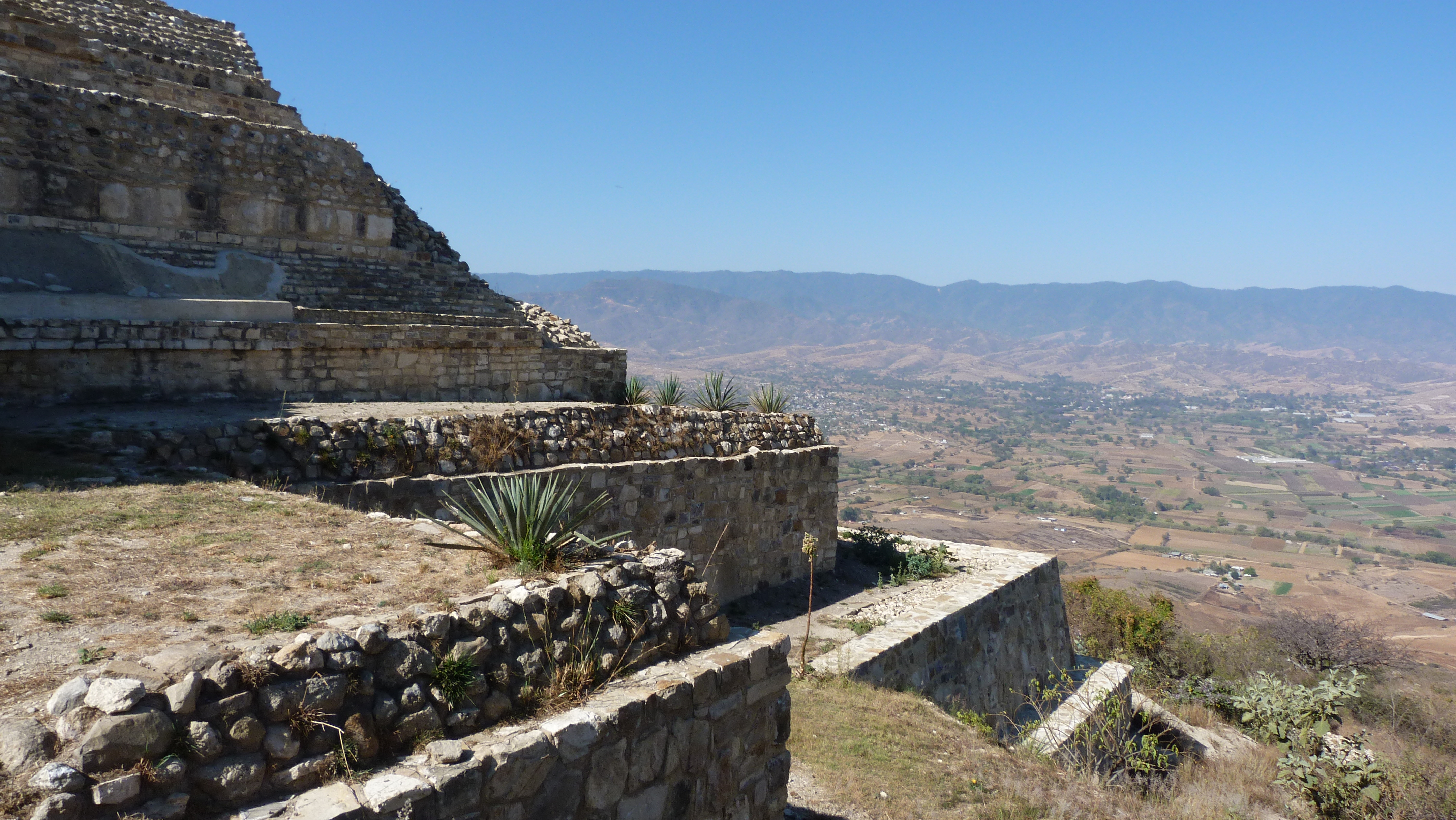
From “Plaza C” you can see across to the city of Monte Albán, as well as to other, as yet uncovered, satellite neighbourhoods.

Looking from Atzompa across the valley to Monte Albán

The plaza makes us understand the level of wealth and privilege in Atzompa. Residents looked down on the peasants, workers and farmers in the valley. They looked across to the seat of power, both political and religious. But it was also practical. Looking down, they could easily see movement or threats from other people travelling in and out of the valley. These were wealthy and powerful people, who lived in luxury.

Looking from the main square of Atzompa to the valley below

The main square is 50 x 50 metres, bordered by a temple, with a central burial mound.

Main square and temple, Atzompa

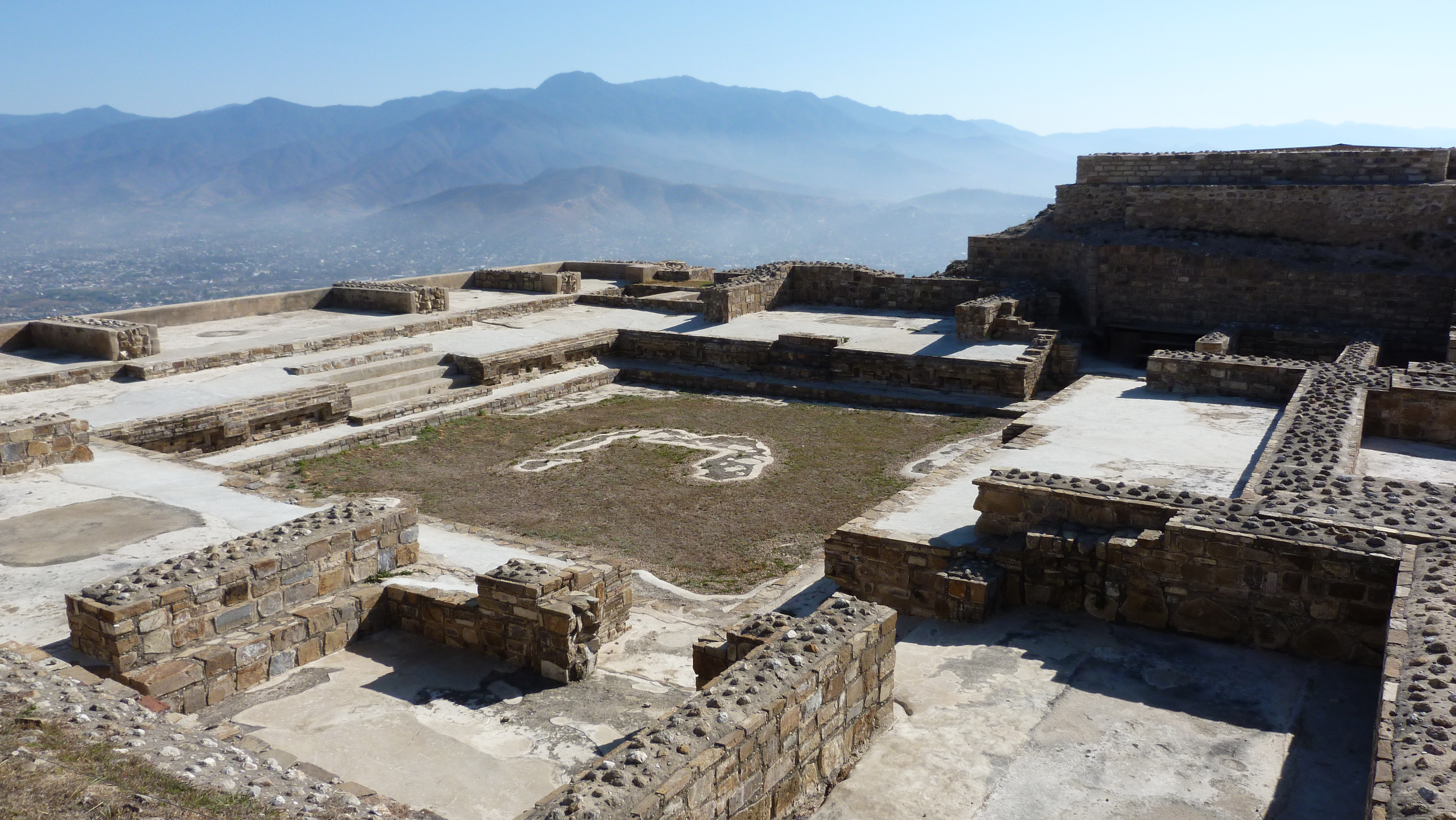
One of the two residences, the House of Altars, has a sunken patio surrounded by a sidewalk, and 18 rooms accessed by four different staircases. Servant’s quarters were attached by walkways. A desirable house, in prime location.

House of Altars, Atzompa

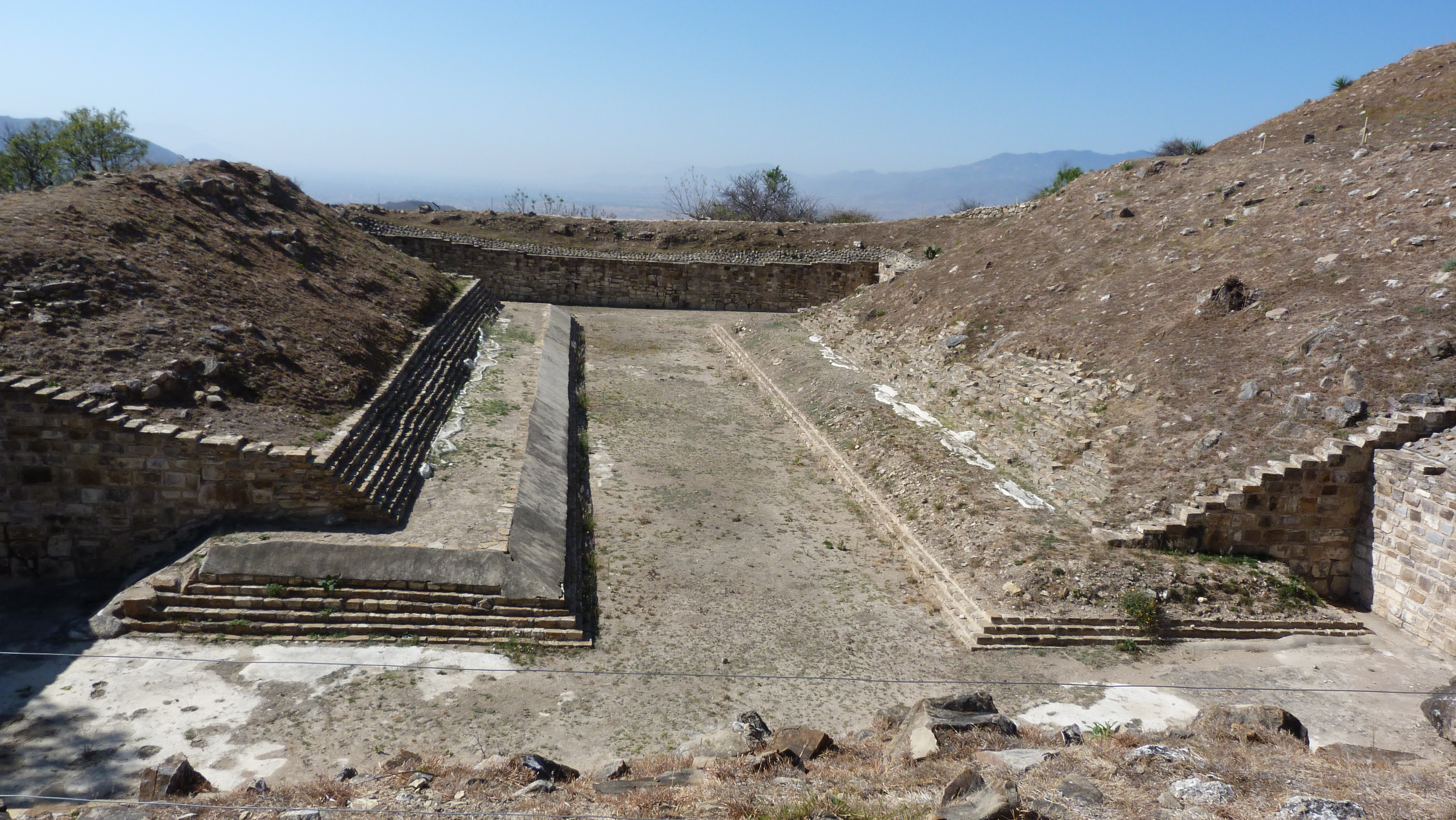
The ball court, one of the largest in Meso America, is 5 x 22 metres in an “I” shape, with a north/south orientation and long benches for spectators on either side. Ball games had both religious and political ramifications, and were “practiced to influence the movement of the stars in the sky, the continuation of the existence of the cosmos, and thereby, the continuation of life” (so the signage at Atzompa tells us). It is easy to imagine, as we stand so close to the sky, the power and influence of the games.

Ball court, Atzompa
Ball court, Atzompa

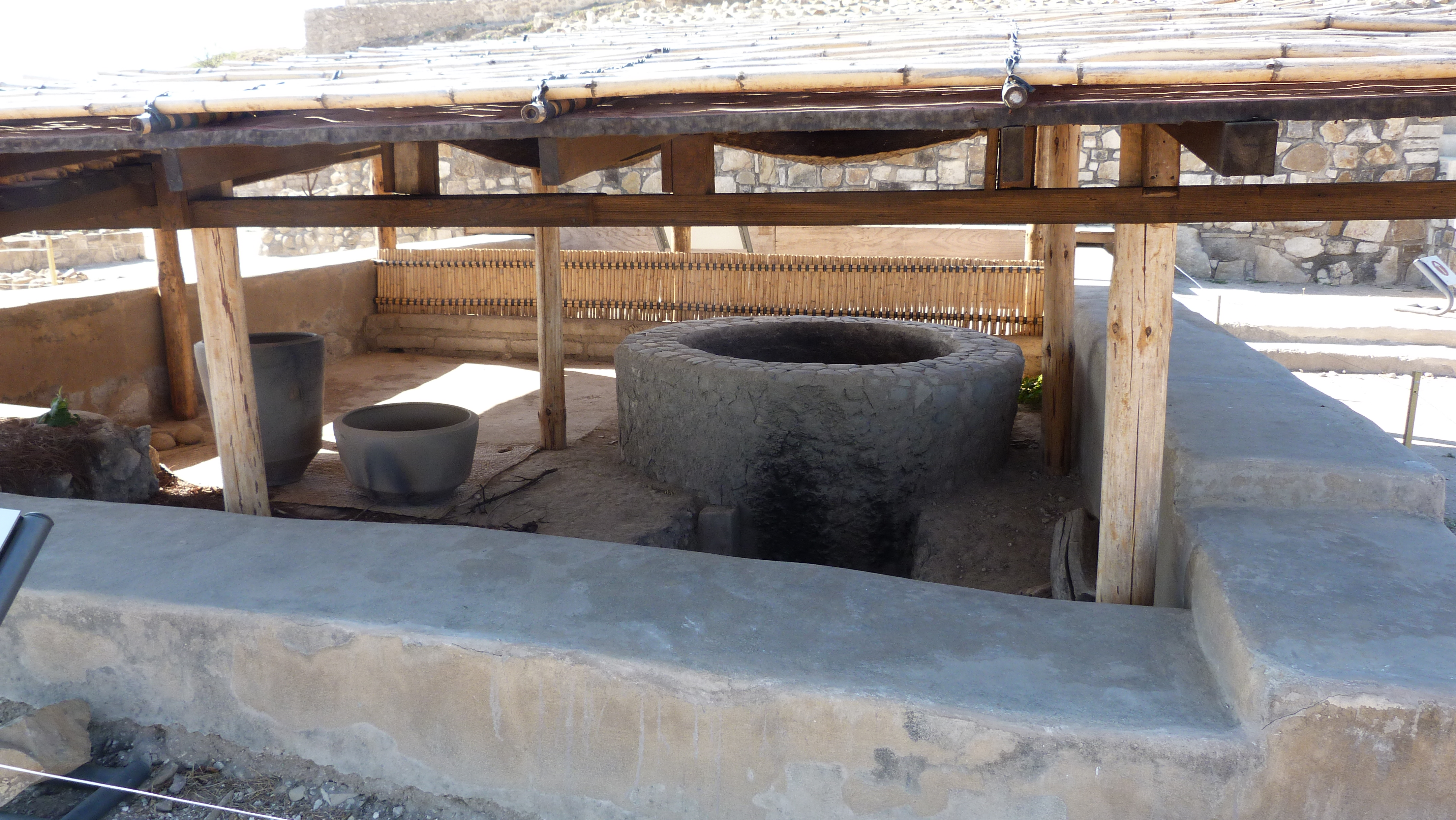
There’s a kiln and ceramic studio here. The original building hasn’t been excavated, as it sits 2.5 metres under the surface, but a re-creation gives weight to the importance of the studio, which specialized in large cooking pots. As today, each artisanal home is responsible for one type of pottery whether it be pitchers, griddles, casseroles or toys. I think back to the potters we passed on our way here. Tradition goes a long way back in this part of the world.

Kiln, Atzompa
Kiln, Atzompa

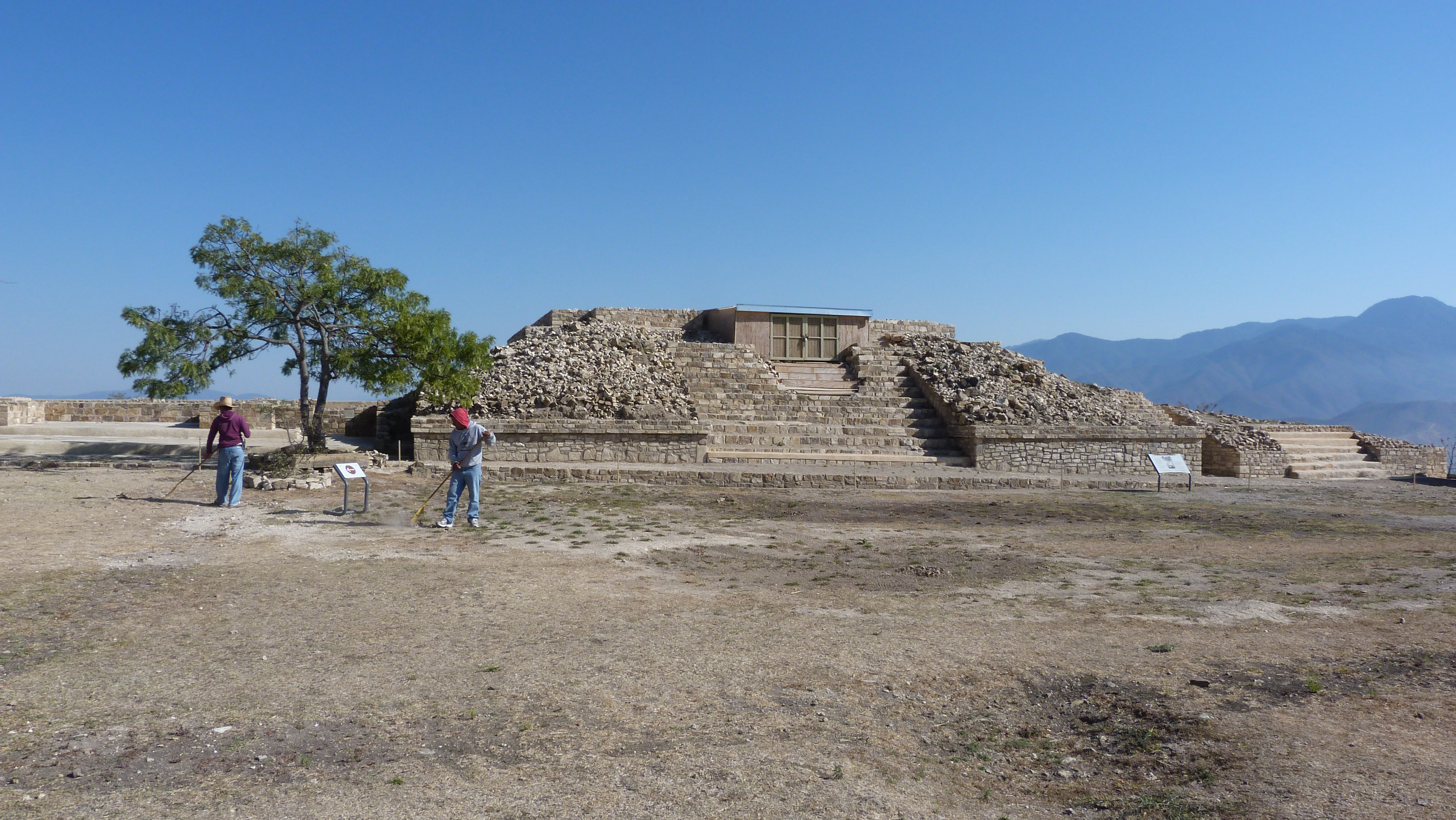
A burial chamber was unearthed in July, 2012. Not open to the public, it’s been dated to be 1100 years old, apparently in amazing condition, and unique in its design of three layers of tombs above ground and brightly painted murals on the walls. A wooden structure sits incongruously on the top, replacing the original stucco temple. The restoration is clearly still in progress, but the only work we see being done today is by men slowly raking stones on the plaza.

Funerary Chamber, Atzompa

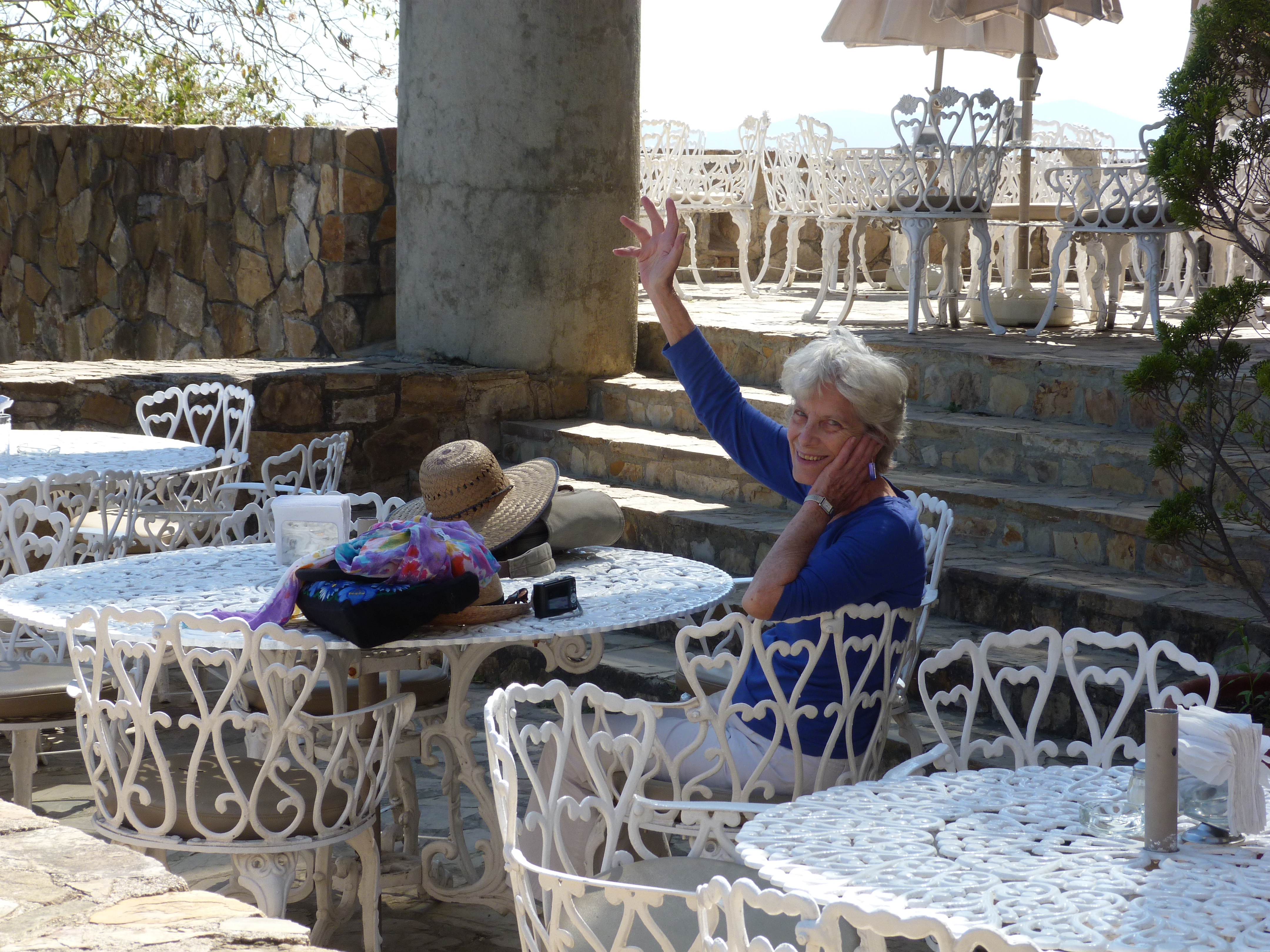
The mid morning sun is beginning to bake us. We gingerly make our way down the gravel paths, to find Vincent waiting patiently. We reluctantly leave the peace of Atzompa. Monte Albán, filled with tourists and school groups, beckons to us across the valley. Aztompa has become our shared secret, our own private discovery. Monte Albán is, as it should be, filled with the trappings of civilization.  We head there for desayuno (breakfast) in a lovely outdoor café …
Desayuno at Monte Albán

Running away from winter: Oaxacan Diary part 1

My grandmother started going to Mexico in 1970. She continued to journey south every winter until she was 89, when it became too hard to travel. In 2003, my mother and I scattered her ashes in Oaxaca City, Oaxaca, Mexico.

My mother has been travelling to Mexico since 1975. Like my grandmother, she loves the land and the people and, of course, the fact that there is no snow or ice. In 2001, Oaxaca became her winter home.

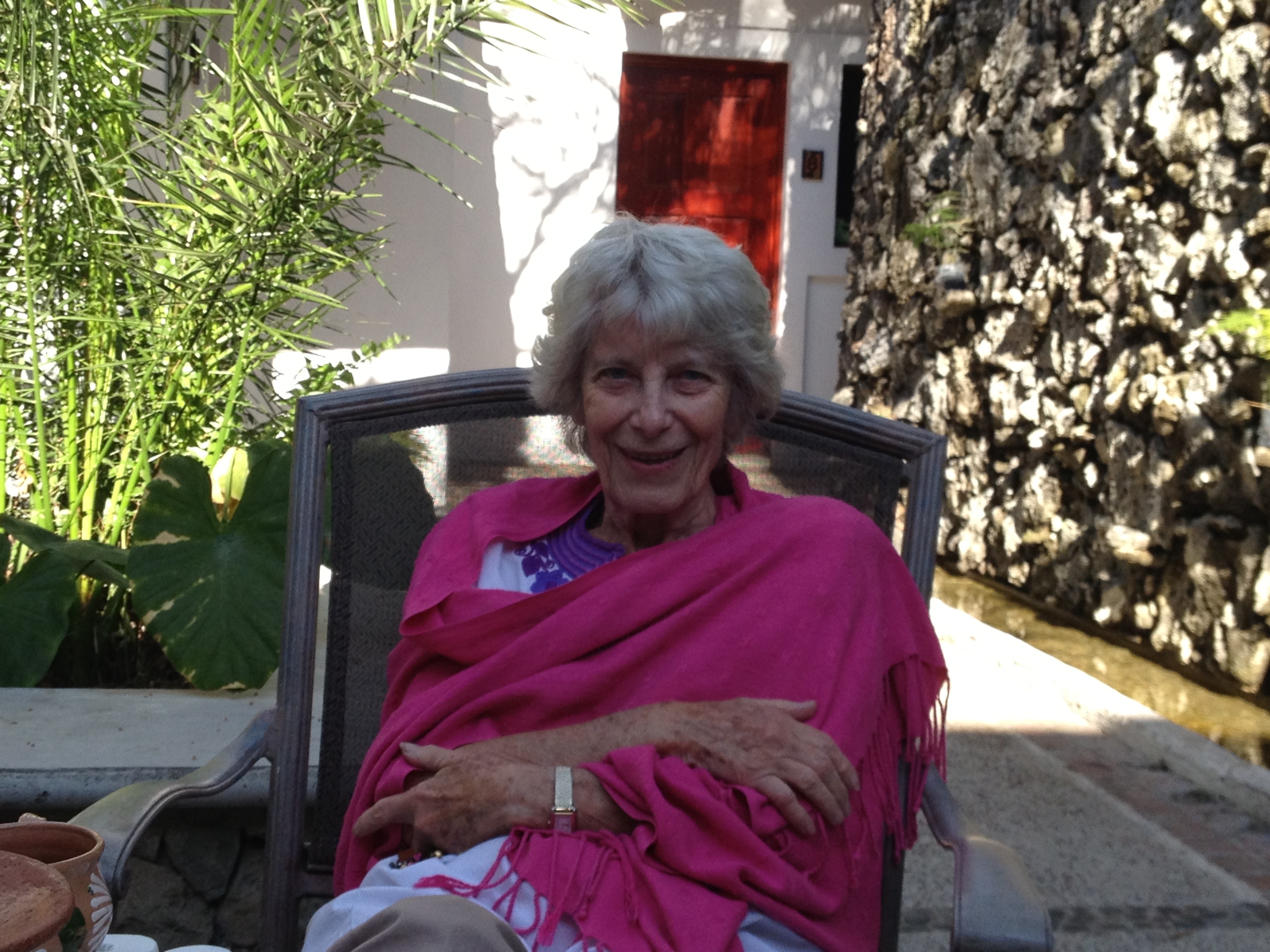
Laurie Lewis at home in Oaxaca

Now, I’ve come to visit and escape the deadening greyness of winter in Eastern Ontario. I’ve left Tim at home, writing, and for a few precious weeks I’ll immerse myself in colour, feel warmth on my skin, shed layers of clothes.

Oaxaca City is in the capital of the state of Oaxaca, a central area of Mexico. The word Oaxaca comes from the Nahuatl (Aztec) word Huaxyácal meaning the “summit of the acacias”  and the city sits over 5,000 feet above sea level. The colonial city centre was declared part of the Cultural History for Mankind by UNESCO in 1987.

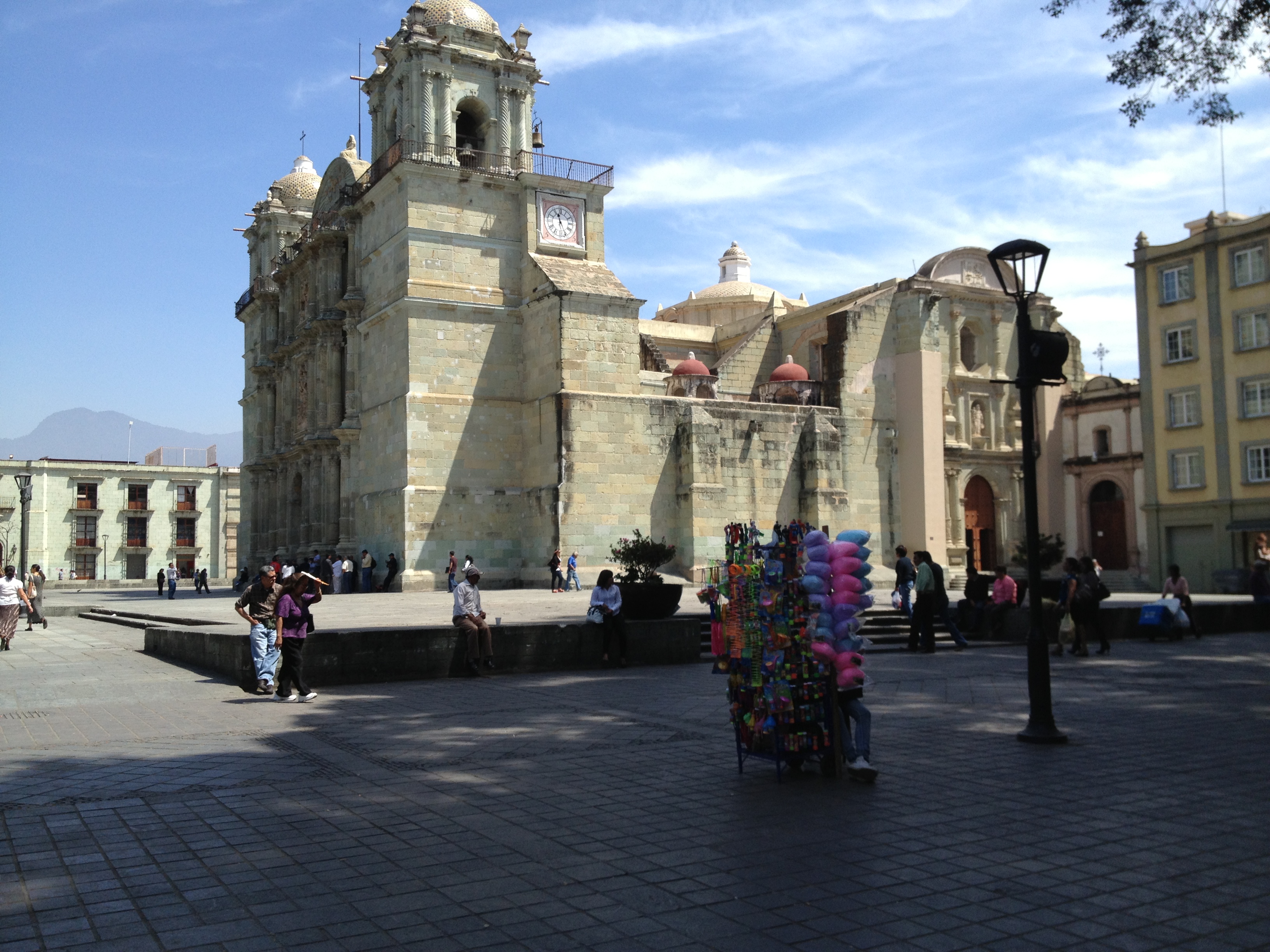
This isn’t the place to go into colonial history, but the confluence of cultures forms the city. Zapotecs, Mixtecs and Aztecs lived in the Oaxaca Valley for at least a 1,000 years before the Spanish arrived. With the conquest, the Spanish built on top of the original Aztec fortress. They designed the city around a central square, the Zócolo, and oriented it to the cardinal points. The cathedral, built over the Aztec spiritual centre, is along one side of the square and facing it on the other side they built the municipal buildings. Thus the square was designed to radiate a balance of civic and spiritual power throughout the city.

The cathedral on the Zocolo

Today, Oaxaca is a busy and friendly city of 250,000 that does, in fact, seem very balanced between both worlds. On one side of the Zócolo is a permanent tent city of protesters. On the other, there are constant processions in and out of the cathedral.

The weather in Oaxaca is blissfully temperate. Mornings are cool, and I must wrap up in a shawl as I sit on the patio for morning coffee. My first morning in Las Mariposas, the family run hotel where we are staying, I am treated to fresh tortillas stuffed with black bean sauce, salsa, zucchini blossoms and cheese, cooked on an open grill on the patio.

My kind of breakfast.

My mother and I spend the morning walking the city streets, looking in shops, smiling at people. There is, everywhere, a mixture of wealth and extreme poverty. My mother carries coins to distribute as we walk, making a special effort to give money to musicians and elderly women. Yet even with the poverty, there is a feeling of ease on the street, an assurance of safety.

My mother constantly reminds me to slow down. Not because I am walking too fast for her, but because I am walking too fast for life.

We sit in the Zocolo listening to speeches about workers rights and watching the women and children make their rounds selling shawls, beaded jewelry, gum, wooden toys and bookmarks. Young children are employed in the family business of selling on the streets. Why aren’t they in school, I ask. “School costs money. Uniforms cost money,” explains my mother. “Many children cannot go. And many of those that do, only go half days.” I know this should depress me, but all around me are smiling, encouraging faces.

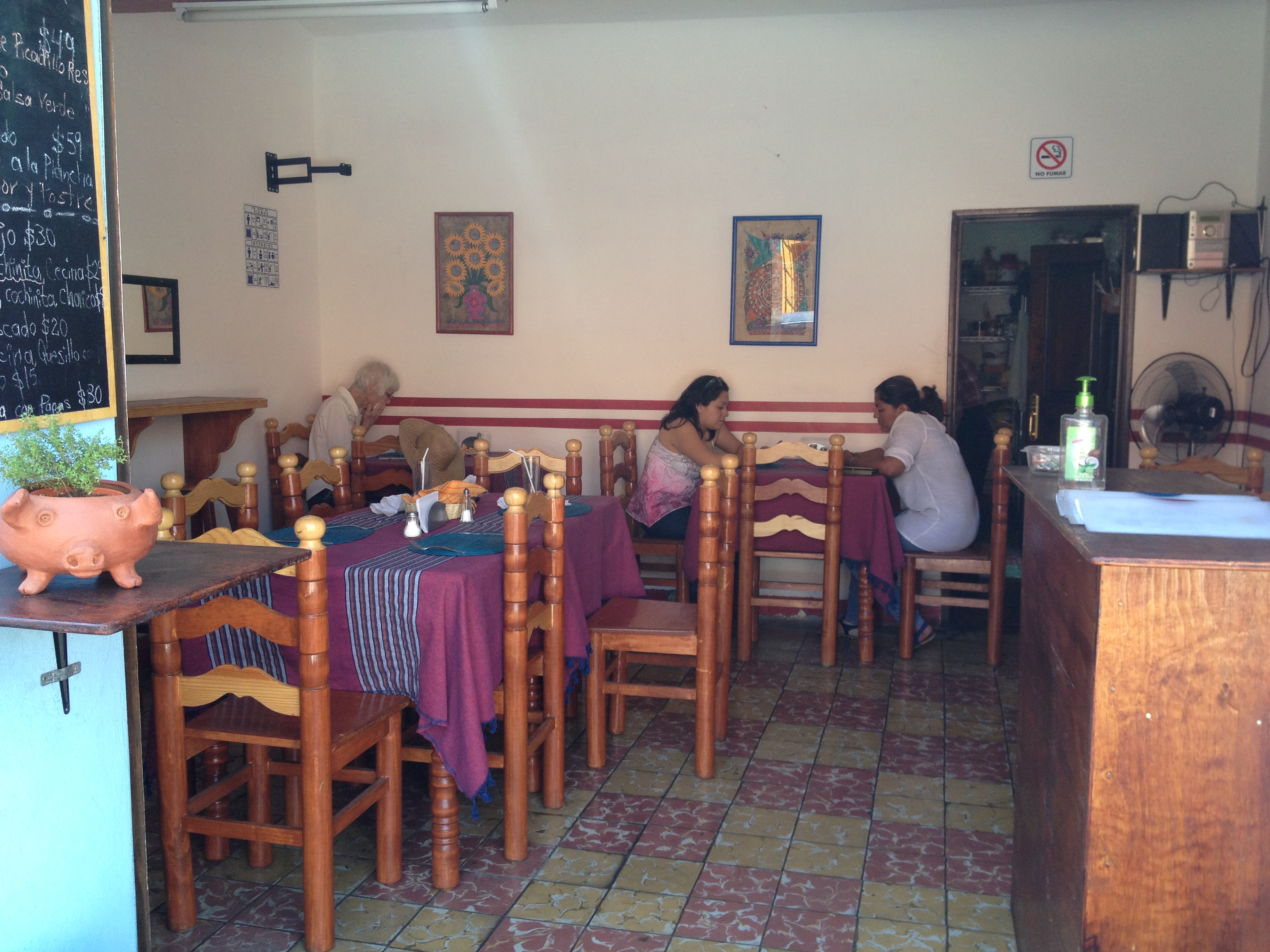
Food, and food preparation, is everywhere. Comida is the main meal of the day, served from about 2:00 – 4:00.  There’s a small restaurant beside our hotel where the owner serves a simple comida, with daily specials.

Comeda down the street
Comida down the street

Today’s menu includes Chayote soup, a kind of Mexican squash. When we ask, the owner/cook brings one from the kitchen to show us. It is light green and shaped like a fat pear. The soup is soft, light and topped with a sprinkling of fresh coriander. Second course is a “dry soup”, a rice pilaf accompanied by hot salsa and a kind of guacamole sauce. We pause as we sip our pineapple water. Lighter than juice, it is a way of getting all of your electrolytes and hydration at one go.

Chillis Rellanos are stuffed poblano chillis that are battered and fried. Today, ours are stuffed with ground meat, carrots, potatoes – almost like a dry stew in a fat pepper. The pepper sits on a bed of mole, with some fresh salsa and salad on the side.

A flan, decorated with swirls of chocolate and caramel completes our comeda.

Comida costs us each 4.50 pesos – less than $4.00 Canadian. There are up-scale restaurants in Oaxaca and we could have gone somewhere fancy and paid twice as much, but this suited us perfectly.

Our simple Comeda restaurant
Our simple Comida restaurant

This is another reason why my mother lives in Mexico. The global financial crisis hit Mexico hard. It is incredibly cheap to live here. With every peso you spend, you feel you are doing a service for the country.

As the heat of the day begins to overwhelm us, we spend the afternoon dozing, reading and recovering from comida. It hasn’t taken long to forget winter.

Ready for a post-Comeda rest at Las Mariposas
Ready for a post-Comida rest at Las Mariposas

Country Mouse/ City Mouse

Truth be told, I am very conflicted about my country mouse/ city mouse existence. I love big cities. I was so happy to be living in London last year, and since we’ve been back, I have been missing the energy of city life. There are days when I rage at being isolated in the country. I long to walk down a street, hear different languages, peer into windows, people watch.

But I am also deeply committed to living in the woods. We moved to the rural wilds of eastern Ontario 25 years ago to give our children a childhood filled with trees to climb, stars to count and newts to save. Every day I revel in the beauty of what I learn outside my door.

We were in Toronto this past week, visiting our son Xan for his birthday, when the big blizzard hit. There was no driving home so we spent a fabulous day visiting friends and trudging through the snowy streets. Going to St. Lawrence Market was a party in itself – there was a communal pride in being intrepid Canadians. We sipped spicy Korean soup and shared weather stories with others who had braved the storm for the sake of community and good food.

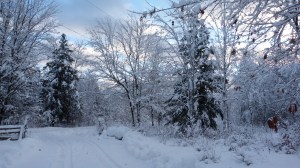
The next day was clear and bright and we drove away from the city, leaving the already brown, snow-clogged city streets. Snow in the city is annoying, but in the country it is transformative. It stays white and clean and makes everything look new and fresh. The snow reflects the sun, making everything brighter. In the country when there is a huge snowfall followed by a day of sunshine, we unfurl from our grumpy grey winter hibernation and soak up the extra strong rays. Winter on these days is the best time of year imaginable. I can’t imagine anywhere better.

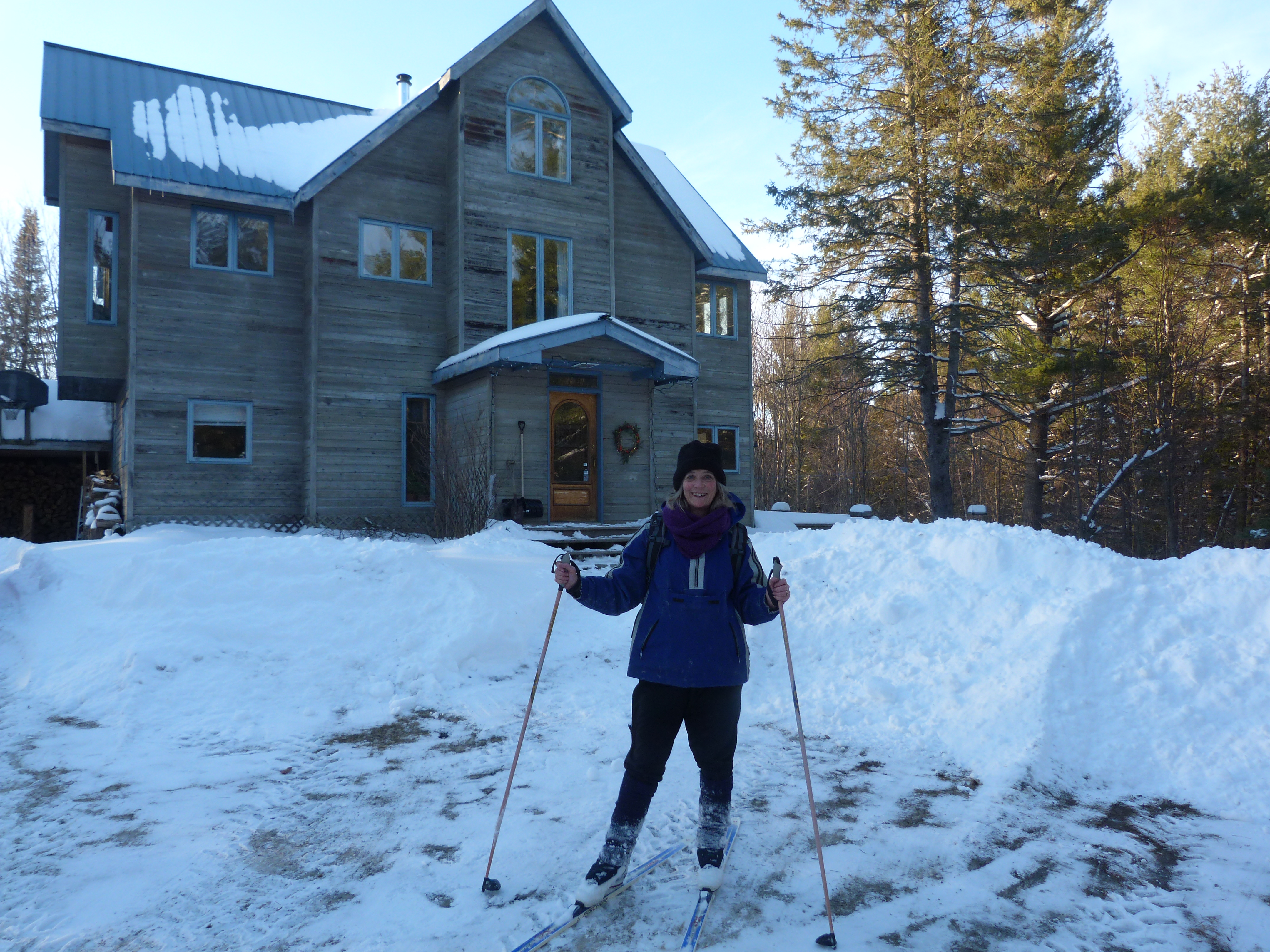
Our house is on 78 acres of scrubby land, adjoining hundreds of sparsely populated acres of the same. On a snow-filled winter day, I can walk out the front door, strap on my cross-country skis and go to investigate the woods.

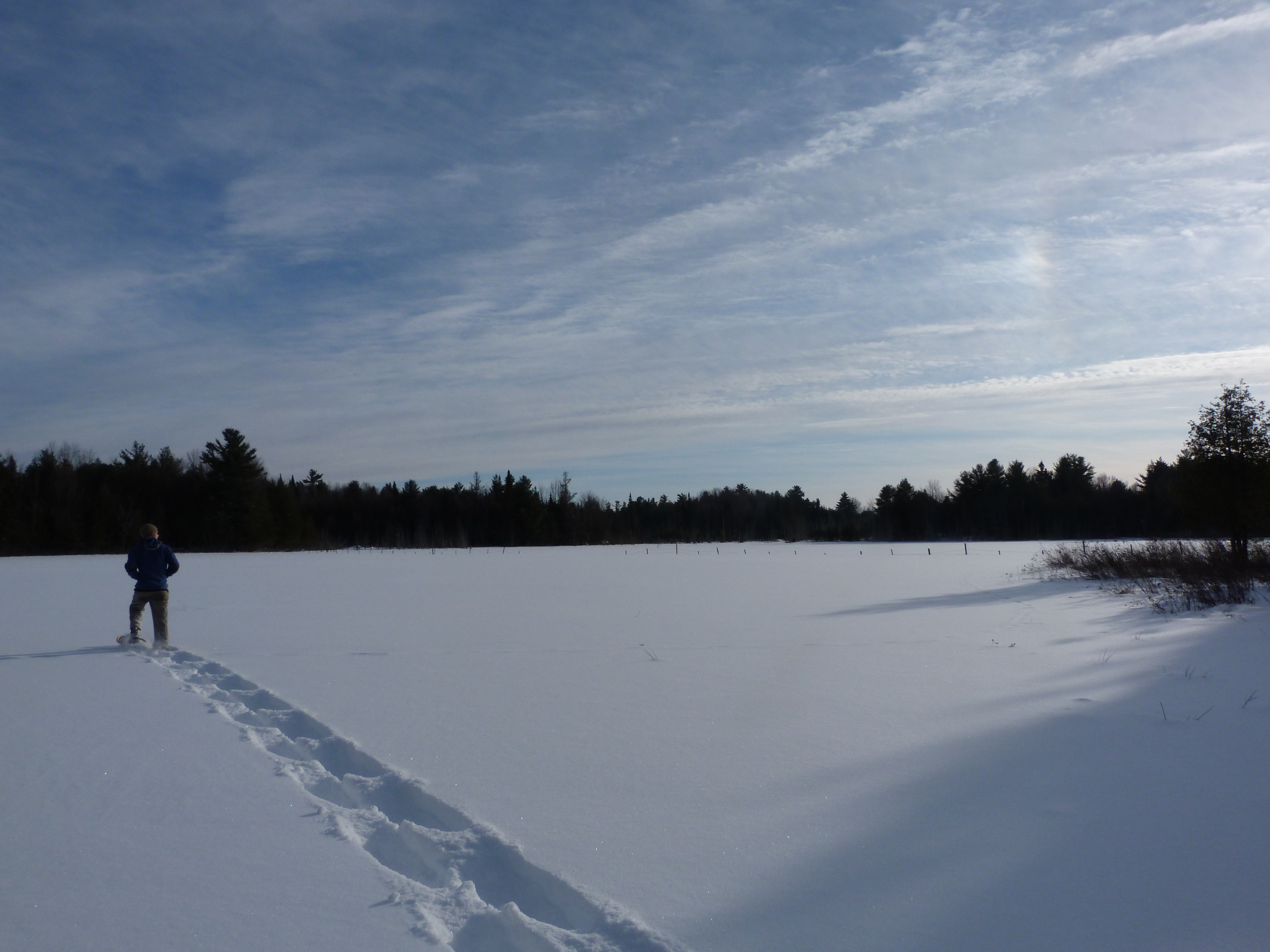
Amanda heading out for a ski
Heading out to ski

Lewis and I decided to explore together – he on snow shoes, me on skis. We’ve got a trail through the property that we keep open, but breaking through the snow is hard work. These are not groomed ski trails. I let Lewis go first.

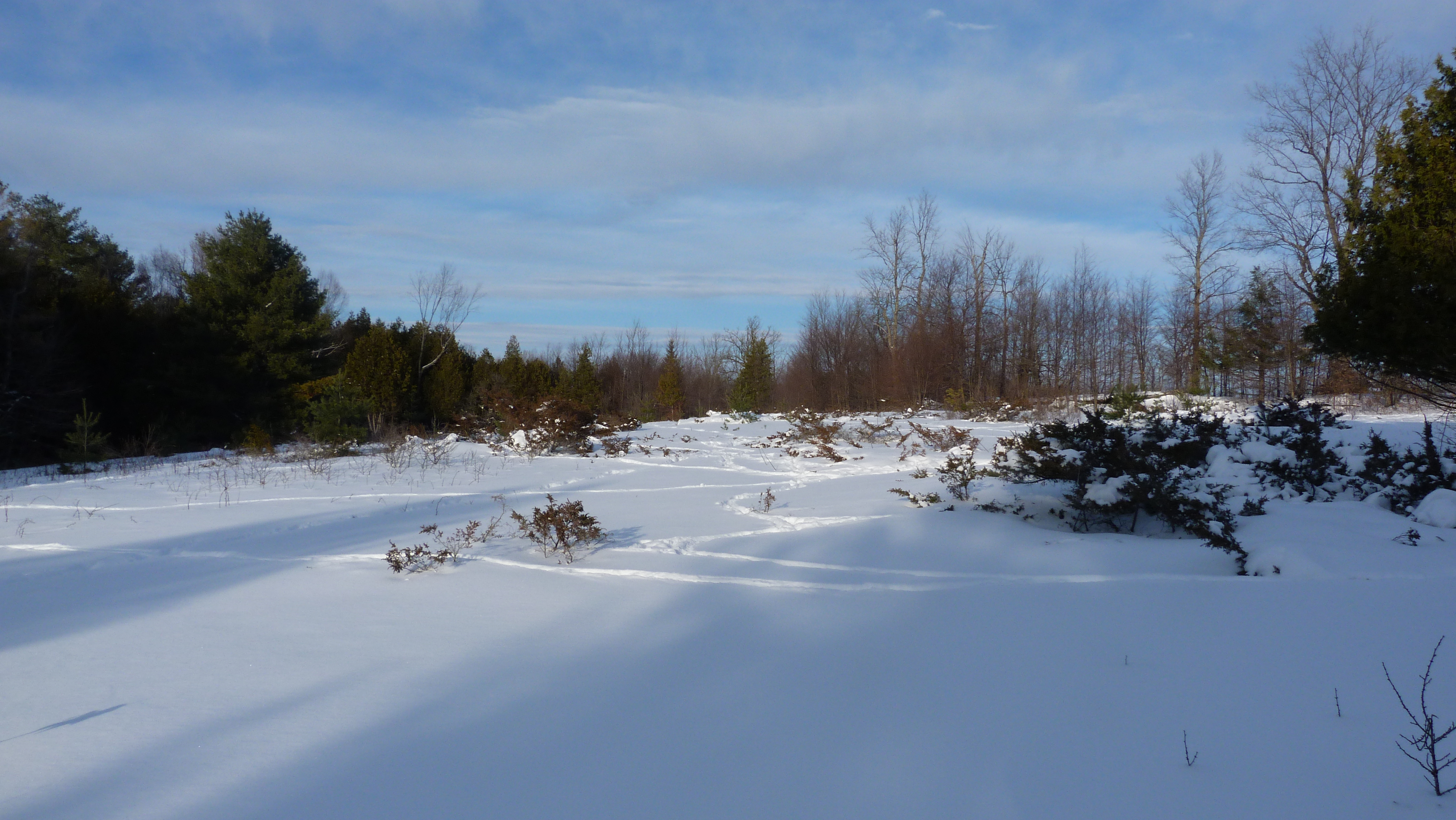
We are not the only ones in the woods, of course. Observing animal tracks is one of the real bonuses of the woods in winter. In the woods you can follow stories. There are a lot of deer this year. We could see where they’d circled the juniper bushes for the deliciously fermented berries.

Deer trails and juniper bushes

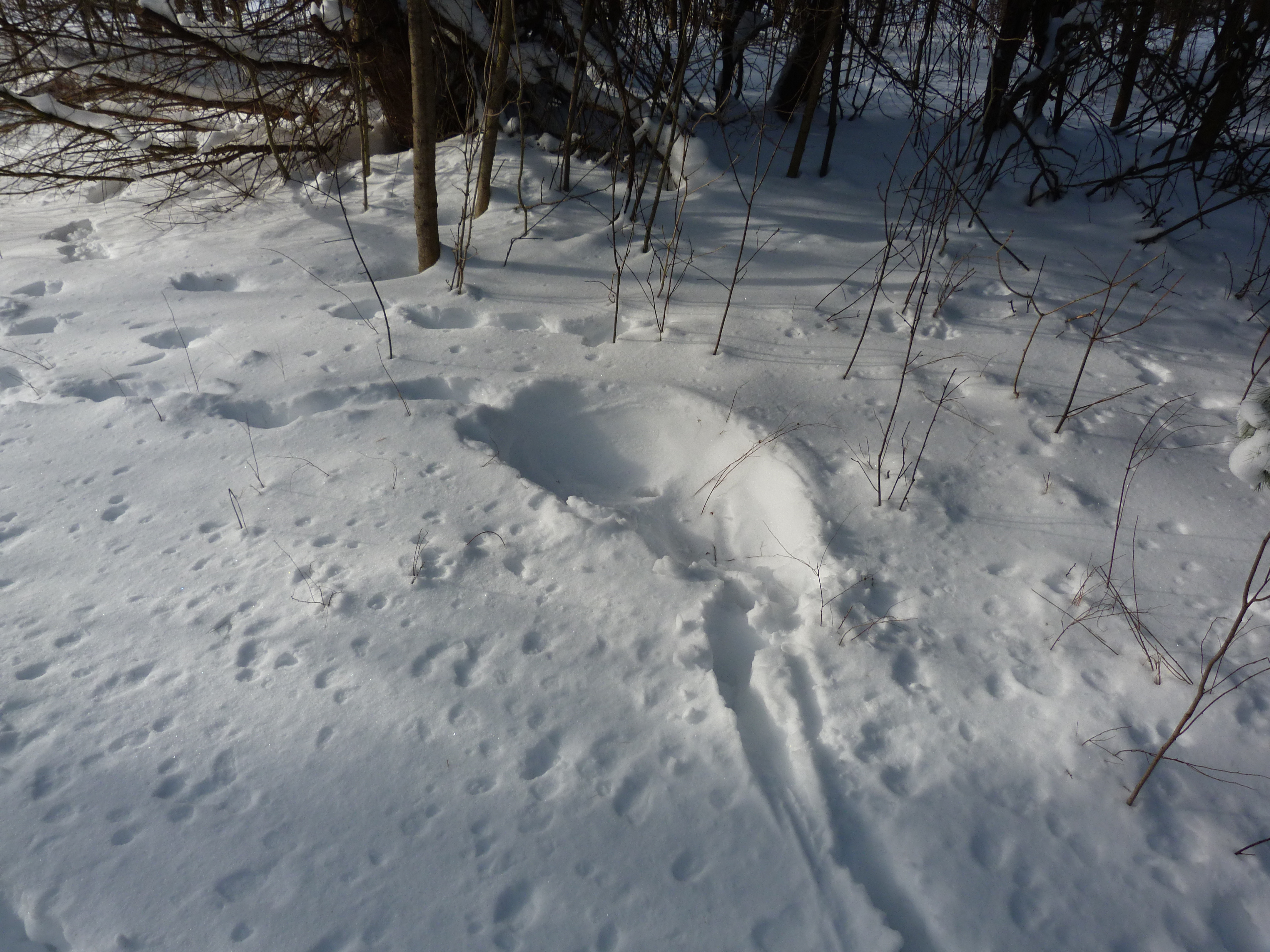
We found hollows where the deer had curled up in south facing exposures – resting places where they could get sun but still be protected from the wind.

A cozy deer bed
A cozy deer bed. The light is deceptive. That’s a hollow in the snow, not a mound. You can see tracks leading in and out.

It takes about a half an hour for us to get to the back end of our land, longer when we are breaking trail. Our property ends at an old rail bed that is now part of the Trans Canada Trail. Initiated in 1994, the TCT is the world’s longest muti-use network of recreational trails. 73% of the trail is now complete, comprising 16,800 kilometers of trail stretching across the country. It is scheduled for completion in 2017, in time for the 150th anniversary of Confederation. Apparently, 80% of Canadians are within 30 minutes of the trail – which seems to me an impossible statistic. Does that mean 80% of Canadians could come walking, riding, snowmobiling, snowshoeing, jogging, biking, or skiing past my “back door”? Perhaps I am not as isolated as I thought.

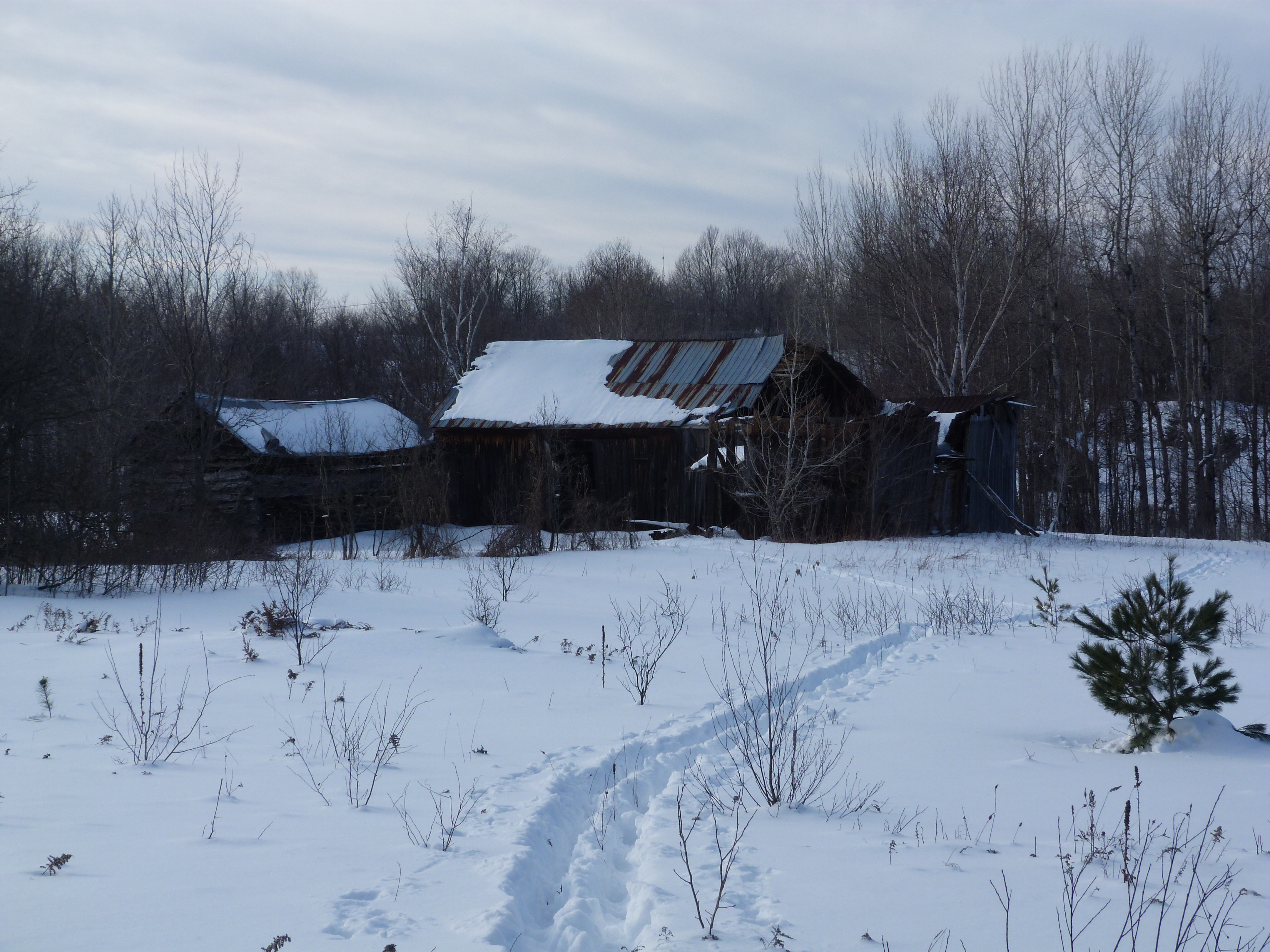
We have an old barn at the back of our property, right by the trail.

The old barn
The old barn

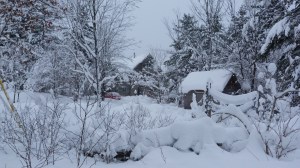
The barn is at least 100 years old, probably more like 150, as it was one of the first built by the previous owners of the land. They had a sawmill and a barn building business. It is a beautiful building, with huge ash beams of a size that is unknown now. I’ve used the occasional piece of barn board for artwork (“Fragments of the Leaves of Grass”). But it’s at the back of the property and not really useful to us as a barn. I’m ashamed to say we’ve let it fall into disrepair. With this last snowfall the roof finally caved in. It is now a statistic – one of Ontario’s beautiful ruins of agricultural days gone by. Too late to repair it, I can only hope the wood will find new life as reclaimed furniture or art.

But there is an animal trail coming out of the barn. Something canine, that is clearly living in there and has made a well-worn path. It is solitary, not grouped like the clustered deer tracks. While coyotes are common, the singularity and size of the path makes me wonder if it is a wolf. A lone wolf. Perhaps. I’m glad the barn can give it shelter.

Lewis and I find a fallen branch to dust off and sit on. I’ve brought us a little treat for our excursion – tiny glasses of port and a piece of Mexican chocolate. We leave drops and crumbs for hungry deer to find.

There is a beaver pond on our land, and we set off across it, well off the trail now.

setting off across the beaver pond

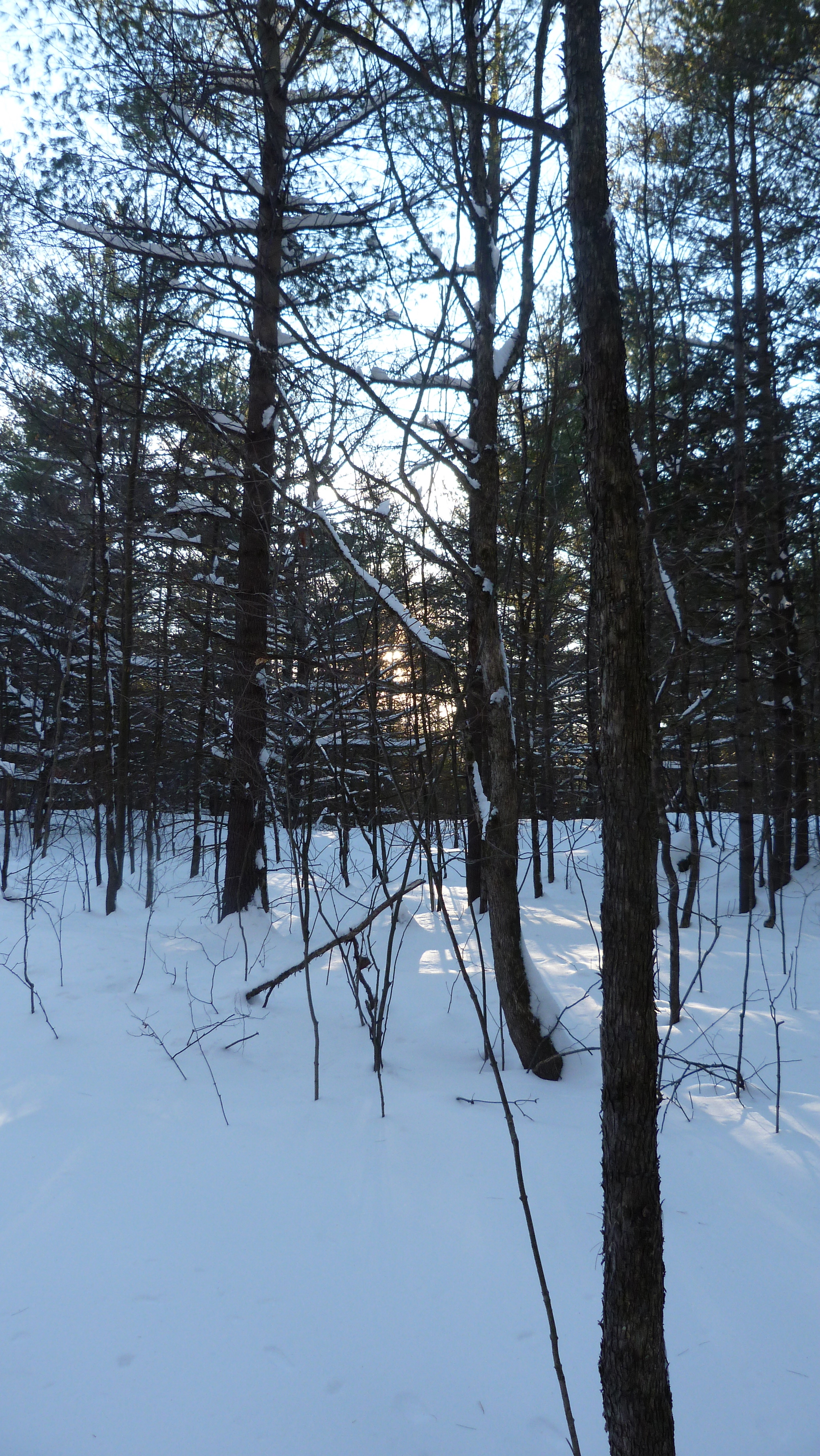
The snow allows us to explore places that we can’t get to other times of year. We begin the trip back home. The afternoon sun streams through the cedar grove. The silence is deep and full.

It really doesn’t get much better.

The light through the cedar grove

A Grand Birthday Tour

I have a hard time with my birthday. It is in January, probably the worst month of the year. I am never sure how I should respond to everyone’s well wishes. I am usually pretty grumpy.

This year, I resolved to take things in hand and order up a perfect day. I made a request for a special meal to be shared with just a small few. I decided that the best birthday treat would be to spend a day reading by the fire and watching dinner being made.

Our son Lewis is living with us right now. He has worked as a cook in a number of restaurants. He loves to work with food, and spending a day cooking is his idea of heaven. So I asked him to make me a special birthday meal, with Tim as sommelier and assistant. I didn’t ask about what we were going to have. I just waited for it to unfold.

I stretched out in my oversized rocking chair by a cheery fire, reading Wuthering Heights – something to transport me out of 2013. As I read, Lewis prepped and I watched out of the corner of my eye as ingredients transmogrified.

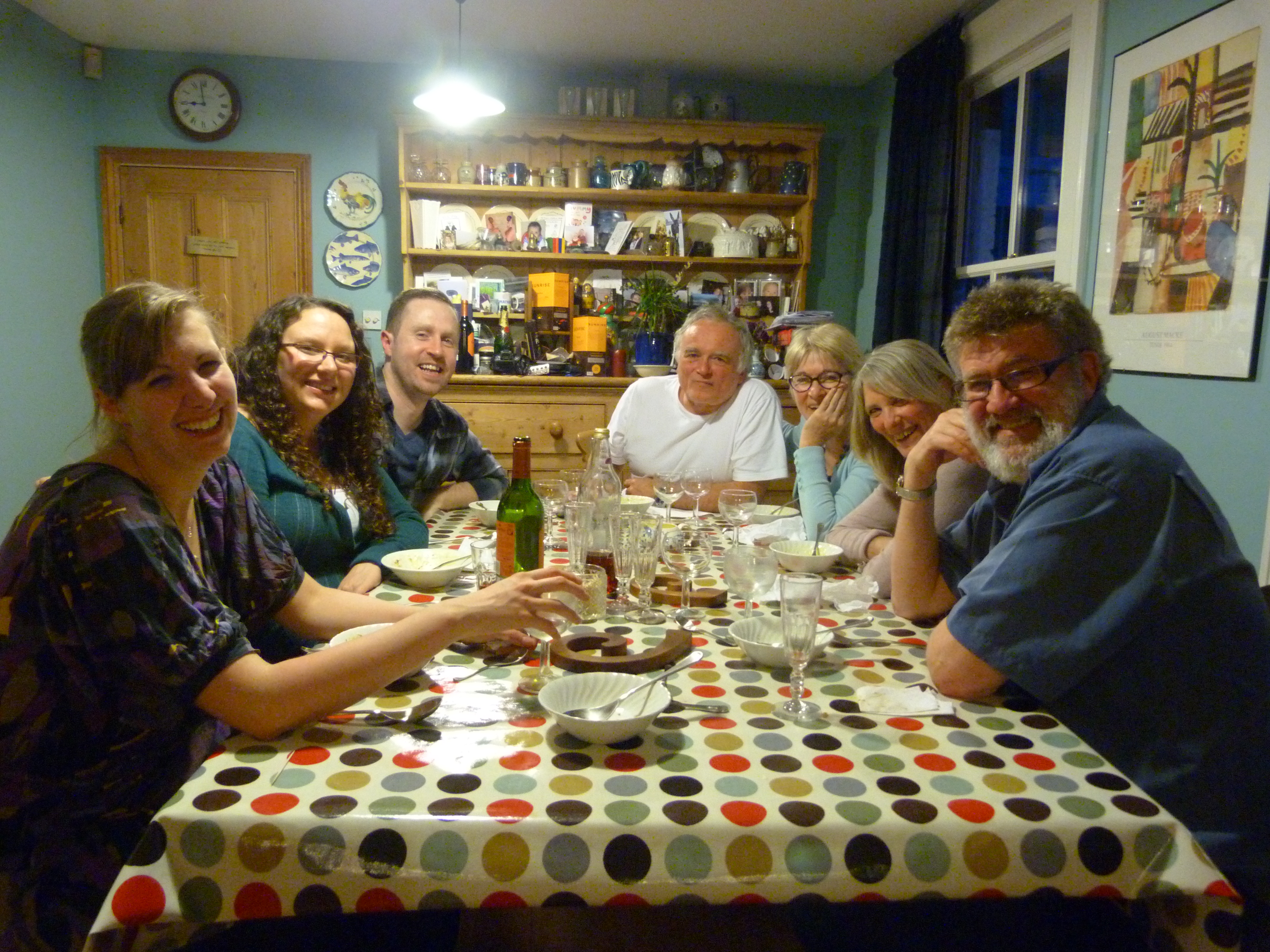
A dinner requires good food and good company to make it work. I decided on a small guest list: My mother Laurie Lewis, a writer, who has a vested interest in my birthday and was just about to leave for Mexico; our friend Jack Hurd, a musician, who had just returned from hiking the Camino and was heading off for a month in Tuscany; and our friend Jan Irwin, a writer and director, who spent last March with us in Devon and is in the midst of contemplating her next trip. And of course Tim, my favourite writer, gourmand and travelling companion, who has shared the past 38 birthdays with me.

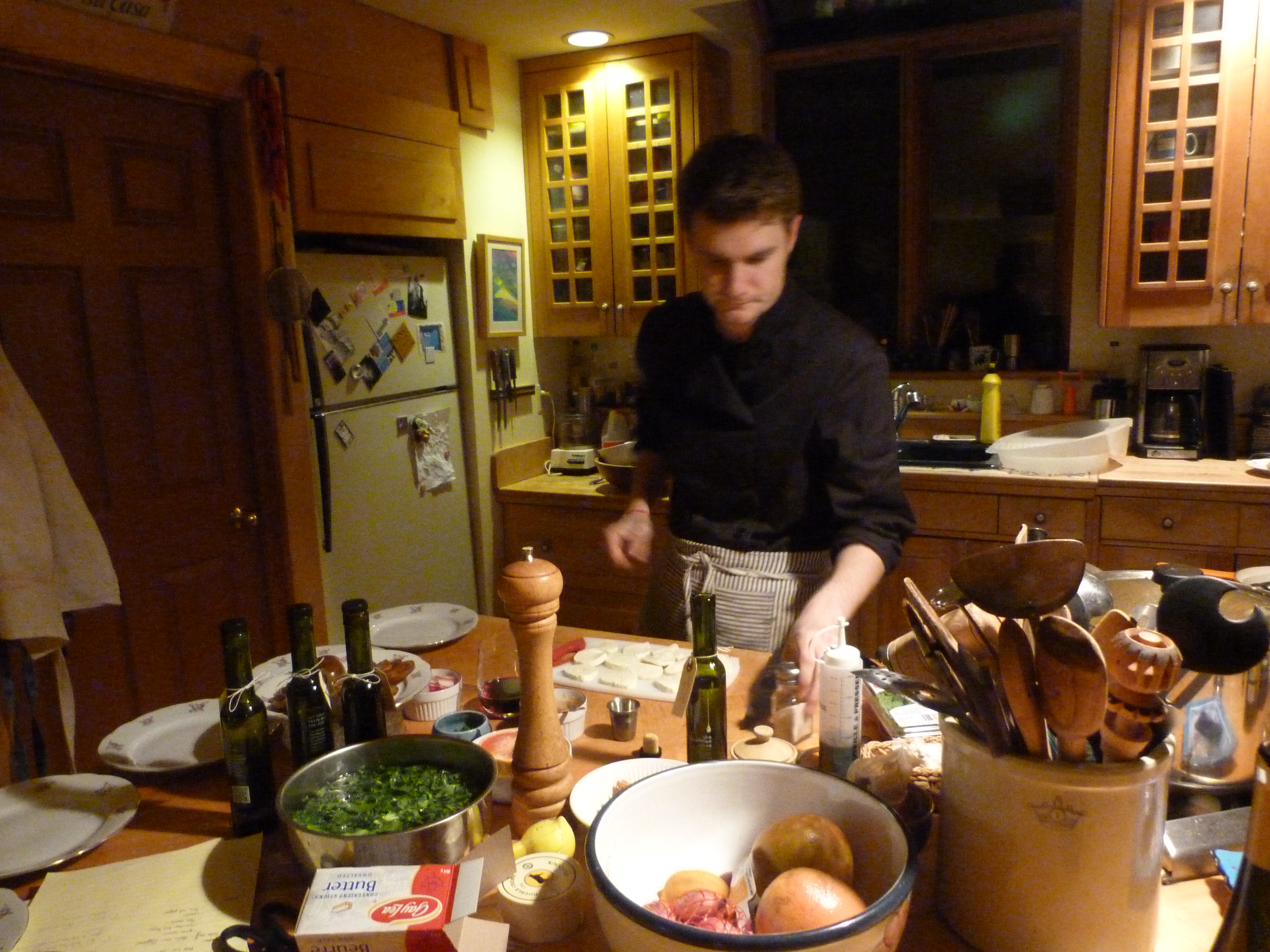
Our kitchen is in the centre of the house, and the cook is at centre stage.

Lewis prepping centre stage

The guests assembled and, after preliminary drinks by the fire, Lewis called us to the table.

#1

A tower of rounds of brown Kumato tomato and mozzarella, with finely sliced basil. Drizzled with blood orange olive oil and chocolate balsamic vinegar.

“A taste of summer,” said Lewis. And it was. The blood orange olive oil and chocolate balsamic elevated it to one of those very special summer days. It told us that this was not going to be an ordinary birthday dinner.

#2

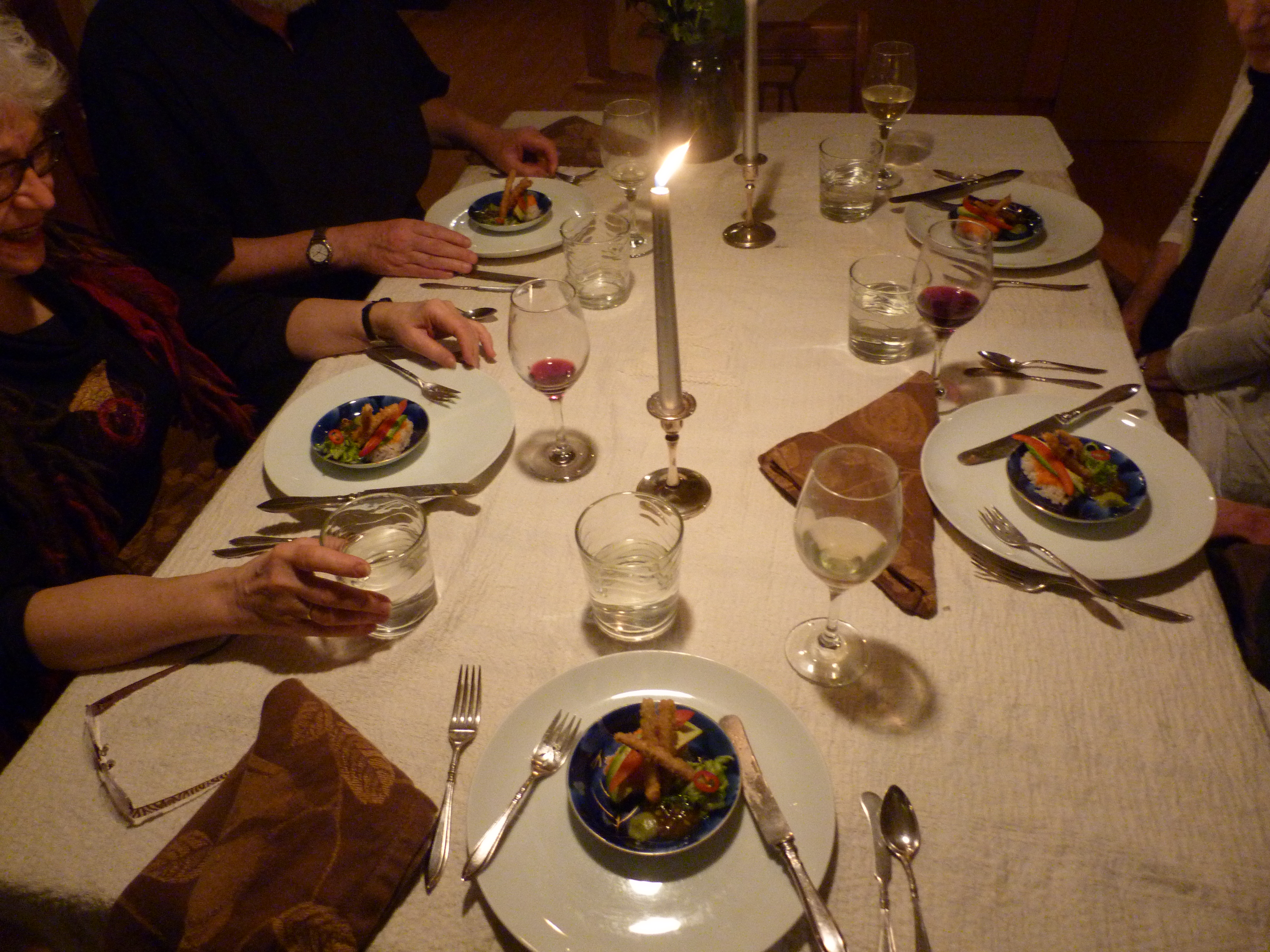
Sushi rice with grated carrot, topped with a slice of avocado, red pepper and spears of tempura aubergine. With dollops of Wasabi, Thai sweet chili garlic sauce, and Cucumber relish with lime, Uma plum vinegar and red jalapeno.

2nd Course. A riot of colour and taste. Sushi rice, carrot, avocado, red pepper, aubergine spears

Presented on a bright blue and gold Japanese plate, the colours bounced energetically. There is a distinct lack of colour in our part of the world in January. The course gave us colour therapy and food therapy. The surprise hit was the cucumber relish, which was salty and tangy, with a zip of hot.

#3

Baby Portobello stuffed with chevrè, cream cheese and roasted garlic. On a bed of arugula with reduced balsamic.

Lewis explained that if you cook chevrè, you need to add cream cheese to it to keep it smooth. Otherwise it goes grainy. This was like a creamy pillow, the sweet roast garlic keeping you alert for more surprises.

#4

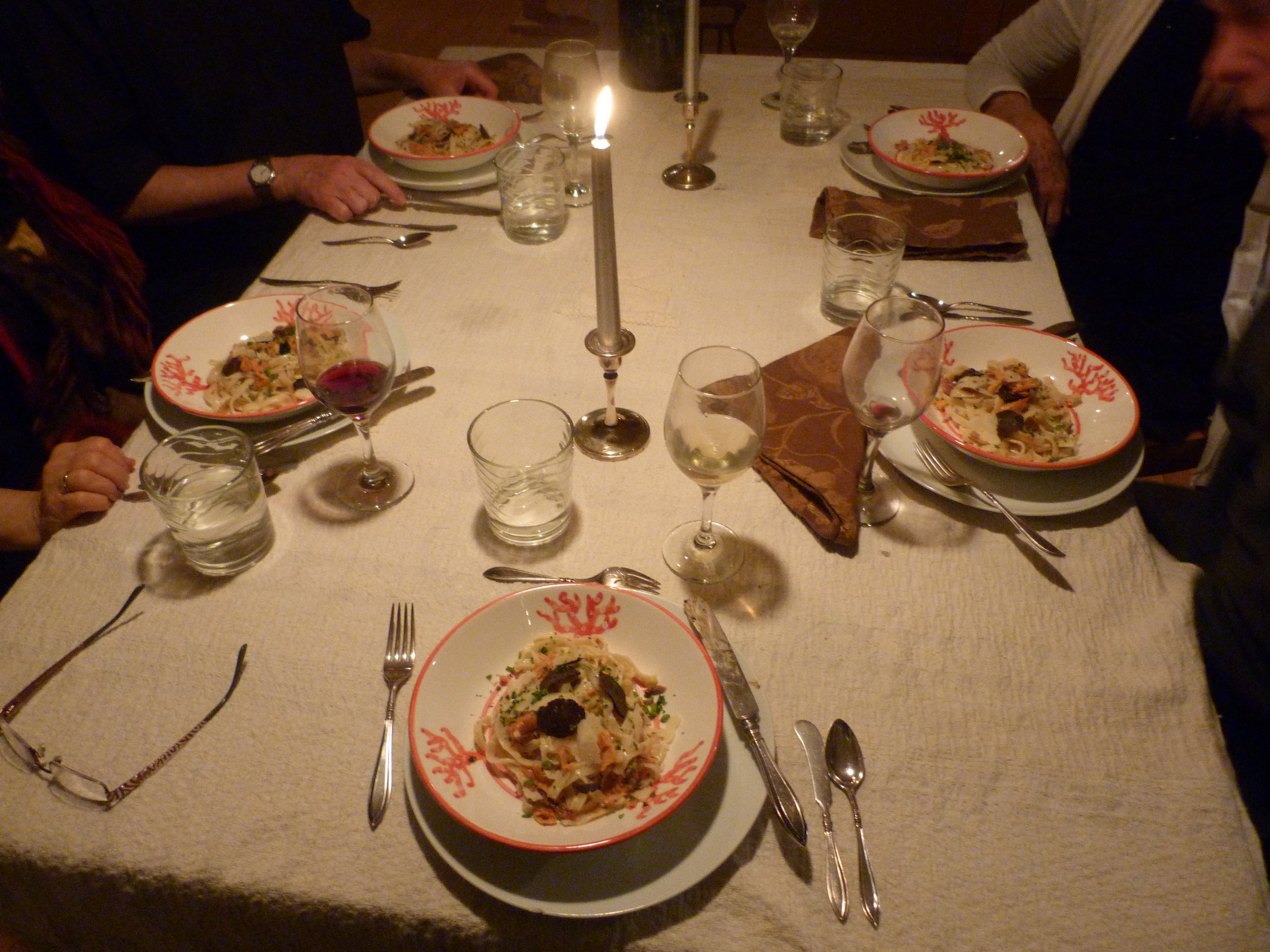
Homemade fettuccini with Oregon smoked salmon, with thin slices of Parma cheese and black truffle

4th Course, pasta, salmon, truffle, parma cheese

There is really nothing like homemade pasta. I had seen Lewis pressing dough through the pasta machine earlier in the day. He hung it out on a horizontally inverted broomstick to dry. I couldn’t wait to see what he was going to do with it. Turns out it was a kind of collaborative offering. Tim had been given a huge piece of smoked salmon from Oregon. Our son Xan had given us a few truffles for Christmas – I’ve never had thinly shaved truffle. Its musty nuttiness perfectly paired with the soft smoke of the salmon. Topped with thinly shaved Parma cheese, and served in pasta bowls from Positano, it was amazing.

#5

Seared filet of sirloin with Tamarillo on a bed of chicory with thinly sliced radish, drizzled with honey and horseradish vinaigrette.

I am a big fan of steak salad. This took it to a whole new level, playing the sweetness of the Tamarillo (like Passion fruit) with the bitter of the chicory and radish. The sweet honey danced with the horseradish, all supporting the succulence of the steak.

#6

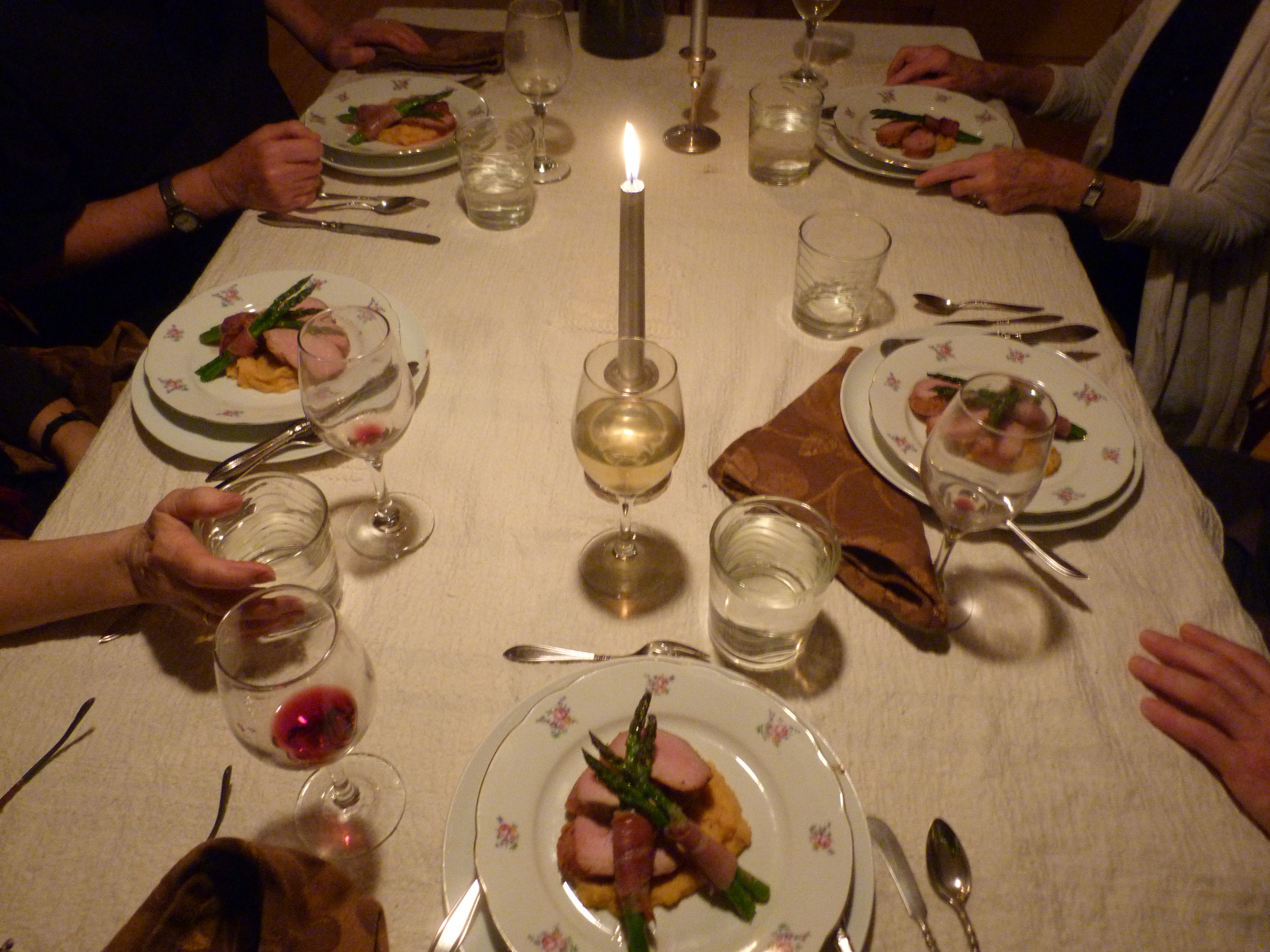
Roast pork tenderloin with grapefruit glaze on a bed of sweet potato puree with curry and chipotle. Served with spears of asparagus wrapped in prosciutto.

6th Course. Sweet potato mash, pork loin roast, asparagus spears with procuitto

It’s amazing what a bit of smoky chipotle can do to a sweet potato mash. It lifts the tuber’s richness to a whole new place. The roast pork was incredibly tender and the combined tastes were buttery and dark. The asparagus counterbalanced with its bright colour, crisp snap, and salty zing of the prosciutto.

#7

Scone with honey glaze served with dollops of pear comfit, peach comfit and Devon cream.

“I don’t bake,” said Lewis, as he put a warm scone in front of each of us. What he meant was that he doesn’t bake cake. The soft, honey-sweet scone was “dessert” – plain and simple after a meal of complexity. The perfect dessert course. The tiny dollop of Devon cream a reminder of the rich green fields of the emerald Isle.

#8

Cheese plate. Featuring herbed Cheveè, St. Agur, Aged Gouda, Double Cream Rondoux, Shropshire Blue

Admittedly, this was probably overkill. But birthdays are about excess. I had asked for a cheese course which, when matched with port, is the best way to end a special meal.

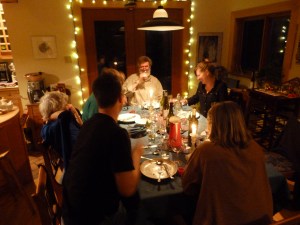
The meal didn’t really end there, though. The food ended, but we sat for many more hours, talking, sharing secrets, hopes and dreams. With my mother and Jack just about to head off to other climes, we talked of travel past, and journeys to come.

Last year, our extraordinary year of travel, was one of the best of my life, and it’s been hard to come down. But with this birthday extravaganza, I realize that while I am not literally on the road any more, I can still go on a journey with travelling companions and cook Lewis as tour guide.

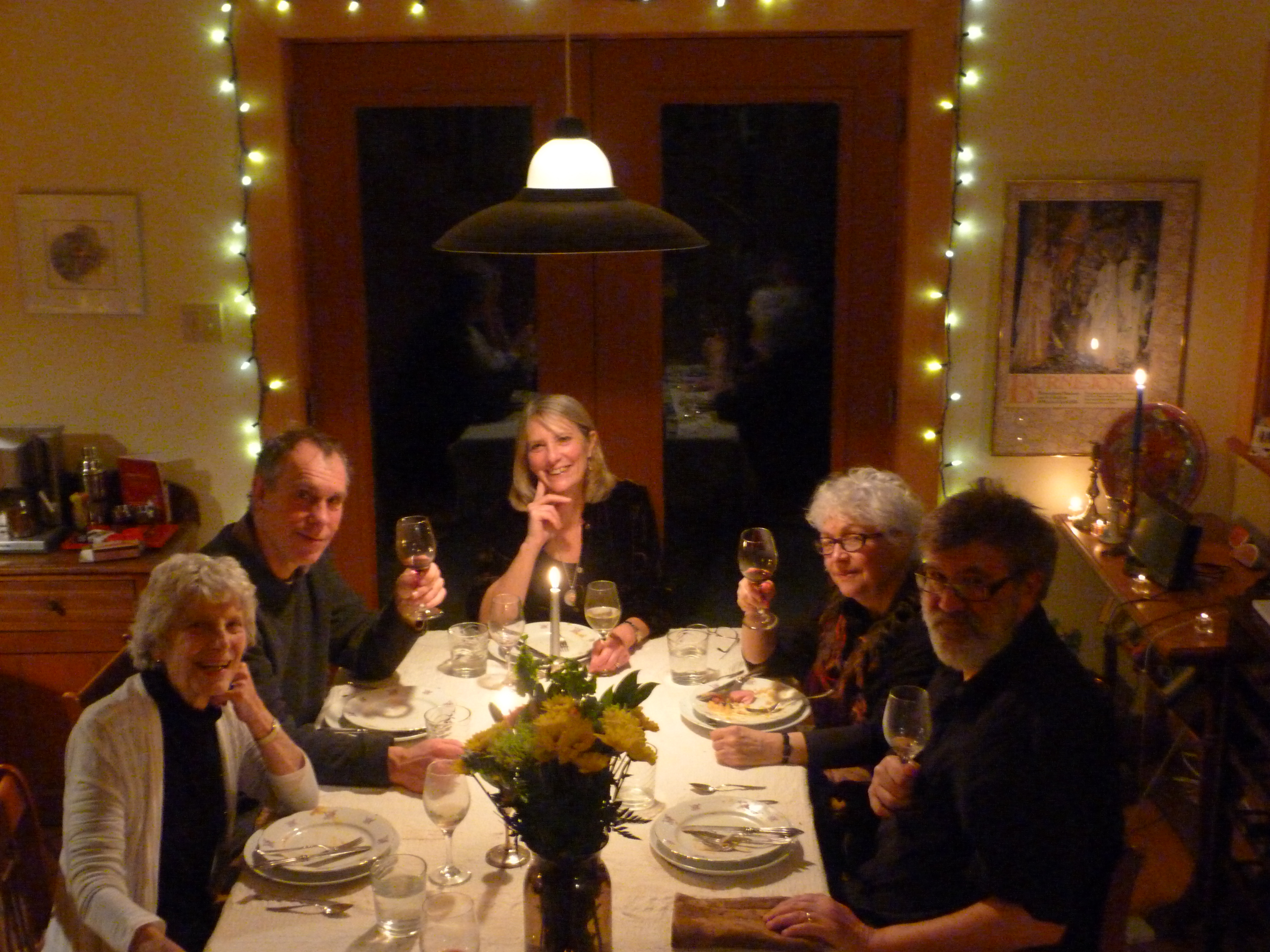
Happy fellow travellers Laurie Lewis, Jack Hurd, Amanda, Jan Irwin, Tim Wynne-Jones

Keeping Christmas

I have often wondered if we moved to the country because of Christmas.

The first winter that we lived in Brooke Valley, we went out into the woods with our three small children and cut down a very scraggly, Charlie Brown-ish tree. The snow came down in lazy, fat flakes as we brought our treasure into the house. We hung soggy mittens by the fire and cupped our hands around steaming mugs of hot chocolate. We were living in the middle of a Christmas card.

Since then, we’ve had as many green Christmases as white, some treacherous with ice, some grey and sodden. Our Christmas trees have always been naturally wild and wispy (“Your tree has great negative space,” said our most optimistic friend). Over the years, Lewis grew to be our primary tree finder and cutter. He took to enhancing nature by drilling holes in the trunk and inserting extra branches to fill out the shape. But whatever the shortcomings of the tree, the house has been filled with Christmas spirit – the smell of good food, the warmth of a fire, and days of laughter.

Last year was our first non-Canadian Christmas. We discovered new foods and new traditions in La Spezia, Italy. Sitting on a sun-drenched patio, drinking Prosecco while munching on delicious Italian cheeses and breads made up for the lack of snow, tree and fireplace. Funny, we didn’t miss any of the usual trappings.

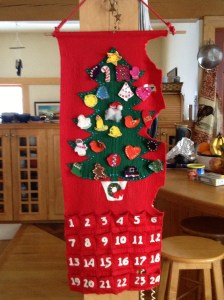
But back home in Canada for Christmas this year, Tim & I dug out ornaments and fell into familiar patterns. Everything seemed all the more special for having been tucked away for 2 years. I carefully unwrapped the special, gold-rimmed Christmas glasses, purchased by my parents in New York over 50 years ago. Tim unrolled the felt advent calendar to find a few additional mouse holes along the edge. (The story of our mouse-chewed advent calendar is one he wrote as “The Mouse in the Manger”, many years ago. Sentiment keeps me from repairing the felt.)

Mouse eaten Advent Calendar

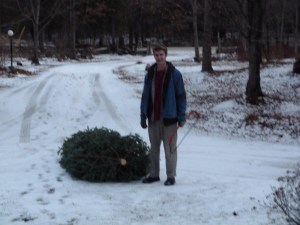
Lewis set off to find a tree. We have 76 acres, and there are a lot to chose from, but finding something that works, a tree that is full and thick, is always a challenge. Determined to bring in something impressive, he felled a 35-foot spruce using only a dull cross cut saw. He cut off the top 10 feet and hefted it home the day before our first big snowfall.

Lewis and this year's tree
Lewis and this year’s tree

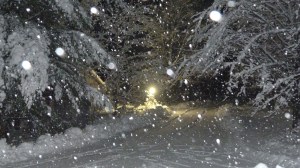
When the plate-sized flakes began to fall, we were surprisingly excited.

Nighttime snowfall in Brooke Valley

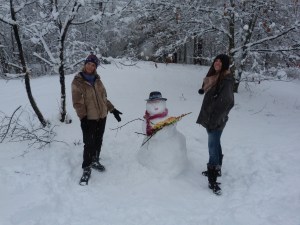
The first snow of the year was heavy and wet – perfect packing snow. Perfect snow lady material.

Amanda, Maddy & the Snow Lady

Over the next few days, the temperature dropped. As it did, the snow quality changed. There were smaller, lighter flakes, not good for packing at all. But we were assured of a white Christmas.

A White Christmas
A White Christmas

The unpredictability of the weather at this time of year can easily destroy festive plans, but luck was with us. Timing was perfect as family and friends arrived in various stages. But the snow accumulation grew and grew until eventually it was impassable. The day after Boxing Day, we abandoned all thoughts of driving and hunkered down to await the eventual arrival of snowplows.

Snowed in
Snowed in

There is a blissful and deep quiet that comes with a large snowfall.

And so we have once again celebrated the season in a Christmas card world. We’ve walked the snowy roads under moonlight and sighted Jupiter, shining brightly. We’ve filled the house with lights and familiar ornaments, and flamed the plum pudding. We’ve watched deer and ravens enjoying bits of composted leftovers. We’ve reveled in memories of Christmases gone by, and toasted absent friends. And we’ve boosted and fortified ourselves to be able to face the long cold winter ahead. As Dickens instructs, we’ll “keep Christmas in our hearts throughout the year”.

A Christmas Carol
A Christmas Carol

Sparkles, Rights and Freedom

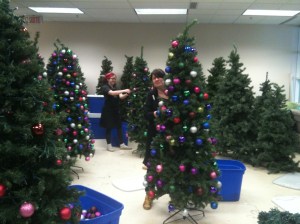
Cara Rowlands and Patrice Forbes in the tree decorating room

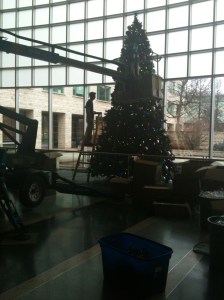
I’ve been spending the last week at the Ottawa City Hall, decorating for The Mayor’s Christmas Party. The Mayor’s Christmas Party is a huge annual event attracting 5000 – 6000 Ottawans to meet Santa, have their faces painted, nibble chocolate treats from Mrs. Claus, make crafts, skate on the rink, roast marshmellows and quaff endless cups of hot chocolate. It’s a big event and my friend Sarah Waghorn of Pukeko Design has the contract to design it.

I know Sarah from Ottawa theatre circles. Designing the Mayor’s Christmas Party is like doing a theatre show except that it’s a huge set filled with audience, workers, performers and thousands of details. We are working to a tight, inflexible deadline and everything has to follow an exact plan. Sarah has hired a team of us, mostly from the theatre community, to decorate and perform elfish duties on the day. Lewis Wynne-Jones has joined us so we really are a family team, a dedicated bunch who take pride in our work. We are under the domain of the Office of Protocol and happy to be their minions for the next seven days.

Who says the city doesn’t support the arts?

We met on the first day in a low section of the stone basement in City Hall. There was a long hallway containing at least 50 boxes of new ornaments for us to sort through. I squatted on the floor so as not to spend the day bent over, wearing a Pukeko apron and bright green gardening gloves. I was soon covered in sparkles from the coloured balls. We became a team immediately recognizable by our sparkly faces, sparkles that were embedded in our skin for the whole of the next week.

Lewis decorating the big tree

Our work hallway led to a tree storage room. A whole room filled with artificial Christmas trees. There was also a secure room accessible only by swipe key filled with all of the kinds of things needed for special events – shelves of Maple syrup (protocol gifts), vases, cake platters, tables cloths, signs, Halloween ornaments, Kahlua (?) and cranberry juice. There were boxes of miniature flags, one box for every country in the world it seems, except for China for which there were 8 boxes. It is in this secure room that we unpacked the special ornaments and exquisite fake cakes for the “set” of Mrs. Claus’ bakery.

We’re a great team and for the first while we swapped theatre gossip and family Christmas stories. We spent two days listening to carols before we gave up trying to connect our tasks to Christmas cheer. By day 3, we were spending hours in silence and small decisions (what colour next?), as we perfected each tree. Over the course of 4 days, we carried, fluffed and decorated 30 trees of varying sizes. My arms became shredded by plastic pine needles as I wove strands of lights and looped 200 coloured balls onto each tree.

After trees, we spent days affixing garland on bannisters, wrapping over 300 boxes for presents, changing the hangers on 50 large ornaments (gold cord is all wrong), changing the orientation of 200 ornaments (they don’t work hanging vertically, they should be horizontal), re-wiring garlands, setting out all of the trees and finding places to plug them in. It was backbreaking and leg exhausting as we crisscrossed the building and work on concrete floors.

Finished Big Tree
Finished Big Tree

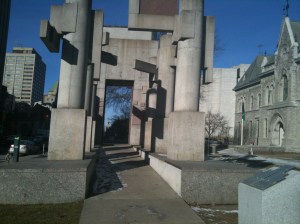
I found myself in a contemplative mood and headed out on a lunch break, to clear my mind in the crisp December air. Beside City Hall is the Canadian Tribute to Human Rights, a monument that I have seen for years but never really looked at. Designed by Montreal artist Melvin Charney, the sculpture incorporates the first sentence of the UN Universal Declaration of Human Rights: “All human beings are born free and equal in dignity and rights – Tous les êtres humains naissent libres et egaux en dignité et en droits.”  The words “Equality”, “Dignity” and “Rights” are repeated in English and French across the top of the monument. These words are then repeated on individual plaques in the 73 languages of Canada’s First Nations.

The Canadian Tribute to Human Rights was inspired by the Polish worker’s solidarity strikes in the 1980’s and is dedicated to the struggle for fundamental human rights and freedoms. Algonquin elder William Commanda ceremonially introduced it in 1990, followed by an official unveiling by the Dalai Lama. Since then, the monument has been the focal point for a wide range of demonstrations drawing awareness to human rights issues.

Canadian Tribute to Human Rights

The monument sits on Algonquin land, as does City Hall. Before returning to work, I took a moment to walk through the simple and unadorned archway, grateful to have the freedom to do so, grateful to be working with a dedicated, sparkly team on a common, happy, goal.

STAYING OFF THE TREADMILL: A Journey continues

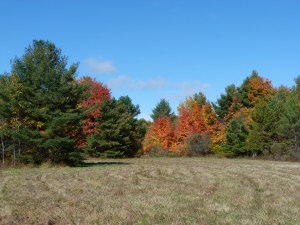
Our "back yard", autumn 2012
Our “back yard”, autumn 2012

I started this blog as a way to record, observe and remember our travels. When Tim & I returned to Canada, I assumed that our travels and adventures were over. There were no journeys and I had nothing to write about. Yes, I was that depressed.

We’ve been back for 6 months now and some of the lessons from the trip are only just sinking in. What I am beginning to understand is that adventures are all in how you look at them. Every day holds something new. I may not be travelling, but I am still on a journey.

I read an article the other day about the number of life forms in 1 cubic foot of earth, and it made me remember that life is infinite in all directions (to quote Freeman Dyson). My geographic scope may be small, but against the microcosm of my day the adventures are still writ large.

But most importantly, we have not stepped back on the treadmill. Tim and I are balancing on a wire without a net. Our lives are irregular, surprising, unsettling, disconcerting, challenging, risky and often exciting. So I think that writing about “Stepping off the Treadmill” is still valid. At the risk of becoming a self-absorbed-navel-gazing blogger, I have decided to continue to write as I did when we were on the road. If it gets too ghastly, you’ll just have to un-follow.

But I hope you’ll travel with me for a while. There’ll be some great recipes, travelogues and photos of slightly less exotic locales. Perhaps we’ll all appreciate our own backyards a bit better.

“…if I ever go looking for my heart’s desire again, I won’t look any further than my own back yard. Because if it isn’t there, I never really lost it to begin with!” 

Dorothy, The Wizard of Oz

Coming Home

Writing a final chapter to my Stepping Off the Treadmill blog has been hard. It is taking time to acclimatize to being back, and I suspect that we will be assimilating the experiences of the last 9 ½ months for a very long time.

What I can say is that it has been wonderful to come back to such an outpouring of love from family and friends. It has been especially important, because my father died 5 days after we landed back in Canada. I was lucky to have been able to see him and talk to him before he died, and to be with my mother at this difficult time. Our homecoming has been bittersweet, and all in all, very discombobulated. So we have been grateful to come back to our welcoming community of friends and family.

Our house, when we finally arrived home, seemed big and quiet. While away, we were always living with other people. We couldn’t help feeling that our house was a bit empty. Even our cat, when she came home, seemed quieter than usual.

Of course there has been a lot of business to attend to. We waded through 9 ½ months of mail. We did our taxes. We made appointments with dentists. We raged at our internet service providers. But we haven’t really unpacked. Every now and then we open up some of the boxes that we packed up 10 months ago, but we are surprisingly uninterested in whatever they contain. I guess we are still travelling light.

People ask if it is wonderful to be home. I can say that we seem to have chosen exactly the right moment – we left a London that had been rainy and cold for weeks and arrived to a sunny Ontario heat wave. We’re enjoying meals on our back deck and finding opportunities for lots of therapeutic gardening. We had a dinner party within days of being home, and loved re-discovering our own pots and pans. We’ve been to a vernissage at our local gallery in Perth, the Riverguild, where we saw a wonderful exhibit of new watercolours by our friend Franc van Oort. And we went to an opening of a play at the Great Canadian Theatre Company in Ottawa where we schmoozed with the cream of the Ottawa theatre community. Tim is heavily into a second draft of a new book, and I am chomping at the bit to get back to my writing as well.

But I am at my happiest when I can talk about where we have been, who we have met, and what we have done since August 1, 2011. Every time we tell a story from the trip, it becomes more real. Tim and I look at each other and say, “this actually happened.”

I know that our future will contain more adventures. But for now, we have stories to tell, narratives to create, and meaning to discover. To those of you who have shared directly in the adventure – thank you for making it so extraordinary. You have, each of you, changed our lives and made them fundamentally better. To those who have been armchair travellers – thank you for coming along. You too, by being observers and commentators, are part of the experience.

“My personal conviction is that we are not changed by our experiences as common wisdom has it. What changes us are the stories we tell about our experiences. Until we have re-formed our lives into story-structured words we cannot find and contemplate the meaning of our lived experiences. Till then they remain in the realm of beastly knowledge. Only by turning the raw material of life into story – by putting it into a pattern of words we call narrative – can beastly knowledge be creatively transformed and given meaning. It is storying that changes us, not events.” –Aidan Chambers

Home in Brooke Valley

Saying Goodbye, part two

Saying goodbye to London means saying goodbye to our favourite dance company, Tempered Body Dance Theatre. We were able to go to one last “Cha-Cha-Cha”, an evening of scratch performances by three companies, including Tempered Body, at Chisenhale Dance Studio. We got to see more of Tempered Body’s new piece “Stand-By”, an exploration of physical and emotional dependency.

Tempered Body Dance Theatre in rehearsal

“As active or non-active feminists of the 21st Century we are taught to be independent. Dependence on other people is accepted as weak and lacking courage. Same too with dependence on substances. Are we really saying these two categories of dependence are similarly devastating? When is independence destructive?” Maddy Wynne-Jones on “Stand-By”

The show premiers in June, after we’ve gone. It has been a privilege to watch these dancers at work, a thrill to watch Maddy creating this piece.

Saying goodbye to London means saying goodbye to the West End, so we decided to splurge on a couple of shows. Trying to decide which shows to go to has been hard. As Sondheim fanatics, Sweeney Todd with Michael Ball and Imelda Staunton was an obvious choice – I had seen the original production on Broadway and this was every bit as wonderful. Michael Ball was a sympathetic and socially conscious Sweeney. Imelda Staunton was funny, sexy and brilliant.

Globe to Globe, part of the Shakespeare World Festival, was also something we wanted to see. 40 plays from 40 countries. We could only see one – the Palestinian production of Richard 2. Funny, angry, provocative. We met up with fellow Ottawan Jessica Ruano after the show, stopping for a drink to talk about art, politics and how to produce theatre that matters. It was hard to walk away from the other 39 shows…

The musical hit of the West End is Matilda, winner of 7 Olivier Awards. It is riotously outrageous, with the wickedly funny Bertie Carvel as Miss Trunchbull. I am in the business of working with children on stage, and I know what they are capable of. But I was floored by these young performers. A fabulous show, and an amazing adaptation of the book by Roald Dahl. Jaw dropping design. Rude, irreverent. What’s not to love about a show that has the biggest belch that ever existed?

We also went to listen to the brilliant playwright Michael Frayn who has two shows on in London: “Noises Off”, the toast of the town, which we saw (Celia Imrie as Dotty!) and could hardly breathe for laughing; and “Here”, which we didn’t get to see, much to our regret. He is also launching a new book, Skios, a blend of farce, satire and romance. Is there anyone who has such a variety of approaches in their work?

We made a dash out this week to see the amazing Bauhaus show at the Barbican. The Bauhaus school was a 14-year exploration of the arts that that changed the way we see things. When it was closed down by the Nazis, proponents of the movement fled to other countries and their design ideas spread throughout the world. I had been very affected by Bauhaus design and philosophy in my youth and it was incredibly inspiring to see the work assembled and thoughtfully chronicled.

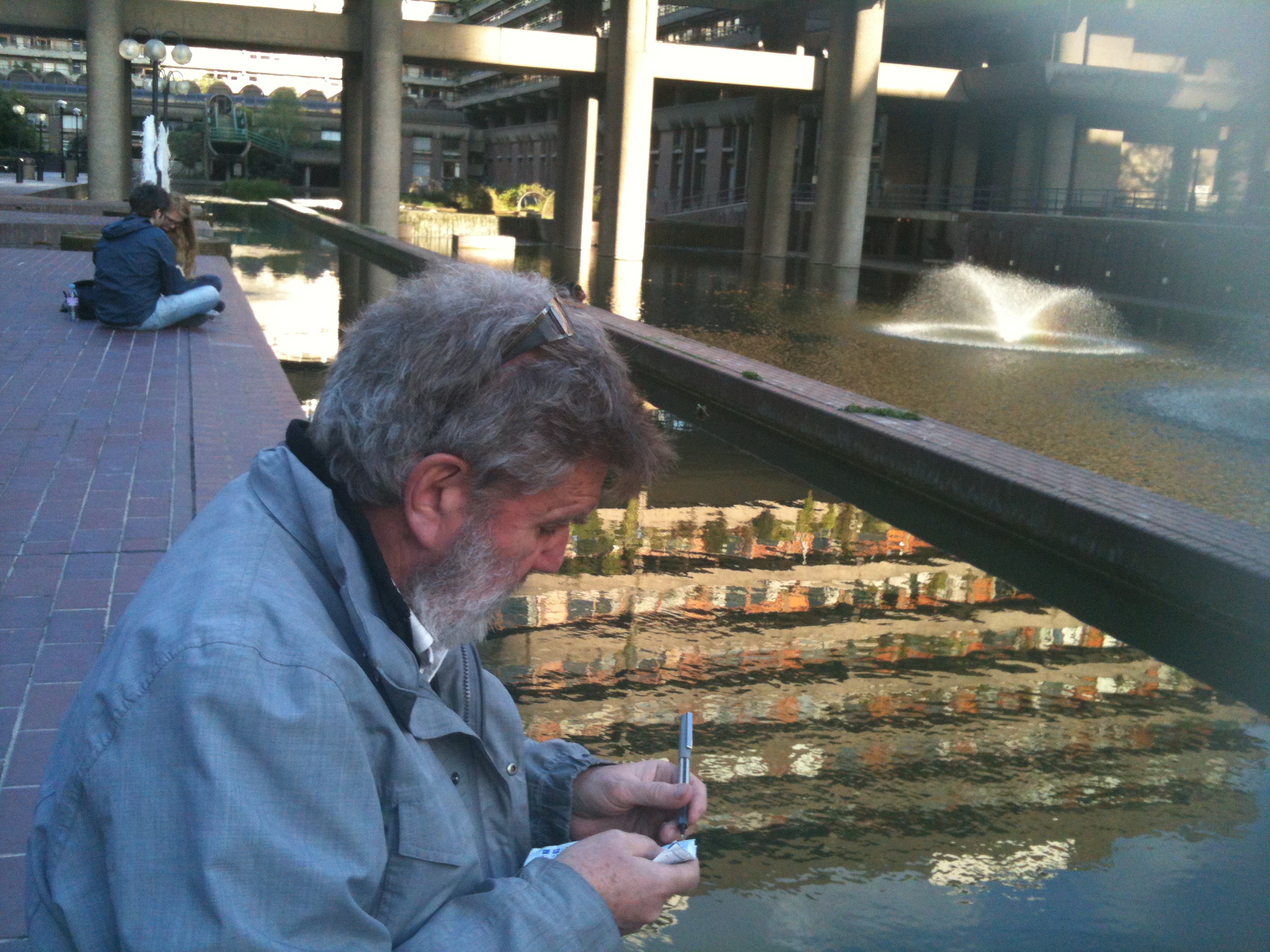
Tim making notes at the Barbican

But the hardest thing right now is having to say good bye to family. It means tears and laughter, and last suppers. This week, Maddy made an amazing dinner for Peta, Bryan, Jo and Amanda. It was her “thank you” to them for putting us up (putting up with us). She created a meal of 4 courses, each dedicated to a country that we had stayed in for at least a week.

Starters (Spain) we had: Spanish Chorizo sausage sautéed with butter beans and shrimp on a bed of lettuce.

Mains (England): Individual Beef Wellingtons, garlic mash, roasted squash, green beans with almonds, mushrooms sauce and gravy sauce.

Dessert (France): Prune Clafoutis with custard.

Afters (Italy): Italian dessert wine (brought from our time in La Spezia) with cardamom biscotti.

It was an amazing feast, a fabulous and noisy night with family. It is impossible to think that we will be leaving, heartbreaking to try and say goodbye.

Maddy, Amanda, Jo, Bryan, Peta, Amanda & Tim at the farewell feast

Saying Goodbye, Part one

Right now, the harshest lesson for Tim and I to learn is that there is never enough time. There will always be more to discover. So much we haven’t seen. Around every corner, a new world waiting. Posters in the tube announcing new shows opening the day after we leave. Family events we’ll miss. We have to let it go. We have to learn how to say goodbye. Goodbye to London. Goodbye to family.

We are filling our last days in London with adventures and one of our most unique experiences was Tim’s raising of the Tower Bridge.

Tim was given one of the best gifts ever. He was given the opportunity to be the man behind the mechanism, the man to move 2,500 tons of steel to allow a boat to pass unimpeded down the Thames.

Tim looking at Tower Bridge

The Bridge, built in 1886, originally worked with a marvelous Victorian hydraulic system to lift the bascules (from the French word for “see-saw”, the moveable section of the bridge road) so that ships could pass through to the Port of London. Ships today still have a right of way along the river and, with 24 hours notice, the Bridge must be raised to allow passage through. On a rainy London morning in early May, Tim was the man who made that happen.

In the control centre for Tower Bridge

Tim met with the Chief Bridge Technician in the control tower of the Tower Bridge. The mechanization is electronic nowadays. But although the system has been modernized, the actual workings of the bridge remain the same. Huge amounts of steel are see-sawed up and down in a very short amount of time. A computer screen shows the inner workings. Buttons must be pushed in sequence. A level must be carefully pulled.

40,000 people cross Tower Bridge every day. This means that the first thing that must happen, when raising the bridge, is to stop the traffic. A push of a button, a communication with the outside patrol, and cars, pedestrians and cyclists came to a halt. Needless to say, this gave Tim an incredible sense of power.

The barriers in place, the traffic stopped, Tim pulls the lever to raise the bascules to 40°.

Tim pulls the lever

It is as though the city holds its breath. The bridge rises and the computer screen shows Tim the changing angle of the bascules. 40° achieved, the awaiting boat glides through.

The bridge raised

When the boat clears the bridge the bascules are lowered, everything is locked back in place and the cyclists race to get back on the road before the barriers are removed. Tim’s moment of glory is over, but he is presented with a certificate to mark the occasion and we are taken on a tour of the mechanisms far below the surface of the water. A secret world.

Tim gets his certificate of Bridge Raising

“The Thames is liquid history”, said John Burns in 1929. A few days later, we decided to go out and explore more of the history of the Thames and took a commuter boat down the river to Greenwich, another on our list of World Heritage Sites.

Greenwich is renowned for its maritime history. The newly restored Cutty Sark has just been “launched” in the dry dock beside the main pier. Built in 1869, the ship was one of the last tea clippers built and one of the fastest ships of her time.

The Cutty Sark, resting on its glass house. A picture not just for a blended Scotch.

It now sits atop a glass museum, held suspended so that you can walk beneath it. On a grey day, the ship seems full of the history of the sea.

The Maritime Museum is also in Greenwich, as is the oldest Royal Park in London. Greenwich Park was created in 1433 and is home to the Royal Observatory, which is where Greenwich Mean Time is centered.

The Royal Observatory

John Flamsteed was the first Royal Astronomer, by decree of King Charles 2, and his rooms and observation room are still in tact. The Octagon Room, where the regularity of the Earth’s rotation was tested, was designed by Inigo Jones.

The Octagon Room

The hill that the Observatory sits on affords a spectacular view of London, the O2 arena, and the new the Olympic Equestrian Events arena.

The view from Observatory Hill

The dark skies cleared (a bit — it has been the coldest and darkest May here since 1698!), as we ruminated on the foundation of time in place. By measuring longitude, we measure the earth’s rotation and use this to fix our concept of time. I stood on the meridian line, one foot officially in the west, one foot officially in the east. But our sense of time is elastic. Ten months ago, the time of our journey seemed endless. Now all we can say is, where has the time gone?

One foot in the west, one foot in the east