Observing the Artistic Process

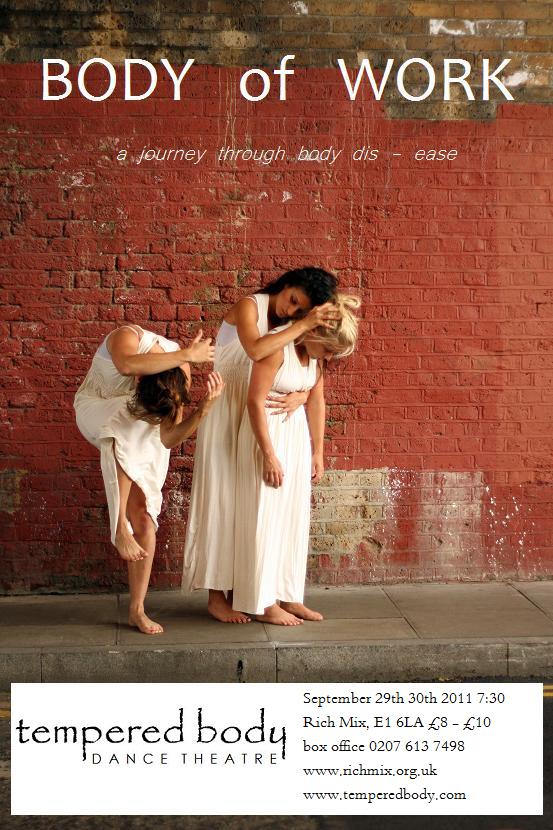
On Thursday, we went to watch a Tempered Body Dance Theatre rehearsal. The company was rehearsing in a studio at the Chisenhale Dance Space, in East London, where our daughter Maddy is artist in residence. As we approached the converted warehouse we heard two people standing out on the third floor fire escape, rehearsing a Shakespearean scene. Clearly we were in the right part of town.

Tempered Body Dance Theatre is getting ready for their most ambitious show yet. “Body of Work” is a full-length piece that explores our complex relationship to our bodies, “the global epidemic of body unease”. On the day that we arrive, Maddy is putting the finishing touches onto one of the last sections of the piece. She explains that it is a technical, not a creative rehearsal. Which is why it is alright for us to watch.

There are 5 dancers in the piece, all of very different body types and energies. They are working through a complex part that involves a fluctuation between syncopated rhythms and tight unison precision. I love watching a dancer’s concentration. They use a shorthand of sounds to describe movements. A dancer listens and watches the choreographer’s direction and puts it into their body as they hear/see the movement. Weight shifts, muscle movements and small breath changes reflect their inner kinetic world, as they process the information.

Dancers are always working. Like an actor in a corner going over lines, they are always marking through passages to get the piece into their body memory. When they take a coffee break, they keep stretching and stay focused.

I find myself wishing that I could bring acting students into this room. It is all about the work. The concentration is thick. The honesty unhindered.

There was a marvelous moment after they had been working on a number of small bits. Maddy said she wanted to try the whole section, and did everyone remember it? There was a deep, concentrated silence for almost a full 2 minutes.  Each dancer went through the passage in place, small gestures, spine lifts and falls, no one saying a word and then they all simultaneously looked up and were ready to go. They danced the section full out, to music. The emotions opened. We cried.

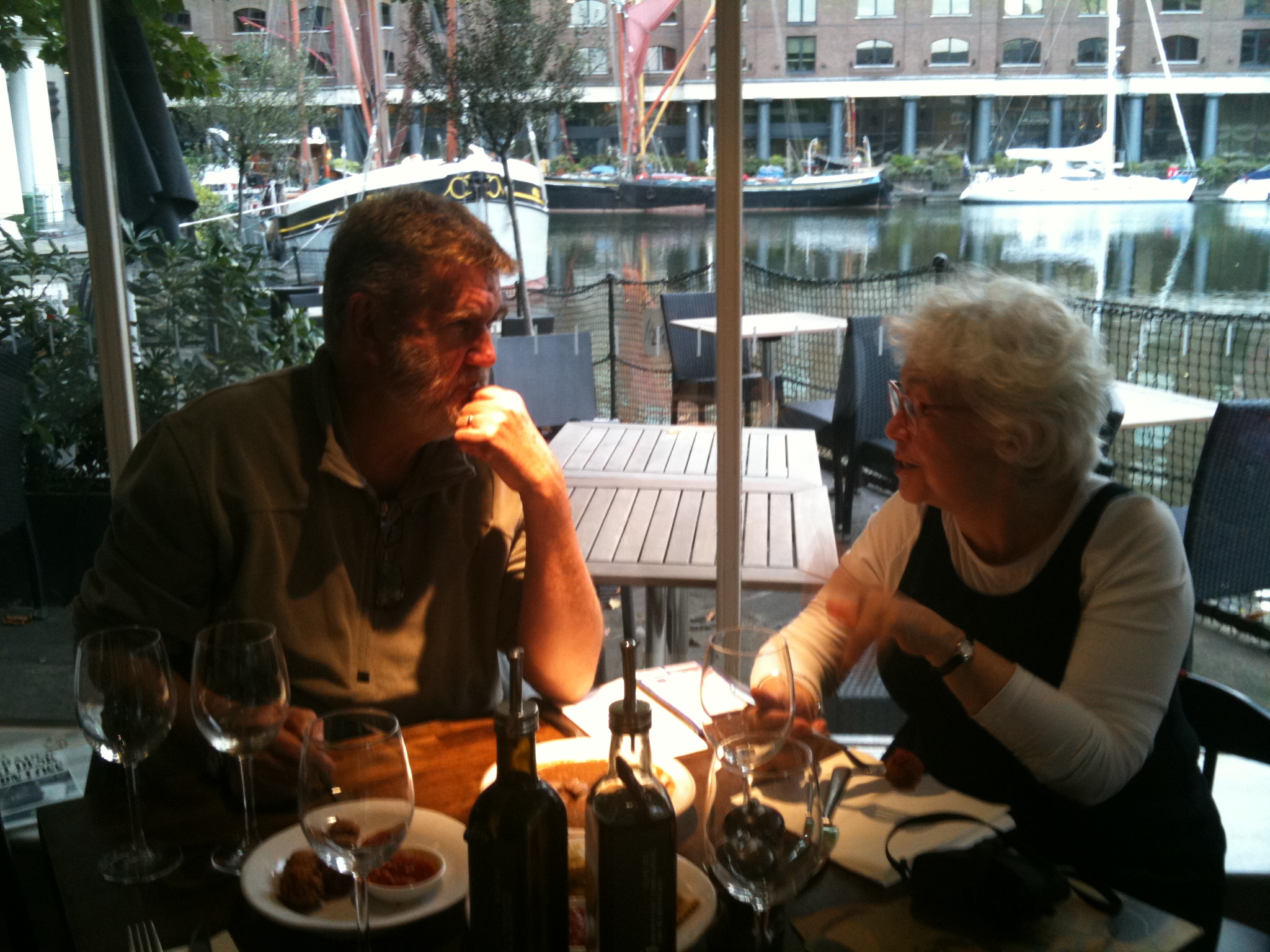
After the rehearsal, and a good post mortem over coffee, we head out for curry in Brick Lane. A lovely late afternoon meal, we stuffed ourselves with flavours and smells and watched the Brick Lane world go by. Dance is art, food is art.

One of the purposes of this trip is to allow ourselves to be surprised. While we were at Chisenhale, we found a flyer for “The Proms”. “The Proms” is the World’s largest classical music festival, with 74 nights of performances in Royal Albert Hall, as well as performances in the parks, events, lectures and activities. Tim looked at that evening’s schedule. Prom 72 was an evening of Sibelius, Tchaikovsky, Rachmaninoff and Ravel. Favourite pieces, played by the Philadelphia Orchestra conducted by Charles Dutoit. We called for tickets and got 2 that were just turned in. It was a sold-out evening.

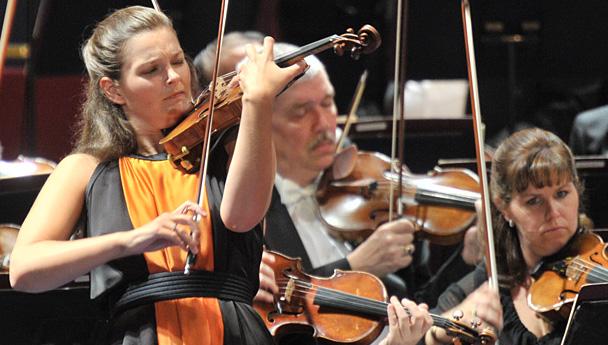
Royal Albert Hall is huge and gorgeous. And filled with thousands of people. I felt overwhelmed by the fact that all of these people were here to see the symphony not because it was good for them, but because they love it. And they come night after night. This is a crowd of young and old, wealthy bankers and poor students. Aside from the thousands in the stalls and boxes, there are hundreds of people who pay the low rate of £5 for standing room. However, I am grateful for the great seats we have, as I am sure I wouldn’t see a thing in that press of people in front of the stage. And seeing is as important as hearing. The fabulous horn section, the 6 percussionists! But the violin soloist for the Tchaikovsky was the star of the night.

Janine Jansen is a gorgeous, tall woman who plays with a fire that focused the hearts of the thousands in Royal Albert Hall that night. Never in my life have I enjoyed orchestral music this much. The piece was originally deemed unplayable. Written by Tchaikovsky for his male lover at a time when this was definitely not acceptable, the concerto is filled with a mixture of pain, desire and joy. Janine Jansen seemed possessed by the spirit of Tchaikovsky and channeled passion through her body and into the violin. She and the music were physically one and the same. It was miraculous.

It was a day of body, mind and heart.

Meaning and Nonsense in the British Library

The British Library is a beautiful modern building, an oasis in the city. The minute I turned the corner into the courtyard, the decibel level dropped. I went  immediately into the Sir John Ritblat Gallery to look at the permanent collection. It has been a while since I have had time to gaze lovingly at manuscripts. Another lifetime ago. I stared at pen strokes, brush strokes and tiny lines of decorations, and noticed that my hand was tracing the lines in the air. Books of Hours, with their gorgeous illuminations and flat quadrata feet. They mesmerize me, because they require so much pen manipulation. The Codex Sinaiticus, with its exquisitie and pure of Greek letters, written in the 4th century. Lettering that reflects purity of thought.

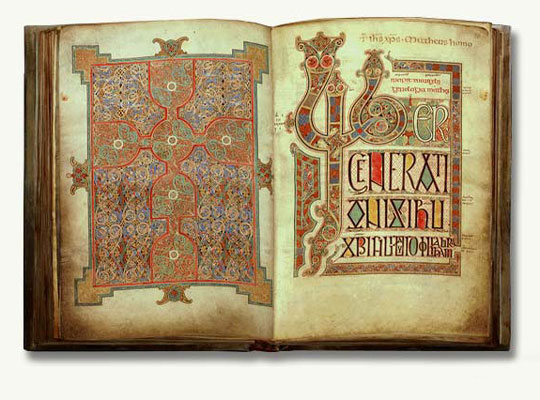
I came around a corner and was suddenly face to face with The Lindesfarne Gospels, one of the most important manuscripts ever created and one that I spent a great deal of time studying in my former life. It was like coming across an old friend in London.

The Lindesfarne Gospels. An old friend

I spent a good long time visiting. We had a lot of catching up to do.

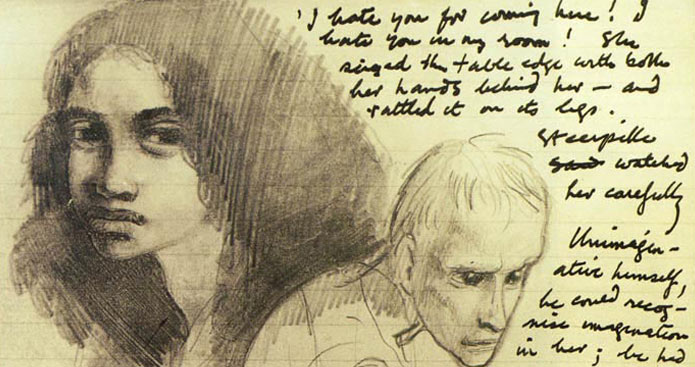
After a reflective and solitary cup of tea, I went perusing. There were a couple of fabulous special exhibits. One was the Library’s holdings of manuscripts by the writer and artist, Mervyn Peake. Anyone who has read the Gormanghast Trilogy knows that it is filled with elaborate, eccentric characters. It is Gothic and weird and wonderful. Peake was a visual artist as well as a writer, and his manuscripts are filled with sketches of characters and settings for the books.

Peake's Gormenghast characters

Peake served in the Second World War. He was one of the first to go into the liberated concentration camp at Belsen, and he was tremendously affected by the experience. He wrote a poem called, “That Last Weak Cough”, and later, when the poem was published with his illustrations, he wrote about the importance of art to humanity.

“… (art) matters fundamentally … if man matters, then the highest flights of his mind and imagination matter. His wonder, his vitality matters. It gives the lie to the nihilists who cry “Woe” in the streets. For art is the voice of man, naked, militant and unashamed.” Mervyn Peake 1949
It never ceases to amaze me that if I open myself to ideas and experiences I find something that speaks to the questions I am asking. The combination of the Peake exhibit and the Manuscripts helped to remind me that every age, every generation, has a voice. Just because I am not “current” doesn’t mean I don’t have a perspective that is meaningful.

And then Peake spoke to me about nonsense:

“Nonsense can be gentle or riotous. It can clank like stones in the empty buckets of fatuity. It can take you by the hand and lead you nowhere. It’s magic – for to explain it, were that possible, would be to kill it. It swims, plunges, cavorts, and rises in its own element. It’s a favourable fowl. For non – sense is not the opposite of good sense. That would be “Bad Sense”. It’s something quite apart – and isn’t the opposite of anything. It’s far more rare.” Mervyn Peake.

So this is my watchword for the next little while, as I negotiate London. To plunge and cavort with a bit of nonsense, remembering that nonsense isn’t just silliness. It can be just as poignant and nostalgic and emotional as any meaningful artistic response.

SENSITIVE, SELDOM AND SAD By Mervyn Peake

Sensitive, Seldom and Sad are we,

As we wend our way to the sneezing sea,

With our hampers full of thistles and fronds

To plant round the edge of the dab-fish ponds;

Oh, so Sensitive, Seldom and Sad –

Oh, so Seldom and Sad.

In the shambling shades of the shelving shore,

We will sing us a song of the Long Before,

And light a red fire and warm our paws

For it’s chilly, it is, on the Desperate shores,

For those who are Sensitive, Seldom and Sad,

For those who are Seldom and Sad.

Goodbye to France, Hello to England

On our second to last night in France, Suzanne and Christian invited us over for dinner and I asked if I could make the dessert. I wanted to make a Tarte aux Mourres. Picking blackberries brings out an almost religious feeling in me. The deep purple, sun-warmed berries, bloated with juice, line all of the road verges. Such beauty. I love picking them with the sun at my back, hearing, just on the other side of the verge, the gentle snorting and snuffling of a large Charolaise cow.

However, there is a bit of treachery there. A bit of pain is part of the process. The thorns are sharp, and the roadsides are plagued with stinging nettles. These seem to thrive right beside the best berries. Tim says the experience is an important moral lesson –in order to receive this extraordinary gift, you will have to undergo a bit of pain. But it will be worth it in the end. And it is. We are just at the end of the blackberry season now, but Tim and I were still able to pick over a quart of blackberries.

To make the tarte, I approximated a recipe from memory that leaves most of the fruit uncooked – it is a great pie if you want your fruit to still taste really fresh. The recipe I have included works for any fresh fruit.

The meal at Suzanne & Christian’s was a true French feast – an extraordinary 5-course, 5-bottle meal. We began with some true Champagne, lovely tiny bubbles that whetted our appetites as we nibbled a local pastry and tiny tomatoes from Suzanne’s garden. Next was “Vin des Fossiles” from Saone-et-Loire. It is made from a grape I have never heard of – Auxerrois – and was crisp and light and lovely with our tomato tarte appetizer.  The François Pinte Aloxe-Corton was a gorgeous and rich Pinot to go with our thin Entrecot steaks. We fried these on a griddle at the table, with some shallots. Suzanne made a beautiful dish of aubergines, potatoes, tomatoes and Parmesan cheese. The whole mixture brought out the pepper taste of the Pinot. For the cheese course, Bryan chose a special wine from his part of Christian’s wine cellar – a Givry Premiere Cru 2000. The way that this wine went with the cheese course is impossible for me to describe. The cheeses themselves were correctly eaten in an order – the soft Brie, followed by the dry chèvre and completed with the creamy St. Agur blue. My Tarte aux Mourres was about 3” high, solid with the blackberries that we had picked that morning. A great success, it went perfectly with the Cremant de Bourgogne, 2008, Veuve Ambal.

Christian admits that they don’t eat in this true French fashion very often! We felt very spoiled.

The next morning I had one final class with Suzanne. I am deeply grateful for the friendship that Suzanne and Christian have shown me. After the class they offered me an aperitif, a Vin Doux Naturel. It is a Vallée du Rhône Grenache that is 16% proof, a slightly sweet, thick wine, served chilled. Not sweet and viscous like an ice wine, but very smooth and very earthy. They gave me olives and dried pork from the same region as the wine to taste as well. Just a little nibble to share before I left. I don’t think I have advanced much with my French, but there are so many wonderful things I have learned!

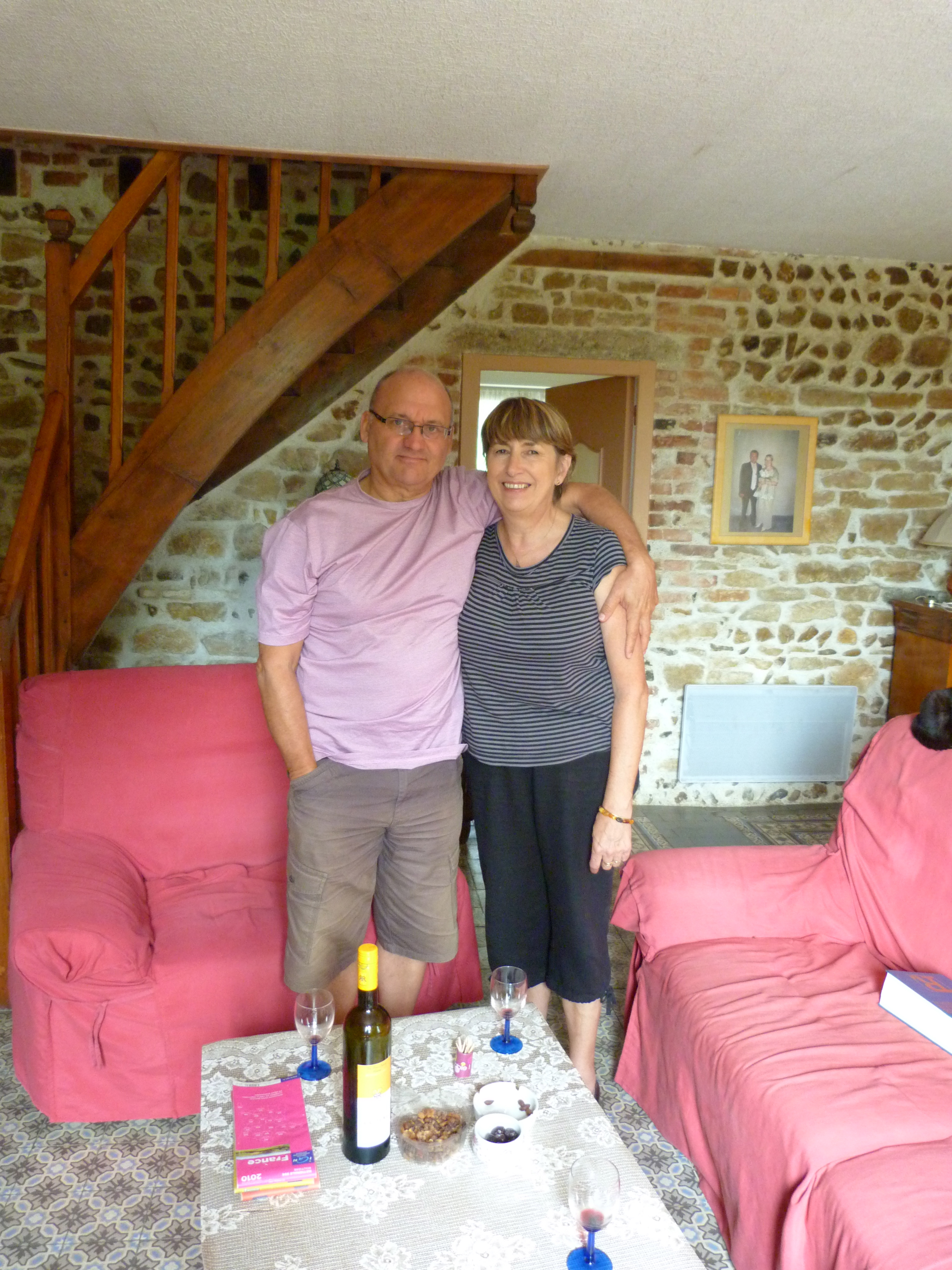
Christian and Suzanne and our aperitif

It was a day of lasts. I walked up the hill past the chickens, past Claudette and Robert’s to a last lunch on the patio. Bryan’s special Frissé salad. It is a simple, filling country salad of Frissé lettuce, Lardons (bits of pork), Comte cheese, and topped with a fried egg. Bryan keeps a big jar of home made salad dressing in the cupboard to pour generously over the top of anything and everything. Of course you sop up all of the salad dressing with fresh baguette, and wash it all down with local Sauvignon Blanc.  How can we possibly leave this heaven?

But we do, on an early morning TGV (Tran Grand Vitesse), from Le Cruesot to Lille, Lille to London. Our gorgeous Maddy is at St. Pancras station to meet us, to guide us and help heft suitcases to Surbiton, Bryan and Peta’s wonderful London home. With loving family around, we get down to the business of making the transition to a new phase of the adventure.

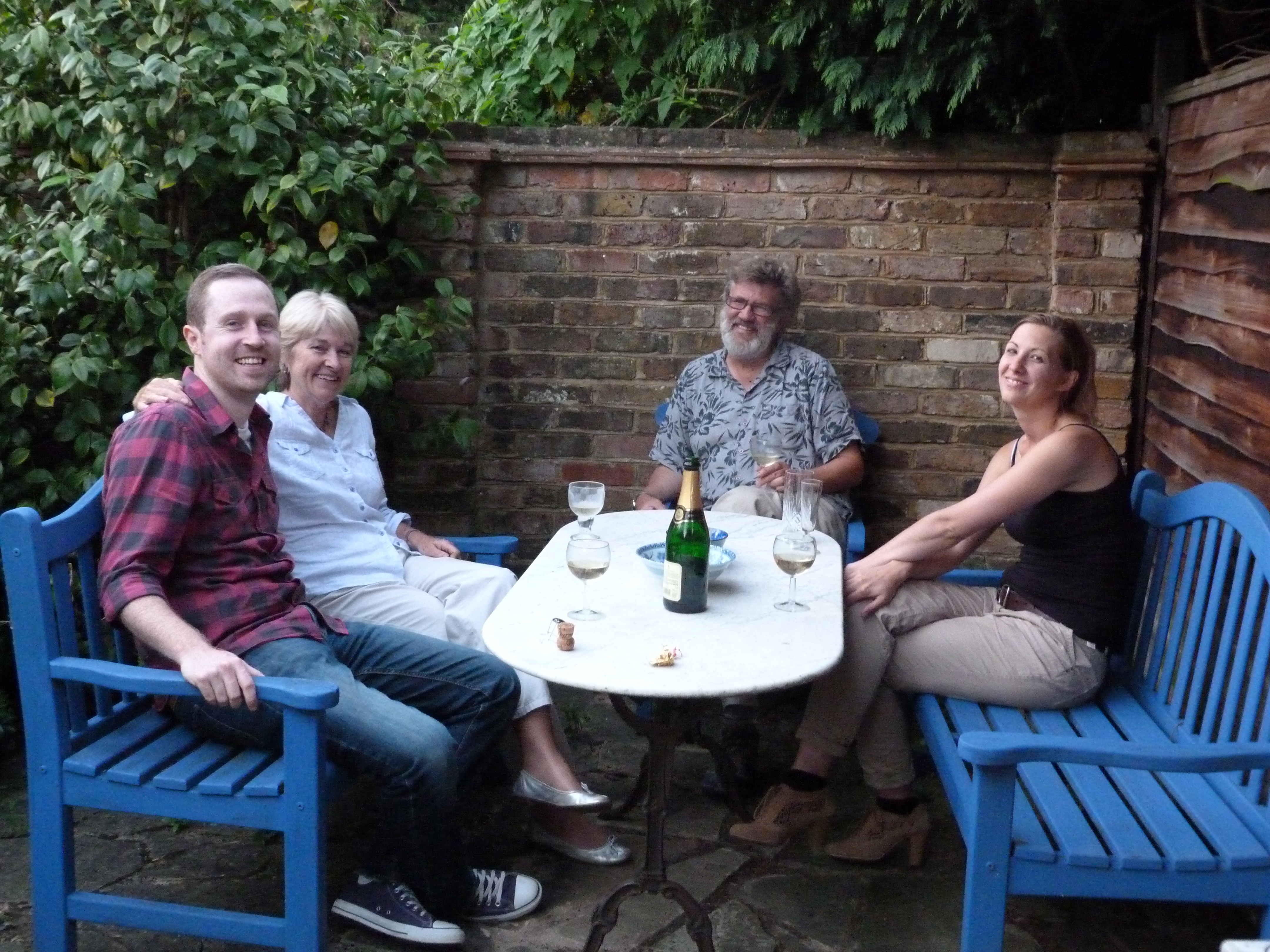
Jo, Peta, Tim & Maddy in the garden at Tolworth

Starting, of course, with a large, welcoming, meal.

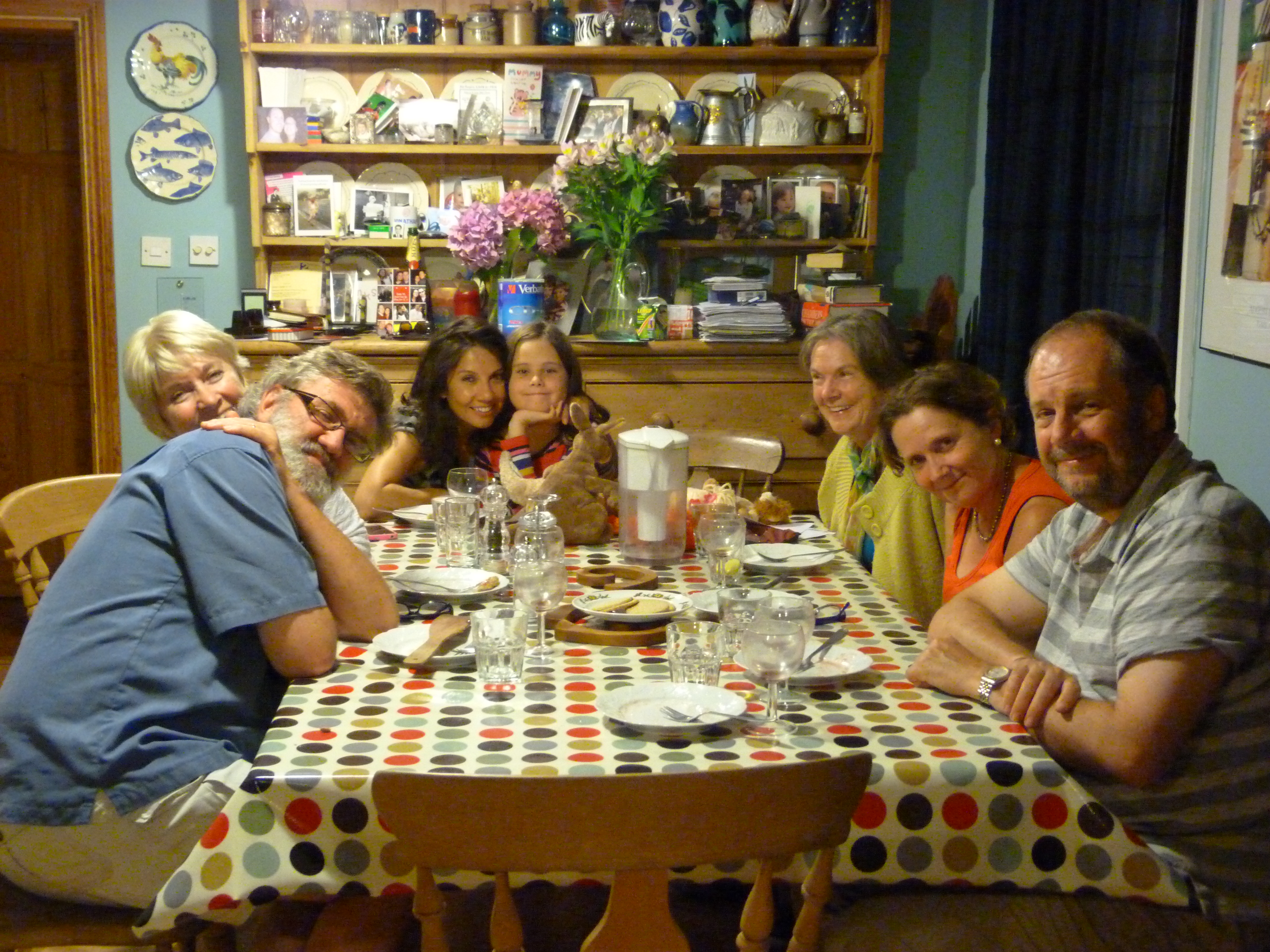
Family dinner at Tolworth. The eating continues!

Parlez-vous Français?

Suzanne has been very patient with me. Since our return from Switzerland, I have been walking down the hill to her house in the mornings, to try and grapple with passé compose, impératif, et futur.

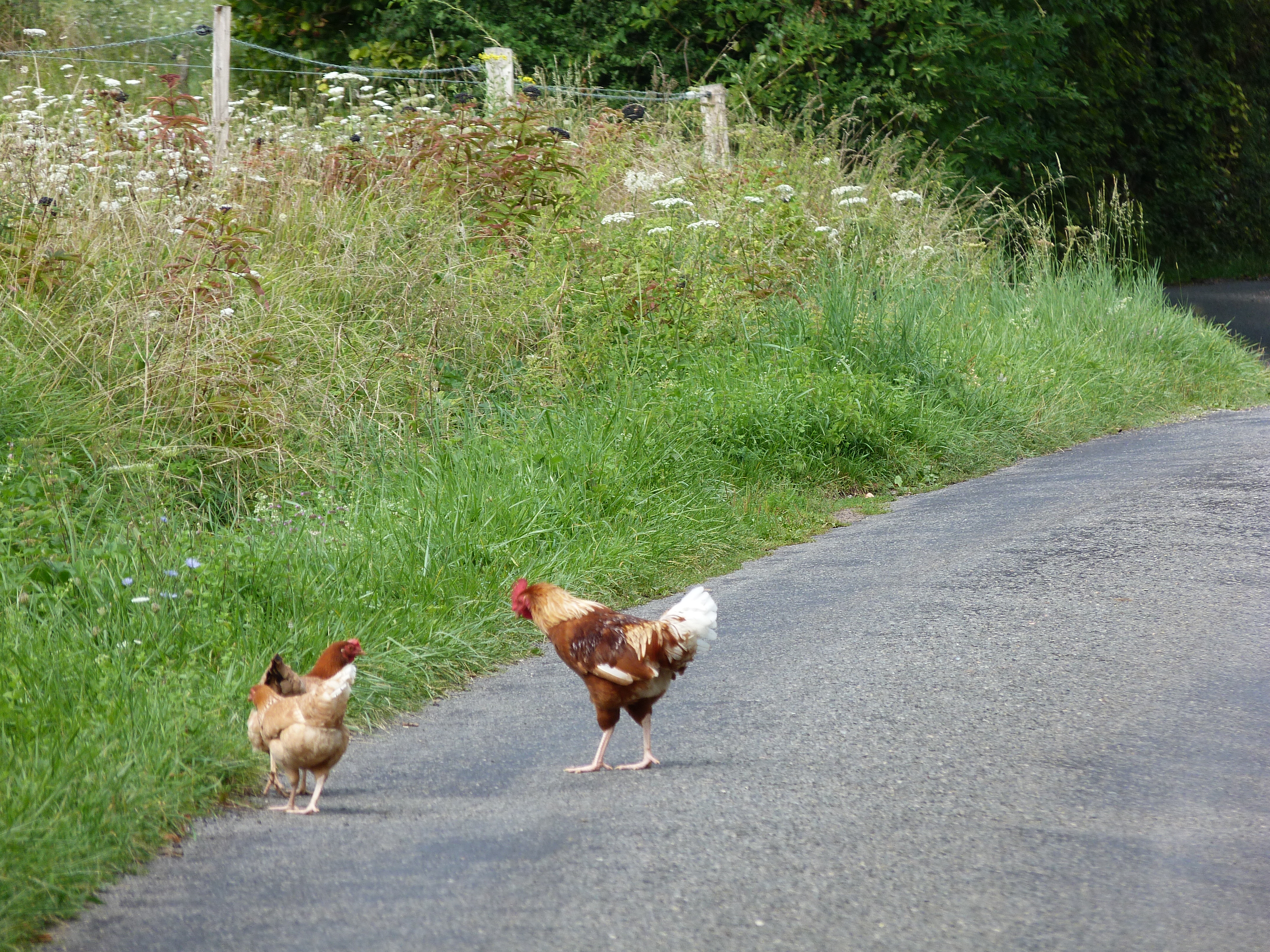
The Road to Suzanne's. The biggest predator for the chickens is the occasional car

Because I did not have English grammar drilled into me at school, French has always been a nightmare. My great frustration is that I have no subtlety. No kindness. « Would you mind looking over my homework » becomes “Look at my homework”, which is abrasive of course. So we work on:« Est-ce que tu pourrais regarder mon devoirs ? » and I vow to try and remember (je me souviens) the verb pouvoir in its many forms. To find a kinder, gentler approach.

Suzanne has been giving me exercises from books for children. I know that her grandson Baptiste finds this hilarious. Baptiste is 7, with a lovely toothless grin. He tells me that he gets about 2 Euros for each tooth from la Petite Souris (the equivalent of the tooth fairy). On Monday he gave me a recipe for chocolate cookies. Not sure why, but perhaps he wanted me to improve upon the brownies I had made for the family (see « Une opération bilingue »). The recipe was from a children’s magazine, similar to “Highlight Magazine” in the US, with fun drawings of child chefs carrying mounds of chocolate, and smashing it with a hammer.

The gauntlet is thrown, and I decide to make a batch of cookies before heading over. This means I begin my day clattering around in the kitchen at 8:00 a.m. Measurements for recipes in the UK and Europe are all in weights. Unfortunately, there is not a set of kitchen scales here, and, being used to volume measurements, my approximations are pretty wonky. As I start to melt the butter, I can’t believe how good it smells. It is local, of course, and fills the kitchen with an irresistible, sweet, warmth. And the eggs! The yolks are orange.

I chop up the hunks of chocolate (I’ve been told that no one here uses chocolate chips, and I can see why – chocolate chunks are so much better!) The recipe is dead simple and scrumptious. I’ve included an English translation for “Baptiste’s Chocolate Chunk Cookies”, but you’ll have to figure out the weight measurements if that is the way you cook. That’s a translation I can’t do.

The lesson with Suzanne goes well, perhaps because of the cookies which are much appreciated by Baptiste and his sister. We get into a conversation about school lunches and Suzanne tells me that schools in France have cafeterias so that children can have a proper, 3-course lunch. She bemoans the fact that lunch is only an hour long for the children. Not nearly a long enough lunch for a Frenchman! When I try to explain that Canadian children have about 25 minutes, sitting at their desks, to eat whatever they have brought from home, she is justifiably appalled. She tells me that when she was at school, they regularly had 5-course lunches. And that for holiday lunches she was given Crémant! (Champagne). Have I mentioned that this is a civilized country?

On my way back from Suzanne’s Claudette stops me to give me 4 lovely courgettes. Claudette always greets me with a smile that melts my heart. I tell her that the lettuce that she gave me the day before (she calls it “salade”) became a wonderful Nicoise salad, and she and Robert are excited that I am able to rhyme off the ingredients in French. Les olives, les haricots verts, le thon, les pommes de terre, les tomates. That, at least, is easy from years of reading bilingual labels in Canada.

We manage a conversation about gardens, and I try to explain how my garden has very little earth, mostly rock, but that I live in a beautiful wood. She has barbed wire around her garden to protect it from les vaches. I try to explain the problem of deer, for which I have no word, and she teaches me “le cerf” et “la biche”. She speaks beautifully, explains how hard the garden and farm work is, how large the house is with just the two of them in it now. But as we look over the fields beyond, and breathe in the deep quiet of the countryside, we both know that we are standing in a privileged place. She asks if I will be back again and all I can say is j’espère. I hope.

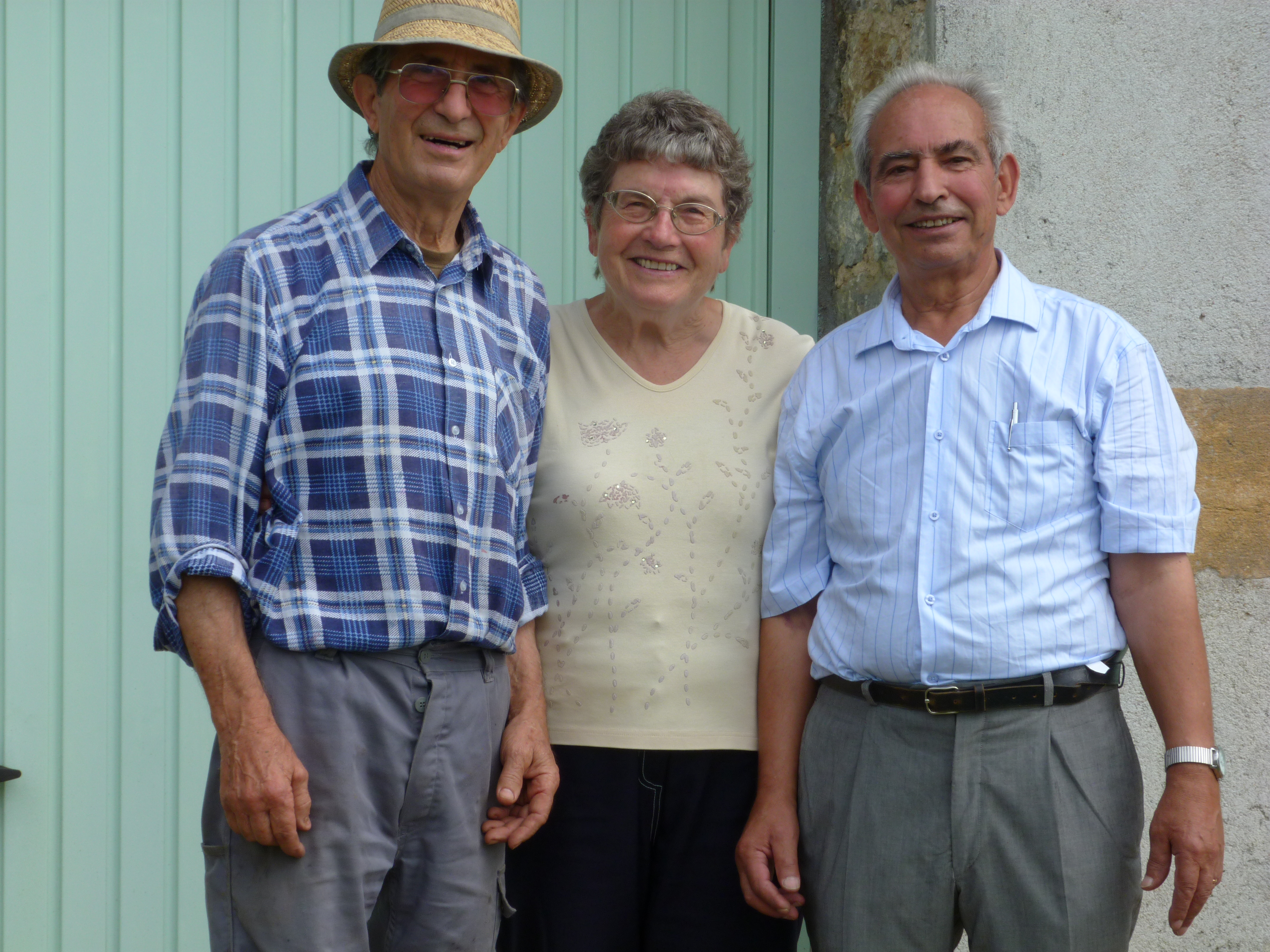
Robert, Claudette and Albertino (from Portugal, he helps on the farm)

Travelling with the Band

The whole purpose of going to Switzerland was to see Josh, aka The JW Jones Band, play at the Sierre Blues Festival. The band was on tour and had already played at a festival in Tenero, Switzerland and La Cheze, France. We were catching up with them for their last gig of the tour.

Josh’s tour manager booked the band into a B & B hotel outside of Sierre for their day off. We arranged to stay in the same place and meet up at some point in the late afternoon or evening – depending on all of our travel arrangements.

Tim & I arrived in Sierre knowing that we would have to take a bus or a Funicular to the hotel, but not really understanding that the hotel was in an entirely different town halfway up the mountain. In fact, we were staying in Crans Montana, a resort community dedicated to golf in the summer, skiing in the winter. The bus ride to Crans Montana was a harrowing experience to say the least – barreling along narrow switch back roads with a bus driver that clearly knew no fear. We zipped up the mountain, to 1500 meters above the Rhône River valley.

But once we got there we were rewarded with an amazing mountain experience.

The view from our window to the Alps beyond

Our room at the B & B overlooked the Alps, the silhouette of the Matterhorn in the distance, the air mountain fresh. The town itself is predictably oriented toward luxury. Stores that specialize in anti-aging products. A caviar bar. A cigar store. Again, we are out of our financial league.

Josh and the band arrived, and we got to meet Ella, Josh’s new lady love who is bravely travelling with the boys through France and Switzerland.

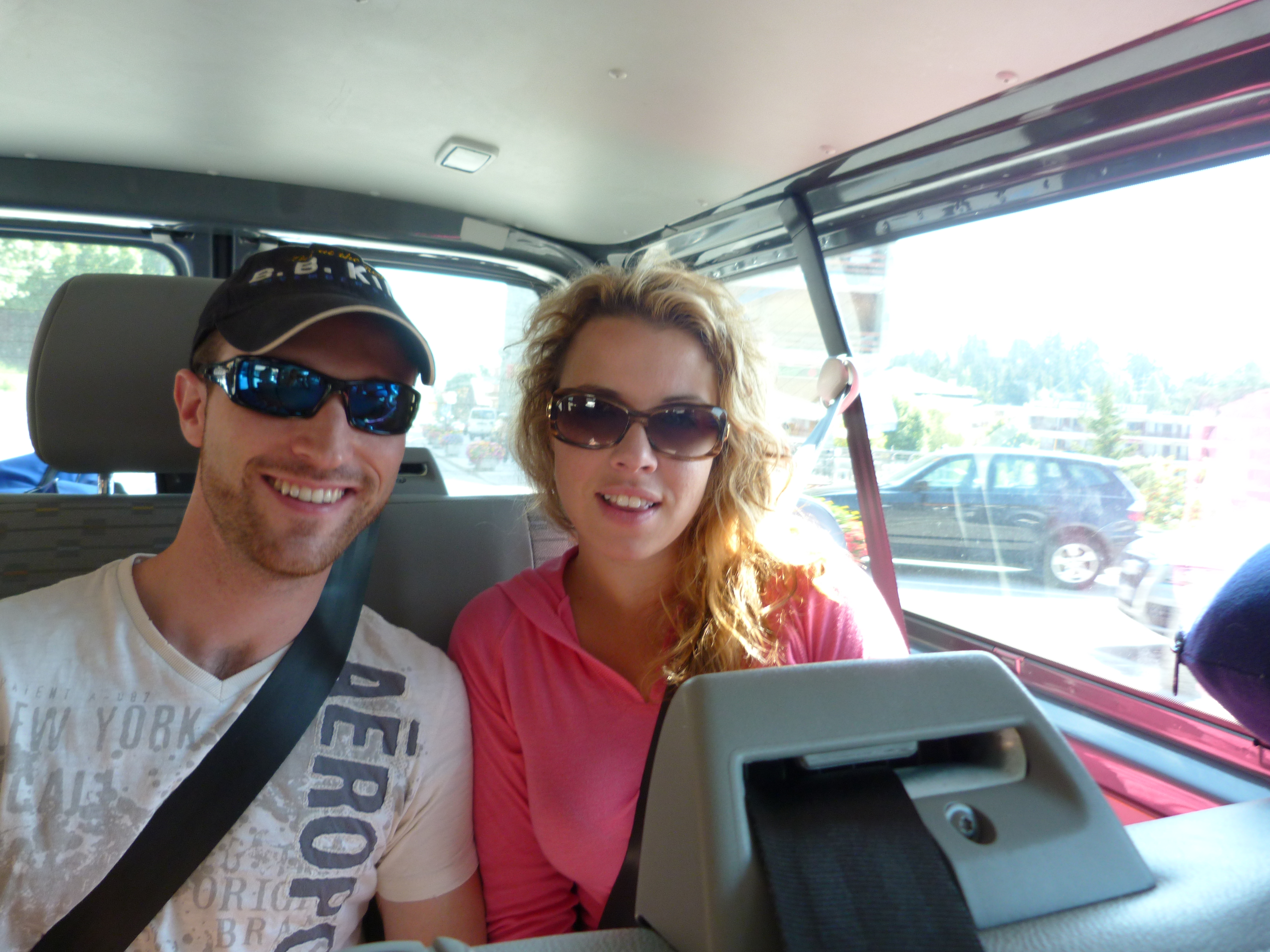
Josh & Ella in the van

Josh, Jeff & Jessie make up the JW Jones Band and they had a tour manager and driver, Dina, from Germany who looked after everything. But even Dina couldn’t find us a cheap place to eat dinner in this town. We settled on a Thai restaurant, of all things, but the food was surprisingly good, especially after we’ve had long days on the road.

Breakfast at the B & B was like nothing I have ever encountered. The menu is clearly focused on healthy life styles, but that doesn’t take into account the outrageous over eating that one does at a B & B. Here is what we encountered:

  • At least a dozen bowls with different nuts, seeds, dried fruits
  • 6 different home made jams
  • A selection of honeys and molasses
  • Bowls of grains. This was mystifying at first. Dried wheat, barley, rye, oats and many others that I couldn’t identify nor translate. Next to the grains was a small hand grinder. After watching someone else, I saw that you put a spoonful of your selection into the grinder and grind it into a bowl. Low and behold you’ve made your own cereal for breakfast.
  • 6 different fresh breads, fresh croissants
  • fresh fruit as well as fresh oranges and grapefruits and a juicer to make your own juice
  • a plate of cheeses and dried meats, salamis, prosciutto etc.
  • several types of yogurts
  • juices, health drinks and many things I couldn’t identify
  • at least a dozen different loose teas, all in small boxes, perfectly labeled
  • bacon, scrambled egg, and a lovely hot bowl that held what looked like sand in which sat perfect boiled eggs.

This is what I can remember. There was much more. Plus a archetypical lovely “Swiss Lass” who brought us coffee and hot water in a beautiful silver service. Needless to say we took our time. We also took the advice of the band and surreptitiously made sandwiches for later.

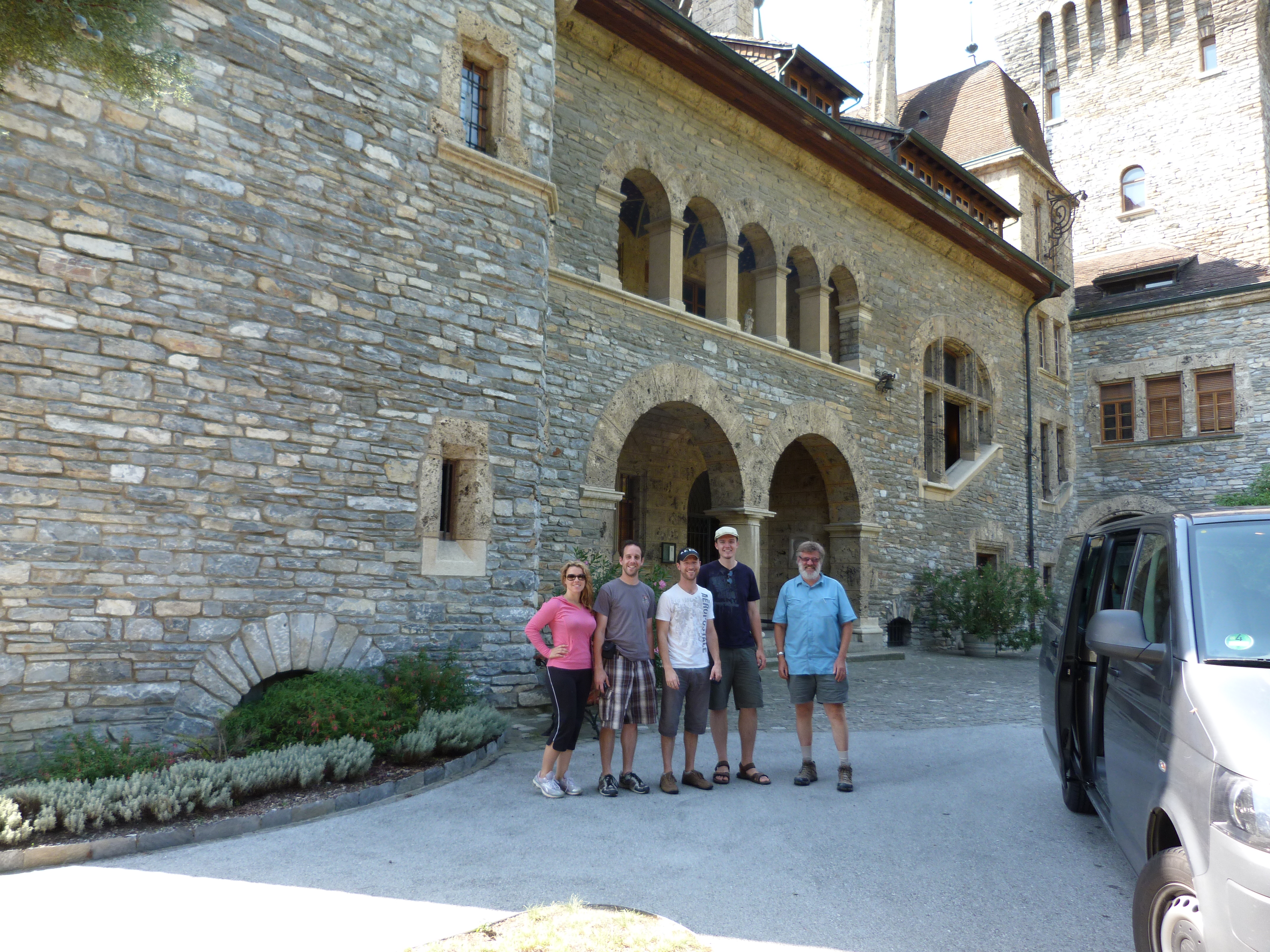
The band & Tim outside Château Mercier

After breakfast, the band checked out to move to their Sierre location. The Festival organizers had put them up in the plush Château Mercier. It is very posh, set amongst vineyards yet only a 5-minute walk from downtown Sierre. The band settled into their new digs while Tim & I went off to explore town. It is charming, with everyone full of smiles and good humour. There are 3 official languages in Switzerland: French, Swiss-German, and Italian. We muddled along in our ghastly French and were embarrassed to hear the ease with which people switched in and out of all of the languages.

We met up with the band again at their sound check.

The view from the stage, during sound check

Josh was really impressed with the professionalism of the Sierre team. He was happy with the equipment that they’d brought in and everything went quickly and efficiently. It was blazingly hot, so we made a plan to go to explore the lake. However, we ended up getting separated and Tim & I decided that we couldn’t walk to the lake in the heat. The band was in their car, somewhere, but we took a different route and ended up at the Reiner Marie Rilke museum. This would have been more exciting if some of the information at the museum had been in English. We deciphered what we could, absorbed the photos and moved on.

Josh’s band was scheduled to start at 11:30 p.m. and our special bus back up the mountain to Crans Montana was to leave Sierre at 2:00 a.m. Tim needed to get a bit of a break from the heat, from the walking, so he headed back to the B & B, taking the Funicular (which was a whole other kind of terror, he tells me later) while I kicked around town a bit.

One of the other bands that we met at the Château Mercier was “Davina and the Vagabonds”, from Minneapolis. They were playing a gig at 5:00 at the Château de Villa, on the outskirts of town but still only a 10 minute walk.

At Château de Villa, Davina and the Vagabonds are under the tent

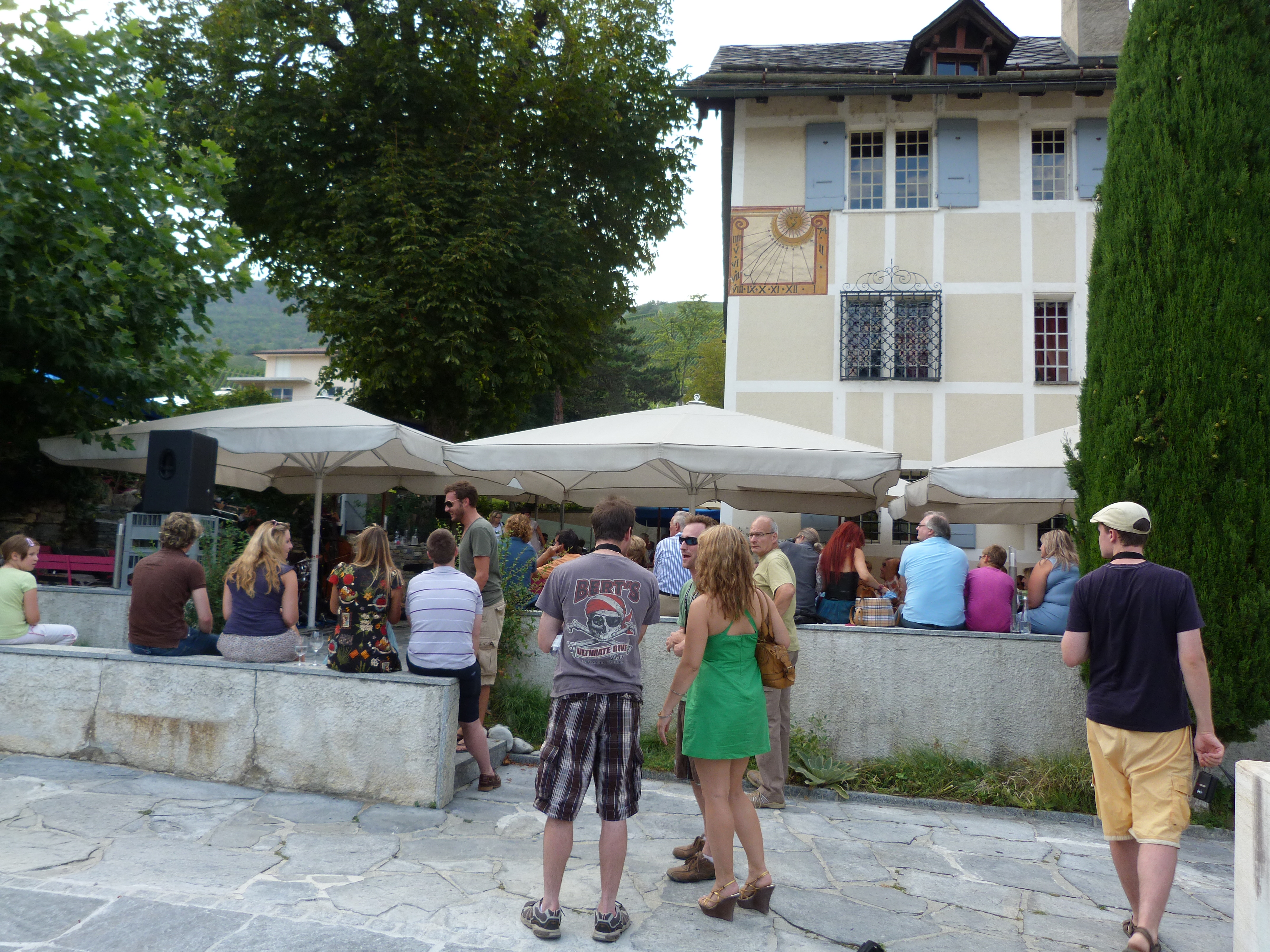
Built in the 16th century, the Château houses a “cave”, L’Oenothèque de Villa, with a selection of wines from over 100 local vintners. There is also a museum dedicated to wine and the wine growers of the region. I looked wistfully at the walking map that would take me on a wine tour, walking from Sierre to the nearby town of Salgesch. But it was blazingly hot and it was going to be a very long night. So I settled for a lovely local Rosé on the terrace, to listen to Davina and her band bounce into some very good Dixieland sound.

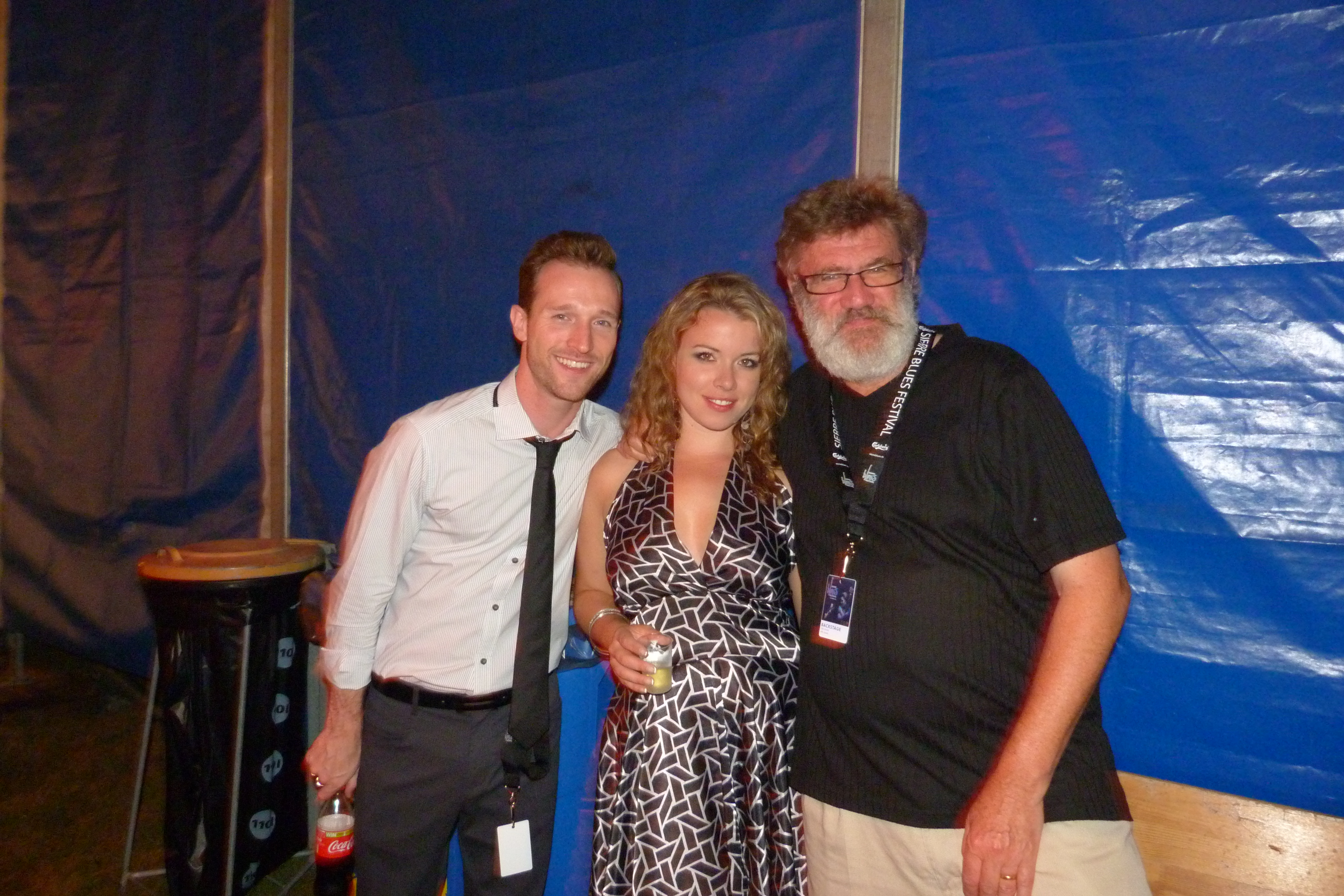
At 7:30 Tim and I met up with the band, backstage. We had our own backstage passes!

Josh, Ella & Tim backstage

We got to eat and hang out with all of the musicians. The organizers put together a good feast that included gazpacho, chicken with wild mushrooms, rice, salad, fresh peach tart and an open bar of Swiss wines and beers. There was even some raclette on offer later in the evening.

We watched the bands, waiting for the main event. The organizers had also put together an exhibition of paintings of all of the musicians and we were all really excited to see a huge painting of Josh in the VIP tent.

JW and JW

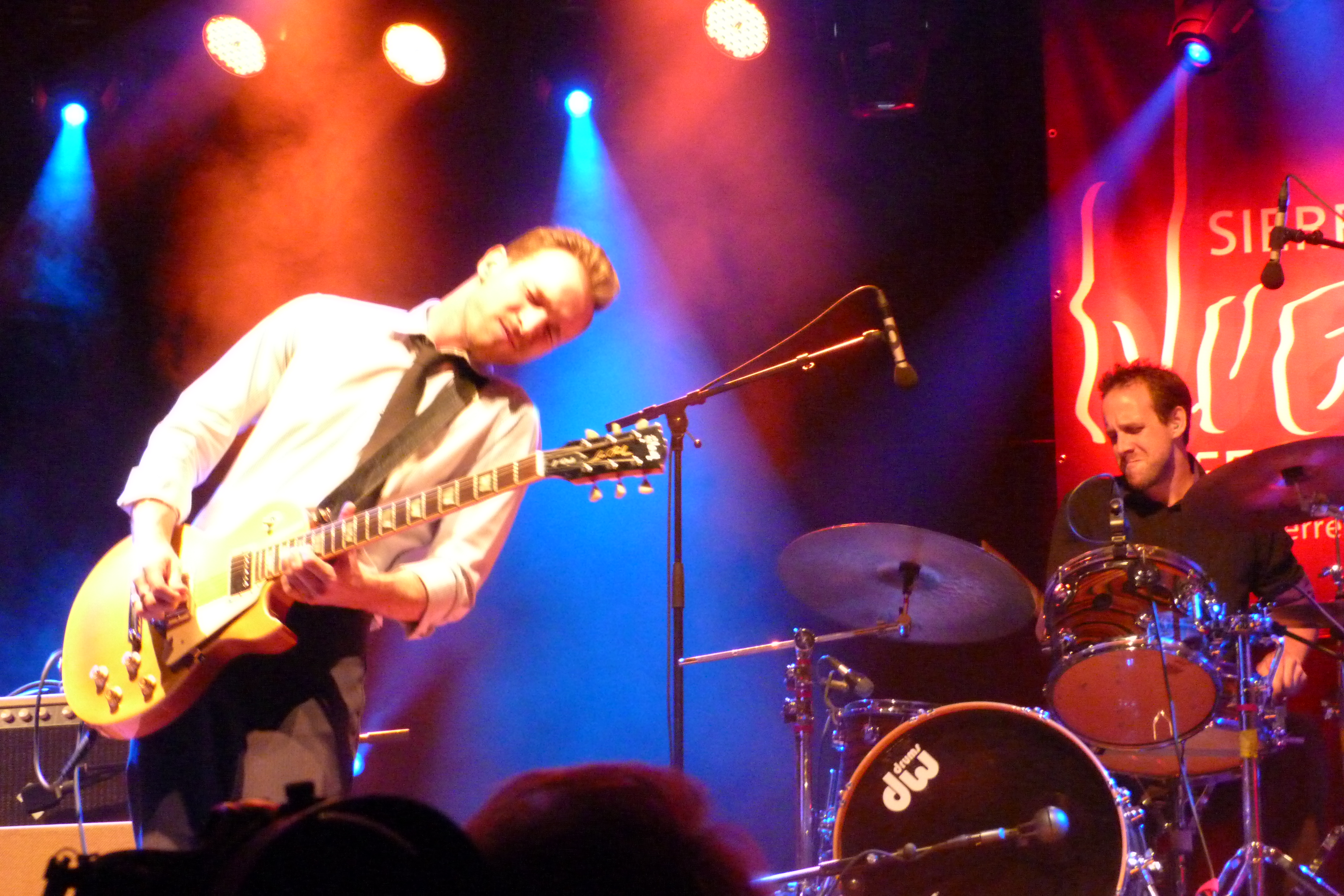
As it turns out, JW didn’t actually start his set until midnight. But what a set! We’ve seen JW in Ottawa at the Rainbow many times. But this was entirely different. The huge stage with the Alps as a backdrop. The fabulous light show. The screaming groupies (not just us – there were lots of others who have travelled from long distances to see this band). JW and Jeff and Jessie are a hot live band and they delivered. You can watch it on You Tube.

We danced, we clapped, we screamed. He conquered. It was a great night.

JW Jones Band

Just before 2:00 we hobbled over to the bus. Turns out we were the only ones who needed the drive up the mountain (the organizers had planned for everything, except for the low turn out). The twists and turns didn’t seem as bad this time around and we were soon tucked safely into our room, already dreaming of tomorrow’s breakfast.

More than cheese, chocolate and clocks

Tim’s friend Sandra picked us up in Geneva to bring us to her house outside the town of Chexbres. Leaving Geneva we made a quick stop to Cologny to see the Villa Diodati, where Mary Shelley first began to write Frankenstein.

Villa Diodati

It’s hard to imagine such a dark book coming out of a villa set in such a sunny, well-manicured garden.

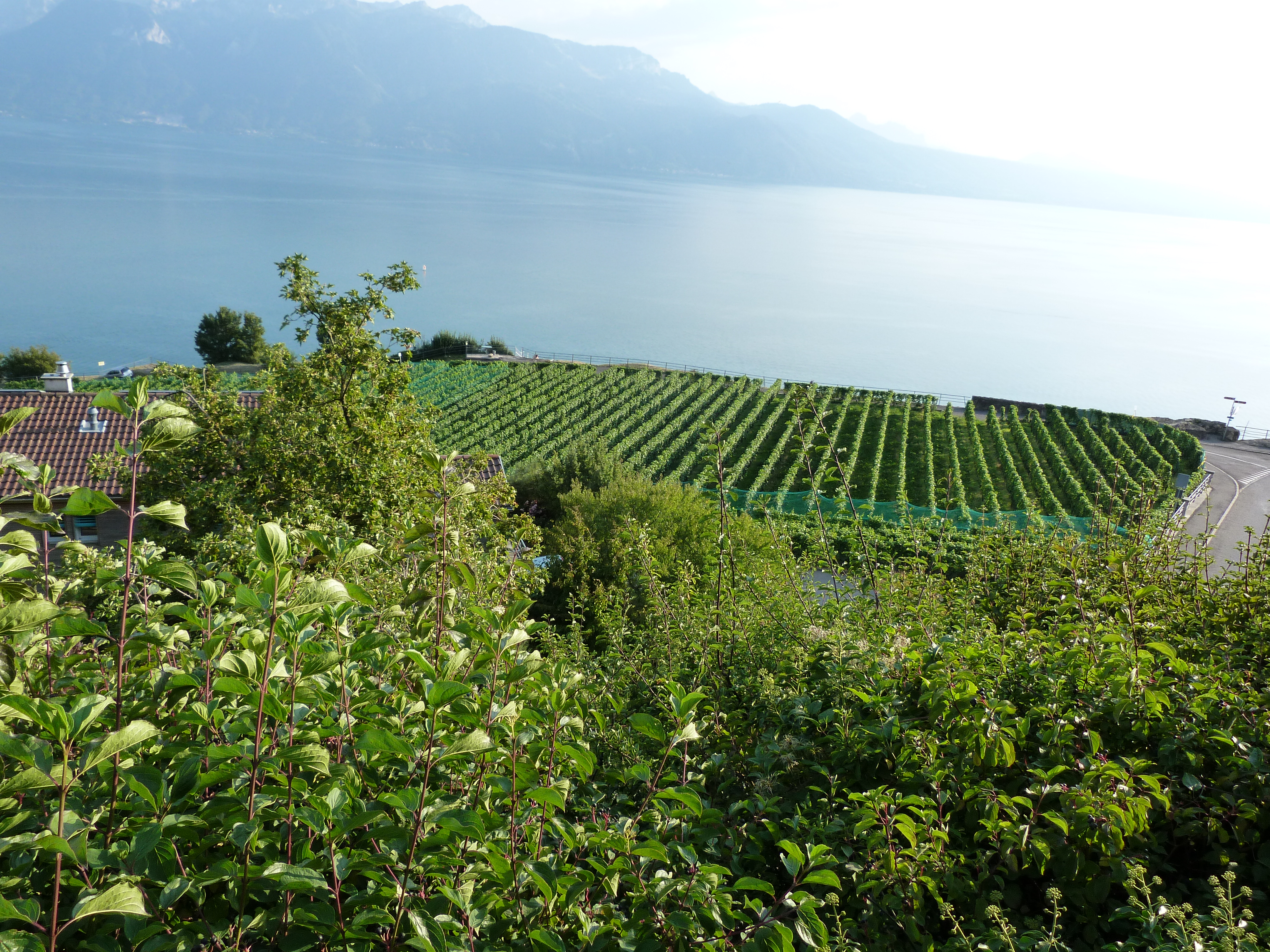
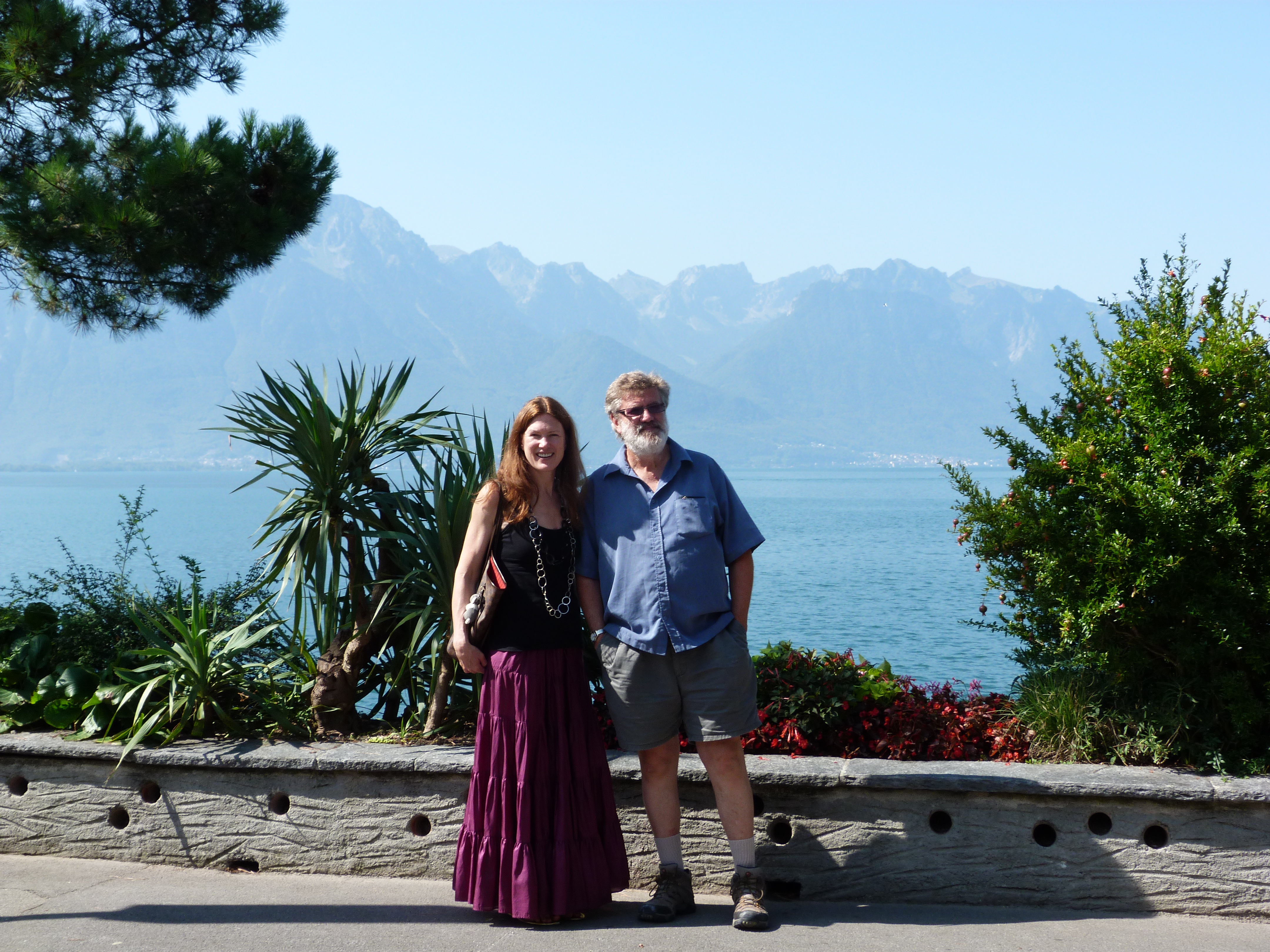
Born in the U.S., Sandra now lives with her husband and daughter in the Lavaux region of Switzerland. Designated as a World Heritage Site in 2007, the Lavaux Vineyard Terraces stretch for approximately 30 kilometers along the north shore of Lake Geneva.

The Lavaux Terraces

A unique microclimate, the area has been under cultivation as a wine-making region since at least the 11th century, when Benedictine and Cistercian monks created the stone terraces that hold the grape vines to this day. The grapes continue to produce exquisite wines. Why have I never heard of them? “Unfortunately, they do not travel well”, says Sandra’s husband with a glint in his eye. Switzerland is proving to be a country of many surprises.

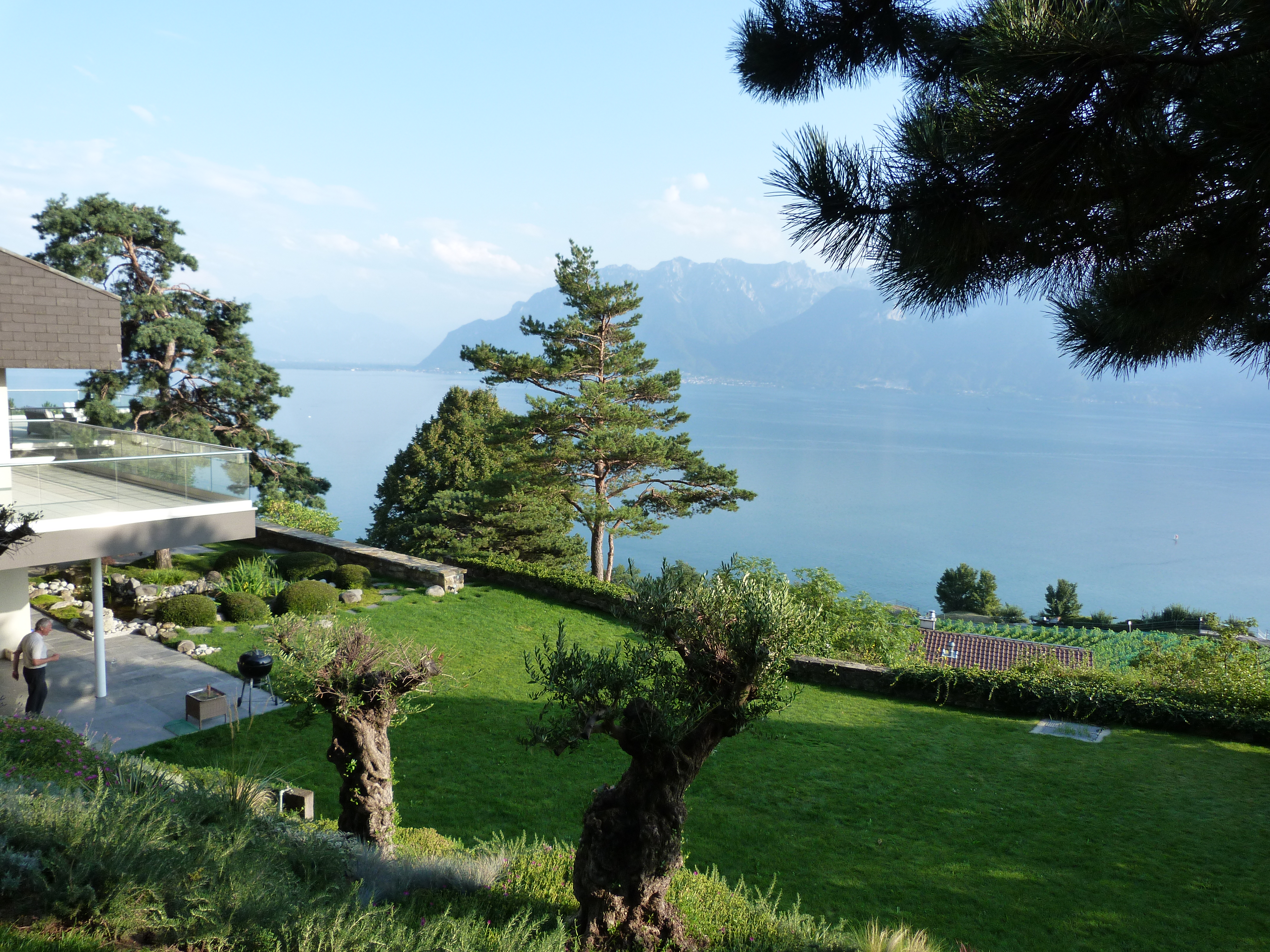
Sandra’s house is a calm oasis amongst the terraced grape vines, directly overlooking Lake Geneva. Designed as a retirement project by a successful engineer, it is a house whose deep windows open to the extraordinary scenery; a house of “noble” products: wood, stone, and polished granite floors.

View from the house, across Lake Geneva to the French Alps

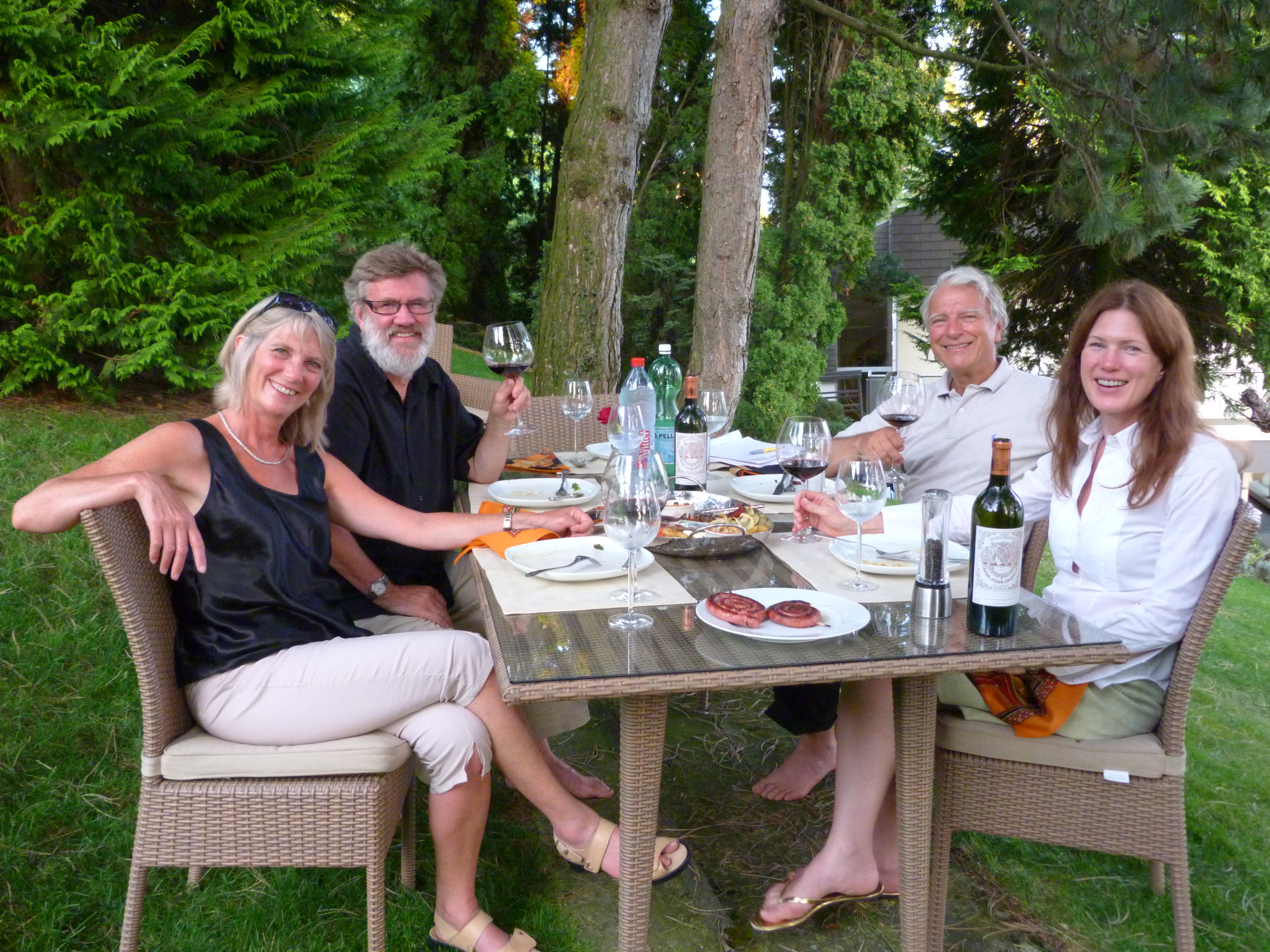
We sip a Dezaley white wine, the appellation of the region. We watch the mountain range on the other side of the lake slide into the purple of the night sky. The French Alps with the famous city of Evian twinkling on the shore. It is an evening of astonishing beauty and invigorating talk under the scent of pine trees.

Dinner in the "magic spot" with Sandra & Andreas. Photo by Olivia

In the morning, we are given a tour of the area, with a brief glimpse of Saint Saphorin, a tiny town that sits atop an ancient Roman villa and produces some of the best wine in the region. We drive along the lake down to Montreux, known to me primarily for the famous jazz festival.

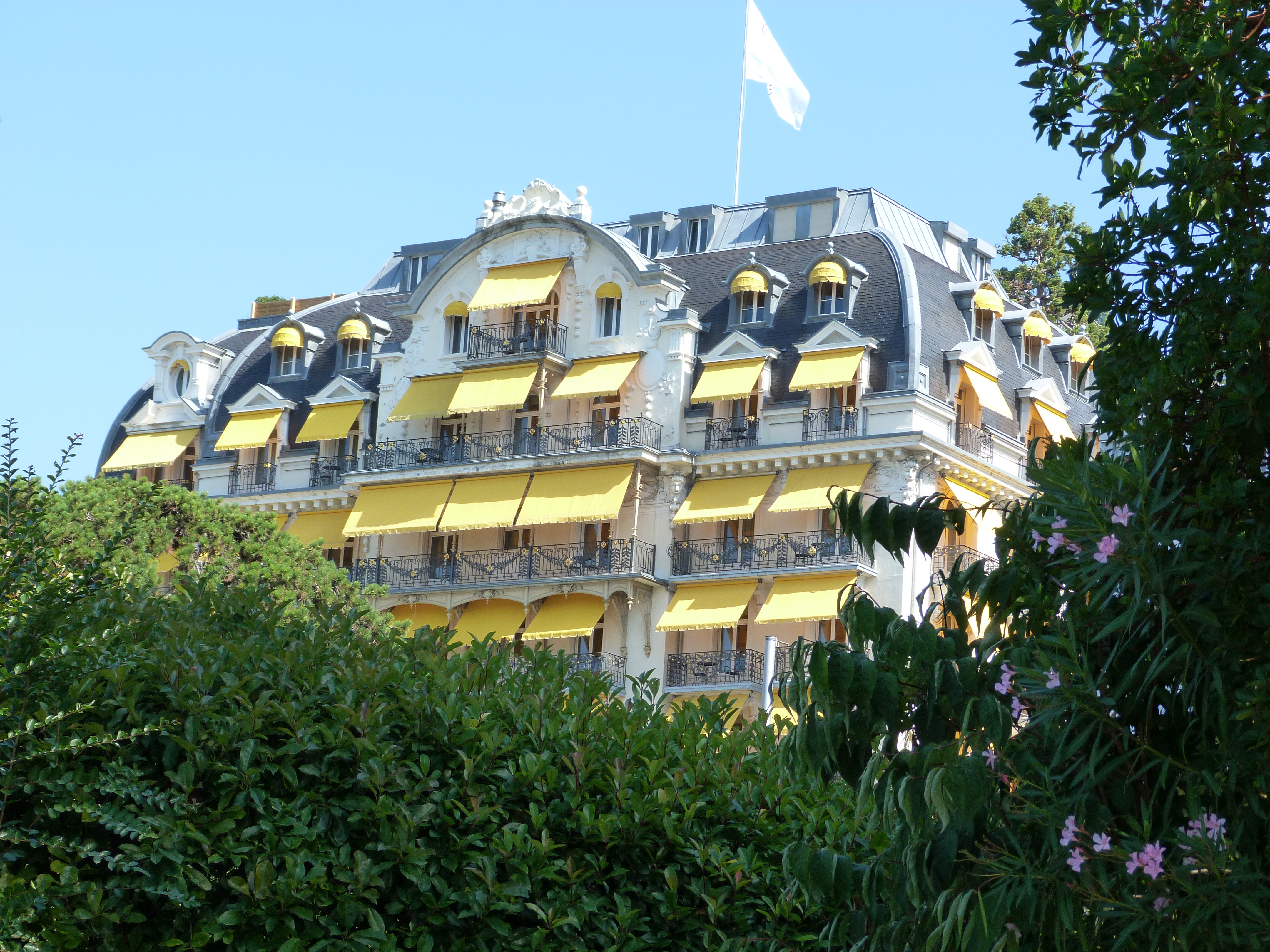
The Grand Hotel in Montreux

In days gone by it was one of the essential stops for Europeans on a “grand tour”. Sandra also takes us to the Hôtel des Trois Couronnes in Vevey, the smaller of the “grand tour” hotels and the setting for Henry James’ novella, “Daisy Miller”.

Hôtel des Trois Couronnes

We wander into the fin-de-siècle lobby and out onto the gorgeous terrace looking out over the topiary to the sun-drenched lake.

We lunch in Lutry, at the Café de la Poste, right beside Lake Geneva. The specialty is tiny Perch fingerlings, fresh from the Lake. Tim, who knows a thing or two about filleting, can’t imagine the difficulty of filleting these tiny fish, but the taste is well worth any effort. The chef comes to our table to explain the cooking process in which the fillets are soaked in milk for half a day, patted dry and lightly floured on the flesh side only. Butter is melted with a little oil and permitted to slightly brown. The fillets are gently fried, always starting with the flesh side first. A delicious sauce, made from a lemon reduction, melted butter, cream and shallots is ladled over the perfect morsels.

The chef in Lutry sits with us to explain how the Perch fingerlings are made

Sandra surprises us by ordering another specialty of the Lavaux region for dessert: Raisins à la Lie et Glace. La Lie is a distilled alcohol, (“sort of like Grappa”) made from the second pressing of the grapes. White Sultana raisins are soaked in the Lie (pronounced Lee), which is slightly diluted with a simple sugar syrup and some lemon zest. Our spoons dip through the creamy ice cream to the sweet alcoholic prize below.

Our experience of Switzerland is full of surprises. Clearly this is a country of much more than cheese, chocolate and cuckoo clocks!

Tim and Sandra in the tropical climate of Montreux

Touching down in Geneva

We decide to go to Switzerland to see Tim’s nephew, Josh. His band, The JW Jones Band, is on tour in Switzerland and his last gig is in Sierre, about 400 km from where we are staying. Since we’ll have to go through Geneva, we decide to spend a night there, followed by a night in the countryside with a student of Tim’s, and then go onto Sierre. We travel by train from Digoin to Lyon to Geneva.

The Rough Guide tells me that Geneva is the most expensive city in Europe, which is confirmed the minute I try and find a B & B. I book us into a hostel that is close to the train station.

We arrive to find Geneva beautiful, clean and safe. We dump our packs at the hostel and head immediately to the harbor to enjoy a local beer and glass of Rosé.

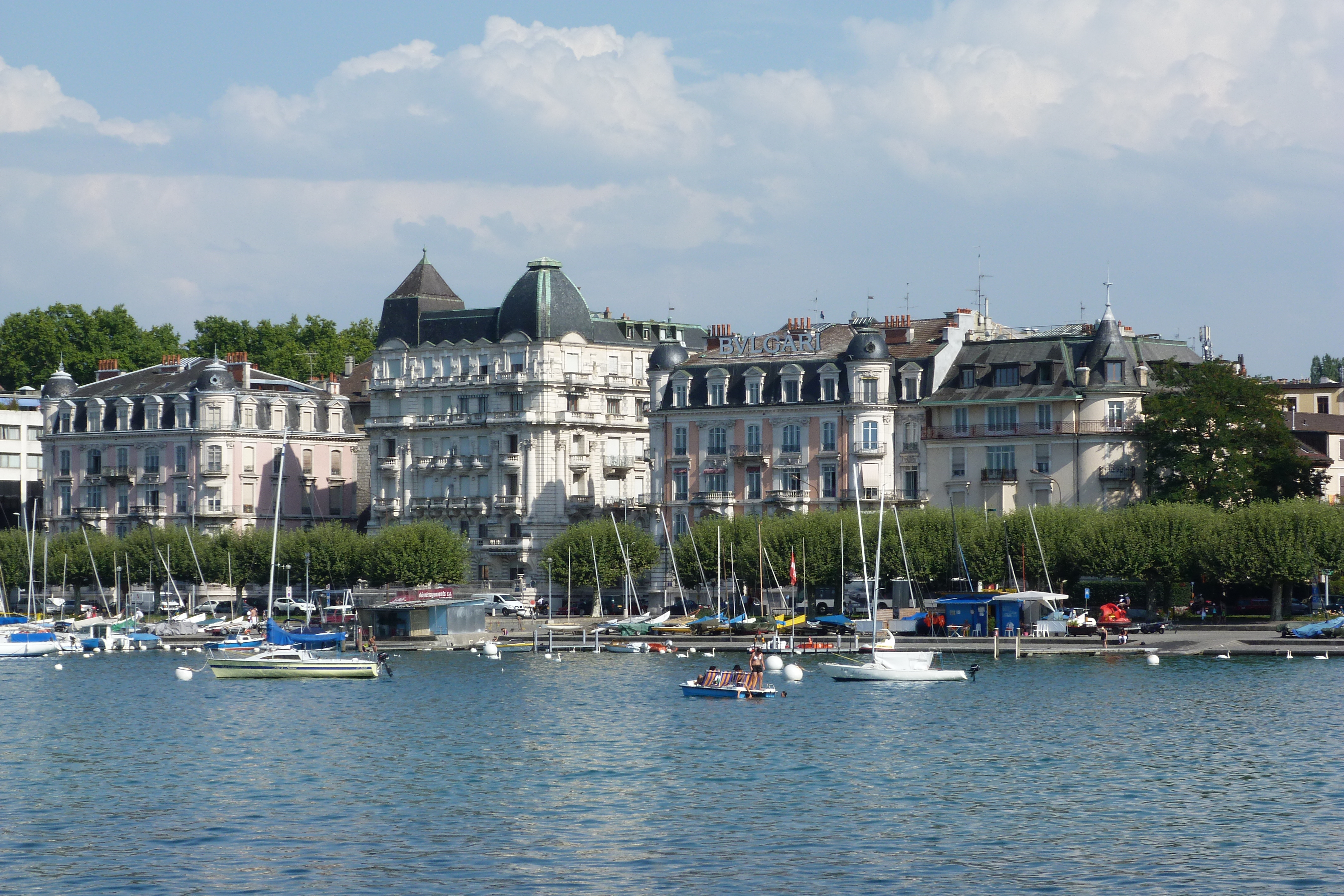
The Geneva Harbour

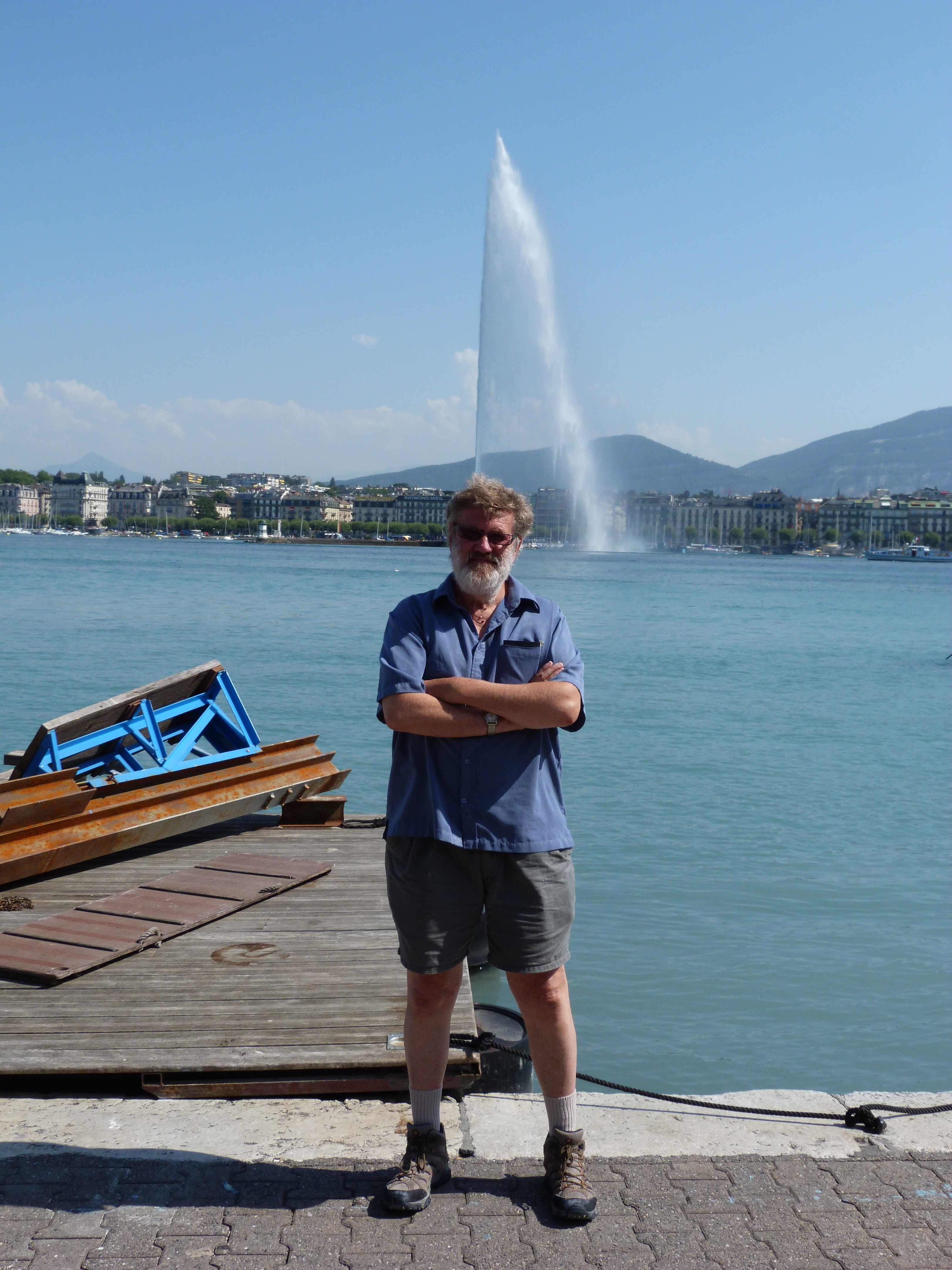
The focal point of the harbor is a fountain that jets water 200 meters into the air. It’s blazingly hot, so we walk out on the jetty just to feel the spray.

The Harbour fountain jutting from Tim's head
Lavish apartments around the harbour

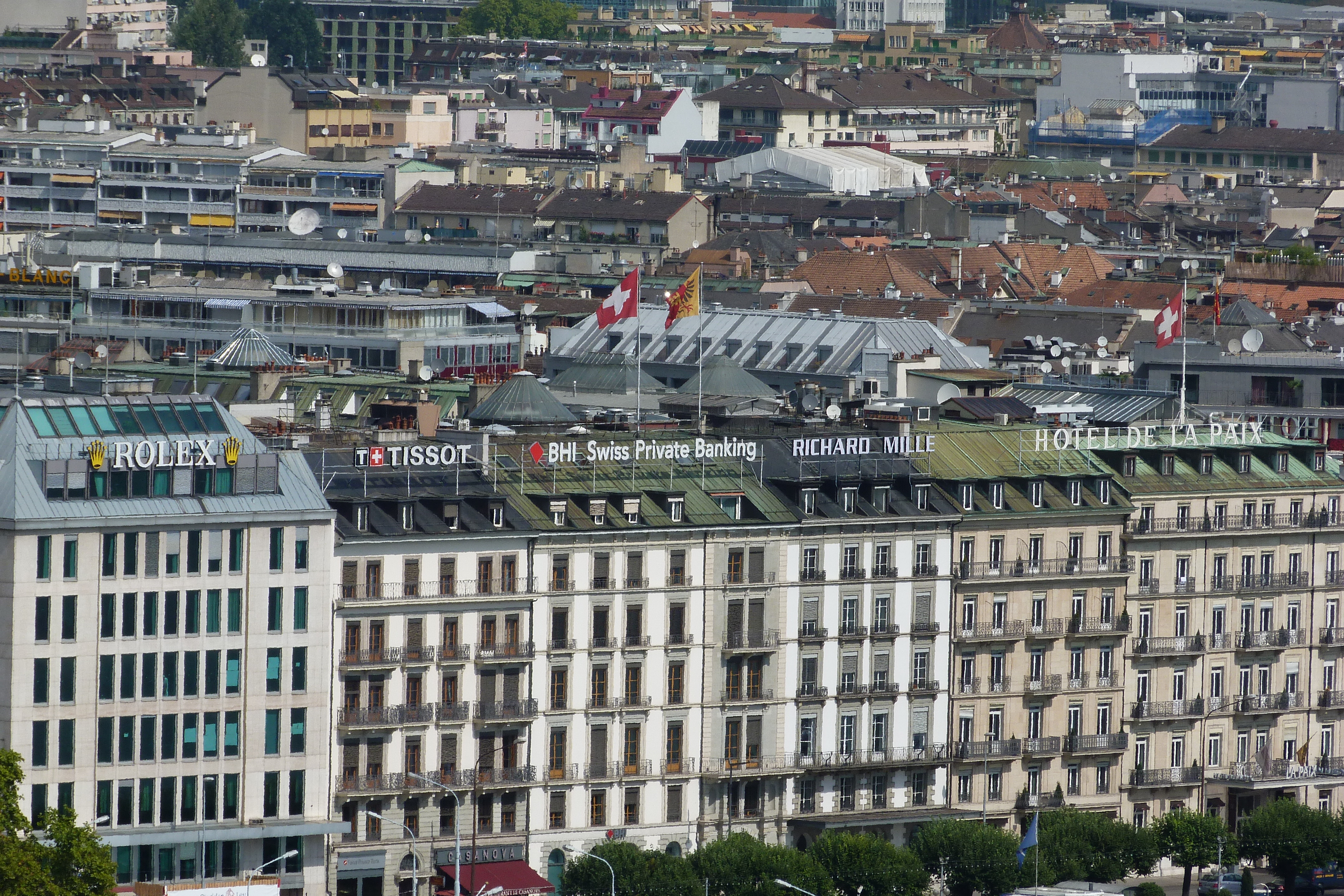
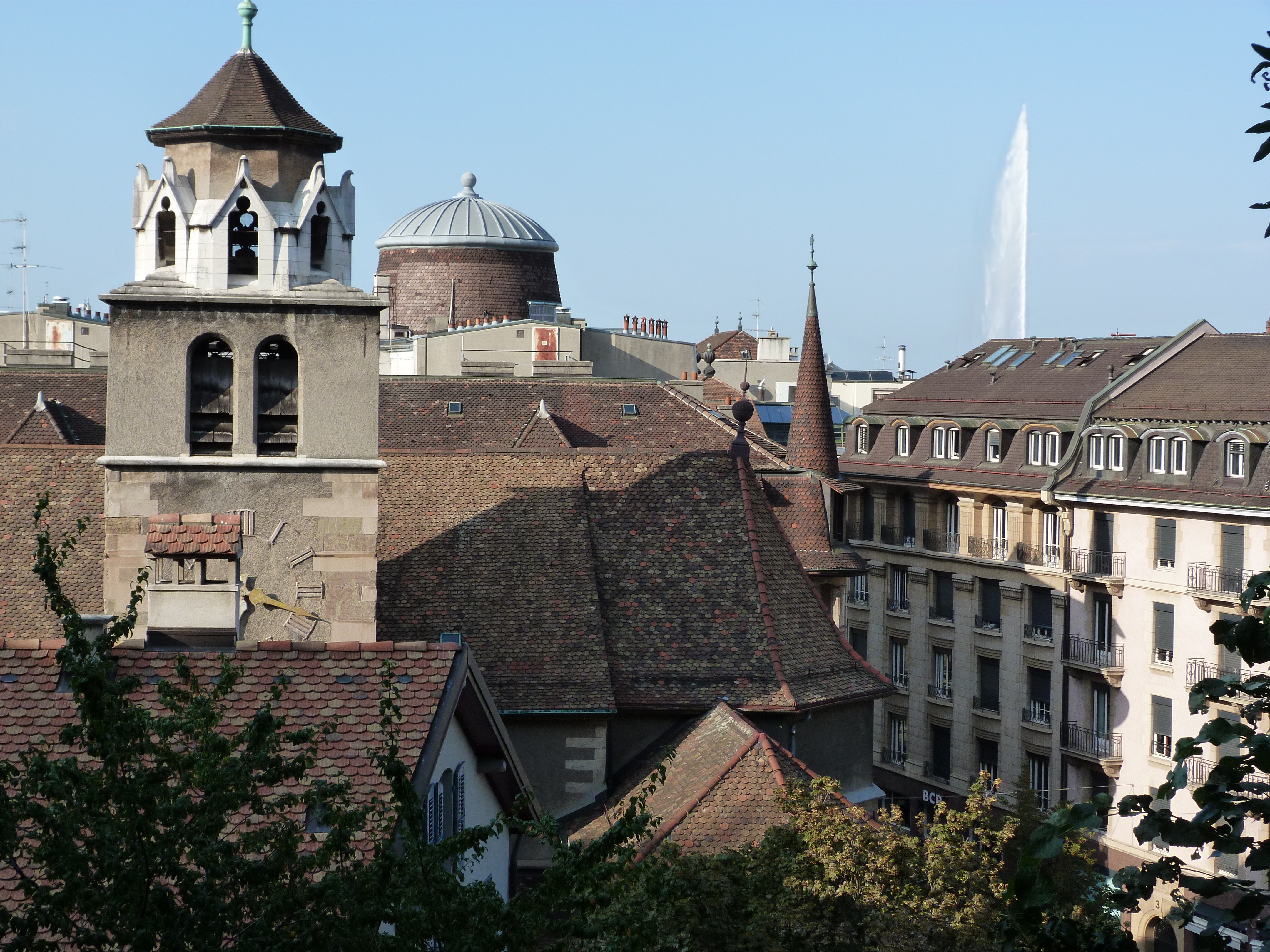
There are beautiful apartment buildings surrounding the harbor, all with huge signs advertising the most expensive brand names: Rolex, Cartier, Cardin. The love of money seems to ooze from the stores – I see a stack of gold attaché cases that is the perfect representation for the conspicuous wealth that surrounds us. But the architecture is beautiful and the old city is a dramatic warren of angles and irregular roof lines.

Roof lines in the old village. Note the jet spray in the background.

However, it is clearly not a place for mere mortals to shop. When we try to find a place for dinner, we are floored by the prices – 26 Euros for a piece of lasagna (about $32 CAD). Not that we want lasagna, but it sticks in my mind as one of the least expensive dishes on the menu.

After great argument, we resort to a place recommended by the hostel, clearly for the student tourist crowd. It specializes in chicken dishes. We have walked too much, are too tired, and without thinking order half roast chickens with “country” fried potatoes and “special sauce”. Sound familiar? We realize we have just ordered Swiss Chalet in Switzerland.

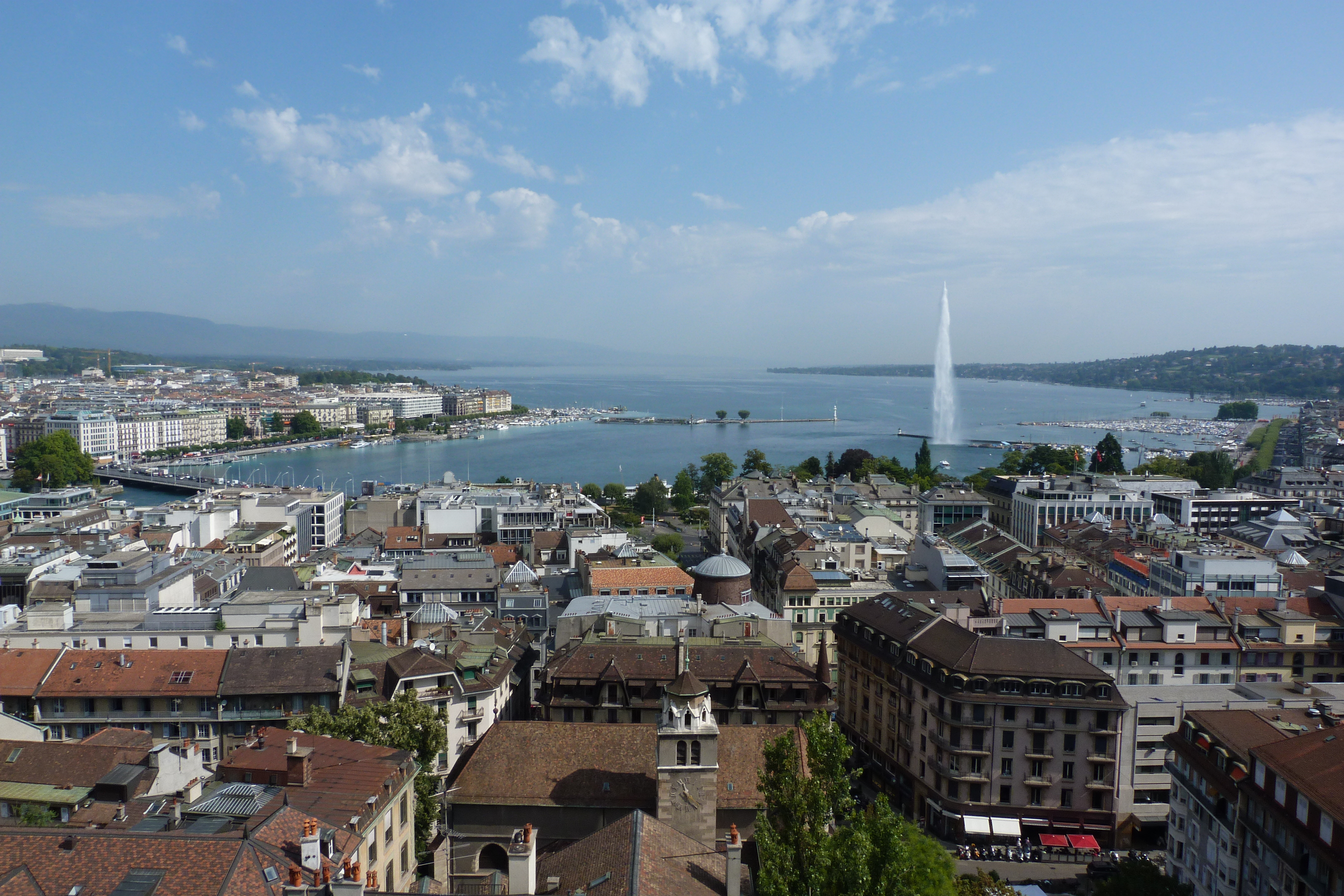
St. Peter’s Cathedral, (http://www.sacred-destinations.com/switzerland/geneva-cathedral) best known for being where John Calvin preached, offers a stunning view of the city, and also a unique perspective on the history of the area.

A view of the harbour from the North Tower of St. Peter's Cathedral

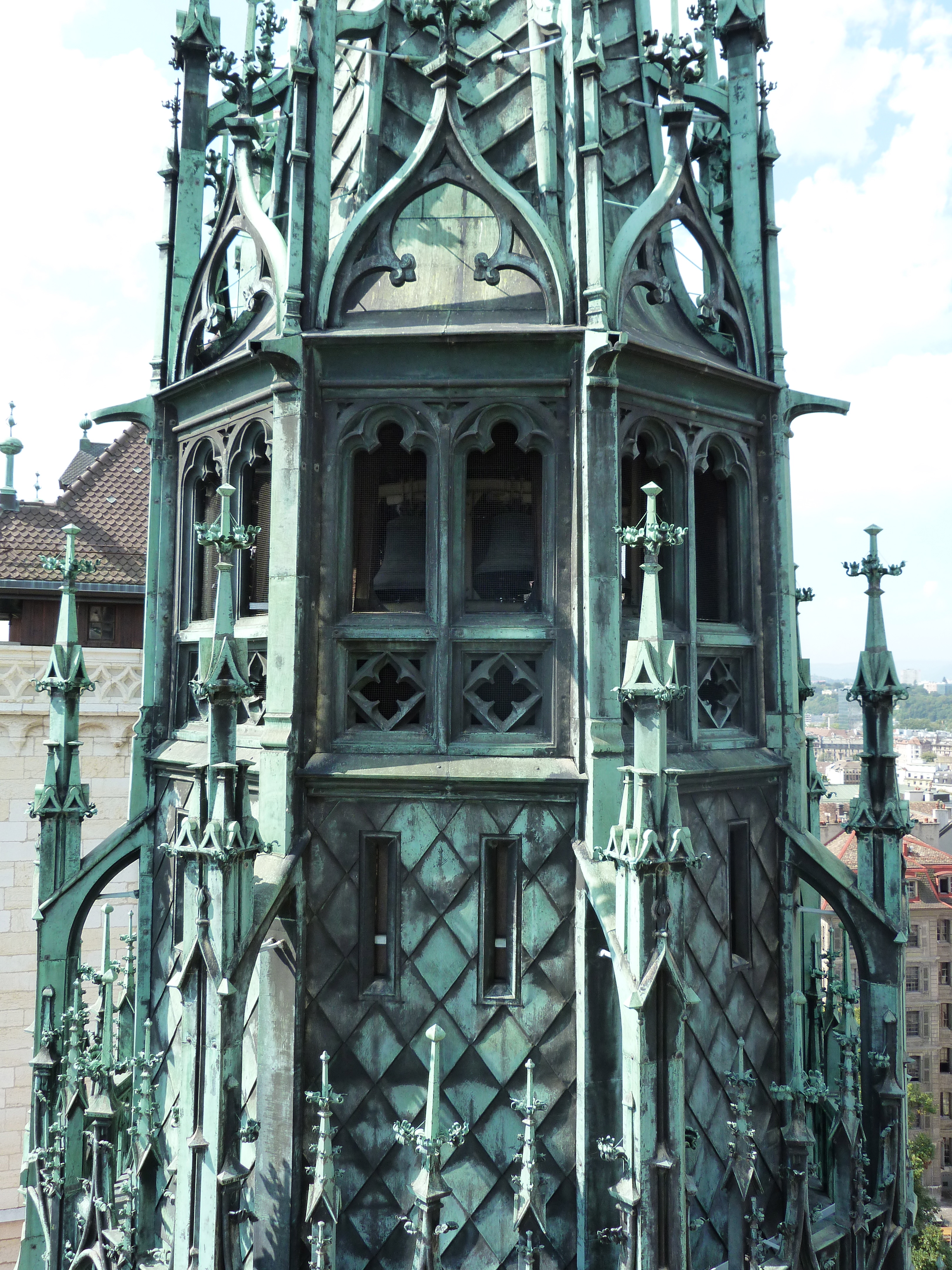
We climb the steep stairs to the top of the north tower as the bells chime alongside us.

The Bell Tower of St. Peter's Cathedral

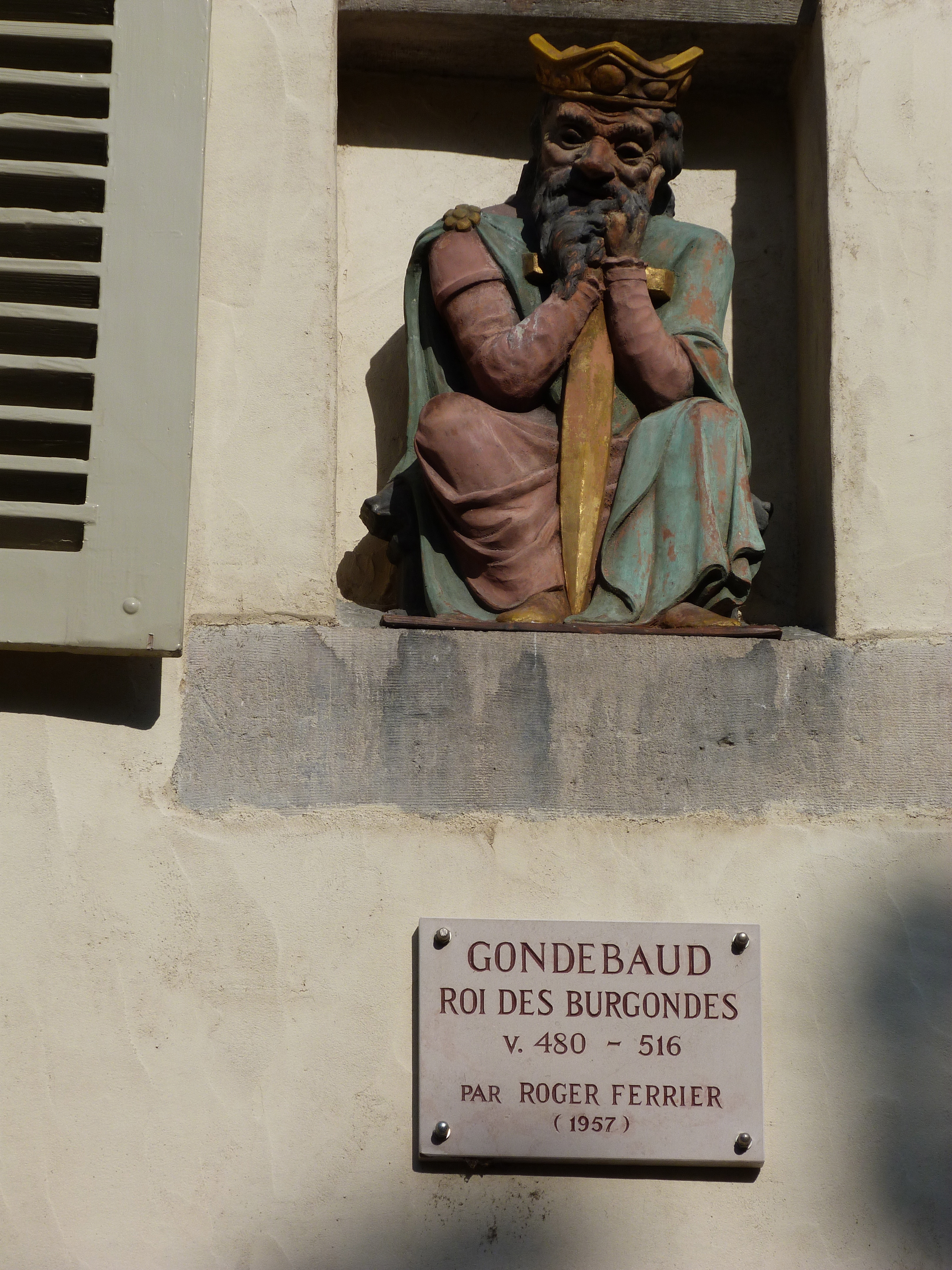
A working archeological site under the cathedral (http://www.site-archeologique.ch/contenu.php?id-node=2) takes us through 2000 years of worship and habitation, beginning with the burial mound of a Allobrogian chieftain in 40 BC. The site has uncovered his remains, but left them in situ. He is observed, but undisturbed. Roman, Celtic, Christian constructions are all exposed under the cathedral. It is the highlight of our brief stay, and helps us to better ground ourselves after the unsettling, ostentatious, contemporary city.

Gondebaud. Roi des Burgondies. 480 - 516 AD

Une opération bilingue

King Charles VIII of France died in April 1498 at the lavish Château d’Amboise, after hitting his head on a low beam.  We learn this little bit of history on the day that Tim is to have his stitches removed, from the wound incurred from banging his head on a low beam in France.

Karine arrived at Bel-Air in the late morning, with a bag of supplies in hand. When we were at the hospital last week, Tim was told to make an appointment with a nurse (l’infirmier) to have the stitches removed. But we weren’t told how or where to make this appointment. Fortunately neighbor Suzanne’s daughter Karine is a nurse and she volunteered to come to the house to do the deed.

I make a pot of coffee, and we sit out on the patio, sheltering ourselves from the heat with a large blue umbrella. Karine speaks some English, and the visit is conducted in a mixture of languages. She is barely given a chance to sip her coffee because Bryan is very excited. Camera in hand he wants to record the “operation”, and has spent the previous night thinking through an appropriate script and commentary. Tim is positioned in the chair at the head of the table and we are ready to go.

Karine washes her hands and then lays her tools out on the table — 2 vials of antiseptic, 1 vial of antibiotic (just in case), plastic tweezers, scissors, scalpel, sterile gauze and wads of cotton — all carefully packaged in sterile plastic sleeves. She cleanses the wound (la blessure) and deftly slices through the blue thread de chaque point. Each one is quickly removed, held aloft and applauded. The operation is a success. Tim’s head is in tact.

“Karine, Je fait des “brownies” pour ta famille”. I send her home with a large plate, freshly made and still warm. We ask if we should be paying for the supplies, to which she replies, “Sarkozy va payer”. Thank you, again, French health care!

Working on my French is an uphill battle. There are a surprising number of words in my memory banks, but the verbs are a nightmare. Other than in high school, my French studies have been half-hearted attempts at self improvement: a series of classes with my dear neighbor Pauline, a dreadful evening college class, and forays into ancient French school text books. Suzanne has agreed to take me on for a few conversational classes, and I have met her down at her house several times. Elle est très gentille and accepts payment in Crémant (the local sparkling wine). After an hour I have managed to tell her I love her (instead of that I love my son). And I leave telling her that I am bad feet. It seems my default is always Je suis, which gives me a frustratingly arrogant air.

But Suzanne and her husband Christian are patient. I am given homework to gently steer me toward a past tense.  I pour through the back of the Robert Collins Super Senior français/anglais dictionnaire, scratching around the edges of comprehension.

Dave’s Magical Mystery Tour

Bryan’s friend Dave is a history teacher and avid bird watcher. Dave likes nothing more than to be a tour guide for the area and when he offered to take us on a “Magical Mystery Tour” we readily accepted. We met up with Dave at his tiny holiday house in Crecoux. As far as I could tell there are only 3 houses that belong to Crecow – Dave’s, a farmer’s and a house belonging to the Mayor of Les Guerraux, a small village of approximately 300. Dave and his wife purchased their house at the end of this very secluded rural road in Burgundy 12 years ago. With a broad smile, he refused to tell us our itinerary for the day, insisting that it be a surprise even for Bryan. We piled into his car and were off.

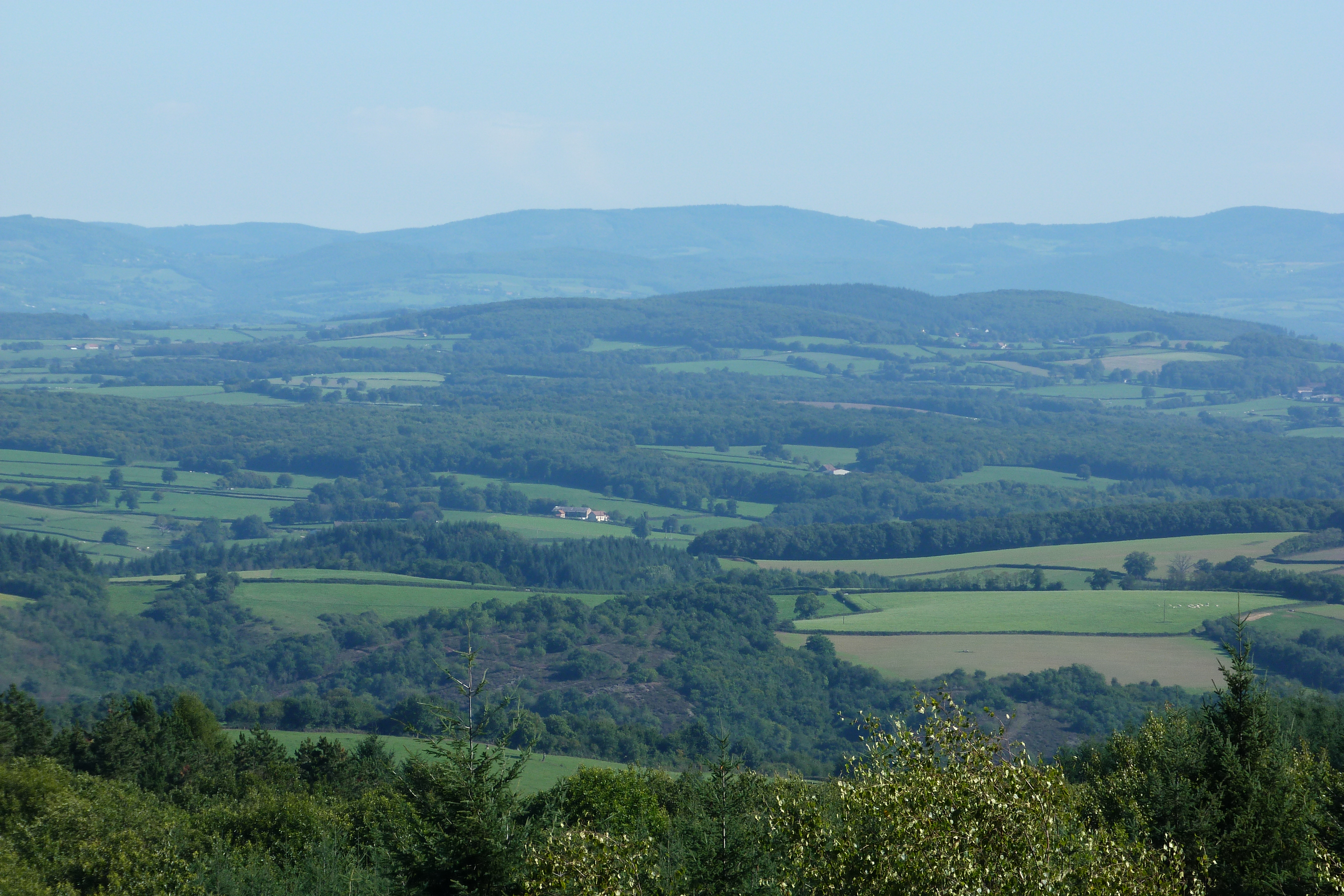
Our first stop was “Signal du Mont”. A wooden observatory, built upon the ruins of a Gallic fort, at 472 metres high it affords an amazing panorama of Burgundy.

View of Burgundy from Signal du Mont

There is no way that my camera is able to do it justice. I know it sounds ridiculous, but I think that this was the first time that I realized just how vast France is. Beautifully kept fields, tiny villages, small towns as far as the eye can see. And in the far distance, the mountains of Massif Centrale.  An auspicious start to the day.

Tim & Dave on Signal du Mont

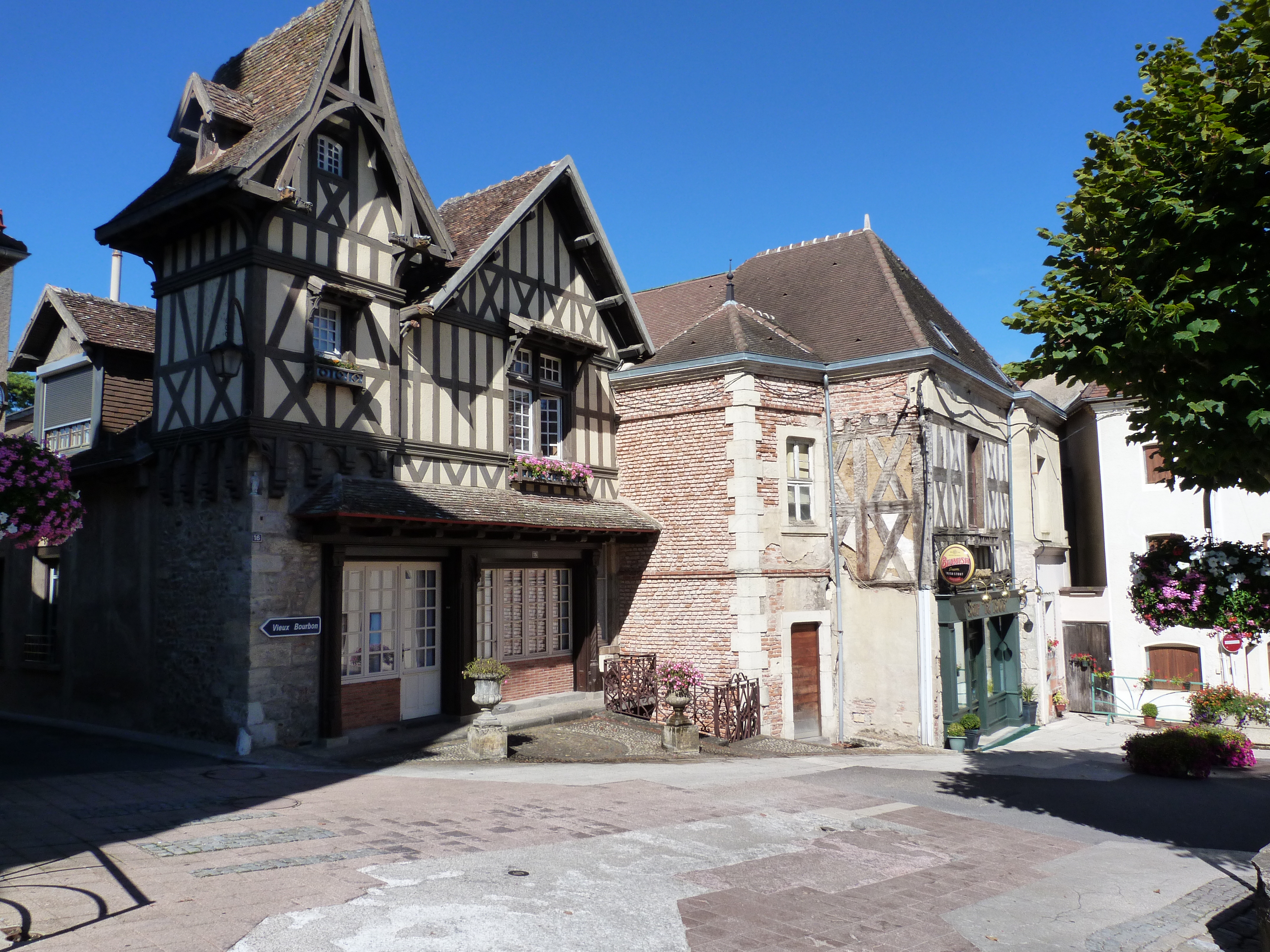
Dave then takes us on to the town of Bourbon Lancy. Bourbon Lancy is known primarily as a spa town (les Thermes – as in the thermal waters), and there is a thriving tourism dedicated to taking the waters. However, we are there to walk through the Medieval Quarter, which is a stunningly well-preserved part of town.

Houses of Bourbon Lancy

There is a clock in the stone gateway in which a manikin pulls a chain to chime the hour.  Immaculate gardens, cobbled streets and wooden beamed homes within the walled boundaries.

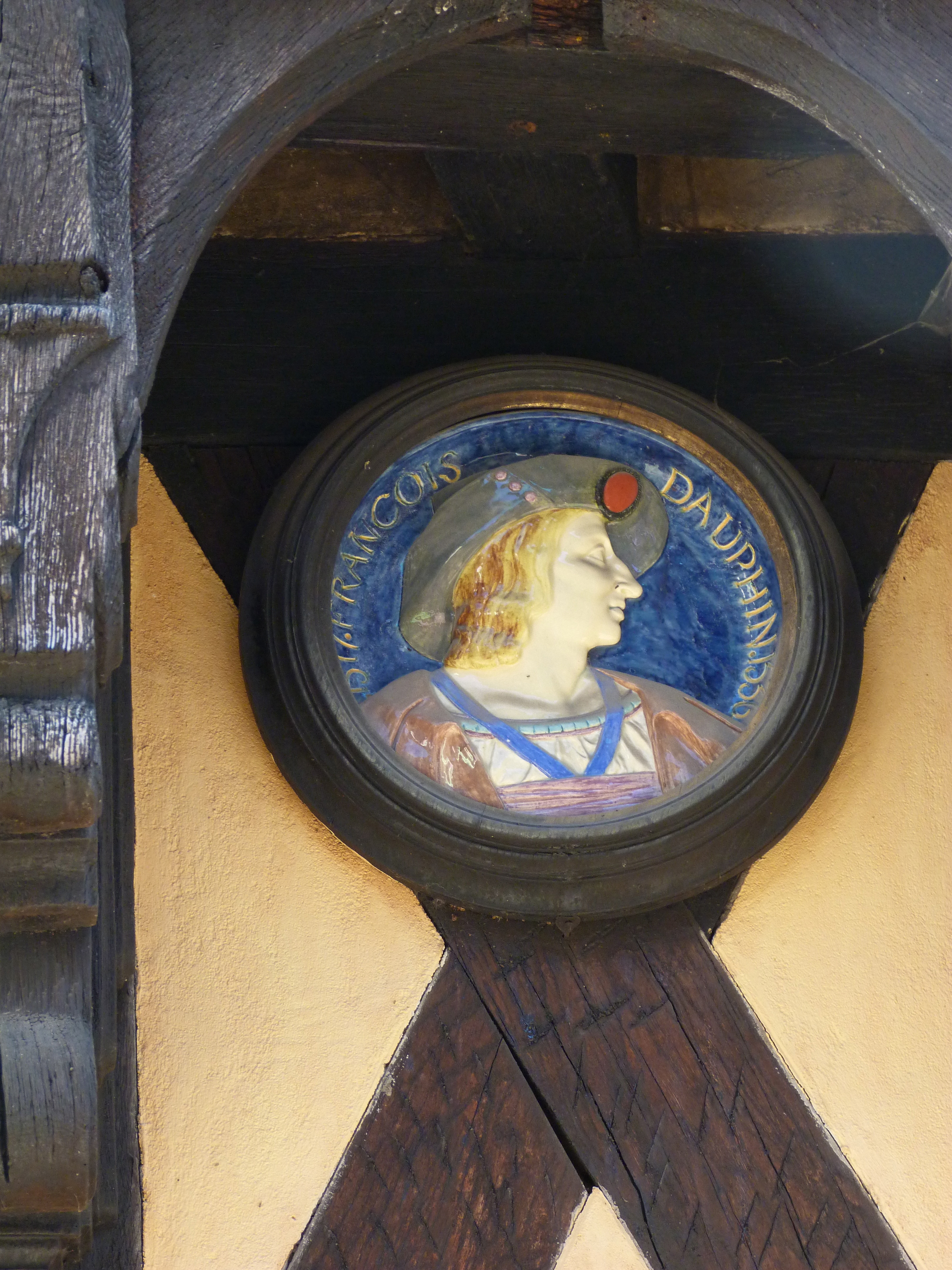
Detail on House in Bourbon Lancy
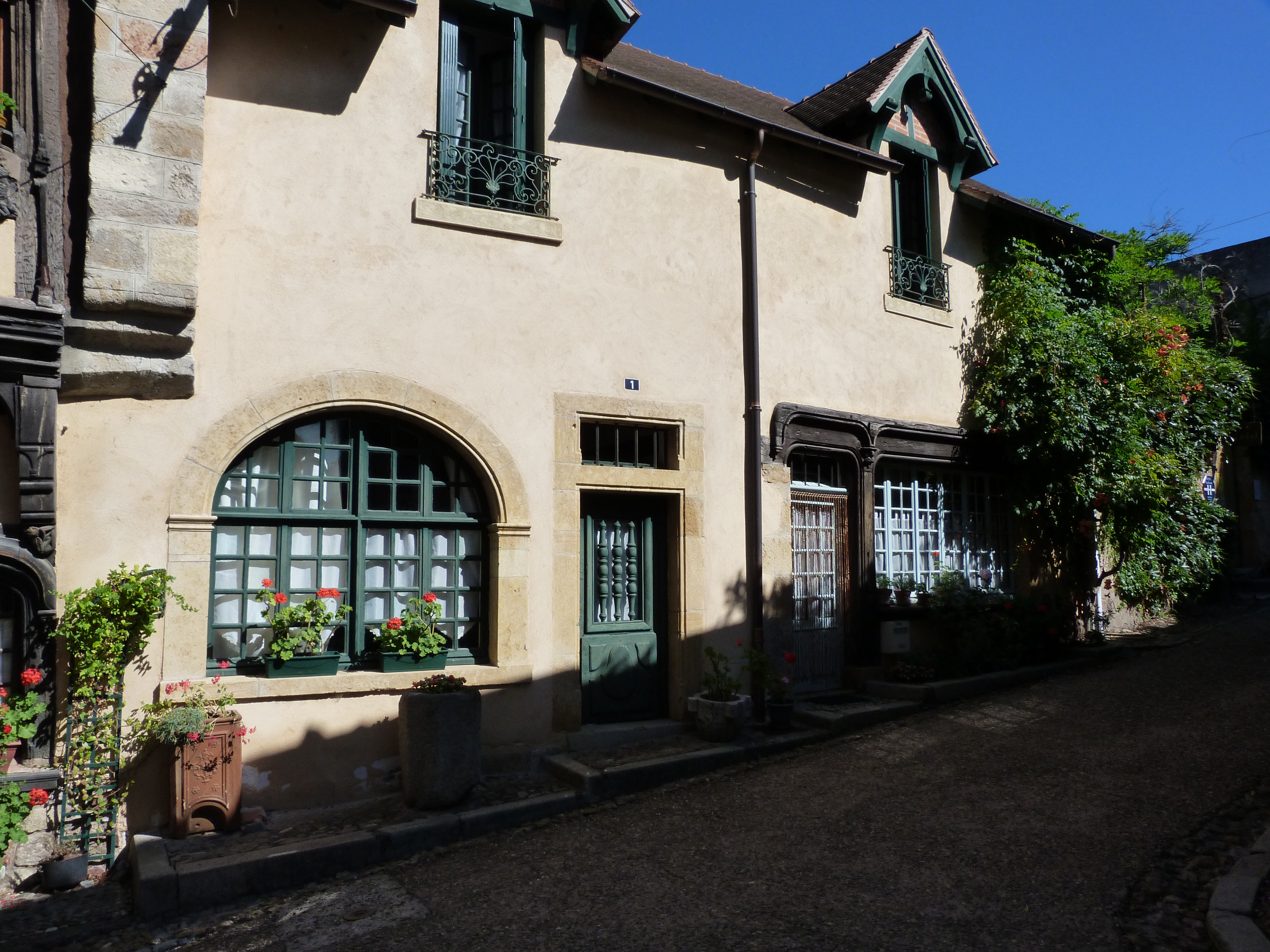
The Medieval Quarter

A vision of old France. The rest of the town is equally beautiful, with cafés and boulangeries that beg to be explored.

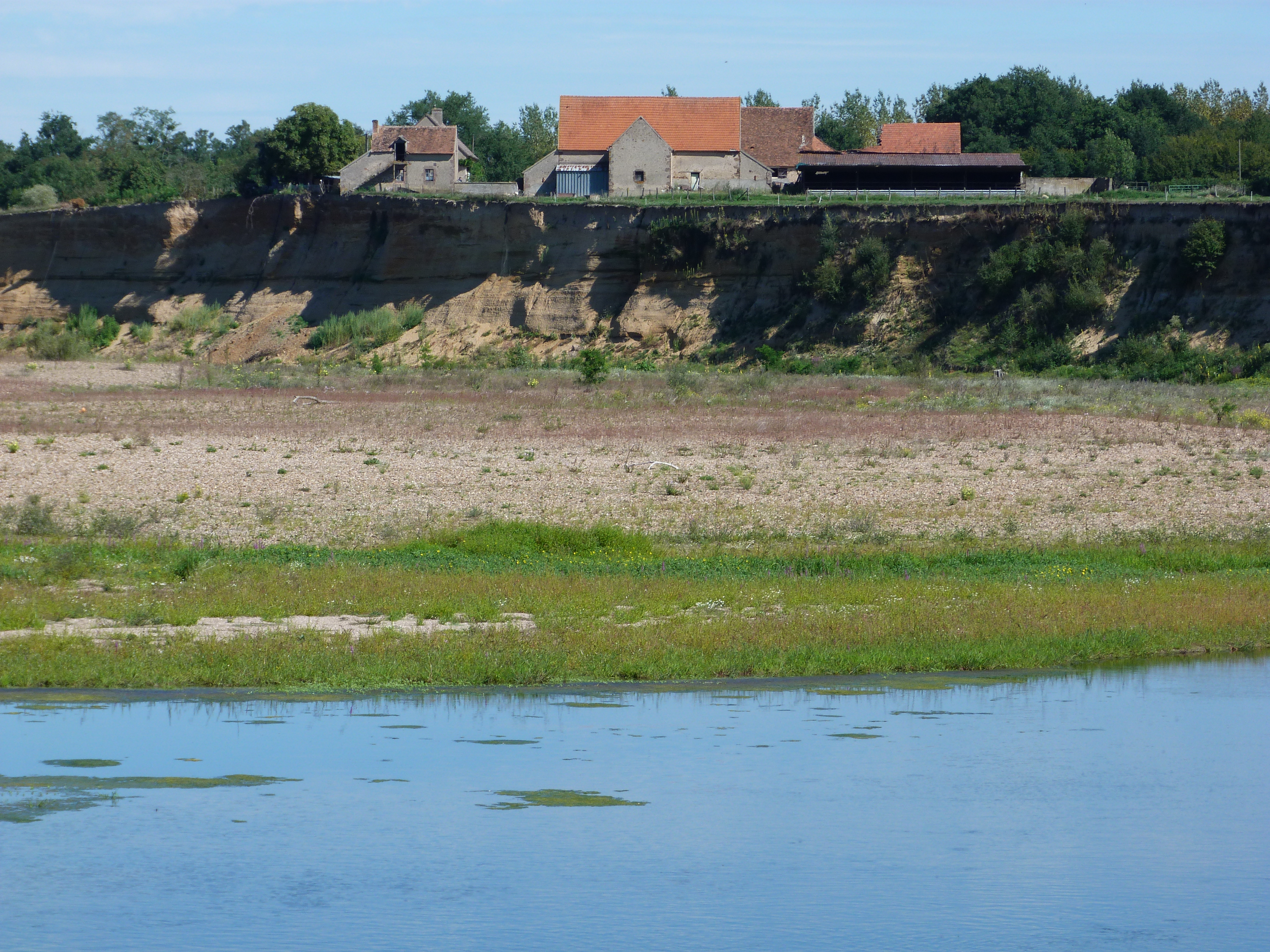
From Bourbon Lancy, Dave takes us to a small wilderness preserve on the Loire called La Fleurie. Here you can see how drastically the Loire has changed its course over the last 100 years. The river’s curves have lessoned and farmers must battle the changing flood plans.

Farm on the cliffs of the Loire

A farm sits atop the last remaining cliff on the Loire, and the cliff edge comes closer every year. The changing flow has created a small island that is preserved as a nature habitat, although Dave admits he has never seen any wildlife other than birds on it.

We are getting hungry and decide to head to Cronat for lunch. Cronat (population approximately 600) is a town that people mostly go through to get to the highway. Pretty, very quiet, Dave says it is a “one horse town”, but I can’t figure out what the horse might be. We lunch sitting outside at a small restaurant, and although the meal is disappointing, the company and the circumstances are not. And everything tastes better after a glass of Kir and a carafe of wine.

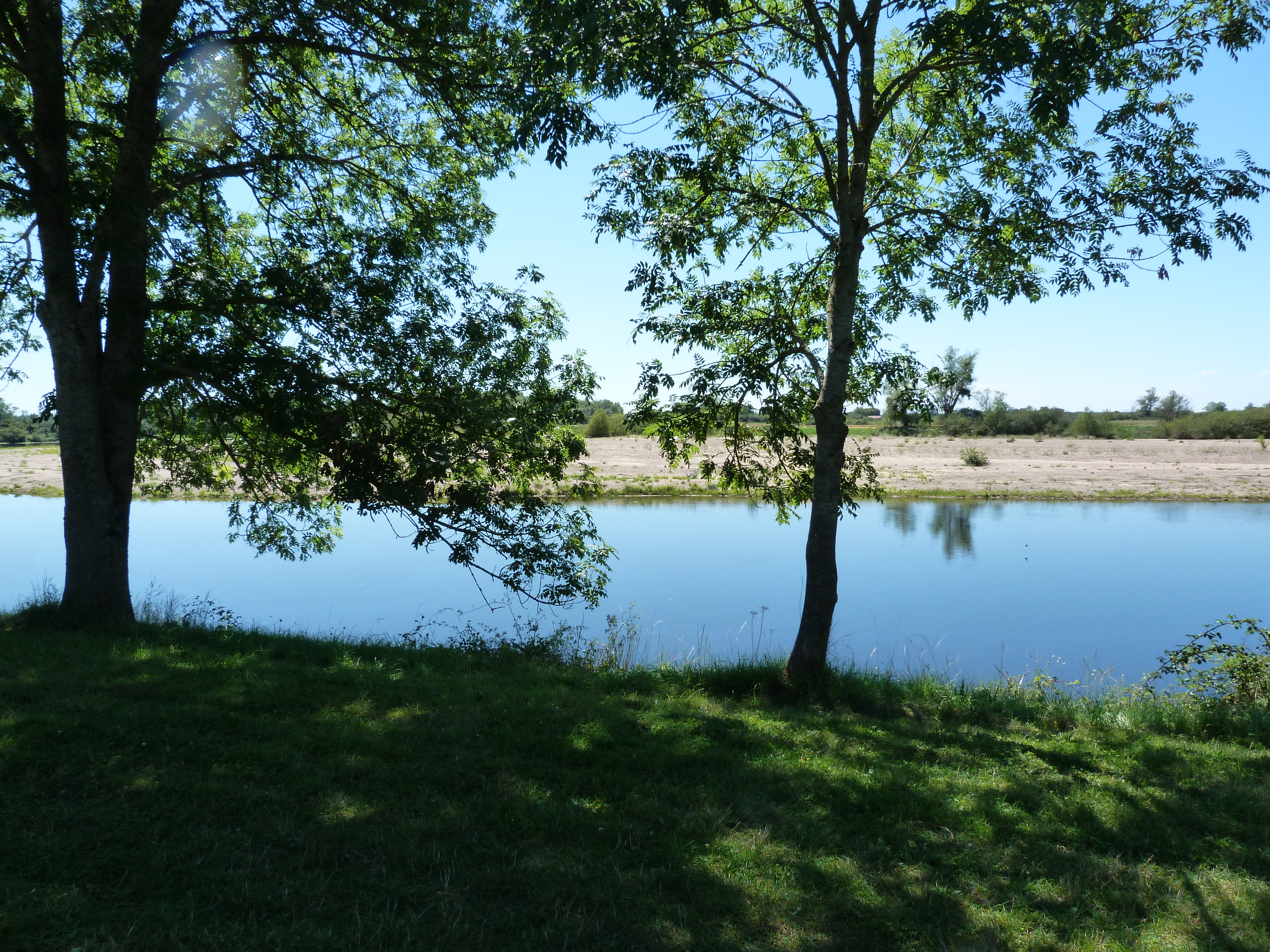
From Cronat we go to Port Thareau, near St. Hilaire-Fontaine (population less than 200). This is a very out of the way section of the Loire that Dave tells us used to be the docking point for the Royal Court of the Bourbons. They came down the river (against the current) from Paris, and were met at the dock to proceed by carriage to their country chateau. It is a magical spot, with 4 houses that face the river and a verge that is a perfect picnic spot.

Across the Loire at Port Thareau

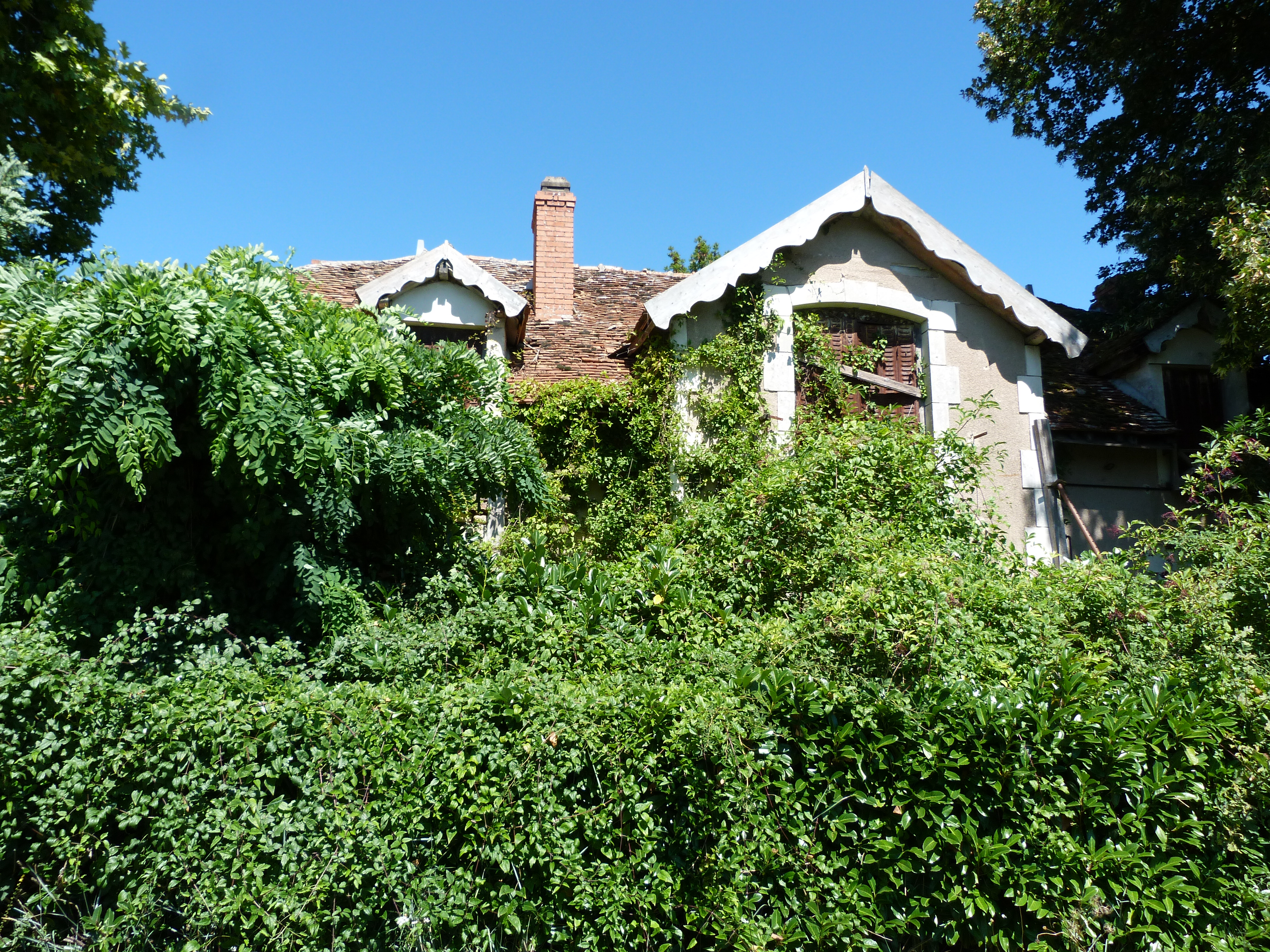
It also has a more recent history that I find mesmerizing. The side of the river that we stand on was, during the Second World War, in occupied France. The other side, literally a stone’s throw, was Vichy, so called “free France”. It would have been a fairly easy place to slip across, as many Jews did, hoping to escape the Nazis in occupied France. Although not the best solution, as Vichy also rounded up Jews to send to the camps, being in free France could buy a little time. Today, the river is so shallow, one could easily walk across. A possible gateway to freedom. Tim falls in love with a house that is a complete ruin. Trees shield the house almost completely from view. Vines grow through the windows.

Briar Rose's House?

It is a vision from Briar Rose and I am afraid that Tim will, any moment, try to make his way inside this magical story.

What lies beyond the wall?

Bryan and Dave, both of a far more practical mind set, are confused by Tim’s passion and eloquence on the subject of a dilapidated house. We eventually pry him loose and head on to Decize. With 7000 inhabitants, we are seemingly thrust into a booming metropolis.

Across the Bridge to Decize

Dave navigates us toward the centre of town, which is accessed across a bridge. Where once there was water from the Loire, the bridge now crosses a field of wildflowers. The bridge and the town beyond are filled with a small town bustle of energy. It is becoming blisteringly hot, so we head to the city centre for a cooling drink. Dave suggests I try Perrier Menthe – Perrier with mint syrup. It is the perfect refreshing drink on such a day. We walk though Decize, through the fortress walls, and back along a canal toward the Loire. We come across a fabulous photographic exhibit “Des Forets et des Hommes” (check the link) set up outside amongst the tress of a small wood beside the river. The photographs are amazing and show everything from deforestation in the Amazon, to tree frogs in France. We slow down to take it all in and are moved by the beauty and the horror. One of the most startling pictures was a show down between a hummingbird and a viper. (check the link)

Sunburnt and weary, we head back to Bel-Air. Thankfully Bryan had made his famous Ratatouille the night before so although we settle into one of our fabulous 5 course meals, we do so with little effort. I throw in a few potatoes to roast and make crudités and a light salad. The Ratatouille is incredible (the inclusion of braised endives is an amazing innovation) and is complemented by quickly fried pork chops. Our cheese supply is in good stead and for dessert we have wild blackberries, picked the previous morning.

All in all, the day has been a wonderful window into this corner of the world. I am beginning to see life in a very different way. This is not like rural Canada, where all roads lead to a mid sized city and where everyone shops at chain stores. Although there are cars and conveniences like washing machines, computers and cell phones, people are leading quiet lives. Small villages still have several boulangeries and cafés. Small towns have grace and people who are open and friendly. I have yet to see anyone rushing.

Nursing a Perrier Menthe with the guys in Decize

In Which We Test the French Health Care System

After our day canoeing on the Loire, we are all exhausted and sunburnt. We get back to Bel Air at 6:00, and are supposed to be at Louis’ house at 7:00 for aperitifs, followed by a massive dinner with all of the canoeists and their families. It is a tradition that everyone has this dinner after the canoeing expedition, a dinner that goes on late into the night.

But we need a brief rest before we go anywhere, and everyone lies down. Within seconds I am in a deep sleep, dreaming disjointed dreams, vaguely aware of Tim snoring beside me. I allow myself about 15 minutes, then surface to head out to the pool to refresh myself.

Tim wakes and stumbles toward the stairs to head for the pool. But he is only half awake and smashes his head into the wooden beam at the top of the doorframe out of the bedroom. He swears loudly, and I shush him afraid he will wake Bryan and Peta. He staggers out of the bedroom holding his head, and goes briefly into the pool. But when he touches his head again and pulls his hand away, there is a fair quantity of blood.

I look at the injury. It does not look good. I go to get my first aid kit that my wonderful mother packed for me (It has all of the essentials, including, most importantly, a corkscrew. Most first aid can begin with the opening of a bottle of wine.) I daub at the blood with alcohol and see a large gash right on the crown of his head.  Matt, who is in training to be a doctor, takes a look at it and pronounces it “quite nasty and icky”. I get an ice pack, and make some tea, alerting Bryan and Peta that we may need to go to the hospital for stitches.

Tim sits and waits, ice melting on this head, as I make a call to our Blue Cross insurance in Canada. They open a file and approve our plan to go to the hospital in Paray-le-Monial.

Bryan drives like he is in the grand prix, even though Tim assures him he is in no pain. There is only a brief wait before Tim is admitted. They examine him, make sure that he is not concussed, check his blood for the antigen for Tetanus and determine they will give him a shot. They wash his head vigorously but carefully and decide that he requires two stitches (“deux points”). The whole thing takes about 15 minutes, is painless and thorough. He is given a card to direct him to get a follow up Tetanus shot in a month, and told to make an appointment with a nurse in Digoin to have the stitches out in a week.

We drive home, deciding it is far too late to go to the dinner at Louis’. We create a quick and comforting dinner of pasta with Harlot Sauce.