ABOUT PROCESS

Today is the book birthday for my new book “Looking at the Sky: How Dr. Janusz Korczak Fought for Children’s Rights.” So to celebrate, I thought I would give you an extended, inside peek at how the book came about.

I work in a number of different genres and media –– theatre, calligraphic book arts, literary arts. My books for young people are in various genres ––  craft books, non-fiction books, picture books, poetry, middle grade, and YA fiction. For me, the challenge isn’t necessarily what to create, but which container is best for this idea?

By exploring ideas from many perspectives, I’ve found new things and come to a richer understanding of what I was trying to say.

Every creative project is different, of course, just as the ultimate audience for each piece will be different. In fact, I’ve worked on the ideas in Looking at the Sky in different forms for over twenty years.

I first heard the story of Dr. Janusz Korczak in 2005 from the landlord for the theatre school I was running (The Ottawa School of Speech & Drama). Leon Gluzman, had been a resident at Korczak’s orphanage in Warsaw and when I met him over eighty years later, he was still emotional when he talked about “Pan Doctor” –– Janusz Korczak.
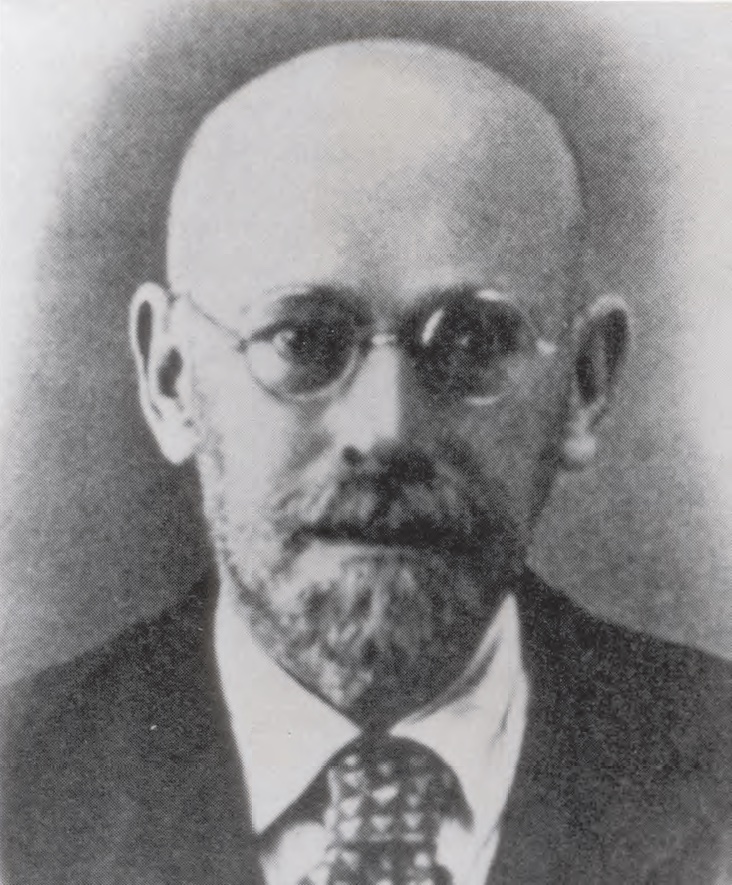
Photograph of Janusz Korczak, a bald man with a trim beard and moustache, wearing round glasses and a suit and tie.
Janusz Korczak.
Born Henryk Goldszmit. 1878-1942

Korczak was a Polish pediatrician, children’s right’s advocate, director of orphanages, and children’s book author. He founded of the first national newspaper edited and written by children, hosted a regular national radio show for children and adults, travelled internationally to speak on how to educate and raise children with respect. In his day he was world-famous. That didn’t prevent his murder in the Holocaust. He died in 1942 along with 200 children and teachers from his orphanage.
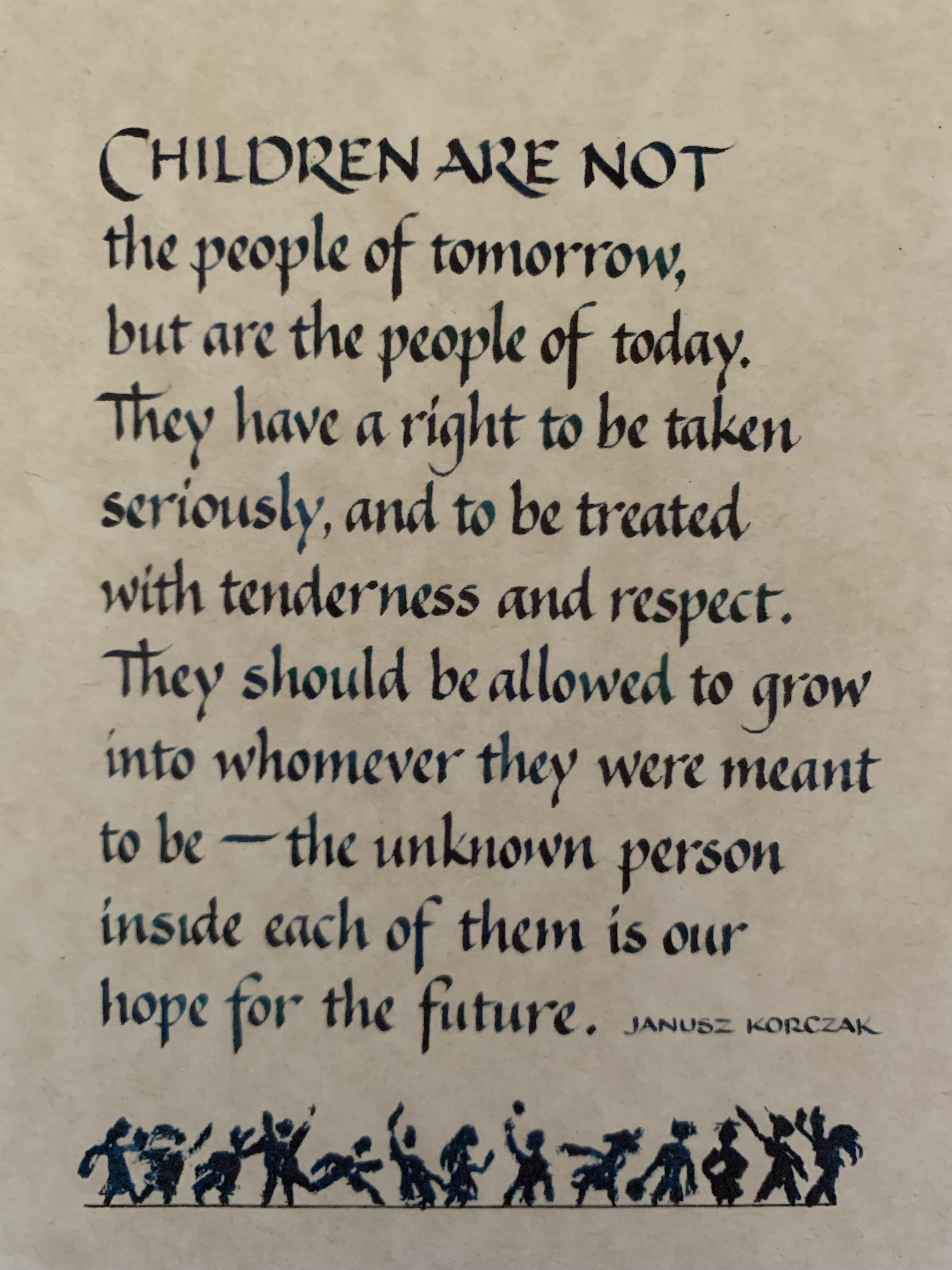
Shows a piece of hand lettering, a quote by Janusz Korczak about the importance of respecting children.
Calligraphy by Amanda Lewis. Artwork by Tim Wynne-Jones

Korczak’s important legacy was to change the way that people thought about children. He is revered for his commitment to young people. His writings became the foundation for the UN Convention on the Rights of the Child. But his work and life are not well known. After learning about him, I wanted to change that.

In 2006, I decided to work with a group of young people at the theatre school to workshop a play about Korczak. The students interviewed Leon and researched Korczak. They dove deeply into war-torn Poland and, inevitably, into the Holocaust. That two-year workshop process was a moving and personal experience for all of us.

In 2009, we decided to take it to the next level and commissioned playwright Hannah Moscovitch to write a play that worked with child actors as well as adults to tell the story. I co-produced The Children’s Republic with the Great Canadian Theatre Company (G.C.T.C) in Ottawa.
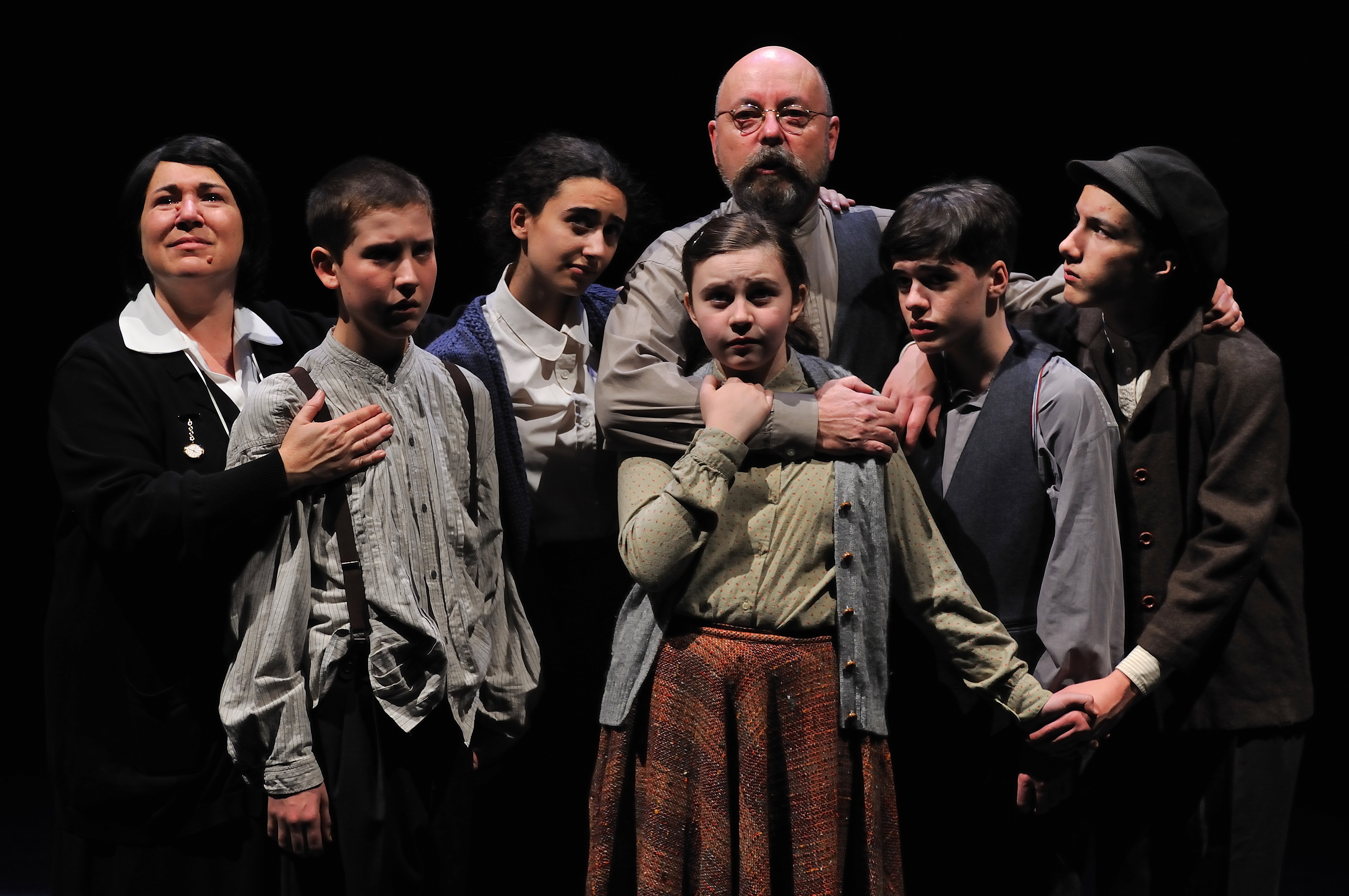
Shows a group of five young children in period dress from 1941, Warsaw, held and looked after by a man and a woman.
from The Children’s Republic, by Hannah Moscovitch, GCTC 2009

It was wonderful to bring Korczak’s story to life on the stage. However, as the years passed after that production, I felt that I wasn’t “done” with the story. The play, while suitable for young audiences, spoke from an adult perspective. I wanted to show young people Korczak’s ideas, to shine a light on his relationship to the children in his care, to show what like to live in the orphanage, and to see how that experience affected their lives.

But whose perspective should I write it from? Korczak’s or a child’s? What kind of “container” did it need?

In 2015, I went back to university to do an MFA in writing for children and young adults. The “Korczak” story was something I kept coming back to. I tried writing a middle grade biography, but it was flat and heavy. (My mentor at the time said, “I have to get you out of the Second World War!”) Then in 2017, I was studying picture book biographies and started trying to write his story as a picture book manuscript. At that point I knew I needed to tell the story from the perspective of a child. But I was having a hard time finding a way for the manuscript to be engaging.

I continued to research and explore different aspects of his life, but trying to contain everything into an 800-word picture book was a challenge to say the least! However, in 2021, I had a manuscript that I thought might work. I submitted it to my editor at Kids Can Press with whom I working on A Planet is a Poem.

Her response was what my inner voice had been telling me, but I had been studiously ignoring. “There’s too much material here for a picture book.” But her next sentence took me totally by surprise. “Have you ever thought of writing a graphic novel?”

Truth be told, I never had. I had hardly read any graphic novels! But I leapt in and started researching how on earth to write one.

It turns out writing a graphic novel is like storyboarding a film script. Not that I’ve written a lot of film scripts. But I’ve written a lot for theatre, worked onstage as an actor, off-stage as a director, producer, and stage manager. Suddenly I was combining all of these skills but in a whole new container. I knew the story I wanted to tell. I knew the characters and the arc of the material. It didn’t take long for me to envision scenes and create “camera angles”. Close-ups, distance shots all came naturally as the “movie” began to play out in my mind. I discovered how to create tension in pacing by working with the size and frequency of the panels.

And best of all, I had more room than I would have had in a picture book. I could show more details from Korczak’s life and philosophy and give a better sense of the times in which he lived. In particular, I could find a way to contextualize the Holocaust for a young reader.

Not all publishers would go out on a limb and develop a graphic novel with a writer. Most graphic novels are written and illustrated by one person. But Kids Can decided that the story was important enough to take a chance on. They contracted the wonderfully sensitive Abigail Ranjov to take on the challenge of illustrating this complex story.

From theatre workshop to scripted play, from middle grade biography to picture book biography to graphic novel –– what I learned was that there are many different containers for stories and each container changes the nature of the story. As a writer, I, too, was changed. This process stretched me and helped me to discover what I really wanted to say and why it was important to say it. Writing the story as a graphic novel has allowed me to finally tell the story I needed to tell.
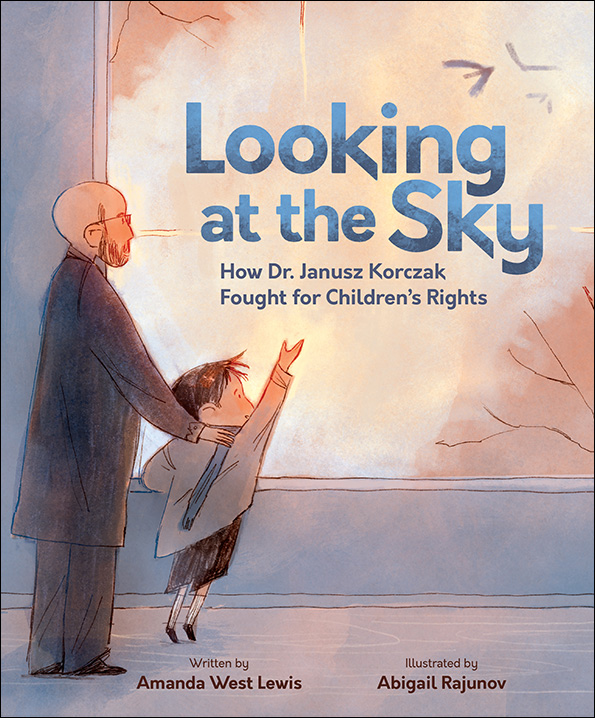
Cover of Looking at the Sky: How Janusz Korczak Fought ofr Children's Rights. Shows a man and a child at a sunlit window, the child reaching out.

Looking at the Sky: How Dr. Janusz Korczak Fought for Children’s Rights, written by Amanda West Lewis, illustrated by Abigail Rajunov, is published by Kids Can Press.

THE LANE ANDERSON AWARD

To be recognized for science writing is humbling –– especially as I am not a scientist.

I’m pinching myself.

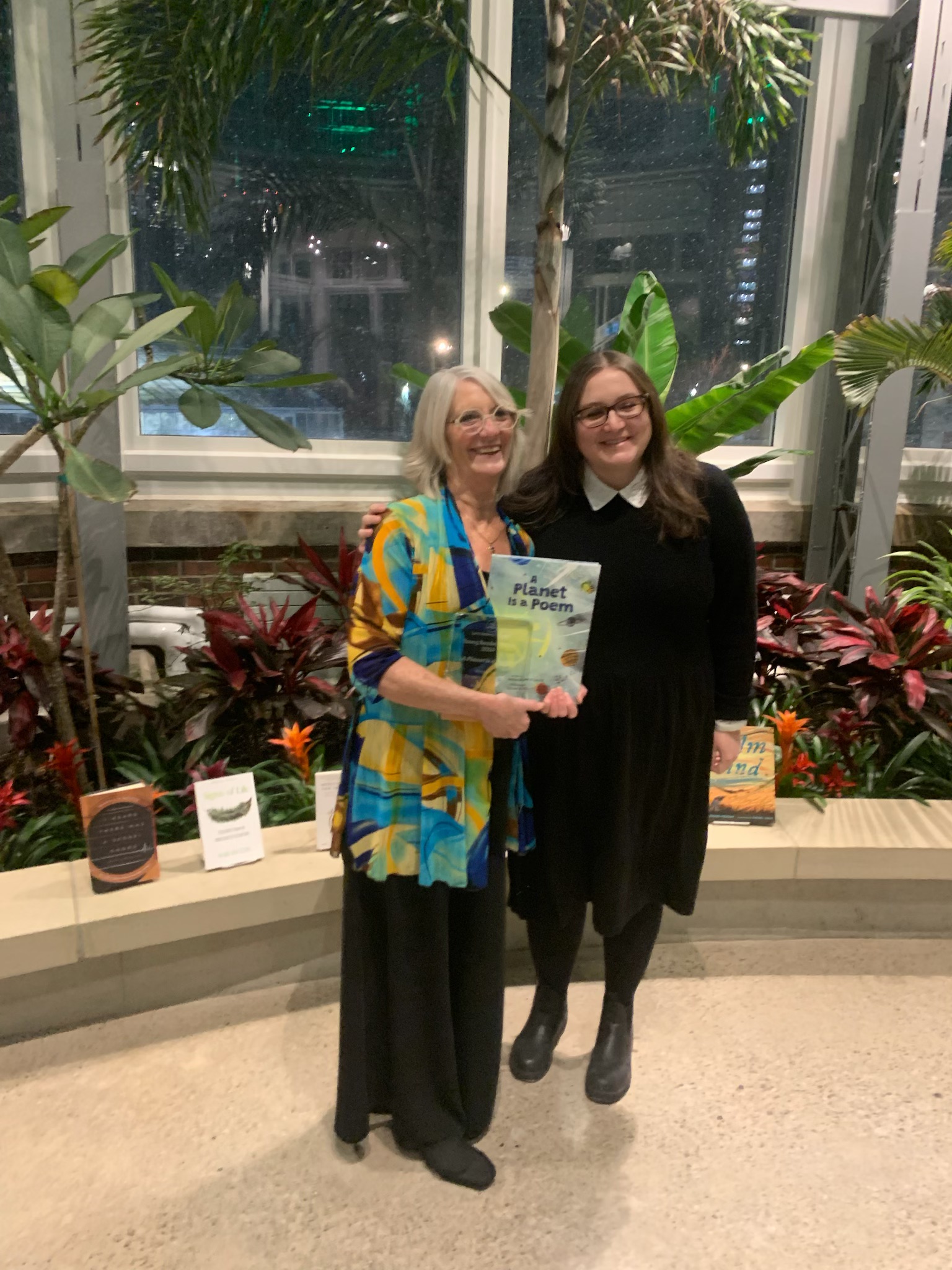
Last night, my book A Planet is a Poem was honoured with the Lane Anderson Award for science writing in Canada, youth category. So much of the credit goes to my editor, Kathleen Keenan, at Kids Can Press. She is a visionary!

The book combines an exploration of the Solar System with an exploration of poetic forms. For me, science and poetry are a natural pairing — they are both ways of trying to understand the world through metaphor and imagery. 

I am deeply grateful to the committee and to the Fitzhenry Foundation for their support and encouragement. I sincerely congratulate my fellow nominees, Monique Polak, Remember This: The Fascinating World of Memory, and Rachel Poliquin, I am Wind: An autobiography.

Before we were presented with the results, each nominee was asked to say something about their book. Here is what I said:

First of all, let me say how incredibly honoured I am that A Planet is a Poem has been shortlisted for the Lane Anderson Award. To be recognized for science writing is humbling –– especially as I am not a scientist. I’ve spent my life in the arts. But I think that artists and scientists have, at base, a common, shared desire to make sense of the world. We may have different approaches, but our need to express our curiosity comes from the same root.

It’s thrilling when a passionate scientist makes sense of their area of expertise for a lay person. You hear that passion every week on the CBC radio show Quirks and Quarks. (I’m a big fan.) In each episode, you hear passionate scientists sharing their latest discoveries –– a beetle, a volcano, the discovered moons of Saturn.

But many of the things that scientists need to explain are huge concepts beyond our understanding. To bring their knowledge to non-scientists, they must find language that describes the indescribable. Inevitably, they resort to metaphor and imagery. And in doing that, scientists and artists share a common language. Poetry.

In 2015, Quirks and Quarks featured a number of reports from the New Horizons Space Probe. The probe had just sent back the first “close ups” from Pluto. The scientists could barely contain their excitement. They talked about Pluto having a red, heart-shaped plateau on it that ebbs and flows. Just like a beating heart, they said. What an image! A beating heart on the edge of our solar system! Who couldn’t fall in love with that? Then someone on the program said: “The skies above Pluto appear as bright blue.” Blue skies? Blue skies on the edge of the solar system? I quoted that line to everyone I knew. “The skies above Pluto appear as bright blue.” “Did you know: The skies above Pluto appear as bright blue?”

At the time, I was in the midst of studying into different poetry forms.  I heard rhythm in everything. “The skies above Pluto appear as bright blue” is iambic tetrameter.

As an exercise, I decided to use that rhythm and make a Pantoum for Pluto. A Pantoum is a complex poetic form, like a puzzle. I’d never written one, and I liked the alliteration of “A Pantoum for Pluto”. Suddenly I was deep in imagery, metaphor, rhythm, rhyme and exciting new science. I dug deeper. I was doing exactly what scientists need to do –– explain things through image and metaphor to excite and spark people’s imagination.

I became hooked on poetry and planets. I was lucky enough to connect with my editor Kathleen Keenan at Kids Can Press. She, too, is mad about poetry and planets. Since I was deeply into studying different poetic forms, Kathleen suggested I try writing about each planet in a different form.

So I set to work researching the planets. As I researched, I realized that they had wildly different characteristics. I’m primarily a novel writer and a theatre person, and when you write a novel or a play you get to know your characters intimately. You learn their rhythms, their pace, their idiosyncrasies, their likes and dislikes. The planets presented themselves to me in the same way –– as characters in the great play of the Solar System. I realized wanted to support their uniqueness by pairing them with different poetic forms. Thus, Mercury, who spins very quickly, is contained in a fast-paced poem with rhythms that echo Dr. Seuss. “Mercury’s tiny/ Of planets the smallest/ But named for a god/who was known as the fastest.” There is, incidentally, a crater on Mercury called Dr. Seuss. Uranus, who spins sideways like a barrel and has a huge corkscrew-like magnetic tail that stretches for millions of miles, is written in free verse that echoes its unique, “free spirit” nature. And Pluto? Pluto is not a Pantoum – however much I loved the alliteration of A Pantoum for Pluto. No, Pluto is in a Companion poem with Charon, the two of them permanently linked and inseparable. Two poems that twine together.

The book became an interconnected way for young people to learn about our Solar System and about poetry.

When I was a little girl, I went to the Hayden Planetarium in New York. I had no knowledge of the night sky, other than the occasional glimpse of the moon. I was a city girl, and visions of stars, let alone planets, were not easy to come by. But that trip to the planetarium, with its mechanical whirling planets, sparked my little girl imagination. Writing this book was my gift to that child, and to all children, especially those who are not scientifically minded, those who live in cities and can’t see the stars, but are young people whose scientific imaginations can be sparked though the arts and go on to have a greater understanding of the world around them.

Thank you very much.

Taking a Breath

… a very personal record of our travels as we set out to discover Madrid and Andalusia, and to rediscover ourselves …

To be a creative artist of any kind means that you are almost always on output. You are digging deeply and finding ways to create art from what you are seeing and thinking. But frankly, it can be exhausting. Every well runs dry.

What bewilders me is that with social media, people seem to be on output all of the time. How do they do it? Where are the moments of reflection and contemplation that are the necessary base for creativity? How can you find strength and wisdom if you never take the opportunity to listen and watch the world?

The last few years have been artistically intense for me. I’ve had three published books in three years. There are two more on the way, and another in process. Frankly, I needed to take a step back. To breathe deeply and slowly, with no agenda to produce or create anything. And what better way to do that than on the road, where the preoccupations are train schedules and finding a good roadside café?

This blog began in 2011 as a record of our year on the road. That year, and the writing I did then, changed my life. But I don’t write regular blogs –– not every day is a day of adventure or reflection! And of course since 2011, there have been a lot of other ways to record things and tell people in fast and furious posts all about your exciting life. I’ve done my fair share of that. But with this trip, I deliberately held the journey close. I needed to take the time to be “in” the experience, rather than to write or post about it.

However, as the trip wound down and the glamour of sunny days in Spain became crystalline memories, I found that I want to wrap some words around the adventure. I wanted to put some thoughts out there for other travellers who might want to explore these roads. Or for any armchair travellers, who might be interested in the reflections of two aging writers navigating new pathways.

What follows over the next few blog entries is a very personal record of our travels, Tim’s and mine, as we set out to discover Madrid and Andalusia, and to rediscover ourselves. Tim and I off the treadmill and on the road.

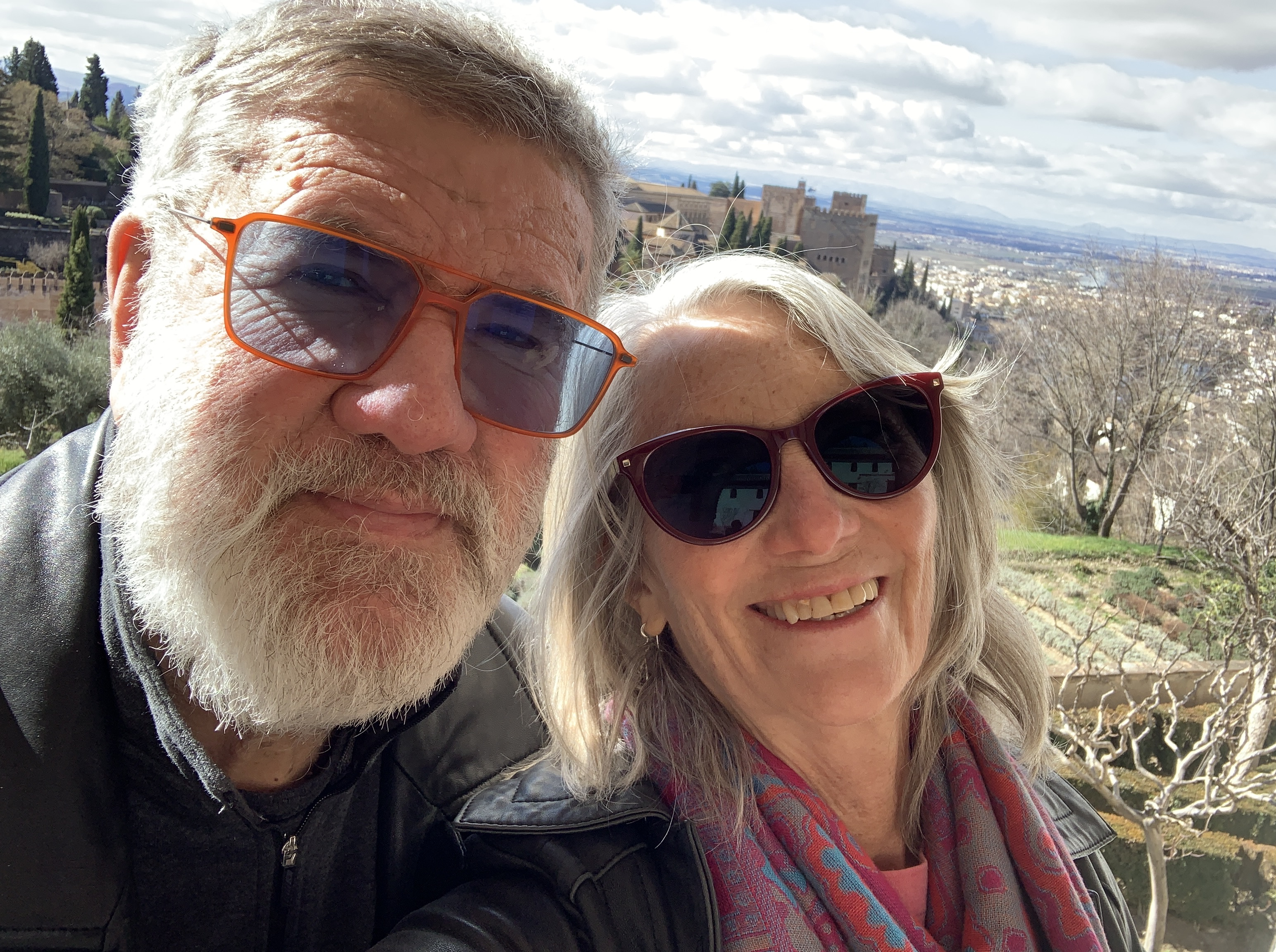
Amanda and Tim on a sunny patio with the Alhambra in the distance.
Tim Wynne-Jones and Amanda Lewis in Granada

Reflections on Writing

I’m posting an interview that I recently did for The Canadian Childrens Book Centre.

It’s a busy time! I am thrilled to be launching a new book for young people A Planet is a Poem, which you’ll hear more about in the coming days. In the meantime, happy reading…

You are a writer, calligrapher, and theatre artist, three creative pursuits which are built on the foundation of words. What attracts you to words? How do words inspire, motivate, challenge and/or change you as a writer?

I come from a word-obsessed family. My grandmother was a writer, editor, and bookstore owner. My mother was a book designer. My uncle was a journalist. I married a writer. Perhaps it is not a big surprise that words are the foundational tool in my life!

My mother enrolled me in a calligraphy course when I was a teenager. I went on to do extensive studies of the development of letterforms. For me, calligraphy was a gateway into cultural history and the whole concept of written language. It was also fundamental in giving me a tactile relationship to words. When you calligraph, you work very slowly. You focus on creating shapes and manipulating space on the page. On a good day, it is very meditative. You involve your breath and connect to the movement of your hand on the page. You go down into the bones of a word, and how one letter connects to another. It’s an intimate relationship between gesture and meaning.

This may be why I write first drafts by hand. I love feeling the graphic line and how it dances across a piece of paper. It stimulates a particular part of my brain and opens me up to things that are not available to me through typing on a keyboard. My manuscripts would be illegible to anyone else –– they are filled with the movement of my hand and brain, working together.

However, the challenge for me is not to overwork words in the editing process. How do I keep the sense of freedom and lightness of the word dance on a page, when I want to work on word choice? How do you make something look effortless when it takes a huge amount of effort and skill? But that, I think, is the plight of anyone working in the arts. You must make it feel fresh and new, yet it must be crafted to the best of your ability. That’s where practice and rehearsal become essential. It’s not something you can achieve in a first draft.

expressive gesture teaching a drama class to children

Photo courtesy of The Ottawa Children’s Theatre

The theatre world is a place you know well. You served as executive director of Ottawa School of Speech & Drama as well as founded Ottawa Children’s Theatre and served as its artistic director. Your writing and theatre worlds united when you and your husband co-wrote Rosie Backstage. How else has your work as a theatre artist influenced or informed your writing for young people?

I can’t imagine being a writer without being a theatre artist. Words are a metaphor for communication, but not the sine qua non of communication. Movement, gesture, tone, inflection, silence –– we use all of these to communicate thoughts and feelings. In theatre. all of these tools are at your disposal. Theatre gives you the ability to create nuances that are harder to communicate with words alone. It uses movement and sound. It uses timing. It is so much more than a series of dialogue lines. So much more than a set. When you are creating for the stage, you need to think about what happens between the words and to the people as they move in space.

As a writer, I try to explore how to create this complexity on the page. I read everything out loud, many times. I listen for the beats, the pauses. I listen for the movements and gestures. I listen for what the character isn’t saying. I place each character in the scene, being aware of where they are and what they are doing when someone else has the focus of the scene.

I also use a lot of theatre exercises in my writing. For example, there’s a theatre game called “What’s Beyond,” where you work on coming into a space focused on what you have just left. You don’t try to tell a story, you don’t try to do anything. You just cross the space with a history. When I am writing, I think a lot about where my character has been before they come into the space, into the scene. It’s different from a backstory. It’s more immediate. A character must come on with their scene already in motion. They aren’t coming on from a vacuum. What they bring with them is going to affect their behaviour in a myriad of small ways that are never discussed.

Perhaps even more fundamentally, however, is how my vocal training has affected the way I work with words and my word choices. Writing is a stand-in for spoken words, so I need to always go back to the vocal source. Learning about breath, resonance, and articulation has given me a very deep physical relationship to words. There is some brain science that suggests that as we read, our mind and body recreate the physical sensation of making the words we are reading. I want people to not only hear the words on the page, but to feel them and recognize them in their own body.

On a practical level, I have taught theatre to young people for many, many years and continue to work in that field. Working with youth keeps me honest. They engage me in their concerns and in what matters to them. It is far too easy to get ghettoized in your own age group. Working inter-generationally is vital to me.

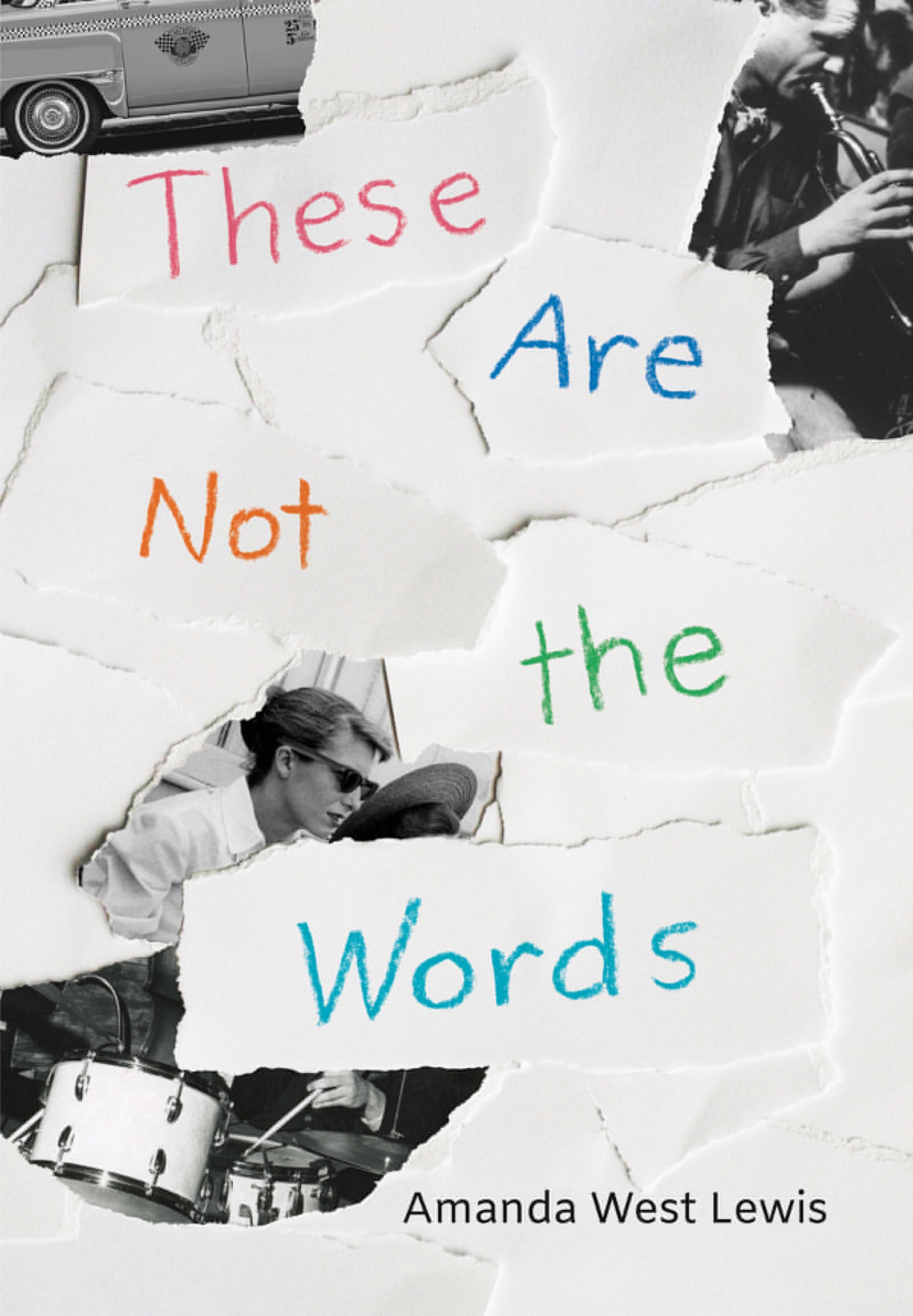
Front cover of book These Are Not the Words showing torn paper, fragments of a drum set, a man playing trumpet a woman in dark glasses and a New York taxi cab.

In These Are Not the Words, Missy and her father write poems for each other – poems that gradually become an exchange of apologies as her father’s alcohol and drug addiction begins to overtake their lives. How can we use poetry to communicate with others and to heal ourselves?

I think that writing can be a way of talking to yourself. Ultimately, you are having a conversation with your mind and your heart. But I think you need to trick yourself into going more deeply.

When you have a conversation with a good friend, you usually stay on a particular level for a long time. But after a while, if you are close and trust your friend, it morphs into something deeper. Those are the special times where you get closer and listen harder and respond more honestly. You have to give yourself time to go through the superficial things before you can get to the heart of the matter. Writing poetry can do this. You write too much and then you cut out all of the fluff. You see what words are essential. That’s when you discover what it is you are really trying to communicate.

I also think that poetry, like theatre or calligraphy, is a kind of game. It’s got some great rules that give us a context for deep exploration. You play with sound and rhythm, and in that playing, you can trick your mind into finding new meanings.

Writing is about asking questions –– of yourself, of your imagined reader. Questions can form the base for a dialogue. It’s the best way to talk to yourself. And when you talk to yourself, you can heal.

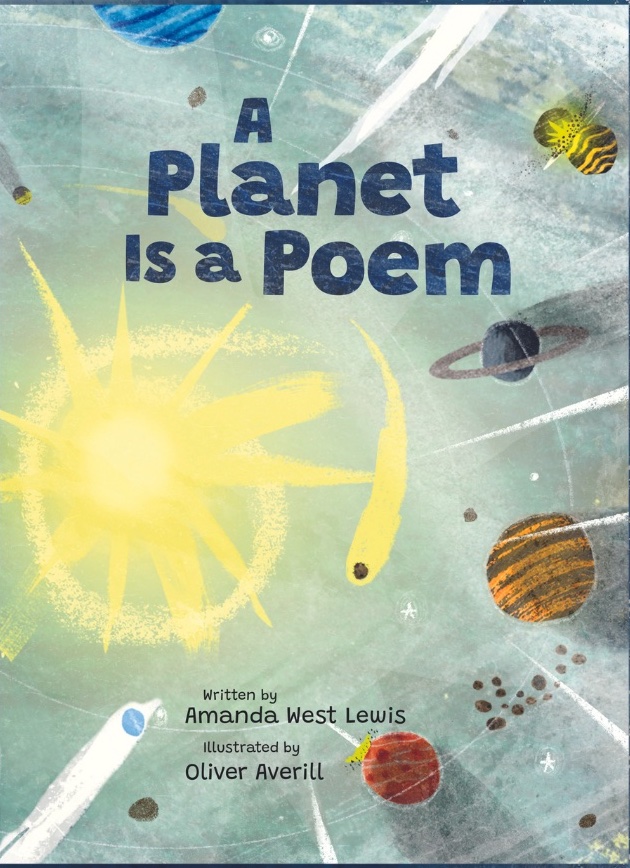
Front cover of book A Planet is a Poem, showing sun and planets.

*Science and poetry may seem like strange bedfellows but they share commonalities such as formulas and patterns. What was your inspiration to write A Planet is A Poem, a collection of poems about the solar system?

A Planet is a Poem came about through a series of coincidences. When I was doing my MFA in Writing for Children, I started a serious study of poetic forms. I hadn’t done that before. My previous schooling was, at best, pretty spotty. I began working my way through the delightful The Ode Less Travelled by Stephen Fry, and challenging myself to try out as many different forms as I could.  As we know, books for younger children rely on sound and word play, so I wanted to drill down and understand things that I had known about but had never tried my hand at. I had avoided writing poetry all of my life. I reasoned that there are so many bad poems out there, the world didn’t need mine as well. But this was a technical challenge I was setting myself, and I wasn’t thinking of publishing anything at that point.

At the same time, I was introduced to the American poet Joyce Sidman. Sidman writes non-fiction poetry books for young people. I love her work and it opened up a whole world for me. My first books had been non-fiction books for young people and truth be told, I am much more comfortable writing non-fiction than I am writing fiction. I became open to the idea that poetry could be a vehicle for young people to learn about nature. I thought that maybe I could write non-fiction poetry and it wouldn’t be as embarrassing as bad personal poetry.

The other influence was the CBC radio program Quirks and Quarks. I love that show and in one particular episode (September 11, 2015), they talked about the New Horizons space probe. It had just started sending images of Pluto back to earth and everyone was talking about these amazing things we were learning. On Pluto, the skies are blue! There are volcanos of slow-moving nitrogen mud! There’s a red, heart-shaped plateau that moves like a heartbeat! Who wouldn’t want to write a poem about that? I wrote A Pantoum for Pluto so that I could explore Pluto but also try that poetic form. Ultimately, we didn’t use that particular poem in the book, but the process was set in motion. Before I knew it, I was deep into researching (always my happy place), and the puzzle of writing non-fiction poetry.

*A Planet is a Poem offers readers multiple access points for interaction.There are its 14 poems which can be enjoyed on their own. Plus, there is accompanying factual information about each poem’s subject matter. And last but not least, there is information on the forms in which the poems are written. How did you decide to present the book in this format? And why was it important to you to create the book this way?

I had quite a few coffee dates with Katie Scott at Kids Can Press, where I tried to pitch her on the idea of non-fiction poetry about planets and/or insects (another area I was obsessing about because of Quirks and Quarks). But they already had a book coming out the next year on space, and one on bugs. The question was what might make mine unique.

I don’t know exactly how the idea of a cross-curricular book came about. I was pretty passionate about poetic forms, and somehow the brainstorming led us to a book that could give the science and the poetry equal weight. Both Katie and my editor Kathleen Keenan got excited about doing a book that could show kids both the magic of language and of the solar system.

Once we had the basic idea, I researched the solar system. I’m not a scientist, but I love astronomy and still remember being in the Hayden Planetarium in New York when I was a child. I researched each planet as though it was a character in a novel. I worked on matching those characteristics with a particular poetic form. For example, Mercury, which is the smallest planet, is incredibly fast. It travels around the sun more quickly than any of the others. So, I paired it with a very fast rhyming and rhythm scheme inspired by Dr. Suess, with only two beats to the bar.

Mercury’s tiny ––

Of planets, the smallest.

But named for a god

Who was known as the fastest.

I researched because I loved it. But as with my experiences in writing historical fiction, it became impossible to squash all of exciting things I was learning into each poem. So, we came up with the idea of sidebars to give more of the scientific information.

The more I worked on the book, the more I got excited about the poetic forms I was using. We came up with the idea of sidebars for the poetry too, just as there were sidebars for the science. It was designer Marie Bartholomew who had the tough job of pulling all of that together with the great illustrations by Oliver Averill.

*What advice would you impart to young people and the young at heart who would like to pursue careers as writers?

Read. Read everything. Listen to words, make them your friends and play with them. Sing them! Foster your sense of curiosity. Let your curiosity take you to new places. Always, always challenge yourself to try new things. Care passionately and let your writing follow your passion. Make it matter.

Young people engaged in disucssion on writing

Photo Courtesy of MASC