ABOUT PROCESS

Today is the book birthday for my new book “Looking at the Sky: How Dr. Janusz Korczak Fought for Children’s Rights.” So to celebrate, I thought I would give you an extended, inside peek at how the book came about.

I work in a number of different genres and media –– theatre, calligraphic book arts, literary arts. My books for young people are in various genres ––  craft books, non-fiction books, picture books, poetry, middle grade, and YA fiction. For me, the challenge isn’t necessarily what to create, but which container is best for this idea?

By exploring ideas from many perspectives, I’ve found new things and come to a richer understanding of what I was trying to say.

Every creative project is different, of course, just as the ultimate audience for each piece will be different. In fact, I’ve worked on the ideas in Looking at the Sky in different forms for over twenty years.

I first heard the story of Dr. Janusz Korczak in 2005 from the landlord for the theatre school I was running (The Ottawa School of Speech & Drama). Leon Gluzman, had been a resident at Korczak’s orphanage in Warsaw and when I met him over eighty years later, he was still emotional when he talked about “Pan Doctor” –– Janusz Korczak.
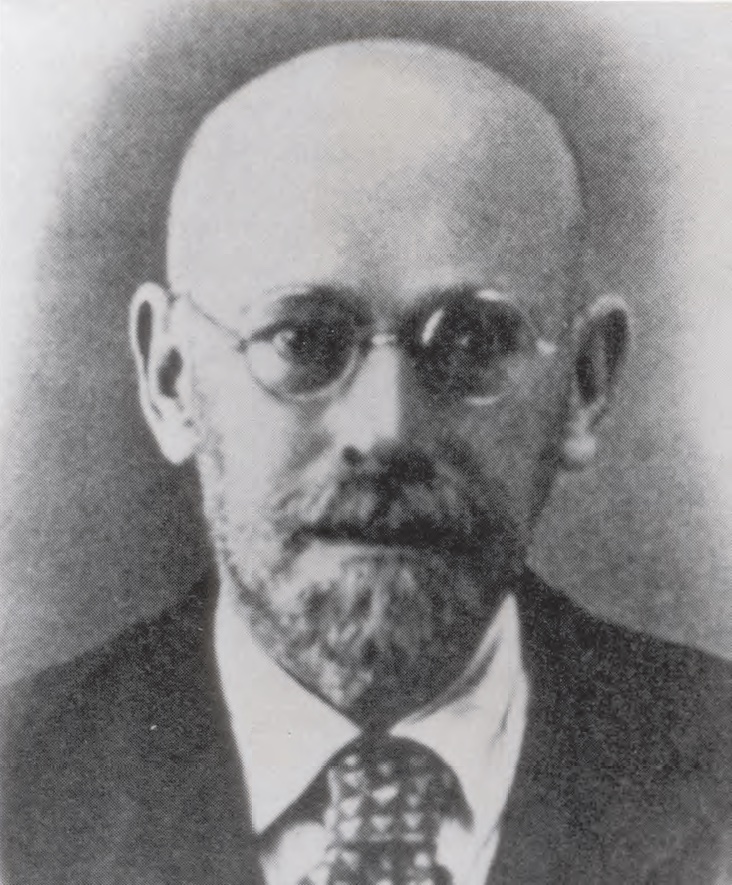
Photograph of Janusz Korczak, a bald man with a trim beard and moustache, wearing round glasses and a suit and tie.
Janusz Korczak.
Born Henryk Goldszmit. 1878-1942

Korczak was a Polish pediatrician, children’s right’s advocate, director of orphanages, and children’s book author. He founded of the first national newspaper edited and written by children, hosted a regular national radio show for children and adults, travelled internationally to speak on how to educate and raise children with respect. In his day he was world-famous. That didn’t prevent his murder in the Holocaust. He died in 1942 along with 200 children and teachers from his orphanage.
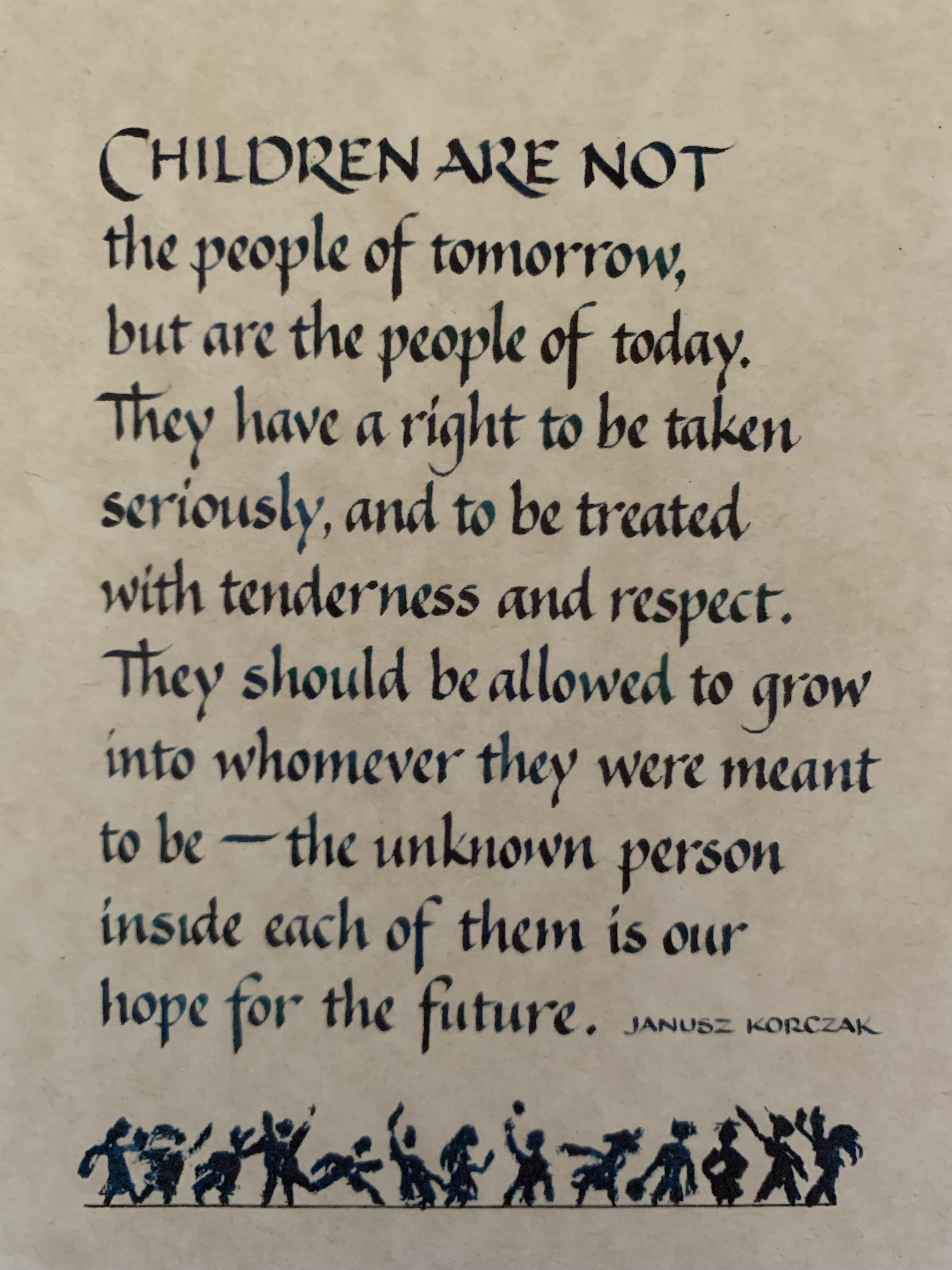
Shows a piece of hand lettering, a quote by Janusz Korczak about the importance of respecting children.
Calligraphy by Amanda Lewis. Artwork by Tim Wynne-Jones

Korczak’s important legacy was to change the way that people thought about children. He is revered for his commitment to young people. His writings became the foundation for the UN Convention on the Rights of the Child. But his work and life are not well known. After learning about him, I wanted to change that.

In 2006, I decided to work with a group of young people at the theatre school to workshop a play about Korczak. The students interviewed Leon and researched Korczak. They dove deeply into war-torn Poland and, inevitably, into the Holocaust. That two-year workshop process was a moving and personal experience for all of us.

In 2009, we decided to take it to the next level and commissioned playwright Hannah Moscovitch to write a play that worked with child actors as well as adults to tell the story. I co-produced The Children’s Republic with the Great Canadian Theatre Company (G.C.T.C) in Ottawa.
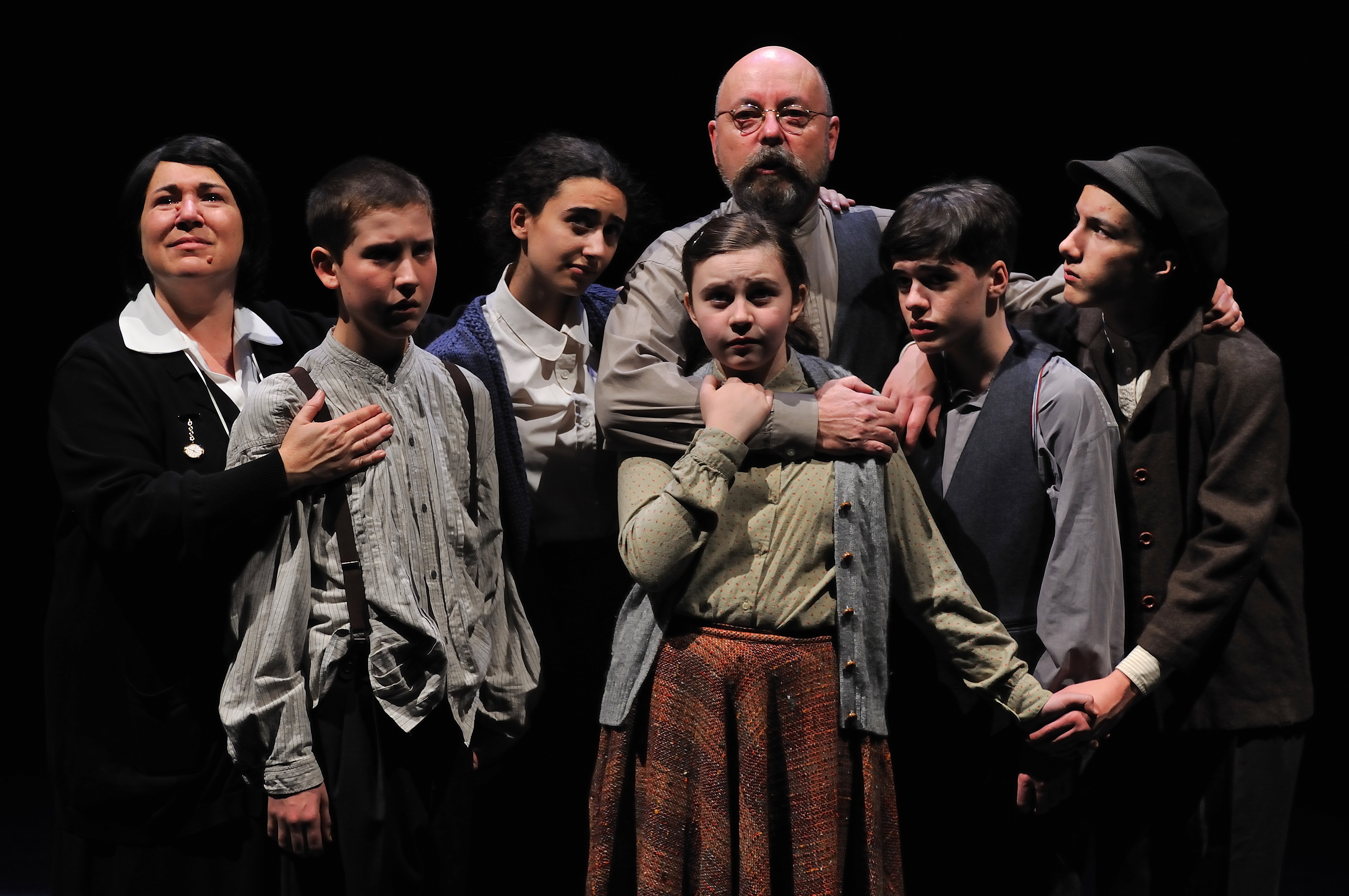
Shows a group of five young children in period dress from 1941, Warsaw, held and looked after by a man and a woman.
from The Children’s Republic, by Hannah Moscovitch, GCTC 2009

It was wonderful to bring Korczak’s story to life on the stage. However, as the years passed after that production, I felt that I wasn’t “done” with the story. The play, while suitable for young audiences, spoke from an adult perspective. I wanted to show young people Korczak’s ideas, to shine a light on his relationship to the children in his care, to show what like to live in the orphanage, and to see how that experience affected their lives.

But whose perspective should I write it from? Korczak’s or a child’s? What kind of “container” did it need?

In 2015, I went back to university to do an MFA in writing for children and young adults. The “Korczak” story was something I kept coming back to. I tried writing a middle grade biography, but it was flat and heavy. (My mentor at the time said, “I have to get you out of the Second World War!”) Then in 2017, I was studying picture book biographies and started trying to write his story as a picture book manuscript. At that point I knew I needed to tell the story from the perspective of a child. But I was having a hard time finding a way for the manuscript to be engaging.

I continued to research and explore different aspects of his life, but trying to contain everything into an 800-word picture book was a challenge to say the least! However, in 2021, I had a manuscript that I thought might work. I submitted it to my editor at Kids Can Press with whom I working on A Planet is a Poem.

Her response was what my inner voice had been telling me, but I had been studiously ignoring. “There’s too much material here for a picture book.” But her next sentence took me totally by surprise. “Have you ever thought of writing a graphic novel?”

Truth be told, I never had. I had hardly read any graphic novels! But I leapt in and started researching how on earth to write one.

It turns out writing a graphic novel is like storyboarding a film script. Not that I’ve written a lot of film scripts. But I’ve written a lot for theatre, worked onstage as an actor, off-stage as a director, producer, and stage manager. Suddenly I was combining all of these skills but in a whole new container. I knew the story I wanted to tell. I knew the characters and the arc of the material. It didn’t take long for me to envision scenes and create “camera angles”. Close-ups, distance shots all came naturally as the “movie” began to play out in my mind. I discovered how to create tension in pacing by working with the size and frequency of the panels.

And best of all, I had more room than I would have had in a picture book. I could show more details from Korczak’s life and philosophy and give a better sense of the times in which he lived. In particular, I could find a way to contextualize the Holocaust for a young reader.

Not all publishers would go out on a limb and develop a graphic novel with a writer. Most graphic novels are written and illustrated by one person. But Kids Can decided that the story was important enough to take a chance on. They contracted the wonderfully sensitive Abigail Ranjov to take on the challenge of illustrating this complex story.

From theatre workshop to scripted play, from middle grade biography to picture book biography to graphic novel –– what I learned was that there are many different containers for stories and each container changes the nature of the story. As a writer, I, too, was changed. This process stretched me and helped me to discover what I really wanted to say and why it was important to say it. Writing the story as a graphic novel has allowed me to finally tell the story I needed to tell.
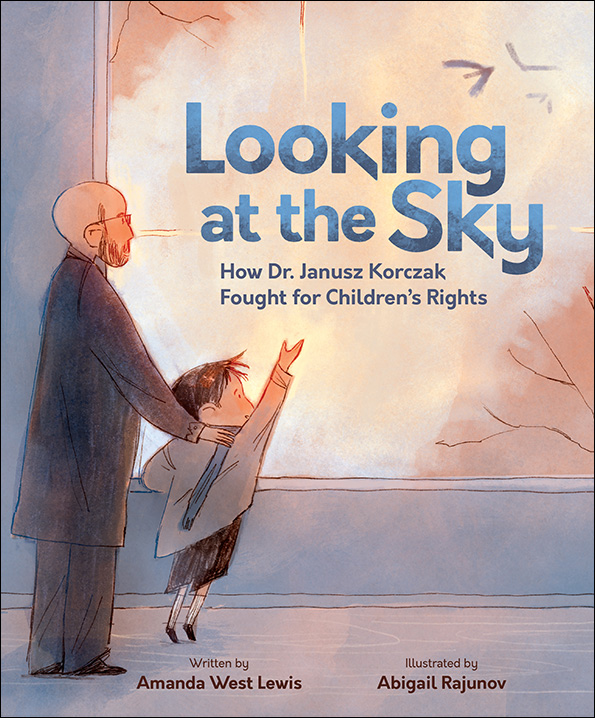
Cover of Looking at the Sky: How Janusz Korczak Fought ofr Children's Rights. Shows a man and a child at a sunlit window, the child reaching out.

Looking at the Sky: How Dr. Janusz Korczak Fought for Children’s Rights, written by Amanda West Lewis, illustrated by Abigail Rajunov, is published by Kids Can Press.

Taking a Breath

… a very personal record of our travels as we set out to discover Madrid and Andalusia, and to rediscover ourselves …

To be a creative artist of any kind means that you are almost always on output. You are digging deeply and finding ways to create art from what you are seeing and thinking. But frankly, it can be exhausting. Every well runs dry.

What bewilders me is that with social media, people seem to be on output all of the time. How do they do it? Where are the moments of reflection and contemplation that are the necessary base for creativity? How can you find strength and wisdom if you never take the opportunity to listen and watch the world?

The last few years have been artistically intense for me. I’ve had three published books in three years. There are two more on the way, and another in process. Frankly, I needed to take a step back. To breathe deeply and slowly, with no agenda to produce or create anything. And what better way to do that than on the road, where the preoccupations are train schedules and finding a good roadside café?

This blog began in 2011 as a record of our year on the road. That year, and the writing I did then, changed my life. But I don’t write regular blogs –– not every day is a day of adventure or reflection! And of course since 2011, there have been a lot of other ways to record things and tell people in fast and furious posts all about your exciting life. I’ve done my fair share of that. But with this trip, I deliberately held the journey close. I needed to take the time to be “in” the experience, rather than to write or post about it.

However, as the trip wound down and the glamour of sunny days in Spain became crystalline memories, I found that I want to wrap some words around the adventure. I wanted to put some thoughts out there for other travellers who might want to explore these roads. Or for any armchair travellers, who might be interested in the reflections of two aging writers navigating new pathways.

What follows over the next few blog entries is a very personal record of our travels, Tim’s and mine, as we set out to discover Madrid and Andalusia, and to rediscover ourselves. Tim and I off the treadmill and on the road.

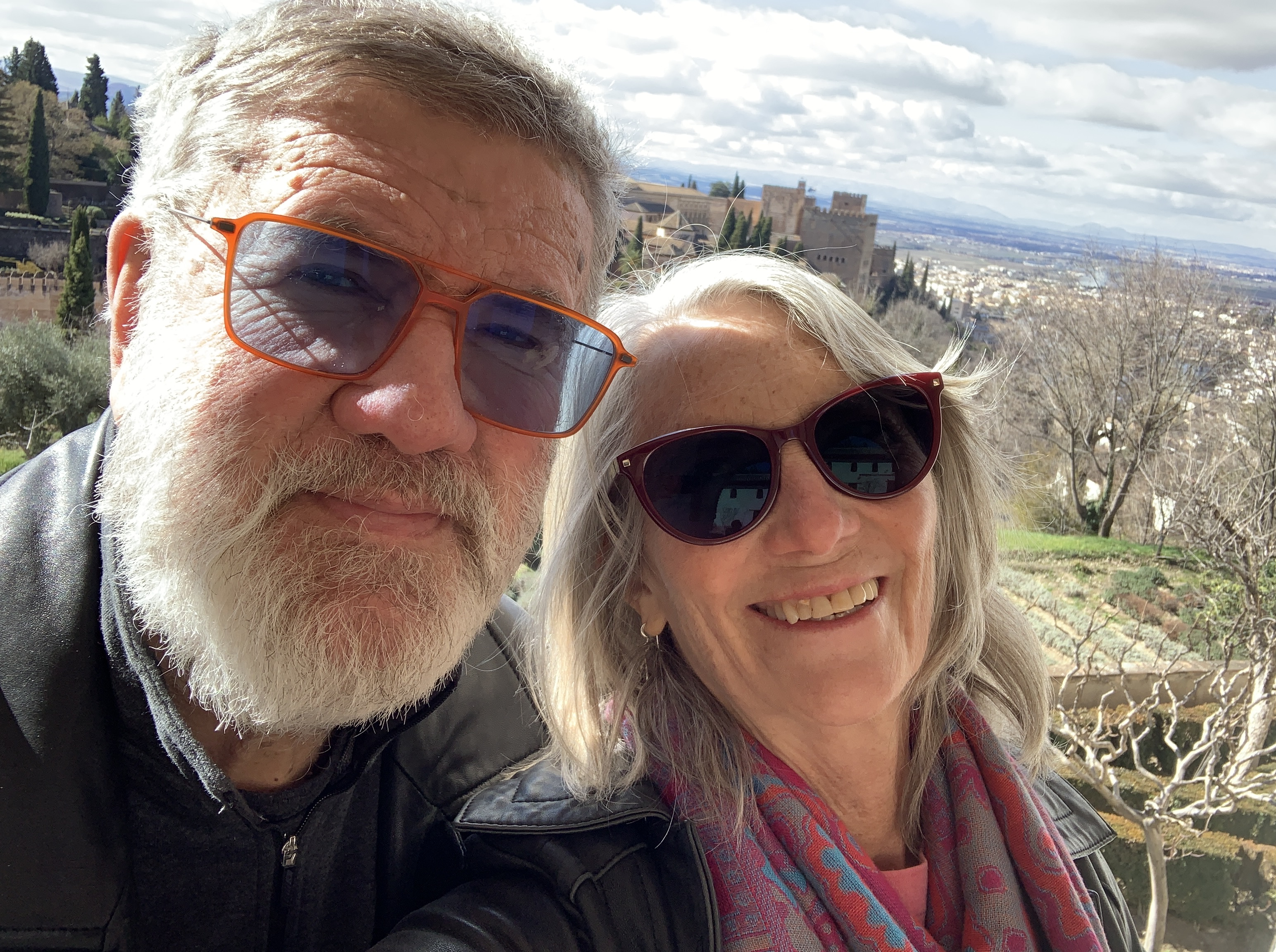
Amanda and Tim on a sunny patio with the Alhambra in the distance.
Tim Wynne-Jones and Amanda Lewis in Granada

CONNECTIONS: A day discovering exciting new plays for youth

After our travels in Cornwall and Devon, we’ve enjoyed coming back to London. Amongst other things, I’ve been making some connections with people who are working in the field of theatre for youth.

Since 1995, The National Theatre has been commissioning plays for youth age 13 – 19. Over the last 16 years, they have collected a canon of plays by professional writers that provide young people from diverse backgrounds with meaningful ways to explore theatre and their world. At The Ottawa School of Speech & Drama, I have produced 5 of these plays with Canadian teens and I wanted to see how the plays are used with British youth.

“Connections” is the annual theatre festival in which U.K. schools and theatre groups present premiere productions of the new plays. As part of the process, directors attend a weekend workshop to meet with the playwrights and facilitating directors. I was thrilled to be invited to attend the 2012 Connections Directors Workshop as an international delegate.

There are ten new plays for 2012 Connections and over 100 directors were attending the workshops. Because I was not focusing on any one play in particular, I got to observe a variety of different writers at work with facilitating directors, all exploring different tasks and approaches to the texts. It was a fabulous day for me. I love creative process.

I arrived at the National Theatre Studio near Waterloo station, but wasn’t really sure where to go. I felt a bit at a loss until I met Edward Bromberg from Riksteatern, the national theatre in Sweden (http://www.riksteatern.se/). Edward was also attending as an international delegate, and he took me under his wing.

We started with “Journey to X”, by Nancy Harris: “A tale about friendship, a journey and the risks that teenagers take when plunged into an adult world.”* The facilitating director Charlotte Gwinner led the group in a discussion of the themes of the play, examining the world and rhythms of the play, while the playwright was able to answer essential questions and open up the dramaturgical process.

From “Journey to X” we went to “Socialism is Great”, by Anders Lustgarten: “The propaganda of the East meets the propaganda of the West in Anders Lustgarten’s play about love, work and power.”* The facilitating director in this workshop, Angus Jackson, worked with the whole group to examine blocking choices and the underlying motivation of the characters, asking the writer for clarification as they went along.

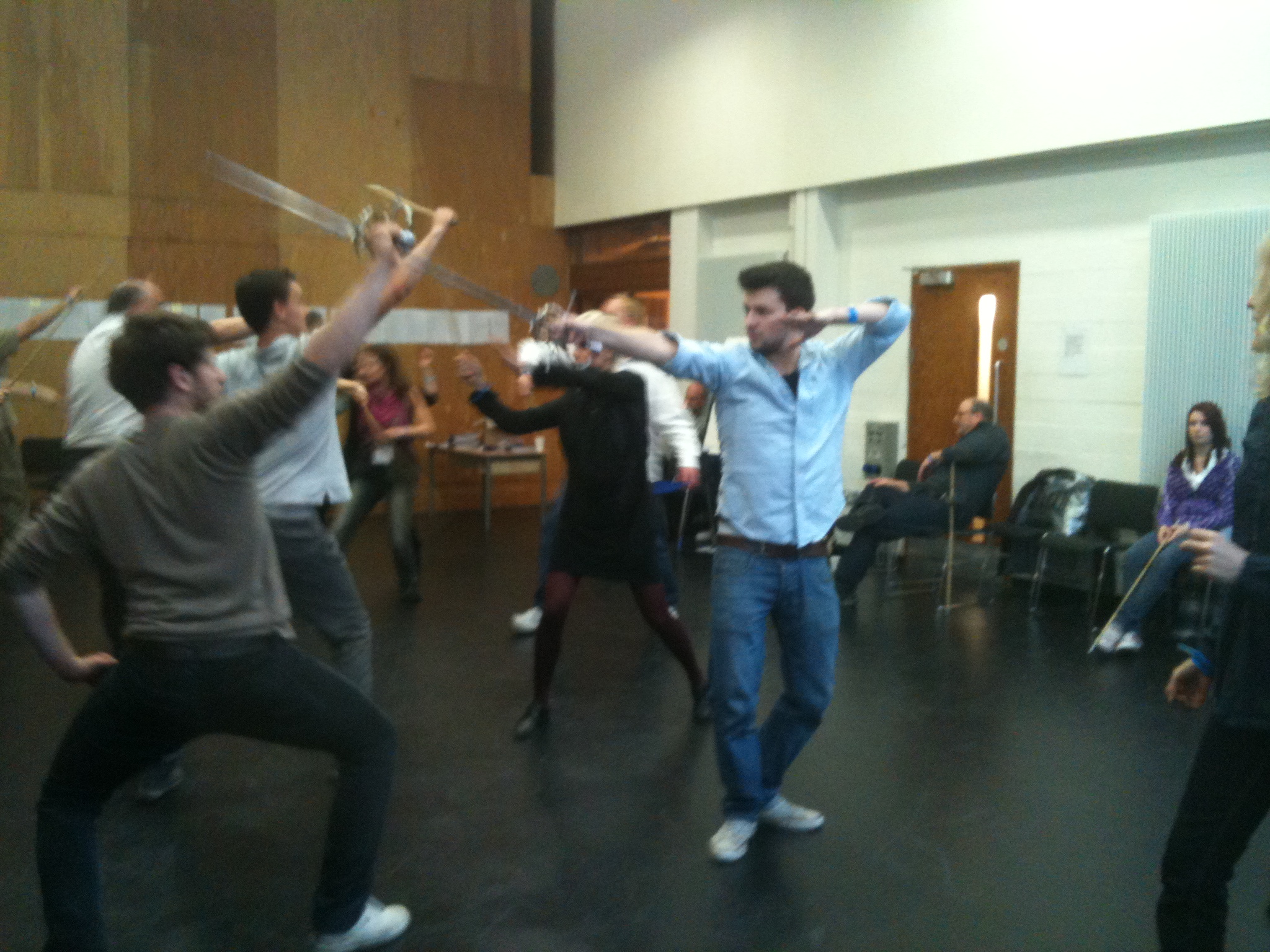
During the lunch break, I met up with my UK contact from the National, Anthony Bank, who was the facilitating director for “Prince of Denmark”,by Michael Lesslie”: “Set a decade before the action of Shakespeare’s play, Michael Lesslie’s imagined prequel follows the teenage Hamlet, Ophelia and Laertes as they rage against the roles handed down by their parents.”* Their morning had been spent in a voice workshop, exploring the use of iambic pentameter. After lunch, fight director Alison De Burgh led us through a basic sword-fighting workshop, always mindful of safety and methods suitable for young people.

Sword Fighting workshop, with Alison De Burgh

In “Generation Next”, by Meera Syal”: “two young British Punjabis are about to get married. Three times. Through three different generations. Exploring notions of identity and culture with a comic eye, Meera Syal addresses a shrinking world and our growing desire to move towards something or somewhere we think is better.”* A play very specifically for a cast of Asian actors, Meera Syal was there with facilitating director Iqbal Khan working with only one director and his cast of young actors. They discussed personal cultural biographies as they developed an understanding of the historical context of the play.

My last stop of the day was “Alice by Heart”, by Steven Sater and Duncan Sheik: “How do we leave childhood behind? How do we close the book? A fresh new rock-musical take on Alice in Wonderland, from the creators of Spring Awakening”.* Writer Steven Sater (yes, he wrote Spring Awakening, one of my favourite musicals) and musical director David Shrubsole had obviously spent a busy day guiding, teaching and answering questions.

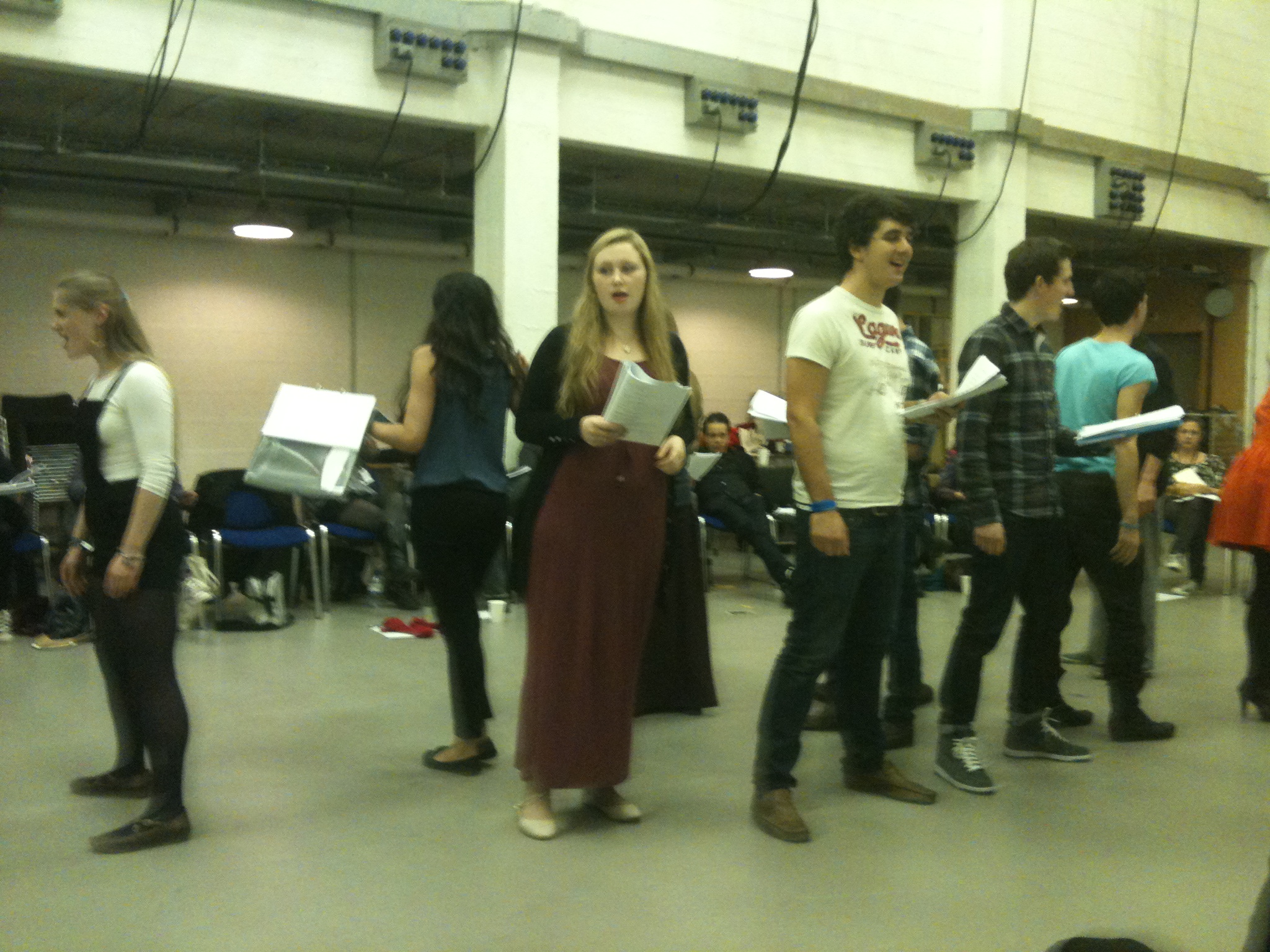
National Youth Musical Theatre Students, workshopping "Alice by Heart"

The room was filled with directors and about 12 actors from the National Youth Musical Theatre program. It was the end of the day and the facilitating director Timothy Sheader was focusing on transitions and design. Steven Sater answered questions about the writer’s process using a pre-existing text (“Alice in Wonderland”) as a springboard for an exploration of underlying themes.

By the end of the day, I had seen bits and pieces of 5 of the 10 new plays. I had met with teachers and directors who were passionately excited about producing these new works with their students, and who clearly relished the opportunity to ask questions of the writers and facilitating directors. It was a rare opportunity.

As the workshops ended, Edward invited me to go with Maria Lewenhaupt, his producer from Sweden, as well as delegates from theatres in Norway and Denmark, to see “Shalom Baby” a new drama-comedy at the Theatre Royal Stratford. A wonderfully layered piece, it is a play where the same characters are explored in 1930s Germany and in contemporary Brooklyn. American rap poems were juxtaposed with poignant forbidden love in Germany. It’s a moving and accessible exploration of xenophobia and contemporary blocks to happiness.

It was a long day, a great day. A day of more questions than answers. Just what I needed to kick start new thoughts.

*NB: all quotes from the National Theatre web site: http://www.nationaltheatre.org.uk/65630/connections-plays-2012/plays-2012.html